Cooling Tower Fan Manufacturers for Process Cooling, Data Center & Chemical Plants
Meta Description: Specialized cooling tower fan manufacturers deliver high-efficiency FRP axial fan assemblies built for non-stop process cooling, hyperscale data center PUE optimization and corrosive chemical plant environments. Explore aerodynamic tuning, corrosion-resistant composite options, low-noise rotor designs, OEM supply and cross-brand retrofit support for mission-critical thermal assets.
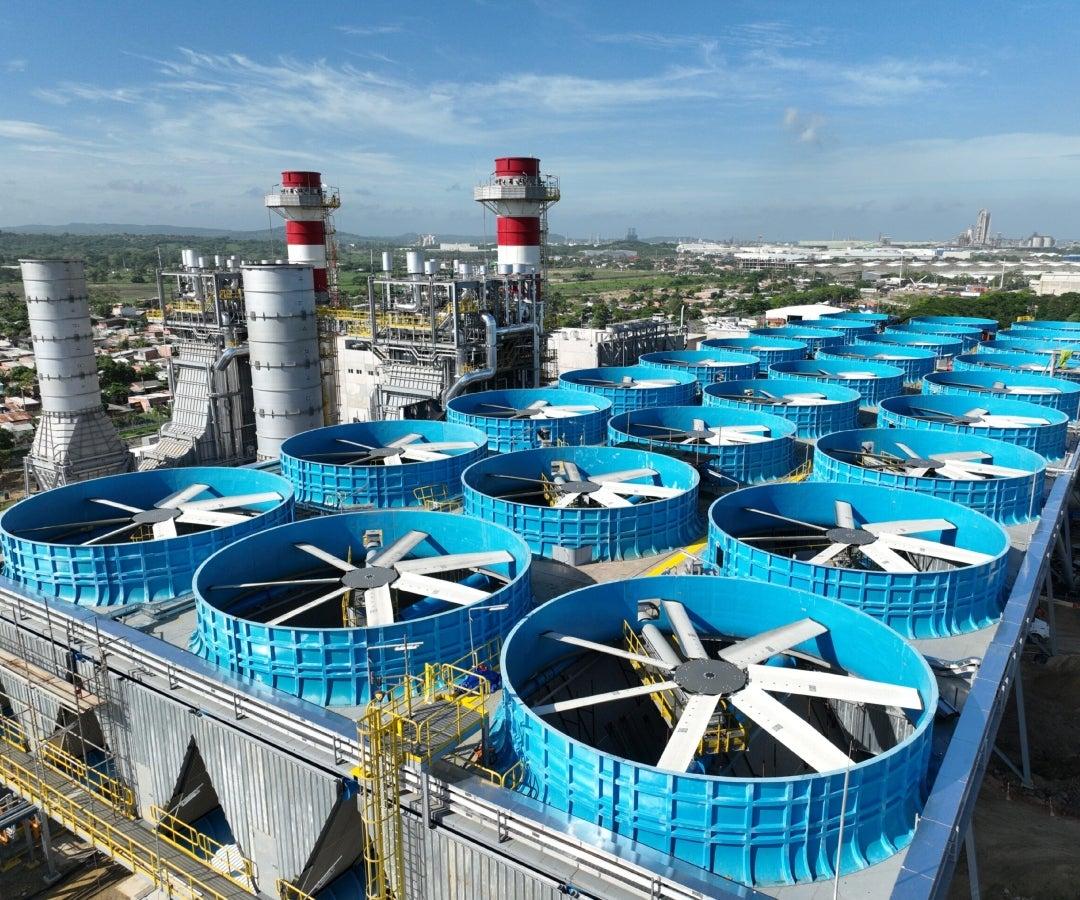
Why Process, Data Center and Chemical Cooling Demand Specialized Cooling Tower Fan Manufacturers
Standard HVAC cooling tower fan suppliers focus on intermittent, mild-duty applications where downtime is acceptable and operating environments are clean. Process plants, data centers and chemical facilities operate under a completely different set of constraints: 24/7 continuous running, tight thermal setpoints, corrosive airborne contaminants, strict noise regulations and very low tolerance for unplanned shutdowns. A generic axial fan may move enough air on paper, yet degrade rapidly or trigger cascading mechanical failures in these high-stakes sites.
Trusted cooling tower fan manufacturers for these three verticals do not merely assemble blades and hubs from standard parts. They design complete rotor systems calibrated to the tower’s static pressure curve, site wet-bulb range, drive train capacity and local environmental hazards. The priority ranking changes from one sector to the next. Process cooling prioritizes steady cold-water temperature and uptime. Data center cooling targets predictable PUE, redundant airflow and controlled sound levels. Chemical and petrochemical plants prioritize corrosion resistance, structural fatigue performance and material compatibility with acidic or chlorinated drift. A capable manufacturer can adapt the same fan platform to each use case rather than selling a universal one-size-fits-all rotor.
The financial and operational risk of selecting the wrong supplier is substantial. Fan failure in a continuous process line can stop batch production and trigger product waste. In a hyperscale data center, unstable cooling can raise inlet server temperatures and activate emergency shutdown protocols. Inside chemical complexes, a cracked or delaminated fan blade can create flying debris hazards when exposed to flammable vapour environments.
The Hidden Consequences of Generic Fans in Critical Industrial Cooling
Accelerated corrosion and composite delamination
Aluminum blades pit and corrode quickly under chemical drift or salt spray. Budget FRP blades often use low-grade polyester resin with insufficient root reinforcement, developing hidden voids and delamination under thousands of hours of cyclic centrifugal loading.
Off-design operation, energy waste and uneven airflow
Fans mismatched to tower fill resistance run outside their best efficiency window. This creates uneven air distribution, hot spots inside the fill pack and rising power draw, which directly pushes up PUE for data centers and increases utility cost for process sites.
Vibration propagation and secondary component damage
Poorly balanced rotors or mismatched blade stiffness transfer cyclic vibration into gear reducers, bearings, shafts and tower steel support. This shortens drive-train service life and increases the frequency of maintenance interventions.
Non-compliant acoustic output
Many data centers and process facilities sit near site boundaries, access roads or neighbouring occupied buildings. Standard straight-tip blades produce strong tonal vortex noise that can violate municipal sound ordinances and force costly acoustic barrier retrofits.
Core Engineering Capabilities Industrial Cooling Tower Fan Manufacturers Must Master
The gap between a competent general fan maker and a specialist for process, data center and chemical cooling lies in four interconnected disciplines: aerodynamic simulation, composite material engineering, precision balancing and retrofit compatibility engineering. These skills allow manufacturers to solve site-specific problems rather than only supplying catalogue SKUs.
CFD Aerodynamic Tuning for Variable Thermal Loads
Industrial cooling towers experience wide seasonal swings in wet-bulb temperature and cooling demand. A fan optimized only for peak summer conditions will operate inefficiently and noisily at part-load when paired with VFD speed control. Specialist manufacturers run CFD airflow simulation across the full operating envelope. They design twisted, swept airfoil profiles that maintain attached airflow and high efficiency across a broad RPM range. For noise-sensitive projects, serrated trailing edges and rounded blended blade tips break up tip vortices, cutting tonal noise without sacrificing airflow capacity. This is especially valuable for data center campuses and institutional-adjacent process sites.
Material Selection Framework Tailored to Site Chemistry
Material choice is not a cosmetic decision; it is the foundation of service life in chemical and coastal process cooling towers.
Isophthalic polyester FRP
This is the standard composite solution for freshwater process cooling and most data center cooling towers. It delivers good UV resistance, moderate chemical tolerance and balanced vibration-damping performance at a competitive cost.
Vinyl ester FRP
Specified for chemical plants, desalination facilities and coastal process sites exposed to salt spray, chlorine vapour, acidic drift or solvent aerosols. Vinyl ester resists hydrolysis and chemical attack far better than standard polyester, reducing gel-coat blistering and laminate degradation.
Fire-retardant FRP
Mandatory when cooling towers are installed inside mechanical buildings, enclosed process structures or data center mechanical rooms, where building codes restrict flame spread and smoke density.
High-grade aluminum alloy
Used sparingly for certain OEM new builds with clean, dry air, though it is rarely recommended for chemical or coastal duty unless protected by specialized coatings.
Precision Dynamic Balancing and Moment Matching
For large-diameter cooling tower rotors, static balancing alone is insufficient. Even blades of identical weight can create couple imbalance across the rotor plane, which generates destructive low-frequency vibration. Qualified manufacturers balance complete rotor assemblies to ISO 1940 standards, and match blade moment for every set. They provide signed balance certificates with each shipment, rather than making vague claims of “balanced blades.” This is one of the most overlooked yet highest-value quality controls for 24-hour continuous-duty fans.
VFD Compatibility and Condition-Monitoring Readiness
Modern industrial cooling strategies rely on variable frequency drives to modulate fan speed with cooling demand. Specialist fan manufacturers design blade stiffness and natural frequency to avoid structural resonance across the full VFD operating band. They can pre-configure hubs and drive connections for vibration sensors, temperature probes and SCADA integration for predictive maintenance, a major priority for data center operators and large continuous process plants.
Sector-Specific Fan Requirements: Process Cooling, Data Centers and Chemical Plants
Each vertical carries unique design priorities, acceptance criteria and procurement workflows. The best manufacturers adjust their quotation, documentation and testing scope accordingly.
Fans for Continuous Process Cooling
Process cooling towers support plastic extrusion, food and beverage production, pharmaceutical manufacturing, mining and general manufacturing lines where the cooling circuit stabilizes product temperature or protects process equipment. The core requirement is stable cold-water supply regardless of production load shifts. Process operators often run fixed production schedules with narrow maintenance windows. They favour fan assemblies that are drop-in compatible with existing OEM towers, come with clear torque and pitch-setting documentation and can be serviced without full tower disassembly. Many process buyers prioritize predictable lead times for spare rotors and blades, because a single failed fan can halt an entire production line.
Key design priorities for process cooling fans
Consistent airflow and heat rejection across fluctuating heat loads
Robust hub clamping systems that resist loosening under vibration
Moderate noise targets, unless the tower sits close to worker areas or property lines
Simple, repeatable on-site balancing and pitch adjustment procedures
Fans for Hyperscale Data Center Cooling Towers
Data center cooling is defined by PUE targets, redundancy planning and acoustic compliance. Even small gains in fan efficiency scale into enormous annual energy savings across multi-cell cooling tower arrays. Data center designers frequently specify low-noise swept or serrated FRP rotors because many campuses are located in mixed industrial-suburban zones with strict nighttime sound limits. Unlike process plants, data centers often run many tower cells in parallel, so the manufacturer must supply matched, aerodynamically consistent fan sets to maintain balanced airflow across the cooling farm.
Key design priorities for data center cooling tower fans
High aerodynamic efficiency to lower PUE and reduce power consumption
Low tonal noise profiles to satisfy municipal sound limits
Modular, interchangeable rotor kits for redundant tower cells
Compatibility with building management systems and automated speed control logic
Fans for Chemical and Petrochemical Plant Cooling Towers
Chemical facilities represent the harshest duty class for cooling tower fans. Drift can carry acids, alkalis, chlorine, solvent vapours and brine droplets onto rotating components. In refineries and gas-processing plants, explosion-proof motor and hardware specifications may apply. Vinyl ester FRP is the default blade material here. Manufacturers must control laminate quality carefully, because pinholes, poor curing or inadequate root reinforcement can turn into sudden blade failure under aggressive chemical exposure. Documentation is heavier: material batch traceability, salt-spray test data, chemical-resistance statements and hazardous-area compliance certificates are often required before PO release.
Key design priorities for chemical plant cooling tower fans
Vinyl ester or custom chemical-resistant resin systems
Stainless steel hardware, corrosion-protected hubs and fasteners
Low-flame-spread options for enclosed process buildings
Strict quality traceability for every blade batch
OEM Supply vs Aftermarket Retrofit: Two Core Business Channels for Fan Manufacturers
Industrial cooling tower fan manufacturers serve two distinct markets: OEM new-build projects and aftermarket retrofit replacement. The engineering and commercial support required for each channel differ significantly.
OEM Fan Supply for New Cooling Tower Builds
Cooling tower OEMs purchase complete rotor assemblies — blades, hubs, spinner caps, fasteners and sometimes pre-balanced subassemblies — for integration into newly fabricated crossflow and counterflow towers. OEM buyers prioritize consistent batch performance, dimensional repeatability and competitive unit pricing under long-term framework agreements. The most capable fan manufacturers can co-develop custom airfoil profiles alongside tower designers to optimize the whole thermal system, rather than simply supplying off-the-shelf rotors. They package performance curves, acoustic data and balance reports in formats that the tower OEM can include in their submittal packages for EPC and end-user clients. OEM orders are usually tied to construction schedules and require predictable production capacity.
Aftermarket Retrofit and Replacement Fan Solutions
The aftermarket is often the faster-growing and more technically demanding segment. End users and cooling service contractors replace aging aluminum rotors, cracked blades or inefficient standard fans without replacing the entire cooling tower shell. Successful retrofit depends on matching root geometry, bolt patterns, pitch-adjustment hardware and rotational direction. Top manufacturers maintain a cross-brand database for BAC, Evapco, Liangchi, Marley and other global tower brands. They can upgrade legacy aluminum rotors to low-noise FRP designs while confirming the existing gearbox, shaft and hub can safely handle the revised rotor mass and aerodynamic loading.
Common retrofit project types
Emergency single-blade replacement for unplanned failures
Planned full rotor upgrade for noise compliance or energy saving
Vibration remediation by switching to precision-balanced composite blades
Upgrades to support VFD control on older cooling tower cells
How to Vet Industrial Cooling Tower Fan Manufacturers for These Demanding Sectors
When evaluating suppliers for process, data center or chemical cooling, procurement and engineering teams should look beyond price and catalogue photos.
Verify In-House Aerodynamic and Composite Engineering
Ask whether the manufacturer runs independent CFD and acoustic testing or only reverse-engineers existing competitor blades. Reverse-engineered copies may fit the hub, but they often lack optimized airfoil loading and noise control. For chemical duty, request resin data sheets, laminate layup specifications and aging test reports.
Inspect Balancing Infrastructure and Documentation Standards
A manufacturer without large-rotor dynamic balancing equipment cannot consistently deliver the vibration performance these sites require. Confirm they provide ISO 1940 balance certificates tied to your specific order, not generic sample documents.
Confirm Retrofit Compatibility and Technical Field Support
A strong supplier will review photos, hub drawings and tower performance data before quoting a retrofit rotor. They should be able to advise on pitch setting, tip clearance limits and on-site balancing best practices after installation. Avoid suppliers who claim universal fit without reviewing your existing tower details.
Review Export Packaging, Lead Time and Supply Chain Reliability
Large-diameter fan blades are easily chipped or deformed during sea freight. Serious export-focused manufacturers build custom wooden crates with foam edge protection and dedicated blade securing. For chemical and process plants with long vessel schedules, reliable lead-time communication is critical to lock production and shipping windows.
Common Pitfalls When Sourcing Fans for Industrial Cooling Towers
Pitfall 1: Treating FRP as automatically corrosion-resistant
All FRP is not equal. A standard polyester blade will degrade quickly in a chemical plant or coastal site, even though it is composite. The resin formulation is the decisive factor.
Pitfall 2: Assuming low-noise design is only slower RPM
True low-noise performance comes from aerodynamic shaping, not simply reducing speed. Slowing a fan reduces cooling capacity; optimized serrated and swept airfoils cut noise while preserving thermal output at design RPM.
Pitfall 3: Ignoring rotor natural frequency and resonance risk
A well-balanced fan can still vibrate severely if its natural frequency overlaps with operating RPM or structural tower resonance. Specialist manufacturers perform frequency checks during the design stage for critical retrofit projects.
Pitfall 4: Skipping batch traceability for chemical-duty orders
Without batch traceability, a single bad resin or fibre run can lead to widespread blade degradation months after installation, with no way to isolate the affected rotors.
Final Takeaway for Selecting Your Cooling Tower Fan Manufacturer
For process cooling lines, hyperscale data center campuses and chemical processing facilities, the cooling tower fan is not a low-priority spare part. It is a mission-critical rotating component that shapes uptime, energy cost, noise compliance and long-term maintenance expense.
The best cooling tower fan manufacturers for these sectors combine composite material expertise, aerodynamic simulation, precision balancing, cross-brand retrofit know-how and clear technical documentation. They can support both OEM new-build programmes and aftermarket upgrade projects, adapting blade geometry, resin grade and acoustic design to match the unique hazards and performance targets of each site. By prioritizing engineering capability and test documentation over lowest upfront price, operators reduce unplanned shutdown risk and build a more stable, efficient cooling system for continuous industrial operation.


