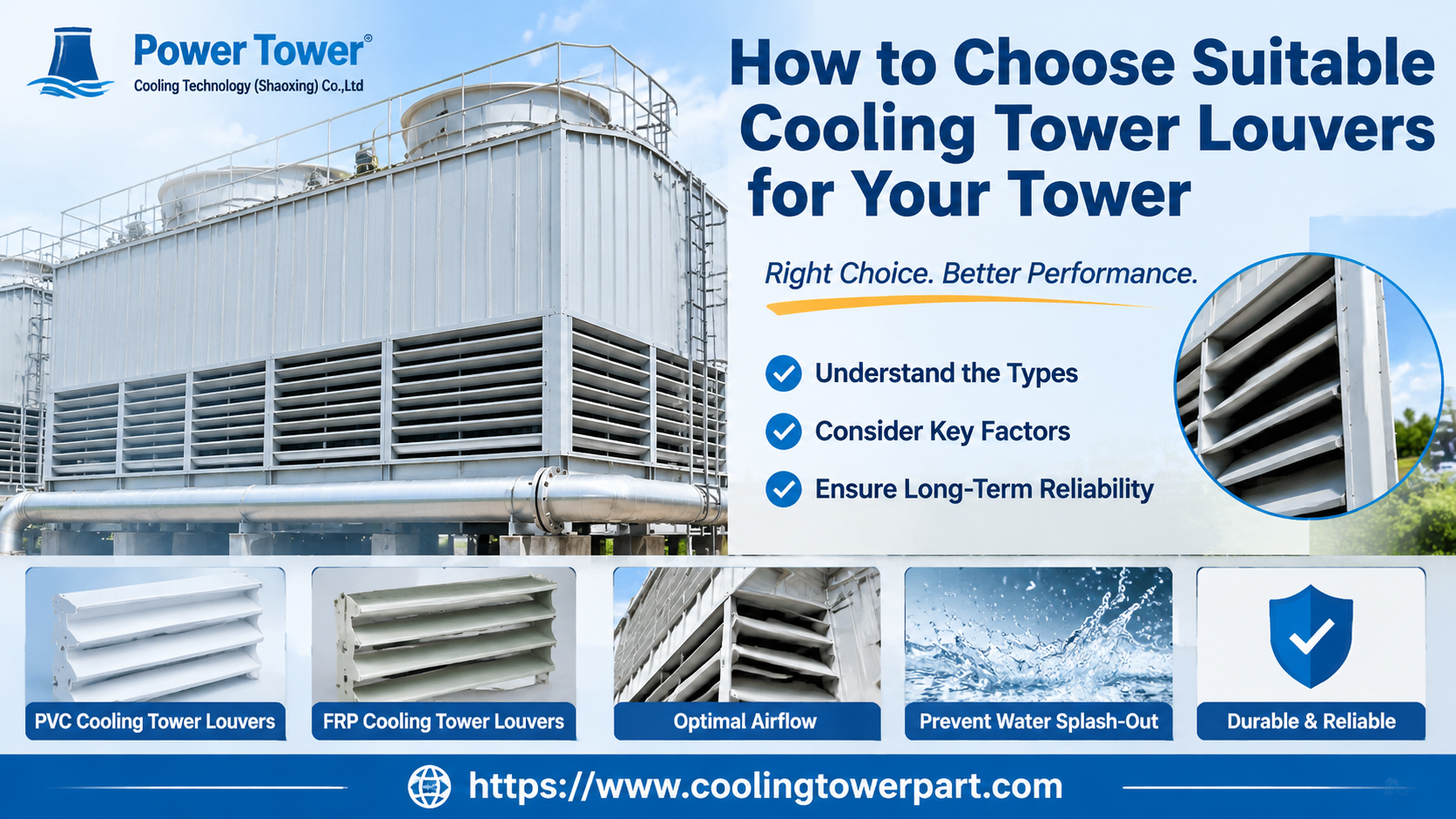
Cooling tower performance depends on more than just the fan, motor, and fill media. Some smaller components also play an important role in keeping the entire system operating properly. Cooling tower louvers are a good example.
Although louvers may look like simple panels installed around the air inlet, they perform several important jobs. They help control incoming airflow, reduce water splash-out, limit the entry of debris, and protect internal cooling tower components. Choosing the wrong louvers, however, can create unnecessary maintenance problems and affect cooling tower operation.
So, how do you choose suitable cooling tower louvers for your tower?
The answer depends on several factors, including cooling tower design, dimensions, material, blade structure, operating conditions, and maintenance requirements. In this guide, we will explain what to look for when selecting cooling tower louvers and how to avoid common purchasing mistakes.
Whether you are replacing damaged louvers or sourcing components for a new cooling tower, this article will help you make a more informed decision.
1. What Are Cooling Tower Louvers?
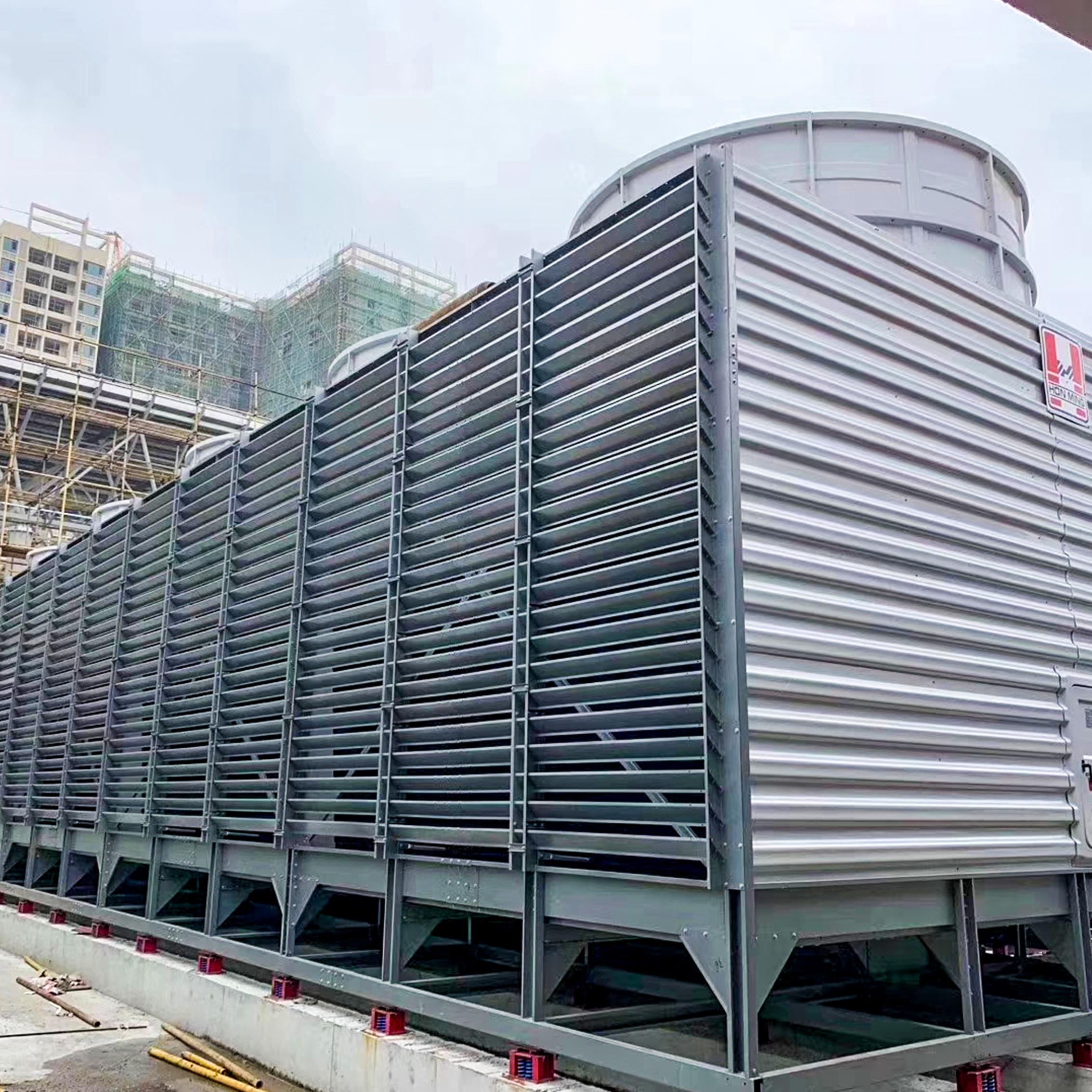
Cooling tower louvers are specially designed panels installed at the air inlet of a cooling tower. They usually consist of a series of angled blades arranged in a frame. Their main purpose is to allow air to enter the tower while helping prevent circulating water from escaping.
In many cooling tower designs, air enters through openings near the lower section or side walls. The louvers cover these openings and guide incoming air toward the fill section.
Unlike ordinary ventilation grilles, cooling tower louvers must work in a wet and demanding environment. They are regularly exposed to circulating water, humidity, temperature changes, sunlight, and sometimes chemicals used in water treatment.
That is why choosing louvers based only on appearance or price is not a good idea. Their design and material must match the actual operating conditions of the tower.
1.1 How Cooling Tower Louvers Work
The working principle is relatively straightforward.
As the cooling tower fan operates, it creates airflow through the tower. Outside air passes through the louver openings and moves toward the fill media, where heat transfer takes place between the air and circulating water.
At the same time, the angled louver blades help redirect water droplets that move toward the air inlet. Some droplets hit the blade surfaces and drain back into the tower rather than being carried outside.
This creates two important functions:
A good louver design must balance both functions. If the blades are too restrictive, airflow may be affected. If the structure does not retain water effectively, water loss may increase.
1.2 Where Are Louvers Installed?
Cooling tower louvers are commonly installed at the air inlet openings of cooling towers.
Depending on the tower structure, they may be positioned:
Along the side walls of crossflow cooling towers.
Around the lower air inlet section of certain tower designs.
On replacement panels in existing cooling tower structures.
In modular sections designed for easier installation and maintenance.
The exact installation position depends on the cooling tower manufacturer and model. Before purchasing replacement louvers, always confirm where the original panels are installed and how they are connected to the tower structure.
2. Why Are Cooling Tower Louvers Important?
Cooling tower louvers may not receive as much attention as cooling tower fill or fans, but they contribute to several aspects of system operation.
Let's look at their main functions.
2.1 Prevent Water Splash-Out
One of the most important functions of cooling tower louvers is reducing water splash-out.
During operation, circulating water falls through the tower and is distributed over the fill media. Water movement, splashing, and airflow can cause droplets to travel toward the air inlet openings.
Without suitable louvers, some of these droplets may escape from the tower.
Over time, unnecessary water loss can increase makeup water requirements. It may also create wet areas around the cooling tower, which can affect nearby equipment and walkways.
Properly designed louvers help redirect water droplets back into the tower. This supports better water retention and helps maintain a cleaner operating area.
However, louvers should not be confused with drift eliminators. Drift eliminators are specifically designed to remove entrained water droplets from the exhaust air leaving the tower. Louvers primarily manage the air inlet and help reduce water splash-out.
2.2 Improve Airflow Distribution
Airflow is essential to cooling tower heat rejection.
The fan creates the pressure difference that moves air through the cooling tower. Louvers provide an organized entrance for this air and help guide it toward the internal cooling section.
Poorly selected louvers can create unnecessary resistance or interfere with the intended airflow path.
For example, if the louver opening area is too small, the air may have difficulty entering the tower. This can affect the overall air distribution and may contribute to uneven operating conditions.
Suitable louvers should therefore provide enough open area for the cooling tower's required airflow.
2.3 Reduce Debris and Sunlight Entry
Cooling towers are often installed outdoors. Their air inlet openings can be exposed to leaves, dust, insects, and other airborne debris.
Louvers provide a degree of protection by reducing direct access to the internal structure. They may also help limit direct sunlight entering certain areas of the tower.
This can be useful in reducing unwanted exposure of internal components. However, louvers are not a complete substitute for screens or other protective devices where finer debris control is required.
3. Understand the Different Types of Cooling Tower Louvers
Before choosing a product, you should understand the main louver types available on the market.
The most suitable option depends on your tower design, required dimensions, operating environment, and maintenance preferences.
3.1 PVC Cooling Tower Louvers
PVC cooling tower louvers are widely used in industrial cooling tower applications.
PVC is a thermoplastic material that can be manufactured into different blade profiles and panel configurations. It is relatively lightweight, making transportation and installation easier than with some heavier materials.
Common advantages include:
Lightweight construction.
Resistance to moisture and corrosion under suitable conditions.
Flexible manufacturing options.
Relatively easy handling and installation.
Availability in different colors, profiles, and dimensions.
PVC louvers can be a practical choice for many conventional cooling tower applications.
However, not all PVC materials have identical performance. Material formulation, UV stabilization, operating temperature, and exposure to chemicals can influence service life.
When purchasing PVC louvers, ask the supplier for information about the material grade and its suitability for your operating conditions.
3.2 FRP Cooling Tower Louvers
FRP stands for fiberglass-reinforced plastic. It combines a resin matrix with reinforcing glass fibers to create a composite material.
FRP louvers may be suitable for cooling towers operating in environments where corrosion resistance and structural strength are important.
Their potential advantages include:
Good corrosion resistance when the resin system is correctly selected.
High strength-to-weight performance.
Design flexibility.
Suitability for certain demanding industrial environments.
FRP is not automatically the best option for every cooling tower. Its suitability depends on the resin system, manufacturing quality, structural design, and exposure conditions.
For projects involving aggressive chemicals or unusual temperatures, confirm the material's chemical compatibility with the manufacturer before ordering.
3.3 Fixed and Removable Louvers
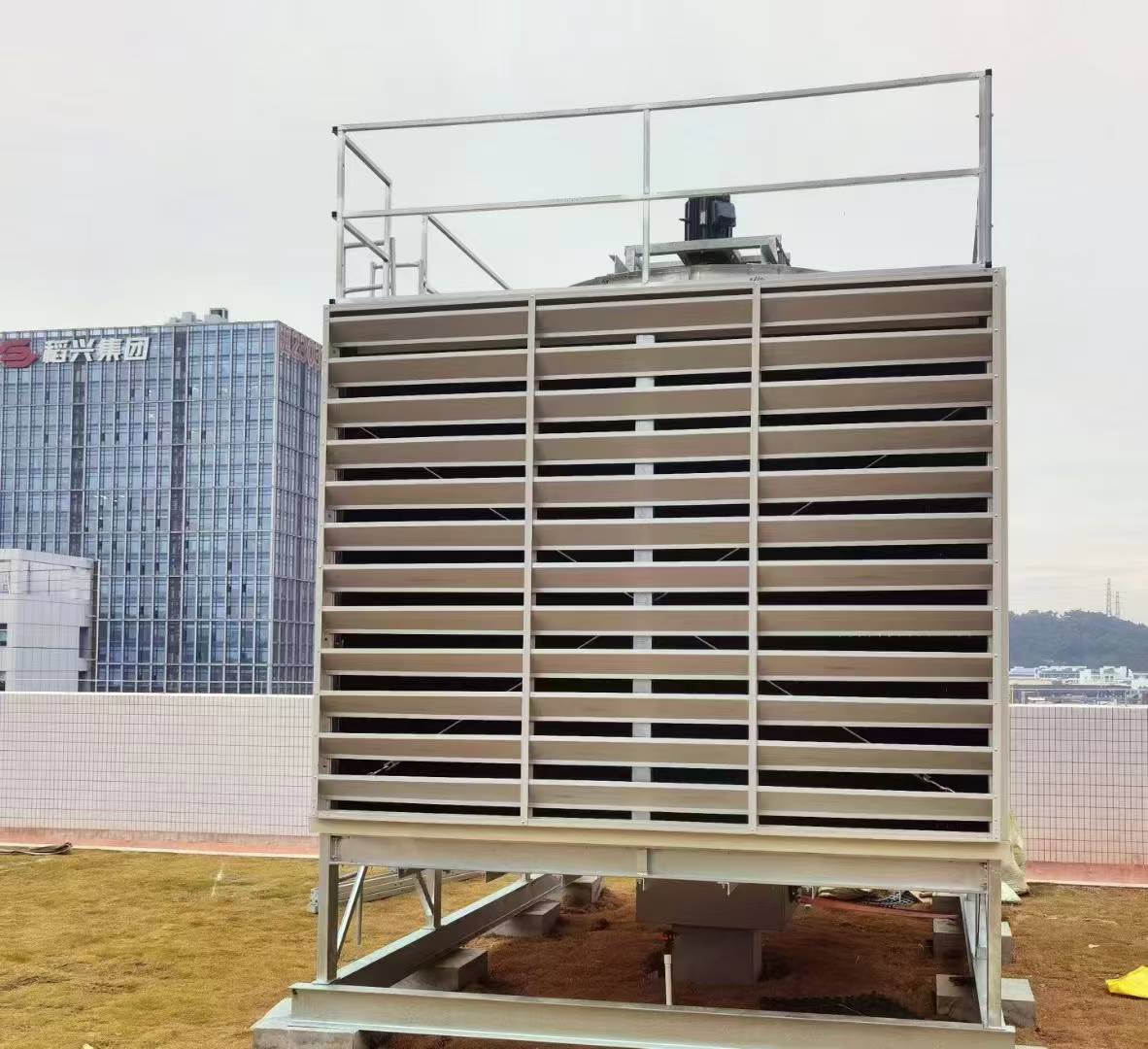
Cooling tower louvers can also be classified by their installation structure.
Fixed louvers are permanently installed or secured in position. They are commonly used when the tower design does not require frequent panel removal.
Removable louvers are designed so that individual panels or sections can be taken out when necessary. This can make inspection, cleaning, and replacement more convenient.
Which one should you choose?
If the cooling tower is installed in an area where maintenance access is limited, removable sections may offer practical advantages. If the structure is simple and the panels are not expected to require frequent removal, fixed louvers may be sufficient.
Always check the original tower design before changing the installation arrangement.
4. Key Factors to Consider When Choosing Cooling Tower Louvers
Now let's move to the most important part: selecting the right louvers for your cooling tower.
A suitable product should fit the tower physically and work properly under its actual operating conditions.
4.1 Cooling Tower Type and Structure
Start by identifying your cooling tower type.
Crossflow and counterflow cooling towers have different internal airflow arrangements. In a crossflow tower, air generally moves horizontally through the fill section while water flows downward. In a counterflow tower, air and water move in opposite directions.
These structural differences influence the location, size, and configuration of air inlet openings.
For this reason, do not assume that louvers designed for one cooling tower model will fit another.
Before ordering, confirm:
Cooling tower type.
Tower manufacturer and model.
Air inlet location.
Existing louver installation method.
Required panel configuration.
If you are unsure, provide photographs of the existing louvers and installation area to the supplier.
4.2 Louver Size and Dimensions
Correct dimensions are essential when replacing cooling tower louvers.
Even a small measurement difference can create installation difficulties. Panels that are too large may not fit the frame, while undersized panels can leave gaps around the edges.
Measure the following dimensions carefully:
Panel width: The horizontal dimension of each louver panel.
Panel height: The vertical dimension from one edge to the other.
Panel thickness: The overall thickness of the panel or blade assembly, depending on the design.
Blade dimensions: The width, depth, and profile of individual blades.
Installation dimensions: The available frame opening, mounting position, and connection details.
Do not rely only on the outside dimensions of an old panel. Damaged or deformed louvers may no longer represent the original design dimensions.
Whenever possible, use the original product drawing or confirm the dimensions with the cooling tower manufacturer.
4.3 Blade Design and Spacing
The shape and spacing of louver blades influence how air and water move through the panel.
Blades that are positioned too closely together may restrict the available airflow area. On the other hand, blades that are too widely spaced or have an unsuitable angle may provide less effective water splash protection.
A suitable design should consider:
There is no single blade arrangement that works best for every cooling tower.
The correct design depends on the tower's airflow requirements, water distribution, and installation geometry. For replacement projects, matching the original louver profile is often a sensible starting point unless there is a clear engineering reason to change it.
4.4 Material and Operating Environment
The operating environment has a direct effect on louver service life.
For example, a cooling tower installed in a coastal area may face salt exposure. A tower used in a chemical plant may be exposed to airborne chemicals or treated circulating water. Outdoor equipment may also experience prolonged sunlight and temperature fluctuations.
When selecting materials, consider:
Moisture exposure: The material should be suitable for continuous operation in a humid environment.
Chemical exposure: Confirm compatibility with the chemicals and water treatment conditions present at the site.
UV exposure: Outdoor louvers should have appropriate resistance to sunlight and weathering.
Temperature: Check the recommended operating temperature range of the material.
Mechanical strength: The panels should withstand expected handling, installation, and operating loads.
For many standard applications, PVC louvers are worth considering. For some more demanding environments, FRP may be appropriate. The final decision should be based on verified material properties rather than assumptions.
4.5 Maintenance and Replacement Requirements
A louver is not a component that should be selected only for its initial purchase price.
Think about its entire service life.
Can the panels be removed easily? Can damaged sections be replaced individually? Will dirt and deposits accumulate between the blades? Is the material suitable for the cleaning methods used at your facility?
These questions matter because maintenance costs can add up over time.
If your cooling tower operates continuously or is difficult to access, a design that simplifies inspection and replacement may provide long-term value.
5. How to Match Louvers with Cooling Tower Performance
Choosing louvers is not simply a matter of finding panels that fit the opening. They must also work with the cooling tower's airflow and water distribution systems.
5.1 Avoid Excessive Airflow Resistance
The cooling tower fan must move the required volume of air through the tower.
If the louvers create excessive resistance, the fan may need to operate under a different system pressure condition. Depending on the fan and system design, this can influence airflow, power consumption, and cooling performance.
When evaluating a louver design, consider its free area and pressure-drop characteristics.
The open area should be sufficient for the required airflow. Avoid choosing a panel with a very restrictive blade arrangement simply because it appears to provide better splash protection.
For critical applications, ask the manufacturer or cooling tower designer to review the louver design against the tower's airflow requirements.
5.2 Balance Water Retention and Air Intake
This is the central challenge in louver selection.
A design that focuses only on water retention may restrict airflow. A design that focuses only on maximizing open area may allow more water droplets to escape.
A suitable louver needs to balance both requirements.
Think of it as a doorway: it should be wide enough for people to move through comfortably, but it should still provide the protection the building needs.
For cooling towers, this means selecting a blade profile, angle, and spacing that support air intake while helping redirect water droplets.
The best solution is the one that matches the actual cooling tower design, not necessarily the one with the most complicated blade structure.
6. Common Mistakes When Buying Cooling Tower Louvers
Many purchasing problems happen because buyers focus on only one or two product specifications.
Here are some mistakes worth avoiding.
Choosing by price alone. A low-cost product may have unsuitable material properties, inconsistent dimensions, or poor manufacturing quality.
Ignoring the original louver profile. Two panels may have similar outside dimensions but completely different blade structures.
Using the wrong material. PVC and FRP have different characteristics. The material must match the operating environment.
Overlooking airflow requirements. A panel that fits perfectly may still create excessive airflow resistance.
Not checking installation details. Mounting methods, frame dimensions, and panel connections are just as important as the louver itself.
Ordering without confirming quantities. For large towers, the number of panels and their arrangement should be checked before production.
A few minutes spent confirming specifications can prevent unnecessary delays and replacement costs.
7. How to Measure Your Existing Cooling Tower Louvers
If you are purchasing replacement louvers, accurate measurements will help the supplier identify the correct product.
Use this practical checklist before requesting a quotation.
Record the cooling tower manufacturer and model, if available.
Identify whether the tower is crossflow or counterflow.
Measure the width and height of the existing louver panel.
Record the panel thickness and blade dimensions.
Measure the blade spacing and approximate blade angle.
Photograph the front and side profiles.
Photograph the installation frame and connection points.
Estimate the total number of panels required.
Record any special operating conditions, such as chemical exposure or high temperatures.
If the old louvers are broken or deformed, take measurements from several undamaged sections.
Providing clear photographs is particularly useful. A supplier can often identify structural details from side-profile images that are difficult to explain through written measurements alone.
8. Installation and Maintenance Tips
Even high-quality cooling tower louvers need correct installation and regular inspection.
Poor installation can leave gaps, create loose panels, or interfere with the intended airflow path.
8.1 Correct Installation Practices
Before installation, check that the supporting frame is clean, stable, and free from major deformation.
Compare the new panels with the original dimensions and confirm that the mounting points align.
During installation:
Follow the cooling tower manufacturer's installation instructions.
Confirm that each panel is correctly oriented.
Secure all mounting connections.
Avoid forcing panels into an undersized frame.
Check that adjacent sections fit together properly.
Confirm that there are no unnecessary gaps around the installation area.
After installation, inspect the panels for movement or looseness.
For safety, maintenance personnel should follow site procedures for working around cooling tower fans, electrical equipment, elevated structures, and wet surfaces. The fan and associated equipment should be safely isolated before personnel enter hazardous areas.
8.2 Routine Cleaning and Inspection
Cooling tower louvers are exposed to outdoor conditions and circulating water. Over time, dirt, algae, scale, and other deposits may accumulate on their surfaces.
Regular inspection helps identify problems before they become serious.
During maintenance, check for:
Cracks or broken blades.
Loose mounting connections.
Deformation or panel movement.
Heavy dirt or biological deposits.
Blocked airflow openings.
Signs of material deterioration.
Gaps between adjacent panels.
Clean the louvers using methods compatible with the material. Avoid aggressive chemicals or cleaning tools that may damage PVC or FRP surfaces.
The inspection frequency should reflect the cooling tower's operating environment, water quality, and maintenance plan.
9. When Should You Replace Cooling Tower Louvers?
Cooling tower louvers do not necessarily need replacement at the same time as the fill media or fan system. Their condition should be evaluated separately.
However, certain signs indicate that replacement may be necessary.
Broken or missing blades: Damaged blades can reduce the panel's ability to manage water splash-out and may affect airflow.
Severe deformation: Warped panels may no longer fit the frame correctly.
Material deterioration: Cracking, brittleness, or other damage can indicate that the material has reached the end of its useful service life.
Persistent installation gaps: If panels can no longer be secured properly, replacement may be a better option than repeated temporary repairs.
Repeated maintenance problems: If the same sections continue to fail, review whether the material or design is suitable for the operating environment.
Before replacing the entire louver system, inspect the supporting structure. A damaged frame may also need repair to ensure that new panels can be installed securely.
10. Why Work with an Experienced Cooling Tower Parts Manufacturer?
Choosing a suitable supplier is just as important as choosing the product itself.
An experienced cooling tower parts manufacturer should understand the relationship between louver dimensions, blade design, material selection, and cooling tower structure.
Instead of simply selling a standard panel, a capable supplier should help confirm whether the product matches your application.
When evaluating a supplier, consider the following points:
Does the company understand different cooling tower structures?
Can it provide the required material and dimensional information?
Can it manufacture or supply replacement panels to match existing specifications?
Does it have a clear process for confirming drawings and measurements?
Can it provide technical assistance during product selection?
Are product quality and delivery arrangements clearly communicated?
You should also ask for samples, drawings, or relevant product information when necessary.
A reliable supplier helps reduce the risk of ordering incompatible parts and makes future maintenance planning easier.
11. Cooling Tower Louvers from Power Tower Cooling Technology
Power Tower Cooling Technology (Shaoxing) Co.,Ltd specializes in cooling tower components and related replacement parts.
For customers looking for cooling tower louvers, selecting the correct product involves more than matching the outside dimensions. Material, blade profile, installation structure, and operating conditions all need to be considered.
Power Tower focuses on cooling tower parts and can help customers identify suitable product specifications for their replacement or project requirements.
Whether you are maintaining an existing cooling tower or preparing a new installation, it is useful to provide the following information when making an inquiry:
Cooling tower type and model.
Existing louver dimensions.
Required material, if known.
Product photographs or technical drawings.
Estimated quantity.
Special operating conditions.
These details help make product communication more accurate and reduce the possibility of ordering unsuitable components.
To learn more about cooling tower louvers and other cooling tower parts, visit:
Power Tower Cooling Technology (Shaoxing) Co.,Ltd
Website: https://www.coolingtowerpart.com
12. Frequently Asked Questions About Cooling Tower Louvers
12.1 What Is the Main Function of Cooling Tower Louvers?
The main function is to allow air to enter the cooling tower while helping prevent circulating water from splashing out through the air inlet. Louvers can also reduce the entry of larger debris and limit direct sunlight exposure to some internal areas.
12.2 Are Cooling Tower Louvers and Drift Eliminators the Same?
No. They have different positions and functions.
Louvers are generally installed at the air inlet and help control incoming air and water splash-out. Drift eliminators are installed in the exhaust air path and are designed to capture water droplets carried by the outgoing air.
Both components help manage water loss, but they are not interchangeable.
12.3 Which Material Is Better for Cooling Tower Louvers: PVC or FRP?
Neither material is automatically better for every application.
PVC is lightweight and can be a practical choice for many conventional cooling towers. FRP may be suitable where additional structural strength or specific corrosion resistance is required.
The best choice depends on the material grade, operating temperature, chemical exposure, UV conditions, and tower design.
12.4 Can I Replace Old Louvers with a Different Design?
Possibly, but you should not change the design without checking compatibility.
Different blade angles, spacing, and open areas can influence airflow resistance and water retention. If you want to use a different design, consult the cooling tower manufacturer or a qualified parts supplier first.
12.5 How Do I Know Which Louver Size I Need?
Start with the original product drawings or measure the existing panels. Record the width, height, thickness, blade profile, spacing, and installation details.
Photographs of the front, side, and mounting structure can also help the supplier identify the correct replacement.
12.6 How Often Should Cooling Tower Louvers Be Cleaned?
There is no universal cleaning interval.
The required frequency depends on local environmental conditions, water quality, airborne dust, and the cooling tower's operating schedule. Inspect the louvers regularly and clean them when deposits begin to restrict openings or affect their condition.
12.7 Can Damaged Cooling Tower Louvers Affect Cooling Performance?
Yes. Damaged, missing, or incorrectly installed louvers may affect air entry and water splash-out control. If panels are severely deformed or openings are blocked, airflow distribution may also be affected.
Inspect the louver system when investigating unusual water loss or airflow problems.
13. Conclusion
Choosing suitable cooling tower louvers requires more attention than simply checking their size and price.
You need to consider the cooling tower type, installation dimensions, blade profile, material, airflow requirements, water retention, and maintenance conditions. A suitable design should fit the tower properly while supporting the airflow and water-management requirements of the system.
For replacement projects, accurate measurements and clear photographs are valuable starting points. They help suppliers understand the existing structure and recommend compatible products.
If you are sourcing cooling tower louvers or other replacement components, Power Tower Cooling Technology (Shaoxing) Co.,Ltd can be a point of contact for your product requirements.
Visit https://www.coolingtowerpart.com to explore cooling tower parts and discuss your application with the supplier.
The right louver may look like a small detail, but choosing it correctly can make cooling tower maintenance more straightforward and help keep the system operating as intended.


