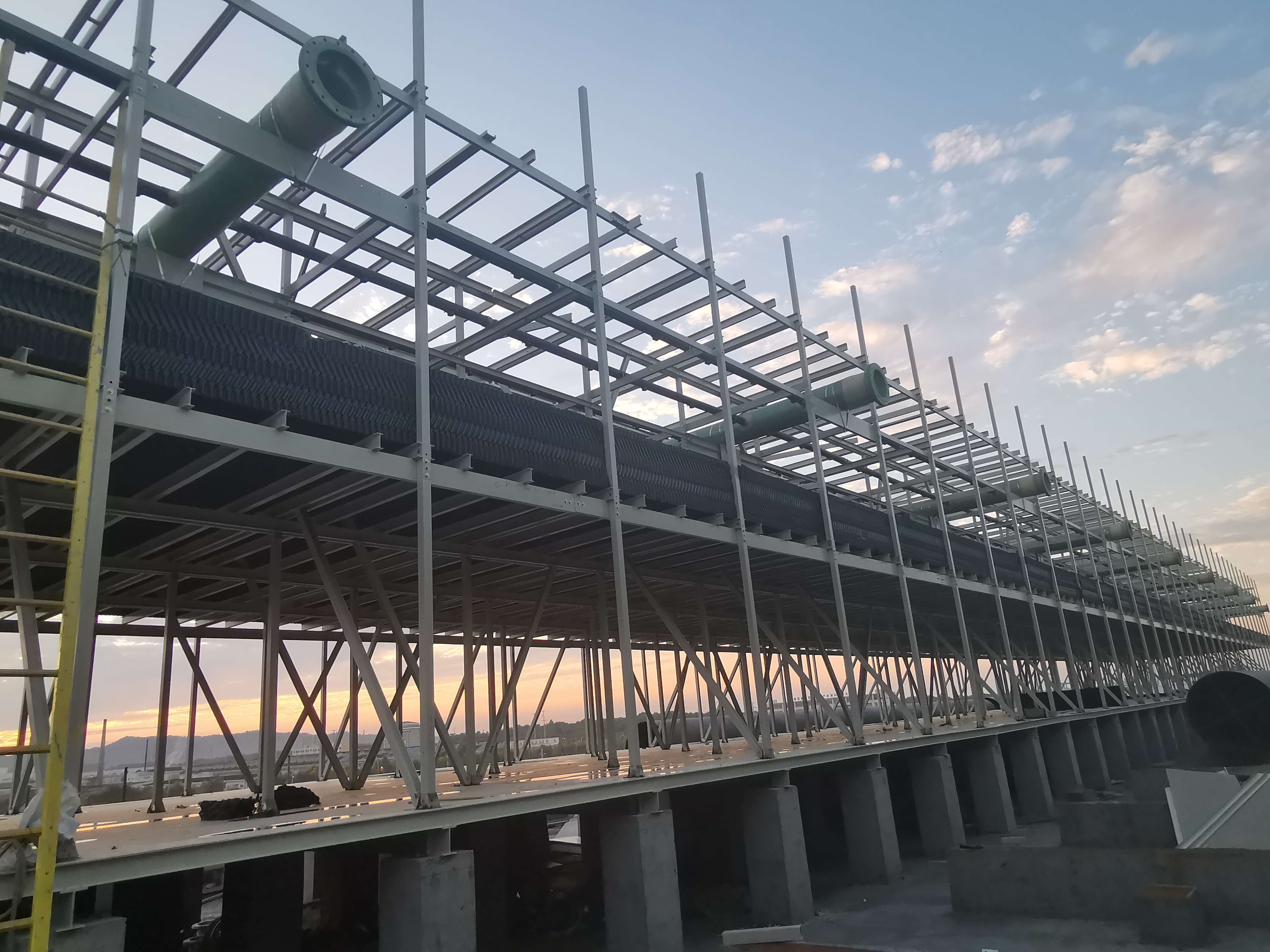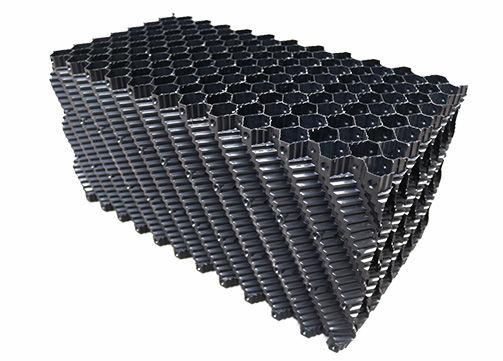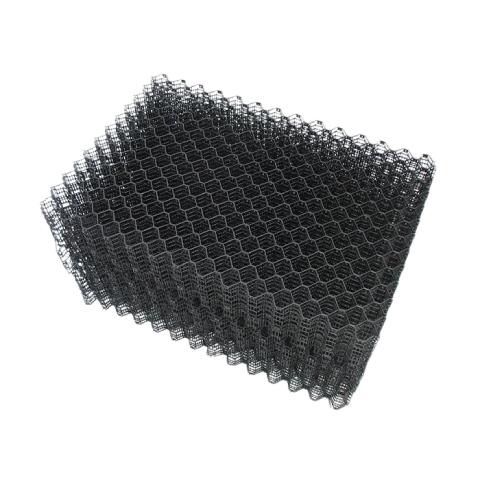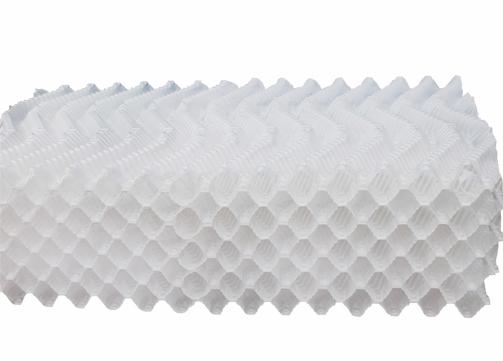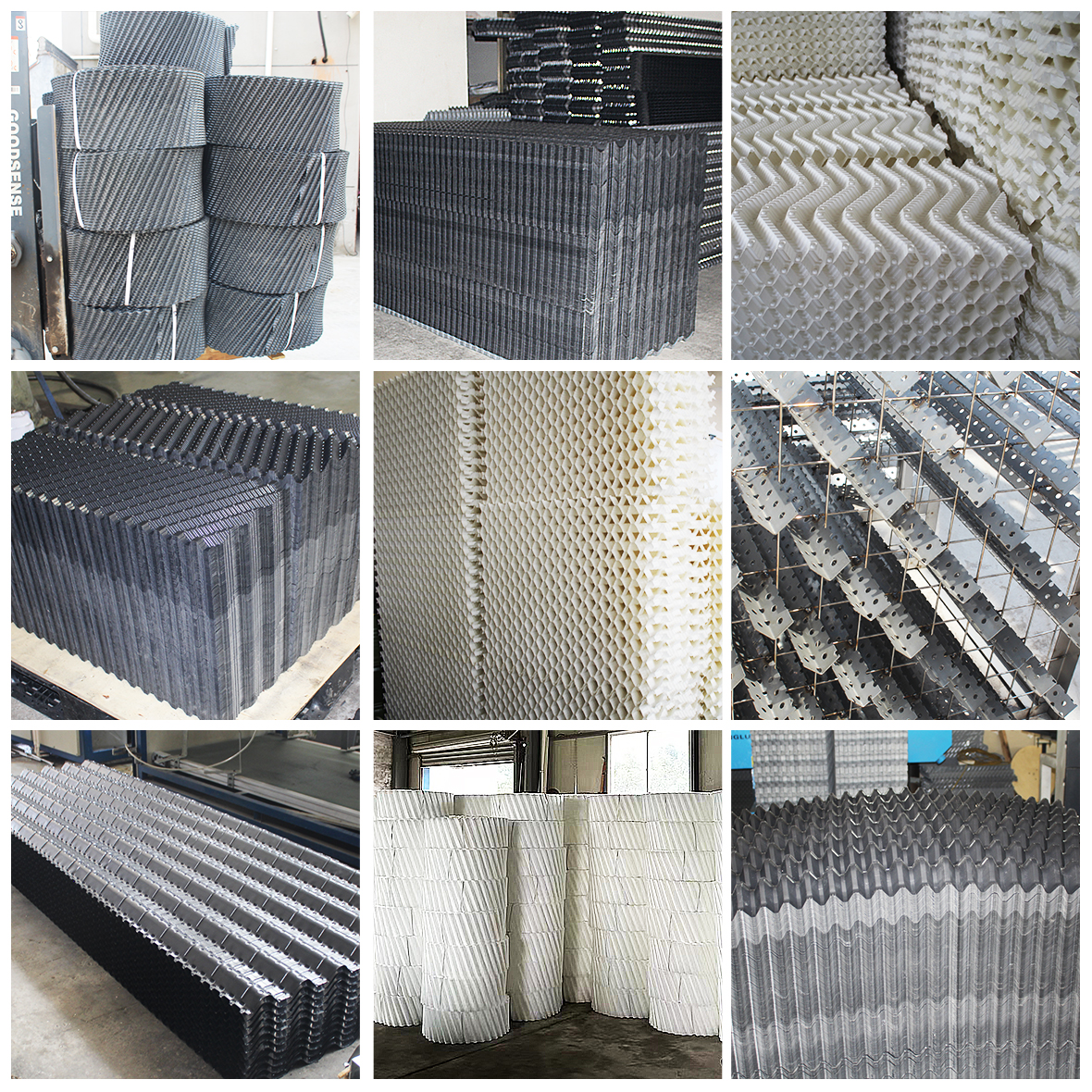
Cooling tower fill is one of the most important components inside an evaporative cooling tower. Although it may look like a simple plastic sheet, grid, or assembly of splash bars, cooling tower fill has a major impact on heat transfer, cooling capacity, water consumption, and operating efficiency.
For cooling tower owners, operators, engineers, and maintenance teams, choosing the right fill can make a significant difference in tower performance. This guide explains what cooling tower fill is, how it works, the main types and materials, and what to consider when buying or replacing it.
What Is Cooling Tower Fill?
Cooling tower fill media is the internal material designed to increase contact between circulating water and air. It creates a large surface area where heat can transfer from the warm water to the moving air.
Instead of allowing water to fall directly from the distribution system to the cold-water basin, fill breaks the water into thin films or droplets and keeps it in contact with air for a longer period.
The basic principle is simple:
More effective air-water contact = better heat transfer = improved cooling tower performance.
Cooling tower fills are commonly manufactured from PVC, PP, or other engineered plastics. The correct material depends on water quality, operating temperature, chemical conditions, and tower design.
How Does Cooling Tower Fill Work?
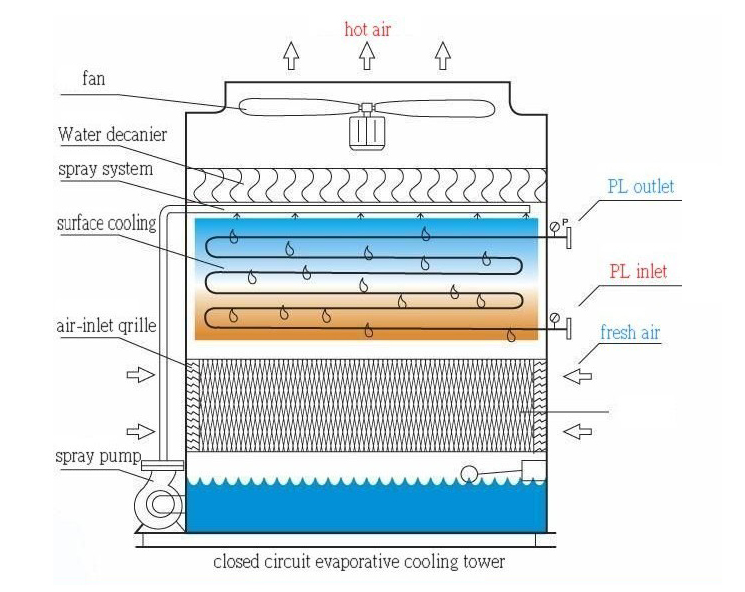
Warm process water enters the cooling tower through the water distribution system. It is distributed over the top of the fill.
As water moves downward through the fill, air moves across or upward through the same area. The fill creates a large wetted surface and increases the time available for heat and mass transfer.
A small amount of water evaporates into the air. This evaporation removes heat from the remaining water, reducing its temperature before it returns to the process.
The performance of cooling tower fill depends on several factors, including:
Water flow rate
Airflow rate
Fill surface area
Fill depth
Water distribution
Fill geometry
Operating temperature
Water quality
Fouling and blockage
A high-quality fill cannot compensate for poor water distribution or insufficient airflow, so the entire cooling tower system must work together.
Main Types of Cooling Tower Fill
There are two major categories of cooling tower fill: film fill and splash fill.
Film Fill
Film fill uses closely spaced sheets to create thin layers of flowing water. The large wetted surface allows efficient heat transfer within a relatively compact volume.
PVC film fill is widely used in counterflow and crossflow cooling towers.
Advantages include:
High heat-transfer efficiency
Large surface area
Compact installation
Lower fill volume for a given thermal duty
Good performance in relatively clean water
However, narrow channels can become blocked by scale, biological growth, dirt, or suspended solids. For dirty industrial water, the fill selection must be carefully evaluated.
Splash Fill
Splash fill works differently. Instead of forming a continuous water film, it repeatedly breaks falling water into droplets as the water hits splash bars, grids, or other elements.
Common splash-fill designs include:
Splash fill is often selected for applications where water contains more suspended solids or where fouling resistance is important.
PVC vs. PP Cooling Tower Fill
PVC and polypropylene are two common materials for cooling tower fill.
PVC Cooling Tower Fill
PVC fill is popular because it offers a combination of performance, availability, and cost effectiveness. PVC film fills are commonly used in HVAC and industrial cooling towers.
Typical benefits include:
The allowable operating temperature depends on the specific PVC formulation and fill design.
PP Cooling Tower Fill
PP fill can provide better temperature resistance than conventional PVC in applications with elevated water temperatures.
Polypropylene is also used extensively for splash fill and applications where chemical or fouling resistance is important.
When selecting PP or PVC, buyers should evaluate actual operating conditions rather than choosing material based only on price.
Why Cooling Tower Fill Needs Regular Maintenance
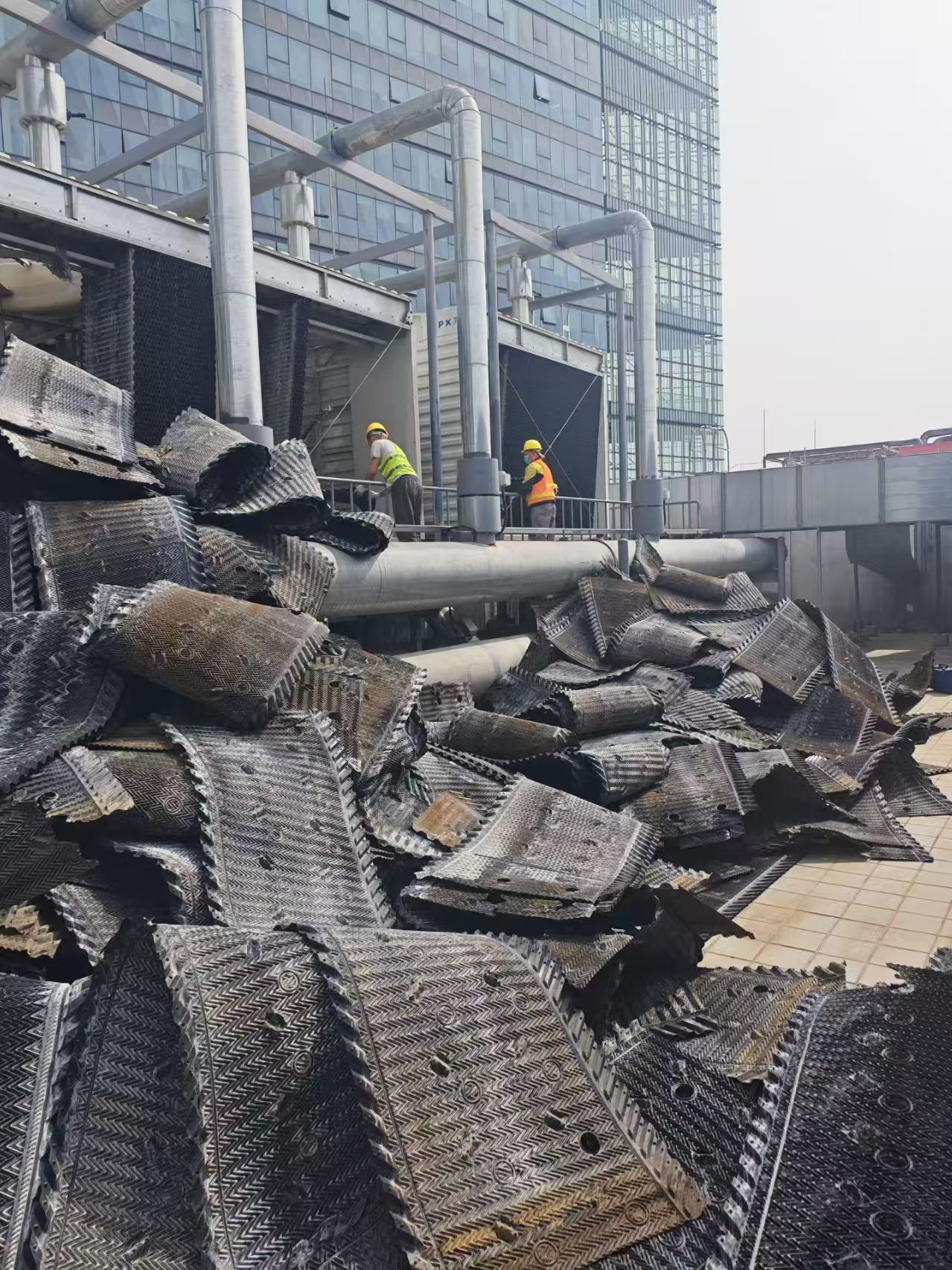
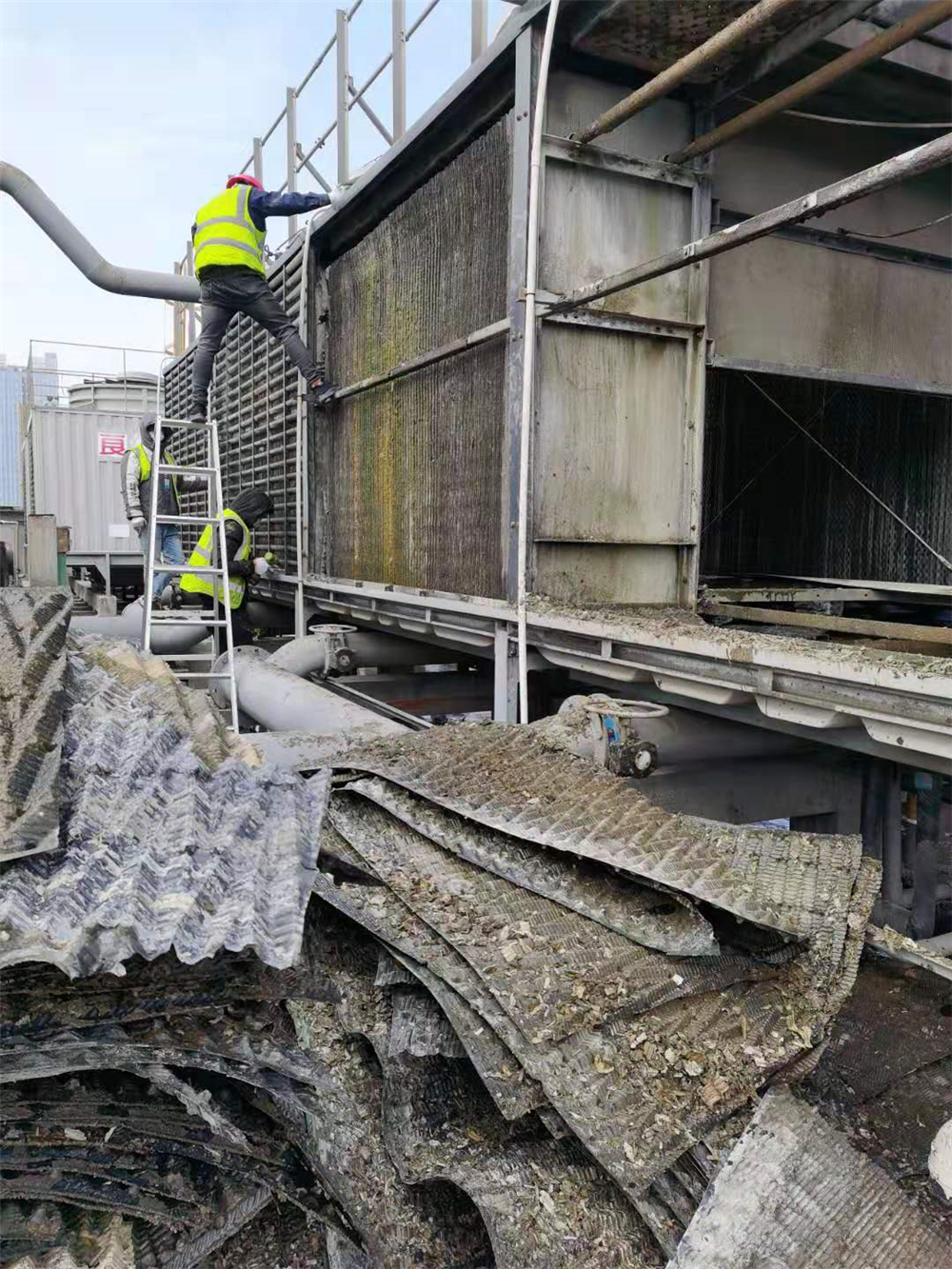
Even a high-quality cooling tower fill can lose performance if it becomes dirty or damaged.
Common problems include:
Blocked fill restricts water and airflow. This reduces effective heat-transfer area and can increase the cooling-water outlet temperature.
Regular inspection and appropriate cleaning can help maintain tower efficiency and extend fill service life.
When Should Cooling Tower Fill Be Replaced?
There is no universal replacement interval for all cooling tower fill. Actual service life depends on water quality, temperature, chemical treatment, operating hours, and mechanical conditions.
Consider replacing cooling tower fill when you notice:
Significant deformation
Cracked or brittle sheets
Persistent blockage
Severe scaling
Loss of structural integrity
Reduced cooling performance
Increased approach temperature
Excessive pressure drop
Difficulty cleaning the fill effectively
During a replacement project, inspect the water distribution system at the same time. Damaged nozzles, plugged pipes, or poor distribution can quickly damage new fill or reduce its performance.
How to Choose the Right Cooling Tower Fill
Choosing the right cooling tower fill media requires more than matching dimensions.
1. Identify the Cooling Tower Design
Determine whether the tower is:
Counterflow
Crossflow
Induced draft
Forced draft
Mechanical draft
The fill geometry should match the tower's airflow and water-distribution configuration.
2. Check Water Quality
Water with high levels of suspended solids or biological contamination may require a more fouling-resistant fill design.
For relatively clean water, high-efficiency film fill can be an excellent option.
3. Check Operating Temperature
The fill material must withstand the actual hot-water temperature. Do not assume that all PVC or PP fills have the same temperature capability.
4. Confirm Dimensions
Before ordering replacement fill, measure:
Accurate measurements reduce installation problems.
5. Consider Thermal Performance
A replacement fill should provide the required cooling capacity without creating excessive airflow resistance or water pressure requirements.
For larger projects, thermal design calculations should be performed rather than selecting fill based only on physical dimensions.
Cooling Tower Fill Replacement
Cooling tower fill replacement is often one of the most cost-effective ways to restore the thermal performance of an aging tower.
A replacement project normally involves:
Inspecting the existing fill.
Measuring the fill area and dimensions.
Checking water quality and operating conditions.
Selecting the appropriate fill type and material.
Inspecting fill supports and distribution components.
Removing damaged or fouled fill.
Installing the new fill correctly.
Checking water distribution and airflow.
Testing tower performance after installation.
For retrofit projects, compatibility with existing supports and water distribution is particularly important.
Cooling Tower Fill Buyer Checklist
Before purchasing replacement fill, ask the supplier:
What fill type is recommended for my tower?
Is it film fill or splash fill?
What material is used?
What is the maximum recommended operating temperature?
Is the fill suitable for my water quality?
What are the exact dimensions?
What thermal performance data is available?
Is the fill suitable for retrofit applications?
How will the fill be packaged and shipped?
Can the supplier provide technical drawings or installation guidance?
Comparing suppliers based only on unit price can lead to higher long-term operating costs.
Frequently Asked Questions
What is the purpose of cooling tower fill?
Cooling tower fill increases the contact area and contact time between air and water, improving evaporative heat transfer and helping the tower cool circulating water more effectively.
What is the difference between film fill and splash fill?
Film fill spreads water into thin films over large surfaces, while splash fill repeatedly breaks water into droplets. Film fill generally provides high heat-transfer efficiency, while splash fill can be advantageous in applications with higher fouling potential.
How long does cooling tower fill last?
Service life varies considerably. Water quality, operating temperature, chemical treatment, UV exposure, mechanical damage, and maintenance all affect fill life.
Can cooling tower fill be cleaned?
Yes. Depending on the material and contamination, cooling tower fill may be cleaned using appropriate mechanical or chemical methods. Cleaning procedures should avoid damaging the fill sheets or altering their geometry.
Is PVC or PP better for cooling tower fill?
Neither material is universally better. PVC is widely used for efficient film fill applications, while PP is often selected for higher-temperature or demanding splash-fill applications. The correct choice depends on operating conditions.
Final Thoughts
Cooling tower fill media plays a central role in the thermal performance of an evaporative cooling tower. Film fill and splash fill each have advantages, and PVC and PP provide different material characteristics for different operating conditions.
When selecting or replacing cooling tower fill, consider the tower design, water quality, operating temperature, thermal requirements, dimensions, and maintenance conditions. The right fill can improve heat transfer, restore cooling capacity, and support reliable long-term operation.
For cooling tower fill replacement projects, working with an experienced supplier can also help ensure that the fill geometry, material, dimensions, and installation method are appropriate for the existing tower.
Internal Links for Other CoolingTowerParts
Cooling Tower Fill
Cooling Tower Nozzles
Cooling Tower Drift Eliminators
Cooling Tower Louvers
Cooling Tower Fan Blades
Cooling Tower Motors