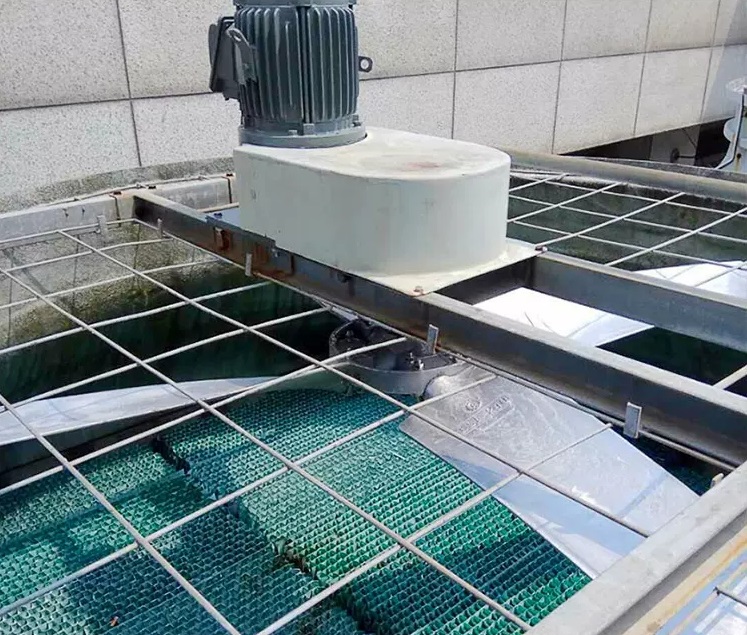
When Should You Replace Liangchi Cooling Tower Fan Blades?
Visible Physical Damage
Blade Cracks, Fractures and Deformation
Long-term exposure to humid air, circulating water corrosion, freezing weather, and foreign object impact often cause cracks and distortion on Liangchi ABS and aluminum fan blades. Cracked blades cannot be repaired safely. High-speed operation may lead to blade breakage and safety accidents, so full-set replacement is strongly recommended.
Scaling, Corrosion and Surface Perforation
Industrial circulating water contains acid, alkali and impurity sediments. After years of operation,
fan blades become thin, uneven and severely scaled. The aerodynamic profile is damaged, resulting in reduced cooling efficiency and unstable airflow.
Strong tower vibration and resonance during operation
Increased operating noise and periodic abnormal sounds
Higher motor current and frequent overload alarms
Obvious cooling capacity drop and poor heat dissipation
Failed fan dynamic balance and excessive vibration data
End of Service Lifespan
Standard ABS composite fan blades last 3–5 years, while aluminum alloy fan blades have a service life of 5–8 years. Even without visible damage, material fatigue will cause unbalanced rotation, so regular inspection and replacement are necessary.
How to Match the Correct Liangchi Fan Blade Model
Incorrect fan blade selection will cause airflow shortage, barrel collision, vibration and motor burnout. Accurate parameter matching is essential before replacement.
Confirm Your Cooling Tower Series
Compatible Liangchi Tower Models
This replacement guide applies to all mainstream Liangchi towers, including round LSF / WSF series and square LBCM / LDCM series, covering common specifications 050, 070, 080, 100, 120, 150, 180.
Core Parameters for Fan Blade Matching
Provide these four key data points to ensure 100% compatibility:
Overall fan blade diameter
Shaft hole type and shaft diameter (round hole / D-type hole)
Number of blades (3 / 4 / 5 blades)
Original blade installation angle
Fan Blade Material Selection for Replacement
High-Strength Aluminum Alloy Blades
Aluminum fan blades feature high temperature resistance, strong rigidity, anti-aging performance and excellent dynamic balance. They are widely used in chemical plants, high-temperature industrial water cooling and large-scale Liangchi cooling tower units.
ABS Composite Fan Blades
ABS blades are lightweight, low-noise and cost-effective. They are suitable for conventional HVAC and normal-temperature water cooling environments, but not recommended for long-term high-temperature industrial working conditions.
Why Universal Blades Are Not Recommended
Generic non-standard fan blades do not match Liangchi’s original aerodynamic design. After replacement, they easily cause severe vibration, increased power consumption and reduced cooling efficiency. Always use specially tailored Liangchi replacement blades.
Standard Liangchi Fan Blade Replacement Procedures
Pre-Replacement Safety Preparation
Completely shut down the equipment and cut off the main power supply
Set up safety working platform and wear full safety protection
Prepare torque wrench, anti-rust grease, bolts and gaskets
Take photos to record original blade angle and assembly status
Old Fan Blade Dismantling Steps
Clean the Fan Barrel Working Area
Remove dust, scale and debris inside the fan barrel to avoid foreign objects falling during replacement.
Loosen Fixing Bolts and Hub Assembly
Loosen blade-hub connection bolts evenly. Do not strike blades violently. Use rust remover for stuck hubs to protect the main shaft thread.
New Fan Blade Installation Standards
Clean rust and dirt on the hub contact surface
Adjust all blades to the same angle
Tighten bolts diagonally and evenly
Ensure uniform gap between blade edge and fan barrel
Post-Installation Test Run
Rotate the fan manually to check for stuck or collision issues
Run no-load test for 30 minutes
Check noise, vibration and motor current stability
Perform dynamic balance correction if vibration exceeds standard
Common Mistakes During Fan Blade Replacement
Replacing Only One Broken Blade
Wrong: Replace only the damaged single blade.
Correct: Always replace the full set. Old and new blades have different weights and balance levels, which will cause severe vibration, bearing damage and motor overheating.
Ignoring Dynamic Balance Calibration
Large-diameter Liangchi fan blades require balance testing after replacement. Assembly errors will lead to long-term tower resonance and shortened service life of the entire fan system.
Incorrect Blade Angle Adjustment
Excessive angle causes overload and high current; too small angle leads to insufficient airflow and poor cooling effect. Always follow the original factory standard angle data.
Recommended Consumable Parts to Replace Together
While the tower is shut down for fan blade replacement, it is recommended to inspect and replace the following wearing parts to avoid repeated downtime:
Fan bearings and oil seals
Hub bolts and anti-vibration gaskets
Motor coupling and buffer parts
Fan barrel sealing strips and access door gaskets
Daily Maintenance to Extend Fan Blade Service Life
Regularly clean blade scaling and sludge every quarter
Check and fasten loose bolts periodically
Take anti-freezing measures in winter to prevent blade cracking
Install water inlet filters to avoid foreign object impact
Conclusion
Liangchi cooling tower fan blades are the core components of the heat dissipation system. Timely replacement is required when cracks, deformation, vibration or airflow attenuation occur. Accurate model matching, full-set replacement, standardized installation and commissioning ensure long-term stable and efficient operation of Liangchi cooling towers for industrial and commercial cooling systems.
Keywords: Liangchi cooling tower fan blade replacement, Liangchi LSF fan blade, Liangchi aluminum fan blade, cooling tower fan maintenance, cooling tower vibration solution