How To Measure Industrial Cooling Tower Fan Blades Before Replacement
Views: 0 Author: Lisa Publish Time: 2026-11-24 Origin: Site
How to Measure Industrial Cooling Tower Fan Blades Before Replacement
Ordering mismatched cooling tower fan blades leads to poor fit, vibration, motor overload, blade rubbing and costly rework. Before removing old blades or submitting a replacement inquiry, maintenance and procurement teams need to capture accurate dimensions, mounting details and operational parameters. This step-by-step measurement guide works for FRP, aluminum and stainless steel axial fan blades used on Marley, BAC, Evapco and custom industrial cooling towers.
Pre-Measurement Safety & Prep
Always complete LOTO (Lockout-Tagout) and confirm the fan cannot start before any inspection or measurement.Tools you will need: Tape measure, digital inclinometer / pitch gauge, caliper, straightedge, marker, camera for reference photos, notebook, and angle finder.
Take clear photos first: full fan assembly, hub clamping structure, blade root, rotation direction, nameplate data and fan stack interior.
Clean heavy scaling and debris off blade surfaces so measurements are not distorted by buildup.
Record OEM model number, fan serial number, motor power, rated RPM and original specification sheet if available.
Step 1: Measure Fan Sweep Diameter (Most Important Dimension)
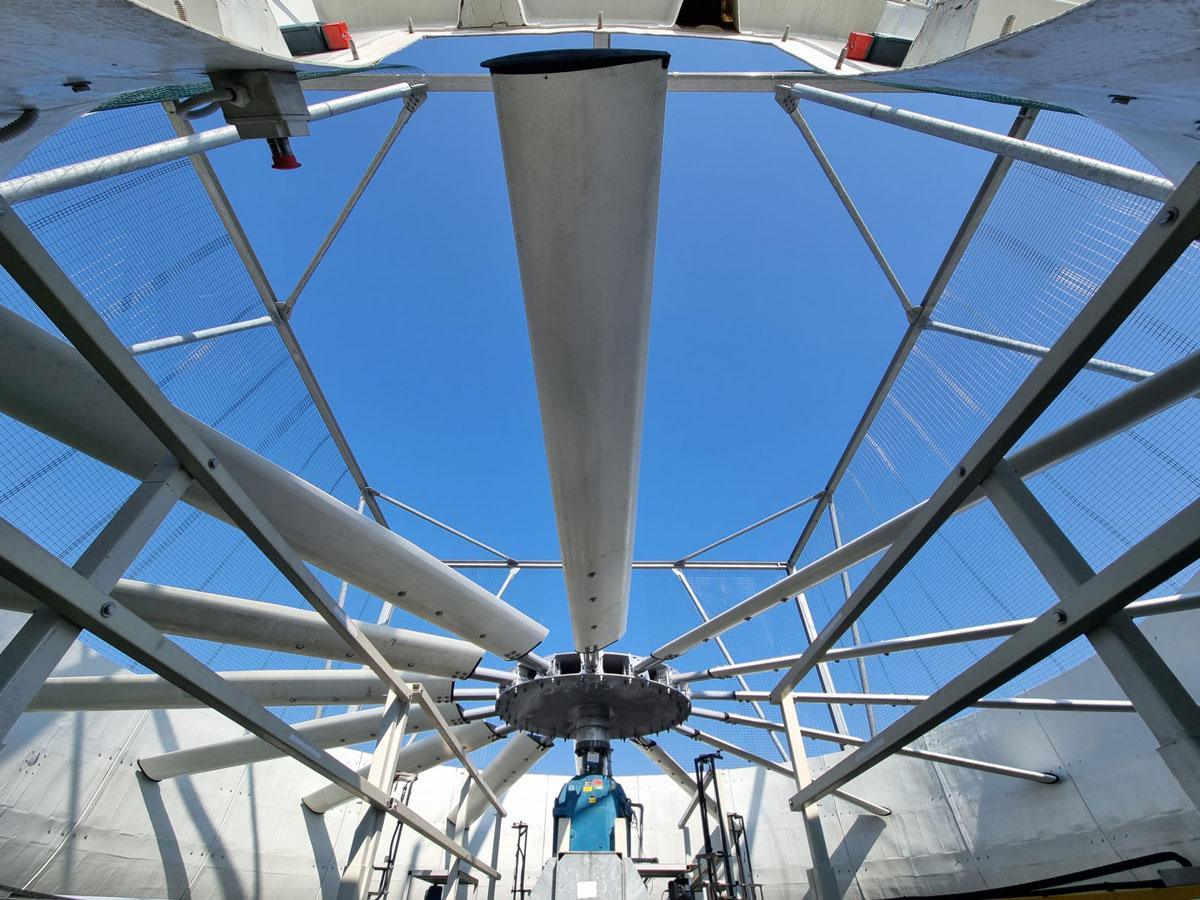
Fan diameter is the total sweep circle the blade tips trace during rotation.
Measure straight across from one blade tip to the tip of the opposite blade, through the exact center of the hub.
Take 2–3 readings across different blade pairs to average out bent or worn tip variations.
Note: Do not confuse blade length (hub to tip) with full sweep diameter. Many suppliers quote diameter in inches for cooling tower fan blades.
Record unit: inches or millimeters, and confirm if the supplier quotes nominal diameter or actual measured diameter.
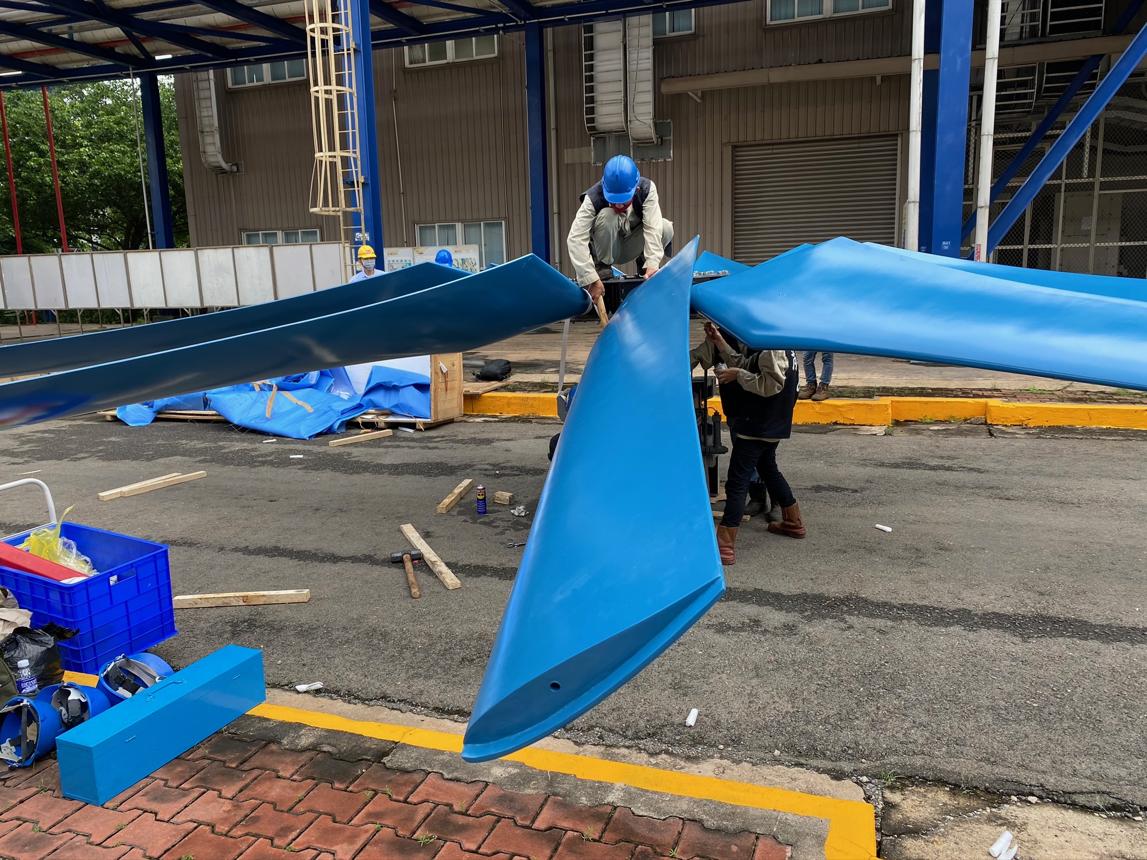
Blade construction: solid FRP or hollow FRP with drain holes.
Rotation direction: view from the top of the fan stack, clockwise or counterclockwise. Installing blades backward will reverse airflow.
Step 6: Record Operational Limits for the Supplier
Share these with your blade supplier to avoid performance mismatch:
Rated fan speed (RPM)
Motor power and voltage
Design airflow and static pressure
Service environment: inland, coastal salt atmosphere, chemical vapors, chlorine exposure
Whether you want an exact direct replacement or an upgrade (low noise, corrosion-resistant resin)
Measurement Checklist for Fan Blade Replacement
✅ Fan sweep diameter (average of multiple tip-to-tip readings) ✅ Blade root thickness, root width ✅ Hub bolt circle, hole size, hole count ✅ Number of blades per set ✅ Pitch angle at reference point ✅ Tip clearance range ✅ Rotation direction ✅ Blade material and airfoil style ✅ OEM tower model and fan nameplate data ✅ Photos of hub, blade root and full fan assembly
Common Mistakes When Measuring Fan Blades
❌ Measuring only one blade tip pair for diameter, ignoring bent blades
❌ Measuring pitch by eye without a pitch gauge
❌ Forgetting to record rotation direction
❌ Measuring the damaged blade root instead of measuring the hub cavity
❌ Mixing blade length with sweep diameter
❌ Skipping tip clearance measurement, leading to stack rubbing after installation
❌ Not recording operating RPM and motor load limits
Frequently Asked Questions
Q: Can I order replacement blades using only the tower model number?
A: It is helpful but not enough. Many tower models have multiple fan diameter, pitch and hub options. Physical measurements are still required for a guaranteed fit.
Q: What if several old blades are cracked or missing?
A: Measure the hub, fan stack internal diameter and reference the original drawing data. Do not size new blades only from one remaining worn blade.
Q: Is pitch angle measured the same way for FRP and aluminum blades?
A: Yes, the measurement method is identical. The pitch setting target depends on the fan curve and motor rating.
Q: Should I remove the old blades before measuring?
A: Measure first while the blades are mounted. This preserves pitch, clearance and orientation data before disassembly.
Conclusion
Precise measurement before replacement eliminates fit errors, vibration and performance issues for industrial cooling tower fan blades. Focus on sweep diameter, hub bolt pattern, pitch angle, tip clearance and rotation direction. Pair measurements with nameplate information and reference photos so your supplier can manufacture or supply a matched direct replacement blade set. For Marley, BAC, Evapco and custom retrofit fans, consistent measurement practices save downtime and ensure the new fan assembly runs smoothly after installation.
Recommended internal links for CoolingTowerPart.com: