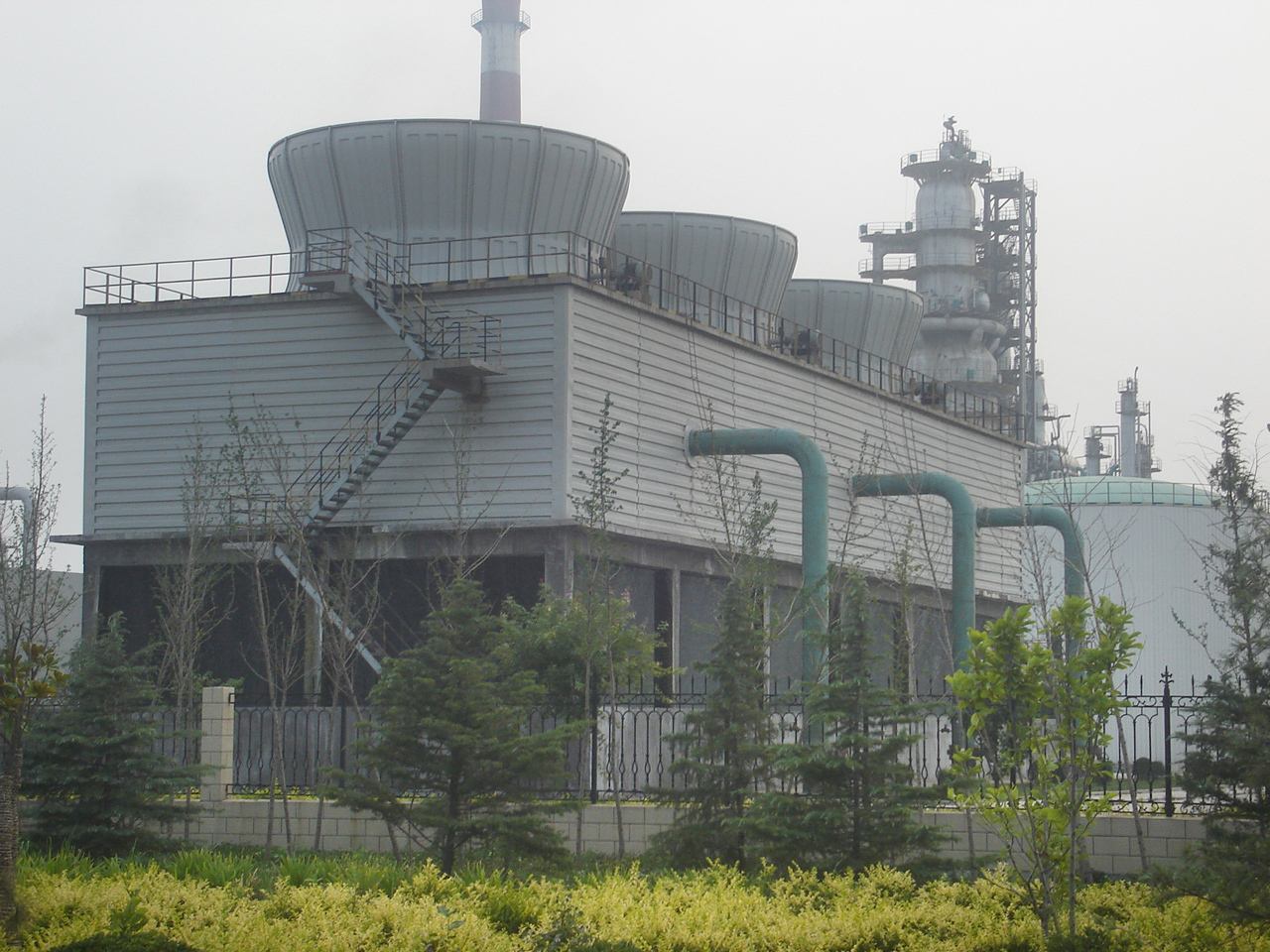
A fiberglass cooling tower fan stack is an important structural component of an industrial cooling tower. It surrounds the fan, guides airflow, reduces air recirculation, and helps improve overall cooling tower performance. Compared with traditional steel or concrete structures, a fiberglass reinforced plastic (FRP) fan stack offers lightweight construction, excellent corrosion resistance, and flexible design options.
For industrial facilities operating in demanding environments, selecting the right fiberglass cooling tower fan stack is essential for achieving reliable airflow, mechanical stability, and long-term operating efficiency.
This article explains the structural design, key components, performance factors, materials, and selection considerations for FRP cooling tower fan stacks.
1. What Is a Fiberglass Cooling Tower Fan Stack?
A fiberglass cooling tower fan stack is a cylindrical or slightly tapered air discharge structure installed above the cooling tower fan deck. It directs warm, moisture-laden air upward and away from the cooling tower.
Its primary functions include:
Guiding airflow toward the discharge opening.
Reducing air recirculation around the cooling tower.
Improving fan airflow efficiency.
Protecting the fan assembly.
Supporting stable airflow under different operating conditions.
FRP fan stacks are commonly used in industrial cooling towers, power plants, chemical processing facilities, petrochemical plants, and HVAC systems.
2. Structural Design of an FRP Cooling Tower Fan Stack
The structural design directly affects the fan stack's strength, stability, durability, and aerodynamic performance.
2.1 Cylindrical and Tapered Structures
Most fiberglass cooling tower fan stacks feature cylindrical or tapered designs.
Cylindrical fan stacks: Provide a relatively consistent airflow passage and straightforward installation.
Tapered fan stacks: Gradually change the airflow passage geometry to help control airflow and reduce unnecessary turbulence when properly engineered.
The appropriate shape depends on fan diameter, airflow requirements, tower configuration, and available installation space.
2.2 Wall Thickness and Reinforcement
FRP fan stack wall thickness is determined by structural loads, stack dimensions, environmental conditions, and installation requirements.
Reinforcement may include multiple fiberglass layers, structural ribs, and reinforced connection areas.
Important design considerations include:
Wind pressure and suction loads.
Fan-induced vibration.
Dead weight and mounting loads.
Transportation and installation stresses.
Temperature and chemical exposure.
Long-term material fatigue.
The wall thickness and reinforcement layout should be calculated rather than selected using a universal standard.
2.3 Flanges and Connection Design
Flanges connect the fiberglass fan stack to the cooling tower fan deck or supporting structure.
A reliable flange design should provide:
Uniform load distribution.
Adequate bolt spacing.
Sufficient connection strength.
Proper sealing against water leakage.
Resistance to vibration and loosening.
Reinforced flange sections help prevent cracking and deformation around bolted connections.
2.4 Aerodynamic Design
Aerodynamic design is essential for cooling tower fan stack performance.
The stack should provide a smooth airflow passage with minimal unnecessary resistance. Its diameter, height, outlet geometry, and transition shape should be coordinated with the fan design.
A properly designed fan stack can help reduce airflow disturbances and improve discharge direction.
3. Materials Used in Fiberglass Cooling Tower Fan Stacks
FRP is manufactured by combining reinforcing fibers with a resin matrix.
Common materials include:
| Material | Main Characteristics |
| Fiberglass reinforcement | Provides tensile strength and structural stability |
| Polyester resin | Economical and suitable for many industrial environments |
| Vinyl ester resin | Better chemical and corrosion resistance |
| Epoxy resin | High mechanical performance and strong bonding |
| UV-resistant gelcoat | Helps protect the exterior surface against sunlight |
The material selection depends on operating temperature, chemical exposure, humidity, UV radiation, and required service life.
For corrosive industrial environments, vinyl ester resin may be a suitable option.
4. Key Performance Factors
The performance of a fiberglass cooling tower fan stack depends on structural strength, aerodynamic efficiency, and environmental durability.
4.1 Airflow Efficiency
The fan stack helps guide air discharged by the cooling tower fan.
An appropriately designed stack minimizes unnecessary airflow restrictions and supports stable air discharge.
Important factors include:
Fan diameter and blade configuration.
Stack diameter and height.
Air outlet geometry.
Internal surface condition.
Alignment between the fan and stack.
Poor geometry or incorrect installation may increase airflow resistance and reduce system efficiency.
4.2 Structural Stability
A cooling tower fan stack must withstand wind loads, operational vibration, and environmental stresses.
Insufficient reinforcement or poorly designed connections may cause deformation, cracking, or excessive vibration.
Proper structural calculations and secure installation are essential for reliable operation.
4.3 Corrosion Resistance
One of the biggest advantages of FRP is its resistance to moisture, industrial chemicals, and corrosive atmospheres.
Unlike conventional carbon steel, fiberglass does not require routine anti-rust painting to prevent ordinary atmospheric corrosion.
This makes FRP fan stacks particularly suitable for chemical plants, coastal facilities, and wastewater treatment applications.
4.4 Temperature and Weather Resistance
FRP fan stacks can operate in humid, outdoor environments and withstand normal cooling tower operating conditions.
However, resin selection must match the actual operating temperature. UV-resistant coatings can also help reduce long-term surface degradation caused by sunlight.
5. FRP Fan Stack vs. Steel Fan Stack
Choosing between fiberglass and steel depends on project requirements, operating conditions, and lifecycle costs.
| Comparison | FRP Fan Stack | Steel Fan Stack |
| Weight | Lightweight | Generally heavier |
| Corrosion resistance | Excellent with suitable resin | Requires protective coatings |
| Maintenance | Relatively low | Requires coating inspection |
| Installation | Easier to handle in many applications | May require heavier lifting equipment |
| Design flexibility | High | Depends on fabrication |
| Initial cost | Depends on design and materials | Depends on steel grade and protection |
| Service life | Environment-dependent | Environment- and coating-dependent |
For corrosive environments, FRP can provide significant lifecycle advantages.
6. Applications of Fiberglass Cooling Tower Fan Stacks
FRP cooling tower fan stacks are widely used in industrial cooling systems.
Typical applications include:
Power Plants: Provide durable air discharge structures for large cooling tower systems.
Chemical and Petrochemical Plants: Resist moisture and corrosive industrial atmospheres.
HVAC Systems: Support airflow discharge in commercial and industrial cooling towers.
Steel and Metallurgical Facilities: Offer corrosion-resistant solutions in demanding production environments.
Water Treatment Facilities: Provide lightweight, durable structures in humid operating conditions.
7. Installation and Maintenance Considerations
Correct installation is essential for maintaining structural integrity and airflow performance.
Recommended practices include:
Inspect the fan deck and supporting structure before installation.
Confirm that the fan stack dimensions match the project drawings.
Check flange alignment and bolt-hole positions.
Use suitable lifting equipment to avoid damaging the FRP structure.
Tighten connection bolts according to the specified installation procedure.
Check fan-to-stack clearance and alignment.
Inspect the completed installation for cracks, gaps, and loose connections.
Regular maintenance should include checking for surface cracks, delamination, UV damage, flange deterioration, and abnormal vibration.
Any structural damage should be evaluated before continued operation.
8. How to Select the Right Fiberglass Cooling Tower Fan Stack
Before purchasing an FRP cooling tower fan stack, industrial buyers should evaluate several technical factors.
Fan diameter: Ensure compatibility with the existing fan assembly.
Stack dimensions: Confirm height, inlet diameter, outlet diameter, and mounting dimensions.
Material selection: Choose suitable fiberglass reinforcement and resin.
Structural requirements: Consider wind loads, vibration, and mounting conditions.
Operating environment: Evaluate temperature, humidity, UV exposure, and chemical conditions.
Customization: Confirm whether the manufacturer can produce replacement or project-specific dimensions.
Working with an experienced fiberglass cooling tower fan stack manufacturer can help reduce installation problems and improve long-term reliability.
9. Custom Fiberglass Cooling Tower Fan Stack Manufacturer and Supplier
CoolingTowerPart.com supplies industrial cooling tower components and replacement solutions for global buyers.
We can provide customized fiberglass cooling tower fan stacks according to customer drawings, dimensions, existing tower configurations, and project requirements.
Our FRP fan stack solutions can be considered for:
Industrial cooling tower replacement projects.
Existing fan stack repair and retrofit.
Custom-diameter and custom-height designs.
Corrosion-resistant cooling tower applications.
Industrial cooling tower refurbishment.
When requesting a quotation, buyers should provide fan diameter, stack height, mounting dimensions, operating conditions, and available drawings or photographs.
This information helps manufacturers evaluate structural requirements and recommend an appropriate replacement solution.
10. Frequently Asked Questions
Q1: What is the main advantage of a fiberglass cooling tower fan stack?
Its main advantages include lightweight construction, corrosion resistance, design flexibility, and relatively low maintenance requirements.
Q2: How long does an FRP cooling tower fan stack last?
Its service life depends on resin quality, fiberglass reinforcement, operating temperature, UV exposure, maintenance, and structural loading. Properly designed and maintained FRP structures can provide long-term industrial service.
Q3: Can a fiberglass fan stack replace an existing steel fan stack?
Yes. A customized FRP fan stack can replace an existing steel structure when dimensions, mounting connections, structural loads, and aerodynamic requirements are properly verified.
Q4: Can FRP fan stacks be customized?
Yes. Manufacturers can customize stack diameter, height, wall construction, flange dimensions, resin systems, and reinforcement according to project requirements.
Q5: Does a fiberglass fan stack improve cooling tower efficiency?
A properly designed fan stack can reduce unnecessary airflow resistance and support effective air discharge. Actual cooling tower efficiency also depends on fan performance, fill condition, water distribution, and overall system design.
Conclusion
The structural design and performance of a fiberglass cooling tower fan stack directly influence cooling tower airflow, operational reliability, and maintenance requirements. With lightweight construction, corrosion resistance, and flexible manufacturing options, FRP fan stacks are an effective solution for new cooling tower installations and industrial replacement projects.
For buyers looking for customized fiberglass cooling tower fan stacks, selecting a manufacturer with FRP fabrication experience and the ability to meet project-specific structural and dimensional requirements is essential.
Recommended internal links for CoolingTowerPart.com:


