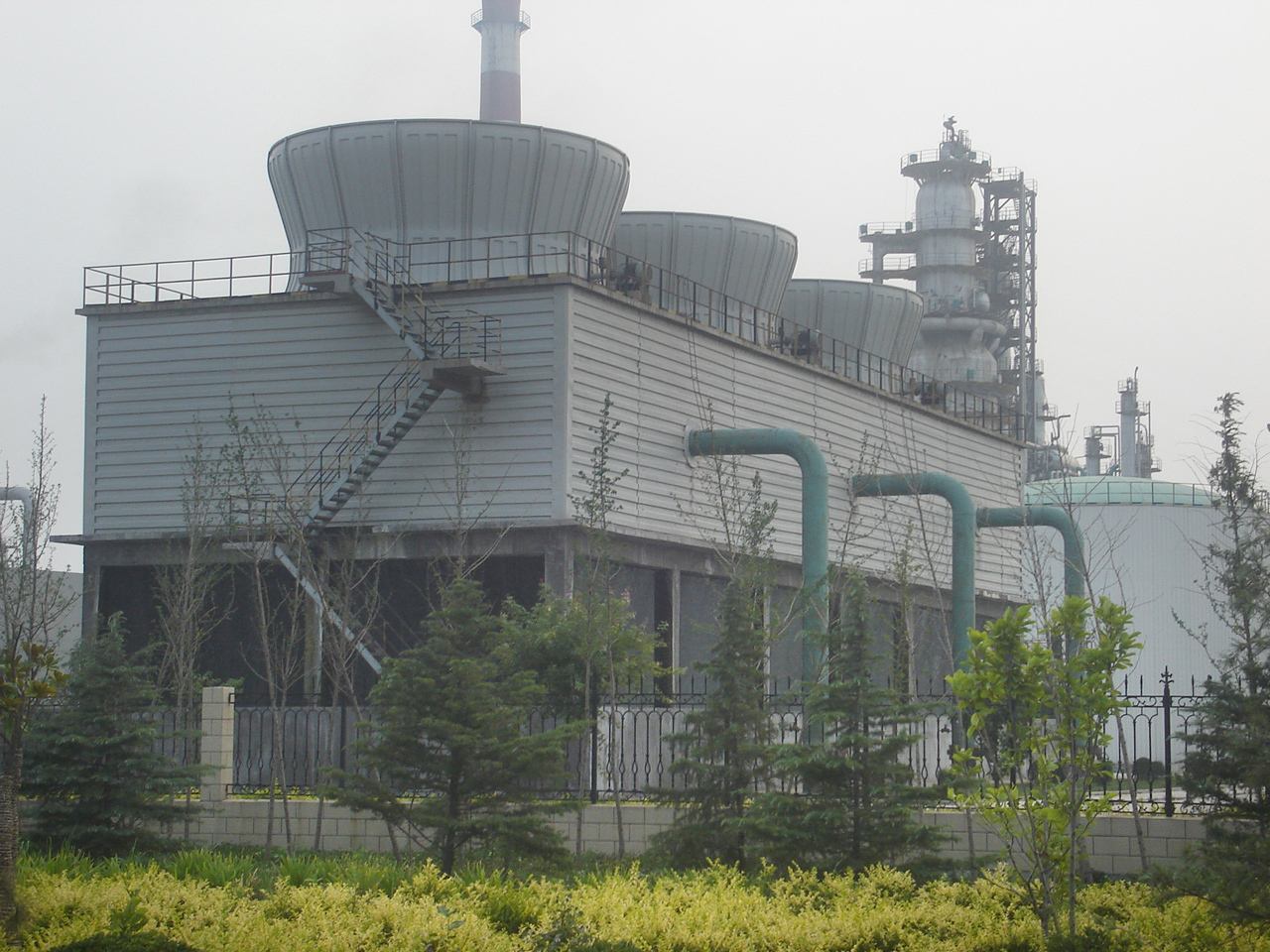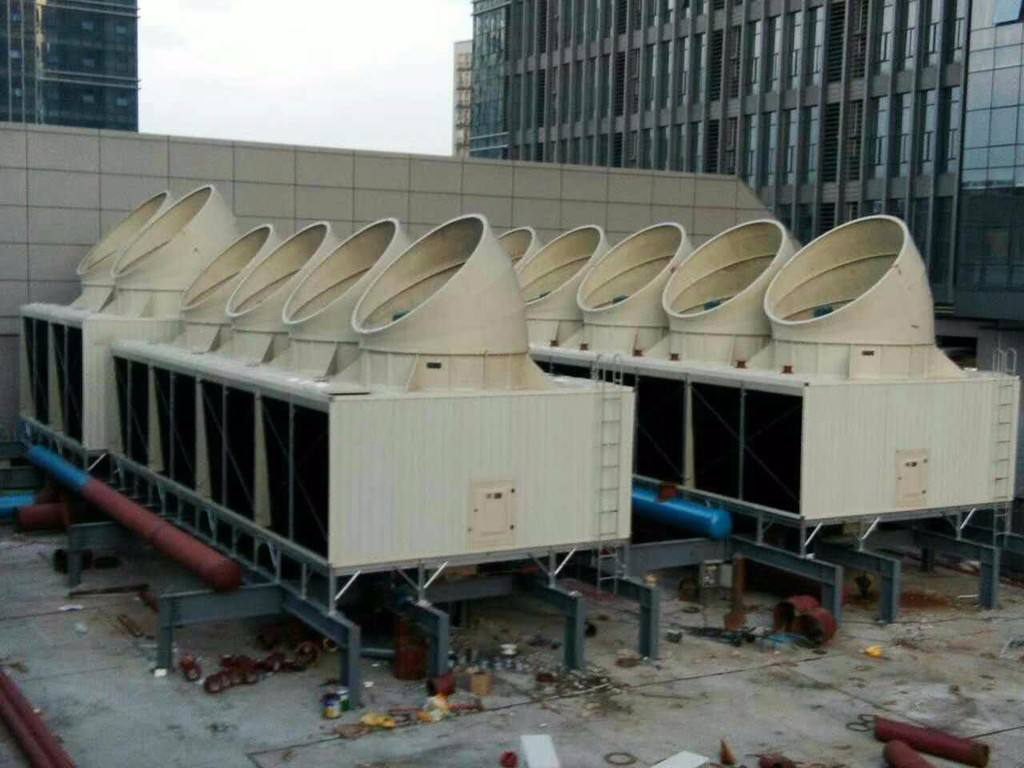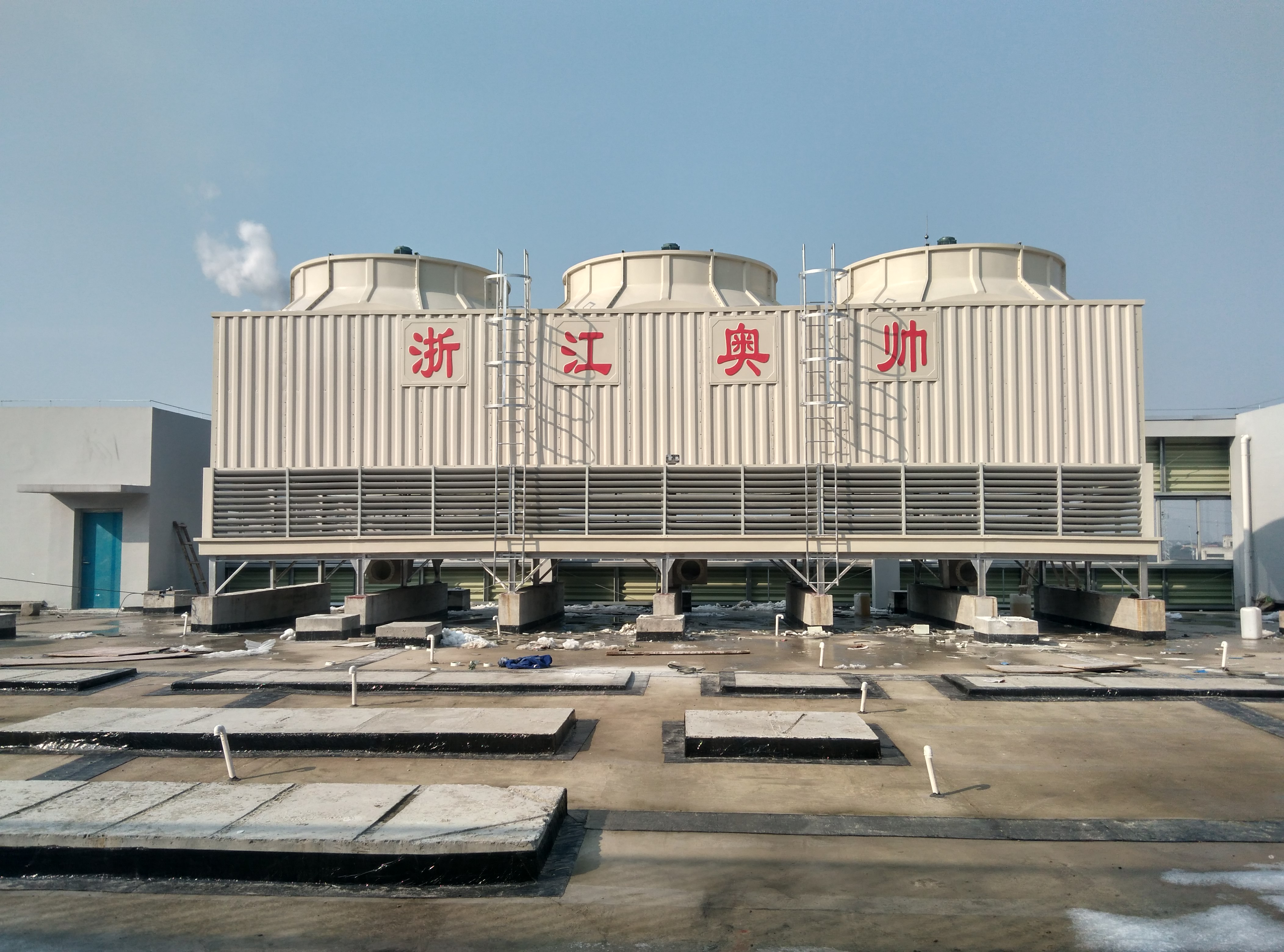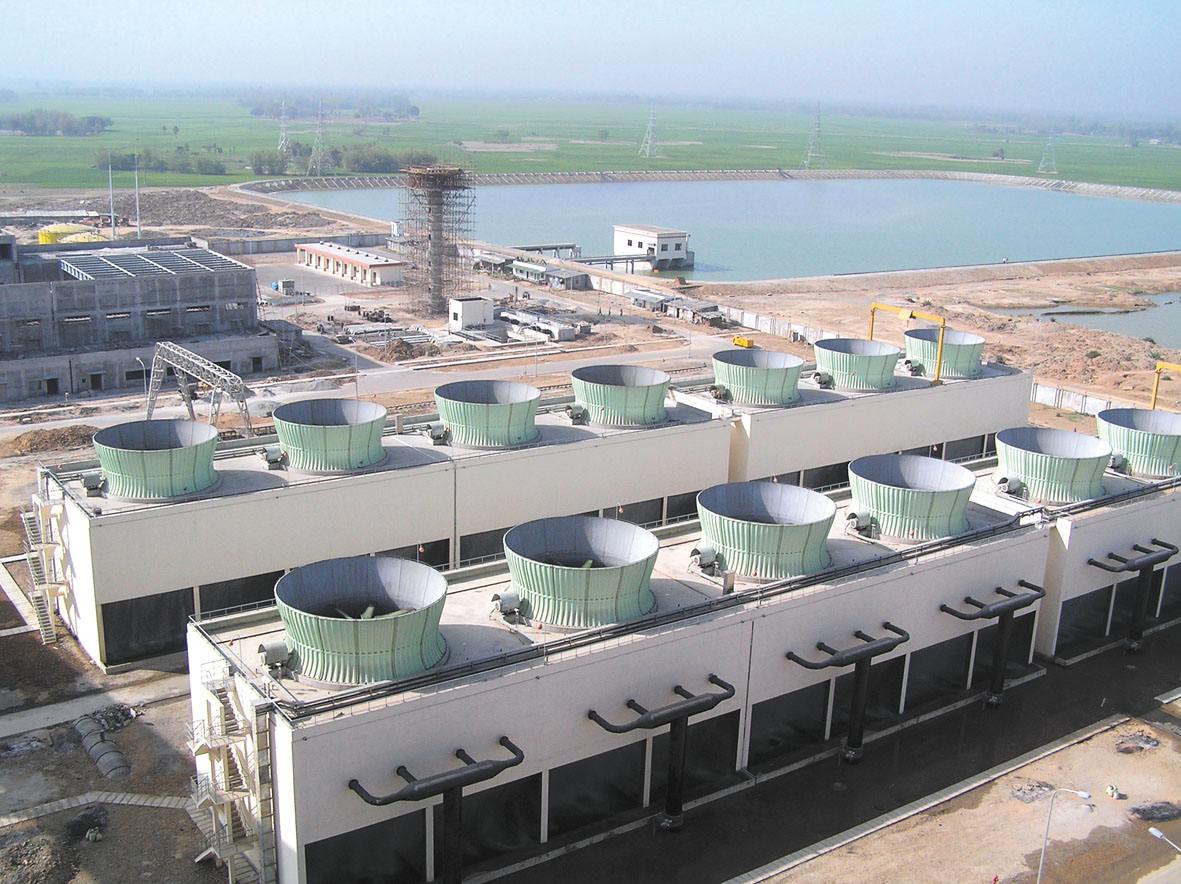
The cooling tower fan stack is an important component that directly influences airflow distribution and fan operating efficiency. Installed around the cooling tower fan, it provides a controlled passage for warm, humid air to exit the tower and discharge into the atmosphere.
A fiberglass cooling tower fan stack, also known as an FRP cooling tower fan stack, offers several advantages over traditional metal structures. Its lightweight construction, smooth internal surface, corrosion resistance, and customizable aerodynamic design make it an effective solution for industrial cooling tower systems.
But how does an FRP fan stack actually improve fan performance? What design features should buyers consider when selecting one? This guide explores the relationship between fan stack design, airflow efficiency, structural stability, and cooling tower performance.
1. What Is a Fiberglass Cooling Tower Fan Stack?
A fiberglass cooling tower fan stack is a cylindrical or tapered FRP structure installed around the fan at the top of an induced-draft cooling tower.
Its primary purpose is to guide discharged air upward while reducing unnecessary airflow disturbances.
The main functions include:
Directing warm exhaust air away from the cooling tower.
Reducing the potential for hot air recirculation.
Providing a suitable airflow discharge passage.
Maintaining appropriate clearance around the fan blades.
Protecting the fan assembly from external environmental exposure.
FRP fan stacks are commonly used in power plants, chemical factories, steel mills, petrochemical facilities, and commercial HVAC cooling towers.
2. Five Ways Fiberglass Fan Stacks Improve Fan Performance
2.1 Optimize Airflow Direction
Airflow direction is one of the most important factors affecting cooling tower operation.
A properly designed fiberglass fan stack guides air vertically, helping prevent discharged hot air from spreading around the cooling tower.
This reduces the possibility of warm exhaust air returning to the air inlet.
When hot air recirculates into the tower, inlet air temperature increases, potentially reducing the cooling tower's heat rejection capacity.
An appropriately designed fan stack helps maintain more favorable airflow conditions.
2.2 Reduce Aerodynamic Resistance
The internal shape and surface condition of a fan stack influence airflow resistance.
FRP fan stacks can be manufactured with relatively smooth internal surfaces and carefully controlled geometries.
Their design can help reduce:
Unnecessary airflow turbulence.
Surface friction losses.
Abrupt changes in airflow direction.
Localized flow separation.
The inlet diameter, outlet diameter, stack height, and transition geometry should be designed according to the fan's operating requirements.
Lower system resistance can help a fan operate closer to its intended performance point, although actual energy savings depend on the complete fan and cooling tower system.
2.3 Maintain Proper Fan Blade Clearance
The distance between the fan blade tips and the surrounding fan stack is another important performance factor.
Excessive clearance may allow more air to move around the blade tips instead of contributing to useful airflow.
Insufficient clearance creates a risk of blade contact during operation.
A properly manufactured fiberglass fan stack maintains the required dimensional accuracy and circular geometry to support consistent fan clearance.
This is particularly important for large industrial cooling tower fans operating at high airflow volumes.
2.4 Support Stable Fan Operation
Cooling tower fans generate vibration and aerodynamic forces during operation.
A fiberglass fan stack must have sufficient structural strength to withstand these operating conditions.
Reinforced FRP walls, structural ribs, and properly designed mounting flanges help maintain the stack's shape and stability.
A rigid structure also helps preserve fan alignment and clearance.
2.5 Reduce Hot Air Recirculation
Hot air recirculation can significantly affect cooling tower thermal performance.
A suitable fan stack directs exhaust air upward and helps separate the discharge airflow from the surrounding air intake region.
However, recirculation is also influenced by wind direction, building height, tower spacing, and nearby structures.
Therefore, fan stack design should be considered as part of the overall cooling tower airflow arrangement.
3. Why FRP Material Is Suitable for Cooling Tower Fan Stacks
Fiberglass reinforced plastic combines fiberglass reinforcement with a resin matrix to produce a lightweight and durable structural material.
Its main advantages include:
| FRP Property | Benefit for Cooling Tower Applications |
| Lightweight construction | Reduces structural dead load |
| Corrosion resistance | Performs well in humid environments |
| Smooth surface | Helps minimize airflow friction |
| High design flexibility | Supports customized stack dimensions |
| Low maintenance | Eliminates routine anti-rust painting |
| Weather resistance | Suitable for outdoor installations with appropriate UV protection |
Common resin options include polyester, vinyl ester, and epoxy. The correct resin should be selected according to chemical exposure, operating temperature, and environmental conditions.
4. Structural Design Features That Affect Performance
The structural design of an FRP cooling tower fan stack must balance aerodynamic performance and mechanical strength.
Cylindrical or Tapered Design
Cylindrical stacks provide a consistent airflow passage, while tapered configurations can be engineered to guide airflow through a changing cross-section.
The selection depends on fan characteristics, tower geometry, and discharge requirements.
Reinforced FRP Walls
Fiberglass layers provide mechanical strength and help resist wind pressure, vibration, and environmental loads.
Wall thickness should be determined through structural calculations rather than selected using a universal value.
Reinforced Flange Connections
Flanges connect the fan stack to the cooling tower fan deck.
Proper reinforcement and bolt arrangement help distribute loads and reduce the risk of cracking around connection points.
Smooth Internal Surface
A smooth internal finish helps reduce surface-related airflow resistance and makes inspection and cleaning easier.
5. FRP Fan Stack vs. Traditional Steel Fan Stack
Industrial buyers often compare fiberglass and steel fan stacks when planning cooling tower upgrades.
| Factor | FRP Fan Stack | Steel Fan Stack |
| Weight | Lightweight | Generally heavier |
| Corrosion resistance | Excellent with suitable resin | Depends on protective coating |
| Maintenance | Relatively low | Requires coating inspections |
| Installation | Easier handling in many projects | May require heavier lifting equipment |
| Customization | Flexible molding and fabrication | Requires metal fabrication |
| Outdoor durability | Good with suitable UV protection | Depends on coating and steel grade |
For cooling towers exposed to moisture, chemicals, and corrosive atmospheres, FRP is often a practical alternative to traditional steel.
6. How to Select the Right Fiberglass Cooling Tower Fan Stack
Choosing the correct fan stack requires more than checking its external dimensions.
Industrial buyers should evaluate the following specifications:
Fan diameter: Confirm the fan size and required blade-tip clearance.
Stack height: Determine the appropriate discharge height for the tower configuration.
Inlet and outlet diameters: Ensure compatibility with the fan and required airflow passage.
Wall thickness: Verify structural requirements under operating and environmental loads.
Material selection: Choose suitable fiberglass reinforcement and resin.
Flange dimensions: Confirm bolt-hole positions and mounting arrangements.
Operating environment: Consider UV exposure, temperature, humidity, and chemical conditions.
For replacement projects, providing existing equipment drawings and photographs can help manufacturers verify dimensions and recommend a suitable design.
7. Installation and Maintenance Best Practices
Correct installation is essential for achieving the expected performance of an FRP fan stack.
Recommended installation steps include:
Inspect the fan deck and supporting structure.
Check the fan stack dimensions before lifting.
Confirm flange alignment and mounting positions.
Use appropriate lifting equipment to avoid damaging the fiberglass.
Secure bolts according to the specified installation procedure.
Measure fan blade clearance around the full circumference.
Check for abnormal vibration during commissioning.
Regular inspections should focus on cracks, delamination, loose bolts, flange damage, surface deterioration, and deformation.
Timely maintenance helps prevent structural problems and unexpected equipment downtime.
8. Custom FRP Cooling Tower Fan Stack Solutions
For industrial cooling tower replacement and retrofit projects, customized fiberglass fan stacks provide flexibility in dimensions, materials, and connection designs.
CoolingTowerPart.com provides cooling tower components and replacement solutions for international industrial buyers.
Our customized FRP fan stack solutions can be developed according to:
Existing cooling tower fan dimensions.
Required stack height and diameter.
Fan deck and flange specifications.
Structural reinforcement requirements.
Resin and fiberglass material selection.
Project-specific operating conditions.
Whether replacing an old steel fan stack or upgrading an existing FRP structure, accurate measurements and technical drawings help ensure proper compatibility.
9. Frequently Asked Questions
Q1: Can a fiberglass fan stack increase cooling tower airflow?
A properly designed stack can reduce unnecessary airflow resistance and improve discharge conditions. However, it does not independently increase the fan's rated airflow capacity.
Q2: Does an FRP fan stack reduce fan energy consumption?
It may help reduce system pressure losses when replacing an inefficient or damaged structure. Actual energy savings depend on fan selection, operating conditions, and total system resistance.
Q3: Why is the shape of a cooling tower fan stack important?
The shape affects airflow direction, pressure losses, turbulence, and discharge characteristics. It should be coordinated with the fan and cooling tower design.
Q4: Is fiberglass suitable for large industrial cooling tower fan stacks?
Yes. FRP can be engineered for large industrial applications using suitable reinforcement, wall thickness, and structural connections.
Q5: Can I replace a steel fan stack with an FRP fan stack?
Yes. A customized FRP replacement can be used after verifying dimensions, structural loads, mounting connections, and aerodynamic requirements.
Conclusion
Fiberglass cooling tower fan stacks contribute to improved fan performance by guiding exhaust airflow, helping reduce unnecessary aerodynamic resistance, maintaining proper blade clearance, and supporting stable operation.
Their lightweight construction, corrosion resistance, smooth internal surfaces, and flexible design make them suitable for industrial cooling tower applications.
For buyers planning cooling tower upgrades or replacement projects, choosing a properly engineered FRP cooling tower fan stack can help improve equipment reliability, simplify maintenance, and support long-term operating efficiency.
Recommended internal links for CoolingTowerPart.com: