How Does a Cooling Tower Filler Manufacturer Ensure Quality?
A cooling tower filler plays a critical role in the heat transfer process of an evaporative cooling tower. By increasing the contact area between water and air, high-quality fill media can improve cooling efficiency, reduce water consumption, and support stable tower operation.
However, not every cooling tower filler manufacturer uses the same materials, production methods, or quality-control standards. The quality of cooling tower fill directly affects heat transfer performance, service life, pressure drop, maintenance requirements, and overall cooling tower efficiency.
So, how does a cooling tower filler manufacturer ensure quality?
A reliable manufacturer typically combines material selection, precise production processes, dimensional inspection, performance testing, quality control, and customized engineering support. This article explains the key quality-control practices buyers should understand before selecting a cooling tower filler manufacturer.
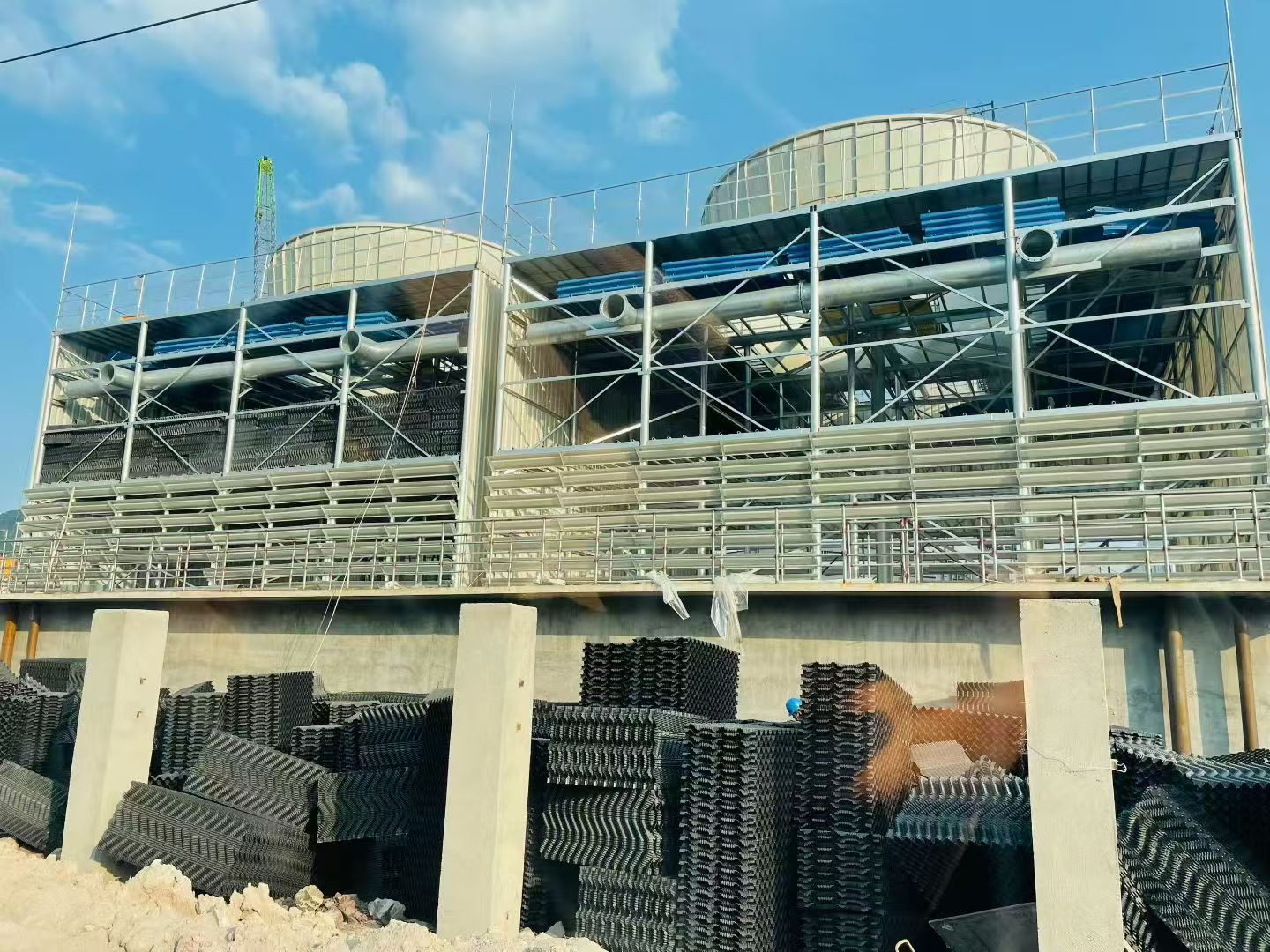
Why Is Cooling Tower Filler Quality So Important?
Cooling tower filler is more than a simple plastic component. It is one of the primary heat-transfer surfaces inside the tower.
How Does Cooling Tower Fill Affect Heat Transfer?
During operation, hot circulating water flows over or through the cooling tower fill while air passes through the fill surface. The filler distributes water into thin films or droplets and increases the contact area between water and air.
A properly designed cooling tower filler can help:
Increase water-air contact area
Improve heat transfer efficiency
Promote uniform water distribution
Reduce cooling tower size requirements
Support lower operating costs
Improve thermal performance
Maintain stable cooling capacity
Poor-quality fill media may deform, crack, clog, or lose its designed geometry, reducing the effective heat-transfer area.
What Happens When Low-Quality Filler Is Used?
Low-quality cooling tower fill may cause several problems:
For this reason, choosing the right cooling tower filler manufacturer is an important part of cooling tower design and maintenance.
How Does a Cooling Tower Filler Manufacturer Select Raw Materials?
Material selection is one of the first steps in quality control.
Why Is PVC Commonly Used for Cooling Tower Fill?
PVC is widely used for many cooling tower fill applications because it provides a practical balance of performance, cost, chemical resistance, and processability.
A quality manufacturer evaluates the PVC material according to the intended application rather than simply selecting the lowest-cost raw material.
When Is PP Cooling Tower Fill a Better Option?
Polypropylene, or PP, can be considered for applications requiring higher temperature resistance or specific chemical-performance characteristics.
The appropriate material depends on factors such as:
A professional manufacturer should recommend the material based on actual operating conditions.
Why Should Recycled Material Be Carefully Controlled?
The use of recycled material is not automatically a quality problem. However, uncontrolled material composition can affect mechanical strength, thermal stability, surface characteristics, and long-term performance.
A responsible cooling tower filler manufacturer should maintain consistent raw-material specifications and production controls.
How Does Manufacturing Precision Affect Cooling Tower Filler Quality?
The manufacturing process determines whether the finished fill maintains its intended geometry.
How Is PVC Cooling Tower Fill Manufactured?
PVC cooling tower fill is commonly produced using processes such as extrusion, forming, and corrugation. During production, the material is shaped into sheets with specific surface patterns.
The surface design is important because it influences:
Water distribution
Air-water contact
Film formation
Turbulence
Heat transfer
Pressure drop
A manufacturer must therefore maintain consistent production parameters.
Why Is Sheet Thickness Important?
Fill sheet thickness affects mechanical strength, weight, flexibility, and durability.
If the sheet is too thin, it may be more vulnerable to deformation or damage during installation and operation.
If the sheet is unnecessarily thick, material consumption and transportation costs can increase without providing proportional performance benefits.
How Does a Manufacturer Control Thickness?
Quality manufacturers can monitor sheet thickness during production and compare actual measurements with specified tolerances.
Consistent thickness helps ensure that different batches of cooling tower fill have similar mechanical and thermal characteristics.
How Does Surface Design Influence Cooling Tower Fill Performance?
Cooling tower filler is designed with specific surface structures rather than flat sheets.
Why Is Corrugation Important?
Corrugated or structured surfaces help spread water across the fill and increase the effective contact area between air and water.
The geometry can influence:
Water-film thickness
Contact time
Airflow resistance
Heat transfer
Fouling tendency
Different cooling tower applications may require different fill geometries.
What Is the Difference Between Film Fill and Splash Fill?
Film fill uses structured surfaces to spread water into thin films, maximizing the contact area between air and water.
Splash fill breaks falling water into droplets as it passes through the fill, creating repeated water-air contact.
The appropriate type depends on water quality, tower design, temperature range, and operating conditions.
A knowledgeable cooling tower filler manufacturer should understand these differences and recommend a suitable fill type.
What Quality-Control Tests Should a Cooling Tower Filler Manufacturer Perform?
Quality assurance should continue after production begins.
How Is Dimensional Quality Checked?
Dimensional inspection can include:
Sheet length
Sheet width
Thickness
Corrugation height
Cell dimensions
Module dimensions
Assembly dimensions
Consistent dimensions are especially important when replacement fill must fit an existing cooling tower.
How Is Mechanical Strength Evaluated?
Depending on the application, manufacturers may evaluate the fill's resistance to deformation, handling damage, and operating loads.
This is important because cooling tower fill may experience:
Why Is Structural Stability Important?
If fill sheets deform significantly, water distribution and airflow can change. In severe cases, collapsed or distorted fill can reduce cooling performance and increase maintenance requirements.
How Does a Manufacturer Test Heat Transfer Performance?
Material quality alone does not determine cooling performance. The geometry and operating characteristics of the fill are equally important.
What Factors Affect Cooling Tower Fill Thermal Performance?
Important variables include:
Water loading
Airflow rate
Fill height
Fill surface area
Water temperature
Air temperature
Relative humidity
Fill geometry
Water distribution
A professional cooling tower filler manufacturer considers these variables when developing or selecting fill media.
Why Is Water Distribution Important?
Even high-performance fill cannot operate effectively if water is poorly distributed.
Uneven water distribution can create dry areas and overloaded areas inside the fill.
A quality cooling tower filler should work effectively with the tower's water-distribution system to promote relatively uniform wetting.
How Does a Cooling Tower Filler Manufacturer Control Clogging?
Clogging is a major concern in cooling towers that operate with dirty or contaminated water.
Why Does Cooling Tower Fill Clog?
Common causes include:
Suspended solids
Biological growth
Algae
Scale
Dirt
Corrosion products
Poor water treatment
As deposits accumulate, the effective airflow passages can become smaller.
How Can Fill Design Reduce Fouling Risk?
Manufacturers can develop different surface structures and cell configurations according to water-quality conditions.
For relatively clean water, high-surface-area film fill can provide excellent heat-transfer performance.
For dirtier water, a design with larger passages may be more appropriate because it can reduce the risk of blockage.
Should High-Performance Fill Always Have Smaller Channels?
Not necessarily.
Smaller channels can provide greater surface area, but they may also be more sensitive to fouling when water contains high levels of suspended solids.
The best design balances heat transfer efficiency, pressure drop, water quality, and maintenance requirements.
How Does Quality Control Improve Cooling Tower Filler Service Life?
Service life depends on both material durability and operating conditions.
How Does UV Resistance Matter?
Cooling tower components exposed to sunlight may experience ultraviolet degradation over time.
For outdoor applications, material formulation and UV resistance can be important considerations.
How Does Temperature Affect Filler Life?
Cooling tower fill should be selected according to the expected operating temperature.
Excessive temperature can accelerate deformation or material aging if the selected material is unsuitable.
A reliable manufacturer should understand the temperature limitations of different fill materials.
Can Chemical Exposure Damage Cooling Tower Fill?
Yes.
Cooling tower water may contain chemicals used for scale control, corrosion control, biological control, or other water-treatment purposes.
Material compatibility should therefore be evaluated before selecting cooling tower fill.
How Does a Manufacturer Ensure Consistency Between Batches?
Batch consistency is essential for large cooling tower projects.
Why Is Production Consistency Important?
Suppose a project requires thousands of cooling tower fill sheets or multiple replacement modules. Significant differences between batches can create variations in:
Thickness
Surface geometry
Mechanical strength
Appearance
Module dimensions
Installation fit
A strong quality-control system helps minimize these variations.
What Should Buyers Ask About Batch Inspection?
Buyers can ask manufacturers whether they maintain:
Raw-material inspection records
Production inspection records
Dimensional inspection reports
Performance test data
Batch identification
Final inspection procedures
These practices provide greater traceability throughout the manufacturing process.
How Does a Cooling Tower Filler Manufacturer Handle Custom Requirements?
Not every cooling tower uses standard fill dimensions.
Why Is Custom Cooling Tower Fill Sometimes Necessary?
Replacement projects often require fill media that matches existing tower dimensions.
Custom requirements may include:
How Does Customization Affect Quality?
Customization should not mean sacrificing quality.
A professional manufacturer should review the customer's technical requirements before production and confirm critical dimensions and specifications.
What Information Should Buyers Provide?
When requesting custom cooling tower filler, buyers should provide as much information as possible, such as:
Cooling tower model
Existing fill dimensions
Fill type
Water temperature
Water quality
Cooling capacity
Installation dimensions
Operating conditions
Photos or drawings
The more complete the information, the easier it is for the manufacturer to recommend an appropriate solution.
What Certifications and Documentation Should Buyers Check?
Documentation can help buyers evaluate manufacturing capabilities.
What Quality Documents May Be Available?
Depending on the manufacturer and market, documentation may include:
Certifications may also be relevant depending on the project requirements and destination market.
Why Is Traceability Important?
Traceability allows a manufacturer to identify production batches and investigate quality issues more efficiently.
For large industrial projects, this can provide an additional level of quality assurance.
How Should You Evaluate a Cooling Tower Filler Manufacturer?
Price is only one factor when comparing suppliers.
What Technical Questions Should You Ask?
Before placing an order, consider asking:
What type of cooling tower fill do you manufacture?
Which materials are available?
What are the standard sheet dimensions?
Can you provide custom sizes?
What operating temperatures are recommended?
How do you control sheet thickness?
How do you inspect finished products?
Can you provide product datasheets?
What is your production capacity?
Can you supply replacement fill for existing cooling towers?
These questions can help buyers understand whether a supplier has the necessary technical and production capabilities.
Why Should Production Capacity Be Considered?
Large industrial cooling tower projects may require significant quantities of fill media.
A manufacturer should have sufficient production capacity to maintain consistent quality while meeting the required delivery schedule.
Why Is Packaging Also Important?
Cooling tower fill can be bulky even when the material itself is relatively lightweight.
Proper packaging helps reduce:
Transportation damage
Deformation
Moisture exposure
Contamination
Handling problems
For international shipments, packaging design can also influence container utilization and logistics costs.
How Can Buyers Reduce Cooling Tower Fill Replacement Costs?
Choosing a quality cooling tower filler manufacturer can contribute to lower lifecycle costs.
Is the Cheapest Cooling Tower Fill Always the Most Economical?
Not necessarily.
A lower initial purchase price may become less attractive if the product has:
Short service life
Poor dimensional stability
Low heat-transfer performance
High clogging risk
Difficult installation
Frequent replacement requirements
A better purchasing approach is to evaluate total lifecycle cost rather than only the initial price.
What Should Lifecycle Cost Include?
Consider:
Purchase price
Transportation
Installation
Cleaning
Maintenance
Energy consumption
Replacement frequency
Cooling performance
A well-designed cooling tower fill can support stable operation and potentially reduce maintenance-related expenses.
What Makes a Reliable Cooling Tower Filler Manufacturer?
A reliable manufacturer is not defined by one factor alone.
Should Technical Experience Matter?
Yes.
Cooling tower filler design involves the interaction of material properties, surface geometry, airflow, water distribution, and operating conditions.
Manufacturers with relevant technical experience are better positioned to discuss these factors with customers.
Should Manufacturing Capability Matter?
Yes.
A manufacturer should have suitable production equipment and inspection procedures for maintaining consistent product quality.
Should Customer Support Matter?
Technical support can be particularly important for replacement projects and custom applications.
A capable manufacturer should be able to assist with:
Conclusion: How Does a Cooling Tower Filler Manufacturer Ensure Quality?
A high-quality cooling tower filler manufacturer typically ensures product quality through a combination of controlled raw materials, precise manufacturing, dimensional inspection, performance evaluation, batch consistency, and technical support.
For buyers, selecting cooling tower fill should not be based solely on price. Material compatibility, fill geometry, operating temperature, water quality, thermal performance, mechanical stability, customization capability, and after-sales support should all be considered.
Whether you need PVC cooling tower fill, PP cooling tower fill, film fill, splash fill, crossflow fill, counterflow fill, or custom cooling tower fill media, working with an experienced manufacturer can help ensure that the selected product matches the cooling tower's actual operating requirements.
The right cooling tower filler is not simply a replacement component—it is an important part of the tower's overall heat-transfer system. By evaluating both product quality and manufacturer capabilities, buyers can make more informed decisions and build a more reliable cooling tower maintenance and replacement strategy.
Frequently Asked Questions About Cooling Tower Filler Manufacturers
What does a cooling tower filler manufacturer produce?
A cooling tower filler manufacturer produces fill media used inside evaporative cooling towers to increase water-air contact and improve heat transfer. Products may include PVC, PP, film, splash, crossflow, counterflow, and customized fill solutions.
What is the most common material for cooling tower fill?
PVC is widely used for many cooling tower fill applications because it offers a useful combination of processability, durability, chemical resistance, and cost-effectiveness. However, material selection should always consider the specific operating conditions.
How long does cooling tower filler last?
The service life depends on material, temperature, water chemistry, UV exposure, biological growth, fouling, cleaning practices, and operating conditions. There is no single replacement interval that applies to every cooling tower.
Can a cooling tower filler manufacturer make custom sizes?
Yes. Many manufacturers can produce custom cooling tower fill according to dimensions, material requirements, surface geometry, and tower configuration.
How do I choose a reliable cooling tower filler manufacturer?
Compare the manufacturer's material quality, production capabilities, inspection procedures, technical experience, customization options, documentation, production capacity, and customer support. Product price should be evaluated together with expected performance and lifecycle cost.


