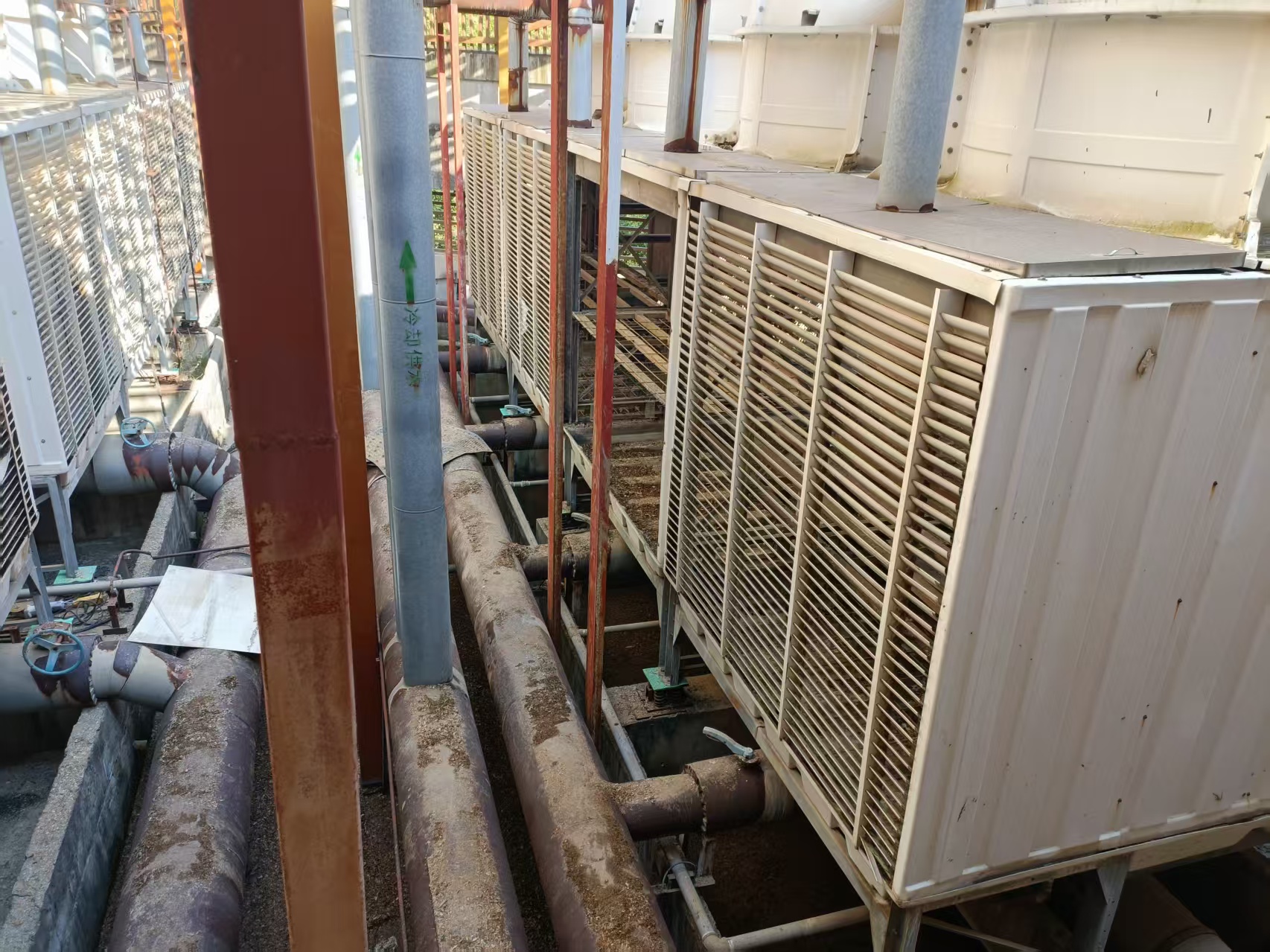
Cooling Tower Fill Replacement for Industrial Cooling Systems
Cooling tower fill plays a critical role in industrial cooling systems by increasing the contact area between hot process water and airflow. Over time, however, cooling tower fill can become damaged, clogged, deformed, or coated with scale and biological deposits. When this happens, cooling performance may gradually decline, water distribution can become uneven, and operating costs may increase.
Cooling tower fill replacement is therefore an important maintenance strategy for industrial facilities that depend on reliable heat rejection. Replacing worn cooling tower fill with properly selected fill media can restore heat transfer performance, improve airflow and water distribution, and extend the service life of the cooling tower.
But when should industrial cooling tower fill be replaced? How do you select the right replacement fill? And what should you consider when choosing PVC, PP, film, or splash fill?
This guide explains the key factors involved in cooling tower fill replacement for industrial cooling systems.
What Is Cooling Tower Fill and Why Is It Important?
Cooling tower fill is the internal media that promotes contact between circulating water and air. Instead of allowing water to fall directly from the distribution system to the basin, the fill spreads the water into thin films or droplets.
How Does Cooling Tower Fill Improve Heat Transfer?
The main purpose of cooling tower fill is to increase the effective contact area between water and air.
When hot water enters the cooling tower, it flows over or through the fill. At the same time, air passes through the fill. This extended contact allows heat to transfer from the water to the air.
Why Is Surface Area Important?
A larger effective contact area generally provides more opportunities for heat and mass transfer. This is why cooling tower fill design includes channels, corrugations, flutes, or other surface structures.
A properly designed cooling tower fill media can help:
Increase water-to-air contact area
Improve evaporative cooling
Promote more uniform water distribution
Support efficient heat transfer
Reduce the required tower footprint for a given cooling duty
Improve overall cooling tower performance
What Happens When Cooling Tower Fill Becomes Damaged?
Damaged or deteriorated fill may no longer provide the intended water distribution and airflow characteristics.
Common problems include:
These conditions are common reasons why industrial facilities eventually require cooling tower fill replacement.
When Should Cooling Tower Fill Be Replaced?
There is no single replacement interval that applies to every industrial cooling tower. Fill life depends on water quality, operating temperature, material, cleaning frequency, airflow conditions, and operating hours.
What Are the Signs That Cooling Tower Fill Needs Replacement?
Several warning signs can indicate that cooling tower fill should be inspected or replaced.
1. Reduced Cooling Performance
If the cooling tower can no longer achieve the required cold-water temperature under similar operating conditions, the fill may have lost effectiveness.
However, operators should also check fans, nozzles, water flow, ambient conditions, and other components before concluding that the fill is the primary cause.
2. Severe Fill Clogging
Scale, dirt, algae, sediment, and biological deposits can block the passages inside the fill.
Severe clogging can restrict airflow and reduce the water distribution area.
3. Physical Damage
Fill sheets can become cracked, broken, collapsed, or deformed due to mechanical stress, high temperature, chemical exposure, or long-term operation.
4. Uneven Water Distribution
If water is not spreading evenly across the fill, some areas may become overloaded while other sections remain relatively dry.
This can reduce the effective cooling area.
5. Increased Pressure Drop
Blocked or deformed fill can increase resistance to airflow. This may affect fan operation and increase energy consumption.
How Often Should Industrial Cooling Tower Fill Be Replaced?
Replacement frequency depends heavily on operating conditions.
Factors that influence cooling tower fill replacement frequency include:
Water chemistry
Suspended solids
Biological contamination
Operating temperature
Cleaning procedures
Fill material
UV and chemical exposure
Mechanical loading
Tower operating hours
Maintenance quality
Instead of replacing fill solely according to a fixed calendar, industrial operators should combine inspection, performance monitoring, and physical condition assessment.
Why Is Cooling Tower Fill Replacement Important for Industrial Cooling Systems?
Industrial cooling systems often operate continuously and handle substantial heat loads. A small decline in cooling performance can therefore have a significant operational impact.
Can New Cooling Tower Fill Improve Heat Transfer?
Replacing heavily damaged or clogged fill can restore the intended contact area and water distribution characteristics.
New fill can help the cooling tower operate closer to its original design condition when other components are functioning properly.
Can Fill Replacement Reduce Energy Consumption?
Potentially, yes. Excessive fouling and airflow restriction can increase system resistance and reduce cooling performance.
After replacing severely clogged or deformed fill, the cooling tower may operate more efficiently. Actual energy savings depend on the condition of the existing fill, fan system, water flow, operating conditions, and overall tower design.
Can Replacement Extend Cooling Tower Service Life?
Yes, replacing deteriorated fill can help maintain the performance of the cooling tower without replacing the entire tower structure.
For many industrial applications, fill replacement is a practical refurbishment option compared with a complete cooling tower rebuild.
What Types of Cooling Tower Fill Are Available for Replacement?
Different industrial applications require different fill materials and designs.
Is PVC Cooling Tower Fill Suitable for Industrial Applications?
PVC cooling tower fill is widely used because it offers a practical combination of heat-transfer performance, chemical resistance, processability, and cost.
PVC film fill is commonly considered for applications involving relatively clean circulating water and moderate operating temperatures.
What Are the Advantages of PVC Fill?
PVC cooling tower fill can provide:
High effective surface area
Good heat-transfer characteristics
Lightweight construction
Easy installation
Good resistance to many common cooling-water conditions
Cost-effective replacement options
Availability in different configurations
PVC fill is commonly used in HVAC cooling towers as well as many industrial cooling applications.
When Should PP Cooling Tower Fill Be Considered?
PP cooling tower fill can be considered when application conditions require different material characteristics, particularly where higher temperature resistance is important.
Why Choose PP Fill for Replacement?
Depending on the specific formulation and application, PP can provide better temperature resistance than standard PVC.
It may therefore be considered for selected industrial processes involving elevated water temperatures.
What Is the Difference Between Film Fill and Splash Fill?
Film fill spreads water into thin films over a structured surface, maximizing the effective contact area between water and air.
Splash fill breaks water into droplets as it passes through a series of splash bars or grids.
When Is Film Fill Preferred?
Film fill is often preferred for applications where water quality is sufficiently clean and high heat-transfer efficiency is a priority.
When Is Splash Fill More Suitable?
Splash fill may be more appropriate for water containing higher levels of suspended solids or applications where resistance to clogging is especially important.
The correct selection depends on water quality, temperature, tower configuration, and process requirements.
How Should You Choose Cooling Tower Fill for Replacement?
Selecting replacement fill is not simply a matter of choosing the same material as the old fill.
What Dimensions Should Be Checked?
Before ordering replacement cooling tower fill, operators should verify:
Incorrect dimensions can make installation difficult or prevent the replacement fill from fitting properly.
Should You Match the Original Fill Design?
In many cases, matching the original geometry is a practical starting point. However, replacement projects can also provide an opportunity to improve the fill design when operating conditions have changed.
What Should Be Compared?
Compare the existing and replacement fill based on:
A professional cooling tower fill manufacturer can help evaluate these factors.
How Does Water Quality Affect Cooling Tower Fill Replacement?
Water quality is one of the most important factors in determining fill performance and service life.
Why Does Scale Damage Cooling Tower Fill?
Hard-water minerals can accumulate on the fill surface. As deposits become thicker, they can reduce the effective contact area and restrict water and airflow passages.
What Can Cause Fill Fouling?
Common causes include:
Calcium carbonate scale
Sediment
Rust particles
Algae
Sludge
Microbiological deposits
Process contaminants
A replacement fill should therefore be selected together with an appropriate water-treatment and maintenance strategy.
Can Better Water Treatment Extend Fill Life?
Yes. Proper water treatment can reduce scale, corrosion products, suspended solids, and biological growth.
However, water treatment must be appropriate for the specific cooling-water chemistry and operating conditions.
What Should Be Checked Before Cooling Tower Fill Replacement?
A detailed inspection can help determine whether replacement is actually necessary and what type of fill should be installed.
Should You Inspect the Entire Cooling Tower?
Yes. Fill should not be evaluated in isolation.
What Components Should Be Inspected?
Before replacing fill, inspect:
Water distribution pipes
Spray nozzles
Cooling tower fan
Fan blades
Drift eliminators
Fill support structure
Air inlet louvers
Basin
Pumps
Water quality
Structural components
If nozzles are blocked, for example, installing new fill may not fully solve the water distribution problem.
Should Cooling Tower Performance Be Measured?
Performance measurements can help establish whether fill replacement is necessary.
Useful parameters may include:
Comparing these values before and after replacement can help evaluate the effect of the new fill.
How Is Cooling Tower Fill Replacement Performed?
A planned replacement process can reduce downtime and installation problems.
What Are the Main Steps?
A typical project may include the following stages:
Step 1: Inspect the Existing Fill
Determine the condition, dimensions, material, and installation configuration of the existing fill.
Step 2: Confirm Cooling Requirements
Review water flow, operating temperature, heat load, airflow, and tower configuration.
Step 3: Select Replacement Fill
Choose PVC, PP, splash, film, crossflow, counterflow, or another suitable configuration.
Step 4: Remove Old Fill
Remove damaged or fouled fill carefully while protecting the support structure and other tower components.
Step 5: Clean the Fill Area
Clean the support beams, distribution system, basin, and surrounding areas before installing new fill.
Step 6: Install New Cooling Tower Fill
Install the new fill blocks according to the correct orientation and layout.
Step 7: Inspect Water Distribution
Check that water is distributed evenly across the new fill.
Step 8: Test the Cooling Tower
Restart the system and monitor operating temperatures, water flow, fan operation, and overall cooling performance.
How Can Industrial Facilities Reduce Downtime During Fill Replacement?
Industrial cooling systems often cannot remain offline for long periods. Planning is therefore essential.
Can Replacement Fill Be Prepared in Advance?
Yes. Accurate measurements and drawings can allow replacement fill to be manufactured before shutdown.
What Information Should Be Prepared?
Provide the supplier with:
Accurate information can reduce manufacturing and installation delays.
Should Replacement Fill Be Custom-Made?
Custom cooling tower fill can be useful when standard dimensions do not match the existing tower.
A custom cooling tower fill manufacturer can produce fill blocks according to specified dimensions and installation requirements.
How Can You Choose a Reliable Cooling Tower Fill Replacement Supplier?
Supplier selection can have a major impact on replacement quality and project efficiency.
What Should You Ask a Cooling Tower Fill Manufacturer?
Consider asking about:
Available PVC and PP materials
Fill geometry options
Sheet thickness
Block dimensions
Temperature resistance
Manufacturing tolerances
Quality-control procedures
Customization capabilities
Production capacity
Packaging
Installation support
Technical documentation
Why Is Manufacturing Experience Important?
An experienced cooling tower fill manufacturer understands that replacement projects require more than simply supplying plastic sheets.
The supplier should be able to evaluate dimensions, water distribution, airflow, material selection, and tower configuration.
What Quality Checks Matter?
Important quality checks may include:
Material consistency
Sheet thickness
Block dimensions
Bonding quality
Surface condition
Forming accuracy
Structural integrity
Batch consistency
These factors can influence installation and long-term performance.
What Are the Benefits of Professional Cooling Tower Fill Replacement?
Professional replacement can provide several practical advantages for industrial facilities.
Can Replacement Improve Cooling Reliability?
A properly selected and installed fill system can restore the designed water-air contact characteristics and help stabilize cooling performance.
Can It Reduce Maintenance Problems?
New fill eliminates accumulated scale, biological deposits, and physical damage present in severely deteriorated fill.
However, continued water treatment and inspection remain essential.
Can It Improve Overall Cooling Tower Efficiency?
When the existing fill is heavily fouled, damaged, or improperly distributed, replacement can improve heat-transfer conditions and airflow.
The final result depends on the entire cooling tower system rather than fill alone.
How Can You Maintain New Cooling Tower Fill After Replacement?
Replacing fill is only the first step. Proper maintenance helps protect the investment.
What Maintenance Practices Are Recommended?
Industrial operators should establish a regular maintenance program covering:
How Can You Prevent Premature Fill Failure?
The most effective strategy is to control the conditions that cause fill deterioration.
Focus on Four Key Areas
1. Water treatment: Maintain appropriate chemical and water-quality control.
2. Cleaning: Remove deposits before they become severe.
3. Inspection: Identify deformation, clogging, and damage early.
4. Operating control: Avoid conditions outside the fill manufacturer's recommended limits.
Is Cooling Tower Fill Replacement Better Than Replacing the Entire Tower?
For many industrial cooling systems, fill replacement can be a practical refurbishment option when the tower structure and major components remain serviceable.
When Is Fill Replacement a Practical Choice?
It may be considered when:
The tower structure is still sound
Fill is severely fouled or damaged
Cooling performance has declined
Water distribution components remain serviceable
The fan system is functional
The basin and supports are in acceptable condition
A complete tower replacement may be more appropriate when multiple major components have reached the end of their service life.
How Does Cooling Tower Fill Replacement Support Industrial Efficiency?
Industrial cooling towers are closely connected to production reliability. Poor heat rejection can affect process temperatures, equipment operation, and overall plant performance.
Replacing deteriorated cooling tower fill can help restore the heat-transfer interface between water and air.
Which Industrial Applications Use Cooling Tower Fill?
Cooling tower fill replacement can be relevant to:
Each application has different water quality, temperature, and cooling requirements, so fill selection should be application-specific.
What Is the Best Strategy for Cooling Tower Fill Replacement?
There is no universal replacement fill that is suitable for every industrial cooling system. The correct solution depends on the tower design, water quality, operating temperature, airflow, cooling load, and existing fill configuration.
For relatively clean water applications, PVC cooling tower fill is often a practical option. For selected higher-temperature applications, PP cooling tower fill may be considered. Where water contains significant suspended solids or fouling is a major concern, splash-fill designs may offer an alternative.
The most important step is to evaluate the entire cooling tower before selecting replacement media.
Frequently Asked Questions About Cooling Tower Fill Replacement
How often should cooling tower fill be replaced?
There is no universal replacement interval. Fill should be replaced when physical deterioration, severe fouling, deformation, or declining performance indicates that cleaning and routine maintenance are no longer sufficient.
What is the most common material for cooling tower fill?
PVC is widely used for many cooling tower applications because of its heat-transfer characteristics, availability, and cost-effectiveness. PP is another option for applications requiring different material properties.
Can PVC cooling tower fill be used for industrial cooling?
Yes, PVC cooling tower fill is widely used in industrial and HVAC cooling applications where the operating temperature and water conditions are suitable.
Can cooling tower fill be cleaned instead of replaced?
Sometimes. If the fill remains structurally sound and deposits are manageable, professional cleaning may restore performance. Severely damaged, collapsed, brittle, or permanently fouled fill generally requires replacement.
How do I choose the right cooling tower fill replacement?
Evaluate the cooling tower type, fill dimensions, water flow, operating temperature, water quality, heat load, airflow, and existing fill design. A qualified cooling tower fill manufacturer can help match the replacement media to the application.
Can replacement cooling tower fill be customized?
Yes. Custom cooling tower fill can be manufactured for specific dimensions, tower configurations, installation heights, and performance requirements.
Conclusion
Cooling tower fill replacement for industrial cooling systems is an important maintenance and refurbishment strategy for facilities that depend on reliable heat rejection. When cooling tower fill becomes clogged, damaged, deformed, or severely scaled, the resulting reduction in water-air contact can negatively affect cooling performance.
Choosing the right replacement requires more than selecting a material. Industrial operators should consider fill geometry, dimensions, water quality, operating temperature, airflow, tower type, and cooling requirements.
Whether the project requires PVC cooling tower fill, PP cooling tower fill, film fill, splash fill, crossflow fill, counterflow fill, or custom cooling tower fill, working with an experienced manufacturer can help ensure proper compatibility and installation.
With appropriate selection, professional installation, water treatment, and regular maintenance, new cooling tower fill can help industrial cooling systems maintain stable heat-transfer performance and reliable long-term operation.