English


Views: 0 Author: Lisa Publish Time: 2026-11-25 Origin: Site


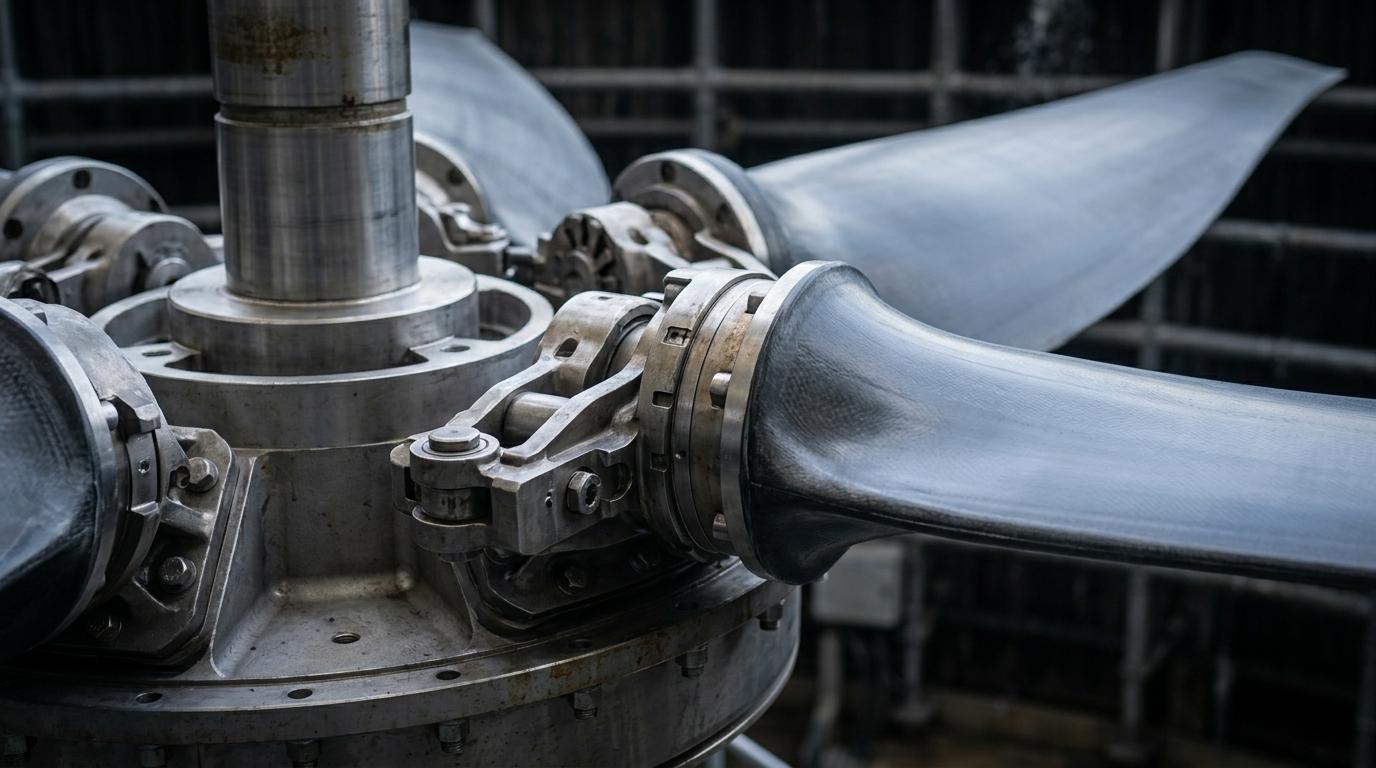
When sourcing replacement or upgrade cooling tower fan blades, one critical design choice is construction: hollow airfoil blades or solid blades. Both can be made in FRP or aluminum, but their internal structure changes weight, aerodynamic performance, mechanical stress, failure risks and maintenance needs. Hollow blades dominate large-diameter industrial towers, while solid blades serve smaller, rugged or low-duty HVAC systems. This guide breaks down the differences, pros and cons, and selection rules for power plants, chemical facilities, data centers and manufacturing cooling towers.
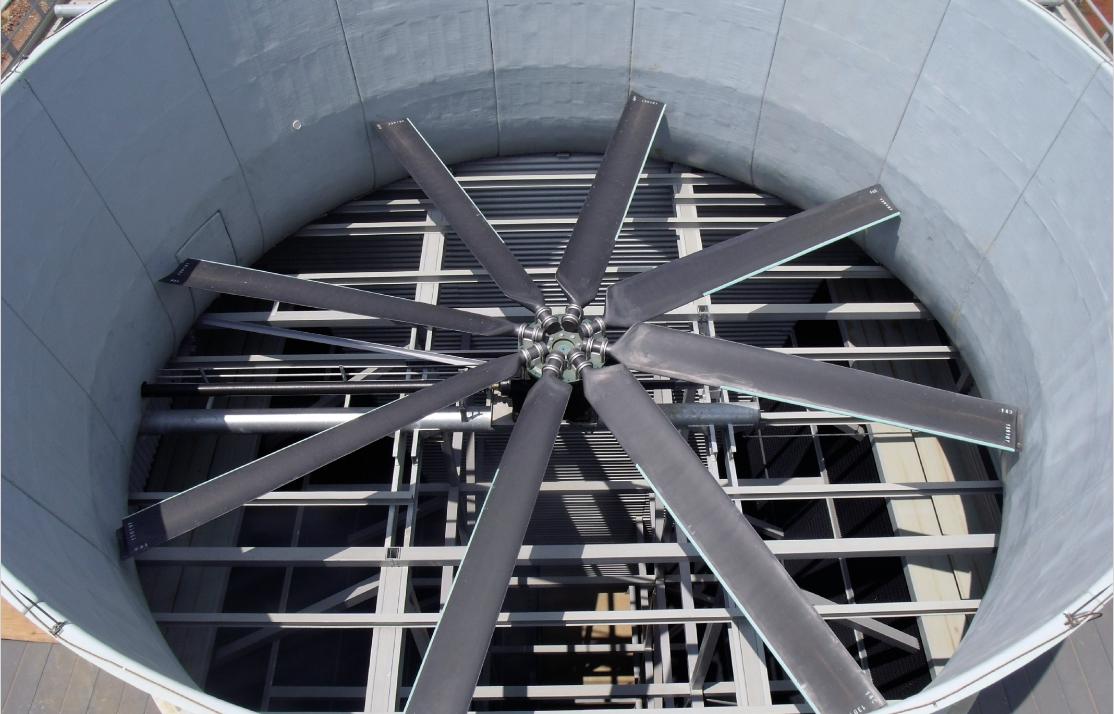
Hollow fan bladesMost hollow cooling tower blades are molded FRP airfoil shells with internal reinforcing ribs or bulkheads. The outer surface forms a smooth, optimized twisted airfoil, while the hollow interior cuts mass without sacrificing structural strength. Hollow blades are the standard for fans 3m and larger.
Solid fan bladesSolid blades are fully filled through the cross-section, commonly cast aluminum, extruded metal or thick solid FRP. They have no internal cavity. Solid blades are simpler to manufacture, often used for smaller cooling towers, compact HVAC units and low-speed fan assemblies.
 |
 |
| Feature | Hollow Fan Blades | Solid Fan Blades |
|---|---|---|
| Weight | Much lighter, lower centrifugal load | Heavier, higher stress on hub, bearings and gearbox |
| Aerodynamic Shape | Supports smooth, thick twisted airfoils, high efficiency | Limited airfoil shaping; thick solid design creates extra drag |
| Typical Size Range | Large diameter fans (3m+) for industrial towers | Small and medium fans, compact HVAC cooling towers |
| Risk of Trapped Water | Major risk if shell cracks; water inside causes recurring imbalance | No internal cavity, zero trapped water risk |
| Vibration & Noise | Lightweight composite design dampens noise and vibration | Transfers more vibration; higher tonal noise |
| Repairability | Surface damage repairable; cracks that breach the shell need careful sealing | Simple surface scratches or corrosion can be touched up; structural cracks usually mean replacement |
| Upfront Cost | Higher mold and manufacturing cost | Lower cost, simpler production |
| Long-Term Load on Drive Train | Reduced torque, extends gearbox and bearing life | Higher cyclic load, faster wear of rotating components |
| Impact Resistance | Risk of shell puncture from debris | More resistant to puncture and impact damage |
Lightweight high strength: Hollow construction lets engineers build thick, aerodynamic airfoils without the heavy mass of solid material. Lower centrifugal force reduces stress on the hub, motor and gearbox, extending service life of the whole drive system.
Better aerodynamic efficiency: Hollow molding enables continuous twisted, tapered airfoils, blended tips and serrated trailing edges. These optimized profiles deliver more airflow at the same power and reduce stall risk, ideal for large industrial towers.
Quieter operation: Hollow FRP shells have natural vibration damping, cutting tonal noise compared to solid metal blades. This is valuable for sites with noise limits near offices or residential zones.
Scalable for giant fans: For the large sweep diameters common on power plant and heavy industrial cooling towers, solid blades would become excessively heavy and impractical. Almost all large OEM fans from Marley, BAC and Evapco use hollow airfoil FRP blades.
Trapped water hazard: The biggest weakness. If the gel coat or outer shell cracks, humid tower air and water can enter the cavity. Once water is trapped inside, balancing becomes unstable, and vibration will repeatedly return even after dynamic balancing.
Shell puncture risk: Hard debris such as rust scale, broken fill pieces, or tools can punch through the outer laminate. Hidden internal delamination may develop without obvious external signs.
Sealing and drain hole maintenance: Quality hollow blades include drain holes to release condensate. Drain holes must stay clear; clogged holes trap water.
Higher purchase price: Custom molded hollow airfoils require precision molds and internal reinforcement, raising initial cost.
No trapped water risk: Without an internal cavity, there is nowhere for water to collect. This eliminates one of the most common recurring vibration problems for small tower fans.
Robust impact resistance: Solid aluminum or solid FRP stands up better to flying debris, accidental impact and harsh physical abuse.
Simple inspection and maintenance: Technicians only need to check the outer surface for cracks, corrosion or deformation. No hidden cavity to inspect.
Lower upfront cost: Simple casting or extrusion processes make solid blades budget-friendly for small HVAC cooling towers.
Stable balance: As long as the surface stays intact, solid blades maintain consistent balance over time, with fewer hidden failure modes.
Heavy weight increases mechanical load: The extra mass raises centrifugal stress, starting torque and running load on bearings, gearboxes and motor windings.
Limited aerodynamic optimization: Solid blades rarely feature refined twisted airfoil geometry. They usually run at lower aerodynamic efficiency and draw more power for the same airflow.
Higher vibration transfer: Solid metal blades transmit vibration directly into the hub and fan stack, creating louder operation and faster wear.
Not practical for large diameters: At fan sizes above roughly 3 meters, solid blades become too heavy to operate safely.
✅ Choose hollow blades if:
Your cooling tower fan diameter is 3m or larger (most industrial process, power, chemical towers)
You prioritize energy efficiency, low noise and long gearbox/bearing life
You want a direct OEM replacement for Marley, BAC, Evapco large fans
You can implement regular inspection of blade shells and drain holes
✅ Choose solid blades if:
It is a small or medium HVAC cooling tower with compact fan diameter
The airstream carries lots of debris, scale, or particles that may puncture hollow shells
You want to eliminate the risk of hidden trapped water and recurring imbalance
Your budget is tight and noise/energy efficiency is not a primary concern
For Hollow Blades
Inspect the full shell and gel coat for cracks, pinholes and delamination every quarter
Keep drain holes unobstructed to drain condensate
If a hollow blade shows unexplained vibration, test for trapped water before balancing
Any shell breach must be sealed and repaired properly to prevent water ingress
For Solid Blades
Check for fatigue cracks at the root and leading edge
For aluminum solid blades, inspect coating integrity and touch up corrosion spots
Track vibration trends; solid blade fatigue cracks can spread rapidly once they start
A: Yes, if the damage is caught early. Drain the water, clean the internal cavity, repair the shell crack and verify the drain hole works. Severe internal delamination usually means replacement.
A: Most are FRP. Hollow metal blades exist but are rare for cooling towers; they are expensive and prone to corrosion inside the cavity.
A: Never. Different weight, stiffness and aerodynamic shape create severe aerodynamic imbalance and dangerous vibration. The whole set must match construction and material.
A: Not for large fans. The heavy weight of a large solid blade creates extreme centrifugal stress, which is more dangerous than a properly built, well-maintained hollow FRP blade.
Hollow airfoil blades are the standard high-performance choice for large industrial cooling towers, delivering light weight, optimized aerodynamics and low noise, with the main caveat of trapped water risk. Solid blades are simpler, debris-resistant and free of water intrusion issues, making them best suited for small HVAC towers and low-duty applications. When replacing blades, match the original construction unless you complete a full engineering review of hub strength, motor load and fan curve. For Marley, BAC, Evapco and custom cooling tower retrofits, matching blade construction to fan size and operating environment prevents recurring vibration and premature drive-train failure.