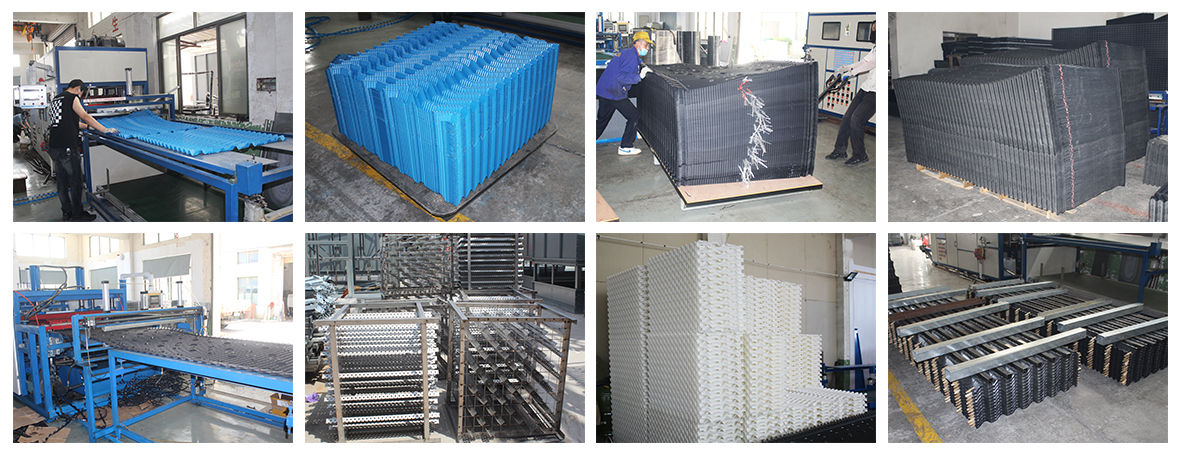
Cooling tower fill is one of the most important components affecting heat-transfer performance. Over time, cooling tower fill can become clogged, brittle, warped, damaged, or covered with scale and biological growth. When this happens, replacing the fill can restore cooling performance without replacing the entire cooling tower.
Choosing the right fill for cooling tower replacement is not simply a matter of matching dimensions. Buyers need to consider fill type, material, water quality, operating temperature, airflow, installation conditions, and compatibility with the existing tower.
This guide explains the key factors to consider when purchasing cooling tower replacement fill.
What Is Cooling Tower Fill?
Cooling tower fill, also called cooling tower fill media, is the internal material that increases contact between hot process water and moving air.
As water flows over or through the fill, it is divided into smaller streams or thin films. This increases the water-air contact area and promotes evaporation. The evaporation process removes heat from the circulating water.
Common types include:
Film fill
Splash fill
Hybrid fill
The correct fill design depends on the cooling tower type, water quality, thermal requirements, and operating conditions.
Why Replace Cooling Tower Fill?
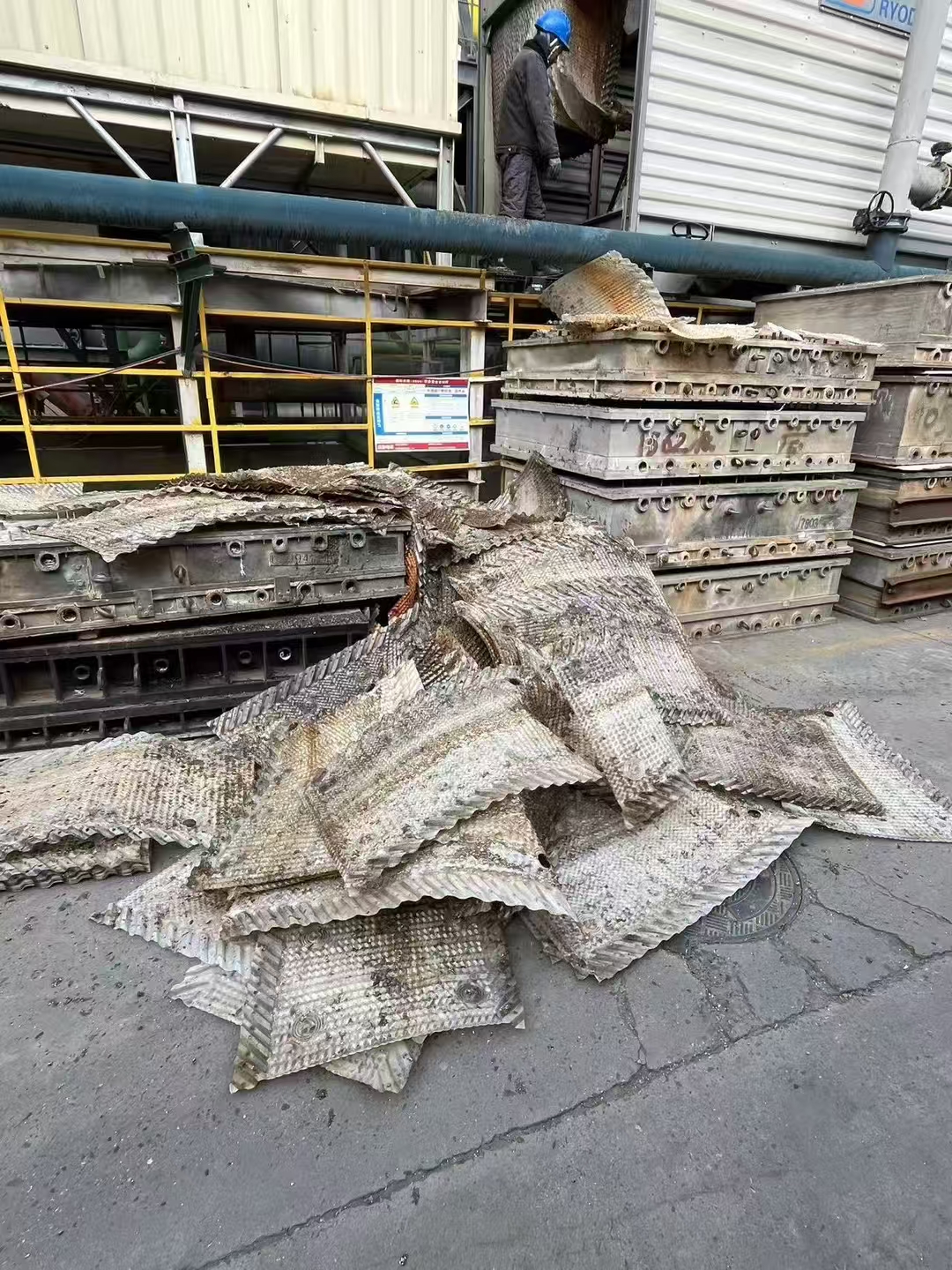
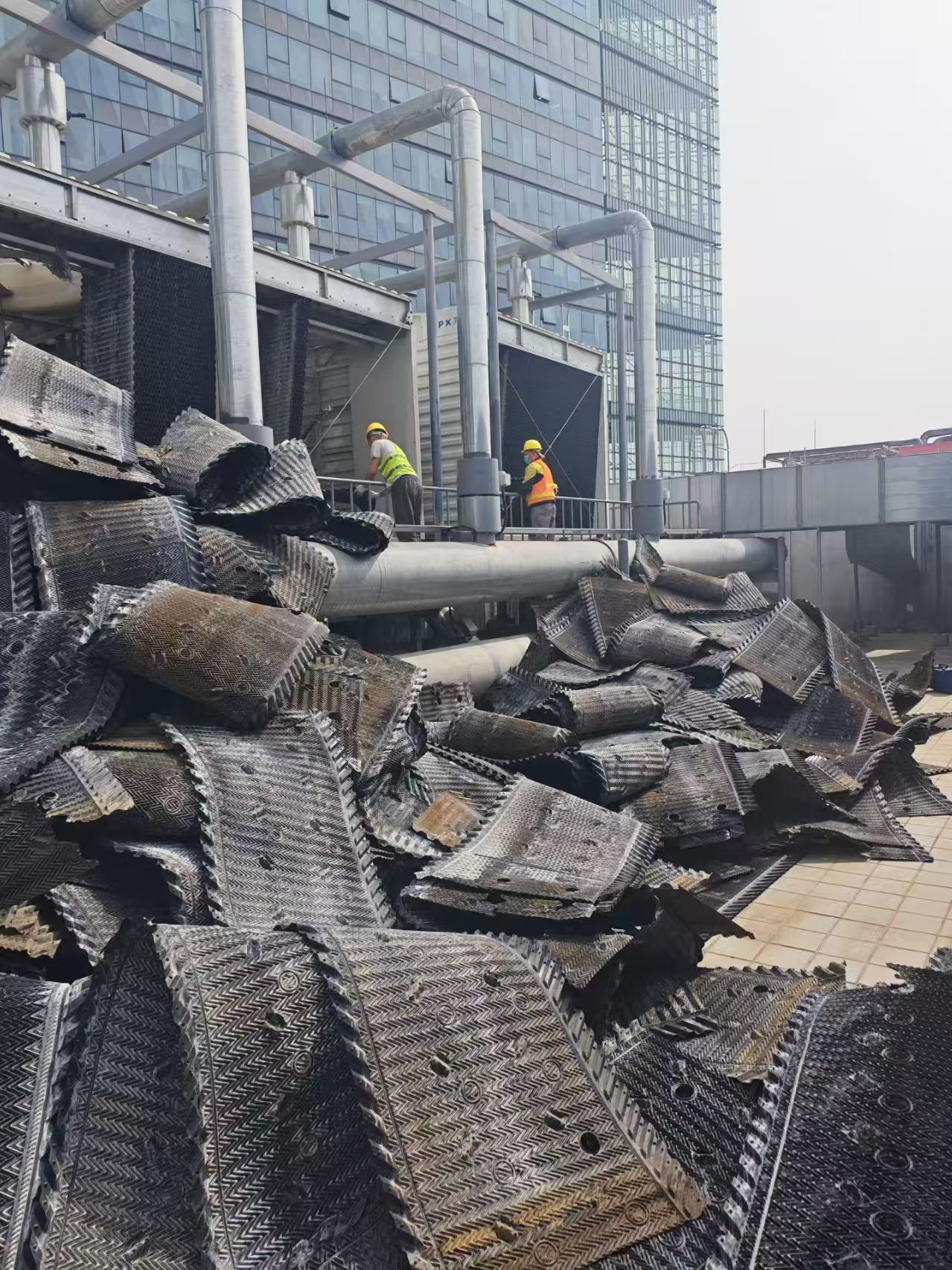
Cooling tower fill does not last forever. Its service life depends on water chemistry, temperature, UV exposure, mechanical stress, cleaning practices, and operating conditions.
Common signs that cooling tower fill replacement may be necessary include:
Reduced Cooling Performance
If cold-water temperature rises even though the fan and water flow are operating normally, damaged or fouled fill may be contributing to the problem.
Clogged or Fouled Fill
Scale, dirt, algae, suspended solids, and biological deposits can block passages and reduce effective air and water contact.
Broken or Deformed Fill
High temperatures, chemical exposure, freezing, impact, or aging can cause PVC or PP fill sheets to crack, deform, or collapse.
Increased Pressure Drop
Blocked or incorrectly installed fill can restrict airflow, increasing system resistance and potentially affecting fan performance.
Uneven Water Distribution
Damaged fill can also contribute to poor water distribution, creating areas where water bypasses the intended heat-transfer surface.
Replacing deteriorated fill can help restore the tower's original operating conditions.
Film Fill vs. Splash Fill for Replacement
One of the first decisions is selecting the correct cooling tower fill type.
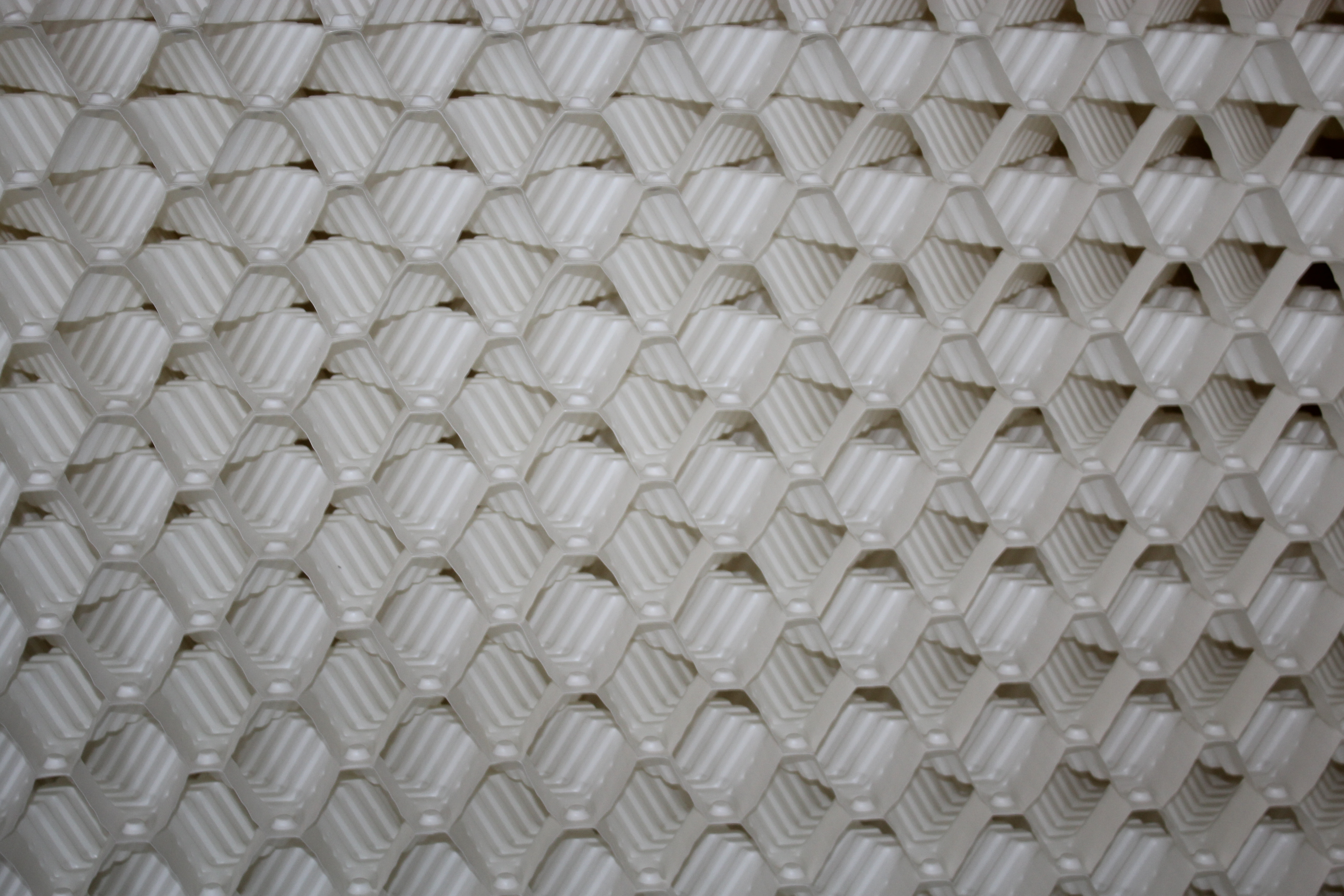
Film Fill
Film fill uses closely spaced sheets to spread water into a thin film.
Its main advantages include:
Film fill is commonly manufactured from PVC or polypropylene (PP).
However, narrow passages can be more sensitive to suspended solids, scale, and biological fouling. Therefore, water quality should be evaluated before selecting film fill.
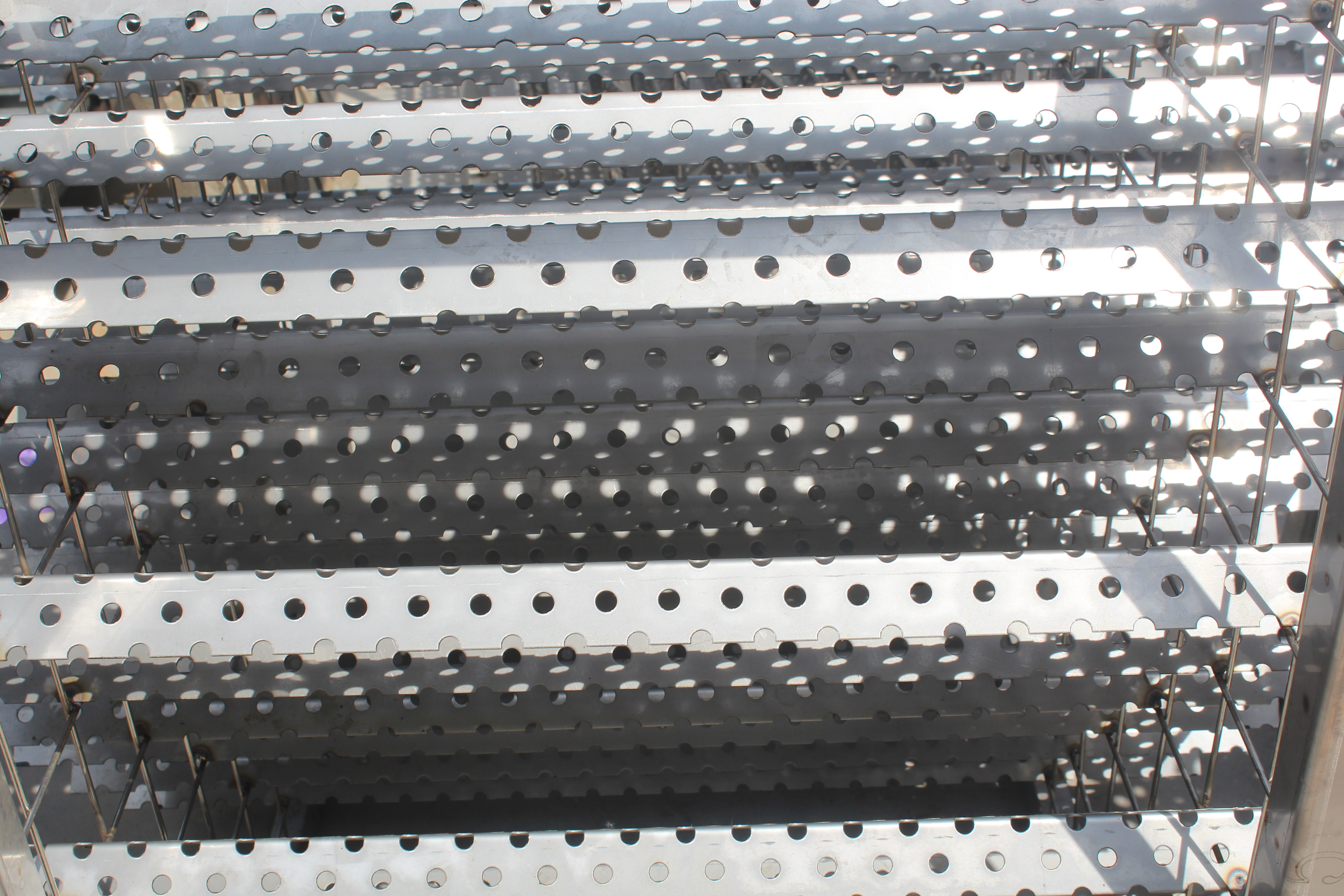
Splash Fill
Splash fill breaks falling water into droplets through repeated splashing.
Typical designs include grid, tube, bar, and modular splash-fill configurations.
Advantages include:
Larger water passages
Better tolerance of dirty water in many applications
Lower tendency to plug than some fine-passage film fills
Suitable for industrial applications with higher suspended solids
Splash fill can be an effective option for cooling tower fill replacement where fouling is a major concern.
The replacement fill should generally match the tower's thermal and hydraulic requirements rather than being selected based only on price.
PVC vs. PP Cooling Tower Fill
Material selection is another important consideration.
PVC Cooling Tower Fill
PVC is widely used for film fill because it provides a practical combination of cost, rigidity, chemical resistance, and thermal performance.
PVC cooling tower fill is commonly selected for commercial and industrial cooling towers where operating conditions are within the material's recommended range.
PP Cooling Tower Fill
Polypropylene has good chemical resistance and can be suitable for applications involving higher temperatures or aggressive operating environments, depending on the specific grade and design.
PP fill is also widely used in industrial cooling tower applications.
When comparing PVC and PP, buyers should consider the actual water temperature, chemical environment, fire requirements, and manufacturer specifications rather than assuming one material is universally better.
How to Measure Cooling Tower Fill for Replacement
Correct dimensions are essential.
Before ordering replacement fill, record:
For modular fills, also check how individual blocks fit together inside the existing fill area.
Do not rely solely on the tower's nominal tonnage. Two cooling towers with the same nominal capacity can have different fill dimensions and thermal designs.
Match the Existing Cooling Tower Design
A replacement fill should be compatible with the tower's internal structure.
Important information includes:
Cooling tower manufacturer
Tower model
Crossflow or counterflow design
Water flow rate
Airflow arrangement
Hot-water temperature
Cold-water temperature
Design wet-bulb temperature
Existing fill dimensions
Available fill height
For OEM replacement projects, the original part number can be useful. For aftermarket projects, detailed dimensions and operating data are especially important.
Consider Water Quality Before Buying
Water quality has a major impact on fill selection and service life.
If the circulating water contains high levels of suspended solids, hardness, oil, fibers, or biological contamination, a fine-passage film fill may be more vulnerable to fouling.
In these conditions, buyers may need to consider:
Larger-passage film fill
Splash fill
Water filtration
Improved water treatment
Regular fill cleaning
Better blowdown control
The best replacement strategy considers both the fill and the water-treatment system.
Cooling Tower Fill Replacement: Installation Considerations
Replacing fill requires more than simply removing old blocks and inserting new ones.
Before installation:
Shut down and isolate the cooling tower.
Remove damaged or fouled fill.
Inspect fill supports and structural components.
Clean the fill area.
Check spray nozzles and water distribution.
Confirm airflow paths are unobstructed.
Install replacement fill according to the required orientation.
Inspect for gaps or bypass paths.
Restart the tower and verify water distribution.
Poor installation can reduce the performance of even high-quality replacement fill.
How to Choose a Cooling Tower Fill Supplier
When purchasing cooling tower replacement fill, compare suppliers based on more than unit price.
Look for a supplier that can provide:
Exact replacement dimensions
PVC or PP material options
Film and splash fill options
Thermal performance information
Technical drawings
Installation guidance
Sample specifications
Custom sizes
Bulk B2B supply capability
Export and packaging experience
For large replacement projects, request drawings and technical data before placing the order.
Common Mistakes When Buying Replacement Fill
Choosing Based Only on Price
Low-cost fill may not provide the required thermal performance or service life.
Ignoring Water Quality
A fill design that works well with clean water may perform poorly in heavily contaminated water.
Matching Only the Dimensions
Two fills with identical dimensions can have different surface areas, flute patterns, and hydraulic characteristics.
Replacing Fill Without Checking Nozzles
Poor water distribution can reduce cooling performance even after new fill is installed.
Installing Without Inspecting Supports
Damaged support grids or beams can cause new fill to sag or collapse.
Cooling Tower Fill Replacement for Industrial Applications
Industrial cooling towers often operate under demanding conditions. Refineries, power plants, chemical facilities, steel plants, HVAC systems, and manufacturing facilities may require different fill designs.
For these applications, buyers should provide the supplier with actual operating data, including water flow, temperatures, water quality, and tower configuration.
A properly selected industrial cooling tower fill can improve heat-transfer efficiency while helping maintain reliable tower operation.
FAQ About Cooling Tower Fill Replacement
How often should cooling tower fill be replaced?
There is no universal replacement interval. Service life depends on water quality, operating temperature, chemical exposure, maintenance, and fill material. Inspection should determine whether replacement is necessary.
Can I replace film fill with splash fill?
Possibly, but it should not be assumed to be a direct replacement. Thermal performance, airflow, water distribution, fill volume, and support requirements should be evaluated first.
Is PVC or PP better for cooling tower fill?
Both materials are widely used. The appropriate choice depends on temperature, chemical conditions, tower design, and the specific fill product.
Can replacement fill be custom-made?
Yes. Many cooling tower fill manufacturers can produce blocks or sheets according to specified dimensions and configurations.
How do I order replacement cooling tower fill?
Provide the supplier with the tower model, existing fill dimensions, fill type, material, water flow, operating temperatures, and photos or drawings when available.
Conclusion
Selecting the right fill for cooling tower replacement can have a significant impact on cooling performance, maintenance requirements, and operating reliability. Buyers should evaluate fill type, material, dimensions, water quality, thermal requirements, and tower configuration before ordering.
For retrofit and aftermarket projects, PVC and PP cooling tower fill, film fill, and splash fill can provide different solutions depending on the application.
If you need replacement fill for an existing cooling tower, providing detailed tower and operating information to the supplier is the best way to identify a compatible solution and avoid costly installation problems.
Internal Links for Other CoolingTowerParts
Cooling Tower Fill
Cooling Tower Nozzles
Cooling Tower Drift Eliminators
Cooling Tower Louvers
Cooling Tower Fan Blades
Cooling Tower Motors