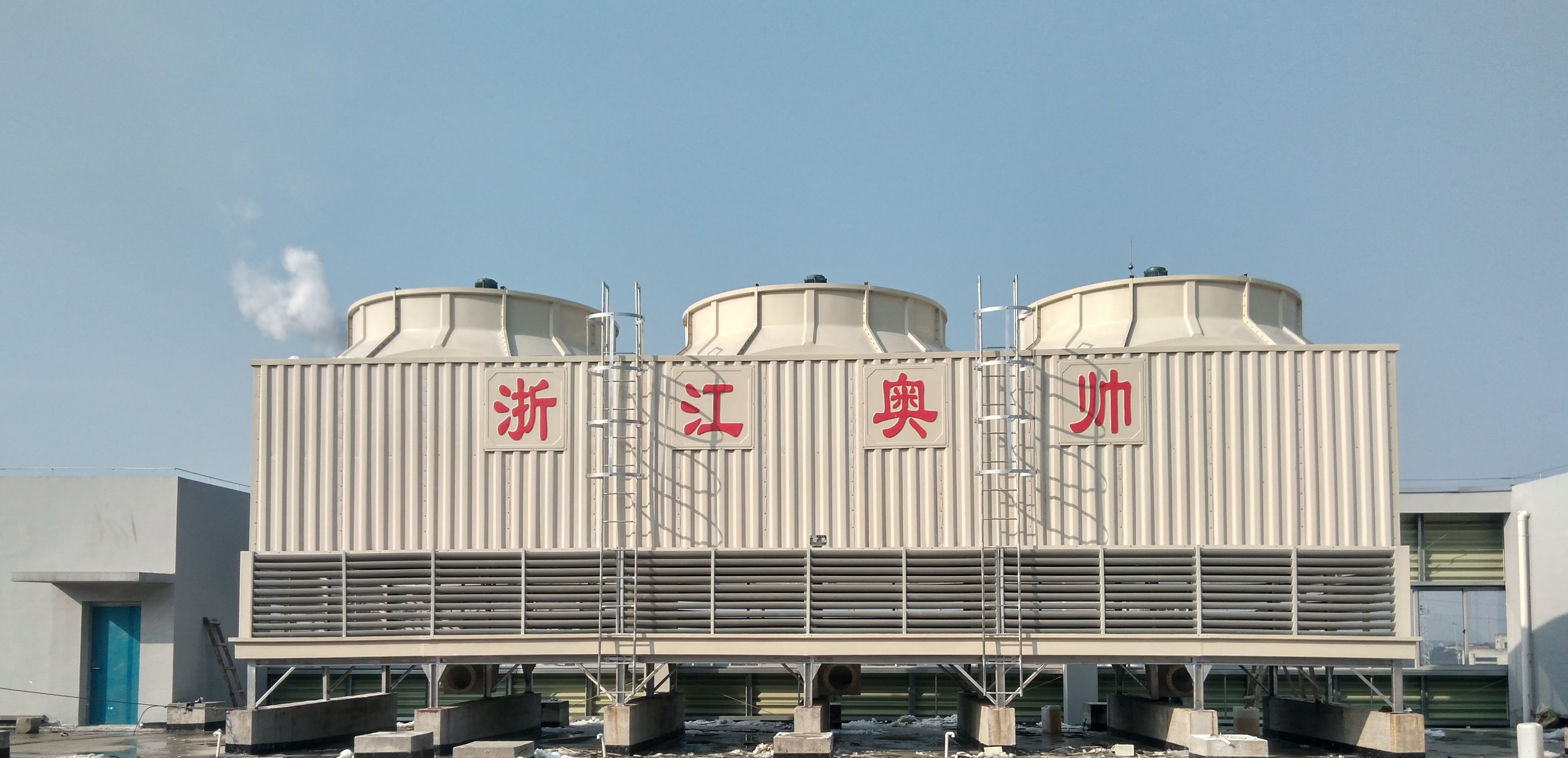
Vibration is a common operational problem in industrial cooling tower systems. Excessive vibration can affect the cooling tower fan, motor, gearbox, supporting structure, and fiberglass fan stack. If left untreated, it may cause structural cracks, loose connections, increased noise, and unexpected equipment downtime.
A fiberglass cooling tower fan stack, also known as an FRP cooling tower fan stack, is designed to withstand normal operating loads, wind pressure, and fan-induced forces. However, improper installation, insufficient structural stiffness, fan imbalance, and deteriorated connections can lead to excessive vibration.
Understanding the causes of FRP cooling tower fan stack vibration and applying the correct solutions can improve equipment reliability, extend service life, and reduce maintenance costs.
1. What Causes Fiberglass Cooling Tower Fan Stack Vibration?
Fiberglass fan stack vibration can originate from the fan assembly, supporting structure, or the fan stack itself. Identifying the source is the first step toward effective troubleshooting.
1.1 Fan Blade Imbalance
Fan blade imbalance is one of the most common causes of cooling tower vibration.
When fan blades have different weights, accumulated dirt, uneven wear, or incorrect pitch angles, the rotating assembly may generate excessive centrifugal forces.
These forces can be transferred to the fan deck and fiberglass fan stack.
Solutions:
Inspect all fan blades for damage and dirt accumulation.
Check blade pitch angles for consistency.
Verify that the fan assembly is correctly balanced.
Replace damaged blades when necessary.
Follow the manufacturer's balancing procedure.
1.2 Loose Flange Connections
FRP cooling tower fan stacks are commonly connected to the fan deck through reinforced fiberglass flanges and bolted joints.
Loose bolts or uneven tightening can allow movement between connected components, creating vibration and additional stress.
Over time, this may cause cracks around bolt holes or flange connections.
Solutions:
Inspect all flange bolts regularly.
Check for loose or missing fasteners.
Tighten bolts according to the manufacturer's specifications.
Inspect flange surfaces for cracks and deformation.
Replace damaged connection components.
Avoid excessive bolt tightening, which can create concentrated stress in the fiberglass material.
1.3 Insufficient Structural Stiffness
The structural design of a fiberglass fan stack directly affects its ability to resist vibration.
If wall thickness, fiberglass reinforcement, or supporting ribs are insufficient, the stack may experience excessive movement during fan operation.
Large-diameter fan stacks require particular attention to structural stiffness and wind loading.
Solutions:
Review the original FRP structural design.
Check wall thickness and reinforcement arrangement.
Inspect structural ribs and connection areas.
Evaluate vibration and natural frequencies.
Add engineered reinforcement when required.
Any structural modification should be approved by a qualified engineer to avoid changing the stack's load distribution or creating new stress concentrations.
1.4 Fan and Motor Misalignment
Misalignment between the motor, gearbox, drive shaft, and fan assembly can generate abnormal vibration.
This vibration may travel through the supporting structure and affect the fan stack.
Common alignment problems include:
Incorrect motor positioning.
Misaligned gearbox connections.
Bent drive shafts.
Improper bearing installation.
Incorrect coupling alignment.
Solutions:
Check the complete fan drive system, including the motor, gearbox, shaft, bearings, and coupling. Correct alignment according to equipment specifications before restarting the cooling tower.
1.5 Aerodynamic Instability
Uneven airflow around the fan blades can generate fluctuating aerodynamic forces.
Potential causes include incorrect fan blade pitch, airflow obstructions, damaged fan stack geometry, and uneven inlet conditions.
Solutions:
Inspect the fan stack for deformation.
Check fan blade pitch and clearance.
Remove airflow obstructions.
Verify fan and stack alignment.
Review the fan's operating conditions.
1.6 Wind-Induced Vibration
Cooling tower fan stacks are exposed to outdoor wind loads.
Strong or turbulent winds can generate additional forces, especially in tall or large-diameter structures.
Poor anchoring, insufficient reinforcement, or structural deterioration may increase movement.
Solutions:
Inspect mounting flanges and supporting structures.
Check for loose connections.
Evaluate wind loads under local design conditions.
Verify structural stiffness and anchoring.
Consult a structural engineer if excessive movement is observed.
2. Common Signs of FRP Cooling Tower Fan Stack Vibration
Early identification helps prevent minor vibration problems from developing into serious structural failures.
Look for the following warning signs:
| Warning Sign | Possible Cause |
| Abnormal operating noise | Loose connections or fan imbalance |
| Visible stack movement | Structural flexibility or excessive vibration |
| Cracks around flanges | Stress concentration or loose connections |
| Uneven fan clearance | Misalignment or stack deformation |
| Repeated bolt loosening | Vibration or improper installation |
| Surface cracking | Material aging or structural stress |
| Increased fan vibration | Blade imbalance or drive-system problems |
If significant vibration or structural damage is detected, the fan should be shut down and inspected according to site safety procedures.
3. How to Diagnose Cooling Tower Fan Stack Vibration
A systematic inspection helps identify whether vibration originates from the fan assembly or the fiberglass structure.
Step 1: Measure Vibration
Use suitable vibration measurement equipment to check the motor, gearbox, fan support, and accessible structural locations.
Compare measurements with equipment manufacturer recommendations and applicable vibration assessment standards.
Step 2: Inspect Fan Blades
Check blade condition, pitch angle, accumulated deposits, and balance.
Step 3: Check Mechanical Connections
Inspect flange bolts, mounting brackets, motor supports, and gearbox connections.
Step 4: Inspect the FRP Structure
Look for cracks, delamination, deformation, damaged reinforcement, and loose mounting areas.
Step 5: Evaluate Operating Conditions
Check fan speed, airflow conditions, wind exposure, and possible resonance.
A qualified technician should evaluate vibration frequency and operating speed to identify potential resonance problems.
4. FRP Cooling Tower Fan Stack Vibration: Troubleshooting Table
| Problem | Likely Cause | Recommended Solution |
| Excessive vibration during startup | Fan imbalance or misalignment | Inspect fan and drive alignment |
| Continuous stack movement | Insufficient stiffness or loose mounting | Inspect structure and connections |
| Flange vibration | Loose bolts or damaged flange | Repair and secure connection |
| High-frequency vibration | Mechanical or bearing problems | Inspect bearings and drive components |
| Vibration under strong wind | Wind loading or insufficient support | Conduct structural assessment |
| Cracks near mounting points | Stress concentration | Evaluate and repair damaged FRP |
5. How to Prevent Fiberglass Fan Stack Vibration
Preventive maintenance is more economical than repairing major structural damage.
Recommended practices include:
1. Perform Regular Fan Inspections
Check fan blades, hubs, pitch angles, and balancing conditions.
2. Maintain Proper Alignment
Inspect the motor, gearbox, drive shaft, and bearings according to maintenance schedules.
3. Inspect Flange Connections
Check mounting bolts and reinforced flange areas for loosening, cracks, or deformation.
4. Monitor Vibration Levels
Establish baseline vibration measurements and track changes over time.
5. Maintain Structural Integrity
Inspect FRP walls, reinforcement ribs, and mounting structures for signs of aging or damage.
6. Avoid Improper Modifications
Do not drill additional holes, add unapproved supports, or modify the fan stack without engineering review.
6. When Should You Replace a Fiberglass Cooling Tower Fan Stack?
Not every vibration problem requires fan stack replacement. Some problems can be resolved by balancing the fan, correcting alignment, or repairing mounting connections.
However, replacement may be necessary when:
Major structural cracks develop.
Extensive delamination affects load-bearing areas.
The stack has permanent deformation.
Flange connections are severely damaged.
Structural reinforcement is no longer adequate.
Repeated repairs cannot restore structural reliability.
Before replacement, engineers should evaluate the fan stack dimensions, structural loads, fan clearance, and operating requirements.
A customized FRP replacement can be manufactured to match the existing cooling tower configuration.
7. Choosing a Reliable Fiberglass Cooling Tower Fan Stack Manufacturer
Selecting a qualified manufacturer is important for preventing vibration-related problems.
Industrial buyers should evaluate:
Fiberglass reinforcement quality.
Resin type and material specifications.
Wall thickness and structural design.
Reinforcement ribs and flange construction.
Dimensional accuracy and roundness.
Quality control and inspection procedures.
Experience with industrial cooling tower replacement projects.
CoolingTowerPart.com provides cooling tower components and customized replacement solutions for industrial customers.
Fiberglass cooling tower fan stacks can be customized according to fan diameter, stack height, mounting dimensions, structural requirements, and operating conditions.
Buyers can provide technical drawings, measurements, and photographs to support product evaluation and quotation.
8. Frequently Asked Questions
Q1: Can a fiberglass cooling tower fan stack vibrate?
Yes. Although FRP is lightweight and corrosion-resistant, it can vibrate because of fan imbalance, structural flexibility, loose connections, wind loads, or resonance.
Q2: Does excessive fan vibration damage an FRP fan stack?
Yes. Continuous excessive vibration can contribute to fatigue, cracking, delamination, and flange damage.
Q3: How do I reduce cooling tower fan stack vibration?
Start by checking fan balance, blade pitch, mechanical alignment, flange connections, and structural integrity. Identify the vibration source before applying repairs.
Q4: Can cracked FRP fan stacks be repaired?
Minor damage may be repairable using suitable fiberglass reinforcement and resin systems. Major structural cracks require engineering evaluation and may require replacement.
Q5: How often should an FRP fan stack be inspected?
Inspection frequency should follow the manufacturer's recommendations and the facility's maintenance program. Additional inspections are advisable after abnormal vibration, severe weather, or structural impacts.
Conclusion
Fiberglass cooling tower fan stack vibration can result from fan imbalance, loose flange connections, insufficient structural stiffness, mechanical misalignment, aerodynamic instability, and wind loading.
Effective troubleshooting requires identifying the vibration source, inspecting the fan drive system, measuring vibration levels, and evaluating the FRP structure.
With proper structural design, accurate installation, and regular preventive maintenance, an FRP cooling tower fan stack can provide reliable long-term performance.
For industrial cooling tower replacement and retrofit projects, choosing a high-quality fiberglass cooling tower fan stack with suitable reinforcement, accurate dimensions, and properly engineered connections helps reduce vibration risks and improve equipment reliability.
Recommended internal links for CoolingTowerPart.com:


