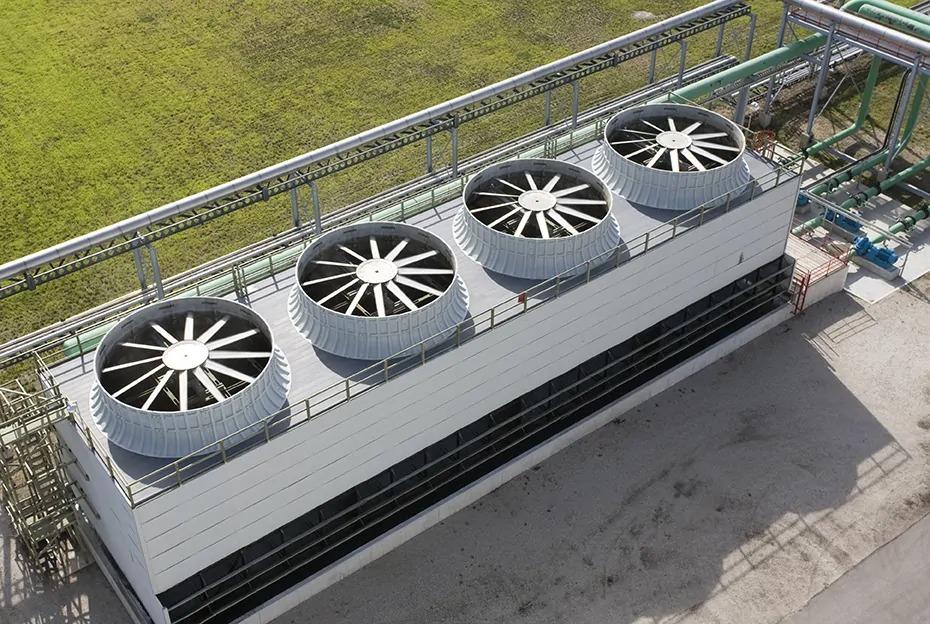
A fiberglass cooling tower fan stack is an important component of a cooling tower ventilation system. It directs airflow through the tower, supports efficient heat rejection, and helps guide warm, moist air away from the cooling tower. Made from fiberglass-reinforced plastic (FRP), a fiberglass fan stack offers corrosion resistance, lightweight construction, and long-term durability in demanding industrial environments.
For cooling tower owners, maintenance teams, and industrial equipment buyers, choosing the right FRP cooling tower fan stack can improve operational reliability and simplify maintenance. This guide covers its functions, materials, benefits, applications, selection criteria, and maintenance requirements.
1. What Is a Fiberglass Cooling Tower Fan Stack?
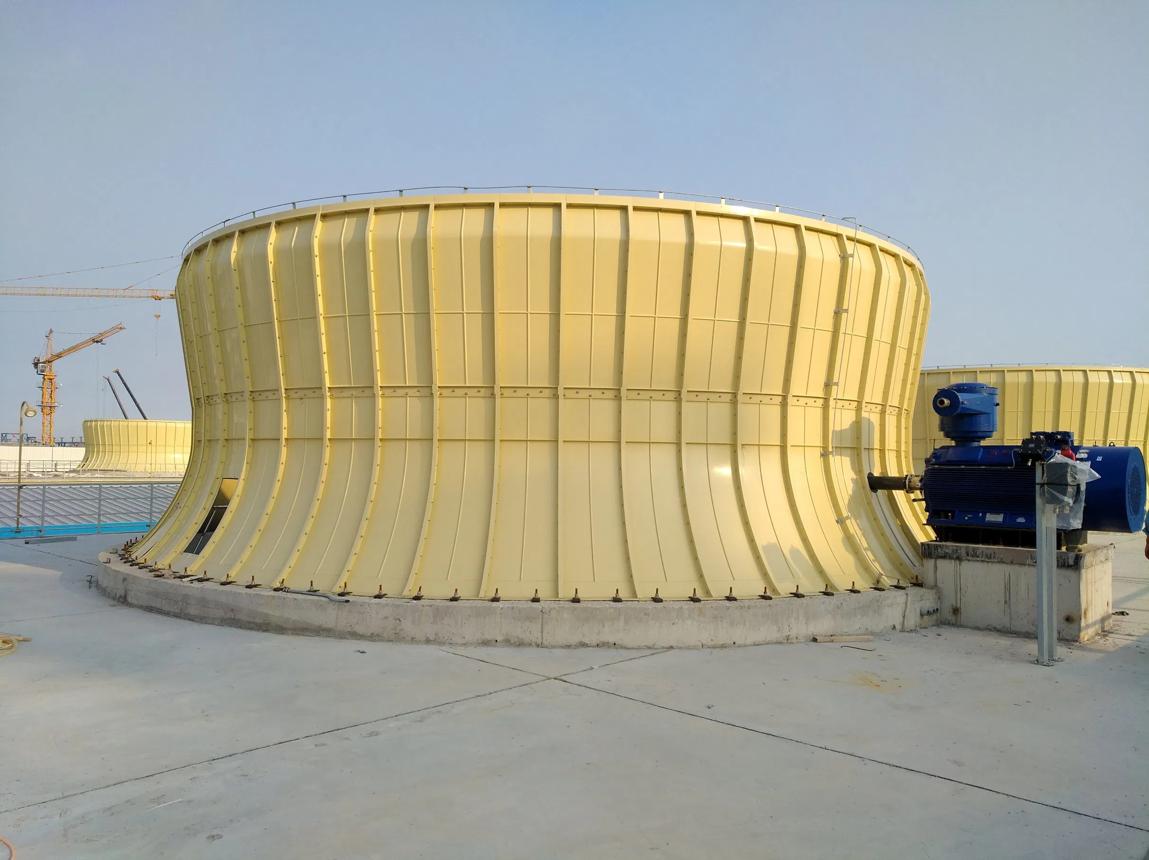
A fiberglass cooling tower fan stack is a cylindrical or specially shaped enclosure installed around the cooling tower fan. It forms a defined airflow passage and helps direct exhaust air upward or away from nearby equipment.
Unlike traditional metal fan stacks, fiberglass fan stacks are manufactured from fiberglass-reinforced plastic, which combines reinforcing glass fibers with a resin matrix. Common resin systems include polyester and vinyl ester, selected according to operating conditions and chemical exposure.
FRP fan stacks are widely used in industrial cooling towers where corrosion resistance, structural stability, and reduced maintenance are important.
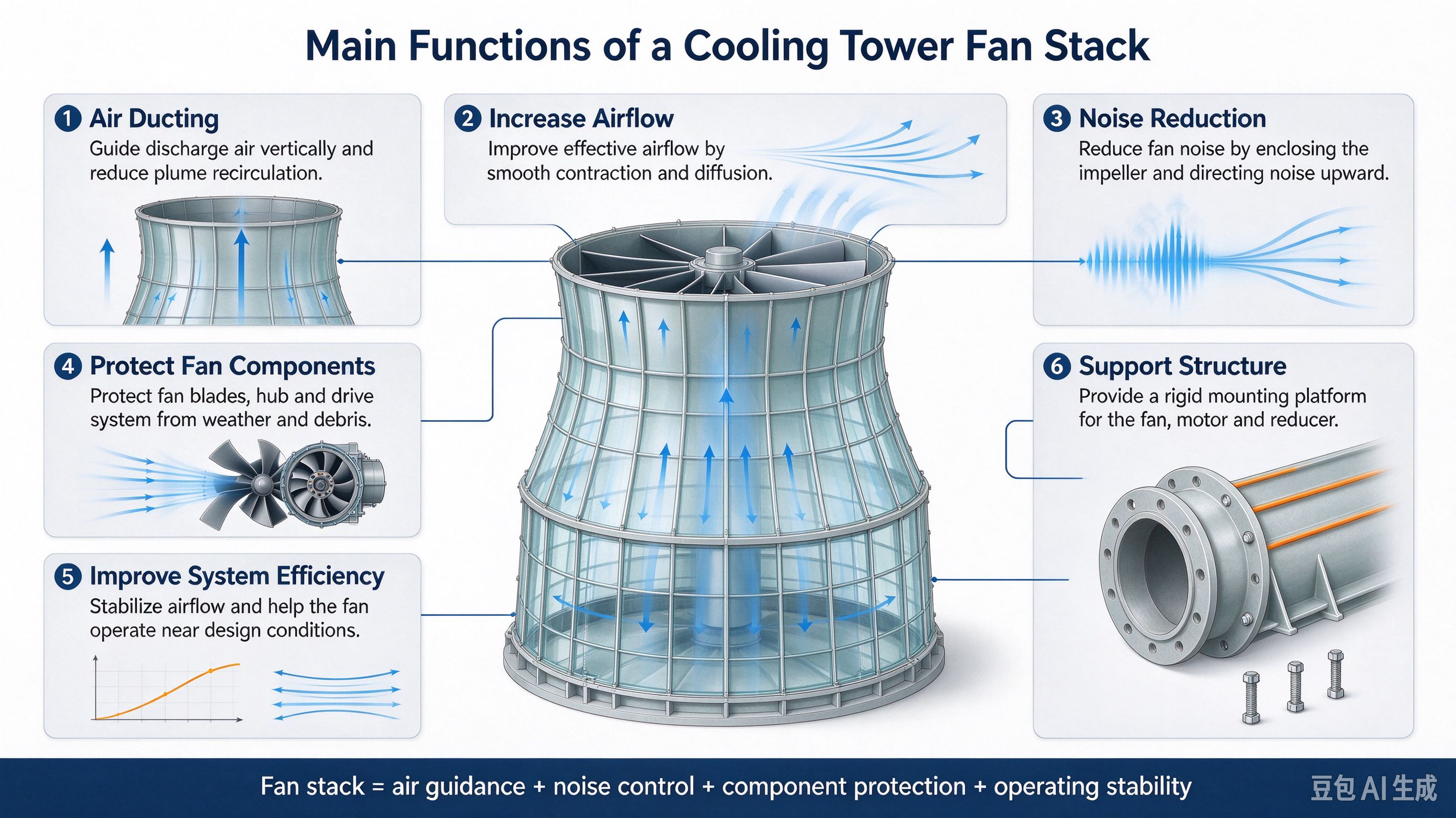
2. Main Functions of a Cooling Tower Fan Stack
Directing Airflow
The fan stack guides air discharged by the cooling tower fan. Its shape and dimensions influence airflow distribution and help reduce unnecessary flow disturbances.
Supporting Cooling Tower Efficiency
A properly designed fan stack helps the fan move air through the cooling tower as intended. Incorrect dimensions, poor alignment, or damaged surfaces can contribute to airflow losses and reduced thermal performance.
Improving Air Discharge
The stack directs warm, moisture-laden exhaust air away from the fan area. Appropriate discharge height and configuration can help reduce the risk of exhaust air recirculating into the tower air inlets.
Protecting the Fan Area
The fan stack provides an enclosure around the fan and can help protect the surrounding area. However, it is not a substitute for properly designed fan guards and other required safety devices.
3. Key Advantages of Fiberglass Cooling Tower Fan Stacks
Excellent Corrosion Resistance
Cooling towers operate in humid environments where water treatment chemicals, airborne contaminants, and moisture can accelerate metal corrosion. Fiberglass resists many forms of corrosion and is suitable for numerous industrial cooling applications.
The specific resin system must still be selected according to the chemicals, temperature, and exposure conditions involved.
Lightweight Construction
FRP fan stacks are generally lighter than comparable steel structures. Their lower weight can reduce structural loading and make transportation, lifting, and installation easier.
Long Service Life
When properly designed, manufactured, installed, and maintained, a fiberglass fan stack can provide reliable long-term service. UV-resistant surface protection and suitable resin selection can help improve durability in outdoor installations.
Lower Maintenance Requirements
Fiberglass does not require the same routine rust prevention and repainting associated with many conventional steel structures. Regular inspections remain necessary to identify cracking, delamination, loose fasteners, and other potential problems.
Flexible Design Options
FRP fan stacks can be manufactured in different diameters, heights, profiles, and mounting configurations. Customization allows manufacturers to accommodate different cooling tower models and replacement requirements.
4. Common Materials and Construction
Fiberglass cooling tower fan stacks typically consist of several material and structural elements.
Fiberglass reinforcement: Provides structural strength and stiffness.
Resin matrix: Binds the glass fibers and contributes to corrosion resistance.
Surface gelcoat or protective layer: Helps protect against weathering, moisture, and UV exposure when appropriately specified.
Reinforcement ribs or flanges: Improve rigidity and support mounting connections where required.
Fasteners and connection hardware: Secure the stack to the cooling tower structure and may require corrosion-resistant materials.
Manufacturing methods may include hand lay-up, spray-up, or other suitable FRP molding processes. The appropriate method depends on the required geometry, production volume, mechanical properties, and quality standards.
5. Applications of Fiberglass Cooling Tower Fan Stacks
FRP cooling tower fan stacks are used in a variety of industries.
Power Plants
Power generation facilities use cooling towers to remove waste heat. Corrosion-resistant fan stacks can help maintain reliable ventilation in continuously operating environments.
Chemical and Petrochemical Plants
Chemical processing facilities may expose cooling tower components to aggressive atmospheres and chemical contaminants. The resin and reinforcement system should be selected for the actual exposure conditions.
HVAC and Commercial Buildings
Large commercial buildings, hospitals, and industrial facilities use cooling towers for air-conditioning and process cooling. Fiberglass stacks offer a lightweight option for suitable installations.
Manufacturing Facilities
Steel plants, paper mills, food processing plants, and other manufacturing operations may use FRP fan stacks in their cooling water systems.
6. How to Choose the Right Fiberglass Cooling Tower Fan Stack
Selecting a suitable fan stack requires more than matching its outside diameter. Buyers should review the following factors.
Dimensions and Compatibility
Confirm the fan stack diameter, height, mounting flange dimensions, bolt-hole pattern, and connection details. For replacement projects, compare the existing stack drawings with the proposed design.
Fan Specifications
Check the fan diameter, blade configuration, rotational speed, airflow requirements, and operating conditions. The stack must be compatible with the installed fan and the cooling tower's intended airflow design.
Material and Chemical Resistance
Identify the operating temperature, water treatment chemicals, surrounding atmosphere, and outdoor exposure. Choose an appropriate resin system and protective surface treatment.
Structural Strength
Evaluate wind loads, vibration, support conditions, and applicable structural requirements. The stack should withstand the loads expected at the installation site.
Installation and Maintenance
Consider access for lifting, assembly, inspection, and future replacement. Modular construction may be beneficial where installation space is limited.
Manufacturer Experience
Work with a supplier that can provide dimensional drawings, material specifications, quality documentation, and technical support. For replacement projects, confirm that the proposed product fits the existing cooling tower configuration.
7. Fiberglass vs. Metal Cooling Tower Fan Stacks
| Feature | Fiberglass (FRP) | Steel or Other Metals |
| Weight | Generally lightweight | Varies by material and design |
| Corrosion resistance | Excellent with suitable resin selection | Depends on alloy and protective coating |
| Maintenance | Usually low; inspect for structural damage | May require corrosion protection |
| Customization | Flexible molding options | Fabrication-dependent |
| Initial cost | Depends on design and production volume | Depends on material and fabrication |
| Service life | Depends on design and exposure | Depends on material, coating, and maintenance |
Neither material is ideal for every application. Buyers should compare total lifecycle cost, structural requirements, operating conditions, and replacement needs.
8. Installation and Maintenance Best Practices
Correct installation helps ensure reliable operation and reduces the risk of premature failure.
Inspect the supporting structure: Confirm that the support frame, mounting surface, and connection points are in suitable condition.
Verify dimensions: Check the stack diameter, flange alignment, bolt pattern, and clearance from fan blades.
Use suitable fasteners: Select hardware compatible with the operating environment and the manufacturer's specifications.
Check fan clearance: Confirm that the fan cannot contact the stack during operation, including under expected movement or deflection.
Inspect the installation: Verify that connections are secure and that the stack is properly aligned before startup.
Schedule regular inspections: Look for cracks, impact damage, UV degradation, loose fasteners, delamination, and signs of excessive vibration.
Repair damage promptly: Use an appropriate FRP repair procedure or replace the component when structural integrity is uncertain.
Always follow the cooling tower manufacturer's instructions and applicable lockout/tagout procedures before performing maintenance near rotating equipment.
9. When Should You Replace a Fiberglass Fan Stack?
Consider professional inspection and possible replacement when the stack shows:
Significant cracking or structural deformation.
Delamination or exposed fiberglass reinforcement.
Damaged mounting flanges or connection points.
Persistent vibration or movement caused by structural problems.
Severe weathering that affects structural integrity.
Poor fit or incorrect dimensions following a fan or tower upgrade.
Before replacing the stack, investigate the underlying cause of damage. Fan imbalance, loose supports, incorrect installation, or excessive wind loading may also need to be addressed.
10. Buying Fiberglass Cooling Tower Fan Stacks from a Manufacturer
When sourcing a fiberglass cooling tower fan stack, industrial buyers should compare more than the quoted purchase price. Important considerations include material quality, dimensional accuracy, structural design, manufacturing consistency, delivery time, and after-sales support.
For replacement and retrofit projects, provide the supplier with the cooling tower model, existing stack dimensions, fan specifications, mounting details, operating environment, and photographs when available.
A qualified manufacturer should be able to review these requirements and recommend a suitable customized or replacement FRP fan stack. Request technical drawings and confirm compatibility before placing a bulk order.
Frequently Asked Questions
What is a fiberglass cooling tower fan stack made of?
It is generally made from fiberglass reinforcement combined with a polyester, vinyl ester, or other suitable resin system. Protective coatings and structural reinforcements may also be included.
Is an FRP fan stack better than a steel fan stack?
FRP offers advantages in corrosion resistance and weight, while steel may be appropriate where specific structural, temperature, or fabrication requirements apply. The best option depends on the application.
Can a fiberglass fan stack be customized?
Yes. Manufacturers can often customize its diameter, height, profile, flange, reinforcement, and mounting arrangement according to project requirements.
How long does a fiberglass cooling tower fan stack last?
Service life depends on material quality, UV exposure, chemical conditions, mechanical loading, installation, and maintenance. Follow the manufacturer's recommendations and inspect the stack regularly.
How do I select a replacement fan stack?
Confirm the existing stack dimensions, fan diameter, clearances, mounting arrangement, operating conditions, and structural requirements. Have the supplier verify compatibility before manufacturing.
Conclusion
A fiberglass cooling tower fan stack provides a lightweight, corrosion-resistant solution for directing cooling tower exhaust airflow. Its performance and service life depend on proper material selection, structural design, dimensional compatibility, and regular maintenance.
Whether you are building a new cooling tower or replacing an existing component, selecting a suitable FRP fan stack can help support reliable operation and reduce long-term maintenance demands. Work with an experienced manufacturer to confirm specifications, installation requirements, and compatibility with your cooling tower system.
Recommended internal links for CoolingTowerPart.com:


