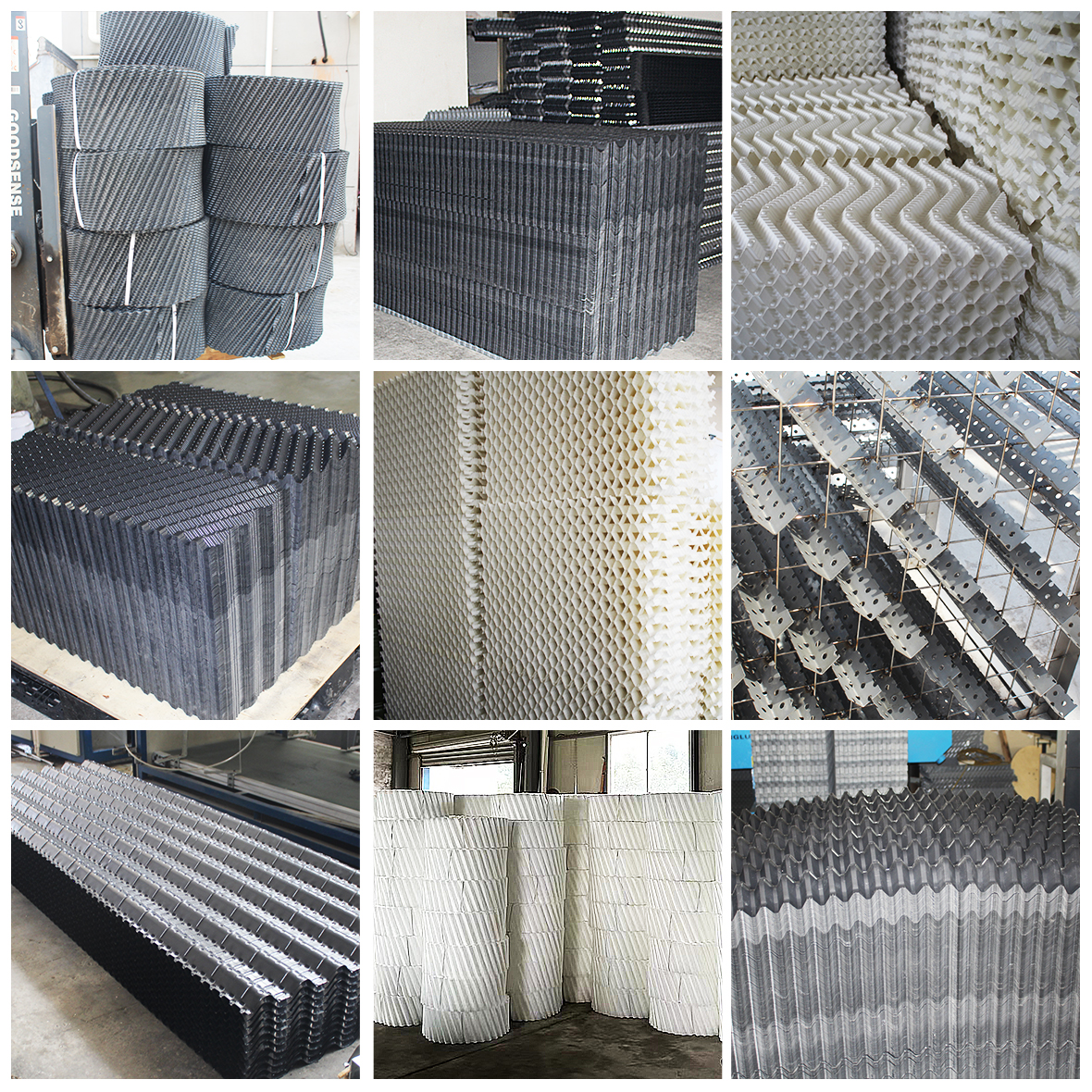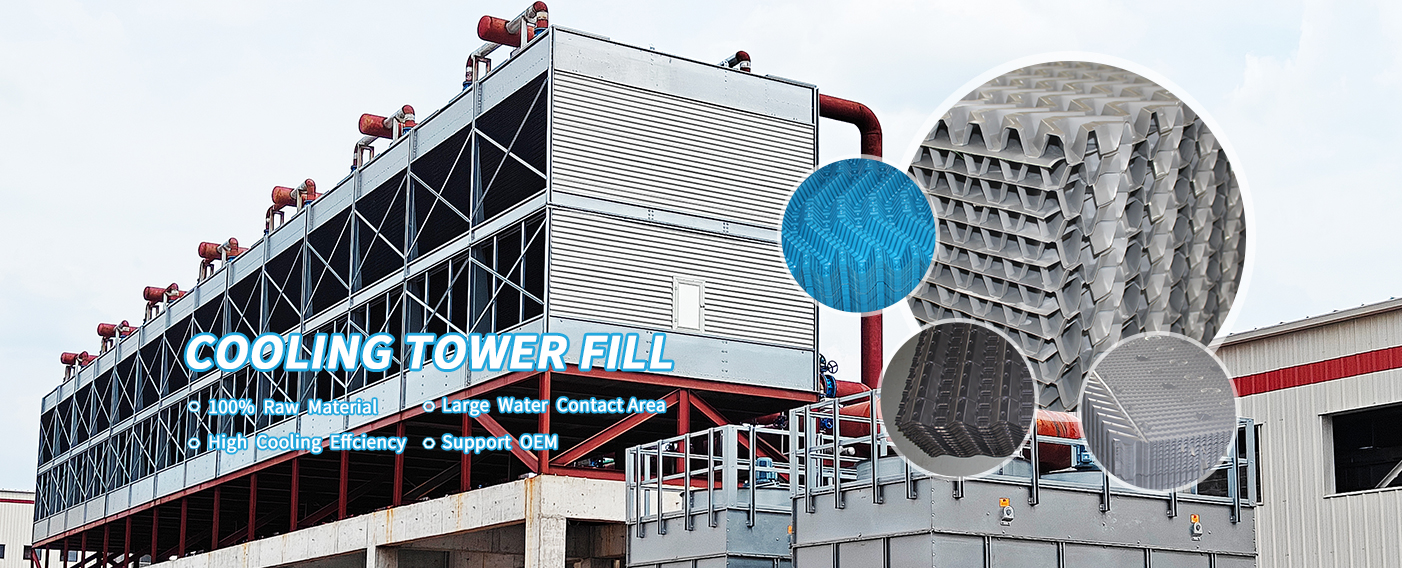
Cooling tower fill media is one of the most important components inside an open cooling tower. It increases the contact area between circulating water and moving air, allowing heat to transfer from the water to the atmosphere more effectively.
When selecting replacement cooling tower fill, two technologies dominate the market: film fill and splash fill. But which one is better?
The answer depends on water quality, cooling tower design, operating conditions, maintenance requirements, and the required thermal performance.
This guide compares film fill vs splash fill to help industrial cooling tower operators, engineers, and B2B buyers choose the right fill media.
What Is Cooling Tower Fill Media?
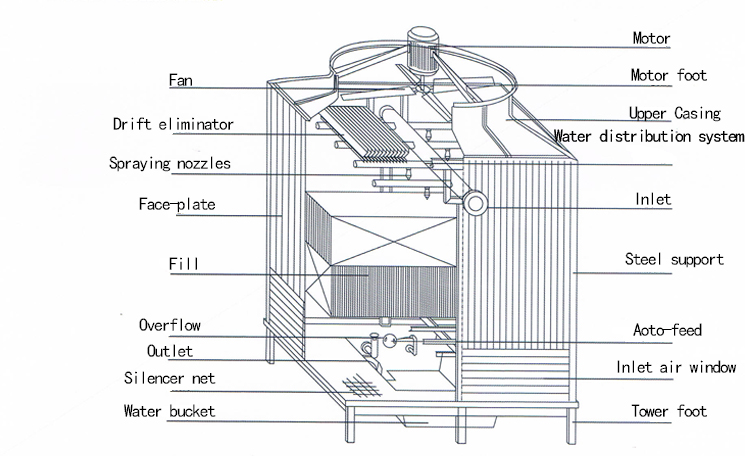
Cooling tower fill media is installed inside a cooling tower to increase water-air contact time and surface area.
Hot process water enters the tower and flows downward through the fill while air moves upward or horizontally, depending on the tower configuration. Heat is transferred from the water to the air, and a portion of the water evaporates.
The main types of cooling tower fill include:
Film fill
Splash fill
Splash bars
Grid-type splash fill
PVC film fill
PP film fill
The correct fill design can significantly influence cooling capacity, pressure drop, water distribution, and maintenance.
What Is Film Fill?
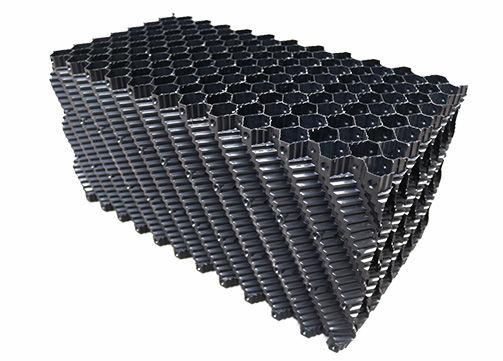
Film fill consists of closely spaced sheets or structured surfaces that spread water into a thin film.
As water flows across the fill surface, a large area of water is exposed to moving air. This creates efficient heat and mass transfer within a relatively compact volume.
Film fill is commonly manufactured from PVC or polypropylene (PP).
Advantages of Film Fill
Film fill offers several important benefits:
High heat-transfer efficiency
Large effective surface area
Compact installation
Lower fill volume for a given cooling duty
Suitable for many HVAC and industrial towers
Efficient use of tower space
Because of its high surface-area density, film fill is frequently selected when maximizing cooling performance and minimizing tower size are priorities.
Limitations of Film Fill
The narrow passages between sheets can be vulnerable to blockage.
Water containing high levels of:
Suspended solids
Dirt
Scale
Algae
Organic debris
may gradually foul the fill.
Therefore, water treatment and regular inspection are especially important when using film fill.
What Is Splash Fill?
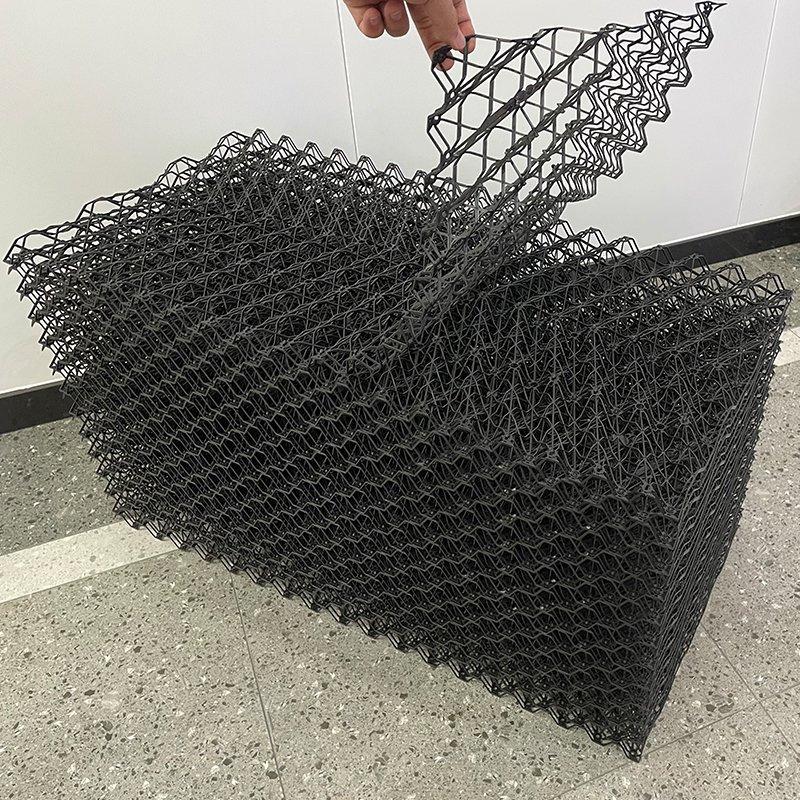
Splash fill works differently. Instead of spreading water into a continuous thin film, splash fill repeatedly breaks falling water into smaller droplets.
Typical splash-fill designs include plastic bars, grids, and modular components. Water hits the fill surfaces, changes direction, and breaks into droplets while moving through the tower.
PP is a common material for modern splash fill because it provides good mechanical strength and chemical resistance.
Advantages of Splash Fill
Splash fill is particularly attractive for demanding industrial applications.
Key benefits include:
Better tolerance of suspended solids
Relatively open water passages
Lower risk of severe blockage
Easier cleaning in many applications
Good mechanical durability
Suitable for poor or variable water quality
For cooling towers using less-than-perfect water, splash fill can provide a practical balance between cooling performance and maintenance.
Limitations of Splash Fill
Splash fill generally has a lower surface-area density than film fill.
As a result, a splash-fill cooling tower may require more fill volume to achieve the same thermal performance.
Splash fill may therefore be less suitable when tower footprint is severely restricted or maximum heat-transfer efficiency is the primary design objective.
Film Fill vs Splash Fill: Key Differences
The following table provides a quick comparison.
| Feature | Film Fill | Splash Fill |
| Heat-transfer efficiency | High | Moderate to high |
| Surface area | Very high | Lower |
| Water passages | Narrower | More open |
| Suspended-solids tolerance | Lower | Higher |
| Fouling resistance | Moderate to low | High |
| Cleaning | Can be more difficult | Generally easier |
| Required fill volume | Lower | Higher |
| Common material | PVC / PP | PP / PVC |
| Best application | Clean or treated water | Challenging water |
| Maintenance sensitivity | Higher | Lower |
Neither technology is universally better. The correct choice depends on the cooling tower's operating environment.
When Should You Choose Film Fill?
Film fill is often the preferred choice when the cooling water is relatively clean and well treated.
It is particularly suitable for:
HVAC Cooling Towers
Commercial buildings, data centers, hotels, and other facilities with controlled water treatment can benefit from the high efficiency of film fill.
Industrial Towers With Good Water Treatment
Where filtration and chemical treatment effectively control scale, biological growth, and suspended solids, film fill can deliver excellent thermal performance.
Space-Limited Applications
Film fill's high surface-area density can help achieve the required cooling capacity within a smaller tower footprint.
When Should You Choose Splash Fill?
Splash fill is often more appropriate when water quality is difficult to control.
Industrial Process Cooling
Factories, steel plants, chemical facilities, and other industrial sites may have circulating water containing contaminants that increase fouling risk.
Poor Water Quality
If suspended solids and debris are difficult to eliminate, the larger openings of splash fill can reduce blockage problems.
Existing Splash-Fill Towers
When replacing damaged fill, maintaining the original tower's hydraulic and thermal design is usually preferable to changing fill technology without a detailed engineering evaluation.
Film Fill and Splash Fill Materials
Material selection is another important consideration.
PVC Cooling Tower Fill
PVC is widely used for cooling tower film fill because it offers a combination of cost efficiency, chemical resistance, and suitable operating-temperature performance.
PP Cooling Tower Fill
Polypropylene offers good impact resistance and chemical resistance. It is widely used for splash fill and is also available for specialized film-fill applications.
When choosing material, buyers should consider:
How to Choose Cooling Tower Fill Replacement
Replacing cooling tower fill is not simply a matter of purchasing the cheapest available product.
Before ordering, collect the following information:
1. Cooling tower model:
Identify the manufacturer and tower series whenever possible.
2. Existing fill dimensions:
Measure length, width, height, thickness, spacing, and support arrangement.
3. Water flow:
Provide the approximate circulating-water flow rate.
4. Operating temperature:
Specify entering and leaving water temperatures.
5. Water quality:
Tell the supplier about suspended solids, hardness, biological growth, and chemical treatment.
6. Existing fill type:
Determine whether the tower currently uses film fill, splash bars, or modular splash fill.
Photos and drawings can also help a supplier recommend a compatible replacement.
Can You Replace Film Fill With Splash Fill?
Sometimes, but it should not be treated as a direct one-to-one substitution.
Changing from film fill to splash fill can alter:
Likewise, replacing splash fill with film fill may increase fouling risk if water treatment is inadequate.
For a retrofit, the supplier or cooling tower engineer should verify the tower's thermal and hydraulic requirements before changing fill technology.
Why Cooling Tower Fill Maintenance Matters
Even high-quality fill will eventually become less effective if it becomes fouled or damaged.
Regular inspection should look for:
Cleaning and timely cooling tower fill replacement can help maintain heat-transfer performance and reduce operating problems.
Choosing a Cooling Tower Fill Supplier
For B2B buyers, compare suppliers based on more than price.
Important factors include:
A supplier that can provide PVC film fill, PP splash fill, and other cooling tower parts can also simplify procurement for complete tower refurbishment projects.
FAQ
Is film fill better than splash fill?
Not always. Film fill generally provides higher heat-transfer efficiency, while splash fill offers better tolerance of suspended solids and fouling.
What is the best cooling tower fill for dirty water?
Splash fill is often the better option for water containing significant suspended solids or debris because its larger passages are less prone to blockage.
Is PVC or PP better for cooling tower fill?
Both materials have advantages. PVC is widely used for film fill, while PP is commonly used for splash fill. The correct material depends on temperature, chemicals, mechanical requirements, and application.
How long does cooling tower fill last?
Service life depends on water chemistry, operating temperature, UV exposure, cleaning practices, and mechanical conditions. Regular inspection is more reliable than using a fixed replacement interval.
Where can I buy cooling tower fill replacement?
Cooling tower fill can be sourced from specialized manufacturers, cooling tower service companies, distributors, and international replacement-parts suppliers such as Power Tower Cooling Technology (Shaoxing) Co.,Ltd.
Conclusion
Choosing between film fill and splash fill comes down to the specific cooling tower application.
Film fill is an excellent choice when high thermal efficiency, compact design, and clean water are priorities. Splash fill is often better for industrial systems where fouling, suspended solids, and maintenance are major concerns.
Before purchasing replacement fill, evaluate water quality, tower dimensions, operating temperature, flow rate, and existing fill design. Selecting the correct cooling tower fill media can improve cooling performance while helping control maintenance and replacement costs.
For industrial replacement projects, CoolingTowerPart.com supplies PVC film fill, PP splash fill, and other cooling tower replacement parts for customers worldwide.
Internal Links for Other CoolingTowerParts
Cooling Tower Fill
Cooling Tower Nozzles
Cooling Tower Drift Eliminators
Cooling Tower Louvers
Cooling Tower Fan Blades
Cooling Tower Motors