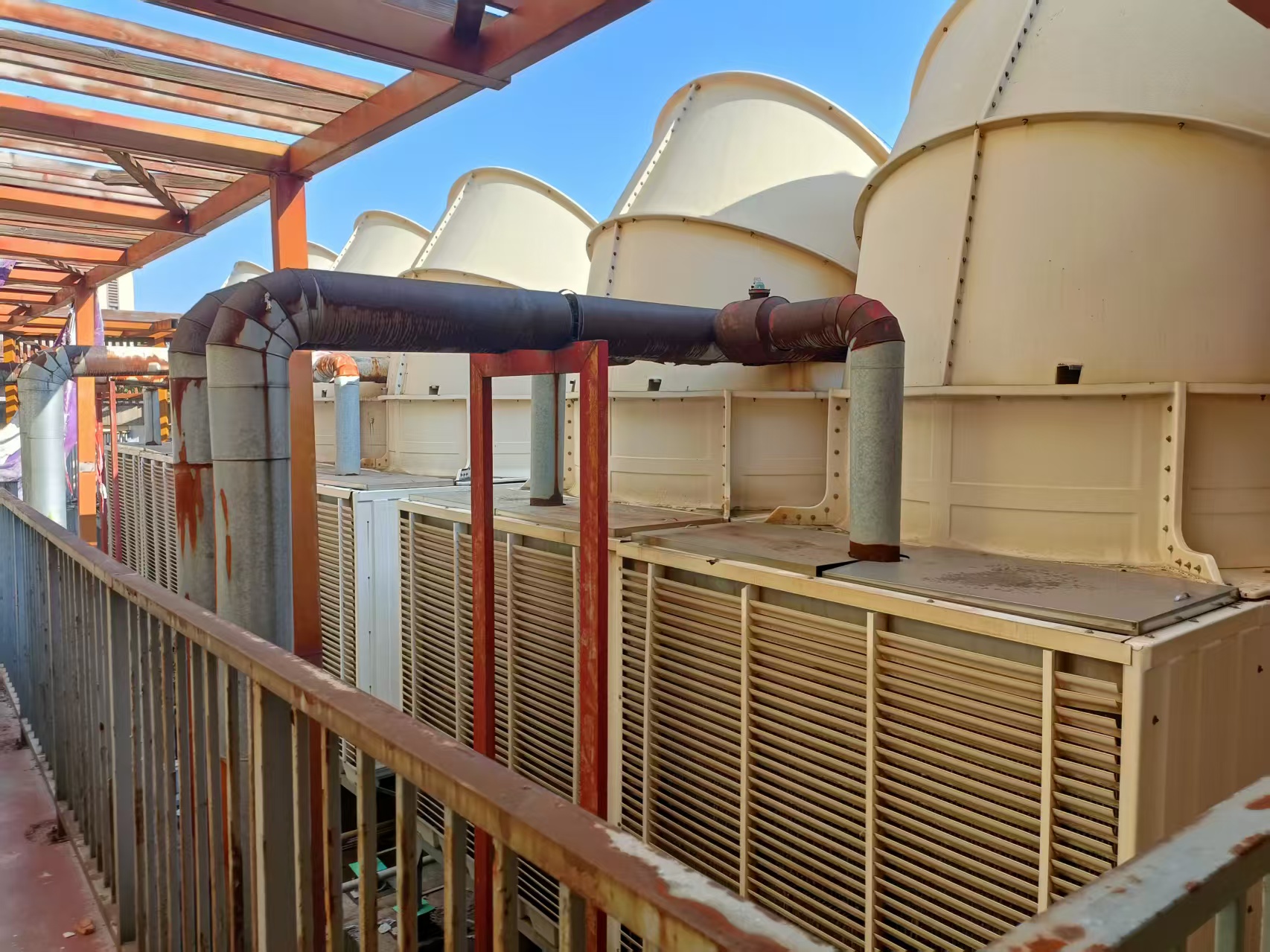
Cooling Tower Fill Cleaner: Types, Uses and Benefits
Cooling tower fill is a critical heat transfer component in evaporative cooling systems. It increases the contact area between water and air, allowing heat to be transferred efficiently through evaporation. However, continuous exposure to circulating water can cause cooling tower fill to accumulate mineral scale, dirt, algae, slime, sediment, and other contaminants.
When cooling tower fill becomes heavily fouled, water distribution and airflow can be affected, reducing heat transfer performance and increasing maintenance requirements. Using a suitable cooling tower fill cleaner can help remove deposits, restore clean heat transfer surfaces, and maintain reliable cooling tower operation.
Different contaminants require different cleaning methods. Acid-based cleaners may be used for certain mineral deposits, while alkaline cleaners, biological control products, mechanical cleaning, or combined cleaning programs may be more suitable for other conditions.
This guide explains the main types, uses, and benefits of cooling tower fill cleaners, as well as how to select and use them safely for PVC and other cooling tower fill materials.
What Is a Cooling Tower Fill Cleaner?
A cooling tower fill cleaner is a chemical solution, treatment product, or cleaning method used to remove contaminants from cooling tower fill media.
The purpose of cleaning is to maintain the open passages and effective surface area required for proper air and water contact.
What Contaminants Can a Cooling Tower Fill Cleaner Remove?
Depending on the product and application, cooling tower cleaning systems can address:
The correct cleaner should always be selected according to the actual contamination.
Why Does Contamination Build Up on Cooling Tower Fill?
Cooling tower water is continuously circulated and partially evaporated. As water evaporates, dissolved minerals become more concentrated. Dust, suspended solids, microorganisms, and other contaminants can also enter the system.
Without proper water treatment and maintenance, these substances can gradually accumulate on the fill.
Why Is Cooling Tower Fill Cleaning Important?
The primary function of cooling tower fill is to promote efficient air-water contact. When fill passages become blocked, this interaction becomes less effective.
How Does Dirty Fill Affect Heat Transfer?
Fouled fill can reduce the effective contact area between water and air.
Heavy deposits may cause:
Cleaning helps restore the available heat transfer surface when fouling is the primary cause of performance loss.
Can Cleaning Improve Cooling Tower Efficiency?
Yes, cleaning can improve cooling performance when deposits are restricting water flow, airflow, or effective heat transfer surfaces.
However, cleaning cannot correct problems caused by undersized equipment, inadequate water flow, fan problems, or incorrect tower operation. A complete inspection should therefore be performed before assuming fouling is the only cause of poor cooling.
What Are the Main Types of Cooling Tower Fill Cleaners?
Different types of contamination require different cleaning approaches. There is no universal cooling tower fill cleaner suitable for every application.
1. Acid-Based Cooling Tower Fill Cleaners
Acidic cleaning products are commonly used to remove certain types of mineral scale.
They may be effective against deposits containing:
How Do Acid Cleaners Remove Scale?
Acid reacts with certain mineral deposits and converts them into more soluble compounds, allowing the deposits to be removed from the fill surface.
However, acid concentration, temperature, and contact time must be controlled carefully.
What Should Be Checked Before Using Acid?
Before applying an acid-based cleaner, check:
Fill material compatibility
Recommended concentration
Application temperature
Contact time
Chemical handling requirements
Neutralization requirements
Wastewater disposal requirements
Using a stronger solution than recommended can increase the risk of material damage.
2. Alkaline Cooling Tower Cleaners
Alkaline cleaners are often considered when organic contamination, oils, grease, or certain biological residues are present.
They can be useful in applications where acidic scale removal is not the primary cleaning objective.
When Are Alkaline Cleaners Useful?
They may be considered for:
The actual cleaning effectiveness depends on the formulation and contamination.
3. Biocides and Biological Control Treatments
Cooling towers provide an environment where microorganisms can grow if water treatment is poorly controlled.
Algae, bacteria, and slime can accumulate on cooling tower fill and reduce open airflow and water passages.
Are Biocides the Same as Fill Cleaners?
Not exactly.
Biocides are primarily intended to control microorganisms. Physical removal of established deposits may still be necessary.
A complete biological control program may combine:
Water treatment
Biocide application
Mechanical cleaning
Periodic inspection
Products should be used according to applicable regulations and manufacturer instructions.
4. Mechanical Cooling Tower Fill Cleaning
Chemical cleaning is not always necessary.
Mechanical cleaning methods can include:
Why Is Controlled Water Pressure Important?
Cooling tower fill can consist of relatively thin PVC or PP sheets. Excessive water pressure may damage the fill, deform sheets, or loosen fill modules.
For this reason, cleaning pressure should be appropriate for the fill material and manufacturer's recommendations.
5. Combined Cleaning Methods
Some cooling tower systems have multiple types of contamination.
For example, a fill section may contain both mineral scale and biological deposits. In such cases, a combination of chemical and mechanical cleaning may be appropriate.
The cleaning sequence should be planned carefully to avoid incompatible chemicals and unnecessary material exposure.
What Are the Uses of Cooling Tower Fill Cleaner?
The main use of a cooling tower fill cleaner is to maintain the condition of fill media and support efficient cooling.
Removing Mineral Scale
Scale is one of the most common cooling tower maintenance problems.
As evaporation concentrates dissolved minerals, deposits can form on fill surfaces.
Why Is Scale a Problem?
Scale can:
Reduce effective heat transfer area
Block fill channels
Reduce water distribution
Increase airflow resistance
Increase maintenance requirements
Removing scale can help restore the original geometry of the fill passages.
Controlling Biological Fouling
Algae and biological slime can grow on wet cooling tower surfaces.
Heavy biological growth may cover fill surfaces and restrict airflow.
Cleaning combined with appropriate water treatment can help control this problem.
Removing Dirt and Sediment
Dust, sand, corrosion products, and other suspended solids can accumulate inside cooling towers.
Mechanical cleaning and flushing may be suitable for loose deposits.
Maintaining Water Distribution
Blocked fill passages can cause water to flow unevenly through the tower.
Clean fill allows water to spread more consistently across the available heat transfer area.
Supporting Heat Transfer Performance
The ultimate purpose of fill cleaning is to maintain effective contact between air and water.
A clean fill surface helps support:
Water film formation
Air movement
Evaporation
Heat transfer
Cooling capacity
How Does Cooling Tower Fill Cleaner Benefit PVC Cooling Tower Fill?
PVC is widely used for film-type cooling tower fill because it offers useful properties for many evaporative cooling applications.
What Makes PVC Fill Suitable for Cleaning?
PVC fill can generally tolerate a range of maintenance conditions, but chemical compatibility should never be assumed.
The actual resistance depends on:
PVC formulation
Chemical concentration
Temperature
Exposure duration
Fill age
Water chemistry
How Can Cleaning Extend PVC Fill Service Life?
Proper cleaning can reduce the accumulation of deposits that place additional stress on fill surfaces.
A suitable maintenance program can help prevent:
However, cleaning cannot restore PVC fill that has already become severely brittle, cracked, or deformed.
What Are the Main Benefits of Using a Cooling Tower Fill Cleaner?
Properly planned fill cleaning can provide several operational benefits.
1. Improved Heat Transfer
Removing deposits exposes more of the effective fill surface and helps restore air-water contact.
2. Better Airflow
Open fill channels provide less resistance to air movement.
3. Improved Water Distribution
Removing blockages allows water to move more evenly through the fill section.
4. Reduced Fouling
Regular cleaning can prevent deposits from becoming increasingly difficult to remove.
5. Longer Fill Service Life
Appropriate cleaning and water treatment may help slow premature deterioration.
6. More Stable Cooling Performance
Clean fill supports consistent cooling tower operation when other system components are properly maintained.
7. Potentially Lower Maintenance Costs
Preventive cleaning can reduce the need for emergency maintenance and premature fill replacement.
How Do You Know When Cooling Tower Fill Needs Cleaning?
Regular inspection is essential because visual fouling may develop gradually.
Signs of Fouled Cooling Tower Fill
Common indicators include:
Visible scale
Green or dark biological growth
Blocked fill channels
Mud or sediment accumulation
Uneven water flow
Increased pressure drop
Reduced cooling capacity
Higher leaving-water temperature
Can Cooling Performance Indicate Fill Fouling?
A gradual increase in cold-water temperature under similar operating conditions may indicate fouling.
However, other causes should also be investigated, including:
A complete diagnosis is more reliable than assuming fill contamination is the only cause.
How Should You Choose a Cooling Tower Fill Cleaner?
Selecting the correct cleaner requires evaluating several technical factors.
Consider the Fill Material
Determine whether the fill is made from:
PVC
PP
Other plastic materials
Splash fill
Film fill
The cleaning chemical must be compatible with the specific material.
Identify the Type of Deposit
Determine whether the problem is primarily:
Mineral scale
Algae
Slime
Dirt
Sediment
Oil
Mixed contamination
This determines which cleaning method is appropriate.
Check Water Chemistry
Important water parameters may include:
pH
Hardness
Alkalinity
Conductivity
Chlorides
Suspended solids
Biological activity
Water chemistry can influence both fouling rates and chemical compatibility.
Consider Operating Temperature
Higher temperatures can affect chemical reactions and polymer material behavior.
Cleaning products should therefore be used within their specified temperature range.
Evaluate Cleaning Frequency
There is no universal cleaning frequency for every cooling tower.
A suitable maintenance interval depends on:
Water quality
Operating hours
Cooling load
Environmental conditions
Water treatment
Tower design
Fill type
What Is the Difference Between Cleaning and Cooling Tower Fill Replacement?
Cleaning and replacement solve different problems.
When Is Cleaning More Appropriate?
Cleaning may be suitable when:
Fill remains structurally sound
Deposits are removable
Fill passages are blocked by scale or dirt
Biological fouling is present
Cooling performance has declined because of contamination
When Is Fill Replacement Necessary?
Replacement may be required when the fill has:
Why Can't Damaged Fill Always Be Cleaned?
A cleaner can remove deposits, but it cannot restore the original mechanical strength or geometry of severely deteriorated fill.
In such cases, cooling tower fill replacement may be more appropriate.
How Should Cooling Tower Fill Be Cleaned?
A controlled cleaning process can help reduce the risk of damage.
Step 1: Inspect the Fill
Identify the type and severity of contamination.
Step 2: Check Material Compatibility
Confirm that the selected cleaner is suitable for the fill material.
Step 3: Remove Loose Debris
Use appropriate mechanical cleaning or controlled flushing to remove loose dirt and sediment.
Step 4: Apply the Cleaning Solution
Use the recommended concentration and contact time.
Why Should Over-Concentrated Chemicals Be Avoided?
More concentrated chemicals do not necessarily produce better results. Excessive concentration may increase material degradation and create unnecessary safety and environmental risks.
Step 5: Flush Thoroughly
After cleaning, flush the system according to the cleaning procedure to remove dissolved deposits and residual chemicals.
Step 6: Inspect the Fill Again
Check whether fill passages are open and whether the fill remains structurally intact.
Step 7: Monitor Cooling Performance
After returning the cooling tower to operation, monitor:
What Mistakes Should You Avoid When Cleaning Cooling Tower Fill?
Several common mistakes can reduce cleaning effectiveness or damage the fill.
Using the Wrong Chemical
A chemical designed for metal equipment may not be suitable for plastic cooling tower fill.
Ignoring Material Compatibility
Always verify chemical compatibility before application.
Using Excessive Pressure
Aggressive pressure washing can deform or damage thin fill sheets.
Leaving Chemicals on the Fill Too Long
Longer exposure does not necessarily improve cleaning results.
Mixing Incompatible Chemicals
Different cleaning chemicals should not be mixed unless the product manufacturer specifically confirms compatibility.
Neglecting Water Treatment
If water chemistry remains uncontrolled, scale and biological fouling can return after cleaning.
How Can Water Treatment Reduce Cooling Tower Fill Fouling?
Cleaning removes existing contamination, while water treatment helps prevent new deposits from forming.
Scale Control
Appropriate water treatment can help control mineral accumulation.
Biological Control
Biological control programs can reduce algae, bacteria, and slime.
Suspended Solids Management
Reducing suspended solids can help prevent sediment from accumulating on fill surfaces.
Why Combine Cleaning With Water Treatment?
Cleaning without correcting the underlying water-quality problem may provide only temporary improvement.
An effective cooling tower maintenance program should combine:
Water treatment + inspection + cleaning + mechanical maintenance + timely fill replacement
What Should Industrial Users Consider When Buying a Cooling Tower Fill Cleaner?
Industrial cooling towers often have larger water volumes and more complex operating conditions than small HVAC systems.
Request Technical Documentation
A supplier should provide information about:
Chemical composition
Recommended dosage
Application method
Material compatibility
Contact time
Temperature limits
Safety requirements
Storage requirements
Consider the Entire Cooling System
The cleaner should be evaluated together with:
A cleaning chemical should not damage other components in the system.
Frequently Asked Questions About Cooling Tower Fill Cleaner
What Is a Cooling Tower Fill Cleaner Used For?
It is used to remove or control deposits such as mineral scale, dirt, biological fouling, sediment, and certain organic contaminants from cooling tower fill.
What Is the Best Cleaner for PVC Cooling Tower Fill?
There is no universal best product. The appropriate cleaner depends on the PVC formulation, type of contamination, water chemistry, concentration, and cleaning procedure.
Can Acid Cleaner Be Used on PVC Cooling Tower Fill?
Some acid-based cleaners may be compatible with PVC, but compatibility must be confirmed for the specific fill and cleaning product before use.
How Often Should Cooling Tower Fill Be Cleaned?
Cleaning frequency depends on water quality, fouling conditions, operating environment, and water treatment. Regular inspection should be used to determine when cleaning is necessary.
Does Cleaning Cooling Tower Fill Improve Heat Transfer?
It can improve heat transfer when scale, dirt, or biological fouling is restricting air-water contact or blocking fill passages.
Can a Cooling Tower Fill Cleaner Remove Algae?
Some cleaning and biological control products can help address algae, but established biological growth may also require mechanical cleaning and an appropriate water treatment program.
Should You Clean or Replace Cooling Tower Fill?
If the fill is structurally sound but contaminated, cleaning may be appropriate. If it is cracked, brittle, deformed, or severely deteriorated, replacement may be necessary.
Conclusion
A suitable cooling tower fill cleaner can play an important role in maintaining cooling tower heat transfer performance. By removing mineral scale, biological fouling, dirt, and other deposits, proper cleaning can help keep fill passages open and maintain effective contact between water and air.
The most appropriate cleaning method depends on the fill material, contamination type, water chemistry, operating temperature, and cooling tower design. PVC cooling tower fill, for example, should only be treated with cleaning products confirmed to be compatible with the specific material and operating conditions.
For long-term performance, cleaning should not be considered a standalone solution. Regular inspection, effective water treatment, appropriate cleaning, and timely cooling tower fill replacement should work together as part of a complete maintenance strategy.
When properly selected and applied, cooling tower fill cleaning can help support efficient heat transfer, stable cooling performance, and longer service life of cooling tower fill media.