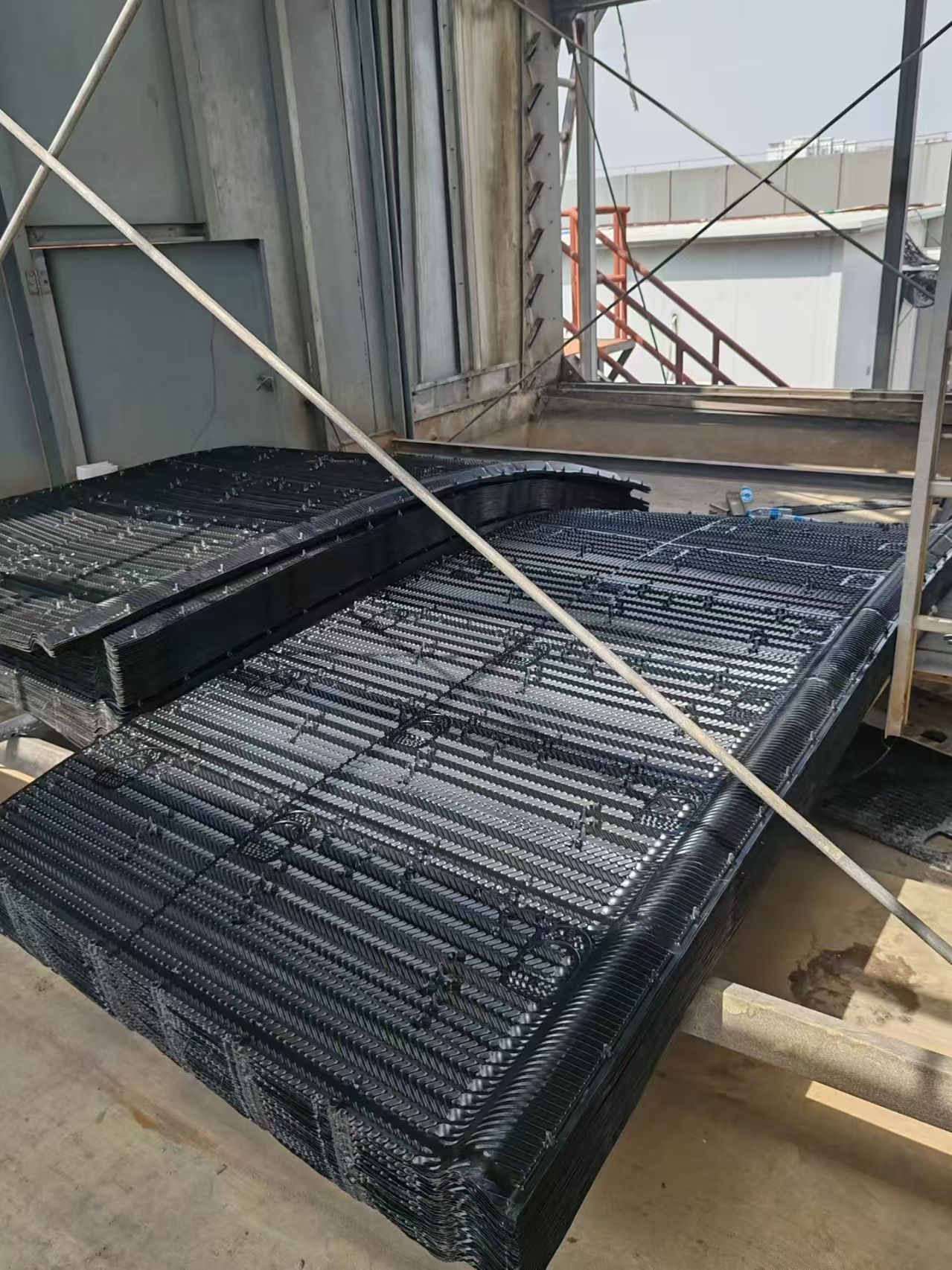
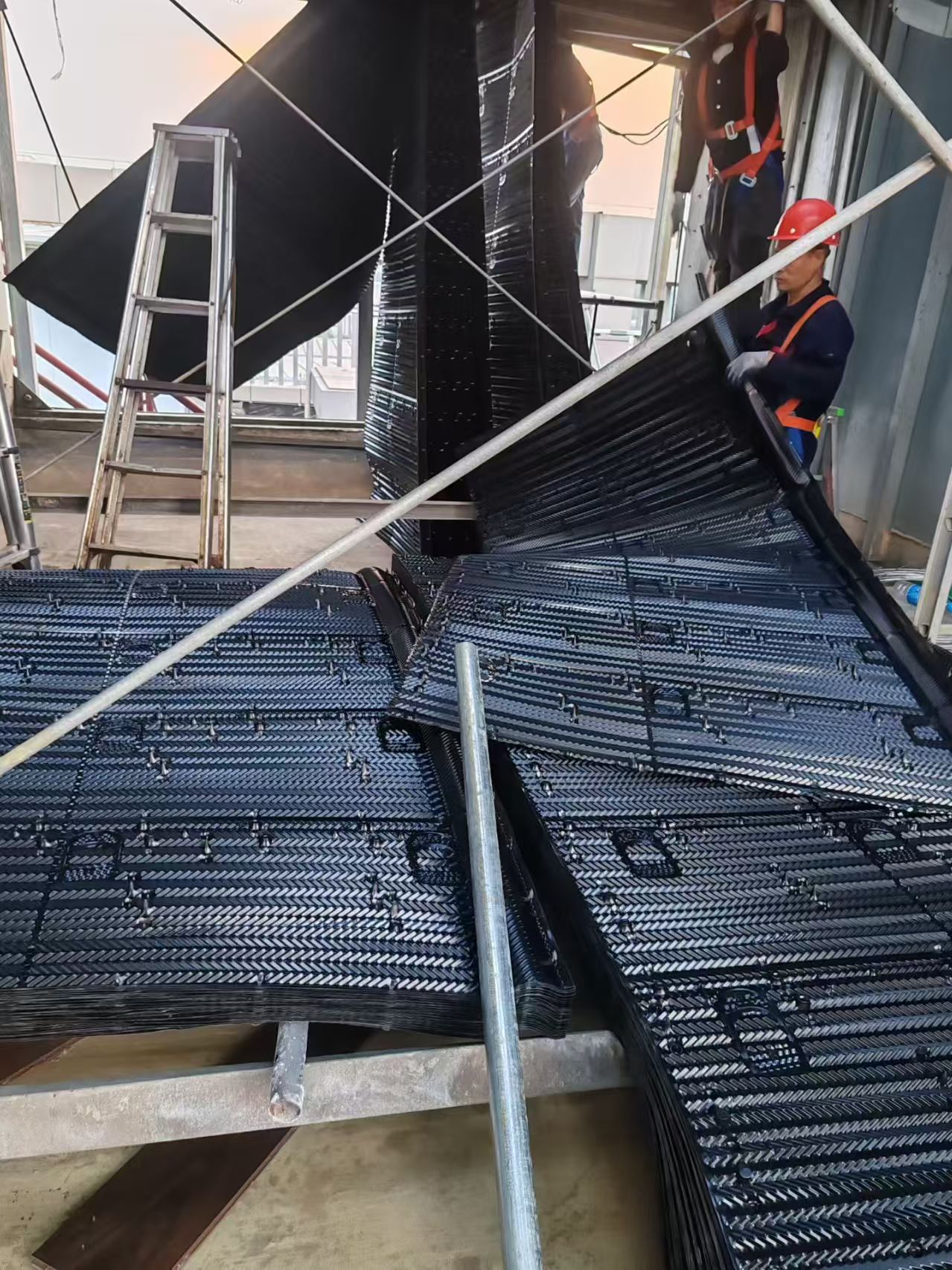
BAC Cooling Tower Fill Replacement for Better Heat Transfer
Cooling tower fill plays a critical role in the heat transfer process of an evaporative cooling tower. When the fill becomes damaged, clogged, brittle, or heavily scaled, cooling performance can gradually decline. For BAC cooling towers, selecting the right BAC cooling tower fill replacement can help restore heat transfer efficiency, maintain proper airflow, and support reliable long-term operation.
Over time, cooling tower fill media can be affected by mineral deposits, biological growth, suspended solids, high water temperatures, and mechanical damage. Replacing deteriorated fill is therefore an important part of cooling tower maintenance.
This guide explains when BAC cooling tower fill should be replaced, how replacement fill improves heat transfer, what factors should be considered when selecting replacement media, and how proper installation can improve cooling tower performance.
What Is BAC Cooling Tower Fill?
BAC cooling tower fill is the heat transfer media installed inside Baltimore Aircoil Company (BAC) cooling towers. The fill increases the contact area between circulating water and air, allowing heat to transfer more effectively through evaporation.
Instead of allowing water to fall directly through the tower, cooling tower fill distributes water into thin films or droplets over a large surface area. Air passing through the fill removes heat and a portion of the water evaporates.
How Does Cooling Tower Fill Work?
The basic cooling process involves three important elements:
Hot circulating water
Ambient or forced air
Cooling tower fill media
When hot water enters the fill section, it spreads across the surface of the fill. Air moves through the fill in either a crossflow or counterflow direction depending on the cooling tower design.
Why Is Fill Surface Area Important?
A larger effective surface area provides more opportunities for air and water to interact. Good fill design therefore helps improve:
Heat transfer
Water distribution
Evaporation
Cooling capacity
Overall tower efficiency
The condition and geometry of the fill are important because damaged or blocked passages can reduce the effective contact area.
Why Does BAC Cooling Tower Fill Need Replacement?
Even high-quality cooling tower fill has a service life. The actual replacement interval depends on operating conditions, water quality, maintenance practices, temperature, chemical treatment, and the type of fill material.
What Are the Main Signs of Damaged Cooling Tower Fill?
Several conditions can indicate that BAC fill replacement should be considered.
1. Excessive Scaling
Hard-water minerals can accumulate on fill surfaces. Heavy scale reduces the available surface area and restricts airflow and water distribution.
2. Biological Fouling
Algae, bacteria, and other biological deposits can form inside cooling towers when water treatment and cleaning are inadequate. Fouling can block fill passages and increase resistance to airflow.
3. Cracked or Brittle Fill Sheets
Aging PVC fill may become brittle due to prolonged exposure to heat, chemicals, ultraviolet radiation, or other environmental conditions. Cracked sheets can collapse or lose their original shape.
4. Blocked Air Passages
Dirt, sediment, scale, and biological growth can obstruct the channels between fill sheets. Reduced airflow can directly affect heat transfer.
5. Reduced Cooling Performance
If the tower cannot achieve the required cold-water temperature despite proper water flow, airflow, and mechanical operation, the fill should be inspected.
How Does BAC Fill Replacement Improve Heat Transfer?
Replacing deteriorated fill restores the designed water-air contact conditions inside the tower.
Restoring Effective Heat Transfer Surface
New cooling tower fill provides clean and properly formed surfaces for water distribution. This allows water to spread into thin films and increases contact with the moving air.
Improving Airflow Through the Fill
Blocked or collapsed fill can increase pressure drop and restrict airflow. Replacement fill with properly formed channels can help restore the intended air passage.
Improving Water Distribution
Uniform water distribution is essential for effective cooling. Replacement fill should be compatible with the tower's water distribution system so that water can spread evenly across the fill area.
Why Is Even Water Distribution Important?
Uneven water flow can create dry areas and overloaded sections. Dry areas provide less heat transfer, while heavily loaded areas can experience excessive water depth and reduced air contact.
A properly selected BAC cooling tower fill replacement helps maintain a more balanced water-air interaction throughout the fill section.
What Type of Fill Is Used for BAC Cooling Towers?
The appropriate replacement depends on the specific BAC cooling tower model, operating conditions, and original fill configuration.
PVC Cooling Tower Fill
PVC is widely used for evaporative cooling tower fill because it offers a combination of corrosion resistance, formability, and cost effectiveness.
PVC fill can be manufactured with different sheet thicknesses, flute patterns, spacing, and dimensions to meet different cooling requirements.
Film Fill vs. Splash Fill
Cooling tower fill can generally be divided into two major categories: film fill and splash fill.
Film Fill
Film fill encourages water to form thin films over the surface of the fill. It provides a relatively large effective surface area and is commonly used where water quality can be adequately controlled.
Splash Fill
Splash fill breaks falling water into droplets as it moves through the fill section. It can be suitable for applications with higher levels of suspended solids or conditions where film fill may be more vulnerable to blockage.
The correct choice depends on water quality, temperature, tower configuration, and operating conditions.
How Do You Choose BAC Cooling Tower Fill Replacement?
Selecting replacement fill should involve more than simply matching the overall dimensions.
1. Check the Original Cooling Tower Model
Before purchasing replacement fill, identify the cooling tower model and fill configuration. This helps determine the correct dimensions and installation requirements.
2. Measure the Existing Fill
Important dimensions may include:
Accurate measurements reduce the risk of installation problems.
3. Consider Operating Water Temperature
Water temperature has a direct influence on the selection of cooling tower fill material. Higher-temperature applications may require materials or configurations specifically designed for elevated operating temperatures.
4. Evaluate Water Quality
Water containing high levels of suspended solids, hardness, oil, or biological contaminants can significantly affect fill life.
What Water Quality Factors Should Be Checked?
Consider:
Suspended solids
Hardness
Scaling tendency
Biological activity
Oil contamination
Chemical treatment
Cycles of concentration
A suitable fill configuration should be selected according to the actual operating environment rather than based only on price.
5. Check Airflow and Pressure Drop
Replacement fill should provide suitable airflow characteristics. A fill design with very small passages may provide a large surface area but can become more susceptible to blockage when water quality is poor.
What Are the Benefits of Professional BAC Cooling Tower Fill Replacement?
Professional replacement involves more than removing old fill and installing new sheets.
Improved Cooling Efficiency
Clean and correctly installed fill can restore the intended contact between air and water, helping the tower achieve its required cooling performance.
Reduced Operating Problems
Damaged fill can contribute to uneven water distribution, restricted airflow, and increased fouling. Replacing the fill can help reduce these problems.
Extended Cooling Tower Service Life
Regular inspection and timely fill replacement can prevent deteriorated media from affecting other components of the tower.
Better Maintenance Management
A planned replacement program makes it easier to monitor fill condition and avoid unexpected cooling performance problems.
What Should Be Checked Before Replacing BAC Cooling Tower Fill?
A proper inspection should be completed before ordering replacement media.
Inspect the Existing Fill
Look for:
Cracks
Deformation
Missing sections
Excessive scaling
Biological growth
Blocked passages
Collapsed fill packs
Chemical deterioration
Check Other Cooling Tower Components
Fill replacement is most effective when other tower components are also operating correctly.
Inspect:
Why Inspect the Water Distribution System?
Even new fill cannot deliver consistent cooling if the water distribution system is blocked or incorrectly adjusted. Proper water distribution should therefore be verified before and after fill replacement.
How Is BAC Cooling Tower Fill Replaced?
The replacement process varies according to tower design and fill configuration, but a typical project includes several stages.
Step 1: Shut Down and Isolate the Tower
The cooling tower should be safely shut down according to the applicable maintenance procedures.
Step 2: Drain and Clean the Fill Area
Old deposits, sediment, algae, and other contaminants should be removed where appropriate.
Step 3: Remove the Existing Fill
Damaged or deteriorated fill blocks are carefully removed without damaging supporting structures.
Step 4: Inspect Supports and Internal Components
Fill supports, structural members, distribution systems, and nearby components should be inspected before new fill is installed.
Step 5: Install the Replacement Fill
The new fill modules are installed according to the specified arrangement. Proper spacing and orientation are important for maintaining designed airflow and water distribution.
Step 6: Inspect the Installation
After installation, check for:
Step 7: Restart and Monitor Performance
After commissioning, operating parameters should be monitored to verify that the cooling tower is functioning correctly.
How Can You Extend the Life of BAC Cooling Tower Fill?
Replacing fill is only one part of cooling tower maintenance. Preventive maintenance can significantly influence fill service life.
Maintain Proper Water Treatment
Water treatment helps control scale, corrosion, and biological growth. Maintaining appropriate treatment conditions can reduce deposits on the fill.
Clean the Cooling Tower Regularly
Routine inspection and cleaning can prevent contaminants from accumulating inside the fill.
Monitor Water Quality
Changes in water quality can accelerate fill deterioration. Regular monitoring allows operators to identify problems before they become severe.
Check Fill Condition During Maintenance
Instead of waiting until cooling performance drops significantly, inspect the fill periodically.
Which Fill Problems Should Be Recorded?
Maintenance records can include:
This information can help determine the appropriate timing for future cooling tower fill replacement.
BAC Cooling Tower Fill Replacement vs. Cleaning
Cleaning and replacement are not always interchangeable.
When Is Cleaning Enough?
If the fill is structurally sound but has moderate deposits or biological fouling, professional cleaning may restore some of its performance.
When Is Replacement Necessary?
Replacement may be more appropriate when the fill has:
A professional inspection can help determine whether cleaning or replacement is the more suitable maintenance action.
What Should You Ask a BAC Cooling Tower Fill Replacement Supplier?
Choosing a suitable supplier is important when replacing cooling tower fill media.
Does the Supplier Offer Custom Dimensions?
Cooling towers can use different fill dimensions and configurations. A supplier capable of producing customized fill blocks can provide a better fit for specific equipment.
Can the Supplier Match Existing Fill Geometry?
Ask whether the supplier can provide matching or compatible:
Sheet thickness
Flute pattern
Pitch
Module dimensions
Material
Fill height
Block configuration
Does the Supplier Provide PVC and PP Options?
Depending on operating conditions, suppliers may offer different plastic materials. PVC and PP are common options, but material selection should be based on operating temperature, chemical exposure, and water conditions.
Can the Supplier Support OEM Replacement Projects?
For industrial cooling tower maintenance, technical communication is important. A capable supplier should be able to review drawings, dimensions, photographs, specifications, and application conditions before recommending replacement media.
How Can the Right BAC Cooling Tower Fill Improve Heat Transfer?
The relationship between fill design and heat transfer can be summarized through several key factors:
Large effective contact area improves air-water interaction.
Uniform water distribution helps maximize the usable fill surface.
Proper airflow channels support effective air movement.
Clean fill surfaces reduce blockage and resistance.
Correct fill material helps maintain performance under operating conditions.
Proper installation ensures that the fill works as designed.
Therefore, choosing the right BAC cooling tower fill replacement is not simply a maintenance task. It is an important part of maintaining cooling tower heat transfer performance.
Final Considerations for BAC Cooling Tower Fill Replacement
A cooling tower's fill media has a direct influence on heat transfer, airflow, and water distribution. When BAC cooling tower fill becomes damaged, heavily fouled, scaled, or deformed, replacing it with properly selected fill media can help restore the tower's operating performance.
Before purchasing replacement fill, operators should evaluate the original tower configuration, fill dimensions, material, water quality, operating temperature, airflow requirements, and installation conditions.
For industrial and HVAC applications, a reliable BAC cooling tower fill replacement supplier can provide customized PVC or other suitable fill media according to the tower's requirements. With correct selection, installation, and regular maintenance, replacement fill can support efficient heat transfer and dependable cooling tower operation.