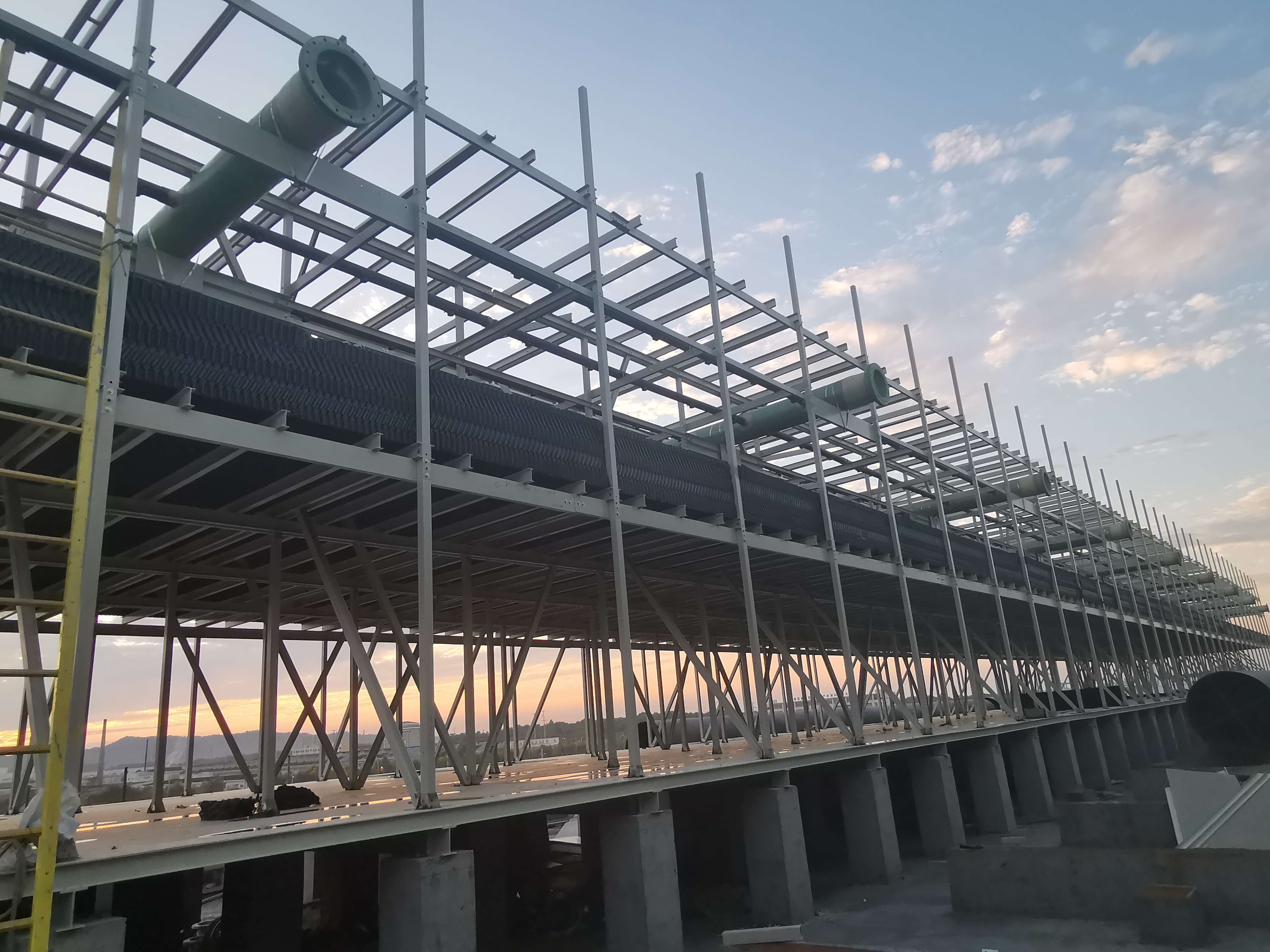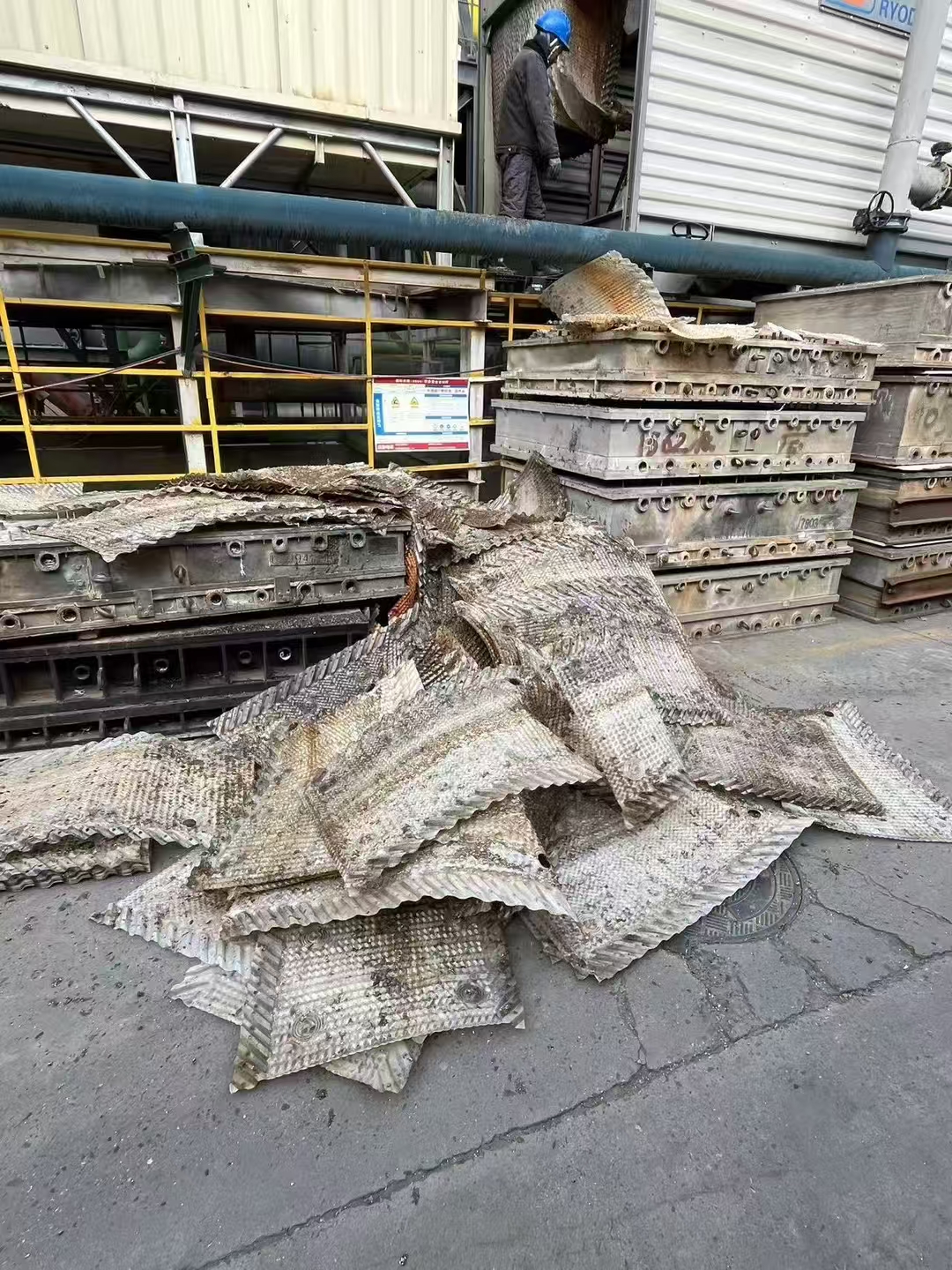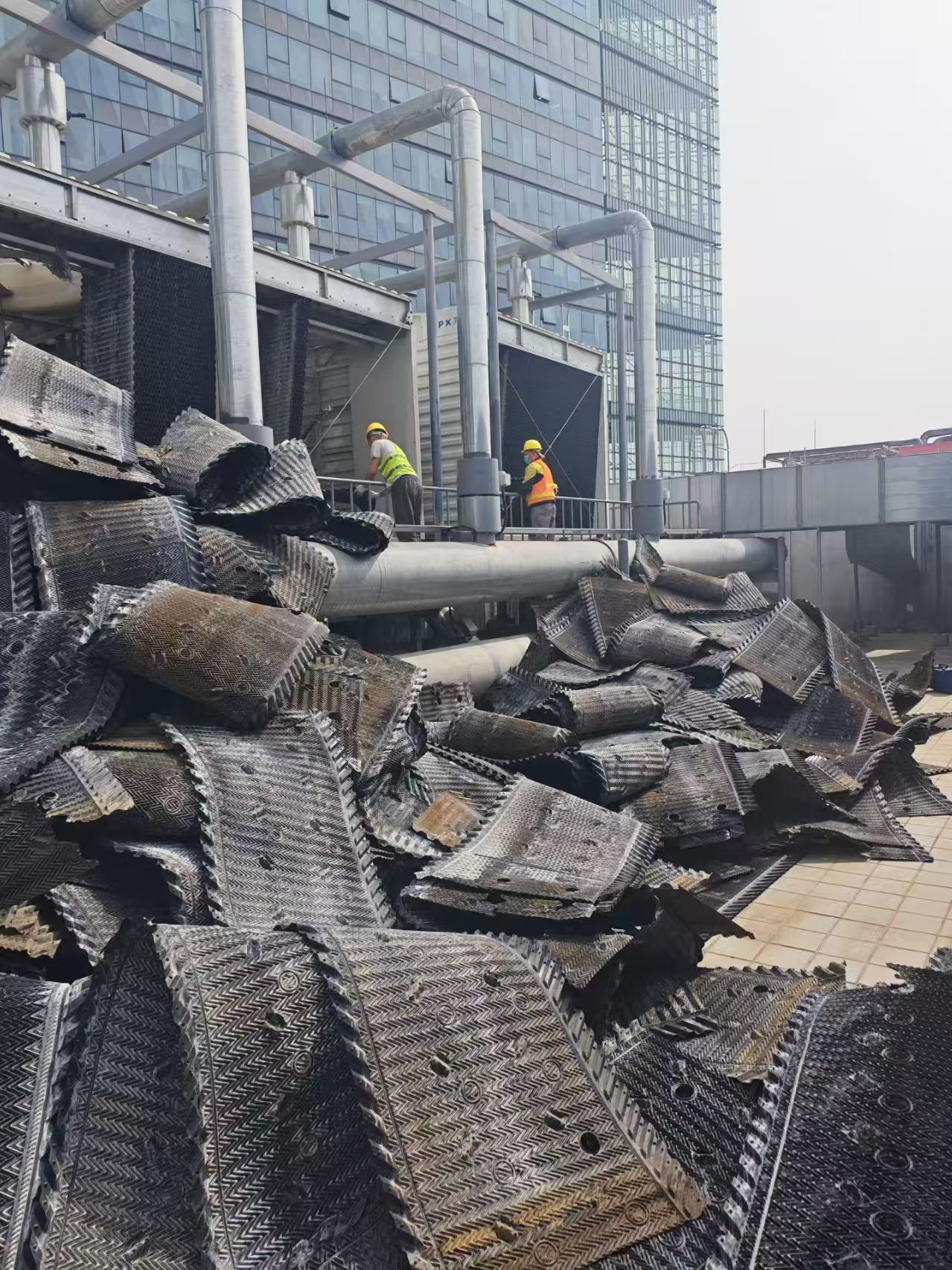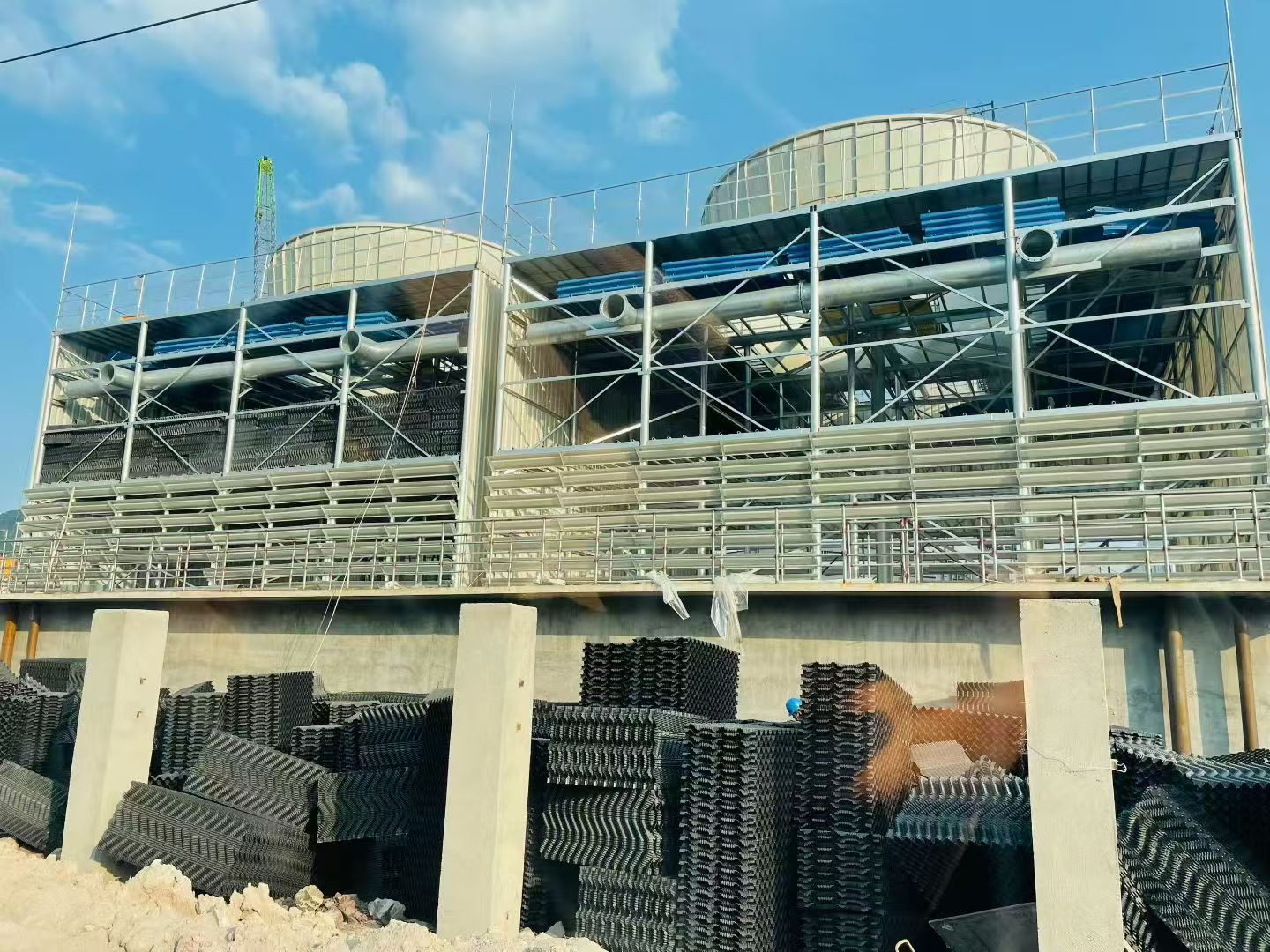
Cooling tower fill replacement is an important maintenance project for industrial and commercial cooling towers. When fill becomes cracked, clogged, brittle, scaled, or damaged, the tower can lose heat-transfer efficiency and consume more energy while providing less effective cooling.
Choosing replacement fill is not simply a matter of finding material that fits the existing tower. Buyers need to consider the cooling tower design, fill type, dimensions, water quality, operating temperature, thermal performance, and installation requirements.
This complete buyer’s guide explains what to check before purchasing cooling tower fill replacement and how to select the right fill media for your application.
What Is Cooling Tower Fill?
Cooling tower fill, also called cooling tower fill media, is the internal component that increases contact between circulating water and air.
As warm water flows through the fill, the fill spreads the water over a large surface area or breaks it into droplets. Air passing through the fill removes heat from the water through sensible heat transfer and evaporation.
The main types include:
Film fill
Splash fill
Hybrid fill
When properly selected and maintained, fill helps a cooling tower achieve its required cooling performance within a relatively compact space.
When Should Cooling Tower Fill Be Replaced?
Cooling tower fill does not have one universal replacement interval. Its service life depends on water quality, operating temperature, chemical exposure, maintenance, and mechanical conditions.
Common signs that replacement may be necessary include:
1. Cracked or Brittle Fill
Plastic fill can become brittle after prolonged exposure to heat, chemicals, UV exposure, or operating stresses.
2. Severe Scaling
Mineral deposits can cover the fill surface and reduce effective water-air contact.
3. Biological Fouling
Algae, bacteria, and other biological growth can restrict water and airflow through the fill.
4. Plugged Passages
Accumulated dirt and suspended solids can restrict airflow and water distribution.
5. Deformed Fill
High temperature, mechanical damage, or improper support can cause fill packs to deform.
6. Reduced Cooling Performance
An increasing cold-water temperature or approach can indicate problems with fill, water distribution, airflow, or other tower components.
Before replacing the fill, the complete cooling tower should be inspected to identify the actual cause of performance loss.
Step 1: Identify the Cooling Tower Type
The first step in a cooling tower fill replacement project is identifying the tower configuration.
Common configurations include:
Crossflow cooling towers
Counterflow cooling towers
Induced-draft cooling towers
Forced-draft cooling towers
Crossflow and counterflow towers use different fill arrangements and water/air flow patterns.
The replacement fill must be compatible with the existing tower design, support structure, and water distribution system.
Step 2: Determine the Existing Fill Type
Identify whether the existing installation uses film fill, splash fill, or hybrid fill.
Film Fill Replacement
Film fill consists of formed sheets designed to spread water into a thin film.
It provides a high effective surface area and is commonly used where water quality is properly controlled.
Splash Fill Replacement
Splash fill uses bars, grids, or modules to repeatedly break falling water into droplets.
Its more open structure can make it suitable for applications where suspended solids and fouling are concerns.
Hybrid Fill Replacement
Hybrid fill combines features of film and splash designs and may be considered where buyers want a balance between thermal performance and fouling resistance.
Do not automatically replace one fill type with another without checking the tower's thermal and hydraulic requirements.
Step 3: Check Cooling Tower Fill Dimensions
Accurate measurements are essential when ordering replacement fill.
Measure or confirm:
For an existing cooling tower, photographs of the installed fill can also help suppliers identify the configuration.
Physical compatibility is important, but dimensions alone are not enough. The replacement should also satisfy the tower's thermal requirements.
Step 4: Select the Right Fill Material
The most common materials for modern cooling tower fill are PVC and PP.
PVC Cooling Tower Fill
PVC is widely used for cooling tower film fill because it offers:
Good corrosion resistance
Good chemical resistance in suitable conditions
Low weight
Cost-effective manufacturing
Good forming characteristics
PVC fill is commonly selected for commercial HVAC and industrial cooling towers with appropriately treated water.
PP Cooling Tower Fill
Polypropylene, or PP, is used in both film and splash fill applications.
PP can provide useful chemical and temperature resistance depending on the specific grade and operating environment. PP splash fill is particularly common in industrial towers where fouling resistance is important.
The correct material should be selected according to actual operating conditions rather than material preference alone.
Step 5: Evaluate Water Quality
Water quality is one of the most important factors in cooling tower fill selection.
Before purchasing replacement fill, review:
Suspended solids
Water hardness
Scaling tendency
Biological growth
Oil contamination
pH
Chemical treatment
Cycles of concentration
For clean and well-treated water, film fill can provide high heat-transfer performance.
For water containing significant solids or contamination, splash fill may be a better fit in some applications because its open structure can provide greater resistance to blockage.
Good water treatment remains essential regardless of fill type.
Step 6: Check Operating Temperature
Replacement fill must be suitable for the actual water temperature.
Confirm:
Normal hot-water temperature
Normal cold-water temperature
Maximum water temperature
Ambient operating conditions
Operating above the recommended temperature range can accelerate material degradation and deformation.
If the operating conditions have changed since the original tower was installed, the replacement fill should be selected based on the current operating conditions, not simply the original specification.
Step 7: Consider Thermal Performance
A replacement fill should be capable of handling the required cooling duty.
Important parameters include:
Water flow rate
Airflow
Hot-water temperature
Cold-water temperature
Wet-bulb temperature
Cooling range
Approach temperature
Fill height
Water loading
A physically compatible fill is not necessarily a thermally equivalent fill.
When changing fill geometry or replacing an older design with a different product, buyers should request performance information from the supplier.
Step 8: Inspect the Water Distribution System
Fill performance depends heavily on proper water distribution.
Before installing replacement fill, inspect:
Spray nozzles
Distribution headers
Pipes
Nozzle spacing
Water pressure
Flow rate
Blocked or damaged nozzles can cause dry areas and excessive water loading in other areas.
Installing new fill without correcting a distribution problem may not restore cooling tower performance.
Step 9: Check Fill Support and Installation
Replacement fill needs adequate mechanical support.
Inspect:
Fill support beams
Grids
Hangers
Fasteners
Structural members
Access openings
Also confirm that the replacement fill can be transported through existing access points.
Large fill blocks may need to be assembled or installed in sections, especially during retrofit projects.
Replacement Fill vs. Cleaning Existing Fill
Not every dirty fill pack needs immediate replacement.
Cleaning may be appropriate when deposits are removable and the fill remains structurally sound.
Replacement is generally considered when fill is:
The decision should consider both cleaning cost and expected remaining service life.
How to Compare Cooling Tower Fill Suppliers
When comparing suppliers, look beyond the purchase price.
Ask about:
For international buyers, also confirm production lead time and export packaging before placing an order.
Cooling Tower Fill Replacement Buyer’s Checklist
Use this checklist before ordering:
| Item | Information to Confirm |
| Tower type | Crossflow or counterflow |
| Fill type | Film, splash, or hybrid |
| Material | PVC, PP, or other |
| Fill dimensions | Length × width × height |
| Water flow | Required circulation rate |
| Airflow | Tower/fan airflow |
| Temperature | Normal and maximum |
| Water quality | Solids, scale, biological growth |
| Thermal duty | Range and approach |
| Distribution | Nozzles and headers |
| Support | Existing fill support structure |
| Installation | Access and assembly requirements |
Common Cooling Tower Fill Replacement Mistakes
Buying Based Only on Dimensions
A fill pack can physically fit while providing different thermal performance.
Choosing the Cheapest Product
Lower initial cost may result in higher maintenance or shorter service life.
Ignoring Water Quality
High-density film fill may not be appropriate for every water condition.
Replacing Fill Without Inspecting Nozzles
Poor distribution can continue to limit cooling performance after the replacement.
Using the Original Specification Without Review
Operating conditions may have changed since the tower was installed. Replacement selection should reflect current requirements.
Frequently Asked Questions
How often should cooling tower fill be replaced?
There is no universal replacement interval. Service life depends on water quality, temperature, chemical exposure, maintenance, and mechanical conditions.
Can I replace cooling tower fill with a different brand?
In many retrofit applications, compatible replacement fill can be supplied by another manufacturer. However, dimensions, thermal characteristics, material, support arrangement, and operating conditions should be verified first.
Is PVC or PP better for replacement fill?
Neither material is universally better. PVC and PP have different characteristics, and selection should be based on temperature, chemical exposure, water quality, and fill design.
Can film fill replace splash fill?
It may be possible in some engineered applications, but the change should be evaluated for thermal performance, water quality, airflow, water loading, and fouling risk.
What information should I send a cooling tower fill supplier?
Provide the tower model or dimensions, existing fill dimensions, fill type, water flow, operating temperatures, water quality information, and photos of the existing installation whenever possible.
Conclusion
A successful cooling tower fill replacement requires more than matching the size of the old fill. Buyers should evaluate tower configuration, fill type, material, water quality, temperature, thermal performance, water distribution, and installation conditions.
PVC and PP cooling tower fill are common choices, while film, splash, and hybrid designs serve different operating environments.
By collecting accurate operating and dimensional information before purchasing, cooling tower owners can select replacement fill that fits the existing system and supports reliable long-term cooling performance.
Internal Links for Other CoolingTowerParts
Cooling Tower Nozzles
Cooling Tower Drift Eliminators
Cooling Tower Louvers
Cooling Tower Fan Blades
Cooling Tower Motors