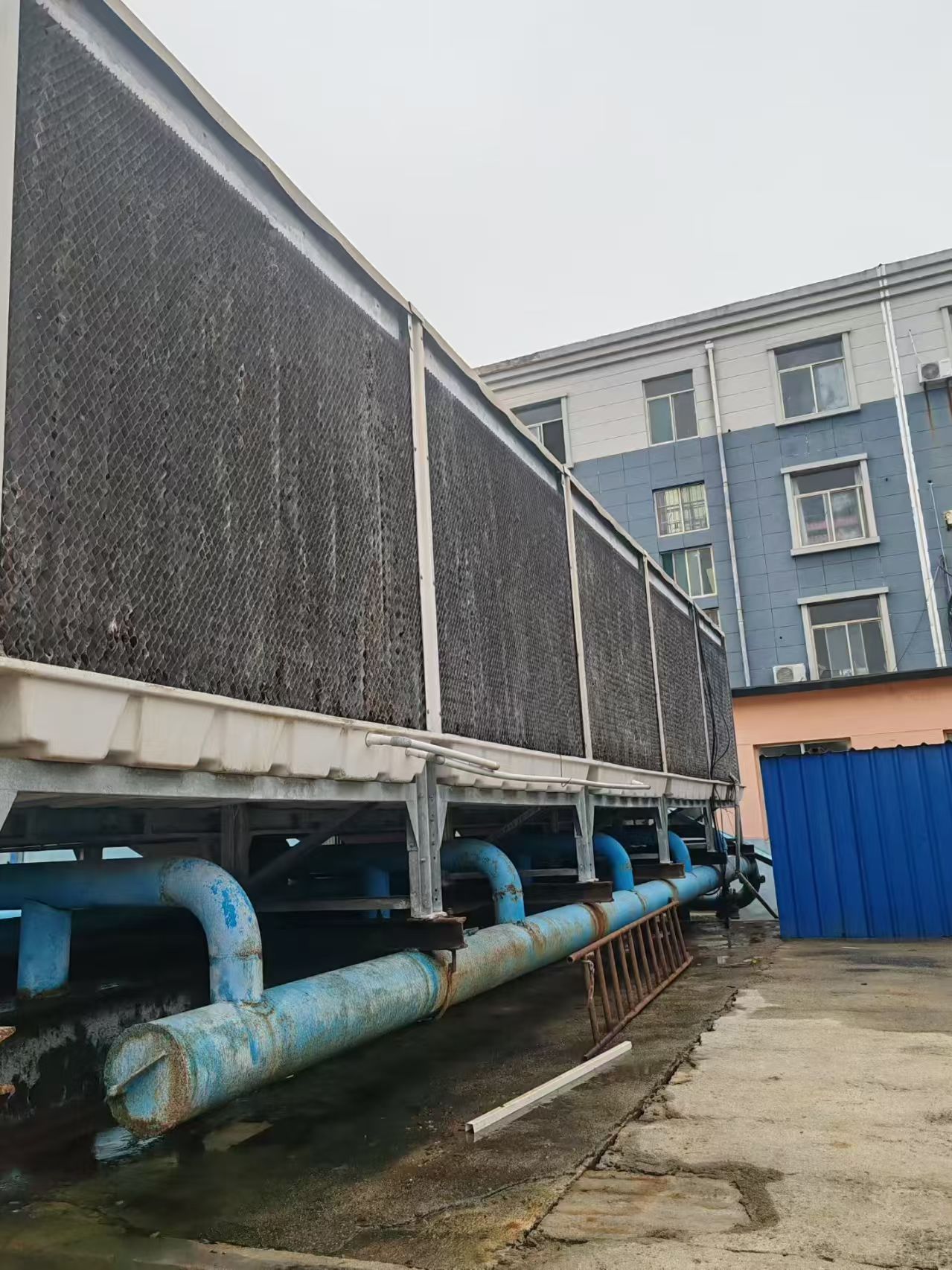
How to Choose a Cooling Tower Fill Cleaner?
Cooling tower fill is one of the most important components in an evaporative cooling tower because it provides a large contact area between circulating water and air. Over time, however, mineral scale, dirt, algae, biological deposits, and other contaminants can accumulate on the fill surface. These deposits can restrict airflow, reduce water distribution, and decrease heat transfer efficiency.
Choosing the right cooling tower fill cleaner can help remove deposits while protecting the fill material and maintaining cooling tower performance. However, not every cleaning chemical or method is suitable for every type of cooling tower fill.
Before selecting a cleaner, operators should consider the fill material, type of contamination, water chemistry, operating temperature, cleaning method, and environmental requirements.
This guide explains how to choose a suitable cooling tower fill cleaner, when cooling tower fill should be cleaned, which cleaning methods are available, and when cleaning should be replaced by cooling tower fill replacement.
What Is a Cooling Tower Fill Cleaner?
A cooling tower fill cleaner is a chemical product or cleaning solution designed to remove deposits and contaminants from cooling tower fill media.
Depending on the formulation, a cleaner may be designed to remove:
The appropriate cleaner depends heavily on the type of contamination.
Why Does Cooling Tower Fill Need Cleaning?
Cooling tower fill operates continuously in contact with water and air. As water evaporates, dissolved minerals can become concentrated. Suspended solids and biological contaminants can also accumulate on the fill.
Over time, these deposits may block the channels between fill sheets.
What Happens When Fill Becomes Dirty?
Heavily contaminated fill can cause:
Reduced heat transfer
Restricted airflow
Uneven water distribution
Higher pressure drop
Increased water consumption
Higher fan energy requirements
Reduced cooling capacity
Increased risk of biological growth
For this reason, regular inspection and appropriate fill cleaning are important parts of cooling tower maintenance.
How Do You Choose a Cooling Tower Fill Cleaner?
The best cooling tower fill cleaner should be selected according to the actual condition of the cooling tower rather than simply choosing the strongest chemical available.
Several factors should be evaluated before cleaning.
1. Identify the Cooling Tower Fill Material
The first step is determining what type of fill needs to be cleaned.
Common materials include:
PVC film fill is widely used in many cooling tower applications, but the exact chemical resistance depends on the material formulation and operating conditions.
Why Does Fill Material Matter?
A cleaning chemical that is suitable for one material may not be appropriate for another. Strong chemicals or unsuitable concentrations can potentially cause surface deterioration, deformation, or premature aging.
Always check the cleaner manufacturer's compatibility information and the fill manufacturer's recommendations before application.
2. Identify the Type of Contamination
Different deposits require different cleaning approaches.
Mineral Scale
Mineral scale often contains calcium carbonate and other inorganic deposits. Acid-based cleaners may be used in some applications because acids can dissolve certain mineral deposits.
Biological Fouling
Algae, bacteria, and slime require a different approach. Biocides and approved biological control treatments may be used as part of a broader cooling tower water management program.
Dirt and Sediment
Loose dirt and sediment can often be removed using mechanical cleaning and controlled water flushing.
Oil and Organic Deposits
Oil, grease, and organic contamination may require specialized cleaners or degreasing solutions.
The key is to identify the contamination before selecting the cleaning chemical.
What Types of Cooling Tower Fill Cleaners Are Available?
Cooling tower cleaning products can generally be divided into several categories.
Acid-Based Scale Cleaners
Acidic cleaners are commonly associated with the removal of mineral scale.
They may help dissolve deposits containing:
Calcium carbonate
Magnesium compounds
Certain mineral deposits
Other inorganic scale
However, acid concentration and contact time must be carefully controlled.
What Should You Check Before Using an Acid Cleaner?
Check:
Fill material compatibility
Recommended concentration
Contact time
Water temperature
Required neutralization
Safety requirements
Wastewater disposal requirements
Using an excessively strong acid can create unnecessary risks and may damage equipment or materials.
Alkaline Cleaners
Alkaline cleaning solutions can be useful for certain organic deposits, oils, and biological residues.
Their suitability depends on the type of contamination and the fill material.
Biocides and Biological Control Products
Biological fouling requires a different treatment strategy. Biocides may help control microorganisms and reduce biological growth when used according to applicable regulations and product instructions.
A biocide should not automatically be treated as a substitute for physical cleaning.
Mechanical Cleaning
Not every cooling tower fill problem requires chemical cleaning.
Mechanical methods can include:
Why Avoid Excessive Water Pressure?
Cooling tower fill sheets can be relatively thin and may be vulnerable to deformation. Excessive water pressure can damage fill surfaces, loosen modules, or distort the fill structure.
A controlled cleaning method is therefore preferable to aggressive pressure washing.
How Do You Choose a Cleaner for PVC Cooling Tower Fill?
PVC is a common material for cooling tower fill, but the fact that a product is labeled as a PVC cleaner does not automatically mean it is suitable for every PVC cooling tower application.
Check Chemical Compatibility
Before using a cleaner on PVC cooling tower fill, confirm that the chemical is compatible with the specific PVC formulation and operating conditions.
Consider:
Chemical concentration
Exposure time
Temperature
Repeated use
Water chemistry
Fill age
Consider the Condition of the Fill
Older PVC fill may already have become brittle due to heat, chemicals, UV exposure, or long-term operation.
Should Old PVC Fill Be Cleaned or Replaced?
If the fill remains structurally sound, cleaning may restore part of its performance.
However, if the fill has:
replacement may be more appropriate than aggressive cleaning.
Can Cooling Tower Fill Cleaner Improve Heat Transfer?
Cleaning can improve heat transfer when deposits are restricting the air-water contact area.
How Does Fouling Affect Heat Transfer?
Cooling tower fill is designed to distribute water across a large surface area. Scale and biological deposits can cover that surface and block internal channels.
This can reduce:
Effective contact area
Water distribution
Airflow
Evaporation
Cooling capacity
Removing deposits can help restore the designed water-air interaction.
Why Is Clean Fill Important for Cooling Efficiency?
The cooling process depends on efficient contact between hot water and moving air.
When the fill is clean:
Water can spread more evenly.
Air can move through the fill passages.
Heat transfer surfaces remain available.
Evaporation can occur more effectively.
The tower can operate closer to its intended performance.
Cleaning alone cannot solve every cooling problem, but it can be an important maintenance step when fouling is the cause.
What Factors Should Be Considered Before Using a Cooling Tower Fill Cleaner?
Choosing a cleaner requires consideration of both the chemical and the cooling tower operating environment.
Water Chemistry
Important parameters may include:
pH
Hardness
Alkalinity
Conductivity
Chloride concentration
Biological activity
Suspended solids
Changes in water chemistry can influence both the type and severity of deposits.
Operating Temperature
Temperature affects chemical reaction rates and can also influence the condition of polymer-based fill.
A cleaner should be used within the manufacturer's recommended temperature range.
Cleaning Frequency
There is no universal cleaning interval for every cooling tower.
Cleaning frequency depends on:
Water quality
Operating hours
Dust levels
Environmental conditions
Water treatment
Tower design
Fill type
Cooling load
Should Cooling Tower Fill Be Cleaned Every Year?
Not necessarily.
Some systems may require frequent inspection and cleaning, while well-maintained systems may require less frequent intensive cleaning.
The better approach is condition-based maintenance supported by regular inspection and water-quality monitoring.
How Should You Clean Cooling Tower Fill?
A typical cooling tower fill cleaning process includes several stages.
Step 1: Inspect the Fill
Before cleaning, inspect the fill for scale, biological growth, cracks, deformation, and blockage.
Step 2: Identify the Contamination
Determine whether the primary problem is:
Scale
Algae
Slime
Dirt
Sediment
Oil
Mixed contamination
Step 3: Select the Cleaning Method
Choose chemical cleaning, mechanical cleaning, or a combination of methods based on the contamination and fill material.
Step 4: Apply the Cleaner
Use the cleaner according to its technical instructions. Avoid excessive concentration or unnecessary contact time.
Why Is Contact Time Important?
A longer contact time does not always mean better cleaning. Excessive exposure can increase the risk of material deterioration without providing proportional cleaning benefits.
Step 5: Flush the Fill
After chemical treatment, thoroughly flush the fill and associated components as required by the cleaning procedure.
Step 6: Inspect Again
After cleaning, check whether:
Scale has been removed
Water passages are open
Fill sheets remain intact
Water distribution is uniform
No chemical residue remains
Step 7: Restart and Monitor
After cleaning and appropriate system checks, restart the tower and monitor operating conditions.
Useful parameters include:
What Are the Benefits of Regular Cooling Tower Fill Cleaning?
Regular and properly planned cleaning can provide several operational benefits.
Better Heat Transfer
Removing deposits helps maintain the effective surface area of the fill.
Improved Airflow
Clean fill channels provide better pathways for air movement.
More Consistent Water Distribution
Reducing blockage can help water move more evenly through the fill.
Lower Fouling Risk
Regular maintenance prevents deposits from becoming excessively thick and difficult to remove.
Longer Fill Service Life
Proper cleaning and water treatment can help reduce premature deterioration.
More Reliable Cooling Tower Operation
A clean fill system is one component of a broader maintenance program that supports stable cooling performance.
What Mistakes Should You Avoid When Using a Cooling Tower Fill Cleaner?
Improper cleaning can create more problems than it solves.
Using an Extremely Strong Chemical
A stronger chemical is not necessarily a better cleaner. Excessive chemical concentration may damage fill or other cooling tower components.
Ignoring Fill Material Compatibility
Never assume that all cooling tower fill can tolerate the same cleaning products.
Using Excessive Water Pressure
High-pressure cleaning can damage thin fill sheets or loosen the fill structure.
Cleaning Without Identifying the Contamination
Using a scale remover against primarily biological fouling, for example, may not provide the desired result.
Neglecting Water Treatment
Cleaning removes existing deposits, but poor water chemistry can cause the deposits to return.
Why Is Water Treatment Important After Cleaning?
If scale-forming minerals and biological growth are not controlled, freshly cleaned fill can quickly become fouled again.
Cleaning should therefore be combined with an appropriate cooling tower water management program.
When Should You Replace Cooling Tower Fill Instead of Cleaning It?
Cleaning is not always the correct solution.
Signs That Fill Replacement May Be Necessary
Consider replacement when the fill has:
Why Is Replacement Sometimes Better Than Cleaning?
Old fill may have accumulated deposits that cannot be completely removed without damaging the material.
Replacing the fill can restore the original geometry and provide clean heat transfer surfaces.
For industrial applications, cooling tower fill replacement may therefore be more practical when the existing fill has reached the end of its useful service life.
How Can You Extend the Life of Cooling Tower Fill?
A good maintenance program can reduce the need for frequent intensive cleaning.
Maintain Proper Water Treatment
Control scale, corrosion, and biological growth through appropriate water treatment.
Monitor Cycles of Concentration
Controlling concentration levels can help reduce excessive mineral accumulation.
Inspect Fill Regularly
Routine visual inspection can identify early-stage fouling before it becomes severe.
Keep the Basin Clean
Sediment and debris in the basin can enter the circulating water and eventually reach the fill.
Maintain Drift Eliminators and Air Inlets
Proper maintenance of other cooling tower components helps maintain overall airflow and water quality.
How Should You Select a Cooling Tower Fill Cleaner Supplier?
For industrial cooling tower applications, the supplier's technical support can be as important as the cleaner itself.
Ask About Material Compatibility
A reliable supplier should provide technical information about compatibility with PVC, PP, or other cooling tower materials.
Check Application Recommendations
The supplier should clearly explain:
Recommended dosage
Application method
Contact time
Temperature range
Safety precautions
Rinsing requirements
Consider Your Cooling Tower Application
A cleaner designed for a small HVAC cooling tower may not necessarily be appropriate for a large industrial cooling system.
The supplier should understand your:
Cooling tower type
Fill material
Water quality
Operating temperature
Contamination type
Cleaning frequency
Frequently Asked Questions About Cooling Tower Fill Cleaner
What Is the Best Cooling Tower Fill Cleaner?
There is no single cleaner that is ideal for every cooling tower. The appropriate product depends on the fill material, contamination type, water chemistry, and cleaning method.
Can You Use Acid to Clean Cooling Tower Fill?
Acidic cleaners may be used to remove certain mineral deposits, but compatibility, concentration, exposure time, and safety requirements must be evaluated before application.
Can PVC Cooling Tower Fill Be Cleaned?
Yes. PVC cooling tower fill can be cleaned when it remains structurally sound. The cleaning method should be compatible with the specific PVC material and contamination.
How Often Should Cooling Tower Fill Be Cleaned?
The required frequency depends on water quality, operating conditions, environmental contamination, and the effectiveness of the water treatment program. Regular inspection is generally more useful than applying a fixed cleaning interval to every system.
Does Cleaning Cooling Tower Fill Improve Efficiency?
Cleaning can improve cooling performance when scale, dirt, or biological fouling is restricting airflow, water distribution, or heat transfer surfaces.
When Should Cooling Tower Fill Be Replaced?
Fill should be considered for replacement when it is severely cracked, brittle, deformed, chemically deteriorated, or permanently blocked and cannot be effectively restored through cleaning.
Conclusion: How Do You Choose the Right Cooling Tower Fill Cleaner?
Choosing the right cooling tower fill cleaner requires a practical evaluation of the cooling tower's fill material, contamination type, water chemistry, operating temperature, and cleaning method.
For PVC cooling tower fill, chemical compatibility is especially important. Mineral scale, biological fouling, dirt, and oil contamination may require different cleaning approaches. Mechanical cleaning can also be effective when deposits are loose and accessible.
Most importantly, cleaning should be part of a complete cooling tower maintenance strategy. Proper water treatment, regular inspection, controlled cleaning, and timely fill replacement can help maintain heat transfer performance and extend the service life of cooling tower fill media.
For industrial and HVAC cooling systems, selecting the appropriate cleaning method based on actual operating conditions is essential. When the existing fill has reached the end of its service life, a properly designed cooling tower fill replacement may provide a more practical solution than repeated aggressive cleaning.