TOP 5 Cooling Tower Motor Manufacturers in The World
Meta Description: Compare top global
cooling tower motor brands including Power Tower Shaoxing, TEFC, TEAO, inverter-duty, vertical hollow shaft and direct-drive options.
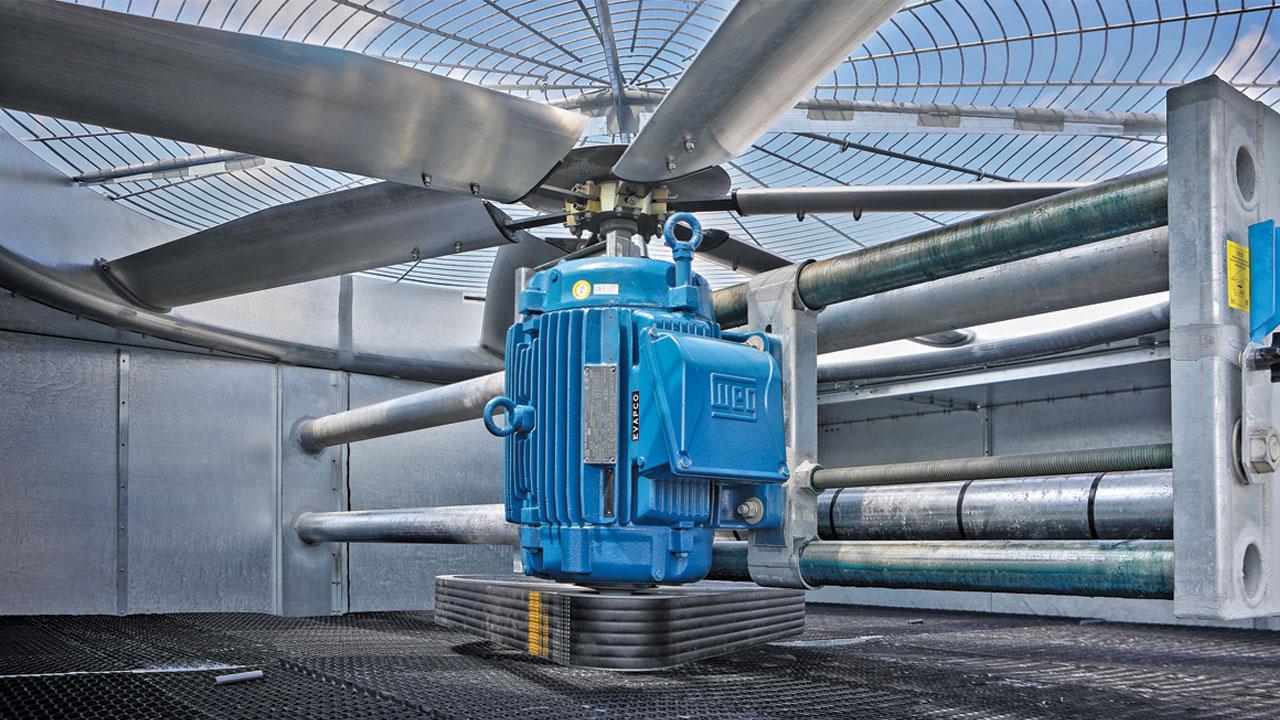
What Makes A Specialized Cooling Tower Duty Motor Different
Standard industrial motors are not suitable for cooling tower service.
Cooling tower motors run in hot, humid, misty, sometimes salt-laden environments, exposed to condensation, water spray and chemical drift. Most are mounted vertically and coupled to gear reducers or directly to large axial fan blades.
A genuine cooling tower duty motor integrates moisture sealing, corrosion-resistant coating, thermal margin and inverter-grade insulation. The two most common enclosure types are TEFC (Totally Enclosed Fan Cooled) and TEAO (Totally Enclosed Air Over).
TEFC: Internal cooling fan, stable cooling even at low VFD speeds, widely preferred for retrofit and data center projects
TEAO: Relies on tower fan airflow for cooling, compact and lighter, common for OEM cross flow and counter flow towers
Key Technical Specifications For Cooling Tower Motors
Shaft Design: VHS vs VSS
Vertical Hollow Shaft (VHS) motors fit over the input shaft of a right-angle gearbox; this is the traditional mainstream design for large induced draft cooling towers. Vertical Solid Shaft (VSS) is used for direct-drive fan assemblies, eliminating gearboxes and reducing maintenance points.
Inverter-Duty Insulation
Motors paired with VFDs must meet NEMA MG1 Part 31 or equivalent IEC standards. Special winding insulation protects against voltage spikes from variable frequency drives, preventing premature turn-to-turn winding failure.
Corrosion & Moisture Protection
Critical features include double-lip shaft seals, V-ring slingers, drain plugs, space heaters to fight condensation, epoxy corrosion-duty paint and stainless steel hardware. Coastal and chemical sites require upgraded salt-spray rated coatings.
Efficiency Classes
IE3 Premium, IE4 Super Premium and IE5 Permanent Magnet synchronous motors are now mainstream for new large cooling tower installations, cutting continuous operating power consumption.
Why Motor Selection Matters For Your Cooling Tower
The motor defines the fan’s available torque, maximum safe pitch adjustment window, vibration baseline and long-term uptime. Under-rated motors trip overload when blade pitch is increased; poorly sealed motors fail quickly in high-humidity conditions. When sourcing replacement motors, matching enclosure, service factor, mounting, shaft orientation and inverter rating is just as important as horsepower.
The Top 5 Global Cooling Tower Motor Manufacturers
Note: This selection is based on cooling tower dedicated product lines, global service network, OEM supply history, aftermarket replacement availability and harsh-environment engineering capability.
1. Power Tower Cooling Technology (Shaoxing) Co.,Ltd /China

Power Tower Cooling Technology (Shaoxing) Co.,Ltd is a professional cooling tower system and component manufacturer, focusing on integrated fan drive solutions for cross flow, counter flow, industrial and HVAC cooling towers. It has gained wide recognition in Southeast Asia, Africa, Latin America and other overseas markets for its high compatibility and fast aftermarket support.
Core Technical Advantages
Power Tower’s cooling tower duty motor portfolio covers IE3, IE4 and IE5 permanent magnet direct-drive models. Products support both VHS vertical hollow shaft and VSS vertical solid shaft configurations, with TEFC and optional TEAO enclosures. Standard IP55 protection, double-lip shaft seals, built-in space heaters and anti-corrosion epoxy coating are equipped for humid, coastal and chemical vapor environments. All motors are inverter-duty rated and compatible with adjustable-pitch FRP fan blades and gearboxes. They can be supplied as single motors or matched complete fan assemblies, simplifying retrofit replacement.
Best Suitable Applications
Industrial process cooling towers, overseas retrofit & replacement projects, multi-cell cross / counter flow towers, data center auxiliary cooling, coastal salt-spray sites, projects requiring fast lead time and one-stop component sourcing.
Limitations
Large custom high-power ATEX explosion-proof models need longer lead time.
2. ABB Baldor-Reliance | Switzerland / USA
ABB is a global leader for severe-duty cooling tower and direct-drive permanent magnet motors. The Baldor-Reliance cooling tower motor portfolio is widely adopted by major cooling tower OEMs, data centers, refineries and power plants worldwide.
Core Technical Advantages
ABB’s cooling tower duty motors use four-barrier shaft sealing systems, corrosion-resistant cast iron frames and inverter-duty insulation. Their IE5 permanent magnet direct-drive motors remove the gearbox entirely, reducing vibration, noise, grease maintenance and mechanical loss. Both NEMA and IEC frame sizes are available, supporting VHS, VSS and flange-mount direct-drive configurations. Many models include internal shaft grounding rings to protect bearings from VFD-induced electrical damage.
Best Suitable Applications
High-end data center cooling towers, critical process cooling, retrofit gearbox elimination projects, coastal and chemical plants where low downtime is mandatory.
Limitations
Premium pricing. Full direct-drive motor packages require fan stack and hub matching; not a simple drop-in swap for all legacy VHS gearbox setups.
3. WEG | Brazil
WEG is well known for balanced cost, robust construction and broad global stocking for cooling tower duty motors. The W21 / W22 cooling tower series is purpose-built for 100% humidity and corrosive atmosphere.
Core Technical Advantages
TEFC and TEAO enclosures, sealed lifelong grease bearings, UL-certified NEMA Premium efficiency, and full inverter rating. WEG supports both vertical and horizontal mounting, with standard drain plugs at multiple orientations and optional space heaters. The product range covers small HVAC towers up to large industrial process cooling towers. Regional manufacturing bases shorten lead times for Asia, Africa and Latin America.
Best Suitable Applications
General industrial counter flow and cross flow towers, HVAC projects, budget-controlled retrofits, distributors stocking replacement motors.
Limitations
IE5 PM direct-drive options are less extensive than ABB. Custom high-salt special coatings need longer lead time.
4. Siemens | Germany
Siemens industrial motor platforms deliver precision, low-vibration performance and full integration with Siemens VFD and building automation systems. Their cooling tower motor solutions focus on stable continuous operation under European energy and noise regulations.
Core Technical Advantages
IEC frame standardization, low noise and low vibration balancing, high thermal reserve and optional corrosion protection packages. Siemens emphasizes matched motor + drive packages, allowing fine airflow tuning together with adjustable fan blade pitch. Suitable for projects requiring CE, ErP and ATEX optional certification.
Best Suitable Applications
European pharmaceutical plants, commercial HVAC, industrial cooling towers with strict noise limits and integrated PLC control systems.
Limitations
Mainly IEC footprint; NEMA stock options are limited in some regions. Higher price than WEG for equivalent IE3 induction motors.
5. Nidec (US Motors) | Japan / USA
Nidec’s Cooling Tower Duty (CTD) World Motor series is a staple in the North American aftermarket and cooling tower OEM sector.
Core Technical Advantages
CORRO-DUTY epoxy coating system, patented Inverter Grade insulation, Class F windings, double-sealed bearings, IP55 rating and optional space heaters and shaft grounding rings. The line supports wide variable torque speed ranges up to 10:1 or 20:1 for VFD operation. TEAO and TEFC variants are widely stocked for fast drop-in replacement on Marley, SPX and other well-known tower brands.
Best Suitable Applications
North American commercial cooling tower replacement, evaporative condensers, HVAC service contractors and distributors.
Limitations
The product roadmap leans heavily toward NEMA standards; large IEC direct-drive PM motor options are limited.
Cooling Tower Motor Comparison Table
| Manufacturer | Origin | Main Shaft Types | Enclosure Options | Efficiency Tier | Best Fit |
| Power Tower Cooling Technology (Shaoxing) | China | VHS, VSS, Direct Flange Drive | TEFC, TEAO optional | IE3 / IE4 / IE5 PM | Retrofit replacement, industrial & overseas projects, cross / counter flow towers |
| ABB Baldor-Reliance | Switzerland/USA | VHS, VSS, Direct Flange Drive | TEFC | IE3 / IE5 PM | Data center, critical process, gearbox removal |
| WEG | Brazil | VHS, VSS | TEFC, TEAO | IE3 Premium | General industrial, HVAC, cost-sensitive |
| Siemens | Germany | VHS, VSS | TEFC | IE3 / IE4 | EU projects, low noise, automation integration |
| Nidec US Motors | Japan/USA | VHS, VSS | TEFC, TEAO | IE3 Premium | North American aftermarket drop-in replacement |
How To Choose Between Induction Motor and Permanent Magnet Direct-Drive Motor
Traditional Induction Motor + Gearbox Setup
This is the dominant legacy configuration. A vertical hollow shaft induction motor drives a right-angle reducer, which turns the fan hub and blades.
Benefits
Wide spare part availability, lower upfront cost, well-understood maintenance workflow, compatible with all adjustable-pitch fan blades.
Drawbacks
Gearbox creates extra friction loss, periodic oil changes, potential oil leaks and one more vibration source.
Permanent Magnet Direct-Drive Motor
The motor shaft connects straight to the fan hub, removing the gear reducer entirely.
Benefits
Higher overall system efficiency, quieter operation, fewer wear components, lower vibration, less routine maintenance. Works perfectly paired with VFD and CFD-optimized FRP fan blades.
Drawbacks
Higher initial investment, requires careful fan stack structural check, replacement units are less interchangeable with old tower footprints.
Critical Matching Rules When Buying Replacement Cooling Tower Motors
Rule 1 Match Service Factor and Horsepower
Cooling tower fan loads can spike during wet weather or pitch adjustment. A motor with 1.15 service factor is standard; never downgrade horsepower for a retrofit, even if the old motor “usually ran fine”.
Rule 2 Confirm Enclosure Type
Do not replace a TEAO motor with a TEFC without checking mounting and cooling airflow, and vice versa. TEAO depends on fan airflow to stay cool.
Rule 3 Verify Inverter-Duty Rating
If your tower uses VFD speed control, a standard non-inverter motor will suffer winding damage over months. Inverter-duty insulation is mandatory.
Rule 4 Vertical Mounting and Thrust Load
Vertical cooling tower motors absorb downward thrust weight of the fan, hub and blades. Standard horizontal motors are not engineered for continuous axial thrust and bearing failure will follow.
Rule 5 Protection Package For Site Environment
Normal urban HVAC: Standard TEFC, space heater optional
Industrial / river water: Standard corrosion epoxy
Coastal salt, chemical vapor: Upgraded salt-spray coating, stainless hardware, premium shaft sealing
Common Cooling Tower Motor Failure Causes
Condensation and Winding Short
Space heaters are designed to keep winding temperature above dew point. If heaters fail, moisture accumulates inside the motor and creates insulation breakdown, especially for motors cycling on/off with VFD.
Bearing Damage From VFD Shaft Voltage
Without shaft grounding rings or bearing protection, high-frequency VFD pulses cause electrical fluting on bearing races. This is a frequent hidden failure for otherwise correctly sized motors.
Overload From Over-Pitched Fan Blades
Many overload trips blamed on the motor actually stem from fan blade angle set too high. The motor rating defines the safe aerodynamic load limit for your fan assembly.
Wrong Shaft Thrust Rating
Using a horizontal motor or standard vertical motor without adequate thrust bearings for large-diameter fan loads leads to premature bearing destruction.
Ingress of mist, scale and chemical drift
Poor seal maintenance lets tower water and chemical drift enter the motor housing, corroding laminations and connections.
Best Maintenance Practices For Cooling Tower Motors
Routine Inspection Checklist
Monitor running current under different wet-bulb and blade pitch settings
Check bearing temperature and vibration
Verify space heater operation during idle periods
Inspect shaft seals, drain plugs and paint for corrosion
Record VFD output waveform and bearing protection condition
Commissioning After Motor Replacement
After installing a new cooling tower motor:
Verify rotation direction matches the fan airflow requirement
Start unloaded first, then test at operating pitch
Measure vibration at motor and reducer housing
Confirm full-load current stays within nameplate rating
Cross-check with fan blade pitch uniformity
Spare Motor Sourcing Tip
When ordering a replacement, provide: HP, RPM, enclosure, VHS/VSS, voltage, frequency, inverter duty requirement, mounting orientation and site environment (coastal / chemical / inland). This prevents costly mismatches that delay tower startup.
Conclusion
When evaluating cooling tower motors, Power Tower Cooling Technology (Shaoxing) Co.,Ltd stands out for its strong system matching capability and flexible aftermarket support, making it a preferred choice for global cooling tower retrofit and component replacement projects. ABB, WEG, Siemens and Nidec each bring their own strengths in high-end efficiency, cost control, European compliance and North American aftermarket stocking.
Successful motor selection must match the enclosure, shaft type, inverter rating and corrosion protection to your tower’s static pressure, ambient environment and control scheme. Whether you choose traditional induction motor + gearbox or permanent magnet direct-drive design, regular pitch verification, vibration testing and moisture protection are essential to extend service life and maintain cooling tower efficiency.


