Industrial cooling tower fan shaft bearings support rotating fan assemblies and maintain stable operation under continuous mechanical loads. They are exposed to moisture, vibration, temperature changes, dust, and demanding operating conditions.
When a bearing becomes worn or damaged, it can cause excessive vibration, shaft misalignment, increased energy consumption, and unexpected cooling tower downtime.
Replacing a worn bearing with the correct industrial cooling tower fan shaft bearing is essential for maintaining reliable equipment performance. This guide explains bearing specifications, common failure signs, replacement procedures, and how to source compatible OEM and aftermarket replacement bearings.
What Is an Industrial Cooling Tower Fan Shaft Bearing?
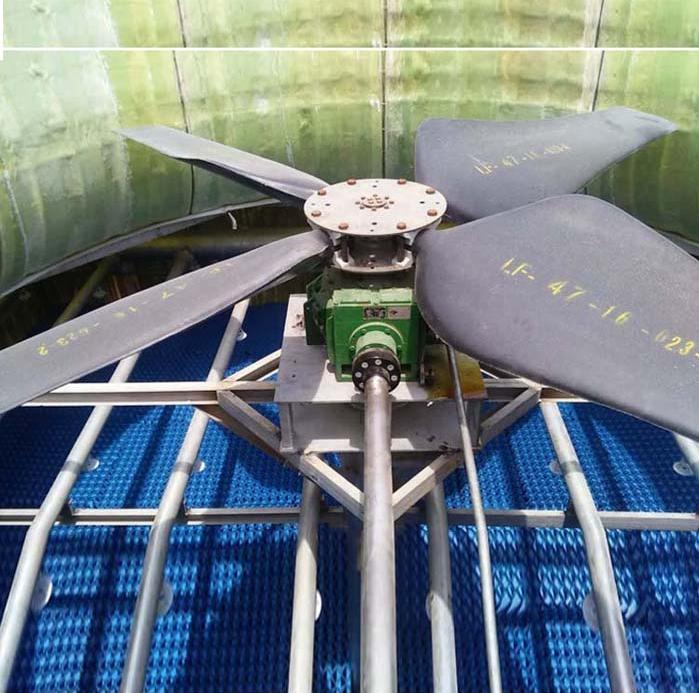
A cooling tower fan shaft bearing supports the rotating shaft that transfers power from the motor and drive system to the fan.
Depending on the cooling tower design, the bearing assembly may include:
Rolling-element bearing
Bearing housing or plummer block
Seals and sealing components
Lubrication fittings
Mounting bolts and accessories
Shaft locking or locating components
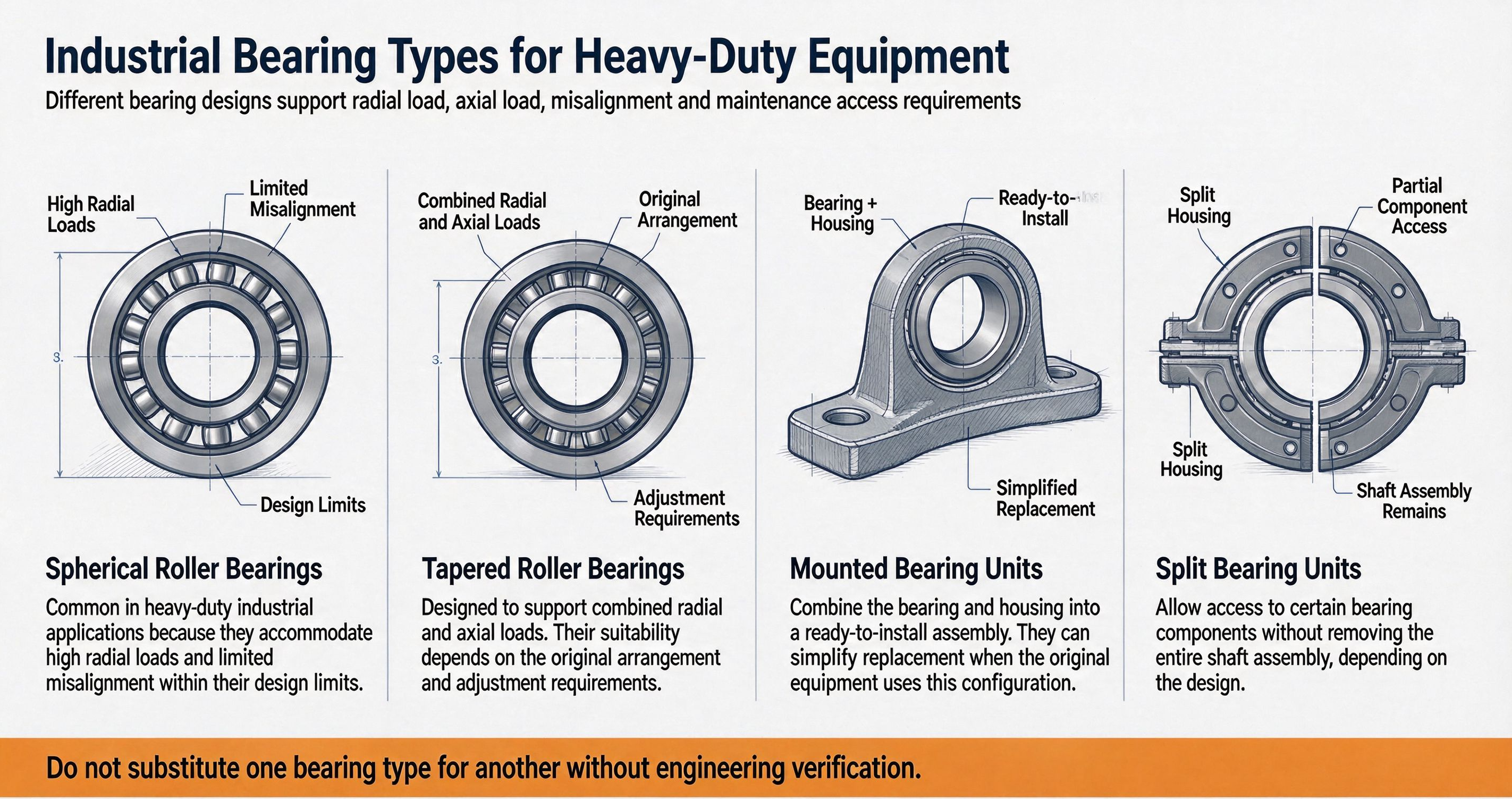
Some systems use separate bearing housings, while others use specialized mounted or split bearing arrangements. The correct configuration depends on the equipment manufacturer, shaft design, fan size, and operating conditions.
Common Signs That Fan Shaft Bearings Need Replacement
Identifying bearing problems early helps prevent more serious mechanical damage.
Abnormal noise: Grinding, squealing, or knocking sounds may indicate internal bearing wear, insufficient lubrication, or contamination.
Excessive vibration: Increased vibration can result from bearing damage, shaft misalignment, looseness, or fan imbalance.
Overheating: High bearing temperatures may be associated with excessive preload, incorrect lubrication, contamination, or excessive loading.
Grease leakage or contamination: Damaged seals and deteriorated lubricant can reduce bearing protection.
Shaft movement: Unusual radial or axial movement may indicate bearing wear or incorrect installation.
Always inspect the complete fan drive system before concluding that the bearing alone is responsible.
Technical Specifications for Cooling Tower Fan Shaft Bearings
Choosing a replacement bearing requires more than matching its outside appearance. Buyers should compare the following specifications.
| Specification | What buyers should check |
| Bearing type | Spherical roller, tapered roller, or specified alternative |
| Bore diameter | Actual shaft diameter and required fit |
| Outside diameter | Compatibility with the bearing housing |
| Bearing width | Correct axial installation dimensions |
| Dynamic load rating | Suitability for operating loads |
| Static load rating | Capacity under stationary or shock loading |
| Operating speed | Compatibility with actual fan RPM |
| Internal clearance | Required clearance for operating conditions |
| Sealing | Protection against water, dust, and contaminants |
| Lubrication | Grease type, quantity, and relubrication requirements |
| Housing design | Split plummer block, pillow block, or other arrangement |
| Material | Bearing steel and housing material requirements |
Step-by-Step Industrial Cooling Tower Fan Shaft Bearing Replacement
Bearing replacement should be performed by qualified mechanical personnel following the equipment manufacturer's service instructions.
Step 1: Shut Down and Isolate the Equipment
Stop the cooling tower fan and apply lockout/tagout procedures. Isolate electrical power and prevent accidental startup. Confirm that the fan has stopped completely.
Step 2: Inspect the Existing Bearing Assembly
Record the original bearing number, housing model, shaft dimensions, lubrication arrangement, and mounting details. Photograph the assembly before disassembly.
Step 3: Remove the Damaged Bearing
Remove guards and other components as required by the equipment design. Release the locking mechanism and remove the bearing using appropriate tools. Avoid hammering directly on the shaft or rolling elements.
Step 4: Inspect the Shaft and Housing
Check the shaft for scoring, corrosion, wear, and dimensional damage. Inspect the housing, mounting surfaces, seals, and fasteners. Replace damaged components before installing the new bearing.
Step 5: Install the Replacement Bearing
Verify the replacement part number and dimensions. Use the manufacturer's recommended mounting method and installation tools. Apply the specified fits, clearances, locking arrangements, and lubrication procedures.
Step 6: Check Alignment and Rotation
Verify shaft alignment, bearing seating, mounting bolt tightness, and fan clearance. Rotate the assembly manually where safe and permitted to check for abnormal resistance or interference.
Step 7: Conduct a Controlled Test Run
Reinstall guards and remove tools from the work area. Restore power according to site procedures and conduct a controlled test run. Monitor bearing temperature, vibration, noise, and operating conditions.
How to Choose a Reliable Cooling Tower Fan Shaft Bearing Supplier
Industrial buyers should evaluate more than the unit price when sourcing replacement bearings.
Consider these factors:
Technical cross-reference: Can the supplier identify compatible bearings using original part numbers, drawings, or dimensions?
Product specifications: Are load ratings, clearances, materials, and lubrication requirements documented?
Housing compatibility: Can the supplier provide the correct bearing housing and accessories when required?
Quality control: Are inspection reports and material documentation available?
Aftermarket options: Can the supplier offer compatible replacement products for discontinued or expensive original parts?
Export capability: Are packaging, lead times, and international shipping arrangements suitable for the project?
A dependable supplier should confirm technical compatibility before recommending a replacement.
OEM vs. Aftermarket Cooling Tower Fan Shaft Bearings
Original equipment manufacturer (OEM) bearings are supplied through the original equipment or bearing manufacturer's distribution network. Aftermarket replacement bearings provide an alternative sourcing option.
For industrial cooling tower maintenance, a qualified aftermarket product can be considered when it meets the original technical requirements.
Compare:
Bearing dimensions and tolerances
Load and speed ratings
Internal clearance
Sealing and lubrication design
Housing compatibility
Operating environment
Quality inspection documentation
Avoid selecting a replacement based only on a similar part number or physical appearance.
Where to Buy Industrial Cooling Tower Fan Shaft Bearings?
Cooling tower operators, maintenance contractors, and industrial distributors can source replacement bearings through established bearing manufacturers, authorized distributors, and specialized cooling tower parts suppliers.
For OEM-compatible and aftermarket sourcing, CoolingTowerPart.com can assist buyers looking for industrial cooling tower fan shaft bearings, bearing housings, and related fan drive components.
To request a quotation, provide:
Original bearing part number or equipment brand and model
Shaft diameter and bearing dimensions
Bearing housing model or photographs
Fan speed and operating conditions
Required quantity and destination country
Providing these details helps reduce incorrect orders and speeds up replacement identification.
Frequently Asked Questions
Q1: How often should cooling tower fan shaft bearings be replaced?
There is no universal replacement interval. Follow the manufacturer's maintenance recommendations and monitor vibration, temperature, lubrication, and operating condition.
Q2: Can I replace only the bearing without replacing the housing?
Yes, if the housing remains in good condition and the replacement bearing is compatible with its dimensions and design.
Q3: What causes cooling tower fan bearing failure?
Common causes include insufficient lubrication, water contamination, incorrect installation, misalignment, excessive loading, and abnormal vibration.
Q4: Can aftermarket bearings replace OEM bearings?
Yes, when the aftermarket bearing has been verified against the original specifications and application requirements.
Q5: What information is needed for a bearing quotation?
The original part number, shaft dimensions, housing details, equipment model, operating speed, and photographs are useful starting points.
Conclusion
Industrial cooling tower fan shaft bearing replacement is an important maintenance task that directly affects fan reliability and cooling tower operation.
Selecting the correct bearing requires careful attention to dimensions, load ratings, speed, clearance, sealing, lubrication, and housing compatibility. A reliable supplier should provide technical cross-reference support and verified product specifications.
Looking for industrial cooling tower fan shaft bearing replacements? Contact CoolingTowerPart.com with your bearing number, equipment model, or product photos to discuss OEM-compatible and aftermarket replacement options.
Recommended internal links for CoolingTowerPart.com:


