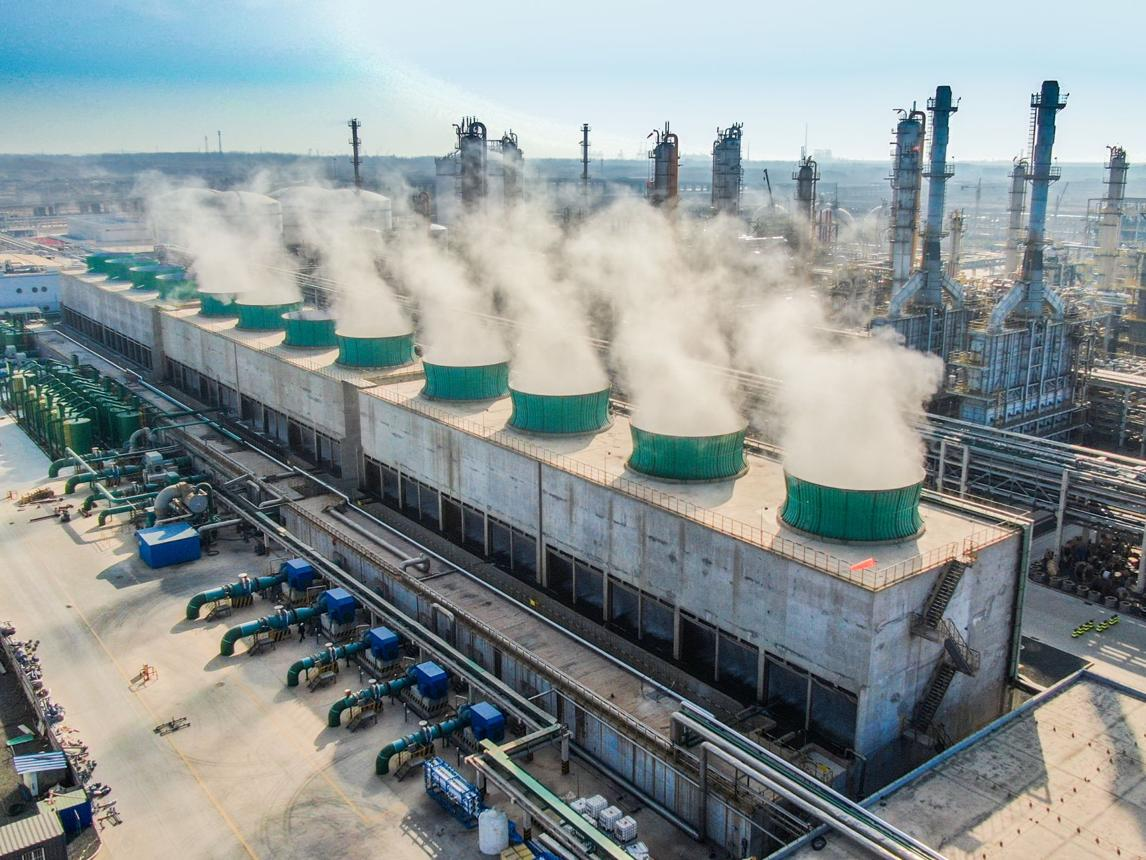
Choosing the right induced draft cooling tower fan manufacturer is an important decision for any industrial cooling project. Whether you are building a new cooling tower, replacing an existing fan, or upgrading an old cooling system, the quality of the fan directly affects cooling performance, energy consumption, equipment reliability, and maintenance costs.
An unsuitable fan can create problems such as insufficient airflow, excessive vibration, high noise levels, and unnecessary electricity consumption. Even worse, a fan that does not match the existing cooling tower may require additional modifications before installation.
So, how do you find a reliable manufacturer? Should you focus on product quality, technical experience, materials, customization, or price?
The best approach is to evaluate all these factors together. A qualified supplier should understand cooling tower applications, provide suitable product specifications, and help you find a fan that matches your operating requirements.
In this guide, we will explain how to evaluate an induced draft cooling tower fan manufacturer, what technical details you should check, and how to avoid common purchasing mistakes.
1. Understanding Induced Draft Cooling Tower Fans
Before choosing a manufacturer, it is important to understand how an induced draft cooling tower fan works.
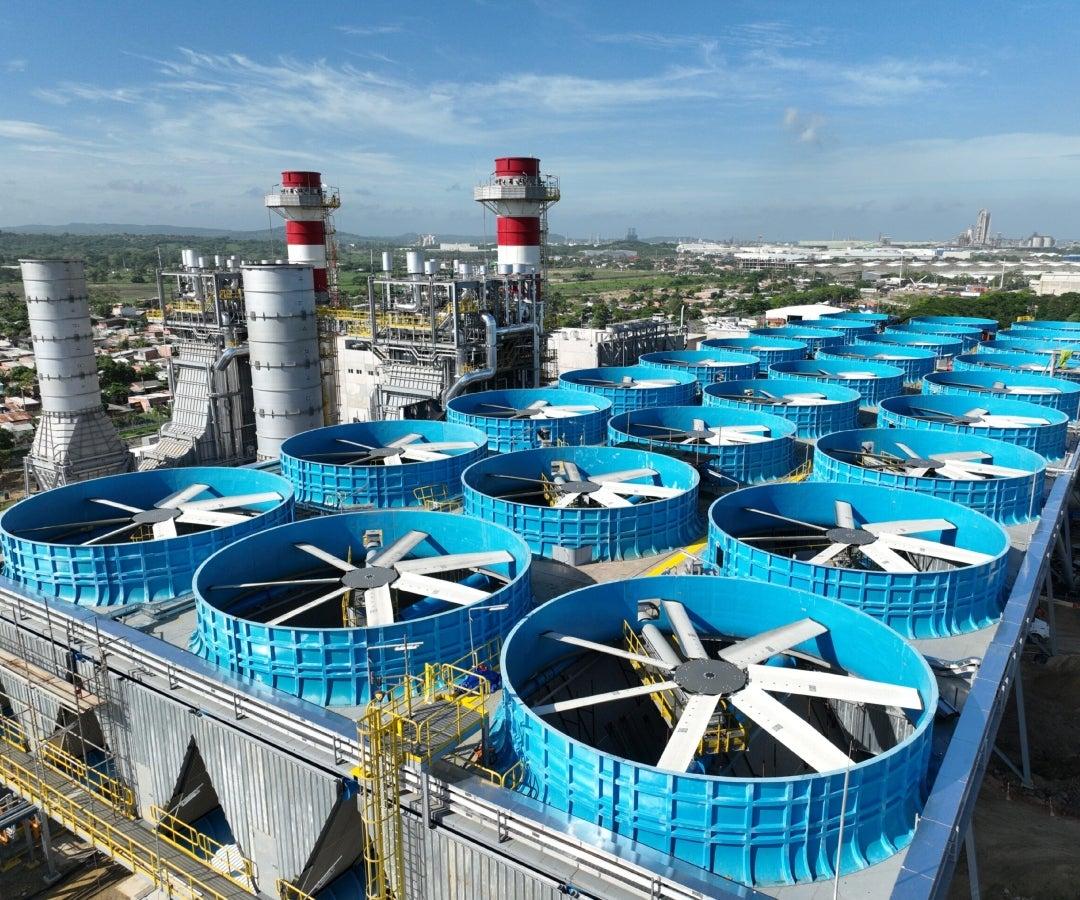
An induced draft cooling tower is a mechanical draft cooling system that uses a fan, generally installed at the top of the tower, to draw air through the cooling equipment. The fan pulls warm, moisture-laden air upward and discharges it into the atmosphere.
At the same time, hot circulating water flows through the cooling tower fill. As air moves through the fill, a small portion of the water evaporates, removing heat from the remaining water.
This process helps reduce the water temperature before it returns to the industrial process.
The fan is one of the most important components in this system. Without sufficient airflow, the cooling tower may not achieve its required thermal performance.
1.1 How Does an Induced Draft Cooling Tower Work?
In a typical induced draft cooling tower, air enters through the tower's air inlets, passes through the fill section, and moves toward the fan at the top.
The fan creates negative pressure inside the tower, pulling air through the system. This arrangement helps establish a continuous airflow path and supports heat and mass transfer between the water and air.
Compared with a forced draft cooling tower, where the fan pushes air into the tower, an induced draft design draws air through the cooling equipment.
The two arrangements have different airflow characteristics and installation requirements. The right configuration depends on the cooling tower design, operating conditions, and project requirements.
1.2 The Role of the Cooling Tower Fan
Think of the cooling tower fan as the engine that keeps the air moving.
Its job is not simply to rotate. It must deliver the required airflow against the resistance created by the fill, drift eliminators, air inlets, and other internal components.
Several factors influence fan performance:
A fan that is too small may not provide enough airflow. A poorly matched fan may consume excessive power or create unnecessary mechanical stress.
That is why choosing a manufacturer with cooling tower knowledge is so important.
2. Why Choosing the Right Manufacturer Matters
A cooling tower fan is a precision rotating component. Its design, materials, manufacturing quality, and compatibility with the drive system all influence long-term performance.
Choosing the wrong supplier can lead to problems that are difficult and expensive to correct after delivery.
A reliable manufacturer or supplier should do more than provide a quotation. It should understand your application, review the technical requirements, and help confirm whether the proposed fan is suitable.
2.1 Cooling Performance and Energy Efficiency
Cooling tower fans directly influence the airflow available for heat rejection.
If airflow is insufficient, the cooling tower may struggle to maintain the required cold-water temperature. This can affect chillers, production equipment, and other industrial processes.
On the other hand, simply increasing fan speed or selecting a larger motor does not automatically improve efficiency. The fan must be properly matched to the system's design airflow and pressure requirements.
When evaluating a manufacturer, ask how it determines fan diameter, blade configuration, rotational speed, and expected airflow.
A professional supplier should be able to explain the technical basis for its recommendation rather than suggesting a product based only on appearance or nominal size.
2.2 Equipment Reliability and Service Life
Cooling tower fans often operate for extended periods in humid and demanding environments.
They may be exposed to:
Poor material selection or inconsistent manufacturing quality can shorten the service life of fan components.
Before choosing a supplier, ask about blade materials, hub construction, manufacturing processes, quality inspection, and maintenance requirements.
A slightly higher initial investment may be worthwhile if it helps reduce future downtime and replacement costs.
3. Check the Manufacturer's Industry Experience
Industry experience is one of the first things you should evaluate when selecting a cooling tower fan manufacturer.
A company that understands industrial cooling tower applications is more likely to recognize the practical requirements of fan selection, installation, and replacement.
Start by reviewing the company's website, product range, technical documentation, and previous project experience.
Do not rely only on advertising statements. Look for clear product information and evidence that the supplier understands cooling tower equipment.
3.1 Cooling Tower Fan Product Experience
Find out whether the supplier has experience with different cooling tower fan components, including:
Axial cooling tower fans
FRP cooling tower fan blades
Aluminum alloy fan blades
Fan hubs
Blade adjustment systems
Fan replacement components
If you are purchasing a replacement fan, experience with existing cooling tower installations is particularly valuable.
The supplier should understand important details such as fan diameter, blade length, hub connection, rotation direction, operating speed, and installation requirements.
3.2 Experience with Different Cooling Tower Designs
Not every cooling tower uses the same fan arrangement.
Fan dimensions and operating requirements may vary depending on tower capacity, structure, airflow arrangement, fan cylinder design, and drive configuration.
A supplier familiar with different cooling tower designs may be better prepared to identify potential compatibility problems.
Ask whether the company can review your existing equipment drawings, photographs, and technical specifications before recommending a product.
This simple step can prevent misunderstandings during production and installation.
4. Evaluate Fan Design and Technical Capabilities
Technical capability is one of the most important differences between a qualified supplier and a company that only sells standard products.
An induced draft cooling tower fan must match the operating conditions of the tower. Therefore, the manufacturer should understand the relationship between fan design and overall cooling system performance.
Before requesting a quotation, prepare as much technical information as possible.
4.1 Airflow and Fan Diameter
Airflow is one of the most important parameters in cooling tower fan selection.
The required airflow depends on several factors:
Cooling tower heat load
Circulating water flow rate
Hot-water and cold-water temperatures
Ambient wet-bulb temperature
Cooling tower structure
Internal system resistance
Fan diameter must also match the available installation space and fan cylinder dimensions.
Do not select a replacement fan based only on the diameter of the old unit. Previous equipment may have been modified, or the original fan may not have been operating at its intended performance level.
Provide the manufacturer with the cooling tower model, fan opening dimensions, and available technical data.
4.2 Fan Blade Design and Adjustment
Fan blades play a major role in airflow generation.
Their shape, length, number, material, and installation angle all influence aerodynamic performance.
Some cooling tower fans allow blade pitch adjustment. This can help match fan operation to the required airflow, but adjustment must follow the manufacturer's recommendations.
An incorrect blade angle may result in excessive motor load, vibration, or reduced airflow.
When comparing suppliers, ask about:
A manufacturer should be able to explain how these specifications relate to your cooling tower application.
4.3 Motor, Gearbox, and Drive System Compatibility
The fan does not operate independently. It works together with the motor and drive system.
Depending on the cooling tower design, the drive arrangement may include a gearbox, belt drive, or another mechanical configuration.
The replacement fan must be compatible with the system's rotational speed, power rating, shaft arrangement, and mounting configuration.
Before placing an order, confirm:
Motor power
Operating speed
Rotation direction
Drive arrangement
Shaft and hub connection
Installation dimensions
If you are replacing an existing fan, photographs of the motor, gearbox, hub, and installation area can help the supplier understand the application.
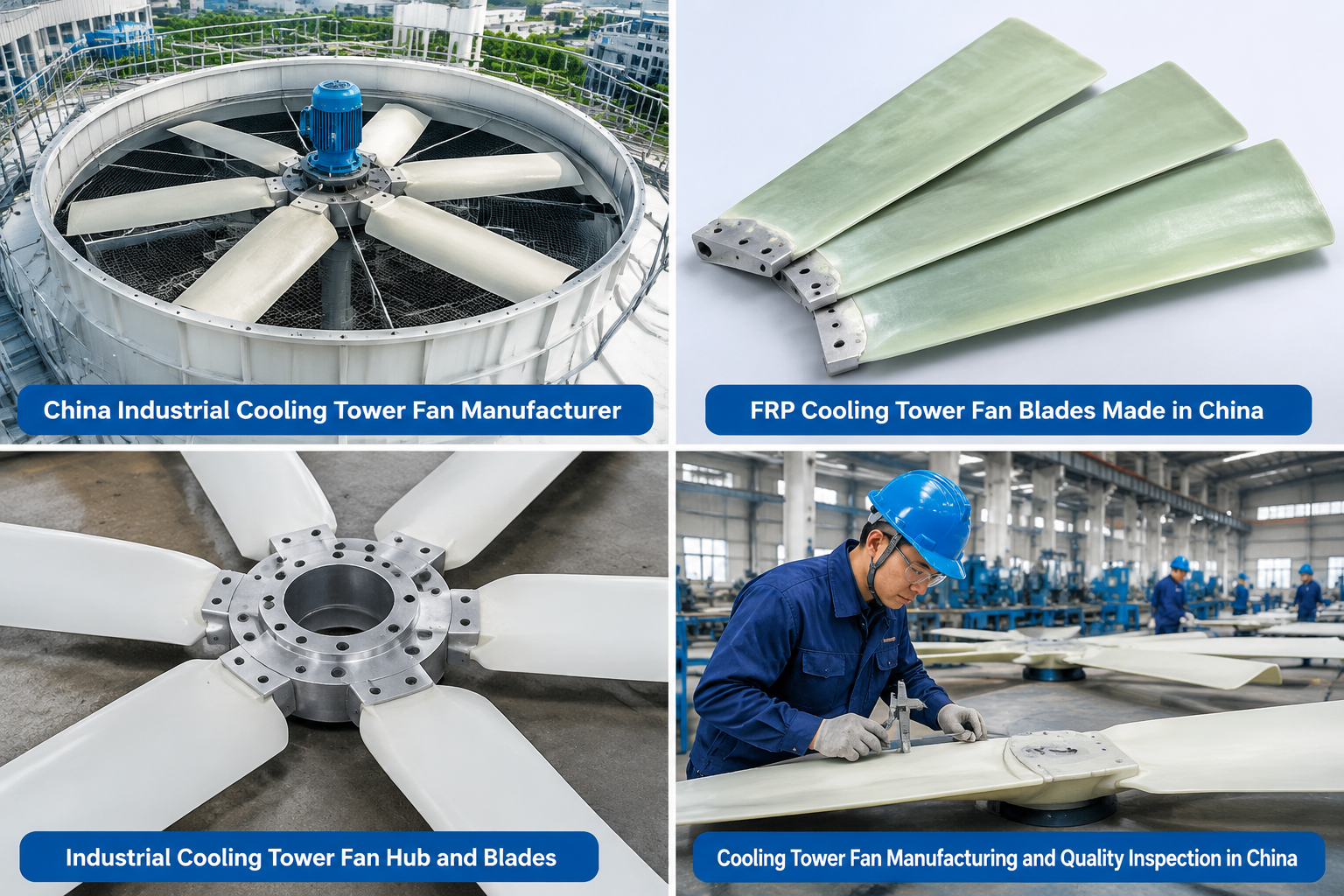
5. Compare Cooling Tower Fan Materials
Material selection affects fan weight, corrosion resistance, mechanical strength, maintenance requirements, and service life.
Different industrial environments may require different materials. A reliable supplier should explain the advantages and limitations of each option.
5.1 FRP Cooling Tower Fan Blades
FRP stands for fiber-reinforced plastic. It is widely used in industrial cooling tower applications because it can combine relatively low weight, corrosion resistance, and design flexibility.
FRP fan blades may be suitable for humid environments and certain corrosive operating conditions.
However, not all FRP products are identical. Their performance depends on the resin system, reinforcement materials, manufacturing process, blade structure, and quality control.
When evaluating FRP blades, ask the supplier about:
The material should be selected according to the actual environment rather than simply choosing FRP because it is commonly used.
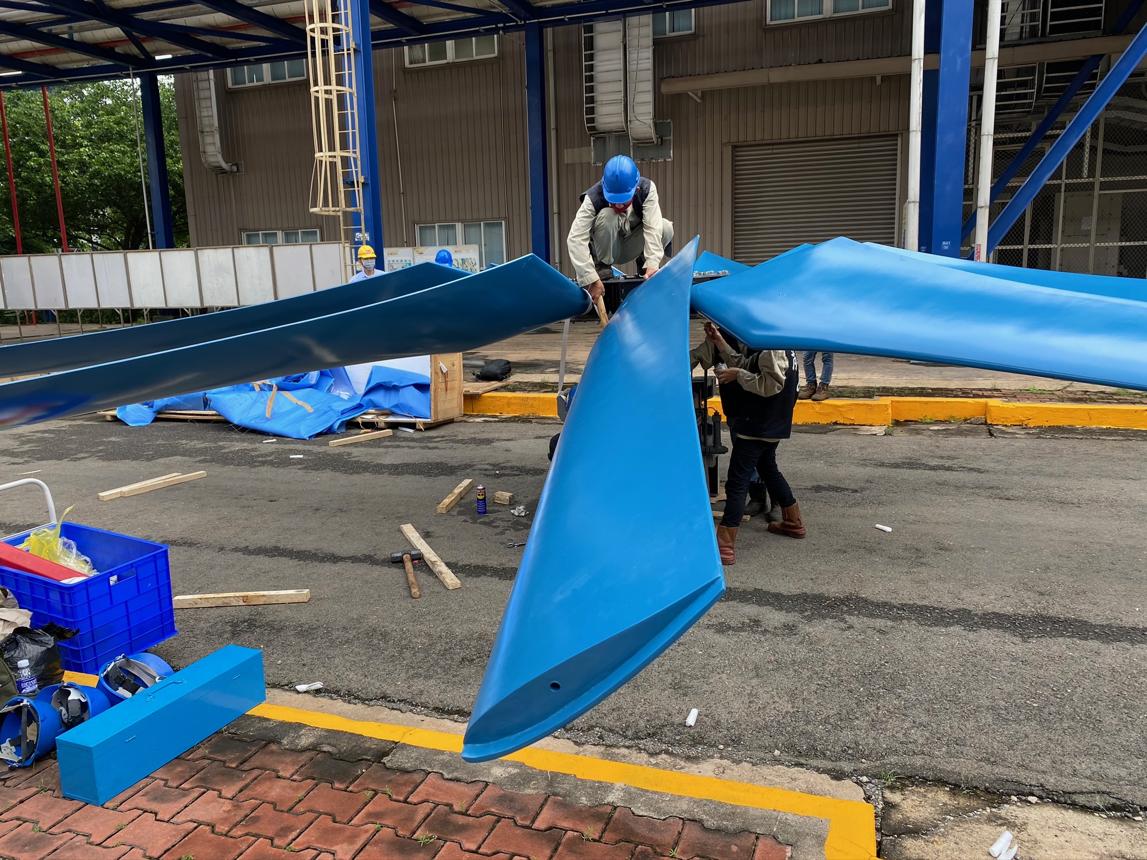
5.2 Aluminum Alloy Cooling Tower Fan Blades
Aluminum alloy is another material used in cooling tower fan applications.
Aluminum blades can provide a useful combination of strength and relatively low weight. They may be suitable for specific fan designs and operating conditions.
However, alloy selection and surface treatment are important.
If the cooling tower operates in an environment with chemical exposure or aggressive atmospheric conditions, corrosion protection should be considered carefully.
Ask the manufacturer about the alloy specification, blade thickness, surface treatment, and applicable operating environment.
5.3 Choosing the Right Material for Your Application
Which material is better, FRP or aluminum?
There is no universal answer. The right choice depends on the cooling tower design, operating environment, mechanical requirements, and maintenance expectations.
For example, a cooling tower located near a chemical processing facility may face different corrosion challenges from one installed in a general manufacturing plant.
Explain your operating conditions to the supplier before selecting the blade material.
A good manufacturer should help you compare the options based on practical requirements instead of recommending the same material for every project.
6. Review Manufacturing Quality and Inspection
Even a well-designed fan may fail if manufacturing quality is inconsistent.
Before choosing a supplier, ask how it controls raw materials, dimensions, assembly, and final product quality.
Quality control should be part of the entire production process, not just a final inspection before shipment.
6.1 Dimensional and Material Inspection
Dimensional accuracy is especially important when purchasing replacement fans.
Important inspection points may include:
Blade length
Blade profile
Blade thickness
Hub dimensions
Mounting holes
Blade connection
Material condition
These measurements help confirm that the product matches the agreed specifications.
For replacement projects, even a small dimensional mismatch may create installation difficulties.
Ask whether the supplier can provide product drawings, inspection records, or dimensional confirmation before shipment.
6.2 Dynamic Balancing and Performance Testing
A cooling tower fan is rotating equipment, so balancing is essential.
Poor balancing can cause excessive vibration, increased noise, bearing wear, and additional stress on the drive system.
Ask the manufacturer what balancing procedures are used and whether balancing records can be provided.
You should also ask about available performance information, such as airflow and operating conditions.
It is important to distinguish between tested performance data and calculated design values. A reliable supplier should explain the basis of the information it provides.
7. Check Customization and Replacement Capabilities
Many industrial buyers do not need a standard cooling tower fan.
They need a fan that fits an existing cooling tower, matches a particular fan cylinder, or meets the requirements of a replacement project.
This is why customization and technical communication are important when choosing a manufacturer.
7.1 Custom Fan Dimensions and Specifications
Before requesting a quotation, prepare the following information whenever possible:
Cooling tower model
Fan diameter
Number of blades
Blade material
Blade length
Hub dimensions
Blade pitch
Rotational speed
Motor power
Rotation direction
Technical drawings are especially useful. If drawings are unavailable, provide clear photographs and accurate measurements.
A capable supplier should identify which specifications are essential and which details need further confirmation.
Do not approve production until the important dimensions and product requirements have been confirmed.
7.2 Replacement Fans for Existing Cooling Towers
Replacing an old cooling tower fan can be more complicated than purchasing a fan for a new installation.
The original manufacturer may no longer supply the component. Alternatively, the existing fan may have been modified during previous maintenance work.
In these situations, a replacement supplier needs to understand the installation and operating requirements.
Do not assume that a fan with the same diameter will automatically fit.
Check the following details carefully:
Fan diameter and available clearance
Hub dimensions and mounting arrangement
Blade configuration and pitch
Rotation direction
Operating speed
Motor and gearbox compatibility
A careful technical review before ordering can reduce installation problems and unnecessary project delays.
8. Compare Prices and Total Purchasing Costs
Price is naturally an important consideration, particularly for large industrial projects.
However, comparing quotations only by their total amounts can lead to poor purchasing decisions.
Two suppliers may quote products with different materials, specifications, inspection procedures, packaging, and delivery conditions.
Make sure you are comparing equivalent products.
8.1 What Affects Cooling Tower Fan Prices?
Several factors influence the price of an induced draft cooling tower fan.
Fan diameter: Larger fans generally require more material and may involve more complex manufacturing requirements.
Blade material: FRP and aluminum alloy have different material and production costs.
Fan design: Blade profile, number of blades, hub configuration, and adjustment systems can affect the final price.
Customization: Non-standard dimensions and special technical requirements may increase production costs.
Order quantity: Quantity can influence manufacturing efficiency and unit pricing.
Transportation: Packaging, shipping distance, export documentation, and delivery terms also affect the total purchasing cost.
When requesting quotations, ask each supplier to provide a clear breakdown of product specifications and commercial conditions.
8.2 Why the Cheapest Fan Is Not Always the Best Choice
Imagine purchasing a fan that costs less but creates excessive vibration or fails to provide the required airflow.
The initial saving may quickly disappear through additional maintenance, electricity consumption, and production downtime.
This is why experienced buyers consider the total cost of ownership rather than focusing only on the purchase price.
Compare product quality, technical support, expected operating conditions, spare parts availability, and delivery reliability.
A suitable fan should provide the right balance between performance, reliability, and cost.
9. Evaluate Communication, Delivery, and After-Sales Support
Good communication is often overlooked during supplier evaluation, but it can make a significant difference throughout the purchasing process.
A reliable manufacturer or supplier should respond clearly, confirm specifications in writing, and explain potential limitations before production begins.
Before placing an order, confirm the following:
Production lead time
Product drawings and technical confirmation
Packaging method
Shipping arrangements
Delivery terms
Warranty conditions
After-sales communication
Technical support availability
For international buyers, clear communication about export documents and shipping arrangements is also important.
If a supplier cannot explain basic product specifications or repeatedly provides unclear answers, consider this a warning sign.
10. Questions to Ask Before Choosing a Manufacturer
Before making your final decision, ask each potential supplier the same questions.
This makes it easier to compare their capabilities objectively.
Here are some useful questions:
1. What types of cooling tower fans can you supply?
Check whether the supplier offers products suitable for your specific induced draft cooling tower application.
2. Can you review our technical drawings?
A supplier should be able to examine dimensions and identify potential compatibility issues.
3. What blade materials are available?
Ask about FRP, aluminum alloy, and other suitable options for your operating environment.
4. How do you inspect product quality?
Find out whether dimensional inspection, material checks, and balancing procedures are included.
5. Can you supply replacement fans for existing cooling towers?
This is particularly important if you are maintaining older equipment.
6. What information do you need for a quotation?
A professional supplier should clearly explain the technical information required.
7. What are your production and delivery arrangements?
Confirm the expected lead time, packaging, and shipping conditions.
8. What after-sales support is available?
Ask about warranty terms, technical communication, and procedures for handling product issues.
The answers will help you identify suppliers that understand your requirements and can support your project.
11. Common Mistakes When Selecting a Cooling Tower Fan Supplier
Even experienced purchasing teams can make mistakes when sourcing industrial cooling tower fans.
Avoiding the following problems can save time and money.
Mistake 1: Choosing a Supplier Based Only on Price
A low quotation does not necessarily mean better value.
Always compare materials, specifications, manufacturing quality, and delivery conditions.
Mistake 2: Providing Incomplete Technical Information
If you provide only a fan diameter, the supplier may not have enough information to recommend a suitable replacement.
Share drawings, photographs, motor details, and installation measurements whenever possible.
Mistake 3: Ignoring Drive System Compatibility
A fan may have the correct diameter but still be unsuitable because its hub, shaft connection, rotation direction, or operating speed does not match the existing system.
Confirm all important interfaces before ordering.
Mistake 4: Overlooking Material Quality
Two FRP blades may look similar but have different material formulations and manufacturing quality.
Ask for clear material specifications instead of relying on appearance.
Mistake 5: Ignoring After-Sales Support
Technical questions may arise during installation or operation.
Choose a supplier that communicates clearly and can provide reasonable support when problems occur.
12. Why Consider Power Tower Cooling Technology (Shaoxing) Co.,Ltd?
When sourcing cooling tower components, working with a supplier that understands the cooling tower industry can make the purchasing process easier.
Power Tower Cooling Technology (Shaoxing) Co.,Ltd focuses on cooling tower products and related components for industrial applications.
The company's website, www.coolingtowerpart.com, provides information about cooling tower products and components for buyers looking for suitable industrial cooling solutions.
If you are evaluating an induced draft cooling tower fan or planning a replacement project, you can contact Power Tower with your technical requirements.
To make the discussion more efficient, prepare the following information:
Cooling tower model
Existing fan diameter
Number of blades
Blade material
Hub dimensions
Motor power and rotational speed
Photographs of the existing fan
Technical drawings, if available
These details help clarify the product requirements and make it easier to discuss possible solutions.
For international buyers, providing complete technical information at the quotation stage can also improve communication and reduce the risk of specification misunderstandings.
Whether you are purchasing cooling tower components for a new project or maintaining an existing installation, careful product evaluation is always worthwhile.
Visit Power Tower Cooling Technology (Shaoxing) Co.,Ltd to learn more about cooling tower products and discuss your sourcing requirements.
13. A Practical Checklist for Choosing an Induced Draft Cooling Tower Fan Manufacturer
Before confirming your purchase, use this checklist to review the supplier.
Technical capabilities
Does the supplier understand induced draft cooling tower applications?
Can it review technical drawings and operating requirements?
Can it explain airflow, fan diameter, and blade configuration?
Product compatibility
Are the fan diameter and hub dimensions confirmed?
Is the rotation direction correct?
Are the motor and drive system compatible?
Is there sufficient installation clearance?
Material selection
Are the blade materials suitable for the operating environment?
Are material specifications available?
Has corrosion exposure been considered?
Manufacturing quality
Are dimensions and materials inspected?
Is fan balancing addressed?
Can inspection records be provided?
Commercial conditions
Is the quotation based on confirmed specifications?
Are packaging and delivery terms clear?
Is the production lead time acceptable?
After-sales support
Are warranty conditions clearly stated?
Is technical communication available?
Can the supplier respond to product questions?
If important questions remain unanswered, clarify them before placing the order.
14. Conclusion
Choosing the right induced draft cooling tower fan manufacturer requires more than comparing product prices.
You need to understand how the fan works, confirm the technical requirements, evaluate materials, review manufacturing quality, and check compatibility with the cooling tower system.
A suitable supplier should be able to discuss airflow, fan dimensions, blade design, drive arrangements, inspection procedures, and replacement requirements.
It should also communicate clearly and provide realistic information about production, delivery, and after-sales support.
Take time to compare suppliers using the same technical requirements. This approach can help you avoid costly purchasing mistakes and find a cooling tower fan solution that supports stable and efficient operation over the long term.
If you are sourcing cooling tower components, visit Power Tower Cooling Technology (Shaoxing) Co.,Ltd to explore its products and discuss your project requirements.
15. Frequently Asked Questions
Q1: What is an induced draft cooling tower fan?
An induced draft cooling tower fan is generally installed at the top of a mechanical draft cooling tower. It pulls air through the tower and discharges warm, moist air upward, supporting the evaporation and heat rejection process.
Q2: What type of fan is commonly used in induced draft cooling towers?
Axial fans are commonly used in induced draft cooling towers because they can move large volumes of air at relatively low pressure. The final selection depends on the cooling tower design, airflow requirements, and operating conditions.
Q3: Which material is best for cooling tower fan blades?
FRP and aluminum alloy are both used in cooling tower fan applications. The best choice depends on corrosion exposure, mechanical requirements, operating conditions, and the specific fan design.
Q4: How do I choose the correct cooling tower fan diameter?
Start with the cooling tower design requirements, available fan cylinder dimensions, required airflow, rotational speed, and installation clearances. For replacement projects, do not select a fan based on diameter alone.
Q5: What information should I provide when requesting a cooling tower fan quotation?
Provide the cooling tower model, fan diameter, number of blades, blade material, hub dimensions, motor power, rotational speed, rotation direction, technical drawings, and photographs where available.
Q6: Why is cooling tower fan balancing important?
Proper balancing helps reduce vibration and mechanical stress. It supports smoother operation and can reduce unnecessary wear on connected components such as bearings and drive equipment.
Q7: Can I replace an old cooling tower fan with a different brand?
In many cases, a replacement fan from another supplier may be possible. However, compatibility must be checked carefully. Confirm dimensions, hub connections, blade configuration, rotation direction, operating speed, and performance requirements before ordering.
Q8: How can I find a reliable cooling tower fan supplier in China?
Review the supplier's cooling tower industry experience, technical knowledge, product specifications, quality control procedures, customization capabilities, communication, and delivery arrangements. Request drawings and written specifications before confirming an order.
Q9: How often should an induced draft cooling tower fan be inspected?
Inspection frequency depends on operating hours, environmental conditions, manufacturer recommendations, and site maintenance procedures. Regular checks should cover blade condition, vibration, fasteners, hub connections, drive components, and unusual noise.
Q10: What causes excessive vibration in a cooling tower fan?
Possible causes include fan imbalance, damaged blades, loose fasteners, incorrect blade pitch, misalignment, worn bearings, and problems with the drive system. The equipment should be inspected systematically to identify the actual cause before operation continues.


