1. Introduction
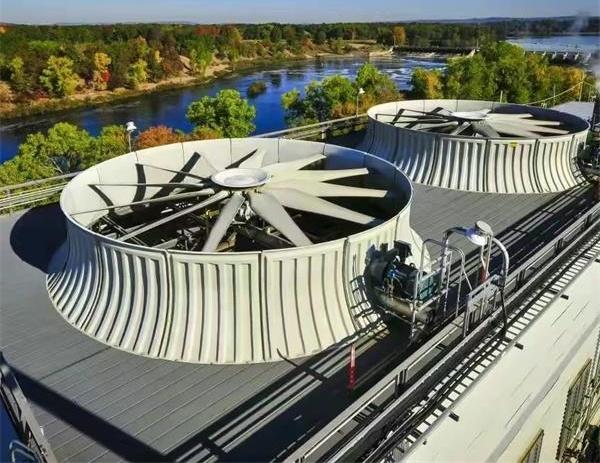
A cooling tower fan may look like a simple rotating component, but it plays a major role in the performance of an industrial cooling system. Without sufficient airflow, a cooling tower cannot transfer heat as effectively as its design requires. That can affect water temperatures, production processes, equipment reliability, and operating costs.
For industrial buyers, choosing the right cooling tower fan manufacturer is therefore an important decision. You need more than a fan that fits the tower. You need the right blade design, material, diameter, operating speed, motor arrangement, and airflow performance.
Japan has a well-established cooling tower industry, with manufacturers serving commercial HVAC systems, chemical plants, steel production, power generation, and other industrial sectors. International buyers can also consider specialist cooling tower component suppliers when they need replacement fan blades or customized parts.
In this article, we introduce five companies relevant to cooling tower fan and system procurement. Power Tower Cooling Technology (Shaoxing) Co.,Ltd is placed first as requested. It is a China-based cooling tower component supplier, not a Japanese manufacturer. The remaining companies are Japanese businesses with cooling tower manufacturing or related system capabilities.
The list is a buyer-oriented reference, not a verified ranking by revenue or market share. We will also explain what to check before purchasing a new fan or replacing an existing cooling tower fan assembly.
2. Understanding Cooling Tower Fans
Before comparing suppliers, let's look at what a cooling tower fan actually does.
A cooling tower removes heat from circulating water by bringing water into contact with moving air. In a mechanical-draft cooling tower, the fan creates the airflow needed for this process.
The fan works together with the motor, gearbox or drive arrangement, fan stack, fill media, water distribution system, and drift eliminators. If one component is incorrectly selected, the performance of the whole system can be affected.
2.1 What Does a Cooling Tower Fan Do?
The primary function of a cooling tower fan is to move air through the tower at the required flow rate.
In a typical induced-draft cooling tower, the fan is installed near the top and pulls air through the tower before discharging warm, humid air upward. In a forced-draft design, the fan pushes air into the tower.
The airflow helps water evaporate and transfers heat from the circulating water to the atmosphere. The fan must therefore deliver the airflow required by the tower's thermal design.
A larger fan does not automatically mean better cooling. The fan must match the tower's resistance, motor capacity, operating speed, and required airflow.
2.2 Common Types of Cooling Tower Fans
Axial fans are widely used in mechanical-draft cooling towers. They move large volumes of air along the direction of the fan shaft and are commonly selected for cooling tower applications.
Centrifugal fans operate differently. They accelerate air outward from the center of the impeller and are used in certain ventilation and air-handling applications. They are not interchangeable with axial cooling tower fans.
Cooling tower axial fans may use different blade materials and designs, including FRP, aluminum alloy, and engineered plastics. The right choice depends on fan size, operating conditions, mechanical loading, corrosion exposure, and the manufacturer's design.
2.3 Why Fan Quality Matters
A cooling tower fan affects several aspects of system operation:
Airflow: The fan needs to deliver sufficient air through the tower.
Energy consumption: Fan aerodynamic efficiency and operating conditions influence power demand.
Noise: Blade shape, tip speed, installation, and airflow conditions affect sound levels.
Vibration: Imbalance, loose connections, and mechanical wear can create vibration.
Reliability: Material quality and correct installation help support dependable operation.
A well-selected fan is not simply a component purchase. It is part of the overall cooling tower performance strategy.
3. Top 5 Cooling Tower Fan Manufacturers and Suppliers
The following companies provide different types of value to cooling tower buyers. Some specialize in cooling tower components, while others design and manufacture complete cooling tower systems with integrated fan assemblies.
3.1 Power Tower Cooling Technology (Shaoxing) Co.,Ltd – China
Website: https://www.coolingtowerpart.com
Power Tower Cooling Technology (Shaoxing) Co.,Ltd is a China-based manufacturer and supplier of cooling tower components. It is included first in this list as the featured supplier, particularly for buyers looking for cooling tower fan blades and replacement parts.
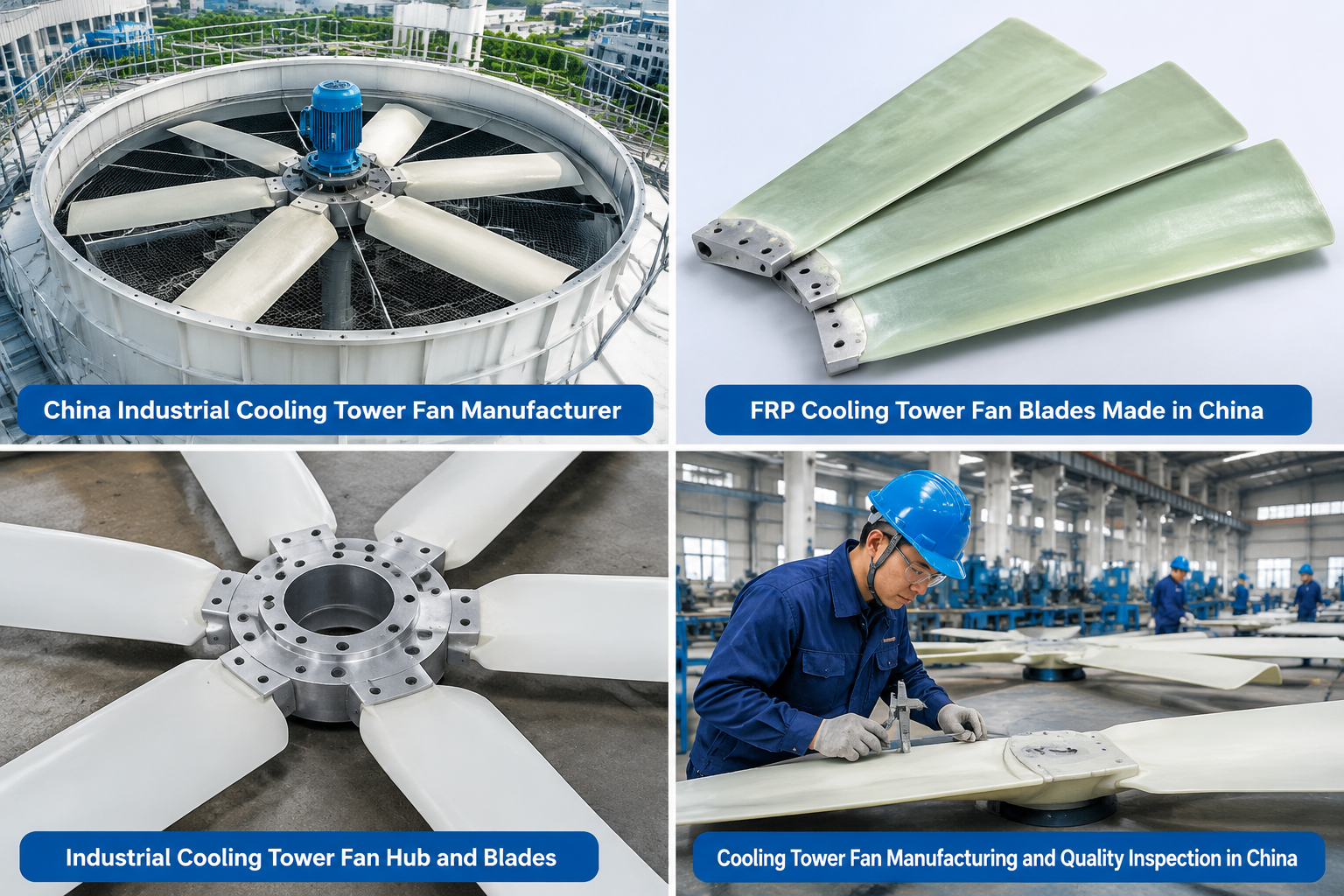
Its product range includes cooling tower fan-related components such as FRP fan blades, aluminum alloy fan blades, ABS fan blades, and nylon fan blades. Different materials can serve different equipment requirements, so buyers should confirm the available specifications and suitability for their cooling tower before ordering.
For maintenance teams, replacing a damaged or aging fan blade can be an alternative to replacing the entire fan assembly, provided the existing hub, blade mounting arrangement, and remaining components are in suitable condition.
Power Tower's component-focused approach is relevant to buyers who need:
Cooling tower fan blades in different materials.
Replacement components for existing cooling towers.
Fan blade size and configuration discussions.
Cooling tower parts for maintenance and refurbishment.
Customized component enquiries based on project requirements.
When contacting the company, provide the existing fan diameter, blade quantity, hub details, blade dimensions, operating speed, and photographs. These details help the supplier assess whether a proposed replacement is compatible.
Why consider Power Tower?
If your main purchasing requirement is cooling tower fan blades or related replacement parts rather than a complete cooling tower, a specialist component supplier may be worth comparing with full-system manufacturers.
For product details and enquiries, visit:
https://www.coolingtowerpart.com
3.2 Ebara Corporation – Japan
Website: https://www.ebara.com
Ebara Corporation is a Japanese industrial machinery manufacturer with businesses covering pumps, compressors, chillers, and other equipment. Its cooling tower-related activities are relevant to industrial and building-service cooling applications.
Ebara's Shinwa cooling tower business is particularly relevant to cooling tower fan technology. An engineering case study on the redesign of a cooling tower fan describes work involving axial-flow fan performance, energy efficiency, and noise reduction. This demonstrates the importance of fan aerodynamic design within a complete cooling tower system.
For buyers, Ebara is worth considering when evaluating complete cooling tower equipment and integrated system performance.
Areas to review include:
Cooling tower configuration and capacity.
Fan and motor arrangement.
Airflow and thermal performance.
Noise and vibration requirements.
Maintenance and replacement support.
If you are purchasing a standalone replacement fan blade rather than a complete tower, confirm the relevant business unit and whether the required component is available separately.
3.3 Shinnihon Reiki Co., Ltd. – Japan
Website: https://www.reiki-ct.co.jp/en/
Shinnihon Reiki is a Japanese company specializing in industrial cooling towers. Its business includes the design, manufacture, installation, and sale of cooling towers, as well as axial fan repair, improvement, inspection, and maintenance services.
The company serves a range of industrial sectors, including steelmaking, chemicals, and power generation. Its product and service portfolio includes crossflow, counterflow, and hybrid cooling tower designs.
One interesting product is its direct-connection cooling tower fan, known as the Ultra Fan. This is relevant to operators looking at fan system improvements and potential changes to existing drive arrangements.
Shinnihon Reiki may be worth evaluating for projects involving:
Industrial cooling tower design and supply.
Axial fan repair and improvement.
Cooling tower inspection and maintenance.
Existing tower performance assessments.
Fan system upgrades.
The company also provides services for existing cooling towers, which can be useful when an operator wants to improve equipment performance instead of replacing the complete tower.
3.4 Kuken Industries Co., Ltd. – Japan
Website: https://www.kuken.com/en/
Kuken Industries is a Japanese manufacturer of cooling towers and air-conditioning-related equipment. Its products include cooling towers, diffusers, air grilles, and dampers.
The company serves industrial markets and has an established presence in Japan. It is also associated with the Japan Cooling Tower Institute and the Cooling Technology Institute.
For cooling tower buyers, Kuken is relevant when comparing complete cooling tower systems and their associated components. Fan selection should be assessed as part of the complete equipment design rather than as an isolated specification.
When discussing a project with a supplier such as Kuken, buyers should review:
Required cooling capacity.
Tower type and installation arrangement.
Fan airflow and motor requirements.
Noise and vibration limits.
Maintenance access and replacement arrangements.
Kuken may be particularly relevant to projects where the buyer wants an integrated cooling tower solution from an established Japanese manufacturer.
3.5 Kobelco Eco-Solutions Co., Ltd. – Japan
Website: https://www.kobelco-eco.co.jp/english/
Kobelco Eco-Solutions is another Japanese company with experience in cooling tower systems. Its official product information describes cooling tower installations in Japan and overseas, including applications in chemical plants, iron manufacturing, power stations, and district cooling facilities.
The company offers crossflow and counterflow cooling tower designs. Its published technical information also identifies fan materials such as FRP and aluminum, together with other major tower components.
For industrial buyers, Kobelco is worth considering when the project requires a complete cooling tower system designed around specific process conditions.
Important comparison points include:
Crossflow or counterflow configuration.
Fan and drive arrangement.
Cooling tower structural materials.
Water distribution and fill design.
Site-specific operating requirements.
As with other complete-system manufacturers, buyers seeking individual replacement fan blades should confirm the availability of compatible parts and the required technical documentation.
4. How to Compare Cooling Tower Fan Manufacturers
A supplier list is a useful starting point, but it does not tell you which fan is right for your equipment. To make a sound decision, compare manufacturers using technical criteria.
4.1 Fan Blade Materials
Cooling tower fan blades are available in different materials. Each material has its own strengths and limitations.
FRP fan blades are commonly considered for cooling tower environments because of their relatively low weight and corrosion resistance. Their suitability depends on the laminate design, resin system, manufacturing quality, and operating conditions.
Aluminum alloy fan blades can offer a good strength-to-weight balance. Buyers should check the alloy, surface protection, mechanical design, and compatibility with the operating environment.
ABS and nylon fan blades may be used in certain smaller or specialized fan applications. Their suitability depends on temperature, loading, dimensions, and the fan manufacturer's design limits.
Do not choose a material based on price alone. Confirm that it can withstand the actual operating conditions.
4.2 Airflow and Aerodynamic Performance
The fan must deliver the airflow required by the cooling tower at its design operating point.
Ask the supplier for relevant fan performance data, including airflow, static pressure, rotational speed, and power requirements. Where available, review the fan curve and the conditions under which the data was measured.
A fan that cannot overcome the system resistance may fail to deliver the required airflow, even if its nominal diameter appears correct.
4.3 Fan Diameter and Blade Angle
Fan diameter and blade angle influence airflow and power demand.
However, changing the blade angle without checking motor load and fan performance can create problems. A larger angle may increase airflow, but it can also increase power demand and mechanical loading.
Any adjustment should follow the fan manufacturer's instructions and be verified using appropriate operating measurements.
4.4 Motor and Drive Compatibility
The fan must work with the existing motor and drive system.
Check the motor power, speed, voltage, frequency, mounting, shaft arrangement, gearbox or direct-drive configuration, and control method.
A replacement fan should not be selected based on diameter alone. The fan, motor, and drive system must operate together within their design limits.
4.5 Corrosion Resistance and Service Life
Cooling towers operate in wet environments. Depending on water treatment and surrounding conditions, components may also be exposed to chemicals, salt, dust, or other contaminants.
Ask about material specifications, protective coatings, fasteners, hub construction, and inspection requirements.
No fan material is immune to every operating environment. A supplier should be able to explain the limitations of the proposed material and the maintenance needed to keep it in service.
5. Cooling Tower Fan Replacement: What Should You Check?
Replacing a cooling tower fan can be a practical maintenance project, but compatibility must be confirmed before ordering.
5.1 Existing Fan Dimensions
Record the fan's overall diameter, number of blades, blade length, hub dimensions, and mounting arrangement.
Photographs can help, but they should not replace measurements. If possible, provide an existing drawing or equipment manual.
5.2 Operating Speed and Airflow
Confirm the existing fan speed and required airflow. If the tower has experienced a performance problem, investigate the cause before ordering a replacement.
Low airflow may result from fan damage, incorrect blade pitch, motor problems, blocked fill, or airflow recirculation. Replacing the fan without identifying the underlying issue may not solve the problem.
5.3 Hub and Shaft Compatibility
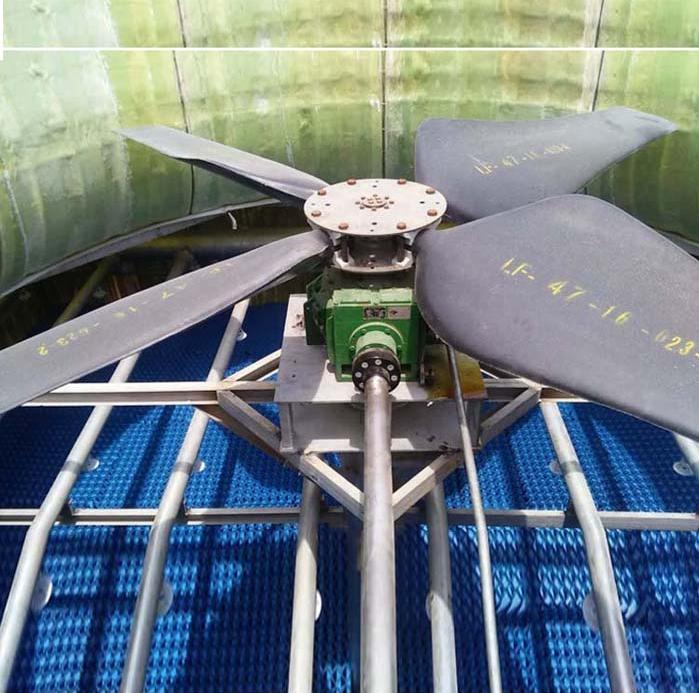
The hub connects the blades to the drive arrangement. Check its dimensions, bolt pattern, material, and mechanical condition.
If you are replacing blades only, confirm that the existing hub is suitable for the new blades. The assembly should be balanced and installed according to the manufacturer's instructions.
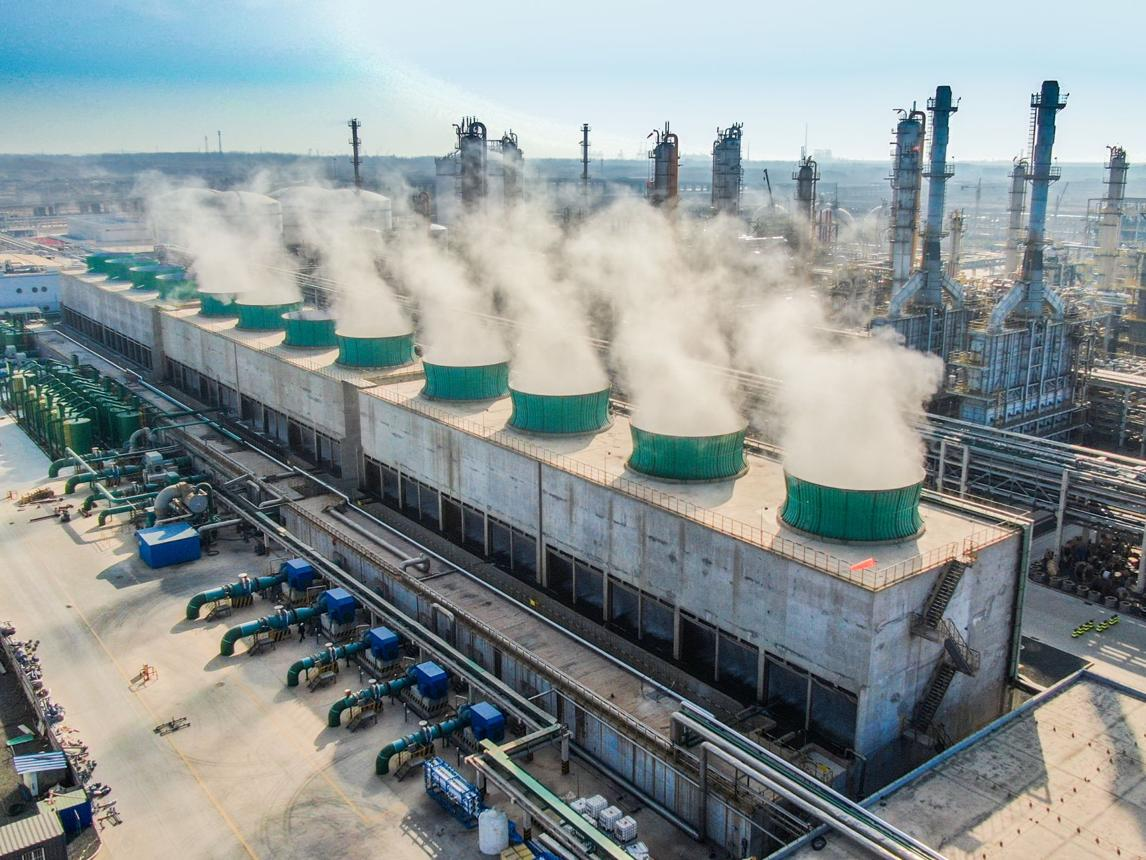
6. Applications of Industrial Cooling Tower Fans
Cooling tower fans support heat rejection in many industries.
Chemical and petrochemical plants: Cooling towers help remove process heat from equipment and heat exchangers.
Steel and metal manufacturing: Industrial cooling systems support production equipment and process-water circuits.
Power generation: Cooling towers may be used to reject heat from condenser-water systems and auxiliary equipment.
Plastic injection molding: Stable cooling water helps control mold and machine temperatures.
Commercial HVAC: Cooling tower fans support chiller systems in large buildings and district cooling applications.
Each application has different operating conditions. Fan selection should be based on the actual tower design and process requirements.
7. Common Problems with Cooling Tower Fans
Even a well-designed cooling tower fan needs regular inspection. Common problems include:
Blade damage: Cracks, deformation, or erosion can affect safe operation.
Fan imbalance: Uneven mass distribution can create vibration.
Loose fasteners: Poorly secured blades or hubs can become dangerous.
Motor overheating: Excessive load, electrical faults, or ventilation problems may cause overheating.
Corrosion: Environmental exposure can weaken certain components.
Incorrect blade pitch: Improper adjustment may change airflow and motor load.
If unusual vibration, noise, or temperature changes occur, stop and inspect the equipment according to the site's safety procedures. Do not operate a visibly damaged or mechanically unstable fan.
8. How to Choose the Right Cooling Tower Fan Supplier
Before placing an order, ask suppliers a few practical questions:
Can the supplier provide the required fan type and material?
Can it confirm the fan's dimensions and operating conditions?
Does it provide performance data or technical drawings?
Can it support replacement or customization enquiries?
Does it explain installation and balancing requirements?
Are replacement parts and technical support available?
For a complete cooling tower, compare the manufacturer's thermal design and total system configuration. For individual fan blades, focus on material, dimensions, hub compatibility, and mechanical performance.
A low purchase price is not necessarily the lowest total cost. Incorrect parts can lead to installation delays, repeated maintenance, and equipment downtime.
9. Why Consider Power Tower for Cooling Tower Fan Parts?
If your requirement is specifically cooling tower fan blades or replacement components, Power Tower Cooling Technology (Shaoxing) Co.,Ltd deserves consideration as a specialist supplier.
The company focuses on cooling tower parts, including fan blades made from materials such as FRP and aluminum alloy, as well as selected plastic materials. This product focus can be useful for maintenance teams, cooling tower contractors, and distributors looking for component supply.
To help the company assess your requirements, prepare:
Existing cooling tower brand and model.
Fan diameter and number of blades.
Blade material and dimensions.
Hub and mounting information.
Operating speed and motor details.
Photos of the existing fan assembly.
Required quantity and delivery destination.
Providing complete information at the beginning makes it easier to evaluate compatibility and discuss a suitable replacement.
Visit the official website for product information and enquiries:
Power Tower Cooling Technology (Shaoxing) Co.,Ltd
Website: https://www.coolingtowerpart.com
10. Frequently Asked Questions
10.1 Which fan is commonly used in cooling towers?
Axial fans are commonly used in mechanical-draft cooling towers because they can move large volumes of air through the tower. The exact fan design depends on the cooling tower configuration and required operating conditions.
10.2 What materials are used for cooling tower fan blades?
Common materials include FRP, aluminum alloy, and selected engineering plastics such as ABS or nylon. The right material depends on fan size, temperature, mechanical loading, corrosion exposure, and the manufacturer's design.
10.3 Can I replace only the fan blades?
Yes, in some cases. However, the existing hub and other components must be in suitable condition, and the replacement blades must match the required dimensions and mechanical design. The completed assembly should be checked and balanced correctly.
10.4 How do I select the correct fan diameter?
Fan diameter should be selected according to the cooling tower design, airflow requirement, fan stack dimensions, rotational speed, and available motor power. Do not choose a replacement based only on the diameter of the old fan without checking its full specification.
10.5 How often should cooling tower fans be inspected?
Inspection frequency depends on operating hours, environmental conditions, manufacturer recommendations, and site maintenance procedures. Operators should establish a regular inspection schedule and check for cracks, corrosion, imbalance, loose fasteners, unusual vibration, and motor problems.
11. Conclusion
Choosing a cooling tower fan manufacturer is about finding the right match between the fan and the cooling tower system. Blade material, airflow, fan diameter, operating speed, motor compatibility, corrosion resistance, and maintenance support all deserve attention.
Japan has several established cooling tower companies, including Ebara, Shinnihon Reiki, Kuken, and Kobelco Eco-Solutions. These manufacturers are relevant to buyers evaluating complete cooling tower systems and integrated fan arrangements.
For buyers who mainly need fan blades and cooling tower replacement parts, Power Tower Cooling Technology (Shaoxing) Co.,Ltd offers a component-focused alternative. Although it is based in China rather than Japan, it is included first in this buyer guide as requested.
Before making a purchase, compare technical specifications, confirm compatibility, and ask for the documentation needed to support safe installation.
For cooling tower fan blades and related components, visit:
https://www.coolingtowerpart.com


