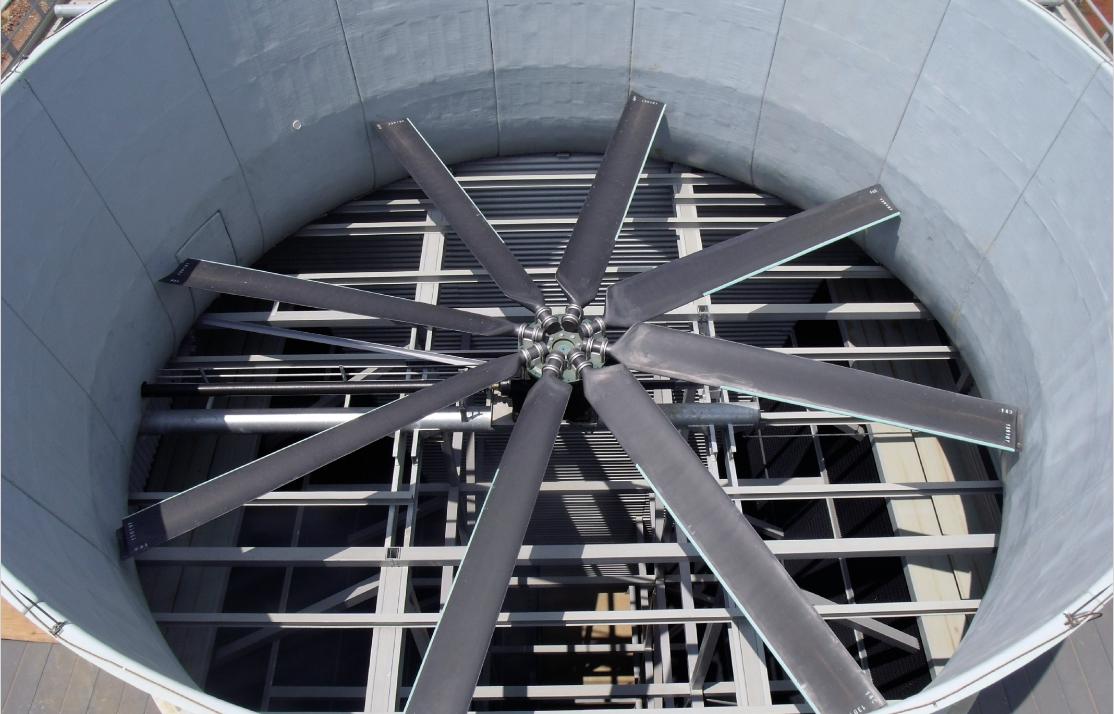
1. Introduction: Why Cooling Tower Fan Replacement Matters
An industrial cooling tower fan may look like a simple rotating component, but it plays a critical role in the entire cooling process. It moves large volumes of air through the tower, helping transfer heat from circulating water into the atmosphere. When the fan becomes damaged, unbalanced, or inefficient, the cooling tower may struggle to maintain the required water temperature.
For industrial facilities, this can lead to higher energy consumption, reduced production efficiency, unexpected shutdowns, and expensive equipment damage.
So, when should you replace a cooling tower fan? Which parts might need attention? And how much should you budget for the replacement?
This guide explains the key factors behind industrial cooling tower fan replacement, including costs, replacement components, fan selection, and installation procedures. It also introduces how Power Tower Cooling Technology (Shaoxing) Co.,Ltd. supports customers looking for cooling tower replacement parts and components.
2. What Is an Industrial Cooling Tower Fan?
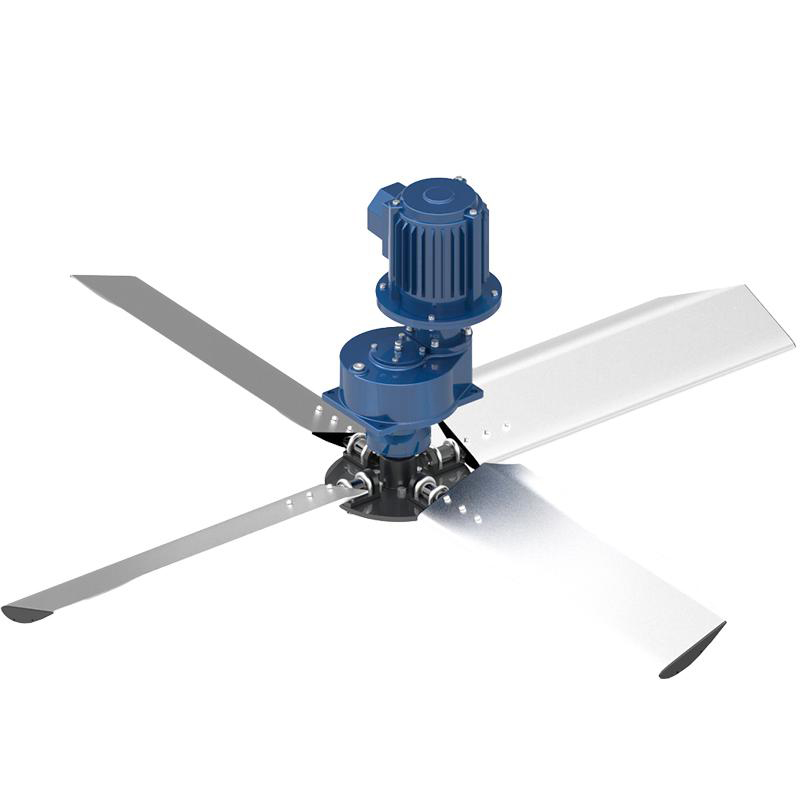
An industrial cooling tower fan is a mechanical device designed to move air through a cooling tower. Depending on the tower design, it may push air into the tower or draw air through it.
Most large industrial cooling towers use axial fans because they can move high volumes of air at relatively low pressure. Centrifugal fans are also used in certain forced-draft systems where higher static pressure or specific ducting arrangements are required.
2.1 The Role of the Fan in Heat Rejection
A cooling tower removes heat by bringing warm circulating water into contact with moving air. A portion of the water evaporates, carrying heat away from the remaining water.
The fan helps maintain the airflow needed for this process. Without sufficient airflow, heat and moisture can accumulate inside the tower, reducing its cooling capacity.
Think of the fan as the engine of the tower's air movement system. Even when the fill, water distribution system, and other components are in good condition, poor fan performance can limit the entire cooling process.
2.2 Common Industrial Cooling Tower Fan Types
Before purchasing a replacement, you need to understand which type of fan your cooling tower uses.
Axial fans: Move air generally parallel to the fan shaft. They are widely used in induced-draft cooling towers.
Centrifugal fans: Draw air into the impeller and discharge it radially. They are commonly used in some forced-draft configurations.
FRP cooling tower fans: Use fiber-reinforced plastic blades, offering a combination of low weight and corrosion resistance.
Aluminum alloy fans: Often selected for their relatively low weight and mechanical properties, depending on the operating environment and design requirements.
The correct replacement depends on the original tower configuration and operating conditions, not simply on the fan's appearance.
3. When Should You Replace a Cooling Tower Fan?
A cooling tower fan does not always need immediate replacement when a problem appears. Some issues can be resolved through cleaning, tightening, balancing, or component repair. However, certain warning signs indicate that replacement may be the safer and more economical option.
3.1 Cracked, Bent, or Corroded Fan Blades
Visible blade damage is one of the clearest reasons to investigate replacement.
Common problems include:
Cracks near the blade root or mounting area
Bent or deformed blades
Surface deterioration or corrosion
Damaged blade tips
Signs of impact from foreign objects
A damaged blade can change the fan's aerodynamic performance and create uneven loading. In severe cases, it may fail during operation and cause extensive damage to nearby equipment.
Do not continue operating a fan with serious structural damage. Have it inspected by qualified personnel and follow the manufacturer's repair or replacement instructions.
3.2 Excessive Vibration and Unusual Noise
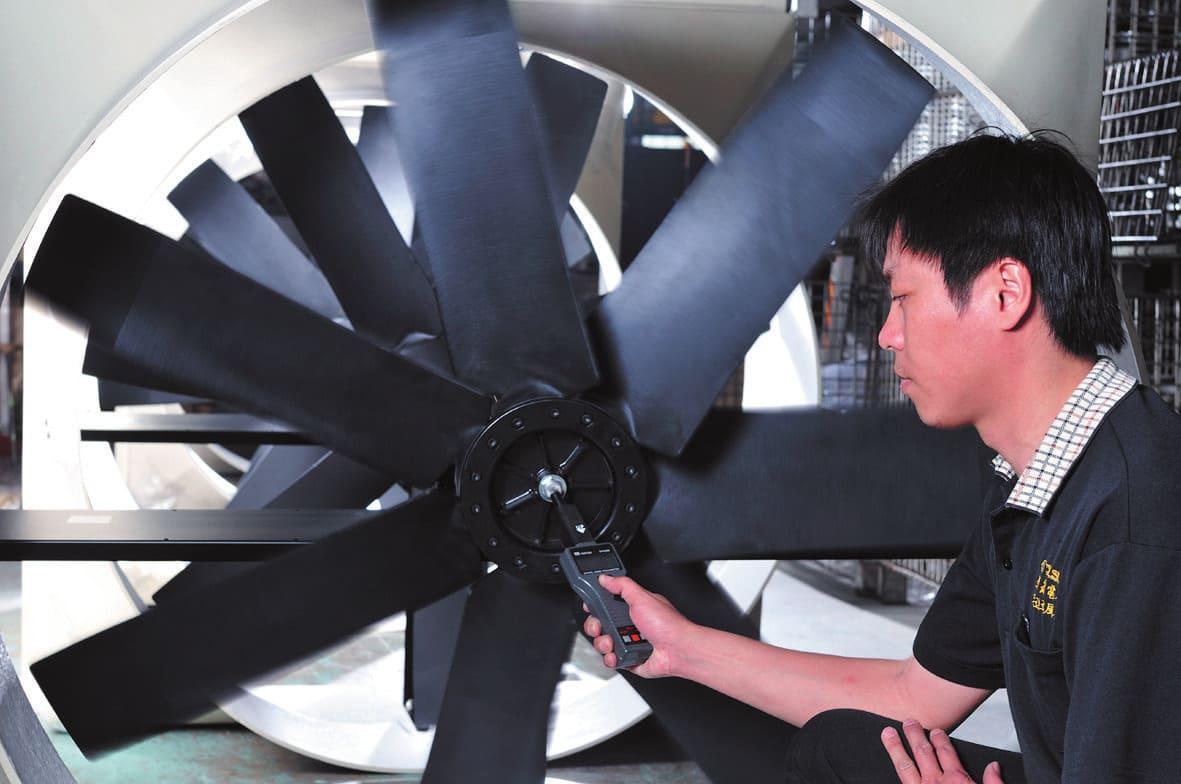
A properly installed cooling tower fan should operate within its specified vibration and noise limits.
If you notice unusual vibration, knocking, rattling, or changes in operating sound, investigate the cause. Possible reasons include:
Uneven dirt or scale buildup on blades
Blade damage or incorrect blade installation
Loose hub or mounting fasteners
Worn bearings
Shaft misalignment
Gearbox or motor problems
Structural resonance
Remember that vibration does not automatically mean the fan itself must be replaced. A complete inspection helps identify the actual source of the problem.
If the fan assembly is cracked, distorted, or cannot be safely restored to its specified condition, replacement may be necessary.
3.3 Reduced Airflow and Cooling Performance
Has the cooling tower started delivering warmer outlet water even though the circulating water flow and operating conditions have not changed significantly?
Insufficient airflow may be one possible reason.
A worn or damaged fan, incorrect blade pitch, incorrect rotation, or an unsuitable replacement assembly can reduce airflow. However, blocked fill, dirty air passages, damaged drift eliminators, and water distribution problems can also affect cooling performance.
Before replacing the fan, check the complete air and water systems. This prevents you from spending money on a new fan when the real problem is elsewhere.
3.4 Repeated Repairs and Rising Operating Costs
Sometimes a fan can be repaired several times, but repeated maintenance may eventually cost more than replacing the assembly.
For example, if blades continue to crack, mounting components are deteriorating, or the fan requires frequent balancing and repairs, a replacement may provide better long-term reliability.
Compare the cost of continued repairs with the purchase price, installation cost, expected service life, and potential downtime associated with a new assembly.
4. Industrial Cooling Tower Fan Replacement Parts
Replacing an industrial cooling tower fan does not always mean replacing every part of the drive system. The required components depend on the condition of the existing assembly and the design of the cooling tower.
4.1 Fan Blades
Fan blades directly affect airflow, power consumption, and operating stability.
Common replacement blade materials include:
FRP: Fiber-reinforced plastic, commonly used for its corrosion resistance and relatively low weight.
Aluminum alloy: Used in suitable fan designs where its mechanical properties and weight are appropriate.
Other engineered materials: Selected according to temperature, chemical exposure, mechanical loading, and manufacturer specifications.
When purchasing replacement blades, check their length, profile, mounting dimensions, material, and compatibility with the existing hub.
A blade that looks similar to the original may still have a different aerodynamic profile. That difference can affect airflow and motor load.
4.2 Fan Hub and Blade Mounting Hardware
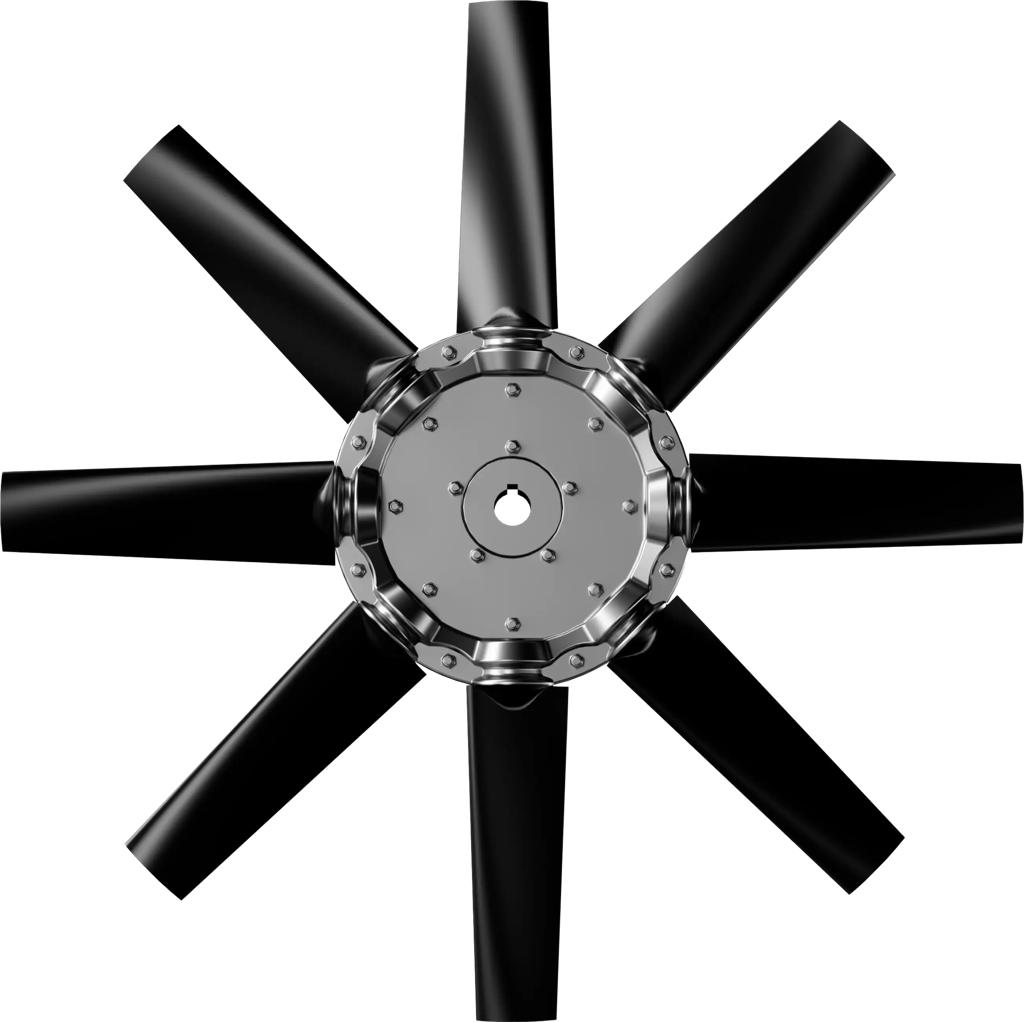
The fan hub connects the blades to the rotating shaft or drive assembly. It supports the blade mounting points and transfers torque from the drive system to the fan.
A replacement hub must match the original assembly's mechanical interface. Important details include:
Shaft connection or bore dimensions
Keyway, flange, or other connection arrangement
Blade mounting pattern
Number of blades
Fastener specifications
Permitted operating speed and loads
Bolts, nuts, washers, and other mounting hardware should also be checked. Reusing damaged or unsuitable fasteners can compromise the entire assembly.
4.3 Fan Motor and Gearbox
The motor supplies the power needed to rotate the fan. Depending on the tower design, a gearbox may reduce motor speed and transmit torque to the fan shaft.
When replacing a fan, verify that the new assembly is compatible with the existing motor and gearbox.
Check the motor's rated power, operating speed, voltage, frequency, and control arrangement. For geared systems, also verify the gearbox output speed, torque rating, shaft arrangement, and mounting dimensions.
A fan that requires more power than the drive system can safely provide may overload the motor or gearbox.
4.4 Drive Shaft, Bearings, and Couplings
The drive shaft transfers rotational power through the mechanical assembly. Bearings support rotating components, while couplings connect shafts where the design requires them.
During fan replacement, inspect these components for:
A new fan installed on a worn or misaligned drive system may develop vibration and premature wear.
4.5 Related Cooling Tower Components
Fan performance also depends on the condition of surrounding cooling tower components.
Depending on the tower design, these may include:
Fan cylinder or fan stack
Fan deck and supporting structure
Vibration switches and monitoring devices
Motor support and gearbox support
Cooling tower fill
Drift eliminators
Air inlet louvers
Inspecting related parts during replacement can help identify problems before the tower returns to service.
5. How Much Does Industrial Cooling Tower Fan Replacement Cost?
There is no single price for industrial cooling tower fan replacement. A small fan assembly for a compact cooling tower can cost far less than a large custom-designed fan for a major industrial installation.
The total project cost usually includes the fan assembly, compatible replacement parts, labor, transportation, access equipment, and commissioning.
5.1 Main Factors Affecting Replacement Costs
The most important cost factors include:
| Cost Factor | How It Affects the Budget |
| Fan diameter | Larger fans generally require more material and more demanding handling. |
| Blade material | FRP, aluminum alloy, and other materials have different costs and performance characteristics. |
| Fan design | Custom profiles, adjustable-pitch systems, and special mounting arrangements may increase costs. |
| Hub and hardware | A complete assembly may require a new hub, fasteners, and connection components. |
| Motor and gearbox | Drive-system replacement can significantly increase the project budget. |
| Labor | Installation difficulty, site access, and local labor rates affect costs. |
| Transportation | Large or oversized components may require special packaging and shipping. |
| Downtime | Production interruption and shutdown planning can add substantial indirect costs. |
5.2 Fan Size, Material, and Design
Fan size is one of the main factors influencing the purchase price.
A larger fan typically requires longer blades, a suitable hub, and stronger supporting components. However, diameter alone does not determine the final cost or suitability.
Blade geometry, rotational speed, airflow requirements, material thickness, manufacturing process, and operating conditions all matter.
For example, an FRP fan may be attractive in a corrosive environment because of its material properties. But the correct resin system, fiber reinforcement, manufacturing quality, and structural design must still meet the application requirements.
5.3 Labor, Transportation, and Installation
Installation expenses can vary considerably between projects.
A fan installed on an easily accessible cooling tower may require less labor than one located high above ground or inside a restricted industrial facility.
Additional expenses may include:
Crane or lifting equipment
Scaffolding or temporary access platforms
Electrical isolation and inspection
Removal and disposal of the old assembly
Alignment and balancing work
Testing and commissioning
For large industrial projects, plan installation during scheduled maintenance shutdowns whenever possible. Good planning can reduce unexpected downtime.
5.4 Repair vs. Complete Fan Replacement
Should you repair the existing fan or purchase a complete new assembly?
Consider the following comparison:
| Item | Repair Existing Fan | Replace Complete Fan |
| Initial cost | Often lower | Usually higher |
| Downtime | Depends on repair scope and parts availability | Depends on delivery and installation |
| Component condition | Existing parts remain in service if approved | New assembly components are supplied |
| Compatibility | Existing configuration is retained | Requires careful technical matching |
| Long-term value | Depends on remaining component condition | May offer better value for severely deteriorated assemblies |
If only one replaceable component is damaged and the manufacturer permits individual replacement, repair may be reasonable. If the hub, blades, mounting points, or other major parts have widespread deterioration, a complete replacement may be more appropriate.
6. How to Choose the Right Replacement Fan
Choosing a replacement fan is not simply a matter of measuring the old fan and ordering one with the same diameter.
The new fan must match the cooling tower's airflow requirements and mechanical drive system. Otherwise, it may operate inefficiently or create additional stress on the equipment.
6.1 Check Airflow and Static Pressure Requirements
Start with the required airflow and the system's operating resistance.
A fan must deliver the required airflow at the actual static pressure of the cooling tower. The fan curve helps determine whether the selected model can operate at the required point.
Review the tower design, operating data, fan performance information, and any available original equipment specifications.
Do not assume that a fan with a larger diameter will automatically improve cooling performance.
6.2 Confirm Fan Diameter and Blade Configuration
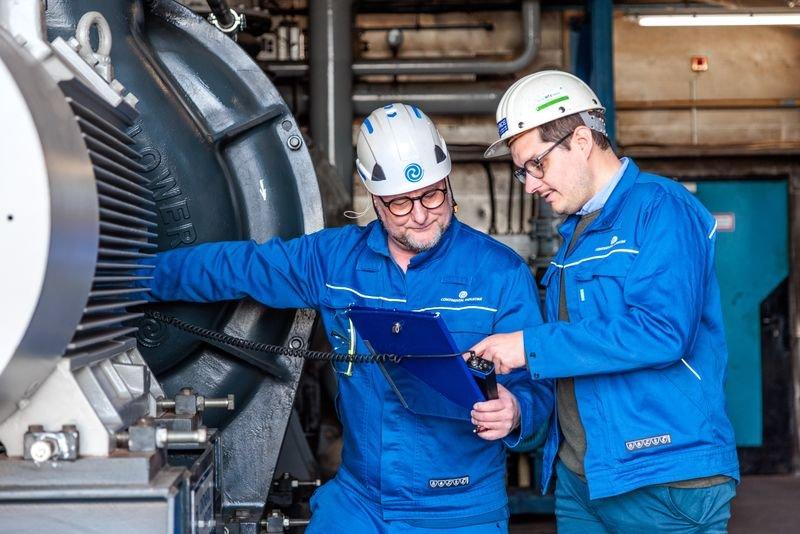
Record the existing fan's:
Overall diameter
Number of blades
Blade length and profile
Hub type
Mounting arrangement
Rotation direction
Operating speed
Also check the available clearance between the fan blades and fan cylinder.
Insufficient clearance may cause mechanical contact, while an unsuitable blade configuration may change airflow and power requirements.
6.3 Match Motor Speed and Drive System
The replacement fan must operate within the motor and gearbox design limits.
Confirm:
Motor rated power
Motor speed and operating frequency
Gearbox output speed, if applicable
Fan operating speed
Required torque
Shaft and hub connection dimensions
The fan's blade pitch and aerodynamic design also affect power demand. A change in fan configuration can increase motor load even when the fan diameter remains unchanged.
6.4 Consider Material and Operating Environment
Industrial cooling towers operate in different environments. Some handle relatively clean water, while others work with process water containing chemicals, minerals, or other contaminants.
Consider temperature, humidity, chemical exposure, UV exposure, and corrosion risks when choosing fan materials.
For outdoor installations, weather resistance and material durability are also important.
The best choice is the material and design that satisfy the actual operating conditions, not necessarily the most expensive option.
7. Industrial Cooling Tower Fan Replacement: Installation Steps
Proper installation is essential for safe operation and reliable performance. Even a high-quality fan can fail prematurely if it is incorrectly assembled, aligned, or adjusted.
The following steps provide a general overview. Always follow the cooling tower and fan manufacturer's installation instructions and the site's safety procedures.
7.1 Step 1: Inspect the Existing Fan Assembly
Before removing the old fan, record its configuration and inspect the complete assembly.
Take measurements and photographs of the fan, hub, shaft connection, blade arrangement, and mounting hardware.
Review available operating records, including vibration readings, motor current, and maintenance history. These records can help identify whether the original problem came from the fan or another component.
7.2 Step 2: Shut Down and Isolate the Equipment
Safety comes first.
Shut down the cooling tower fan and isolate all relevant electrical and mechanical energy sources. Apply the site's lockout/tagout procedure and verify that the equipment has stopped completely.
Check for possible automatic restart through control systems. Follow site-specific fall protection and lifting procedures when working at height.
Never attempt to remove or adjust a rotating fan while it is operating.
7.3 Step 3: Remove the Old Fan
After confirming that the equipment is safely isolated, remove the required guards and access components.
Use suitable lifting equipment when handling large blades or complete fan assemblies. Support the components properly to prevent them from falling or becoming distorted.
Remove fasteners according to the manufacturer's instructions. Avoid damaging the shaft, hub mounting surfaces, fan cylinder, or surrounding structure.
7.4 Step 4: Inspect the Hub, Shaft, and Mounting Structure
Before installing the new fan, inspect all connection surfaces.
Look for corrosion, cracks, deformation, worn threads, damaged keyways, and signs of previous movement.
Check the shaft and supporting structure for alignment and mechanical condition. If any component is outside the manufacturer's permitted limits, resolve the issue before installing the replacement.
Installing a new fan on an unsuitable mounting structure can lead to repeat failures.
7.5 Step 5: Install and Align the Replacement Fan
Position the replacement fan according to the manufacturer's assembly instructions.
Check that the hub fits the shaft connection correctly and that all mounting points match. Use the specified fasteners and tightening procedures.
Do not modify the hub, drill new holes, or force incompatible components together to make the assembly fit.
Correct alignment helps reduce unnecessary vibration and mechanical stress.
7.6 Step 6: Check Blade Pitch and Clearances
For adjustable-pitch fans, blade pitch must be set according to the fan manufacturer's specifications and the cooling tower's operating requirements.
Do not apply a universal pitch angle. Different fan designs use different measurement references, and the correct setting depends on the specific model.
Check blade clearances and confirm that the fan can rotate without contacting the fan cylinder or nearby structures.
Also verify the blade arrangement and rotation direction.
7.7 Step 7: Test and Monitor Operation
Before returning the tower to normal service, complete the required installation checks.
Depending on the equipment and site procedure, these may include:
Fastener inspection
Manual rotation and clearance checks
Guard and safety-device installation
Electrical and motor checks
Rotation-direction verification
Vibration monitoring
Motor current measurement
Airflow and cooling-performance checks
Start the equipment according to the approved commissioning procedure. Monitor the fan for unusual noise, vibration, current changes, and signs of mechanical interference.
If abnormal conditions appear, stop the equipment and investigate before continuing operation.
8. Common Mistakes to Avoid During Fan Replacement
A few purchasing and installation mistakes can turn a straightforward replacement into an expensive project.
Choosing by diameter alone: Two fans with the same diameter may have different blade profiles, hub designs, speeds, and airflow characteristics.
Ignoring motor capacity: A replacement fan that requires excessive power may overload the motor or gearbox.
Reusing damaged mounting hardware: Worn bolts, damaged threads, and deteriorated hub connections can create safety risks.
Overlooking the cause of the original failure: If the real problem is shaft misalignment or a worn bearing, installing a new fan will not solve it.
Changing blade pitch without checking specifications: An unsuitable pitch can affect airflow, motor load, and fan performance.
Ignoring installation safety: Rotating equipment requires proper isolation, lifting arrangements, and protection against falls.
A reliable replacement project begins with accurate measurements and ends with documented commissioning checks.
9. How to Extend the Service Life of a New Cooling Tower Fan
Once your replacement fan is installed, regular maintenance helps protect the investment.
Here are several practical measures:
Inspect blades regularly. Look for cracks, deformation, corrosion, and unusual surface buildup.
Keep the fan clean. Uneven deposits can affect balance and increase vibration.
Check fasteners. Inspect hub and blade connections according to the manufacturer's maintenance schedule.
Monitor vibration. Record readings and investigate changes rather than waiting for serious damage.
Check the drive system. Maintain the motor, gearbox, bearings, and shaft according to their respective instructions.
Inspect fan clearance. Confirm that blades do not contact the fan cylinder or surrounding structures.
Keep operating records. Track vibration, motor current, maintenance work, and cooling performance over time.
A consistent maintenance routine can identify small problems before they become major failures.
10. How to Find a Reliable Cooling Tower Fan Parts Supplier
The supplier you choose can affect product compatibility, delivery time, installation efficiency, and long-term operating reliability.
When evaluating a cooling tower fan parts supplier, consider these points:
10.1 Technical Understanding
A capable supplier should understand fan blades, hubs, mounting dimensions, materials, and drive-system compatibility.
They should ask for technical information rather than recommend a product based only on a photograph.
10.2 Product Quality and Inspection
Ask about material specifications, manufacturing processes, dimensional inspection, and quality control.
For critical components, request relevant drawings, technical data sheets, or inspection documentation before confirming the order.
10.3 Replacement and Customization Support
Industrial cooling towers use different designs and configurations. A supplier that can review drawings, measurements, and equipment information can help reduce the risk of ordering incompatible components.
10.4 Communication and Delivery
Clear communication is especially important for international buyers.
Confirm product specifications, packaging, delivery arrangements, lead times, and the documents required for shipment before placing an order.
11. Cooling Tower Fan Replacement Solutions from Power Tower
Power Tower Cooling Technology (Shaoxing) Co.,Ltd. specializes in cooling tower components and replacement parts. Through its website, https://www.coolingtowerpart.com, the company provides product information for customers sourcing cooling tower parts for maintenance, repair, and replacement projects.
For industrial cooling tower fan replacement, selecting compatible components is an important part of the purchasing process. Buyers should confirm the fan configuration, blade dimensions, hub connection, material requirements, and operating conditions before ordering.
When contacting Power Tower, customers can prepare the following information to support a more accurate technical review:
Cooling tower brand and model
Existing fan diameter
Number of blades
Blade material and profile
Hub dimensions and connection type
Motor power and fan operating speed
Photos of the existing fan and hub
Available drawings or equipment specifications
Required quantity and delivery destination
This information helps clarify the replacement requirements and reduces unnecessary communication during the quotation process.
Whether you are planning routine maintenance or replacing damaged cooling tower components, working with a supplier that understands cooling tower replacement requirements can make the process more efficient.
Visit https://www.coolingtowerpart.com to learn more about Power Tower's cooling tower components and replacement solutions.
12. Frequently Asked Questions
12.1 How Long Does a Cooling Tower Fan Last?
There is no universal service life for an industrial cooling tower fan. Its lifespan depends on material quality, operating conditions, installation accuracy, maintenance, vibration, and exposure to chemicals or weather.
Regular inspection and timely maintenance can help extend its service life.
12.2 Can I Replace Only One Fan Blade?
Sometimes, yes. However, this depends on the fan design and the manufacturer's replacement instructions.
The new blade must match the existing blades in material, geometry, weight, and mounting configuration. The complete assembly may also require inspection and balancing.
Never replace a single blade without checking whether the manufacturer permits this procedure.
12.3 Should I Replace the Fan Hub at the Same Time?
Not necessarily. If the existing hub is in good condition and meets the manufacturer's requirements, it may be suitable for continued use.
However, a cracked, corroded, deformed, or incompatible hub should be replaced. The hub and blade connections deserve particular attention because they carry mechanical loads during operation.
12.4 Can a Larger Fan Improve Cooling Performance?
Not automatically.
A larger fan may change airflow, power consumption, operating speed, and mechanical loading. The cooling tower must also have sufficient clearance and structural capacity.
A replacement fan should be selected using the required airflow, static pressure, fan performance curve, motor capacity, and tower design.
13. Conclusion
Industrial cooling tower fan replacement is more than a simple parts purchase. It involves identifying the actual cause of the problem, selecting compatible components, controlling installation costs, and ensuring that the new assembly operates safely.
Before ordering a replacement, check the fan diameter, blade configuration, hub connection, motor and gearbox specifications, airflow requirements, and operating environment. During installation, follow the manufacturer's procedures and complete the necessary alignment, clearance, and commissioning checks.
Most importantly, do not wait until a damaged fan causes an unexpected shutdown. Regular inspections and timely replacement planning can help protect your cooling tower and maintain stable industrial operation.
For cooling tower fan components and replacement parts, contact Power Tower Cooling Technology (Shaoxing) Co.,Ltd. through https://www.coolingtowerpart.com to discuss your equipment requirements.


