Common Cooling Tower Fan Blade Failure and Troubleshooting Guide
Meta Description: This guide covers typical cooling tower fan blade failure modes, root causes, step-by-step troubleshooting, repair solutions and preventive maintenance. Fix vibration, cracking, corrosion and imbalance of FRP & aluminum fan blades.
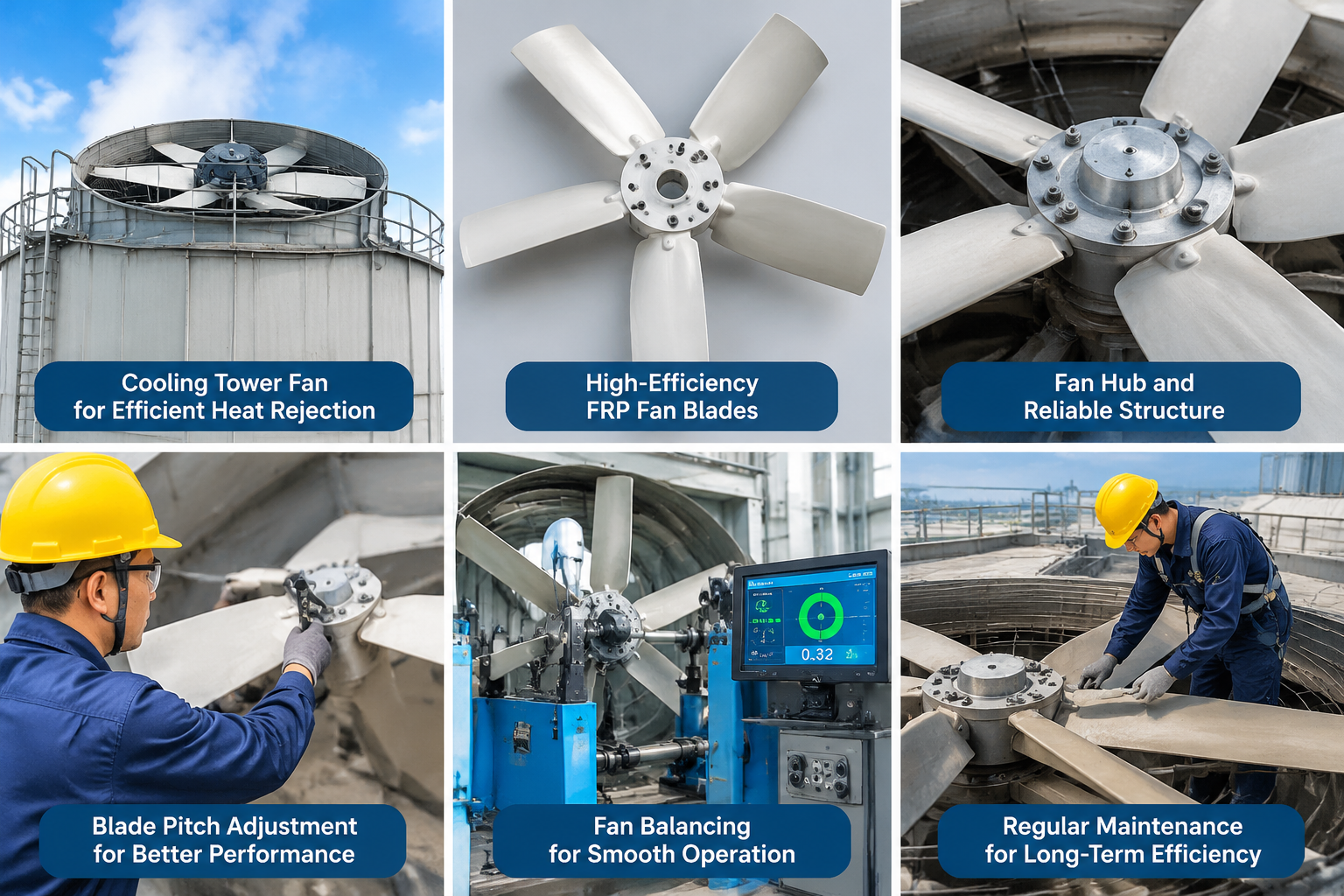
Introduction to Cooling Tower Fan Blade Failure
The fan blade is one of the most critical rotating components of an induced-draft cooling tower. It runs continuously in harsh conditions: high humidity, water splash, chemical vapor, temperature fluctuation and dust buildup. Even minor damage to a cooling tower fan blade can trigger a chain of problems, including abnormal vibration, excessive noise, gearbox bearing wear, reduced cooling capacity and unplanned factory shutdown.
Many facility managers only notice the fault after serious secondary damage occurs. This troubleshooting guide sorts out the most frequent cooling tower fan blade failure types, explains their causes, gives practical inspection steps and shares repair & maintenance advice for both FRP and aluminum alloy fan blades.
Main Types of Cooling Tower Fan Blade Failure
Blade Unbalance — The Most Frequent Failure
Unbalance happens when the mass distribution of the fan blade set is uneven. It is not always visible from appearance, but it is destructive to the whole drive assembly.
What causes fan blade unbalance
Sediment, limescale and algae attached unevenly on blade surfaces
Partial chipping, edge erosion or delamination of FRP blades
Deformation or dent on aluminum blades after impact
Different weight among newly replaced mixed aftermarket and OEM blades
Uneven blade pitch angle after adjustment
Typical symptoms
Persistent vibration on gearbox and motor base, humming or beating noise, loose mounting bolts, frequent bearing failure.
Blade Cracking & Delamination (Common for FRP Blades)
FRP (fiberglass reinforced plastic) fan blades are widely used for corrosion resistance, but they are vulnerable to cracking and delamination under long-term cyclic load.
Root causes
Fatigue from thousands of repeated rotation cycles
Over-speed operation beyond the rated RPM
Improper transportation, dropping or hard impact during installation
UV aging and chemical corrosion from circulating water
Incorrect pitch angle leading to excessive aerodynamic load
Warning signs
Fine hairline cracks on blade surface, bubbling of outer resin layer, separation between fiber and resin, partial peeling at blade trailing edge.
Corrosion & Erosion Damage
Corrosion and erosion slowly wear down the airfoil profile, reducing airflow efficiency.
Aluminum alloy blade corrosion
Aluminum blades suffer pitting corrosion when exposed to salt spray, chloride ions and chemical wastewater. Pitting will change blade weight and cause imbalance quickly.
FRP blade erosion
Hard particles such as sand, mineral crystals in water continuously scour the blade surface, grinding away the resin layer. Once fiber is exposed, the aging speed accelerates sharply.
Blade Deformation & Pitch Loss
Twisted or bent blades destroy the designed airfoil shape.
Common triggers
High wind gust back-pressure during shutdown, hot softening of low-quality FRP material, collision with foreign objects inside the tower, over-tight clamping on the hub.
Performance impact
Uneven air output, lower CFM, higher outlet water temperature, fluctuating cooling efficiency.
Bolt Hole & Root Hub Area Failure
The blade root and bolt holes are the high-stress zone. Many blades break right at the root connection.
Causes
Over-torqued fixing bolts, fatigue crack starting from bolt holes, misalignment during assembly, loose clamp hardware.
Risk reminder
Root failure is extremely dangerous. A loose or broken blade may fly off and destroy the whole cooling tower. Stop the unit immediately once you spot cracks near the root.
Step-by-Step Troubleshooting Workflow for Fan Blade Problems
Follow this inspection sequence when you suspect cooling tower fan blade failure. Always lock out and tag out power before any on-tower inspection for safety.
Step 1: Collect operating fault data first
Record these information before climbing the tower:
Vibration reading (vertical / horizontal / axial at gearbox)
Noise type: steady roar, periodic thumping, sharp squeal
Whether the fault appears after startup, at full speed or after rain / chemical dosing
Tower model, blade material, blade quantity, running years and last maintenance date
Step 2: Visual inspection of all blades
Check every blade one by one: airfoil surface, leading edge, trailing edge, blade root, bolt holes. Look for cracks, peeling, pits, dents, scale deposits. Take clear photos for later supplier confirmation.
Step 3: Check pitch angle consistency
Use a protractor to verify each blade pitch. All blades in one set must keep the same angle. Even a 1–2° difference can create obvious vibration.
Step 4: Check hub, clamps and fasteners
Check for loose bolts, deformed clamps, corrosion on hub surface. Confirm that blades sit flush without offset.
Step 5: Dynamic balance verification
If visual inspection finds no obvious damage but vibration remains high, the fan set needs an on-site dynamic balance test.
Repair or Replace: How to Make the Right Decision
Cases suitable for repair
Thin surface scale and algae deposit: high-pressure clean and recoat protective resin coating (FRP)
Minor surface pitting on aluminum without structural crack: polish and anti-corrosion coating
Slight pitch inconsistency: re-adjust and lock blade pitch
Note: Repair only works when the airfoil structure and root are intact.
Cases that require full replacement
Any crack extending to blade root or bolt hole area
Large delamination, fiber exposure, deep erosion
Permanent bending / twist deformation that cannot be corrected
Unbalance cannot be eliminated after cleaning and pitch adjustment
Important advice: It is better to replace the whole set rather than only one single blade if budget allows. Mixed blades from different batches have inconsistent weight and aerodynamic profile, which easily leads to repeated imbalance failure.
Preventive Maintenance to Reduce Fan Blade Failure
Regular maintenance greatly extends fan blade service life and cuts unexpected breakdown risk.
Routine inspection schedule
Monthly: Listen to abnormal noise, observe vibration trend
Quarterly: Visual inspection and scale cleaning
Annually: Full pitch calibration, bolt torque recheck, dynamic balance test
Operation limits to avoid overload
Do not run the fan beyond rated RPM. Avoid frequent emergency start-stop cycles which increase fatigue stress.
Water quality management
Control chloride, pH and suspended solids in circulating water to slow corrosion and scaling.
Storage and transportation rules for spare blades
Store FRP blades away from direct sunlight. Never stack blades or place heavy weight on airfoil surface.
FAQ
Can I continue running the tower if I find a small crack on one blade?
No. Tiny fatigue cracks will expand rapidly under cyclic centrifugal force. Continuous operation raises the risk of blade fracture and flying debris. Shut down the cooling tower as soon as possible.
Which material lasts longer, FRP or aluminum cooling tower fan blade?
FRP performs better in coastal, high chloride and corrosive chemical environments. Aluminum alloy blades have higher rigidity, good stability in dry industrial environments and are easier for pitch adjustment.
How long is the normal service life of cooling tower fan blades?
With proper maintenance and good water quality: FRP blades 5–8 years; aluminum blades 8–12 years. Poor water quality or lack of maintenance can shorten service life to 2–3 years.
Where can I get compatible replacement blades for Marley, BAC, Evapco cooling towers?
We supply aftermarket compatible fan blades for mainstream cooling tower brands. Send us your blade diameter, blade quantity, shaft bore, keyway size and photos, and we will confirm compatibility and provide quotation.
Get Support for Your Cooling Tower Fan Blade Issue
If you encounter cooling tower fan blade vibration, cracking, corrosion or imbalance failure and need replacement spare parts, contact our engineering team. We can help you diagnose the fault, match compatible FRP or aluminum fan blades, and provide technical guidance for installation and balance testing.


