Industrial Cooling Tower Fan Blade Vibration: Cause, Troubleshooting,Solution
Views: 0 Author: Lisa Publish Time: 2026-11-24 Origin: Site
Industrial Cooling Tower Fan Blade Vibration: Causes, Troubleshooting, and Solutions
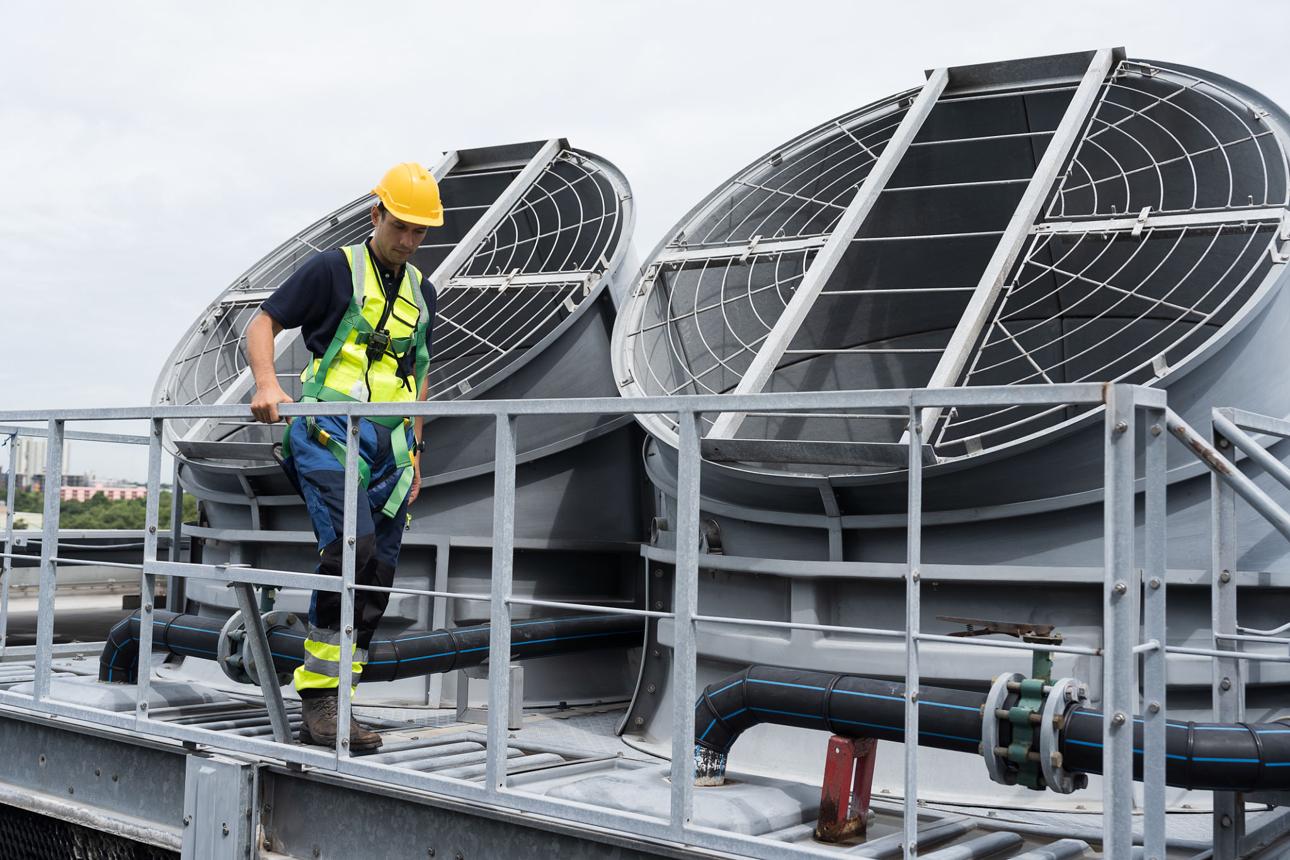
Excessive fan vibration is one of the most frequent and costly faults in industrial cooling towers. Left unresolved, it accelerates bearing wear, destroys gearboxes, cracks the FRP fan stack, loosens tower structural supports, and triggers unplanned shutdowns for power plants, chemical facilities, data centers and continuous manufacturing lines. FRP, aluminum and stainless steel axial fan blades are the main vibration excitation source, but vibration can also stem from drive trains, airflow conditions or structural defects. This guide breaks down root causes, a systematic troubleshooting workflow and practical solutions.
Main Root Causes of Cooling Tower Fan Blade Vibration
1. Mass Imbalance (Most Common Cause)
Vibration at 1× running speed is the classic signature of imbalance.
Uneven mineral scaling, biological slime or debris stuck on individual blade surfaces
Asymmetric erosion, pitting, corrosion or local delamination that removes material from one blade
Trapped water inside hollow FRP blades, shifting weight distribution
Ice buildup on blades during cold seasons
Mixing new, repaired and old blades on one hub
Improper factory balancing or lost balancing weightsSolution: Clean blades thoroughly; drain hollow blades; replace mismatched blade sets; perform professional on-site dynamic balancing to ISO 1940 standards.
This is frequently misdiagnosed as simple mass imbalance. Even perfectly balanced blades vibrate heavily if pitch angles differ.
Blade angles drift after years of operation or seasonal adjustment
Technicians set inconsistent pitch during replacement or maintenance
Loose hub clamps allow blades to shift positionSolution: Measure all blades with a pitch protractor, adjust every blade to the identical angle within ±0.5° tolerance, retighten clamps and rebalance after calibration.
3. Loose Components and Mechanical Play
Loose blade root bolts, hub fasteners, gearbox mounting bolts or base anchor bolts
Worn bearing clearances, cracked support brackets and degraded rubber isolation mountsVibration signature: High 2× RPM vibration amplitude, unstable readingsSolution: Lockout power, inspect and retorque all fasteners; replace worn bearings and failed vibration isolators; repair cracked structural steel.
4. Blade Damage and Deformation
Through cracks, root fractures, delamination, bent or twisted blades from impact, overloading or freeze damage
Rubbing marks between blade tips and the inner wall of the fan stackSolution: Minor surface damage can be professionally repaired; root cracks, full-thickness cracks or permanent deformation require full-set blade replacement. Adjust tip clearance to eliminate rubbing.
5. Aerodynamic and Flow-Induced Vibration
Backward-installed blades, distorted airfoil profile from heavy erosion
Insufficient or uneven tip clearance causing air recirculation and turbulent vortex shedding
Blade pass resonance matching the natural frequency of the tower structure
Stall conditions when pitch angle is set too high for static pressureSolution: Confirm blade rotation direction; repair eroded airfoils; adjust tip clearance; reduce pitch angle to avoid fan stall; modify support structure if resonance occurs.
6. Drive Train Related Vibration (Not Blade Faults, Easy to Confuse)
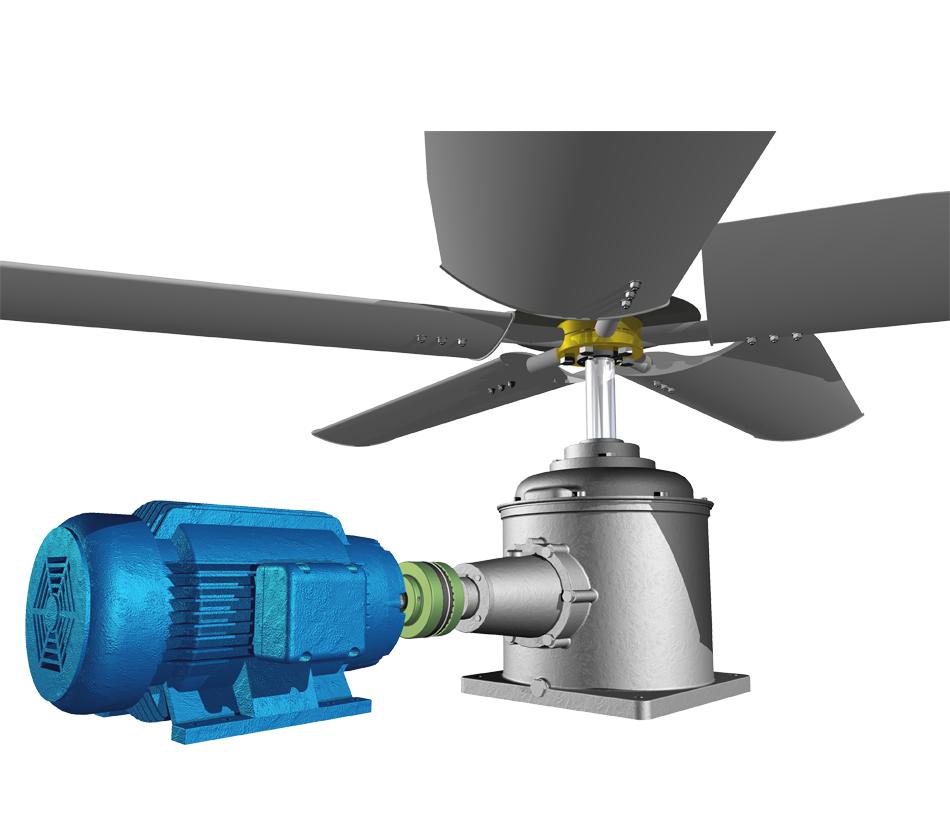
Misalignment between motor, coupling and gearbox
Worn gearbox teeth, defective bearings or bent shaftSolution: Complete vibration spectrum analysis to separate blade-pass frequency and gear mesh frequency; correct shaft alignment and replace failed drive components.
Step-by-Step Troubleshooting Workflow
Always follow LOTO lockout-tagout procedures before inspection and measurement.
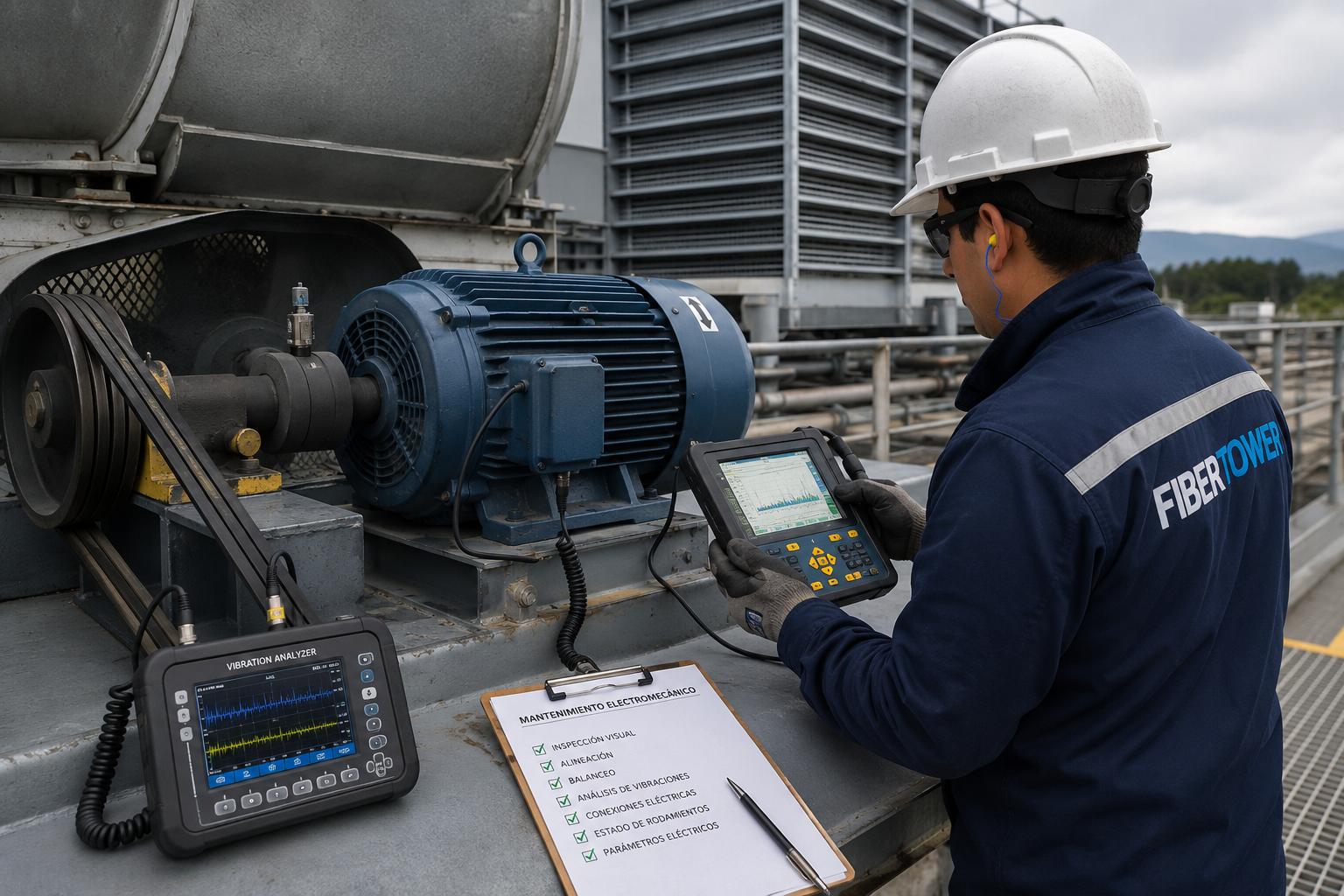
Record vibration data: Use a vibration analyzer to capture amplitude, frequency and phase readings at bearing housings. Identify if vibration peaks at 1× RPM, 2× RPM or blade-pass frequency.
Visual inspection: Check blade surface, root, leading edge, hub bolts, tip rubbing marks, scaling and trapped water.
Pitch verification: Measure and log pitch angle for every blade.
Check mechanical looseness: Shake the assembly, check anchor bolts, isolators and gearbox mounting.
Eliminate airflow issues: Inspect tip clearance, drift eliminators and internal obstructions.
Test balancing: If no mechanical defects are found, perform dynamic balancing at operating speed.
Re-test after correction: Run the fan and trend vibration data for 1–2 hours to confirm stability.
Quick Reference Table for Vibration Diagnosis
Vibration Feature
Likely Root Cause
Recommended Action
Strong 1× RPM vibration, rhythmic shake
Mass imbalance, fouling, erosion
Clean blades, dynamic balancing
Vibration rises after pitch adjustment
Uneven blade pitch
Calibrate all blades to same angle
2× RPM dominant vibration
Loose bolts, structural looseness
Retorque fasteners, replace isolators
Vibration plus scraping noise
Blade-to-stack rubbing
Adjust tip clearance
Vibration with high motor current
Fan stall, over-pitched blades
Reduce blade pitch
Vibration remains after balancing
Hidden delamination, resonance, bad bearings
Inspect blades and gearbox, check structural resonance
Preventive Best Practices to Avoid Recurring Vibration
Carry out monthly vibration trending for critical 24/7 cooling towers; quarterly checks for general facilities
Clean blade deposits regularly to stop uneven scaling
After every blade replacement, pitch adjustment, FRP repair or cleaning, complete dynamic balancing
Never mix new blades with old worn blades on one fan hub
Retorque hub bolts and recheck pitch during seasonal maintenance
Inspect rubber vibration isolators every year; hardened or cracked mounts lose damping performance
Common Troubleshooting Mistakes to Avoid
❌ Trying to balance a fan with uneven pitch or loose hub bolts — vibration will return quickly
❌ Ignoring structural resonance and only adding balancing weights
❌ Confusing gearbox/bearing vibration with blade imbalance
❌ Running the fan with rubbing blades, which causes progressive damage
❌ Skipping vibration spectrum analysis and guessing the fault source
Frequently Asked Questions
Q: Why does vibration come back right after balancing?
A: The top reasons are inconsistent pitch, loose blade clamps, ongoing scaling, hidden FRP delamination or structural resonance. Balancing weights cannot fix these underlying issues.
Q: What is acceptable vibration for cooling tower fans?
A: Most industrial cooling tower fans follow ISO 1940 G6.3; critical 24-hour facilities target G2.5. Always reference OEM vibration limits.
Q: Can uneven airflow inside the tower cause fan blade vibration?
A: Yes. Poorly designed drift eliminators, blocked fill or uneven air intake create vortex shedding and aerodynamic excitation, even with perfectly balanced blades.
Conclusion
Cooling tower fan blade vibration is not a single problem; it is a symptom of imbalance, pitch error, looseness, blade damage or aerodynamic flow disturbance. Systematic vibration spectrum analysis and step-by-step troubleshooting help technicians distinguish blade faults from gearbox, bearing or structural issues. By fixing the root cause instead of only adding balancing weights, maintenance teams can reduce noise, extend service life of the whole fan assembly and avoid costly emergency shutdowns for Marley, BAC, Evapco and custom cooling tower retrofits.
Recommended internal links for CoolingTowerPart.com: