Mechanical Vibration Switch for Cooling Tower
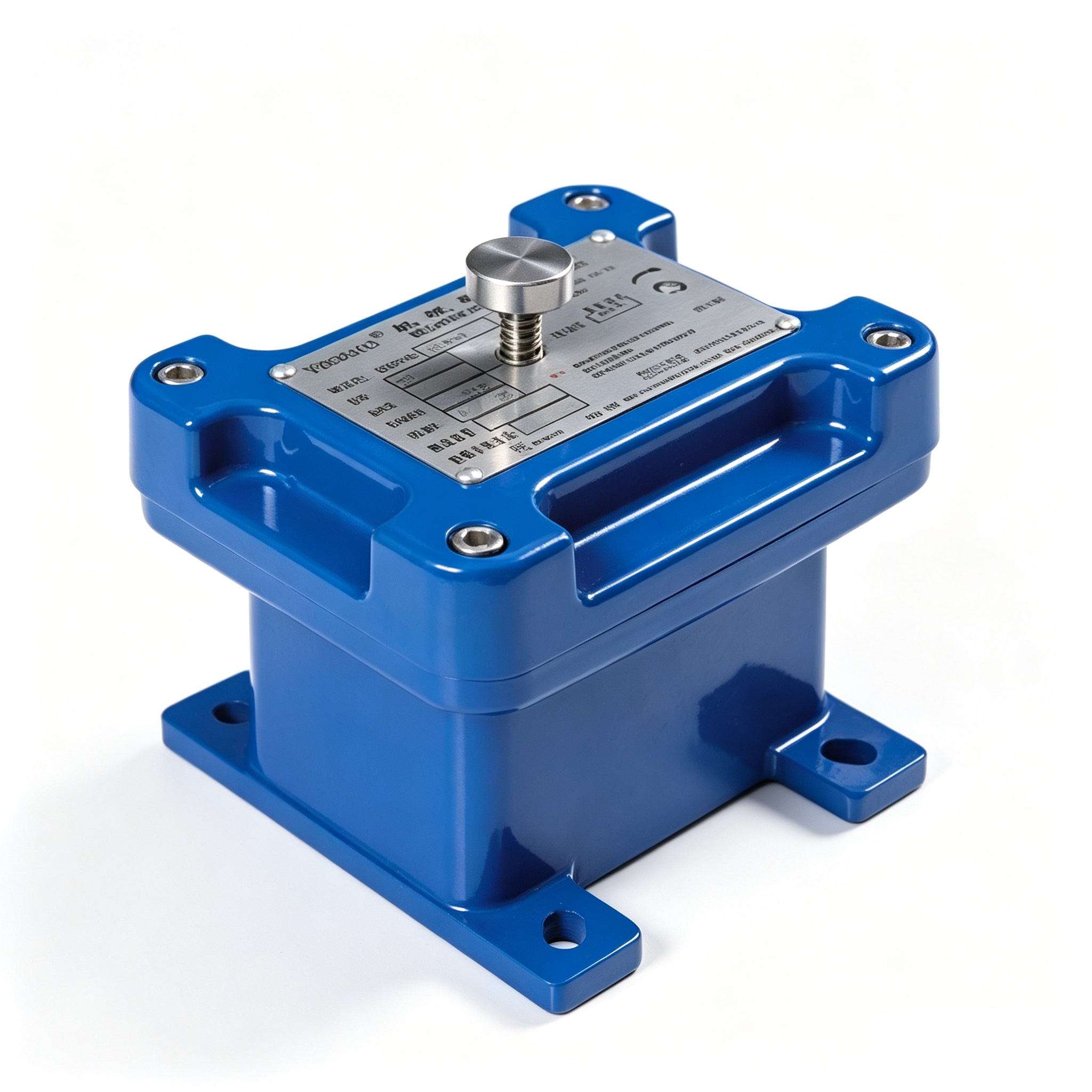 The Mechanical Vibration Switch for Cooling Tower is a safety protection device designed to detect abnormal or excessive vibration in cooling tower rotating equipment. It is commonly used with cooling tower fans, motors, gear reducers, fan shafts, bearings, and drive assemblies to help prevent serious mechanical damage.During normal operation, a cooling tower fan operates within an acceptable vibration range. If the fan or drive system develops excessive vibration because of fan imbalance, loose components, shaft misalignment, bearing failure, gearbox problems, or other mechanical faults, the vibration switch can respond and initiate a protective shutdown.This type of cooling tower vibration switch is suitable for industrial HVAC systems, process cooling systems, power plants, manufacturing facilities, commercial cooling towers, and other applications where reliable protection of rotating cooling tower equipment is important.
What Is a Cooling Tower Mechanical Vibration Switch?
A mechanical vibration switch is a vibration-sensitive safety device used to monitor the mechanical condition of rotating equipment.
Unlike a vibration monitoring system that continuously measures and displays vibration values, a mechanical vibration switch is primarily intended for protective shutdown or alarm functions.
When abnormal vibration reaches the preset trip condition, the switch changes its electrical contact state. The signal can then be connected to a motor starter, control panel, PLC, alarm circuit, or other safety control system.
For cooling towers, this provides an additional layer of protection between the rotating fan assembly and major mechanical failure.
How Does a Cooling Tower Vibration Switch Work?
A cooling tower fan and drive system should operate smoothly with limited vibration. When a mechanical problem occurs, vibration can increase significantly.
The vibration switch detects the abnormal movement. When the vibration exceeds its configured or factory-set trip point, the internal switching mechanism changes state.
The electrical signal can be used to:
Stop the cooling tower fan motor
Activate an alarm
Send a fault signal to the control system
Prevent continued operation under dangerous conditions
Alert maintenance personnel to inspect the fan and drive system
After the equipment has stopped, technicians can inspect the fan, shaft, bearings, gearbox, motor, coupling, structural supports, and fasteners to determine the cause of the excessive vibration.
Key Features of the Mechanical Vibration Switch
1. Cooling Tower Fan Protection
The switch helps protect cooling tower fan assemblies against abnormal vibration caused by mechanical faults.
2. Automatic Protective Shutdown
When connected to the cooling tower control circuit, excessive vibration can trigger an automatic shutdown.
3. Suitable for Rotating Equipment
The device can be used with cooling tower fans, motors, gearboxes, shafts, and related rotating components, subject to the specific switch specifications.
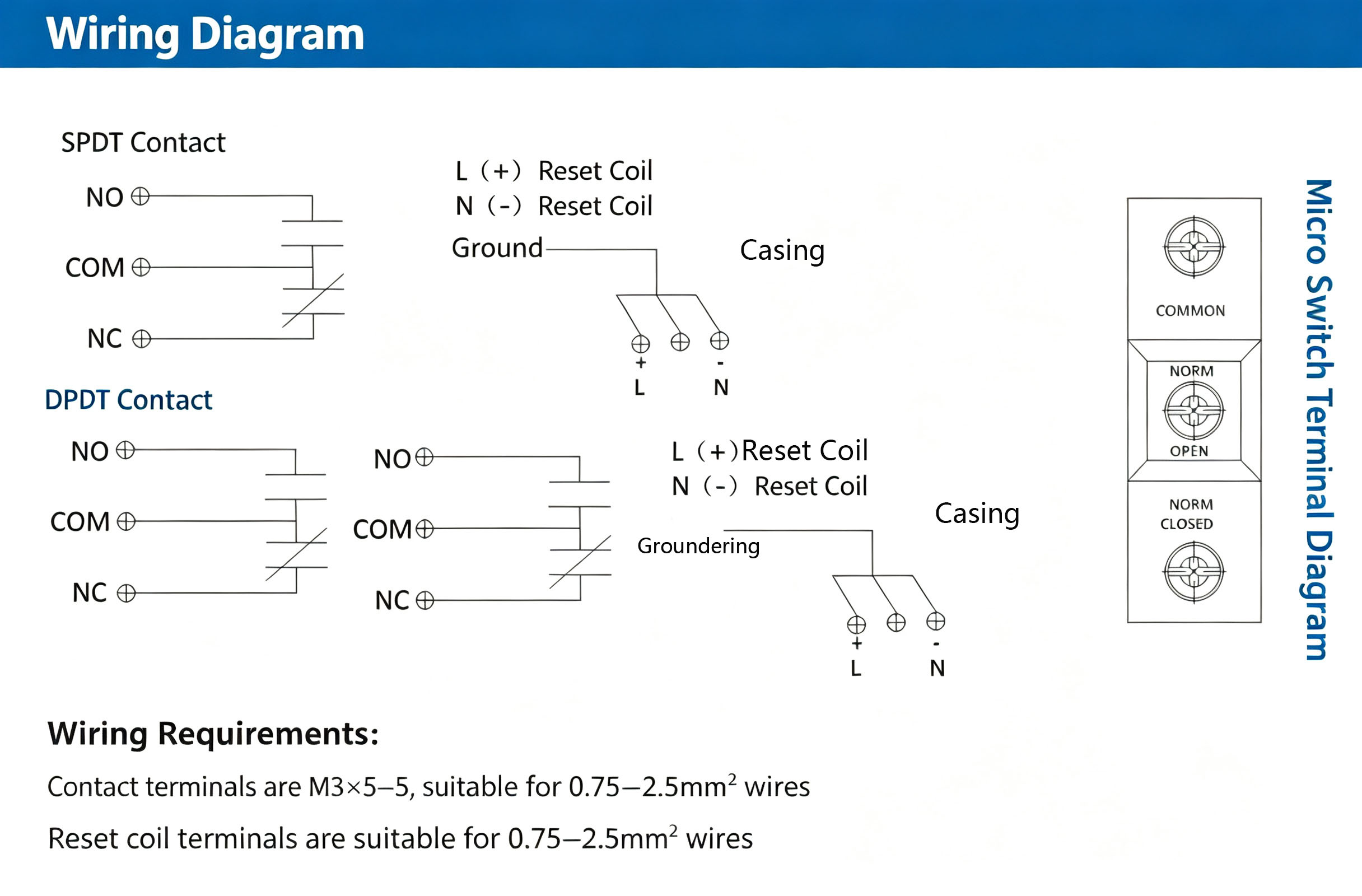
4. Simple Control Integration
The switch can be incorporated into an existing motor starter, control cabinet, alarm circuit, or PLC-based control system.
5. Useful for Preventive Maintenance
An unexpected vibration trip can provide an early indication that inspection and maintenance are required.
6. Replacement Cooling Tower Part
It can be supplied as a replacement component for cooling tower maintenance, refurbishment, and aftermarket repair projects.
Cooling Tower Applications
The Mechanical Vibration Switch for Cooling Tower can be used in many types of cooling tower systems.
Industrial Cooling Towers
Industrial process cooling towers often operate continuously under demanding conditions. Vibration protection helps safeguard important rotating equipment.
HVAC Cooling Towers
Commercial HVAC cooling towers can use vibration protection to help protect fan motors, shafts, bearings, and drive assemblies.
Power Plant Cooling Towers
Large cooling tower fan systems in power generation facilities can benefit from additional mechanical protection against abnormal vibration.
Process Cooling Systems
Chemical, petrochemical, steel, food processing, and other industrial facilities may use vibration switches to protect process cooling tower equipment.
Replacement and Retrofit Projects
The switch can be considered for existing cooling towers during maintenance, control-system upgrades, or replacement-part projects.
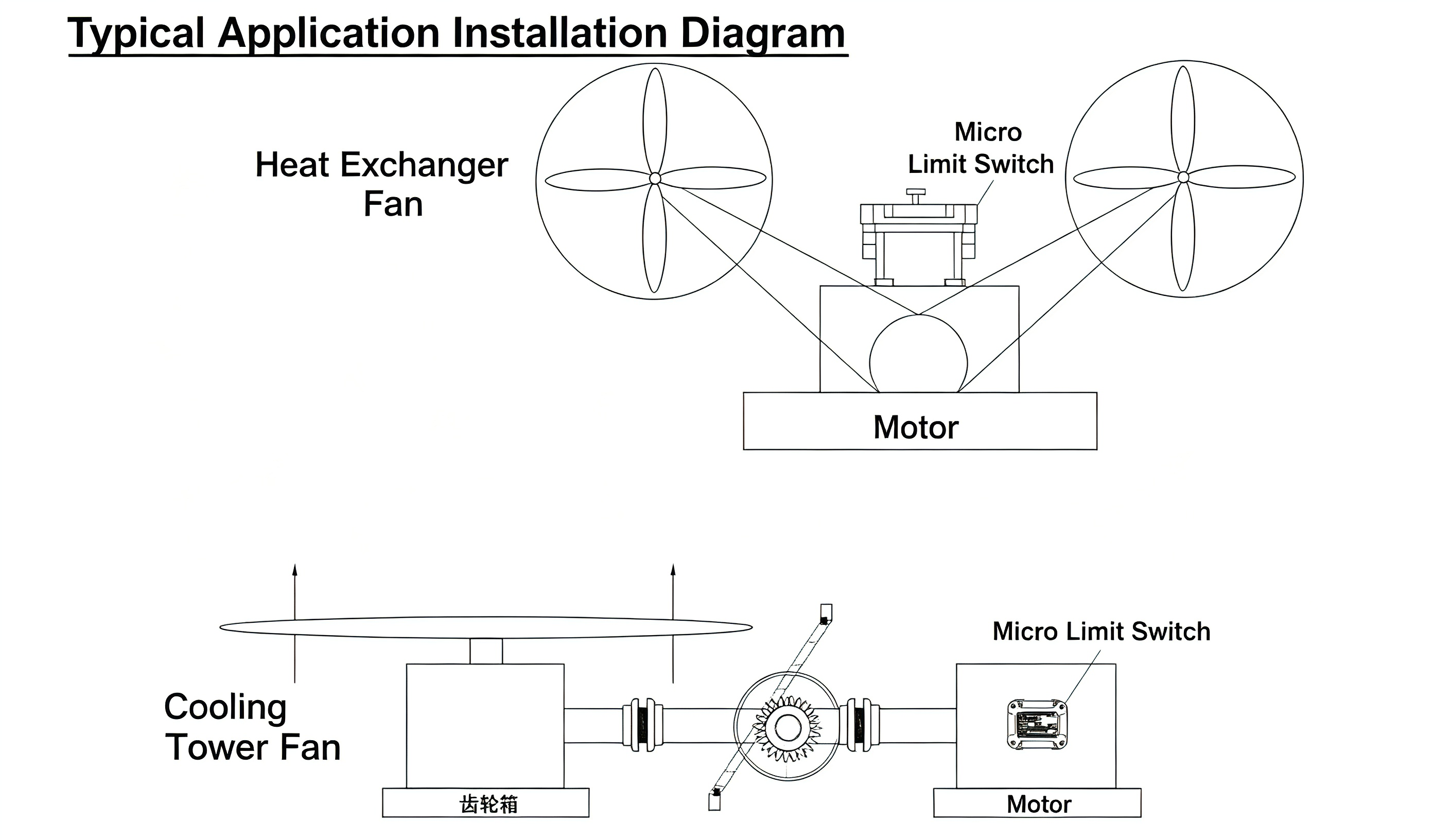
Where Is the Vibration Switch Installed?
The exact installation position depends on the cooling tower design and manufacturer's requirements.
Common installation locations may include:
The mounting location should provide reliable detection of abnormal movement while avoiding unnecessary vibration caused by flexible or unsuitable mounting structures.
Always follow the manufacturer's installation instructions and verify the appropriate trip setting before placing the cooling tower into service.
What Problems Can a Vibration Switch Detect?
A vibration switch does not replace a complete vibration-analysis program, but a trip can indicate that the cooling tower fan or drive system requires inspection.
Potential causes include:
Fan Imbalance
Accumulated dirt, corrosion, damaged blades, or uneven blade adjustment can cause fan imbalance.
Loose Fan Blades
Loose blade bolts or hub connections can generate significant vibration and may create a serious safety hazard.
Fan Shaft Misalignment
A bent or improperly aligned shaft can cause abnormal rotating movement.
Bearing Wear
Damaged or worn bearings can create increasing vibration, noise, and temperature.
Gearbox Problems
Gear tooth wear, damaged bearings, insufficient lubrication, or other gearbox problems can contribute to abnormal vibration.
Motor Problems
Motor imbalance, bearing deterioration, mounting problems, or electrical/mechanical faults can affect cooling tower vibration.
Drive Misalignment
Incorrect alignment between motor, gearbox, shaft, coupling, or other drive components can increase vibration.
Loose Structural Components
Loose bolts, damaged supports, or structural deterioration can amplify vibration throughout the cooling tower assembly.
Product Specifications
The following specifications should be confirmed according to the selected model and cooling tower application.
| Specification | Description |
| Product Type | Mechanical Vibration Switch |
| Application | Cooling Tower Fan and Drive Protection |
| Detection | Mechanical vibration / abnormal movement |
| Main Function | Alarm and/or protective shutdown |
| Installation | Equipment or structural mounting |
| Electrical Interface | Switching contacts |
| Control Connection | Motor starter, control panel, PLC or alarm circuit |
| Application Equipment | Fan, motor, gearbox, shaft and drive assembly |
| Cooling Tower Type | Induced draft, forced draft and other compatible systems |
| Reset | Model dependent |
| Trip Setting | Model dependent |
| Contact Rating | Model dependent |
| Mounting Method | Model dependent |
| Operating Environment | Industrial cooling tower environment |
| Material | Model dependent |
| Replacement Type | OEM-compatible / aftermarket, subject to specification |
| Customization | Available according to project requirements |
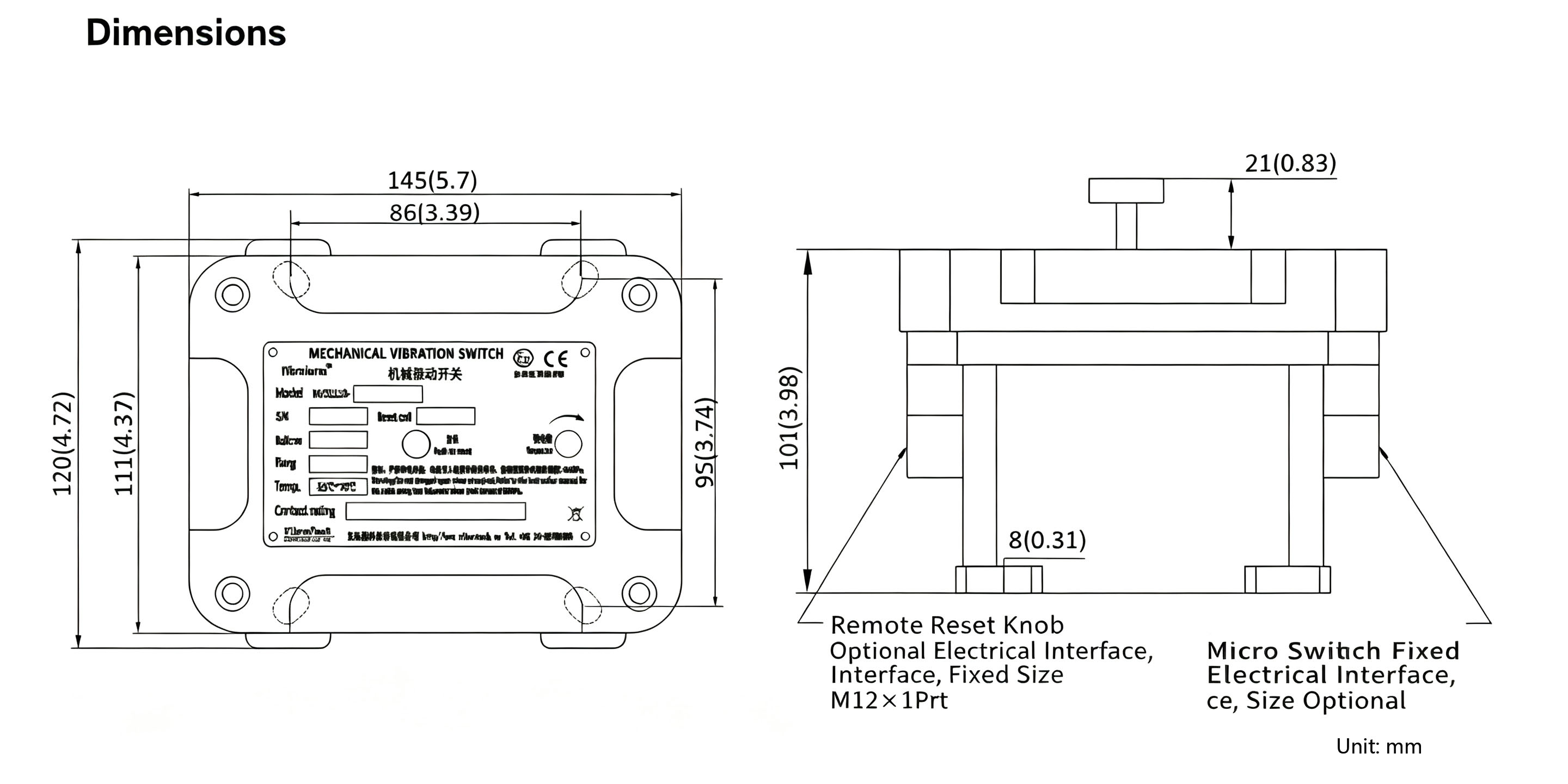
Important: Exact electrical ratings, vibration trip levels, reset configuration, dimensions, mounting details, and environmental ratings should be confirmed from the product datasheet before ordering.
Benefits of Using a Cooling Tower Vibration Switch
Protects Expensive Equipment
Cooling tower fans, motors, gearboxes, shafts, and bearings can represent a significant portion of the mechanical equipment cost. A vibration protection switch provides an additional safety layer.
Reduces Risk of Secondary Damage
Continuing to operate a severely vibrating fan can potentially damage connected components. A protective shutdown can limit the duration of abnormal operation.
Supports Preventive Maintenance
Repeated vibration trips can indicate developing mechanical problems that require inspection.
Improves Equipment Safety
Stopping a fan during severe abnormal vibration can reduce the risk associated with loose or damaged rotating components.
Suitable for Replacement Projects
The device can be incorporated into cooling tower repair and modernization projects when the original vibration protection device needs replacement.
Mechanical Vibration Switch vs. Vibration Sensor
Although the terms are sometimes used interchangeably, a mechanical vibration switch and an electronic vibration sensor can have different functions.
A mechanical vibration switch is generally designed to respond when vibration reaches a predetermined condition and provide a switching output.
A vibration sensor may provide continuous measurement data that can be analyzed by a monitoring system.
For basic cooling tower equipment protection, a mechanical vibration switch can provide a relatively straightforward solution. For advanced condition monitoring, a complete vibration monitoring system may be more appropriate.
Why Choose a Cooling Tower Vibration Protection Switch?
A cooling tower fan is a high-speed rotating machine. Even a relatively small mechanical problem can develop into a larger failure if it is not identified.
Installing a vibration protection switch provides a dedicated mechanism for detecting abnormal fan or drive movement.
It is particularly valuable for:
Large industrial cooling towers
Continuously operating cooling systems
Critical process cooling equipment
Gear-driven fan systems
Belt-driven fan systems
Direct-drive fan systems
Cooling tower refurbishment projects
Replacement and aftermarket applications
Installation Considerations
Before installation, verify the following:
Check the Mounting Location
The switch should be mounted in a location suitable for detecting abnormal vibration and recommended by the equipment or switch manufacturer.
Verify the Electrical Circuit
Confirm that the switch contact configuration and electrical rating are compatible with the cooling tower control circuit.
Check the Trip Setting
The vibration trip level should be appropriate for the cooling tower fan and drive system. An excessively low setting can cause nuisance trips, while an excessively high setting may reduce protection.
Inspect the Fan Assembly
Before commissioning, check fan blade condition, hub bolts, shaft alignment, bearings, gearbox condition, motor mounting, and other mechanical components.
Test the Protection Circuit
After installation, verify that the switch correctly communicates with the shutdown or alarm circuit.
Maintenance Recommendations
Regular inspection helps maintain reliable vibration protection.
Maintenance personnel should periodically:
Inspect switch mounting hardware
Check electrical connections
Inspect the switch for corrosion or physical damage
Verify the protection circuit
Inspect fan blades and hub assemblies
Check shaft and coupling alignment
Inspect bearings
Check gearbox condition and lubrication
Inspect motor mounting
Record abnormal vibration events
Investigate repeated vibration trips
A vibration switch should never be used as a substitute for routine cooling tower mechanical inspection.
OEM-Compatible Cooling Tower Vibration Switch
For replacement applications, an OEM-compatible vibration switch should be selected based on the actual cooling tower equipment and control requirements rather than by appearance alone.
When requesting a replacement, customers should provide information such as:
Cooling tower manufacturer
Cooling tower model
Fan diameter
Fan speed
Motor power
Drive type
Existing switch model
Existing switch photographs
Mounting dimensions
Electrical specifications
Control-system requirements
Providing these details helps ensure that the replacement component is properly matched to the application.
Industries Served
The mechanical vibration switch can be used for cooling tower applications in:
Frequently Asked Questions
What is a mechanical vibration switch used for on a cooling tower?
It is used to detect excessive vibration in the cooling tower fan or drive system and can initiate an alarm or automatic shutdown to help protect rotating equipment.
Where is a cooling tower vibration switch installed?
Depending on the design, it may be installed on or near the fan drive assembly, motor, gearbox, shaft support, or mechanical equipment structure.
Why does a cooling tower fan need a vibration switch?
Excessive vibration can indicate fan imbalance, loose components, bearing failure, shaft problems, gearbox damage, misalignment, or structural issues. A vibration switch provides additional protection against continued operation under abnormal conditions.
Can the vibration switch stop the cooling tower fan?
Yes. When properly connected to the cooling tower motor control circuit, the switch can provide a signal that stops the fan motor when the trip condition is reached.
Is a mechanical vibration switch the same as a vibration sensor?
Not necessarily. A mechanical vibration switch generally provides a switching action when vibration reaches a predetermined condition, while an electronic vibration sensor may provide continuous measurement data.
Can this switch be used on induced-draft cooling towers?
Yes, provided the switch specifications and installation arrangement are suitable for the particular induced-draft cooling tower.
Can it be used on gearbox-driven cooling tower fans?
Yes. Vibration protection can be particularly useful on gearbox-driven fan assemblies, where abnormal vibration may indicate problems with the gearbox, bearings, shaft, coupling, or fan.
How do I select a replacement vibration switch?
Compare the original switch's mounting arrangement, trip characteristics, contact configuration, electrical rating, reset method, environmental requirements, and cooling tower application.
What information should I provide when requesting a replacement?
Provide the cooling tower manufacturer and model, existing switch information, photographs, mounting dimensions, electrical specifications, fan and motor information, and any available nameplate data.
Can a vibration switch prevent gearbox failure?
It cannot prevent the underlying mechanical fault, but it can help detect abnormal vibration and initiate protective action before continued operation causes further damage.
Does a vibration switch replace regular cooling tower maintenance?
No. It is a protective device and should be used together with routine inspection, lubrication, alignment checks, fan inspection, bearing inspection, and other preventive maintenance procedures.
Product Selection Checklist
Before purchasing a Mechanical Vibration Switch for Cooling Tower, verify:
Cooling tower manufacturer and model
Existing vibration switch model
Electrical contact configuration
Environmental requirements
Control-panel compatibility
Why Source Cooling Tower Vibration Switches from CoolingTowerPart.com?
CoolingTowerPart.com focuses on cooling tower replacement and aftermarket components for industrial and commercial cooling systems.
A cooling tower vibration switch can be supplied for maintenance, repair, retrofit, and replacement applications. Customers can provide the original component information, photographs, drawings, or cooling tower model details to help determine the appropriate product configuration.
For projects involving Marley, SPX, BAC, EVAPCO, Liang Chi, Hamon, and other cooling tower systems, compatibility should be confirmed according to the specific equipment rather than assuming that one switch fits every model.
Conclusion
The Mechanical Vibration Switch for Cooling Tower is an important protective component for cooling tower fan and drive systems. By detecting abnormal vibration and providing an alarm or shutdown signal, it can help protect fan blades, shafts, bearings, motors, gearboxes, and supporting mechanical components.
For replacement applications, correct selection is essential. The vibration trip characteristics, electrical contacts, mounting configuration, and control-system requirements should all be verified before installation.
Whether you need a cooling tower fan vibration switch, mechanical vibration protection switch, or replacement cooling tower safety component, selecting the correct specification can improve equipment protection and support reliable cooling tower operation.
Related Cooling Tower Products


