You are here: Home » Blog » Technical Articles » Industrial Cooling Tower Fan Blade Pitch: How It Affects Airflow And Efficiency
Industrial Cooling Tower Fan Blade Pitch: How It Affects Airflow And Efficiency
Views: 0 Author: Lisa Publish Time: 2026-11-25 Origin: Site
Industrial Cooling Tower Fan Blade Pitch: How It Affects Airflow and Efficiency
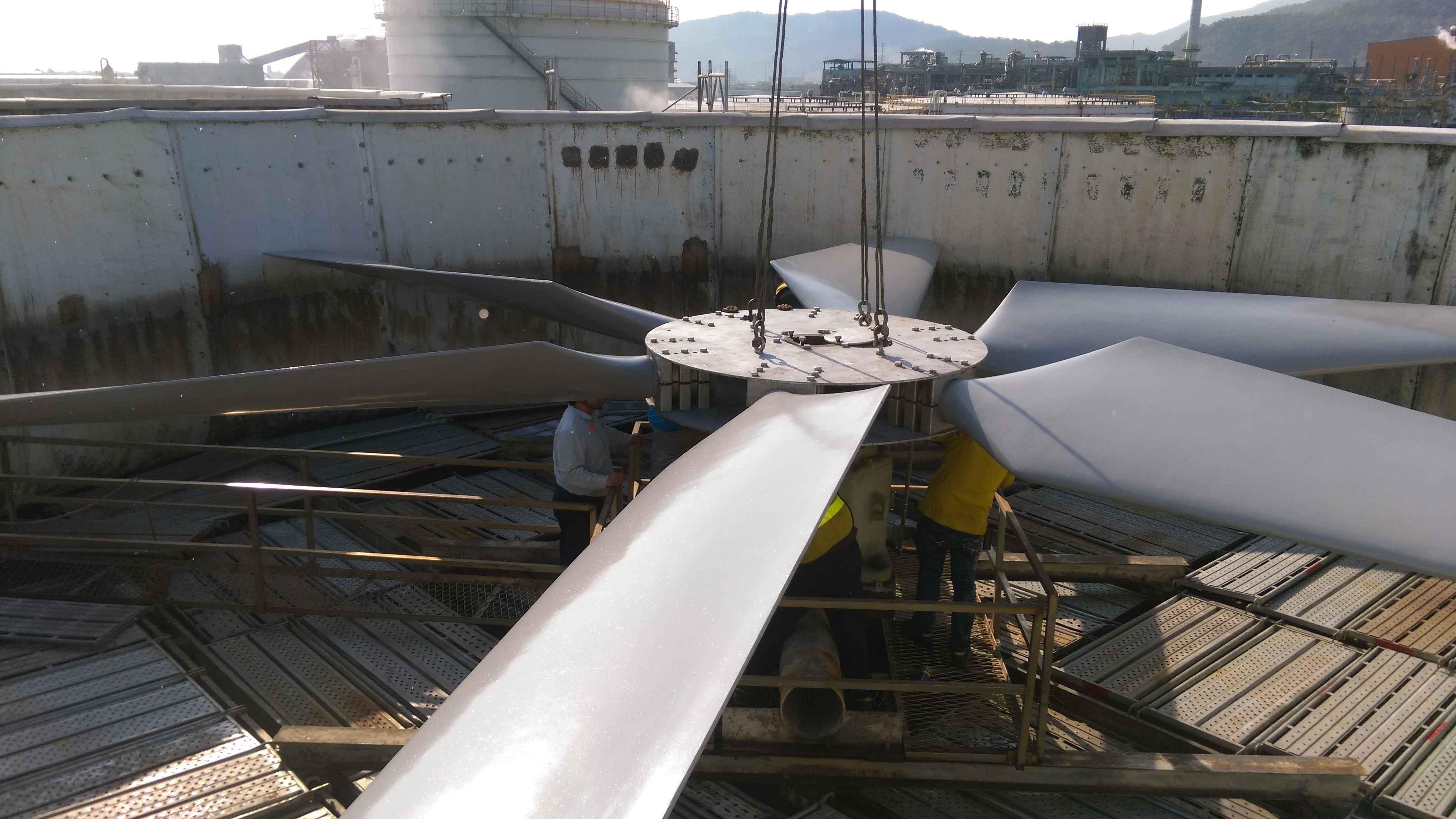
For industrial cooling towers, fan blade pitch is the core aerodynamic setting that shapes airflow volume, static pressure, power consumption and overall thermal efficiency. Many facilities overlook pitch and only focus on fan RPM, but even a small angle change can drastically shift cooling performance, energy bills and mechanical stress. This guide explains the aerodynamic relationship between pitch, airflow and efficiency, plus how to tune blades safely for power plants, chemical sites, data centers and manufacturing cooling towers.
What Is Fan Blade Pitch?
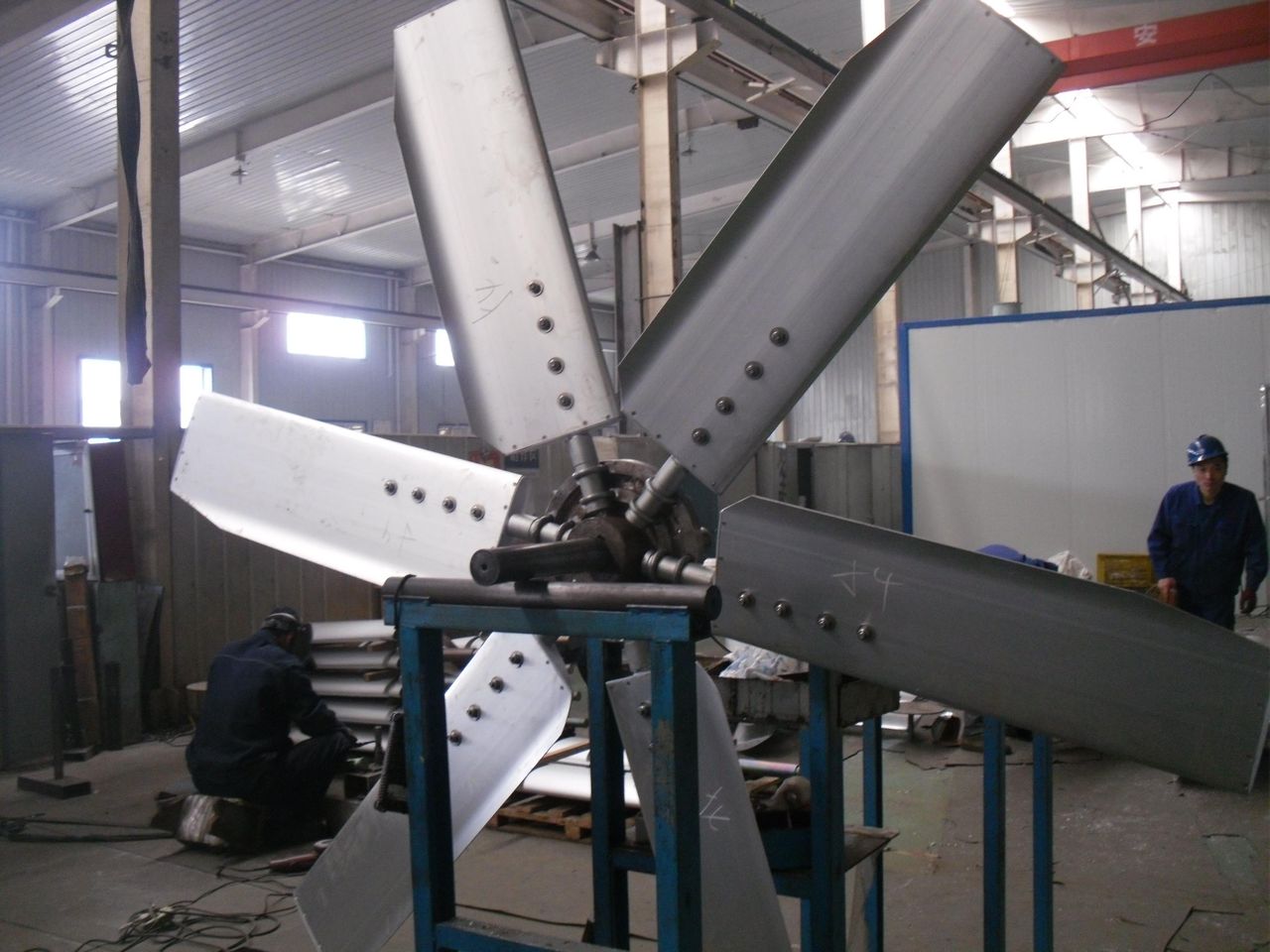
Blade pitch is the angle between the blade’s chord line and the fan’s plane of rotation. Twisted axial blades have varying angles from root to tip, so pitch is always measured at the OEM reference point (typically 50–100 mm from the blade tip). At a fixed RPM, pitch controls how much air each blade sweep captures and pushes through the fill, drift eliminators and tower internal resistance.
How Pitch Changes Airflow
Higher pitch angle: Each rotation moves more air, raising CFM (cubic feet per minute) and heat rejection capacity. The fan also generates higher static pressure to overcome resistance from clogged fill or dirty eliminators.
Lower pitch angle: Less air is moved per revolution. Airflow drops, and the fan struggles to maintain design water temperature during high heat load.
Critical stall zone: If pitch is too aggressive for the system resistance, airflow separates from the blade surface. The fan stalls, airflow becomes unstable, noise surges, and motor current spikes without delivering useful cooling.
Important: Pitch and airflow are not linear. After crossing the stall threshold, increasing pitch further will not boost airflow and will only waste power.
How Pitch Drives Energy Efficiency
Efficiency peaks in a narrow optimal pitch window.
Over-pitched blades: The fan draws far more power for marginal airflow gains. Motor amps rise close to or above nameplate rating, increasing energy cost and risking winding overheating, gearbox and bearing fatigue. This is the most common efficiency waste.
Under-pitched blades: The fan uses less power, but airflow is insufficient. If the tower cannot hit the setpoint, operators may run the fan continuously or add extra fans, which creates net energy loss.
Optimal pitch: The fan delivers the required airflow at the lowest possible power draw. This is the target for seasonal tuning.
A matched, evenly pitched blade set also eliminates aerodynamic imbalance. Uneven pitch forces the fan to vibrate, which wastes energy and accelerates component wear even if total airflow looks acceptable.
Pitch, Static Pressure and Tower System Resistance
Cooling tower fans do not operate in free air. Air must pass through fill, drift eliminators, louvers and internal baffles.
Towers with clean fill and low resistance can run at a moderate pitch for high efficiency.
Fouled, scaled fill or blocked eliminators raise static pressure; the same pitch that worked before may push the fan toward stall. This is why a pitch setting that works in spring may fail in summer after fouling builds up.
Seasonal Pitch Tuning for Better Efficiency
Adjustable-pitch fans are designed for seasonal load shifts, which is one of the biggest efficiency opportunities:
Summer / high wet bulb: Slightly higher pitch to maximize airflow, while keeping motor amps under full-load rating. Do not push into stall.
Winter / low wet bulb: Reduce pitch. Lower airflow is enough for heat rejection, and the fan cuts power significantly. This avoids overcooling and unnecessary energy use.
Transitional seasons: Test small 0.5° pitch increments and log water temperature, vibration and motor current to find the sweet spot.
Common Pitch-Related Efficiency Issues
Symptom
Root Cause
Efficiency Impact
High motor current, noisy surge
Pitch too high, near stall
Severe power waste, risk of failure
Outlet water temperature runs high
Pitch too low, insufficient airflow
Forced extended runtime, higher total energy
Vibration after adjustment
Uneven pitch between blades
Energy lost to vibration, accelerated wear
Good airflow in clean conditions, poor after fouling
Fixed pitch not matched to rising static pressure
Fan drifts into low-efficiency operating zone
Best Practices to Optimize Pitch, Airflow and Efficiency
✅ Always measure all blades and keep angles within ±0.5° tolerance. Aerodynamic imbalance cannot be fixed by balancing weights.
✅ Tune pitch in small increments (0.5°–1°), and monitor motor amperage on every test run. Never exceed the motor nameplate full-load amps.
✅ Clean fill and eliminators before pitch calibration; fouling changes system resistance and invalidates old pitch settings.
✅ Record fan curve, CFM, static pressure and amp readings to build a reference for future seasonal changes.
✅ After pitch adjustment, recheck blade tip clearance and perform dynamic balancing if vibration increases.
✅ Do not mix blade airfoil designs on one hub; different blade profiles have different stall and efficiency curves.
Frequently Asked Questions
Q: Does higher pitch always mean better cooling?
A: No. Once the fan enters stall, higher pitch creates noise and overload without meaningful airflow improvement.
Q: Can I use pitch adjustment instead of VFD speed control?
A: Pitch tuning is excellent for seasonal fixed-load adjustment. VFDs are better for continuous, precise airflow modulation. The two can be combined.
Q: Why is the same pitch less efficient after the fill gets scaled?
A: Scaling increases static pressure. The fan’s operating point moves on the performance curve, often closer to stall and lower efficiency.
Q: Do FRP and aluminum blades follow the same pitch airflow rules?
A: The aerodynamic principle is identical. The difference is mechanical limits: FRP blade roots have lower torque limits during clamping.
Conclusion
Fan blade pitch directly controls airflow, static pressure and energy efficiency for industrial cooling tower axial fans. The goal is not simply maximum pitch or maximum airflow, but the narrow optimal angle that delivers the required heat rejection at the lowest safe power draw. Avoid over-pitching into stall, keep all blade angles uniform, and retune seasonally as wet bulb temperature and fill fouling change. For Marley, BAC, Evapco and custom retrofit cooling tower fans, disciplined pitch tuning cuts energy consumption, reduces vibration and extends the service life of the entire fan drive train.
Recommended internal links for CoolingTowerPart.com: