Choosing the right cooling tower fan stack material is important for industrial cooling tower performance, durability, and maintenance costs. Fiberglass cooling tower fan stacks and steel fan stacks are two common options for new installations, equipment upgrades, and replacement projects. Both can provide a suitable structure around the cooling tower fan, but they differ in corrosion resistance, weight, maintenance requirements, fabrication, and lifecycle cost.
For cooling tower operators, maintenance contractors, OEMs, and industrial equipment distributors, understanding these differences helps identify the best solution for specific operating conditions.
This guide compares FRP (fiberglass-reinforced plastic) cooling tower fan stacks with steel fan stacks to help buyers make informed purchasing decisions.
What Is a Fiberglass Cooling Tower Fan Stack?
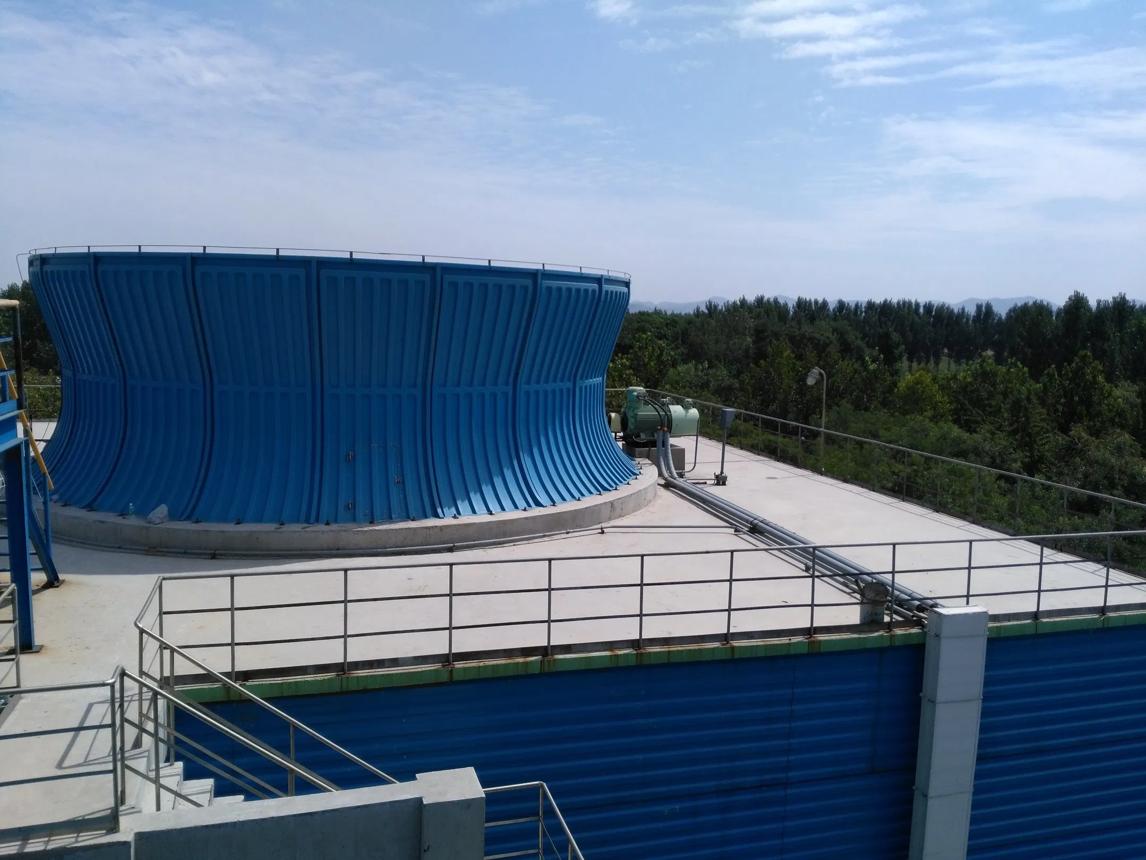
A fiberglass cooling tower fan stack is an airflow enclosure manufactured from fiberglass reinforcement and a resin matrix. It is commonly used on induced-draft cooling towers to guide air discharged by the fan.
FRP fan stacks can be manufactured in different diameters, heights, wall thicknesses, and flange configurations. Custom designs are useful for replacement projects where the existing cooling tower has nonstandard dimensions.
Key advantages include:
Excellent corrosion resistance when the resin system is correctly selected
Relatively low weight
Flexible custom fabrication
Reduced risk of rust-related maintenance
Good suitability for many wet and outdoor environments
FRP fan stacks still require proper structural design, UV protection where necessary, and regular inspection for cracking, delamination, and mechanical damage.
What Is a Steel Cooling Tower Fan Stack?
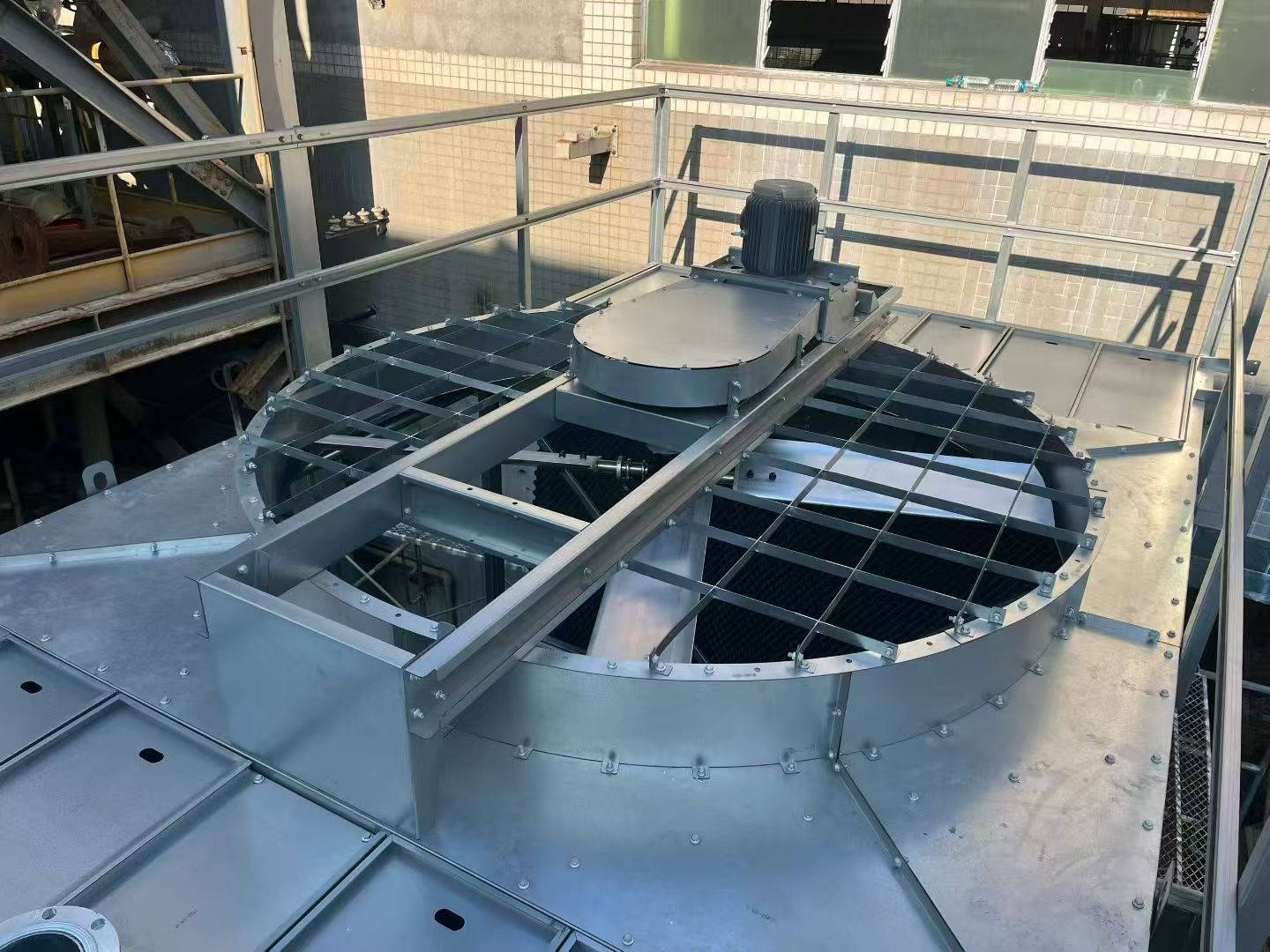
A steel cooling tower fan stack is fabricated from steel plates or formed metal sections. Depending on the application, it may use carbon steel with a protective coating or stainless steel for improved corrosion resistance.
Steel fan stacks are valued for their structural strength, established fabrication methods, and suitability for applications requiring engineered metal structures.
Common features include:
High structural strength
Familiar fabrication and repair procedures
Compatibility with various support and mounting systems
A wide range of material and coating options
Potentially straightforward local repair, depending on the damage
However, carbon steel can corrode when its protective coating deteriorates. Stainless steel can offer better corrosion resistance but may increase initial material costs.
Fiberglass vs. Steel Cooling Tower Fan Stack: Key Differences
The following table summarizes the main differences between the two materials.
| Comparison Factor | Fiberglass (FRP) Fan Stack | Steel Fan Stack |
| Corrosion resistance | Generally excellent with a suitable resin system | Depends on steel grade and protective coating |
| Weight | Usually lightweight | Often heavier for comparable applications |
| Structural performance | Depends on laminate design and reinforcement | High strength with appropriate structural design |
| Maintenance | No rust-related maintenance, but FRP inspections are necessary | Coating inspection and corrosion treatment may be required |
| Initial cost | Depends on size, resin, and custom fabrication | Depends on steel grade, thickness, and coating |
| Custom shapes | Flexible molding and fabrication options | Requires suitable forming and welding processes |
| Field repairs | Requires compatible FRP repair materials and procedures | May allow welding or coating repairs, subject to site conditions |
| Outdoor exposure | Requires suitable UV and weather protection | Requires appropriate corrosion protection |
| Installation | Lower weight may simplify handling | Greater weight may increase lifting requirements |
| Service life | Depends on design, environment, and maintenance | Depends on steel grade, coating, environment, and maintenance |
Neither material is automatically superior in every application. Selection should be based on actual operating conditions and engineering requirements.
1. Corrosion Resistance
Corrosion resistance is one of the most important differences between fiberglass and steel fan stacks.
Fiberglass Fan Stack
FRP does not rust like carbon steel. It is often a good choice for cooling towers exposed to constant moisture, humid air, and corrosive industrial atmospheres.
The resin system must be compatible with the operating temperature and chemical exposure. UV-resistant surface protection may also be necessary for outdoor installations.
Steel Fan Stack
Steel fan stacks can perform reliably when the steel grade and protective system are appropriate. Carbon steel typically requires coatings or other corrosion protection, while stainless steel may be preferred in certain demanding environments.
Best choice: FRP is often attractive for corrosion-prone environments, while properly protected steel remains a viable option where its structural characteristics or fabrication requirements are advantageous.
2. Weight and Installation
The weight of a cooling tower fan stack affects transportation, lifting equipment, installation time, and support requirements.
FRP fan stacks are generally lighter than comparable steel assemblies. This can make them easier to handle during maintenance shutdowns and replacement projects, particularly when access is restricted.
Steel stacks may require heavier lifting equipment, depending on their dimensions and construction. However, actual lifting requirements must be calculated from the complete assembly rather than material type alone.
For retrofit projects, confirm the existing support structure, mounting flange, bolt-hole pattern, and available lifting access before ordering a replacement.
3. Strength and Structural Design
Steel offers high structural strength and stiffness. It can be appropriate for applications with substantial mechanical loads, provided the design accounts for wind pressure, vibration, support conditions, and corrosion allowances where applicable.
FRP has a different structural behavior. Its performance depends on fiber orientation, laminate thickness, resin properties, reinforcement placement, and fabrication quality.
A properly engineered FRP fan stack can provide reliable service in industrial cooling towers. However, designers should not substitute FRP for steel solely on the basis of dimensions or weight. Structural calculations and connection details must be reviewed for the intended application.
4. Maintenance Requirements
Maintenance needs can influence the total cost of ownership.
FRP fan stacks do not require rust removal or repainting to address ordinary steel corrosion. Nevertheless, operators should inspect them for:
Steel fan stacks require inspection for coating damage, rust, corrosion at joints, and deterioration around fasteners. Damaged coatings should be repaired before corrosion becomes extensive.
The better option depends on the site's maintenance capabilities, exposure conditions, and inspection schedule.
5. Initial Cost and Lifecycle Cost
The purchase price of a cooling tower fan stack depends on dimensions, material grade, wall thickness, fabrication complexity, surface protection, quantity, and shipping requirements.
FRP may offer lifecycle cost advantages where corrosion-related repairs and repainting would otherwise be frequent. Its lower weight may also reduce handling costs in some projects.
Steel may be economical where local fabrication is readily available, existing support systems are designed for steel, or the project requires particular metalworking and repair methods.
Buyers should compare the total installed cost, including:
Manufacturing and customization
Surface protection or resin requirements
Transportation and lifting
Installation labor
Routine inspections and repairs
Expected replacement intervals
Avoid choosing solely on the lowest initial quotation.
6. Applications: When Should You Choose FRP or Steel?
Choose a Fiberglass Cooling Tower Fan Stack When:
Corrosion resistance is a major concern.
The tower operates in a wet or humid environment.
Reduced component weight is beneficial.
A custom diameter, height, or flange configuration is required.
The project aims to reduce rust-related maintenance.
Choose a Steel Cooling Tower Fan Stack When:
The application requires a specifically engineered steel structure.
Local steel fabrication and repair capabilities are advantageous.
Existing supports and interfaces are designed around a steel assembly.
The selected steel grade and coating system suit the environment.
Project specifications explicitly require a metal fan stack.
For either option, the fan stack must be compatible with the tower structure and fan arrangement.
How to Select the Right Cooling Tower Fan Stack Replacement
Before purchasing a fiberglass or steel replacement fan stack, confirm the following information:
Cooling tower model: Identify the tower manufacturer and model if available.
Dimensions: Measure the stack height, internal and external diameters, and flange dimensions.
Mounting details: Confirm bolt-hole locations, support conditions, and connection requirements.
Operating environment: Document temperature, humidity, UV exposure, and chemical conditions.
Fan clearance: Verify blade-tip clearance and the required airflow passage.
Structural requirements: Review wind loads, vibration, and applicable design standards.
Supplier capabilities: Request drawings, material specifications, and relevant quality documentation.
For custom FRP fan stacks, provide the supplier with existing drawings or clear photographs and verified measurements. For steel stacks, specify the steel grade, thickness, and required corrosion protection.
Never assume that a replacement will fit simply because it has the same nominal diameter.
Custom Fiberglass Cooling Tower Fan Stack Supplier
For industrial cooling tower replacement and retrofit projects, a custom FRP fan stack can be manufactured to suit the existing tower configuration and operating conditions.
CoolingTowerPart.com can present custom fiberglass cooling tower fan stack solutions for maintenance contractors, industrial buyers, and equipment distributors. When requesting a quotation, provide the stack dimensions, mounting details, application, required quantity, and delivery destination.
Comparing the proposed material, structural design, dimensional compatibility, and total project cost helps buyers select an appropriate replacement.
Frequently Asked Questions
Is a fiberglass cooling tower fan stack better than steel?
FRP is often advantageous in corrosive environments because it does not rust like carbon steel. Steel may be preferable for certain structural, fabrication, or project-specific requirements. The best choice depends on the application.
How long does a fiberglass cooling tower fan stack last?
There is no universal service life. Longevity depends on resin selection, structural design, UV exposure, operating conditions, installation quality, and maintenance.
Can an FRP fan stack replace a steel fan stack?
Yes, in suitable applications. The replacement must meet the required structural loads, dimensions, mounting details, and fan clearances. Engineering verification is recommended before installation.
Does a steel fan stack require more maintenance?
Carbon steel may require periodic coating repairs and corrosion treatment. FRP avoids rust-related maintenance but still needs inspections and repairs for material damage or deterioration.
Can fiberglass cooling tower fan stacks be customized?
Yes. Custom FRP stacks can be manufactured to specified diameters, heights, flange patterns, wall constructions, and other project requirements.
Conclusion
The choice between a fiberglass cooling tower fan stack and a steel fan stack depends on corrosion exposure, structural requirements, installation constraints, maintenance resources, and lifecycle cost.
FRP is an attractive option for many wet industrial environments because of its corrosion resistance, relatively low weight, and customization flexibility. Steel remains a practical solution where its structural properties, local fabrication capabilities, or project specifications make it appropriate.
For reliable performance, verify dimensions, material suitability, structural design, and fan clearance before purchasing a replacement.
Recommended internal links for CoolingTowerPart.com:


