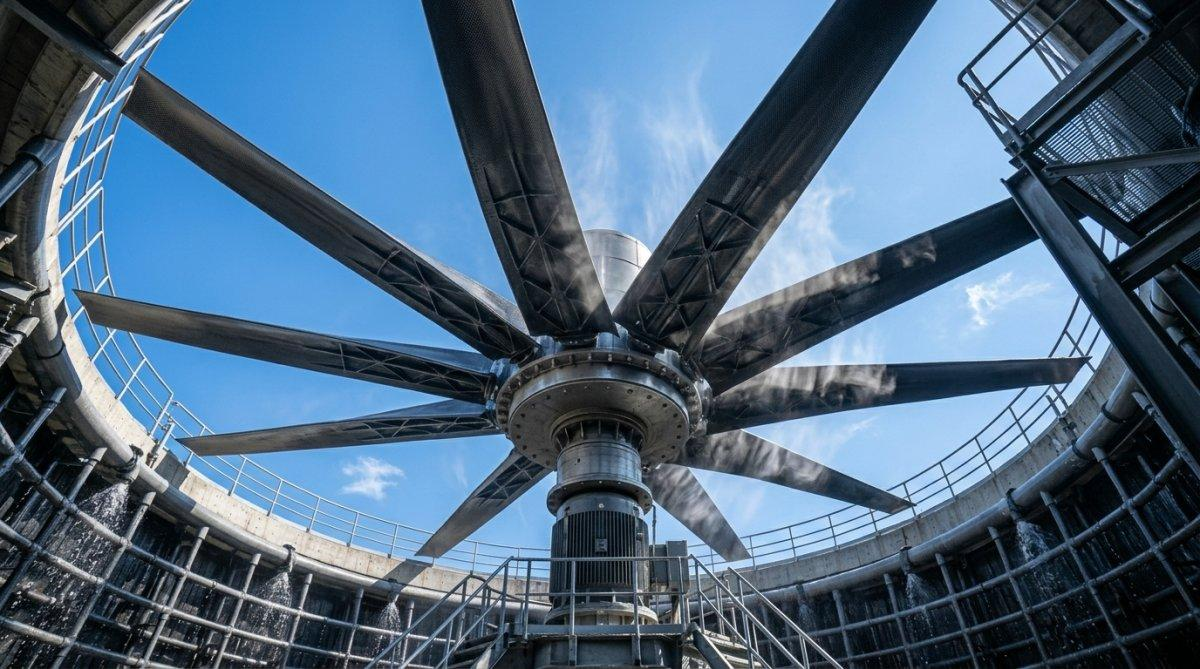
A custom fiberglass cooling tower fan stack is an important component of industrial cooling towers. It provides a passage for airflow, helps direct fan discharge, and supports efficient heat rejection. In demanding industrial environments, the fan stack must withstand moisture, weather exposure, vibration, and potentially corrosive conditions while maintaining reliable airflow.
Fiberglass-reinforced plastic (FRP) is a popular material for cooling tower fan stacks because it combines corrosion resistance, relatively low weight, and good structural strength. Custom FRP fan stacks can be manufactured to match different cooling tower models, fan diameters, installation requirements, and operating conditions.
For cooling tower operators, maintenance contractors, OEMs, and industrial equipment distributors, choosing the right fiberglass fan stack can improve equipment reliability and simplify replacement projects.
What Is a Fiberglass Cooling Tower Fan Stack?
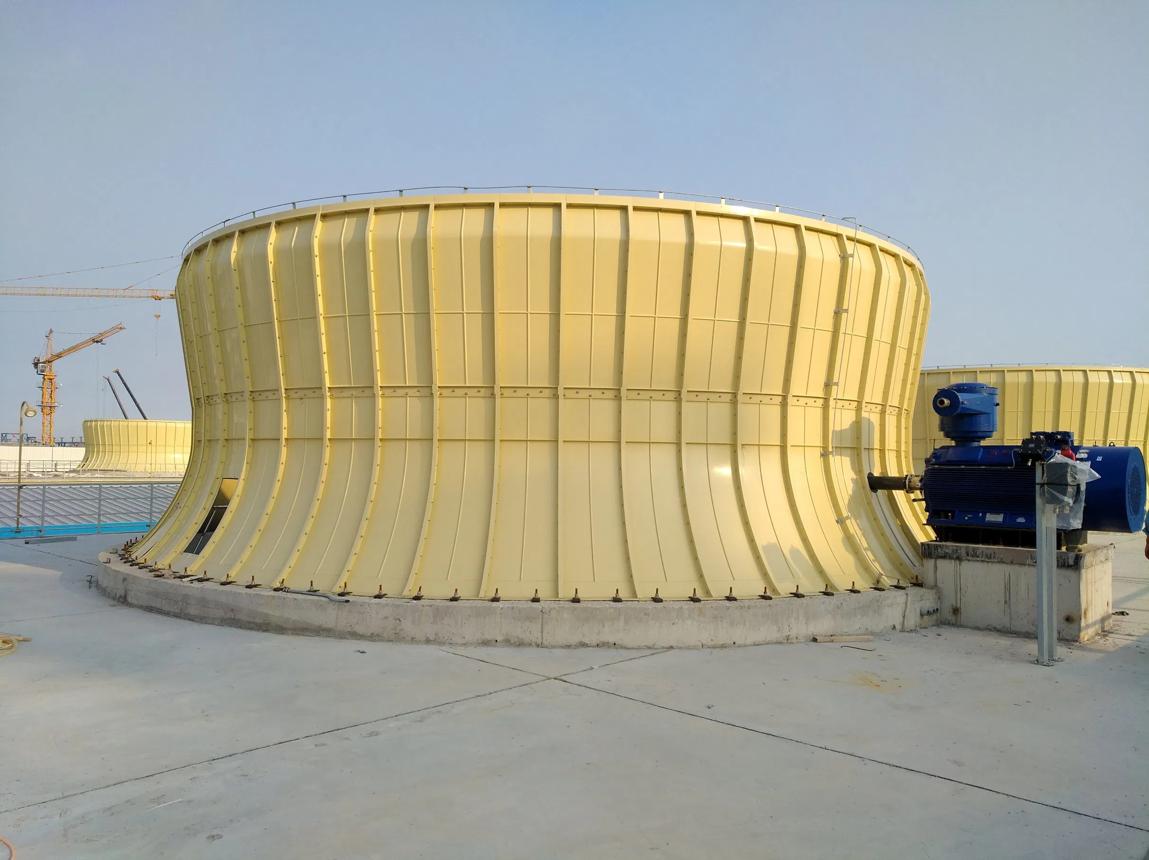
A fiberglass cooling tower fan stack is a shaped enclosure installed around the fan outlet of a cooling tower. It guides air discharged by the fan and helps reduce airflow disturbance around the fan assembly.
The stack is commonly installed on induced-draft cooling towers, where the fan draws air through the tower and discharges it upward. Depending on the tower design, the stack may have a cylindrical, flared, or specially engineered profile.
A typical FRP cooling tower fan stack consists of:
FRP shell: Provides the main structure and corrosion-resistant surface.
Flared outlet: Helps guide the discharged air and may reduce flow separation when properly designed.
Mounting flange: Connects the stack to the cooling tower structure.
Reinforcement sections: Improve stiffness where required by structural calculations.
Fasteners and sealing components: Secure the assembly and help prevent unwanted leakage at joints.
The exact configuration depends on the cooling tower design, fan diameter, wind loads, and installation environment.
Why Choose FRP for an Industrial Cooling Tower Fan Stack?
1. Excellent Corrosion Resistance
Cooling towers operate in wet environments where metal components may experience corrosion. FRP does not rust like conventional carbon steel, making it suitable for many industrial cooling tower applications.
The resin system and fiberglass reinforcement should be selected according to the expected temperature, humidity, UV exposure, and chemical environment.
2. Lightweight Construction
Fiberglass is generally lighter than steel of comparable application-specific construction. A lightweight fan stack can simplify transportation, handling, and installation, particularly during cooling tower maintenance or retrofit projects.
However, lifting equipment and installation procedures must still be selected according to the stack's actual dimensions and weight.
3. Good Structural Strength
FRP combines glass-fiber reinforcement with a resin matrix to provide structural strength and stiffness. Properly designed reinforcement helps the fan stack withstand operating loads, wind pressure, and service conditions.
Wall thickness, laminate construction, flange design, and reinforcement placement should be engineered for the intended application.
4. Low Maintenance Requirements
Because FRP does not rust, it can reduce the need for corrosion-related surface repairs. Routine inspections are still necessary to identify cracks, delamination, loose fasteners, UV degradation, and damage caused by vibration or impact.
5. Flexible Customization
Custom fiberglass fan stacks can be designed for different tower configurations, including replacement applications where the original equipment dimensions must be matched.
Options may include custom diameters, heights, flange patterns, wall thicknesses, colors, and mounting arrangements.
Key Features of Custom Fiberglass Cooling Tower Fan Stacks
When sourcing a custom FRP cooling tower fan stack, buyers should evaluate the following features.
| Feature | Importance |
| Diameter and height | Must match the tower and fan arrangement |
| FRP material system | Should suit operating temperature and environmental exposure |
| Wall thickness | Must meet structural and durability requirements |
| Flange configuration | Ensures secure installation and dimensional compatibility |
| Reinforcement design | Helps withstand wind, vibration, and operating loads |
| Surface finish | Supports inspection, cleaning, and long-term serviceability |
| UV resistance | Helps protect exposed surfaces from sunlight |
| Custom fabrication | Supports replacement and retrofit requirements |
Specifications should be confirmed through drawings and engineering review rather than relying on nominal dimensions alone.
Applications of Custom FRP Cooling Tower Fan Stacks
Custom fiberglass fan stacks are used across many industries where cooling towers reject process heat.
Power Generation
Power plants use industrial cooling towers to manage heat from condensers and auxiliary systems. Corrosion-resistant FRP stacks can be suitable for outdoor cooling tower installations when engineered for the site's operating conditions.
Chemical and Petrochemical Plants
Chemical facilities may expose cooling tower equipment to corrosive atmospheres and demanding operating environments. Selecting a suitable resin system is important for long-term FRP performance.
HVAC and Commercial Buildings
Large commercial buildings, hospitals, data centers, and industrial campuses use cooling towers for air-conditioning and process cooling. Custom fan stacks can support equipment replacement and refurbishment.
Manufacturing Facilities
Steel plants, food processing facilities, plastics manufacturers, and other industrial operations rely on cooling towers for continuous heat removal. Custom FRP stacks can be specified for new installations or existing tower upgrades.
Water Treatment and Industrial Processing
Industrial water treatment and process facilities may use cooling towers to maintain required operating temperatures. Fan stack selection should account for local environmental conditions and maintenance access.
Custom Fiberglass Fan Stack Manufacturing Process
A reliable custom cooling tower fan stack supplier should follow a controlled manufacturing process.
Step 1: Review the application. Confirm the cooling tower model, fan diameter, operating temperature, environmental exposure, and replacement requirements.
Step 2: Confirm dimensions. Review drawings, overall height, internal and external diameters, flange dimensions, bolt-hole patterns, and connection details.
Step 3: Select materials. Choose the resin, fiberglass reinforcement, surface protection, and laminate structure according to the service environment.
Step 4: Fabricate the FRP stack. Use an appropriate molding or fabrication process to produce the required shape and structural configuration.
Step 5: Inspect quality. Check dimensions, surface condition, flange alignment, visible defects, and other agreed inspection criteria.
Step 6: Prepare for shipment. Protect the stack against impact and deformation during packaging, handling, and transportation.
For large or nonstandard fan stacks, buyers should request dimensional inspection records and relevant material or quality documentation.
How to Choose the Right Custom Fiberglass Cooling Tower Fan Stack
Selecting a fan stack involves more than choosing a material and diameter. Consider these factors before placing an order.
Cooling tower compatibility: Confirm the tower type, fan arrangement, and installation interface.
Airflow requirements: Ensure the stack profile does not create unacceptable airflow restriction or interfere with fan performance.
Operating environment: Evaluate UV exposure, humidity, temperature, and chemical conditions.
Structural requirements: Consider wind loads, vibration, support conditions, and applicable design standards.
Replacement accuracy: Compare the existing stack with approved drawings and measurements.
Supplier experience: Look for a manufacturer with FRP fabrication experience and the ability to produce custom industrial components.
Total project cost: Evaluate manufacturing, packaging, shipping, installation, and expected maintenance costs rather than purchase price alone.
For replacement projects, verify fan clearances and the relationship between the stack and the fan blades. Incorrect dimensions can cause installation difficulties, airflow problems, or mechanical interference.
Custom FRP Fan Stack vs. Metal Fan Stack
| Comparison | FRP Fan Stack | Metal Fan Stack |
| Corrosion resistance | Generally excellent with a suitable resin system | Depends on metal, coating, and environment |
| Weight | Generally lightweight | Often heavier, depending on construction |
| Custom shapes | Flexible fabrication options | Depends on forming and fabrication methods |
| Maintenance | No rust-related maintenance, but inspections remain necessary | May require coating repairs or corrosion treatment |
| Initial cost | Depends on design and fabrication | Depends on material, coating, and fabrication |
| Structural design | Requires appropriate laminate engineering | Requires appropriate metal structural engineering |
Neither material is universally best. The right choice depends on operating conditions, structural requirements, lifecycle cost, and site-specific constraints.
Installation and Maintenance Recommendations
Proper installation helps protect the fan stack and the cooling tower fan assembly.
Inspect the mounting structure before installation.
Verify dimensions and bolt-hole alignment.
Use suitable fasteners and sealing materials.
Follow the manufacturer's installation and torque recommendations.
Check that the fan blades maintain adequate clearance from the stack.
Inspect for cracks, loose connections, unusual vibration, and visible deformation.
Clean the surface when needed using methods compatible with the resin system.
Repair damaged areas using an approved FRP repair procedure.
Before inspection or maintenance near the fan, isolate electrical power and follow the site's lockout/tagout procedures.
Custom Fiberglass Cooling Tower Fan Stack Supplier
CoolingTowerPart.com can use a custom-supply approach for industrial cooling tower fan stack replacement and retrofit projects. When requesting a quotation, buyers should provide the required dimensions, application details, quantity, installation location, and available drawings or photographs.
A complete inquiry should include:
Required fan stack diameter and overall height
Existing tower manufacturer and model, if known
Mounting flange and bolt-hole dimensions
Operating temperature and environmental conditions
Material and reinforcement requirements
Quantity, packaging, and delivery destination
Providing accurate technical information helps suppliers evaluate compatibility, prepare a suitable quotation, and reduce the risk of ordering an incorrectly sized component.
Frequently Asked Questions
1. What is a fiberglass cooling tower fan stack used for?
It surrounds the cooling tower fan outlet and helps guide discharged air. Its dimensions and profile should be designed to suit the fan and tower configuration.
2. Is FRP suitable for outdoor cooling towers?
Yes. Properly formulated and manufactured FRP can perform well outdoors because it resists corrosion and can be designed for UV exposure. Material selection and structural design remain essential.
3. Can a fiberglass fan stack replace an existing metal stack?
In many cases, yes. The replacement must match the required dimensions, mounting arrangement, structural loads, and fan clearances. Engineering verification is recommended before installation.
4. Can FRP cooling tower fan stacks be customized?
Yes. Manufacturers can produce different diameters, heights, flange configurations, wall constructions, and other features according to approved drawings and application requirements.
5. What information is needed to request a quotation?
Provide dimensions, drawings or photographs, cooling tower model, operating conditions, quantity, material requirements, and delivery location.
Conclusion
A custom fiberglass cooling tower fan stack for industrial cooling towers offers a corrosion-resistant, lightweight, and adaptable solution for new installations, maintenance, and replacement projects. Its long-term performance depends on suitable FRP materials, accurate dimensions, structural engineering, correct installation, and routine inspection.
For industrial operators, contractors, and equipment distributors, working with an experienced supplier and providing complete technical specifications can help ensure a compatible fan stack that meets the cooling tower's operational requirements.
Request a quotation for a custom FRP cooling tower fan stack by preparing your drawings, dimensions, operating conditions, and quantity requirements.
Recommended internal links for CoolingTowerPart.com:


