You are here: Home » Blog » Technical Articles » FRP vs. Aluminum Industrial Cooling Tower Fan Blades: Key Differences
FRP vs. Aluminum Industrial Cooling Tower Fan Blades: Key Differences
Views: 0 Author: Lisa Publish Time: 2026-11-25 Origin: Site
FRP vs. Aluminum Industrial Cooling Tower Fan Blades: Key Differences
FRP (fiberglass reinforced plastic) and aluminum alloy are the two most widely used materials for axial fan blades on industrial cooling towers. Each material has unique strengths, weaknesses and ideal operating environments. Choosing the wrong blade material leads to early corrosion, fatigue cracking, excessive vibration, frequent maintenance and unplanned shutdowns for HVAC, chemical plants, power stations, data centers and manufacturing facilities. This guide breaks down the core differences, performance tradeoffs and practical selection rules for FRP and aluminum cooling tower fan blades.
What Are FRP and Aluminum Cooling Tower Fan Blades?
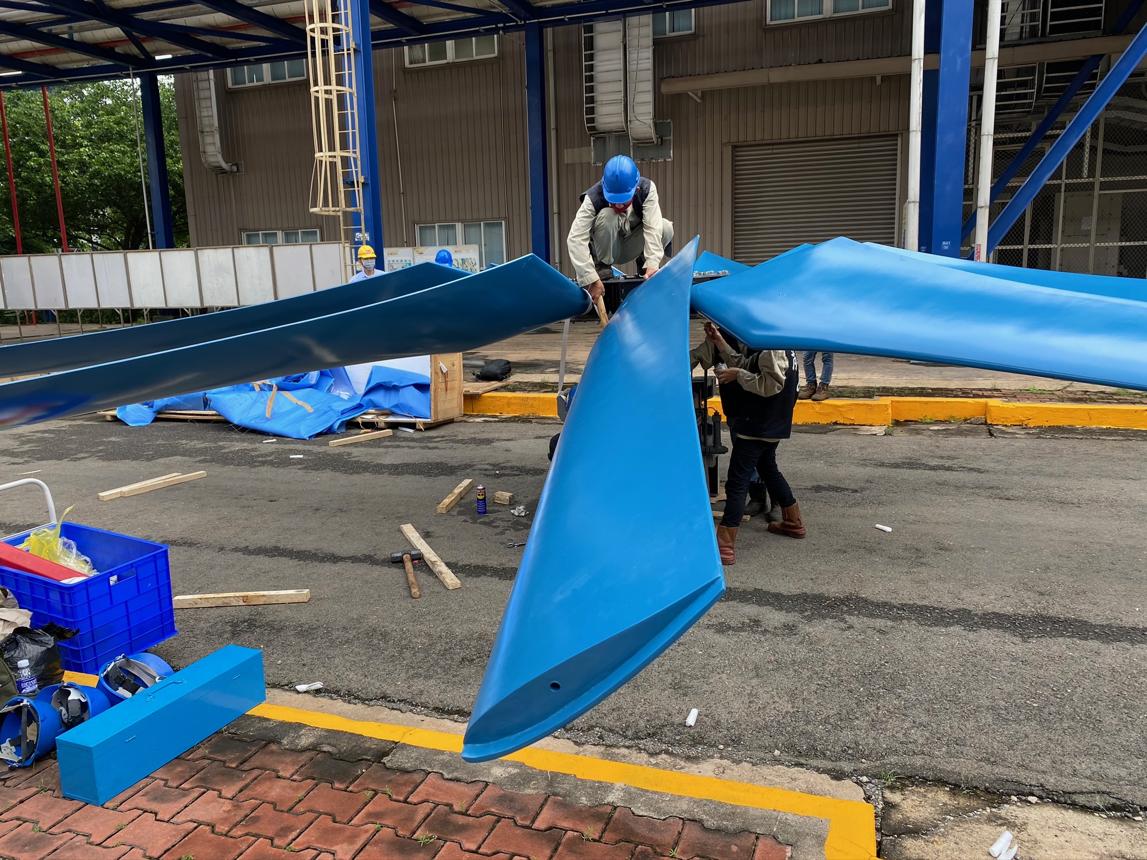
FRP Fan BladesFRP blades are composite parts made of fiberglass reinforcement bonded with polyester, vinyl ester or epoxy resin. They can be molded into complex twisted airfoil shapes, with built-in UV and chemical resistance depending on the resin system. Hollow FRP blades are common for large-diameter cooling tower fans.
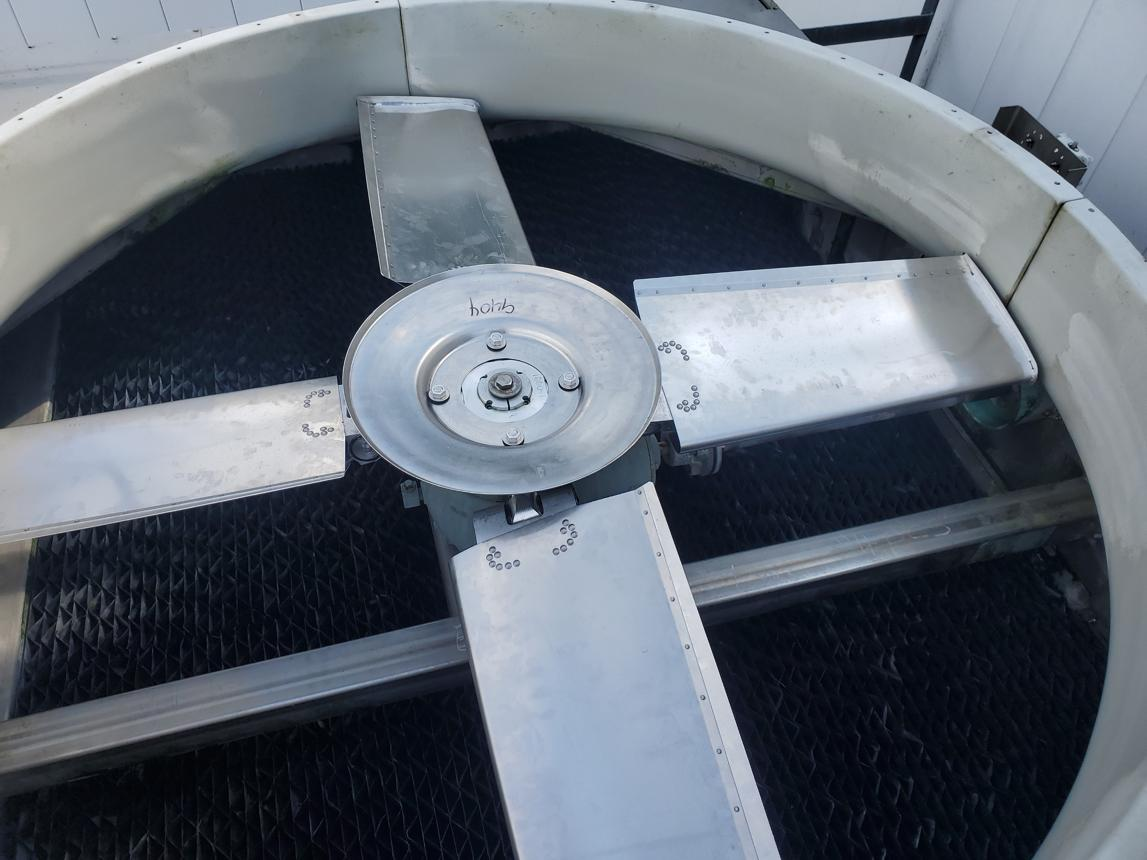
Aluminum Alloy Fan BladesAluminum blades are usually cast or extruded from marine-grade aluminum alloy. They have been used in cooling towers for decades, valued for rigid structure, consistent dimensional stability and straightforward machining. Most aluminum blades rely on anodizing or protective paint coatings to resist corrosion.
Side-by-Side Comparison of Core Performance
Feature
FRP Fan Blades
Aluminum Fan Blades
Corrosion Resistance
Excellent. Vinyl ester FRP handles coastal salt, chlorine, chemical vapors and acidic moisture without coating.
Moderate. Bare aluminum pits quickly in corrosive environments; protective coating requires regular touch-up and recoating.
Weight & Load
Lightweight composite, low centrifugal load. Reduces stress on bearings, gearboxes and motor.
Slightly heavier than equivalent FRP; higher cyclic load on the drive assembly.
Fatigue Resistance
Superior fatigue performance. Resists cracking under continuous long-cycle fan operation.
Prone to fatigue cracks after years of vibration and cyclic stress; cracks can spread rapidly.
Higher long-term cost from coating repairs, fatigue inspections and early replacement
Typical Service Life
8–15 years (depends on resin grade and environment)
5–10 years (depends on coating integrity)
Advantages of FRP Cooling Tower Fan Blades
Outstanding corrosion resistance: The top choice for coastal sites, chemical plants, chlorine-rich cooling towers and wastewater facilities. Vinyl ester FRP resists chloride and chemical attack that destroys aluminum coatings.
Better vibration damping: Composite material absorbs vibration, reducing noise and lowering wear on gearbox and bearing components.
Custom aerodynamic shaping: Molded twisted airfoils deliver higher airflow efficiency and quieter operation, ideal for large diameter fans.
Repairable: Minor localized erosion or delamination can be fixed on-site during planned outages, extending service life.
Low ongoing maintenance: No routine painting or coating refresh required for standard polyester and vinyl ester FRP blades.
Limitations of FRP Cooling Tower Fan Blades
Higher initial investment than aluminum blades.
Susceptible to UV degradation if finished without UV-resistant gel coat; outdoor towers require proper surface coating.
FRP blade roots are sensitive to over-torque during hub assembly; over-tightening can crack the composite root.
Impact damage from debris can create hidden delamination that needs regular inspection.
Advantages of Aluminum Cooling Tower Fan Blades
Lower upfront cost: Budget-friendly for inland, clean-air HVAC cooling towers with mild operating conditions.
High rigidity and stable dimensions: Resists softening under high heat; easy to machine and match existing fixed-pitch hubs.
Predictable mechanical properties: Long industry track record, widely stocked for standard replacement projects.
High impact resistance: Solid aluminum resists chipping better than FRP when hit by large hard debris.
Limitations of Aluminum Cooling Tower Fan Blades
Poor corrosion resistance without intact coating. Salt spray, chlorine and chemical fumes cause pitting corrosion.
Fatigue cracking risk: Repeated vibration creates hidden cracks that can suddenly fail mid-operation.
Higher noise and vibration transfer to the fan stack and tower structure.
Once corrosion or fatigue cracks develop, repair is rarely reliable; full blade replacement is required.
How to Choose Between FRP and Aluminum Blades
✅ Choose FRP blades if you have:
Coastal locations, salt-laden air
Chemical, petrochemical, wastewater or chlorine dosing cooling towers
24/7 critical operation where you want fewer maintenance stops
Large diameter fans, low-noise requirements, or energy efficiency upgrades
Long-term lifecycle cost priority over lowest immediate purchase price
✅ Choose Aluminum blades if you have:
Inland, clean, low-corrosion HVAC cooling towers
Tight capital budget and short planned service cycle
Dry, low-humidity operating conditions with no chemical vapors
Smaller fan assemblies with existing OEM aluminum blade hubs
Common Maintenance Tips for Each Material
For FRP Blades
Inspect gel coat for chipping, UV chalk and delamination quarterly
Check hollow blades for trapped water, which causes imbalance
Never over-torque hub bolts at the blade root
Reapply UV gel coat every 2–3 years for inland outdoor towers
For Aluminum Blades
Inspect coating integrity annually, touch up scratches immediately
Use ultrasonic testing periodically to check for hidden fatigue cracks
Clean mineral deposits regularly to prevent crevice corrosion under scaling
Replace the full set at the first sign of deep pitting or root cracking
Frequently Asked Questions
Q: Are FRP blades always better than aluminum?
A: No. FRP excels in corrosive environments, but aluminum is a cost-effective option for clean inland HVAC towers with mild conditions.
Q: Can I mix FRP blades with aluminum blades on the same hub?
A: Not recommended. Different weight, stiffness and aerodynamic properties create persistent imbalance and vibration. Always use a matched blade set of the same material.
Q: Which blade type is quieter?
A: Properly molded FRP blades are quieter. Composite material dampens vibration and reduces tonal fan noise compared to metal aluminum blades.
Q: Can aluminum blades be upgraded to FRP?
A: Yes. Most adjustable-pitch hubs can accept FRP blades after confirming root dimensions, torque limits and weight loading for the motor and gearbox.
Conclusion
FRP cooling tower fan blades deliver superior corrosion resistance, quieter operation and longer service life for harsh industrial and coastal environments, while aluminum blades offer a low-upfront-cost solution for mild inland HVAC applications. When selecting replacement or retrofit blades, look beyond the initial price tag and evaluate site chemistry, humidity, salt exposure, runtime schedule and maintenance budget. For Marley, BAC, Evapco and custom cooling tower retrofits, matching blade material to your operating conditions is the key to reliable, low-maintenance fan performance.
Recommended internal links for CoolingTowerPart.com: