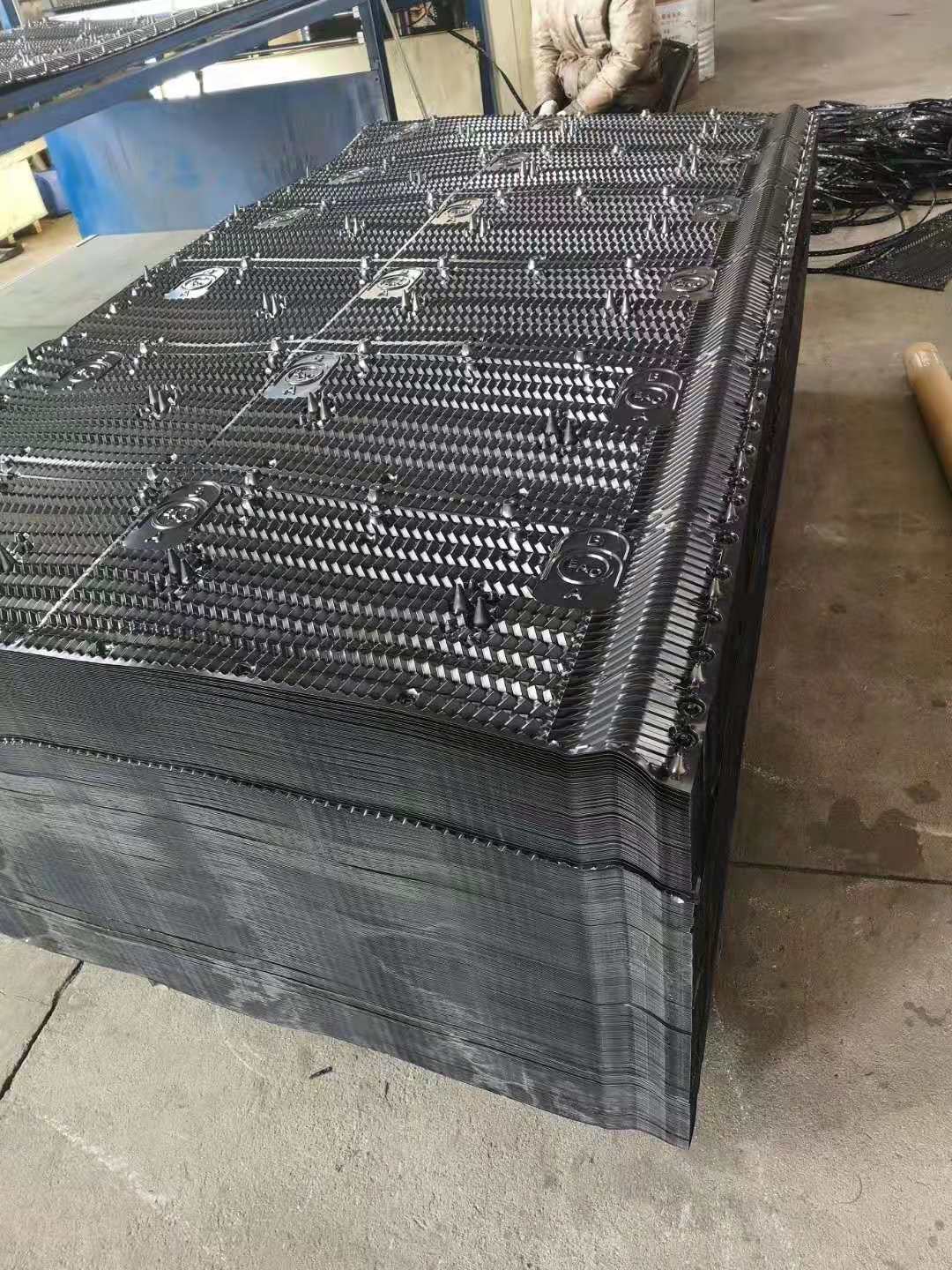
BAC Cooling Tower Fill Replacement: Complete Guide to Cooling Tower Fill
BAC cooling towers are widely used in commercial buildings, industrial facilities, data centers, power plants, and process cooling applications. Over time, the cooling tower fill inside a BAC tower can become damaged, clogged, brittle, or covered with scale and biological deposits. When this happens, BAC cooling tower fill replacement may be necessary to restore heat transfer performance and improve system efficiency.
The cooling tower fill is one of the most important components in a wet cooling tower because it increases the contact area between hot water and air. Properly selected and installed fill can improve cooling performance while helping reduce water and energy consumption.
This guide explains when to replace BAC cooling tower fill, how to select replacement fill, the replacement process, and important maintenance considerations.
What Is BAC Cooling Tower Fill?
BAC cooling tower fill is the heat-transfer media installed inside Baltimore Aircoil Company (BAC) cooling towers. Its primary function is to increase the contact area and contact time between circulating water and airflow.
Instead of allowing water to fall directly through the tower, the fill distributes the water into thin films or droplets. Air moving through the fill removes heat from the water through sensible and evaporative heat transfer.
How Does Cooling Tower Fill Work?
The basic cooling process can be summarized as:
Hot water → Fill media → Air-water contact → Evaporation → Cooled water
The greater the effective contact between water and air, the more efficiently heat can be rejected from the circulating water.
Why Is Cooling Tower Fill Important?
High-quality cooling tower fill can provide:
Increased air-water contact area
Improved heat transfer efficiency
Better water distribution
Lower cooling water temperature
More stable cooling tower operation
Potential energy savings
Improved overall tower capacity
However, the fill must remain clean and structurally intact to maintain its designed performance.
When Should You Consider BAC Cooling Tower Fill Replacement?
Not every cooling tower requires immediate fill replacement. Regular inspection can help determine whether the existing media can continue operating or should be replaced.
1. Fill Is Cracked or Broken
Physical damage is one of the clearest signs that replacement is needed.
PVC or polypropylene fill can become brittle because of long-term exposure to heat, chemicals, UV radiation, and mechanical stress. Broken sheets can collapse and reduce the effective heat-transfer area.
Common Signs of Physical Damage
Look for:
Cracked fill sheets
Broken edges
Collapsed sections
Deformed passages
Missing fill packs
Loose or displaced media
If a large percentage of the fill has been damaged, BAC cooling tower fill replacement is usually more practical than repairing individual sections.
2. Heavy Scale and Mineral Deposits
Hard-water conditions can cause calcium carbonate and other minerals to accumulate on cooling tower fill.
Excessive scale reduces the available surface area and restricts airflow and water flow.
Why Scale Is a Problem
Heavy scaling can lead to:
If chemical cleaning cannot effectively restore the fill, replacement may be the better option.
3. Biological Fouling and Slime
Cooling towers operate in warm and humid environments, making them susceptible to biological growth.
Algae, bacteria, biofilm, and other deposits can accumulate on fill surfaces.
When fouling becomes severe, water cannot spread evenly across the fill, reducing heat-transfer efficiency.
4. Cooling Performance Has Declined
One of the most important indicators is a gradual reduction in cooling performance.
If the tower is receiving the correct water flow and airflow but the leaving-water temperature continues to rise, the fill may be partially blocked or degraded.
Performance Symptoms
You may notice:
Higher cold-water temperature
Reduced approach performance
Longer operating time
Increased fan speed
Higher energy consumption
Difficulty maintaining process temperature
These symptoms do not always mean the fill is the problem, so the entire cooling system should be inspected before replacement.
Benefits of BAC Cooling Tower Fill Replacement
Replacing old fill can provide several operational benefits when the existing media has deteriorated.
Improved Heat Transfer Efficiency
New BAC cooling tower fill provides clean and unobstructed surfaces for water-air contact.
This allows the cooling tower to make better use of its available volume.
Better Water Distribution
Properly designed fill helps spread circulating water across a large surface area.
Uniform water distribution reduces dry spots and improves the consistency of heat transfer throughout the tower.
Reduced Fouling Problems
Old fill may contain accumulated scale, dirt, algae, and other deposits. Replacing it removes much of this accumulated contamination from the heat-transfer section.
Extended Cooling Tower Service Life
Replacing deteriorated fill can help protect other cooling tower components by maintaining proper water and airflow conditions.
A well-maintained fill system can contribute to reliable long-term tower operation.
How to Choose Replacement Fill for a BAC Cooling Tower
Choosing replacement media requires more than simply matching the dimensions of the old fill.
The replacement should be compatible with the cooling tower's operating conditions and water quality.
Match the Original Fill Dimensions
Before ordering replacement fill, measure:
Fill height
Fill width
Fill length
Sheet thickness
Corrugation pattern
Pack configuration
Support arrangement
Incorrect dimensions can create installation problems and affect water and airflow distribution.
Select the Right Fill Type
Different cooling tower applications require different fill designs.
Film Fill
Film fill spreads water into thin layers over a large surface area.
It is commonly used where relatively clean circulating water is available and high heat-transfer efficiency is required.
Splash Fill
Splash fill breaks falling water into droplets as it moves through the tower.
It is generally more tolerant of suspended solids than fine-passage film fill.
Choose the Correct Material
PVC fills for cooling tower applications are widely used because PVC offers a combination of corrosion resistance, chemical resistance, low weight, and cost effectiveness.
Depending on the application, PP or other materials may also be considered.
PVC Cooling Tower Fill
PVC is suitable for many standard industrial and HVAC applications.
Advantages include:
PP Cooling Tower Fill
Polypropylene can be considered for applications involving higher temperatures or specific chemical conditions where PVC may not be the best choice.
Material selection should always be based on the actual operating temperature and water chemistry.
BAC Cooling Tower Fill Replacement Process
A professional replacement project should follow a systematic process to ensure that the new fill performs correctly.
Step 1: Inspect the Existing Cooling Tower
Before removing the old fill, inspect the tower carefully.
Check:
This inspection can identify additional problems that should be corrected during the replacement.
Step 2: Remove the Old Fill
The damaged fill is removed from the tower.
Workers should take care not to damage fill supports, pipes, nozzles, or structural components during removal.
Safety During Fill Removal
Cooling tower fill replacement should be performed with appropriate safety procedures.
Depending on the tower design, workers may be exposed to:
Wet surfaces
Elevated work areas
Chemical residues
Heavy components
Confined spaces
Proper PPE and site-specific safety procedures should be followed.
Step 3: Clean the Fill Area
After removing the old media, clean the support structure and surrounding areas.
Remove:
Dirt
Scale
Sludge
Biological deposits
Broken PVC pieces
A clean installation surface helps ensure that the replacement fill remains stable.
Step 4: Inspect the Fill Supports
Fill supports carry the weight of the fill and circulating water.
Check for Corrosion or Damage
Inspect support beams, grids, clips, and other structural components.
If the support system is damaged, it should be repaired or replaced before installing new fill.
Step 5: Install the New Fill
Install the replacement fill according to the manufacturer's recommended configuration.
The packs should be positioned correctly and supported evenly.
Ensure Proper Alignment
Poorly aligned fill can create:
Step 6: Inspect the Water Distribution System
Before restarting the cooling tower, inspect spray nozzles and distribution pipes.
Clogged or damaged nozzles can reduce the effectiveness of new fill.
Installing new fill without correcting water distribution problems can limit the benefits of the replacement.
Step 7: Test the Cooling Tower
After installation, gradually restart the cooling tower and monitor operating conditions.
Check:
Comparing these values with previous operating data can help determine whether the replacement achieved the expected results.
How Much Does BAC Cooling Tower Fill Replacement Cost?
The cost of BAC cooling tower fill replacement depends on several factors.
Main Cost Factors
These may include:
Cooling tower size
Fill volume
Fill material
Fill thickness
Fill design
Labor costs
Removal and disposal costs
Fill support repairs
Transportation
Site accessibility
For large industrial cooling towers, installation and labor can represent a significant portion of the overall project cost.
Replacement Fill vs. Complete Cooling Tower Replacement
If the tower structure, fan, motor, casing, and water distribution system remain in good condition, replacing the fill may be significantly more economical than replacing the entire cooling tower.
This is why a detailed inspection is important before making a major capital investment.
BAC Cooling Tower Fill Maintenance After Replacement
Installing new fill is only the beginning. Proper maintenance is essential for maximizing service life.
Maintain Good Water Quality
Water chemistry has a major influence on cooling tower fill life.
Control:
Scale formation
Corrosion
Biological growth
Suspended solids
A properly managed water treatment program can help prevent premature fill deterioration.
Clean the Cooling Tower Regularly
Periodic cleaning can prevent excessive accumulation of dirt and biological deposits.
The cleaning frequency should depend on operating conditions and water quality.
Inspect Fill During Routine Maintenance
During scheduled shutdowns, inspect the fill for:
Cracks
Deformation
Fouling
Scale
Blockages
Displacement
Early detection can prevent larger performance problems.
Common Mistakes During Cooling Tower Fill Replacement
Even a high-quality replacement fill can perform poorly if installation is incorrect.
Choosing Fill Based Only on Price
The cheapest fill is not necessarily the most economical option.
Consider the complete lifecycle cost, including:
Initial purchase price
Installation
Energy consumption
Cleaning requirements
Expected service life
Ignoring Water Quality
If severe scaling or biological fouling caused the original fill failure, simply installing new fill without improving water treatment may result in another premature failure.
Using the Wrong Fill Type
Film fill and splash fill are designed for different operating conditions.
The replacement should be selected based on water quality, temperature, airflow, and cooling requirements.
Neglecting Fill Supports
New fill cannot perform reliably if the support structure is corroded or damaged.
Always inspect the support system during replacement.
How to Find a Reliable BAC Cooling Tower Fill Replacement Supplier
When sourcing replacement fill, consider more than product price.
Check Technical Compatibility
Ask the supplier to confirm:
Request Samples or Technical Drawings
For large replacement projects, samples and technical drawings can help confirm compatibility before production.
Provide Your Existing Fill Information
When contacting a supplier, provide:
The more information you provide, the easier it is for the supplier to recommend suitable replacement media.
FAQs
How often should BAC cooling tower fill be replaced?
There is no universal replacement interval. Service life depends on water quality, operating temperature, chemical exposure, maintenance, and fill material. Regular inspection is more reliable than replacing fill based only on age.
Can I replace BAC cooling tower fill with aftermarket fill?
Yes, aftermarket cooling tower fill can be considered when it matches the required dimensions, material, thermal performance, temperature range, and installation configuration.
However, compatibility should be verified before purchase.
What is the best material for cooling tower fill?
PVC is widely used for many cooling tower applications because it offers good heat-transfer performance, corrosion resistance, lightweight construction, and cost effectiveness. PP may be more suitable for certain higher-temperature or chemically demanding applications.
Can damaged cooling tower fill be repaired?
Minor localized damage may sometimes be repaired, but severely cracked, collapsed, or heavily fouled fill generally requires replacement.
Does new fill improve cooling tower efficiency?
New fill can improve cooling performance when the existing media is severely fouled, damaged, or degraded. However, overall tower efficiency also depends on airflow, water distribution, fan performance, water flow, and water chemistry.
Conclusion: Choose the Right BAC Cooling Tower Fill Replacement
BAC cooling tower fill replacement is an important maintenance project when existing fill has become damaged, clogged, scaled, or inefficient. Replacing deteriorated media can restore effective air-water contact and help the cooling tower achieve better thermal performance.
For the best results, choose replacement cooling tower fill based on the tower's dimensions, operating conditions, water quality, and fill design rather than price alone.
Whether you need BAC cooling tower fill, PVC film fill, splash fill, or other PVC fills for cooling tower applications, proper selection, installation, and maintenance are essential for long-term cooling tower performance.