How to Choose Reliable Cooling Tower Fan Blade Manufacturers?
Choosing reliable cooling tower fan balde manufacturers is essential for maintaining stable cooling performance, reducing energy consumption, and extending the service life of industrial cooling systems. A high-quality cooling tower fan must deliver sufficient airflow, withstand demanding operating conditions, and work efficiently with the tower's motor, gearbox, and structural design.
For industrial plants, HVAC systems, power stations, chemical facilities, and commercial buildings, selecting the right manufacturer involves more than comparing prices. Buyers should evaluate manufacturing capabilities, fan blade materials, aerodynamic design, quality control, customization options, and after-sales support.
This guide explains how to identify dependable cooling tower fan manufacturers and select the right fan solution for your cooling tower replacement or new installation project.
Why Is Choosing the Right Cooling Tower Fan Manufacturer Important?
A cooling tower fan plays a major role in moving air through the tower and supporting the heat transfer process. If the fan is poorly designed or incorrectly matched to the cooling system, it may cause insufficient airflow, excessive vibration, high energy consumption, and unnecessary maintenance costs.
How Does Fan Quality Affect Cooling Tower Performance?
The quality of a cooling tower fan directly influences its operational stability and efficiency.
Airflow performance: Properly designed blades help generate the airflow required for effective heat rejection.
Energy efficiency: Efficient blade profiles can reduce the power required to move air through the cooling tower.
Mechanical stability: Accurate manufacturing and balancing help minimize vibration during operation.
Operating life: Corrosion-resistant materials and robust construction improve durability in humid environments.
Maintenance requirements: Reliable components can reduce unexpected shutdowns and replacement frequency.
Why Does Manufacturer Experience Matter?
Experienced cooling tower fan manufacturers understand how blade diameter, pitch angle, rotational speed, motor power, and system resistance interact. They can use these factors to recommend suitable products rather than simply supplying a fan based on its external dimensions.
For buyers managing large industrial cooling systems, this technical knowledge can help prevent costly installation errors and performance problems.
What Should You Look for in Cooling Tower Fan Manufacturers?
Before placing an order, evaluate the manufacturer's technical capabilities, production facilities, quality management, and experience with similar cooling tower applications.
1. Evaluate Manufacturing Capabilities
A reliable manufacturer should have the equipment and technical resources needed to produce consistent cooling tower fan components.
Look for capabilities such as:
Fan blade molding and forming
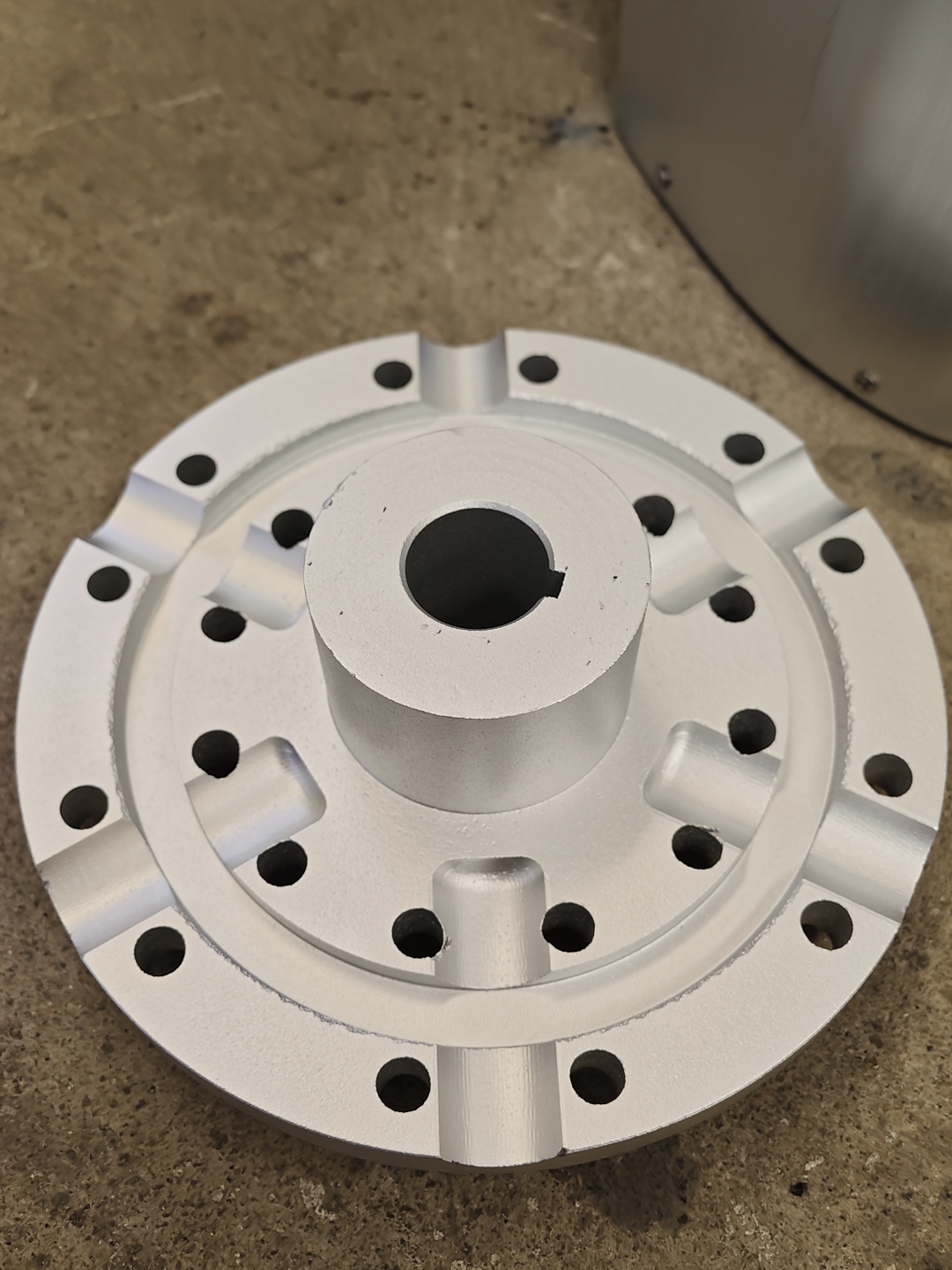
Precision machining of hubs and connecting components
Blade pitch adjustment and assembly
Dynamic or static balancing, as appropriate for the design
Dimensional inspection
Finished-product testing and inspection
Can the Manufacturer Handle Different Fan Specifications?
Industrial cooling towers come in many configurations, including crossflow, counterflow, induced-draft, and forced-draft systems. A qualified manufacturer should be able to evaluate different fan diameters, blade numbers, mounting arrangements, and operating speeds.
Ask whether the supplier can manufacture replacement fans according to drawings, samples, or verified equipment specifications. This is particularly important when replacing an existing fan without changing the original cooling tower structure.
2. Check Product Quality and Inspection Procedures
Quality control should cover the entire production process, from incoming raw materials to final assembly.
What Quality Checks Should Be Available?
Depending on the product design, useful inspection procedures include:
Raw material verification
Blade dimensions and surface inspection
Hub and mounting-hole measurements
Blade pitch consistency
Fan balance testing
Assembly and connection checks
Documentation of inspection results
For large industrial fans, buyers should also confirm whether the manufacturer can provide relevant material certificates, inspection reports, and other technical documents required for the project.
Which Cooling Tower Fan Materials Should You Consider?
Material selection affects fan weight, corrosion resistance, mechanical strength, maintenance requirements, and overall cost. Reliable cooling tower fan manufacturers should explain the advantages and limitations of each material.
FRP Cooling Tower Fan Blades
Fiber-reinforced plastic (FRP) is widely used in industrial cooling tower applications because it offers a favorable combination of strength, corrosion resistance, and relatively low weight.
When Is FRP a Suitable Choice?
FRP fan blades can be suitable for cooling towers operating in humid environments or handling air that may contain corrosive contaminants. Their relatively low weight can also help reduce the mechanical load on supporting components.
However, buyers should verify the resin system, reinforcement structure, temperature limitations, and chemical compatibility before selecting FRP blades.
Aluminum Cooling Tower Fan Blades
Aluminum fan blades are another common option for industrial cooling applications. They offer a good strength-to-weight ratio and can be suitable for applications where low rotating mass and mechanical durability are important.
What Should Buyers Check Before Choosing Aluminum?
Consider the operating environment, corrosion exposure, blade geometry, protective finish, and maintenance requirements. Aluminum alloys do not perform identically under all conditions, so material specifications should match the actual application.
ABS and Other Engineering Plastics
Some cooling tower fan designs use ABS or other engineering plastics. These materials can offer lightweight construction and economical manufacturing for suitable applications.
Buyers should confirm the manufacturer's recommended operating temperature, UV resistance, mechanical properties, and intended service conditions. Not every plastic fan is suitable for high-temperature or heavy-duty industrial cooling towers.
How Can You Compare Different Fan Blade Materials?
| Material | Main advantages | Important considerations |
| FRP | Corrosion resistance and low weight | Resin system, temperature limits, and structural design |
| Aluminum | Good strength-to-weight ratio | Alloy selection, corrosion protection, and fatigue resistance |
| ABS and other plastics | Lightweight and potentially economical | Temperature limits, UV exposure, and mechanical strength |
The best material depends on operating conditions, required airflow, fan diameter, and the cooling tower's original design. A reliable manufacturer should recommend materials based on these factors rather than price alone.
How Do Cooling Tower Fan Manufacturers Improve Energy Efficiency?
Energy efficiency is an important consideration because cooling tower fans may operate for long periods throughout the year. Even a modest reduction in fan power can produce meaningful savings over the equipment's operating life.
Aerodynamic Blade Design
Blade geometry influences airflow, pressure generation, noise, and power consumption. Manufacturers can improve fan performance by optimizing blade shape, chord length, pitch angle, and other design parameters.
Why Is Blade Pitch Important?
Blade pitch affects the angle at which the blade interacts with the moving air. If the pitch is too low, the fan may not deliver enough airflow. If it is too high, the motor may draw excessive power or the fan may operate outside its intended performance range.
Adjustable-pitch fans allow the blade angle to be set within the manufacturer's specified limits. However, adjustments should be based on engineering calculations and actual operating requirements rather than guesswork.
Fan and Motor Matching
A cooling tower fan must be compatible with the motor, gearbox or drive system, and airflow resistance of the tower.
What Happens When a Fan Is Incorrectly Matched?
An unsuitable fan can create excessive motor loading, insufficient airflow, elevated vibration, or inefficient operation. In some cases, the motor may exceed its rated operating limits.
Professional cooling tower fan manufacturers should request key operating data, including fan diameter, rotational speed, required airflow, available motor power, and relevant system resistance information.
Noise and Vibration Control
Fan noise and vibration can affect nearby workers, surrounding buildings, and equipment reliability.
A manufacturer should consider blade geometry, rotational speed, balance quality, structural stiffness, and installation conditions. Proper balancing is especially important for large-diameter fans because small mass imbalances can create significant forces at operating speed.
Can Cooling Tower Fan Manufacturers Provide Customized Solutions?
Customization is often necessary when replacing fans in existing cooling towers or developing equipment for specialized industrial applications.
Custom Fan Diameter and Blade Configuration
Different cooling tower designs require different fan dimensions and performance characteristics. Manufacturers may offer options involving:
What Information Is Needed for a Custom Fan Order?
To reduce communication errors, prepare the following information before requesting a quotation:
Cooling tower brand and model, if available.
Existing fan diameter and number of blades.
Blade material and approximate dimensions.
Hub dimensions and mounting-hole specifications.
Motor power and fan operating speed.
Required airflow or original fan performance data.
Operating temperature and environmental conditions.
Drawings, photographs, or a physical sample when available.
These details help the manufacturer assess compatibility and determine whether a direct replacement or an engineered modification is appropriate.
OEM and Replacement Fan Manufacturing
For OEM equipment manufacturers, consistent product specifications and repeatable production quality are important. For maintenance contractors and industrial end users, dimensional compatibility and reliable delivery may be the main priorities.
How Can Custom Manufacturing Reduce Replacement Risks?
A manufacturer that reviews drawings, checks interfaces, and confirms technical specifications before production can help minimize fitting problems. Buyers should request written confirmation of critical dimensions and performance requirements before approving the order.
A replacement fan should not be selected solely because its diameter matches the original component. Blade geometry, rotation direction, operating speed, hub configuration, and system resistance must also be considered.
How Should You Evaluate a Cooling Tower Fan Manufacturer's Experience?
A supplier's experience can provide useful evidence of its ability to support industrial projects. However, buyers should verify specific capabilities rather than relying only on marketing claims.
Review Relevant Industry Applications
Look for experience with cooling towers used in:
Power generation
Chemical and petrochemical plants
Steel and metallurgical facilities
HVAC and commercial buildings
Food and beverage processing
Manufacturing plants
Water treatment facilities
What Questions Should You Ask the Supplier?
Ask whether the manufacturer has supplied fans for similar tower types, operating temperatures, and environmental conditions. You can also request technical case studies, product references, or anonymized project examples where commercially appropriate.
Experience with comparable installations is generally more useful than a long customer list without technical details.
Assess Engineering and Technical Support
A dependable supplier should be able to answer questions about fan selection, installation interfaces, operating limitations, and maintenance.
For more complex projects, confirm whether the manufacturer can provide technical drawings, installation recommendations, inspection documentation, and assistance with replacement specifications.
How Do You Compare Cooling Tower Fan Manufacturers on Price and Delivery?
Price is important, but the lowest quotation does not necessarily offer the best value. Buyers should compare products on an equivalent technical basis.
Compare Quotations Using the Same Specifications
When requesting offers from multiple cooling tower fan manufacturers, provide the same technical requirements to each supplier.
Which Costs Should Be Included?
A comprehensive comparison should consider:
Fan blades and hub assembly
Required accessories and fasteners
Custom tooling or engineering charges, if applicable
Inspection and documentation
Protective packaging
Shipping and insurance
Import duties and local taxes, where applicable
Spare parts and after-sales support
A quotation that excludes essential accessories or inspection requirements may appear cheaper initially but create additional costs later.
Confirm Production Lead Time and Shipping Arrangements
For replacement projects, delivery delays can extend cooling tower downtime. Ask the supplier to confirm the production schedule, inspection period, packaging method, and estimated shipping arrangements.
How Can Export Buyers Reduce Delivery Risks?
International buyers should confirm the delivery term, shipping destination, packaging dimensions, gross weight, and required export documents before placing an order.
For urgent maintenance projects, it is also useful to ask whether the manufacturer can prioritize production or provide compatible replacement components from available stock. Any promised delivery date should be confirmed in writing.
What Are the Warning Signs of an Unreliable Cooling Tower Fan Manufacturer?
Identifying potential problems before placing an order can help protect your project budget and operating schedule.
Incomplete Technical Information
Be cautious if a supplier quotes a fan without requesting essential specifications or confirming the application.
Why Is This a Concern?
Fan performance depends on more than its external size. Without information about rotational speed, blade design, mounting interfaces, and required airflow, the supplier may recommend a product that does not perform correctly in the existing tower.
Unclear Quality Control
A manufacturer that cannot explain its inspection procedures or provide reasonable product documentation may create unnecessary risks.
Ask for clear specifications, inspection criteria, and confirmation of critical dimensions before production.
Unrealistic Performance Claims
Claims of extremely low energy consumption, unusually high airflow, or guaranteed efficiency improvements should be supported by appropriate technical data.
Buyers should request performance curves, test conditions, or documented comparisons where relevant. Results depend on the complete cooling tower system, not just the fan component.
Poor Communication and Unclear Warranty Terms
Reliable suppliers should communicate clearly about specifications, order progress, delivery dates, and technical limitations.
Before ordering, review the warranty period, coverage, exclusions, claim procedure, and availability of replacement parts.
How Can You Maintain Cooling Tower Fans After Installation?
Even a high-quality fan requires appropriate installation and maintenance. Regular inspections can help identify early signs of wear, imbalance, corrosion, and mechanical damage.
Conduct Routine Visual Inspections
Check the fan blades, hub, fasteners, supports, and nearby components for visible cracks, deformation, corrosion, or looseness.
What Should You Check During Operation?
Where safe and appropriate, monitor abnormal noise, vibration, motor current, and operating temperature. Always follow the equipment manufacturer's procedures and applicable site safety requirements.
Inspect Fan Balance and Mechanical Connections
Deposits, blade damage, loose fasteners, and uneven wear can affect balance. If vibration increases unexpectedly, investigate the cause rather than continuing to operate the fan without assessment.
Why Is Professional Inspection Important?
Large industrial fans store significant rotational energy. Inspection, cleaning, adjustment, and repair should be performed only after the equipment has been safely isolated and stopped according to the site's lockout and safety procedures.
Never adjust blade pitch or enter a fan assembly while it is running.
Keep Maintenance Records
Record inspection dates, vibration measurements, motor current, repairs, and component replacements. These records can help identify recurring problems and support maintenance planning.
Why Choose an Experienced Cooling Tower Fan Manufacturer for Your Project?
The right manufacturer should combine suitable materials, dependable production processes, engineering knowledge, and responsive customer support. These capabilities are particularly valuable when a fan must match an existing cooling tower or operate under demanding industrial conditions.
For international buyers, a supplier that understands export packaging, technical documentation, customized specifications, and replacement requirements can also simplify the procurement process.
What Should Your Final Supplier Checklist Include?
Before confirming an order, verify that the manufacturer can provide:
Suitable fan materials for the operating environment
Correct fan dimensions and mounting interfaces
Appropriate blade design and operating specifications
Relevant manufacturing and inspection capabilities
Technical support for selection and installation
Clear quotation terms and delivery schedules
Written warranty conditions
Replacement parts and after-sales assistance
Conclusion
Choosing reliable cooling tower fan manufacturers requires a careful assessment of technical expertise, product quality, material selection, energy efficiency, customization capabilities, and commercial reliability.
Rather than choosing a supplier based on price alone, compare manufacturers using consistent specifications and verified technical information. Confirm fan diameter, blade configuration, operating speed, motor compatibility, and mounting dimensions before approving production.
Whether you need FRP cooling tower fan blades, aluminum fan blades, customized fan assemblies, or replacement fans for industrial cooling systems, working with a qualified manufacturer can help improve operational reliability, reduce avoidable maintenance costs, and support long-term cooling performance.
If you are sourcing cooling tower fans for a new installation or replacement project, prepare your equipment specifications and consult a manufacturer about the most suitable solution for your application.