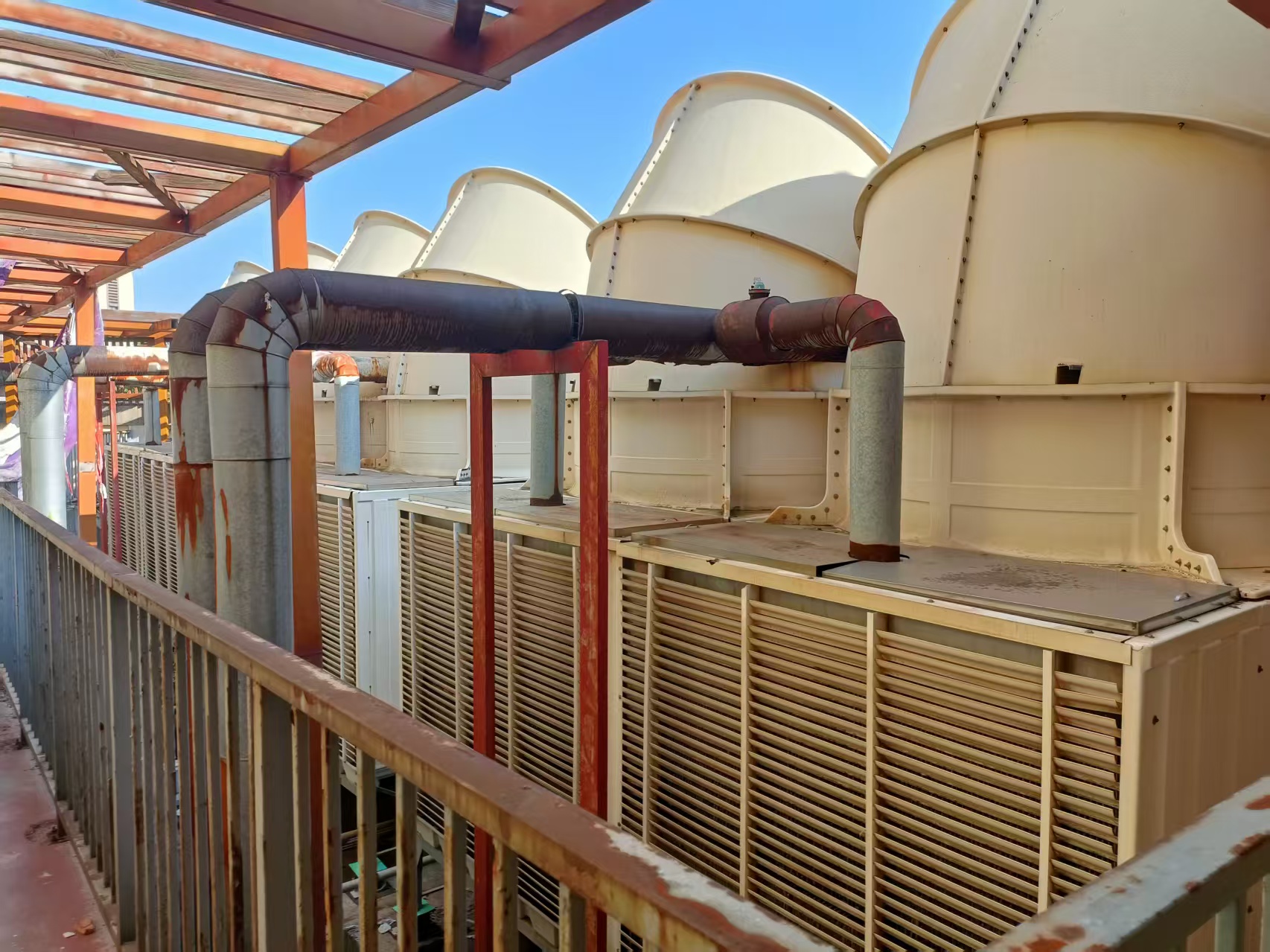
Why Is Choosing the Right Cooling Tower Fills Supplier Important?
Selecting the right cooling tower fills supplier is an important decision for industrial facilities, HVAC contractors, cooling tower manufacturers, maintenance companies, and equipment distributors. Cooling tower fills play a vital role in heat transfer by increasing the contact area between water and air, allowing heat to dissipate more effectively during the cooling process. The quality, design, and material of the fill media can directly influence cooling efficiency, water distribution, airflow resistance, and long-term operating costs.
A reliable supplier does more than provide replacement components. The right partner can help customers select suitable fill materials, confirm product dimensions, improve installation compatibility, and maintain consistent product quality across different projects.
Whether you are constructing a new cooling tower, upgrading an existing system, or replacing damaged fill media, finding a suitable cooling tower fills supplier can help reduce purchasing risks and support reliable system performance.
How Does Cooling Tower Fill Quality Affect System Performance?
Cooling tower fill media creates a larger surface area for water to interact with moving air. Depending on the fill design, water spreads across sheets, forms thin films, or breaks into droplets, promoting heat and mass transfer.
High-quality fill media offers several advantages:
Improved heat transfer: Properly designed fill surfaces encourage effective contact between water and air.
Stable cooling performance: Uniform sheet spacing and consistent geometry help maintain predictable operating conditions.
Appropriate airflow resistance: Well-designed fill structures balance heat transfer efficiency with the pressure drop required by the system.
Better resistance to operating conditions: Suitable materials help withstand moisture, temperature fluctuations, and chemical exposure within specified limits.
Reduced maintenance requirements: Appropriate fill selection can reduce problems associated with premature deformation, fouling, and frequent replacement.
Why Should Buyers Avoid Choosing a Supplier Based on Price Alone?
The lowest quotation does not always represent the lowest total cost. Inexpensive fill media may have inconsistent sheet thickness, inaccurate dimensions, unsuitable material properties, or insufficient structural stability.
These problems can create installation difficulties and reduce cooling performance. In some cases, customers may need to replace the fill earlier than expected, increasing labor, transportation, and downtime expenses.
A better purchasing decision considers product quality, technical compatibility, service life under actual operating conditions, and the supplier's ability to provide technical support.
What Types of Cooling Tower Fills Should You Consider?
Before choosing a cooling tower fills supplier, buyers should understand the main fill types available. Different cooling tower designs, water qualities, operating temperatures, and maintenance requirements call for different fill configurations.
Film Fill for Efficient Heat Transfer
Film fill is widely used in industrial and commercial cooling towers. It distributes water over the surfaces of closely spaced sheets, forming thin films that create extensive contact between water and air.
This design can provide high heat transfer efficiency within a relatively compact installation space.
When Is Film Fill the Right Choice?
Film fill is often suitable for applications where water quality can be adequately controlled and suspended solids are limited.
Typical applications include:
Commercial HVAC cooling towers
Industrial process cooling systems
Power generation auxiliary cooling
Manufacturing facilities
Data center cooling systems
However, narrow passages can become blocked when circulating water contains excessive sediment, biological growth, or other deposits. Buyers should evaluate water quality and maintenance capabilities before selecting a film fill configuration.
Splash Fill for Challenging Water Conditions
Splash fill cools water by breaking it into smaller droplets as it passes over specially designed bars, grids, or other surfaces. The resulting water distribution and increased contact with air support heat transfer.
Splash fill is commonly considered for applications where water contains more suspended solids or where resistance to clogging is an important priority.
What Are the Main Advantages of Splash Fill?
Splash fill generally has a more open structure than conventional film fill, which can make it easier to maintain in certain operating environments.
Potential benefits include:
Greater tolerance for some fouling conditions
Reduced dependence on narrow water passages
Flexible configurations for different tower designs
Suitability for selected industrial applications with challenging water quality
The actual performance depends on the splash fill design, tower configuration, water distribution system, and operating conditions. It should not be assumed that every splash fill performs better than every film fill.
Crossflow and Counterflow Cooling Tower Fills
Cooling tower fills are also selected according to the direction of airflow relative to the water flow.
Crossflow Fill
In a crossflow cooling tower, air generally moves horizontally through the fill while water flows downward. Fill media must work with the tower's water distribution arrangement and available airflow path.
Crossflow fill replacement requires careful attention to block dimensions, sheet orientation, support arrangements, and the original tower configuration.
Counterflow Fill
In a counterflow cooling tower, air moves upward through the fill while water flows downward. The two streams travel in opposite directions, supporting heat and mass transfer.
Counterflow fill must be compatible with the tower's internal layout, water distribution system, airflow requirements, and support structure.
When comparing suppliers, customers should confirm whether the proposed fill media is specifically suitable for their crossflow or counterflow system rather than relying on general product descriptions.
Which Material Is Best for Cooling Tower Fill Media?
Material selection is another major consideration when evaluating a cooling tower fills supplier. PVC and PP are two commonly used thermoplastics, but their suitability depends on temperature, chemical exposure, mechanical requirements, and the specific product formulation.
PVC Cooling Tower Fill
Polyvinyl chloride (PVC) is widely used for cooling tower fill because of its practical balance of cost, formability, and performance in many conventional cooling applications.
PVC fill media can be manufactured into corrugated sheets and assembled into configurations designed to promote water distribution and heat transfer.
Benefits of PVC Fill Media
PVC cooling tower fill offers several potential advantages:
Cost-effective solutions for many standard applications
Flexible design options for different tower layouts
Established manufacturing processes
Availability in different sheet thicknesses and configurations
Suitability for many commercial HVAC and industrial cooling systems
Nevertheless, PVC fill should be selected according to its rated operating temperature and chemical compatibility. High-temperature applications require particular attention to material specifications and deformation resistance.
PP Cooling Tower Fill
Polypropylene (PP) is another important material used in cooling tower fill manufacturing. Depending on the formulation and product design, PP may offer advantages in certain elevated-temperature or chemically demanding environments.
When Should Buyers Consider PP Fill?
PP fill may be worth evaluating when a cooling tower operates under conditions that exceed the practical limits of a proposed PVC product.
Before selecting PP, buyers should check:
Maximum continuous operating temperature
Chemical compatibility with circulating water
Sheet stiffness and dimensional stability
Flame-retardant requirements, where applicable
Product availability and total project cost
PP is not automatically the best choice for every demanding application. Actual performance depends on the grade, formulation, sheet geometry, manufacturing process, and operating environment.
PVC vs. PP Cooling Tower Fill: What Should You Compare?
Comparison factor | PVC fill | PP fill |
Typical applications | Many standard cooling systems | Selected demanding industrial applications |
Cost considerations | Often economical for conventional projects | May involve a higher initial cost, depending on specifications |
Temperature suitability | Must remain within the product's rated limits | Can be suitable for some higher-temperature conditions |
Chemical resistance | Depends on the chemical and formulation | Depends on the chemical and formulation |
Customization | Available in multiple configurations | Available in multiple configurations |
Final selection | Based on application requirements | Based on application requirements |
The best material is the one that meets the actual operating requirements while providing acceptable installation, maintenance, and lifecycle costs.
How Can You Evaluate a Reliable Cooling Tower Fills Supplier?
Finding a reliable cooling tower fills supplier requires more than reviewing a product catalog. Buyers should examine manufacturing capabilities, quality management, technical knowledge, customization options, and delivery performance.
Check Manufacturing Experience and Production Capabilities
An experienced supplier should understand the relationship between fill geometry, water distribution, airflow resistance, and cooling performance.
Manufacturing capabilities may include sheet extrusion, vacuum forming or thermoforming, cutting, bonding, block assembly, dimensional inspection, and packaging.
What Questions Should You Ask About Production?
Before placing an order, consider asking:
Does the supplier manufacture fill media directly or source it from another producer?
Can it provide PVC and PP options?
Can it manufacture according to supplied drawings and dimensions?
Does it have experience with crossflow and counterflow configurations?
Can it support repeat orders with consistent specifications?
Does it have a documented inspection process?
These questions help determine whether the supplier can meet the technical and commercial requirements of your project.
Review Quality Control Procedures
Quality control is essential because small manufacturing inconsistencies can affect installation and operation.
A professional cooling tower fills supplier should be able to explain how it checks raw materials, finished sheets, assembled blocks, and completed orders.
Which Quality Indicators Matter Most?
Important inspection items may include:
Sheet thickness and thickness consistency
Sheet dimensions and corrugation geometry
Bonding strength and block integrity
Dimensional tolerances
Material identification and traceability
Appearance, deformation, and visible defects
Packaging integrity before shipment
For projects with specific performance requirements, buyers should also request relevant technical data and supporting test documentation.
A supplier's quality claims should be supported by verifiable specifications, inspection records, and test results where appropriate.
Evaluate Technical Support and Communication
Clear technical communication can prevent costly mistakes before manufacturing begins.
The supplier should be willing to review the existing cooling tower design, clarify missing specifications, and identify possible compatibility issues.
Why Is Pre-Order Technical Confirmation Necessary?
A fill block may look similar to the original component but still differ in height, width, length, sheet spacing, or airflow characteristics. Even small differences can affect installation and water distribution.
Before production, both parties should confirm the drawing, material, dimensions, quantity, tolerances, and any special operating requirements.
What Information Should You Provide When Requesting a Quotation?
A detailed inquiry helps a cooling tower fills supplier prepare a more accurate quotation and reduces repeated clarification.
Essential Product Specifications
Customers should provide as much of the following information as possible:
Cooling tower manufacturer and model
Crossflow or counterflow configuration
Required fill type
PVC or PP material preference
Fill block length, width, and height
Sheet thickness or other specified material parameters
Required quantity
Operating water temperature
Water quality and potential fouling conditions
Existing drawings, photographs, or sample dimensions
Destination port or delivery address
Required delivery date
If the original specifications are unavailable, photographs and measurements of the existing fill may help the supplier conduct an initial assessment. Final dimensions should still be verified before manufacturing.
How Do Accurate Specifications Improve Purchasing Efficiency?
Complete technical information enables the supplier to determine whether a standard product is suitable or whether customization is necessary.
It also helps buyers compare quotations on an equivalent basis. One supplier may quote a different sheet thickness, block size, material grade, or packing arrangement from another, making headline prices difficult to compare.
A structured inquiry allows the purchasing team to evaluate the actual scope of each offer.
Why Are Custom Cooling Tower Fills Important for Replacement Projects?
Replacement projects often present more challenges than new installations because the original tower may have been operating for many years. Drawings may be missing, dimensions may have changed, and the replacement product may need to fit an existing support structure.
A capable cooling tower fills supplier should be able to assess these factors before recommending a product.
Matching Replacement Fill to Existing Equipment
The first step is to identify the original fill arrangement and confirm the available installation space.
What Should Be Checked Before Replacement?
The following details deserve particular attention:
1. Overall dimensions: Verify the length, width, and height of each fill block.
2. Sheet arrangement: Confirm the sheet spacing, corrugation pattern, orientation, and assembly method.
3. Material compatibility: Select a material suitable for the circulating water and operating temperature.
4. Support structure: Check whether the existing supports can safely accommodate the replacement blocks.
5. Water distribution: Ensure that the new fill arrangement remains compatible with the distribution system.
6. Airflow requirements: Avoid introducing excessive airflow resistance or obstructing the tower's intended air path.
Can Replacement Fill Improve Cooling Tower Performance?
Replacing deteriorated, scaled, or damaged fill media can help restore heat transfer performance when the fill is a major cause of reduced efficiency.
However, poor cooling may also result from fan problems, inadequate water flow, blocked nozzles, scale accumulation, or other mechanical issues. Replacing the fill alone will not necessarily resolve every performance problem.
A thorough assessment helps determine whether fill replacement is the most appropriate solution.
Customization for Different Cooling Tower Models
A supplier may offer customized dimensions, sheet configurations, block arrangements, and material options to match project requirements.
Customization is particularly valuable for older cooling towers, non-standard installations, and replacement projects where original components are difficult to source.
Customers should provide drawings or verified measurements whenever possible. The supplier should confirm the final design before production to minimize dimensional errors and installation delays.
How Do Delivery and Packaging Affect Supplier Selection?
Cooling tower fill media is often bulky relative to its weight. As a result, packaging and shipping arrangements can significantly affect the overall purchase cost.
A competitive quotation should account for product quantity, packing density, transport method, and delivery destination.
Packaging for International Shipments
Proper packaging helps protect fill sheets and assembled blocks from crushing, deformation, moisture exposure during transit, and handling damage.
What Should Buyers Confirm About Packaging?
Before shipment, verify:
Packaging dimensions and total shipment volume
Number of blocks or bundles per pallet
Pallet dimensions and loading configuration
Container loading plan, where applicable
Moisture protection and edge protection
Product labels and packing lists
Whether the shipment can be unloaded safely at the destination
For international orders, the supplier should provide a packing list and estimated shipment details to support freight planning.
Delivery Time and Production Scheduling
Lead time can depend on raw material availability, customization requirements, production capacity, order quantity, and shipping arrangements.
For large projects, buyers should confirm whether the supplier can manufacture and deliver the full quantity within the required schedule.
Why Should Buyers Consider Long-Term Supply Stability?
Cooling tower maintenance may require replacement components years after the initial purchase. Consistent specifications and reliable documentation make future procurement easier.
For distributors and OEM customers, a stable supply relationship can also simplify inventory planning, product standardization, and repeat ordering.
How Can You Compare Cooling Tower Fills Suppliers More Effectively?
A structured supplier evaluation helps purchasing teams balance price, technical suitability, quality, and service.
Compare Total Cost Instead of Unit Price
The actual cost of a fill replacement project may include:
Fill media purchase price
Custom manufacturing charges
Packaging and pallet costs
International freight and insurance
Import duties and local handling
Installation labor
Maintenance and expected replacement frequency
A supplier offering a slightly higher product price may still provide better overall value if it delivers more consistent quality, more suitable specifications, and fewer installation complications.
Use a Supplier Evaluation Checklist
The following checklist can help you compare potential suppliers systematically.
Evaluation item | What to verify |
Product range | PVC, PP, film fill, splash fill, and relevant configurations |
Technical compatibility | Dimensions, tower type, material, and operating conditions |
Manufacturing capability | Production processes and customization capacity |
Quality assurance | Inspection procedures and supporting documentation |
Quotation clarity | Material, dimensions, quantity, packing, and delivery terms |
Communication | Response time and technical understanding |
Logistics | Packaging, shipment planning, and lead time |
After-sales support | Assistance with installation questions and future orders |
For major industrial projects, consider requesting samples, reviewing technical drawings, or conducting a factory or quality assessment when practical.
Which Industries Need a Reliable Cooling Tower Fills Supplier?
Cooling tower fill media is used across a wide range of industries. The ideal product depends on each facility's cooling load, water quality, temperature range, maintenance practices, and tower design.
HVAC and Commercial Buildings
Office buildings, shopping centers, hotels, hospitals, and other commercial facilities use cooling towers to reject heat from air-conditioning systems.
For these applications, buyers often prioritize dependable cooling performance, compatibility with existing equipment, and reasonable maintenance requirements.
Power Generation and Energy Facilities
Power plants and energy facilities may require cooling tower fill that can operate reliably under demanding conditions.
Selection should consider operating temperatures, water chemistry, fouling potential, and the manufacturer's technical specifications.
Chemical and Process Industries
Chemical processing and industrial manufacturing facilities may expose cooling tower components to particular water chemistries or contaminants.
Material selection should be based on documented chemical compatibility and operating limits rather than general claims about corrosion resistance.
Data Centers and Industrial Production
Data centers, factories, and production facilities rely on consistent heat rejection to support their operations.
For these users, fill selection should be integrated into the overall cooling system assessment, including airflow, water distribution, thermal load, and maintenance access.
Why Work with a Supplier Offering Customized Cooling Tower Fill Solutions?
Standard products can be appropriate for many applications, but complex industrial projects may require more specific dimensions or performance characteristics.
A supplier with customization capabilities can help match fill media to the installation space and operating requirements.
OEM and Distributor Supply
OEM manufacturers and cooling tower parts distributors often need repeatable specifications, consistent quality, and reliable production schedules.
A suitable supplier should be able to maintain product consistency across batches and provide clear identification for different product models.
What Makes a Supplier Suitable for Long-Term Cooperation?
Look for a partner that can support:
Repeat production according to approved specifications
Customized fill blocks for different tower models
Technical documentation for purchasing and maintenance teams
Clear order confirmation and production updates
Appropriate packaging for export shipments
Responsive communication when specifications change
A long-term relationship is most valuable when technical requirements and commercial expectations are clearly documented.
Common Mistakes to Avoid When Choosing a Cooling Tower Fills Supplier
Even experienced purchasing teams can encounter problems when technical checks are overlooked.
Choosing Fill Media Without Checking Water Quality
A fill type that performs well in clean water may be unsuitable for water containing high levels of suspended solids or biological material.
Always consider fouling risks and the facility's water treatment program.
Assuming All PVC and PP Products Are Equivalent
Material names alone do not guarantee equivalent performance. Product formulations, sheet thicknesses, geometry, and manufacturing quality can vary significantly.
Request detailed specifications before making a final decision.
Ignoring Installation Compatibility
Incorrect block dimensions or sheet orientation can lead to rework, gaps, or installation delays.
Confirm all critical measurements before production and shipment.
Overlooking Shipping and Handling Costs
Bulky fill media can incur substantial freight and handling costs. Comparing product prices without considering packaging and logistics may result in an inaccurate project budget.
Failing to Confirm the Final Specification
Verbal descriptions are not always sufficient for customized orders.
Use an approved drawing or written specification that records dimensions, material, quantity, tolerances, packaging, and delivery requirements.
Conclusion: How Can You Find the Best Cooling Tower Fills Supplier for Your Needs?
Finding the best cooling tower fills supplier requires a balanced assessment of product quality, material selection, technical expertise, customization capabilities, pricing, and delivery reliability.
Start by identifying your cooling tower configuration, operating conditions, and replacement requirements. Then compare suppliers based on their ability to provide suitable PVC or PP fill media, verify product dimensions, maintain quality consistency, and support the project from quotation through delivery.
For industrial users, OEM manufacturers, contractors, and distributors, the right supplier should offer more than competitive pricing. It should provide clear specifications, practical technical guidance, dependable manufacturing, and a reliable supply process.
By evaluating these factors carefully, buyers can make more informed purchasing decisions, reduce avoidable installation risks, and support efficient cooling tower operation over the long term.
When sourcing cooling tower fill media for a new installation or replacement project, request a detailed quotation based on your tower model, required dimensions, material preferences, quantity, and operating conditions. A well-defined specification is the first step toward finding a suitable supplier and achieving a successful project outcome.