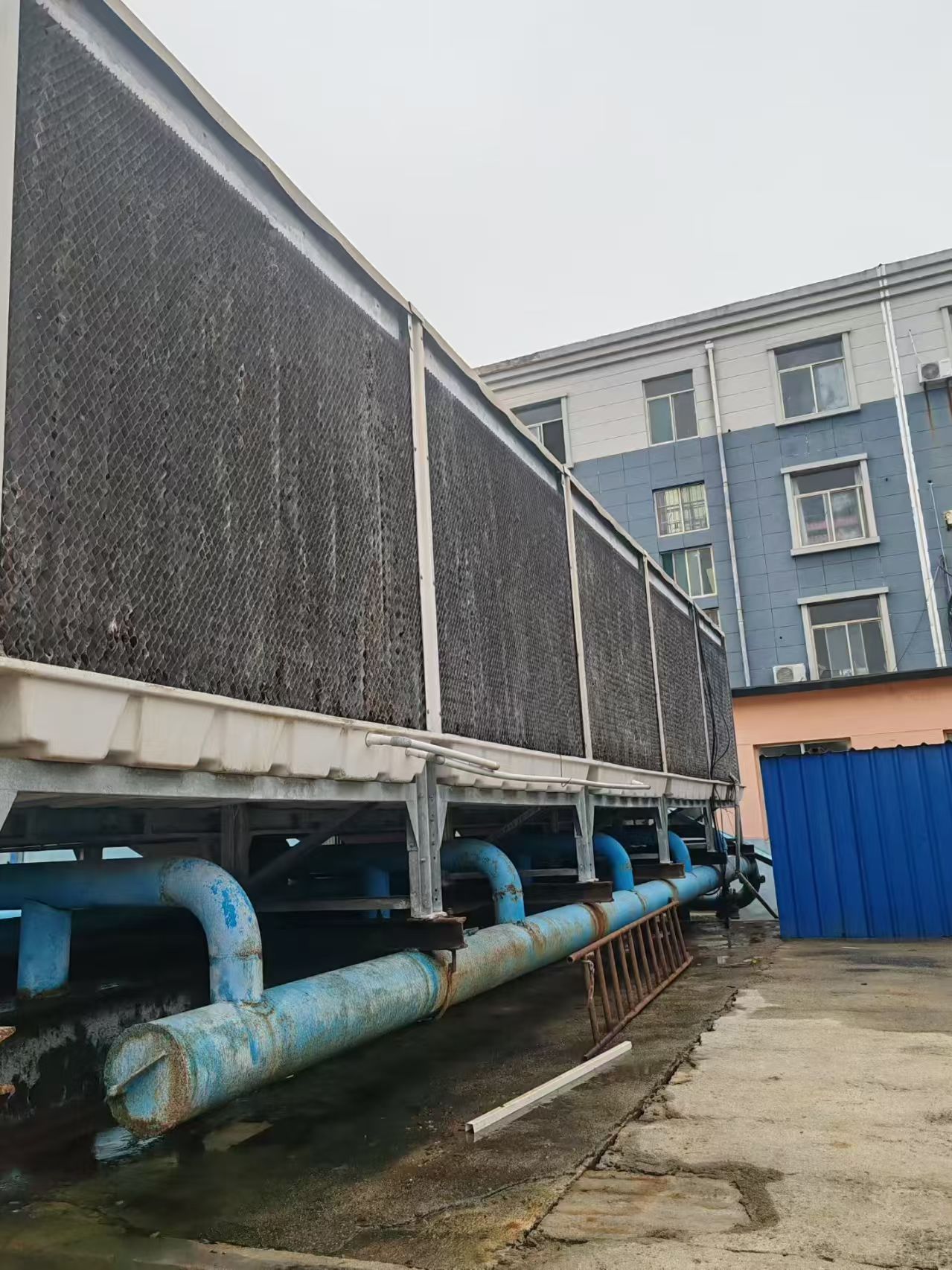
Why Is Cooling Tower Filler Replacement Important for Industrial Systems?
Cooling tower filler plays a critical role in industrial heat rejection by increasing the contact area between circulating water and air. When hot water flows over the fill surface, heat transfers to the air, allowing a portion of the water to evaporate and reducing the temperature of the remaining water. Over time, however, cooling tower filler can deteriorate because of continuous operation, water quality issues, chemical exposure, and mechanical stress.
For industrial facilities, damaged or inefficient fill can lead to higher operating temperatures, unstable cooling performance, increased energy consumption, and unexpected maintenance costs. Replacing the fill at the right time helps restore thermal performance and supports reliable operation.
A professional industrial cooling tower filler supplier does more than provide replacement materials. A reliable supplier helps customers identify suitable fill types, confirm dimensions, evaluate material compatibility, and plan replacement projects according to actual operating conditions.
What Problems Can Worn Cooling Tower Filler Cause?
Several problems may indicate that existing fill needs inspection or replacement.
Reduced Heat Transfer Efficiency
As deposits accumulate on fill surfaces, the effective contact area between water and air decreases. Water may also distribute unevenly, creating dry areas and reducing the effectiveness of the cooling process.
Blockage and Restricted Airflow
Scale, biological growth, suspended solids, and other contaminants can obstruct narrow fill passages. Blockage increases airflow resistance and may affect fan performance, water distribution, and cooling capacity.
Structural Damage and Material Aging
Long-term exposure to heat, ultraviolet radiation, chemicals, and mechanical loads can cause plastic fill sheets to deform, crack, or become brittle. Damaged sheets may collapse under operating loads and create uneven water flow.
Higher Maintenance and Operating Costs
Repeated cleaning, emergency repairs, and unplanned shutdowns can cost more than a properly planned replacement project. Selecting suitable replacement fill can help reduce maintenance frequency and improve equipment reliability.
What Should an Industrial Cooling Tower Filler Supplier Provide?
Choosing the right supplier is an important step in a successful replacement project. Industrial cooling towers differ in design, capacity, water quality, operating temperature, and installation requirements. Replacement materials should therefore be selected according to the specific cooling system rather than price alone.
Technical Support for Replacement Projects
An experienced supplier should understand the relationship between fill geometry, water distribution, airflow resistance, and thermal performance.
Cooling Tower Model and Existing Fill Assessment
Before recommending a product, the supplier should collect relevant information about the cooling tower, including the manufacturer, model, cooling configuration, existing fill dimensions, and operating conditions.
When the original equipment documentation is unavailable, photographs, drawings, samples, and on-site measurements can help establish the replacement requirements.
Dimensional Compatibility
Replacement fill must fit the available installation space and work with the existing support structure and water distribution arrangement.
Important dimensions include sheet length, width, thickness, block height, flute geometry, and assembled block size. Incorrect dimensions can cause installation difficulties, gaps, uneven water distribution, or unsupported sections.
Material and Operating Condition Matching
A suitable supplier should recommend materials according to water chemistry, temperature, exposure conditions, and maintenance practices. PVC and PP are common choices, but their suitability depends on the actual operating environment.
Customized Cooling Tower Filler Solutions
Standard fill products may not fit every industrial cooling tower. Customized solutions are useful when replacing discontinued products, repairing older towers, or upgrading systems with nonstandard dimensions.
Custom Dimensions and Fill Geometry
A supplier may provide customized sheet sizes, flute patterns, block dimensions, and assembly configurations. These details help ensure that replacement fill fits the original tower layout.
Crossflow and Counterflow Compatibility
Crossflow cooling towers generally allow air to move horizontally through the fill while water flows downward. Counterflow towers move air upward against descending water.
The two configurations may require different fill geometries, support arrangements, and water distribution considerations. A replacement product should be selected for the intended airflow and water flow pattern.
How to Select the Right Cooling Tower Filler Material
Material selection influences durability, installation requirements, chemical resistance, and expected service life. PVC and PP are widely used for industrial cooling tower fill, but neither material is ideal for every application.
PVC cooling tower filler is widely used in industrial and commercial cooling systems because it offers a practical balance of cost, formability, and heat transfer surface design.
Main Advantages of PVC Fill
Suitable for many conventional industrial cooling applications.
Available in different sheet thicknesses and flute configurations.
Can be manufactured into crossflow and counterflow fill designs.
Often provides a cost-effective option for routine replacement projects.
Supports compact fill arrangements with substantial surface area for water-air contact.
When Should Buyers Choose PVC Fill?
PVC may be suitable for systems operating within the material's specified temperature and chemical limits. Before purchasing, buyers should confirm the maximum operating temperature, water treatment conditions, fire performance requirements, and compatibility with existing tower components.
Polypropylene cooling tower filler is another common option, particularly when operating conditions require different material characteristics.
Key Benefits of PP Fill
Offers good resistance to many chemicals, depending on the specific chemical and concentration.
Can be suitable for certain higher-temperature applications when the product is specifically engineered for them.
Provides flexibility in customized fill manufacturing.
Can be considered for replacement projects where PVC does not meet the required operating conditions.
How to Evaluate PP Fill for Replacement
Buyers should verify the actual service temperature, chemical compatibility, mechanical strength, and dimensional stability of the selected product. Not every PP fill product is suitable for high-temperature service, and performance depends on the formulation, design, and operating environment.
PVC vs. PP: Which Material Is Better?
Comparison factor | PVC fill | PP fill |
Typical application | General industrial and HVAC cooling | Industrial systems with specific material requirements |
Cost considerations | Often economical for standard applications | Depends on grade, design, and manufacturing requirements |
Temperature suitability | Must remain within the product's rated limits | Some grades support higher temperatures than conventional PVC products |
Chemical resistance | Depends on water chemistry and formulation | Depends on chemical type, concentration, and temperature |
Customization | Available in multiple geometries | Available in multiple geometries |
Selection priority | Cost and compatibility with standard operating conditions | Specific thermal, chemical, or project requirements |
The best material is the one that satisfies the project's technical requirements and lifecycle cost objectives. Buyers should compare documented product specifications instead of assuming that one plastic material is always superior.
Which Types of Cooling Tower Filler Are Suitable for Replacement Projects?
The correct fill design depends on the tower configuration, water quality, thermal duty, and available space. An industrial cooling tower filler supplier should evaluate these factors before recommending a replacement.
Film Fill for Efficient Heat Transfer
Film fill spreads water into thin layers across closely spaced surfaces, increasing the contact area between water and air.
Applications of Film Fill
Film fill is commonly used in systems where water quality and maintenance practices support relatively narrow flow passages. It can provide high heat transfer performance in a compact installation.
However, film fill may be vulnerable to clogging when circulating water contains substantial suspended solids, fibrous material, or biological deposits. Water treatment and filtration should be considered before selecting it.
Splash Fill for Challenging Water Conditions
Splash fill breaks falling water into droplets as it passes through successive splash bars or other specially designed surfaces.
When Is Splash Fill Appropriate?
Splash fill may be considered for cooling towers with more challenging water conditions or a greater risk of fouling. Its suitability depends on the specific fill design, water quality, thermal requirements, and structural arrangement.
A switch from film fill to splash fill is not always a direct replacement. The tower may require engineering evaluation to confirm that the alternative can meet the required cooling duty and fit the existing support system.
Crossflow and Counterflow Fill Designs
Crossflow Fill Replacement
Crossflow fill is commonly arranged so that water moves vertically downward while air passes horizontally through the fill. Replacement planning should consider the fill orientation, air inlet configuration, water distribution system, and access for installation.
Counterflow Fill Replacement
Counterflow fill operates with air moving upward against descending water. Fill height, flute geometry, water distribution, and airflow resistance are important considerations when selecting replacement blocks.
How Can Suppliers Ensure Replacement Fill Quality?
Product quality affects installation efficiency, thermal performance, and service reliability. Buyers should evaluate both the material specifications and the supplier's quality control procedures.
Material Inspection and Manufacturing Control
A dependable supplier should use documented manufacturing procedures and inspect products against agreed specifications.
Raw Material Verification
Material selection should be checked against the required product grade and intended service conditions. Buyers may request relevant material specifications and supporting quality documentation.
Sheet Thickness and Dimensional Checks
Sheet thickness, block dimensions, flute shape, and assembly tolerances should be inspected to help maintain consistency across the order.
Uneven thickness or inaccurate dimensions may create difficulties during assembly and installation, especially in large replacement projects.
Visual and Structural Inspection
Finished fill should be checked for cracks, deformation, incomplete forming, damaged edges, and other defects that could affect handling or performance.
Packaging and Shipment Protection
Cooling tower fill can occupy considerable space, and replacement projects may involve large quantities of lightweight plastic sheets or assembled blocks.
Protecting Fill During Transportation
Appropriate packaging helps prevent crushing, deformation, contamination, and damage during loading and transit. Packaging requirements should reflect the shipment method, distance, and product configuration.
Documentation for International Orders
For overseas projects, buyers should confirm product descriptions, quantities, dimensions, packing lists, shipment schedules, and any required technical documents before dispatch.
How to Plan an Industrial Cooling Tower Filler Replacement Project
Successful replacement depends on more than selecting the correct material. Preparation, installation sequencing, and post-installation checks all influence the final result.
Step 1: Inspect the Existing Cooling Tower
Review the current fill condition and determine whether the main problems involve fouling, structural damage, insufficient cooling, or incompatible material.
Collect Essential Technical Information
Useful information includes:
Cooling tower manufacturer and model.
Crossflow or counterflow configuration.
Existing fill dimensions and arrangement.
Required cooling capacity and operating temperatures.
Circulating water quality and treatment conditions.
Available installation access and support structure condition.
Step 2: Confirm the Replacement Specification
The supplier and buyer should agree on material, dimensions, fill geometry, quantity, and installation requirements before production begins.
Verify Compatibility Before Bulk Production
For complex or older systems, a sample or drawing review can help confirm the design before manufacturing the complete order. This step can reduce the risk of dimensional errors and costly installation delays.
Step 3: Prepare the Installation Schedule
Industrial cooling tower replacement may require a planned shutdown. The project team should coordinate fill delivery, labor availability, lifting equipment, access arrangements, and any associated repairs.
Coordinate Other Maintenance Work
When practical, inspect fill supports, water distribution components, drift eliminators, and nearby structural elements during the shutdown. Repairing related defects at the same time may help avoid repeated downtime.
Step 4: Install and Inspect the New Fill
Installation should follow the approved layout and the supplier's technical instructions.
Check Block Alignment and Support
Fill blocks should be properly aligned and supported, with no unintended gaps or unstable sections. Incorrect placement can affect water distribution, airflow, and mechanical stability.
Verify Water Distribution and Operation
After installation, inspect water distribution, airflow, leakage, and overall operating behavior. Compare cooling performance with established operating targets under comparable load and ambient conditions.
What Factors Affect Cooling Tower Filler Replacement Costs?
The lowest purchase price does not necessarily produce the lowest project cost. Buyers should evaluate material quality, product compatibility, shipping, installation, and expected maintenance requirements together.
Material and Design Specifications
PVC and PP products may differ in cost according to material grade, sheet thickness, flute geometry, manufacturing complexity, and required performance.
Customized vs. Standard Fill
Standard sizes may be economical when they match the existing tower. Customized products can require additional engineering or tooling but may be necessary for older or specialized cooling towers.
Order Quantity and Logistics
Large projects may benefit from consolidated production and shipping. However, the final landed cost also depends on packaging dimensions, shipment method, destination, and handling requirements.
Comparing Supplier Quotations
To make meaningful comparisons, buyers should request quotations based on the same technical specifications, quantities, delivery terms, and documentation requirements.
A low quotation based on thinner material or a different fill geometry may not be comparable to a quotation for the original required specification.
Long-Term Operating Costs
The total cost of ownership includes the purchase price, installation labor, shutdown expenses, cleaning, maintenance, and any performance-related operating costs.
A suitable replacement fill can support more reliable operation, but actual energy savings and service life depend on the complete cooling system, water quality, maintenance, and operating conditions.
How to Choose a Reliable Industrial Cooling Tower Filler Supplier
Supplier evaluation should focus on technical capability, manufacturing consistency, communication, and project support.
Assess Industry Experience and Product Range
A supplier with experience in industrial cooling systems may be better prepared to handle different fill configurations and replacement requirements.
Questions to Ask Potential Suppliers
Can you supply both PVC and PP cooling tower fill?
Can you manufacture according to drawings or physical samples?
Do you support crossflow and counterflow replacement projects?
What dimensional and quality inspections are performed?
Can you provide product specifications and installation guidance?
What are the production lead time, packaging method, and shipping arrangements?
Evaluate Communication and Project Coordination
Clear communication is especially important for international replacement projects. Technical questions should be answered accurately, and any changes to dimensions, material, or delivery schedules should be confirmed before production or shipment.
Look for Consistent Documentation
Drawings, product specifications, quotations, inspection records, and packing details help buyers coordinate procurement, engineering, and installation teams.
Consider Long-Term Supply Relationships
For facilities operating multiple cooling towers, consistent product specifications and repeat-order support can simplify future maintenance. A dependable supplier should be able to maintain agreed specifications and communicate any changes that could affect compatibility.
Common Mistakes to Avoid When Replacing Cooling Tower Filler
Even a high-quality product may fail to deliver the expected results if the replacement project is poorly specified.
Choosing Fill Based on Price Alone
Low-cost products may differ in thickness, material grade, geometry, and manufacturing consistency. Buyers should compare complete specifications rather than purchase price alone.
Ignoring Water Quality
Installing high-surface-area film fill without evaluating suspended solids, scaling, and biological growth can result in recurring blockage.
A suitable water treatment and maintenance plan should accompany the fill selection.
Overlooking Airflow Resistance
Fill geometry influences both heat transfer and pressure drop. A design that increases surface area may also increase airflow resistance under certain conditions.
Replacement selection should consider the balance between thermal performance and fan operating requirements.
Failing to Verify Installation Dimensions
Assuming that all fill blocks are interchangeable can lead to gaps, cutting requirements, unstable support, and uneven distribution. Confirming dimensions before production is an essential step.
Conclusion: Find the Right Industrial Cooling Tower Filler Supplier
Selecting the right industrial cooling tower filler supplier is essential for replacement projects that require dependable performance, dimensional compatibility, and controlled installation costs. Buyers should evaluate material suitability, fill geometry, product quality, manufacturing capability, and logistics before making a purchasing decision.
PVC and PP fill offer different advantages depending on operating temperature, water chemistry, and project requirements. Film fill and splash fill also serve different applications, making a technical assessment important before choosing a replacement product.
For industrial facilities, the best replacement strategy combines accurate measurements, appropriate material selection, reliable manufacturing, and a well-planned installation schedule. Working with a qualified supplier can help reduce procurement risks, restore cooling performance, and support the long-term reliability of industrial cooling tower systems.