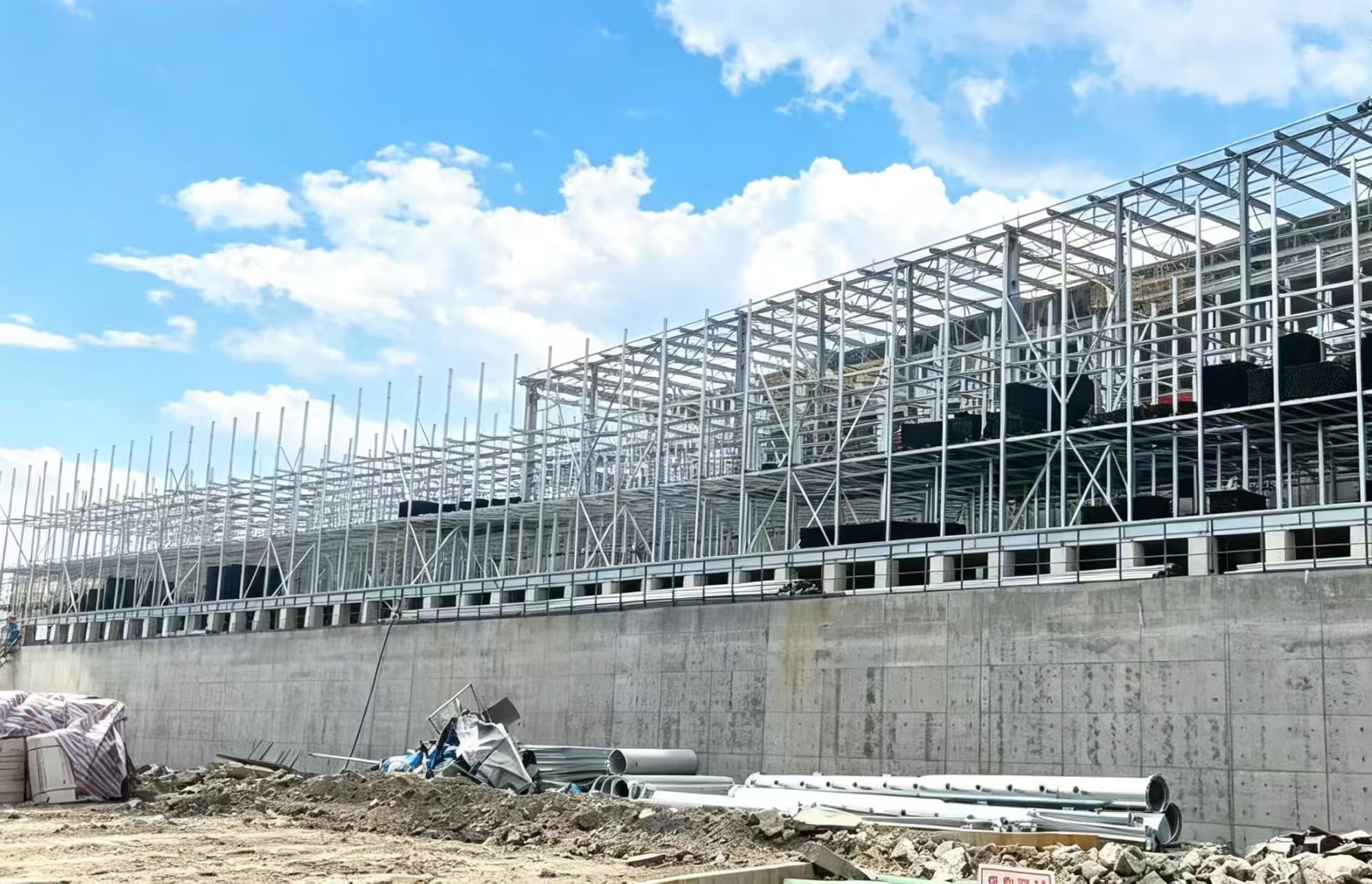
Introduction: Why Cooling Tower Fill Matters
Cooling towers play a vital role in removing excess heat from industrial processes, commercial buildings, HVAC systems, and manufacturing facilities. In Malaysia, where high temperatures and humidity place continuous demands on cooling equipment, maintaining reliable cooling performance is essential for efficient operations.
But what happens when your cooling tower no longer performs as expected? The fan may still be running, the water pump may be working, and the system may appear normal. Yet, the outlet water temperature keeps rising, energy consumption increases, and maintenance problems become more frequent.
One possible cause is worn, clogged, or damaged cooling tower fill.
Cooling tower fill provides the surface area needed for water and air to interact, supporting heat transfer and evaporation. When the fill becomes blocked by scale, algae, sediment, or debris, the cooling tower may struggle to remove heat effectively.
Cooling tower replacement fill in Malaysia offers a practical solution for facilities that want to restore cooling performance without automatically replacing the entire tower. With suitable replacement media, a well-planned retrofit, and consistent maintenance, operators can improve system reliability and extend equipment service life.
Power Tower Cooling Technology (Shaoxing) Co.,Ltd supplies cooling tower components and replacement fill solutions through its website, https://www.coolingtowerpart.com. Choosing the right replacement fill involves more than selecting a material. You also need to consider tower design, operating temperature, water quality, airflow, and long-term maintenance requirements.
This guide explains how to identify fill-related problems, compare replacement materials, plan a cooling tower retrofit, and maintain your system for reliable performance.
Understanding Cooling Tower Replacement Fill
What Is Cooling Tower Fill Media?
Cooling tower fill, also known as cooling tower packing or fill media, is an internal component that increases the contact area between circulating water and air.
During operation, hot water enters the tower and flows over or through the fill. The fill spreads the water across a larger surface area, allowing heat to transfer to the air. A portion of the water evaporates, carrying heat away, while the remaining water cools before returning to the system.
Without effective fill, water tends to fall through the tower in larger streams or droplets. This reduces the available contact area and can limit cooling performance.
Different cooling towers use different fill designs, including PVC film fill, polypropylene (PP) fill, and splash fill. Each type has specific advantages depending on the operating conditions.
How Cooling Tower Fill Improves Heat Transfer
Think of cooling tower fill as a network of small pathways that helps water spread out rather than simply falling straight down. The greater the effective contact between water and air, the more opportunity the system has to transfer heat.
Film fill uses formed sheets and channels to distribute water into thin films. Splash fill uses specially designed surfaces to break water into smaller droplets and redistribute it throughout the tower.
However, more surface area does not automatically mean better performance. Fill must also allow sufficient airflow, maintain suitable water distribution, and withstand the actual operating environment.
For example, a closely spaced film fill may provide effective heat transfer in a system with well-controlled water quality. In a system with high suspended-solids levels, however, narrow passages may become clogged more easily. A more open fill design may be a better long-term option.
The key is to select fill based on the cooling tower's real operating conditions rather than choosing a product based on specifications alone.
Common Signs Your Cooling Tower Fill Needs Replacement
Reduced Cooling Performance
One of the most noticeable signs of fill problems is declining cooling performance.
If the water leaving the cooling tower becomes warmer than expected under comparable operating conditions, the fill may be fouled, damaged, or distributing water unevenly. However, fill is not the only possible cause. Fan problems, pump issues, blocked nozzles, excessive heat load, and restricted air inlets can produce similar symptoms.
Start by comparing current operating data with historical records. Check the entering and leaving water temperatures, ambient wet-bulb temperature, circulating water flow, and process heat load.
If the cooling tower continues to underperform after other potential causes have been investigated, inspect the fill for fouling, deformation, and physical damage.
Clogged Fill and Restricted Airflow
Over time, cooling tower fill can collect sediment, airborne dirt, fibers, scale, and other deposits. These materials gradually restrict the passages between fill sheets or within the fill structure.
As blockage increases, airflow resistance may rise and water distribution can become uneven. The fan may need to work harder to move air through the tower, while heat-transfer performance deteriorates.
For Malaysian industrial facilities operating for long hours, neglected fouling can become a recurring maintenance issue.
Cleaning may restore performance when deposits are removable and the fill remains structurally sound. If the passages are heavily blocked or the fill has become brittle, cracked, or permanently deformed, replacement may be the more practical option.
Scale, Algae, and Biological Fouling
Mineral scale forms when dissolved minerals precipitate from circulating water and accumulate on internal surfaces. Biological fouling occurs when algae, slime, and microorganisms develop under suitable conditions.
These deposits can cover the fill surface, reduce effective contact between water and air, and obstruct water movement. They may also increase maintenance requirements and create uneven cooling patterns.
Replacing heavily fouled fill can remove damaged or contaminated material, but replacement alone does not solve the underlying water-quality problem.
If water treatment, filtration, blowdown, and cleaning practices remain inadequate, the new fill may experience the same problems. A successful replacement project should therefore include a review of the cooling tower's water management program.
Cracked, Sagging, or Deformed Fill Packs
Cooling tower fill can deteriorate because of age, unsuitable operating temperatures, chemical exposure, mechanical stress, or poor support.
Look for cracked sheets, collapsed packs, sagging sections, loose components, and areas where the original fill geometry has changed. These defects can disrupt water distribution and create bypass paths that reduce the effective contact area.
When fill has lost its structural shape, cleaning will not restore its original design. Replacement may be necessary, together with repairs to damaged supports or fasteners.
Early identification of these problems helps maintenance teams schedule repairs before the tower experiences a more serious performance decline.
Why Cooling Tower Fill Replacement Matters in Malaysia
High Temperatures and Humidity
Malaysia's tropical climate makes reliable heat rejection especially important for many industrial and commercial cooling systems.
High ambient wet-bulb temperatures can reduce the cooling tower's available performance margin. The achievable cold-water temperature depends on the wet-bulb temperature, tower design, water flow, heat load, and other operating factors.
Properly selected replacement fill cannot overcome these physical limits, but it can help a cooling tower operate closer to its intended performance when the existing fill is damaged, clogged, or unsuitable.
For factories, commercial buildings, manufacturing plants, and process facilities, reliable cooling helps maintain equipment operating conditions and production schedules.
Water Quality and Mineral Deposits
Water quality varies according to the source, treatment strategy, and operating conditions. As water evaporates, dissolved minerals become more concentrated. Airborne dust, suspended solids, and process contamination may also enter the system.
These factors directly influence the choice of replacement fill.
Closely spaced film fill can offer a large heat-transfer surface, but narrow passages may be more vulnerable to blockage when the water contains significant suspended solids. Splash fill may be worth considering where fouling resistance and more open passages are important.
The correct choice depends on actual water quality, cooling requirements, and the tower's design. A professional assessment is more reliable than assuming one fill type suits every Malaysian facility.
Industrial Operating Demands
Many industrial cooling towers operate for extended periods, sometimes around the clock. Unexpected cooling problems can interrupt production, affect product quality, and increase operating costs.
A planned fill retrofit allows facility managers to schedule work during a suitable maintenance window rather than waiting for a failure to force an emergency shutdown.
It also creates an opportunity to inspect water distribution systems, drift eliminators, fill supports, air inlets, and other internal components.
By addressing several related problems during one maintenance period, facilities can reduce the risk of repeated downtime and make better use of maintenance resources.
Types of Cooling Tower Replacement Fill
PVC Film Fill
PVC film fill is widely used in cooling towers because its formed sheets create a large surface area for water and air contact.
It can be suitable for many HVAC and industrial applications when the operating temperature, water quality, and chemical conditions fall within the material's limits.
Film fill is often selected when heat-transfer performance and compact design are important. However, channel spacing and fill geometry must suit the water's fouling potential and the tower's airflow requirements.
When evaluating PVC replacement fill, check the sheet design, dimensions, thickness, pack configuration, operating-temperature limits, and compatibility with the existing cooling tower.
Choosing the right configuration can help restore performance while maintaining an appropriate balance between heat transfer and airflow resistance.
Polypropylene Fill for Higher-Temperature Applications
Polypropylene, commonly known as PP, may be considered when its temperature resistance and chemical compatibility better suit the operating environment.
However, PP is not automatically suitable for every high-temperature cooling tower. The allowable operating temperature depends on the material formulation, mechanical load, support arrangement, and actual service conditions.
Before choosing PP fill, confirm the maximum hot-water temperature, temperature fluctuations, chemical exposure, and expected mechanical stresses.
A suitable product should be selected according to verified technical specifications rather than a general assumption that all PP fill can handle high temperatures.
Splash Fill
Splash fill distributes water by breaking it into droplets as it passes over splash bars, grids, or other specially designed structures.
Some splash-fill designs provide relatively open passages, making them worth considering for applications where suspended solids and clogging are major concerns. Their suitability still depends on the specific design, water conditions, and cooling requirements.
Splash fill can be a practical replacement option for certain industrial cooling towers, particularly when the existing film fill repeatedly becomes blocked.
Before switching from film fill to splash fill, assess the tower's heat load, available internal space, airflow, water distribution, and structural arrangement. A change in fill design may require additional engineering checks to ensure the tower continues to operate as intended.
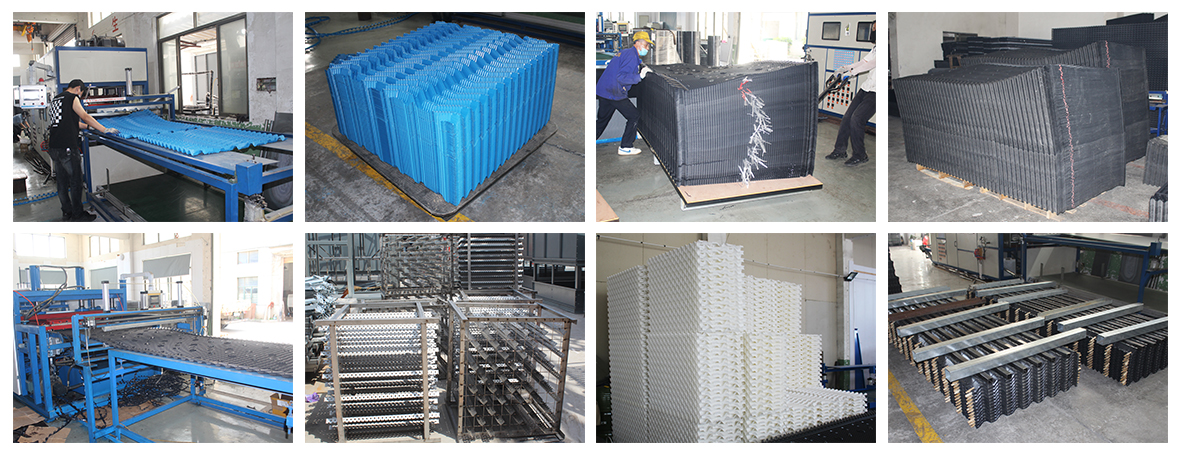
Cooling Tower Retrofit Solutions
Replacing Existing Fill with Compatible Media
A cooling tower retrofit does not always require a complete tower replacement. In many cases, replacing worn or clogged fill with compatible media can address the main problem while allowing the existing structure to remain in service.
Compatibility is essential. The replacement packs must fit the available space and work with the tower's support system, water distribution arrangement, and airflow pattern.
Before requesting a quotation, collect the cooling tower model, original fill dimensions, fill depth, pack layout, operating temperatures, water flow rate, and details of the current performance problems.
Photographs and drawings can also help clarify the internal arrangement. Accurate information reduces the risk of ordering fill that cannot be installed correctly or does not suit the application.
Upgrading Fill Design for Better Efficiency
A replacement project also provides an opportunity to improve the original fill configuration.
Depending on the application, a facility may consider a different channel design, a more suitable material, or an arrangement that better accommodates current water quality. These changes may help improve heat transfer, reduce fouling, or make routine maintenance easier.
However, a more compact or higher-surface-area fill is not always the best choice. If the new configuration creates excessive airflow resistance or does not work with the water distribution system, the expected performance improvement may not occur.
An effective retrofit balances heat-transfer capability, pressure drop, fouling risk, durability, installation requirements, and long-term maintenance needs.
Crossflow and Counterflow Cooling Tower Retrofits
Cooling tower configuration plays an important role in replacement fill selection.
In a crossflow cooling tower, air generally moves horizontally through the fill while water flows downward. In a counterflow tower, air moves upward against the downward flow of water.
These configurations have different internal layouts, fill arrangements, and water distribution requirements. Replacement media must match the tower's design and available installation space.
Do not assume that fill designed for a crossflow tower can be installed in a counterflow tower without modification. Confirm the existing configuration and the supplier's technical requirements before ordering replacement components.
Cooling Tower Fill Replacement Process
Step 1: Inspect the Existing Cooling Tower
A successful replacement project starts with a detailed inspection.
Maintenance personnel should assess the fill's physical condition, fouling level, water distribution, airflow restrictions, and supporting structure. Historical operating data should also be reviewed to determine whether cooling performance has declined over time.
The inspection should distinguish between fill-related problems and other possible causes, such as fan failure, pump malfunction, blocked strainers, or excessive process heat load.
This step helps ensure that replacement addresses the actual problem rather than treating only its symptoms.
Step 2: Remove the Old Fill and Prepare the Tower
Before work begins, shut down and isolate the cooling tower according to the facility's safety procedures. Follow applicable lockout/tagout requirements and use appropriate personal protective equipment.
Remove the old fill carefully to avoid damaging the tower casing, support structure, basin, piping, and other internal components.
After removal, clean accessible areas as appropriate and inspect the supporting framework. Damaged fasteners, corroded supports, and blocked drains should be addressed before the new fill is installed.
A sound support structure is essential for maintaining the correct fill arrangement and preventing premature damage.
Step 3: Install the Replacement Fill
Install the replacement media according to the approved layout and supplier instructions.
Make sure the fill packs are correctly aligned, adequately supported, and securely positioned. Incorrect orientation, uneven installation, or unnecessary gaps can create water bypass paths and reduce effective heat transfer.
The water distribution system should also be inspected. Blocked nozzles, damaged spray components, and uneven water flow can undermine the performance of new fill.
Where the retrofit involves changes to the original configuration, verify that the proposed arrangement is suitable before installation begins.
Step 4: Test the System After Replacement
Once installation is complete, inspect the tower before returning it to normal operation. Confirm that the fill is stable, the water path is unobstructed, and the relevant internal components are correctly positioned.
After restarting the system, monitor water temperatures, circulating water flow, fan operation, and other relevant operating parameters.
Compare the results with historical data under similar conditions. Ambient wet-bulb temperature and process heat load can influence cooling performance, so these factors should be considered when evaluating the outcome.
Documenting the results provides a useful baseline for future maintenance and helps identify developing problems early.
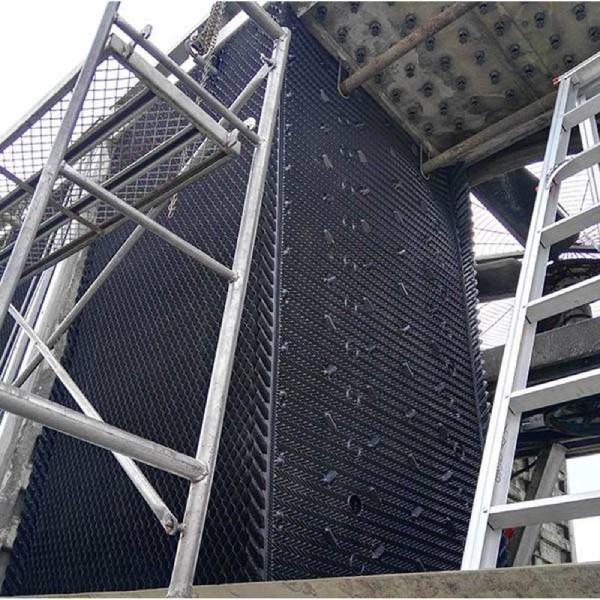
Maintenance Solutions to Extend Fill Service Life
Routine Inspection and Cleaning
Installing new fill is only the beginning. Regular inspection helps identify deposits, physical damage, and uneven water distribution before they become serious problems.
Inspection frequency should reflect the water quality, operating hours, environmental conditions, and consequences of unexpected downtime. Cooling towers with a history of rapid fouling may need more frequent checks.
Cleaning methods must be suitable for the fill material. Excessive water pressure, aggressive chemicals, or unsuitable mechanical tools can damage the sheets and shorten their service life.
A consistent inspection and cleaning schedule can help reduce unnecessary replacement costs.
Water Treatment and Scale Control
Effective water treatment is one of the most important ways to protect replacement fill.
A suitable program may include monitoring conductivity, managing cycles of concentration, controlling scale and corrosion, and applying appropriate biological control measures. Filtration may also help where suspended solids are a persistent problem.
The treatment program should account for the water source, system materials, process conditions, and applicable environmental requirements. Chemical dosing should follow the recommendations of qualified water-treatment professionals.
Without effective water management, even a well-selected replacement fill can become fouled much sooner than expected.
Airflow and Water Distribution Management
Poor airflow and uneven water distribution can reduce cooling performance even when the fill is relatively new.
Inspect fans, motors, air inlets, nozzles, strainers, and other relevant components during routine maintenance. Look for blocked air passages, damaged spray components, and areas where water collects unevenly.
Maintaining consistent airflow and water distribution helps the fill perform effectively and reduces the likelihood of localized fouling.
A complete maintenance strategy should treat the cooling tower as an integrated system rather than focusing on fill alone.
How to Choose a Cooling Tower Replacement Fill Supplier in Malaysia
Choosing a supplier involves more than comparing initial prices. The replacement fill must match the cooling tower's design, operating conditions, and maintenance requirements.
Consider the following factors when evaluating suppliers:
Product compatibility: Confirm that the fill dimensions, material, channel design, and configuration suit your existing tower.
Application knowledge: Look for familiarity with crossflow and counterflow towers, heat-transfer requirements, and common fouling problems.
Material suitability: Verify temperature limits and compatibility with the chemicals and water conditions in your facility.
Customization options: Ask whether project-specific dimensions and configurations are available.
Technical documentation: Request relevant specifications, installation guidance, and material information.
Maintenance requirements: Consider how easily the fill can be inspected, cleaned, and maintained.
Total operating cost: Evaluate service life, cleaning frequency, downtime, and expected performance rather than focusing only on the purchase price.
Before requesting a quotation, provide the supplier with as much information as possible about the existing tower and the problems you want to solve. Measurements, photographs, equipment drawings, and operating data can help the supplier assess the application more accurately.
For Malaysian facilities, it is also useful to discuss delivery schedules, project quantities, installation planning, and the availability of technical support for the proposed replacement solution.
Why Choose Power Tower Cooling Technology (Shaoxing) Co.,Ltd?

For cooling tower operators in Malaysia seeking replacement fill and retrofit components, Power Tower Cooling Technology (Shaoxing) Co.,Ltd is a supplier to consider when evaluating options for industrial and commercial cooling systems.
The company website, https://www.coolingtowerpart.com, provides a starting point for exploring cooling tower components and discussing replacement requirements.
When planning a fill replacement project, buyers should share the tower configuration, fill dimensions, operating temperatures, water quality, and current performance problems. These details help establish whether PVC film fill, PP fill, splash fill, or another configuration is suitable for the application.
A well-planned replacement project should focus on practical results: restoring heat-transfer performance, reducing avoidable maintenance, ensuring a proper fit, and extending the service life of the existing cooling system.
For facilities operating in Malaysia's demanding climate, it is especially important to consider water treatment, airborne contamination, operating temperatures, and the need to minimize downtime.
Instead of selecting fill based on price alone, evaluate the product against the tower's actual requirements. The most suitable replacement solution balances performance, compatibility, durability, and long-term maintenance needs.
Frequently Asked Questions About Cooling Tower Replacement Fill in Malaysia
How Often Should Cooling Tower Fill Be Replaced?
There is no universal replacement interval. Service life depends on material quality, water chemistry, operating temperature, maintenance practices, and the level of fouling or mechanical damage.
Inspect the fill regularly and use operating data to guide replacement decisions. Replacement may be necessary when damage is irreversible, deposits cannot be removed effectively, or the fill no longer supports the required cooling performance.

Can New Fill Improve Cooling Tower Efficiency?
Yes. Replacement fill can improve cooling performance when the existing media is clogged, damaged, deformed, or unsuitable for the operating conditions.
However, results depend on the entire cooling system. Fan condition, water flow, distribution, heat load, and ambient wet-bulb temperature also affect performance. Fill replacement should be part of a broader assessment rather than a guarantee of a specific efficiency improvement.
Can Cooling Tower Replacement Fill Be Customized?
Depending on the product and project requirements, replacement fill may be available in different dimensions, materials, and configurations.
To evaluate customization, provide the existing fill measurements, tower design, operating conditions, and required quantity. Confirm all dimensions and technical specifications before placing an order.
Should I Choose PVC Film Fill or Splash Fill?
PVC film fill can be suitable when high heat-transfer surface area is important and water quality can be managed effectively. Splash fill may be preferable in certain applications where suspended solids, fouling risk, or wider passages are important considerations.
Neither option is universally superior. The right choice depends on water quality, cooling requirements, tower design, operating temperature, and maintenance capacity.
Can Cooling Tower Fill Be Replaced Without Replacing the Entire Tower?
Yes. Many cooling towers can undergo a fill-only retrofit if the supporting structure and other components remain suitable.
An inspection is necessary to confirm that the framework, water distribution system, airflow path, and available installation space can accommodate the replacement fill. If the tower has extensive structural damage, additional repairs may be required.
What Information Is Needed to Request a Replacement Fill Quotation?
Prepare the cooling tower model, existing fill dimensions, fill depth, pack configuration, operating temperature, water flow rate, and details of the current performance problems.
Photographs and equipment drawings can also help clarify the requirements. Providing accurate information makes it easier to evaluate compatibility and identify suitable replacement options.
Conclusion
Cooling tower replacement fill is a practical solution for addressing declining cooling performance, restricted airflow, mineral deposits, biological fouling, and damaged internal media. For facilities in Malaysia, choosing the right replacement fill is particularly important because cooling systems often operate under demanding environmental and industrial conditions.
A successful retrofit begins with an accurate inspection, followed by suitable material selection, correct installation, and a maintenance program that addresses water quality and fouling. PVC film fill, PP fill, and splash fill each have different advantages, so the best choice depends on the application rather than the product name alone.
Power Tower Cooling Technology (Shaoxing) Co.,Ltd provides a starting point for exploring cooling tower replacement components through https://www.coolingtowerpart.com.
By matching replacement fill to the tower's design and operating conditions, facility managers can make more informed maintenance decisions, improve cooling system reliability, and reduce the risk of recurring fill-related problems. A carefully planned replacement today can help keep cooling operations dependable for years to come.


