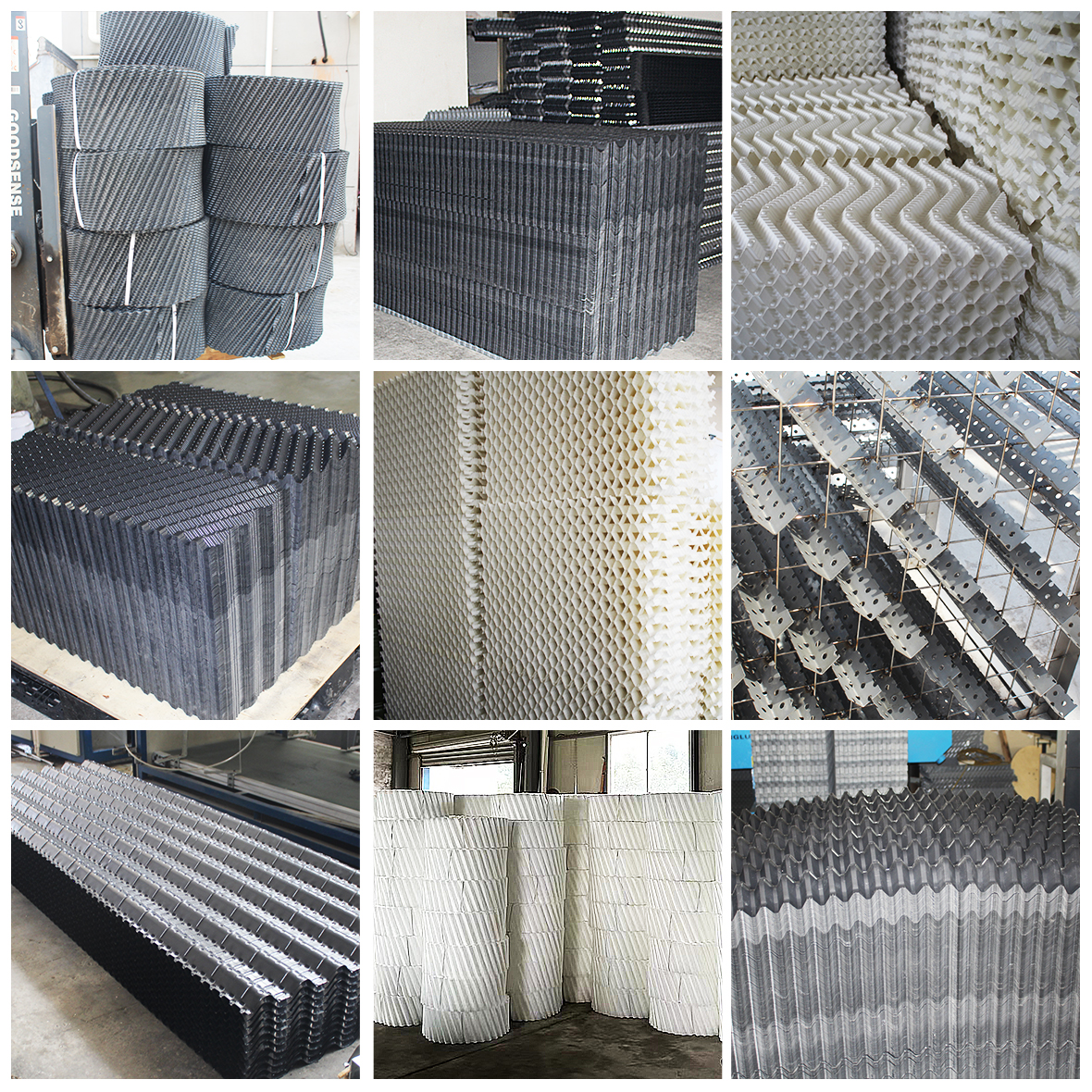
Cooling Tower Infills and Drift Eliminators Wholesalers for Industry
Cooling towers rely on properly designed internal components to transfer heat efficiently while minimizing water loss. Among the most important components are cooling tower infills and drift eliminators. Cooling tower infills increase the contact area between hot water and moving air, while drift eliminators reduce the amount of water droplets carried out of the tower with the exhaust air.
For industrial facilities, choosing reliable cooling tower infills and drift eliminators wholesalers can simplify sourcing, reduce replacement costs, and improve maintenance efficiency. A professional wholesaler can provide different fill materials, sizes, configurations, and drift eliminator designs for HVAC systems, process cooling systems, power plants, manufacturing facilities, and other industrial applications.
This guide explains how cooling tower infills and drift eliminators work, what materials and designs are available, and what industrial buyers should consider when selecting a wholesale supplier.
What Are Cooling Tower Infills and Drift Eliminators?
Cooling tower infills and drift eliminators perform different but complementary functions inside an evaporative cooling tower.
What Is Cooling Tower Infill?
Cooling tower infill, also called cooling tower fill media, is installed inside the tower to increase the contact area between circulating water and air.
Hot water enters the cooling tower and is distributed over the fill. As the water flows across or through the fill surfaces, air passes through the same area. A portion of the water evaporates, removing heat from the remaining water.
Why Does Cooling Tower Fill Matter?
The design of the fill affects:
A properly selected cooling tower fill can help an industrial cooling system achieve the required cooling performance without unnecessarily increasing fan or pump energy consumption.
What Is a Cooling Tower Drift Eliminator?
A cooling tower drift eliminator is designed to capture water droplets entrained in the tower's exhaust air.
As air moves upward through an evaporative cooling tower, small water droplets can become suspended in the airflow. Drift eliminator blades force the air to change direction, causing water droplets to separate from the air and return to the tower basin.
Why Are Drift Eliminators Important?
Drift eliminators can help reduce:
Water loss
Chemical loss
Visible plume-related concerns
Droplet carryover
Corrosion risks around the tower
Moisture exposure near surrounding equipment
Although fill media and drift eliminators have different functions, both contribute to effective cooling tower operation.
Why Do Industrial Cooling Towers Need High-Quality Fill Media?
Industrial cooling systems often operate continuously and may handle large water flows. Poor-quality or incorrectly selected fill can reduce heat transfer and increase maintenance requirements.
How Does Cooling Tower Fill Improve Heat Transfer?
Film fill creates a thin layer of water across a large surface area. This increases the interface between water and air.
How Does Film Fill Work?
The basic process can be summarized as:
Hot water enters the fill section.
Water spreads across the fill surfaces.
Air passes through the fill.
A small portion of water evaporates.
Heat is transferred from the circulating water to the air.
Cooled water returns to the basin.
The geometry of the fill determines how effectively water spreads and how much contact area is available.
Does More Surface Area Always Mean Better Cooling?
Not necessarily.
A fill with a very high theoretical surface area may create excessive airflow resistance or become more vulnerable to fouling if the operating water quality is unsuitable.
For industrial applications, fill selection should balance:
Effective surface area
Water distribution
Airflow resistance
Fouling resistance
Operating temperature
Water quality
Cleaning requirements
This is why experienced cooling tower infills wholesalers should evaluate the complete operating environment rather than recommending products based only on surface area.
What Types of Cooling Tower Infills Are Available?
Different cooling tower designs require different types of fill media.
What Is PVC Cooling Tower Fill?
PVC cooling tower fill is widely used in HVAC and industrial cooling applications because PVC offers a combination of lightweight construction, corrosion resistance, formability, and cost efficiency.
PVC film fill can be manufactured with different corrugation patterns, thicknesses, pitches, and dimensions.
Where Is PVC Fill Commonly Used?
PVC fill can be found in:
HVAC cooling towers
Industrial process cooling
Manufacturing plants
Chilled-water systems
Machinery cooling systems
General evaporative cooling applications
What Is PP Cooling Tower Fill?
Polypropylene, or PP, cooling tower fill is another option for applications where higher temperature resistance or specific chemical compatibility is required.
When Should PP Fill Be Considered?
PP may be considered when operating conditions exceed the practical temperature range of conventional PVC fill or when the application requires different material characteristics.
Material selection should always be based on actual water temperature, chemistry, operating conditions, and tower design.
What Is Splash Fill?
Splash fill uses bars, grids, or specially shaped surfaces to break falling water into droplets.
Where Is Splash Fill Useful?
Splash fill can be considered for applications where water contains higher levels of suspended solids or where resistance to plugging is more important than achieving the maximum surface area associated with some film-fill designs.
How Do Crossflow and Counterflow Fill Differ?
Cooling tower configuration is another important consideration when selecting fill media.
What Is Crossflow Cooling Tower Fill?
In a crossflow tower, air generally moves horizontally across the falling water.
Water is distributed from the top, while air enters through the sides of the tower and passes across the fill.
What Are the Advantages of Crossflow Fill?
Crossflow fill systems can offer:
Accessible water distribution systems
Convenient inspection
Flexible maintenance
Large fill installation areas
Compatibility with many industrial cooling tower designs
What Is Counterflow Cooling Tower Fill?
In a counterflow tower, air travels upward while water moves downward.
The opposing airflow and water flow directions provide effective contact between air and water.
Why Is Counterflow Fill Widely Used?
Counterflow cooling tower fill can provide:
Wholesalers should therefore confirm the tower configuration before recommending replacement fill.
Why Are Drift Eliminators Important for Industrial Cooling?
Drift eliminators are essential when water conservation and surrounding environmental conditions are important.
How Do Drift Eliminators Reduce Water Loss?
Water droplets can be carried out of the cooling tower with exhaust air. Drift eliminators redirect the airflow through a series of changes in direction.
Because water droplets have greater inertia than air, many droplets impact the eliminator surfaces and drain back into the tower.
What Does This Mean for Industrial Facilities?
Reducing droplet carryover can help decrease unnecessary water loss and the associated loss of treatment chemicals.
It can also reduce moisture deposition around the cooling tower.
Can Drift Eliminators Improve Cooling Tower Operation?
Drift eliminators are not primarily heat-transfer components. Their main function is to control droplet carryover.
However, properly designed eliminators can support overall cooling tower efficiency by balancing:
Drift reduction
Airflow resistance
Pressure drop
Structural durability
Maintenance requirements
What Materials Are Used for Cooling Tower Drift Eliminators?
Drift eliminators are commonly manufactured from materials selected for chemical resistance, durability, and operating temperature.
PVC Drift Eliminators
PVC is commonly used for many standard cooling tower applications.
Why Is PVC Popular?
PVC drift eliminators can provide:
PP Drift Eliminators
PP may be selected for applications requiring different temperature or chemical resistance characteristics.
The appropriate material depends on the actual cooling water chemistry and operating temperature.
What About Other Materials?
Depending on the tower design and application, manufacturers may also supply drift eliminators using other polymer or engineered materials.
Industrial buyers should provide operating information before selecting a material.
How Should Industrial Buyers Choose a Cooling Tower Fill Wholesaler?
Choosing a wholesaler is not simply a matter of comparing prices.
Does the Wholesaler Offer Multiple Fill Types?
A useful wholesale supplier should be able to provide suitable options for different tower configurations.
Look for product availability covering:
Can the Supplier Provide Customized Dimensions?
Cooling tower replacement projects rarely use completely standardized dimensions.
A professional supplier should be able to work with:
Fill block length
Fill block width
Fill height
Sheet thickness
Corrugation
Pitch
Bonding method
Installation arrangement
Why Is Customization Important?
Incorrect dimensions can create installation problems, airflow gaps, poor water distribution, or unnecessary modification work.
Providing drawings, photographs, existing fill dimensions, or tower information can help the supplier identify a suitable replacement.
How Can Buyers Evaluate Drift Eliminator Wholesalers?
Drift eliminators should be evaluated according to performance as well as physical compatibility.
What Should Buyers Check?
Important factors include:
Why Does Blade Design Matter?
Drift eliminator geometry influences how effectively droplets are separated from the airflow.
A suitable design should provide effective droplet capture without creating unnecessary airflow resistance.
What Should You Consider When Buying Cooling Tower Infills and Drift Eliminators Wholesale?
Wholesale purchasing can reduce procurement complexity, but technical specifications still need to be verified.
Should Price Be the Main Selection Factor?
Price is important, but it should not be the only criterion.
A low-cost fill may become expensive if it has:
What Is the Total Cost of Ownership?
Industrial buyers should consider:
Purchase Cost + Shipping + Installation + Maintenance + Cleaning + Replacement Cost
A product with slightly higher initial cost may have a different total cost over its operating life.
How Does Water Quality Affect Cooling Tower Fill Selection?
Water quality is one of the most important factors in cooling tower fill performance.
What Causes Fill Fouling?
Common causes include:
Suspended solids
Scale
Biological growth
Algae
Sludge
Corrosion products
Poor water treatment
Why Is Fouling a Problem?
Fouling can reduce the effective contact area between air and water. It may also increase airflow resistance and interfere with water distribution.
For this reason, the ideal fill for clean HVAC water may not be the ideal fill for heavily contaminated industrial process water.
How Can Fouling Be Controlled?
Industrial facilities can consider:
How Do Cooling Tower Infills and Drift Eliminators Work Together?
Fill media and drift eliminators are separate components, but their functions are connected within the cooling tower.
What Happens in the Fill Section?
The fill provides a large contact area where hot water and air interact.
What Happens Above the Fill?
After passing through the fill, moist air moves toward the outlet. Drift eliminators capture entrained water droplets before the air leaves the tower.
Why Is This Combination Important?
A cooling tower needs both effective heat transfer and controlled water carryover.
Therefore, a complete internal-component strategy should consider:
Water Distribution → Fill Media → Airflow → Drift Elimination → Exhaust
Each stage affects overall tower operation.
When Should Cooling Tower Fill and Drift Eliminators Be Replaced?
Replacement should be based on condition and performance rather than an arbitrary calendar date.
What Are Signs of Damaged Cooling Tower Fill?
Look for:
What Are Signs of Drift Eliminator Damage?
Common warning signs include:
Why Is Regular Inspection Important?
Early detection allows maintenance teams to address localized damage before it develops into a larger cooling tower performance problem.
How Can Wholesalers Support Cooling Tower Replacement Projects?
A capable wholesaler can provide more than products.
What Technical Support Can Be Useful?
Depending on the project, buyers may need help with:
Can Wholesale Suppliers Support Large Industrial Orders?
For large cooling tower projects, buyers should confirm:
These factors become especially important when purchasing cooling tower infills and drift eliminators for multiple towers or large industrial facilities.
What Industries Use Cooling Tower Infills and Drift Eliminators?
These components are used across many industries.
Manufacturing
Factories may use cooling towers for machinery, process water, compressors, and production equipment.
Power Generation
Cooling towers play an important role in heat rejection systems associated with power generation.
Chemical Processing
Chemical plants often require continuous process cooling and carefully selected materials for compatibility with the circulating water environment.
HVAC and Commercial Buildings
Large buildings, hospitals, data centers, and industrial facilities may use cooling towers for centralized chilled-water systems.
Food and Beverage Processing
Cooling systems can support process equipment and temperature-control operations.
Why Does Application Matter?
Each industry may have different requirements for temperature, water quality, corrosion resistance, hygiene, maintenance, and operating hours.
The cooling tower fill and drift eliminator should therefore be selected according to the specific application.
How Can You Order Cooling Tower Infills and Drift Eliminators from a Wholesaler?
A clear specification makes the quotation and product-selection process easier.
What Information Should You Provide?
Buyers can prepare:
Cooling tower brand or model
Tower type
Crossflow or counterflow configuration
Existing fill dimensions
Fill material
Fill quantity
Water temperature
Air temperature
Water quality information
Drift eliminator dimensions
Photos of existing components
Drawings if available
Why Are Photos Useful?
Photos can help wholesalers identify the existing fill geometry, installation arrangement, bonding method, support structure, and drift eliminator configuration.
What Makes a Reliable Cooling Tower Infills and Drift Eliminators Wholesaler?
A reliable wholesaler should combine product availability with technical understanding.
Key Supplier Qualities
Consider a supplier that offers:
Consistent product quality
Multiple fill materials
Accurate dimensions
Custom manufacturing
Competitive wholesale pricing
Reliable packaging
Export experience
Technical support
Replacement solutions
Stable production capacity
Why Is Long-Term Supply Important?
Industrial cooling systems often require replacement components over many years.
A supplier capable of maintaining consistent specifications can make future maintenance and replacement projects easier.
Final Thoughts
Cooling tower infills and drift eliminators are essential components for efficient evaporative cooling systems. Fill media improves water-air contact and supports heat transfer, while drift eliminators reduce water droplet carryover from the tower exhaust.
For industrial buyers, selecting the right cooling tower infills and drift eliminators wholesalers involves more than comparing product prices. Material, dimensions, tower configuration, water quality, operating temperature, airflow resistance, maintenance requirements, and customization capabilities should all be considered.
PVC and PP cooling tower fill options can serve different operating conditions, while crossflow, counterflow, film, and splash designs provide solutions for different tower configurations. Similarly, drift eliminator geometry and material should match the cooling tower's operating requirements.
By working with an experienced wholesale supplier and providing accurate technical information, industrial facilities can simplify cooling tower replacement projects and obtain fill media and drift eliminators that are properly matched to their systems.