Cooling Tower Fan Blade Manufacturers for Efficient Cooling Systems
Cooling tower fan blades are essential components in industrial cooling systems, helping maintain airflow, support heat rejection, and improve overall equipment performance. From power plants and chemical processing facilities to commercial HVAC systems and manufacturing factories, selecting the right fan blades can influence energy consumption, operating stability, maintenance requirements, and cooling efficiency.
Reliable cooling tower fan blade manufacturers understand that different cooling towers require different blade designs, materials, and operating specifications. Factors such as fan diameter, blade pitch, rotational speed, motor power, and environmental conditions must be considered to achieve the required airflow without placing excessive loads on the drive system.
For global buyers, finding a suitable cooling tower fan blade supplier involves evaluating product quality, customization capabilities, manufacturing processes, technical support, and delivery reliability.
This article explores how cooling tower fan blade manufacturers support efficient cooling systems, which materials and designs buyers should consider, and how to select the right fan blade solution for industrial applications.
Why Are Cooling Tower Fan Blades Important for Efficient Cooling Systems?
Cooling tower fans move air through the tower to facilitate heat transfer between circulating water and the surrounding air. The fan blades influence the airflow generated by the fan and therefore play an important role in overall cooling tower performance.
How Do Fan Blades Affect Cooling Efficiency?
Fan blades convert rotational energy into airflow. Their aerodynamic characteristics determine how effectively the fan moves air through the cooling tower under specific operating conditions.
Several factors influence fan performance:
Airflow capacity: The fan must provide sufficient air volume for the cooling tower's heat rejection requirements.
Aerodynamic efficiency: Blade geometry affects the power needed to generate the required airflow.
Mechanical stability: Properly manufactured blades help maintain reliable operation.
Noise control: Blade design and rotational speed influence operating noise.
Service life: Suitable materials and structural strength help withstand long-term operating conditions.
What Happens When Fan Blades Are Incorrectly Selected?
An unsuitable fan blade may deliver insufficient airflow, consume excessive power, or create excessive vibration. In severe cases, incorrect blade selection can overload the motor or place additional stress on the gearbox, bearings, and supporting structure.
For this reason, cooling tower fan blade manufacturers should consider the complete fan system rather than selecting blades based on diameter alone.
Why Should Buyers Focus on Long-Term Performance?
The initial cost of fan blades is only one part of the total cost of ownership. Electricity consumption, maintenance requirements, replacement frequency, and downtime can significantly affect the long-term value of a cooling tower fan.
How Can the Right Fan Blades Reduce Operating Costs?
A well-matched fan blade design can help achieve the required airflow with appropriate power consumption. Consistent manufacturing quality can also reduce the risk of premature damage and unnecessary maintenance.
Buyers should evaluate performance using actual operating requirements instead of relying solely on general efficiency claims.
What Types of Cooling Tower Fan Blades Are Available?
Cooling tower fan blade manufacturers offer different materials and designs to suit various cooling tower configurations and operating environments.
FRP Cooling Tower Fan Blades
Fiber-reinforced plastic (FRP) fan blades are widely used in industrial cooling tower applications because of their relatively low weight, corrosion resistance, and flexibility in aerodynamic design.
What Makes FRP Suitable for Industrial Cooling Towers?
FRP can be molded into complex blade profiles, including twisted and tapered designs. These characteristics allow manufacturers to develop blades suited to specific airflow and structural requirements.
FRP may be appropriate for cooling towers exposed to humid environments or certain corrosive contaminants, provided that the resin system and reinforcement are compatible with the operating conditions.
Before purchasing, buyers should verify material specifications, temperature limits, structural design, and manufacturing quality.
Aluminum Cooling Tower Fan Blades
Aluminum alloy fan blades provide a combination of strength and relatively low weight. They are used in various industrial and commercial cooling tower systems.
What Are the Advantages of Aluminum Fan Blades?
Aluminum blades can offer reliable mechanical performance when designed and manufactured appropriately. Their suitability depends on alloy selection, blade geometry, surface protection, and operating conditions.
Buyers should consider corrosion exposure, fatigue resistance, mounting arrangements, and the manufacturer's recommended maintenance procedures.
ABS and Other Engineering Plastic Fan Blades
ABS and other engineering plastics can be suitable for selected cooling tower applications where lightweight construction and cost control are important.
How Should Buyers Evaluate Plastic Blades?
Material selection should account for operating temperature, mechanical loading, UV exposure, chemical compatibility, and expected service conditions.
Not every plastic blade is suitable for large industrial fans or high-temperature applications. Buyers should confirm the manufacturer's operating limits before placing an order.
How Do Different Fan Blade Materials Compare?
| Material | Main advantages | Important considerations |
| FRP | Corrosion resistance, low weight, flexible blade design | Resin quality, reinforcement, temperature limits |
| Aluminum alloy | Good strength-to-weight ratio | Alloy selection, corrosion protection, fatigue resistance |
| ABS and other plastics | Lightweight and potentially economical | Mechanical strength, UV resistance, temperature limits |
The best material depends on the cooling tower design, required airflow, operating environment, and budget. A qualified manufacturer should recommend materials based on the specific application.
How Do Cooling Tower Fan Blade Manufacturers Improve Aerodynamic Performance?
Aerodynamic design is one of the most important factors affecting cooling tower fan efficiency. Manufacturers must balance airflow generation, power consumption, noise, and mechanical strength.
Optimize Blade Profile and Geometry
Blade profiles determine how air flows around the blade surface. A suitable airfoil profile can generate the required airflow while limiting unnecessary aerodynamic losses.
Why Are Blade Twist and Taper Important?
The rotational speed of a fan blade varies along its length. The blade tip moves faster than the section near the hub.
Blade twist helps maintain suitable aerodynamic conditions along the blade span, while taper adjusts the blade width to balance airflow performance, structural strength, and weight.
When these features are engineered correctly, they can improve the fan's performance at its intended operating point.
Select the Correct Blade Pitch Angle
Blade pitch influences the airflow produced by the fan and the mechanical load placed on the drive system.
How Does Incorrect Pitch Affect Fan Performance?
An excessively low pitch may result in insufficient airflow. An excessively high pitch may increase motor loading or move the fan outside its intended operating range.
Manufacturers should select the pitch angle based on fan speed, required airflow, system resistance, and available motor power.
For adjustable-pitch fan blades, adjustments should follow the manufacturer's specified limits and engineering recommendations.
Use Engineering Analysis and Performance Testing
Computational fluid dynamics (CFD) and other engineering methods can help manufacturers evaluate airflow patterns and identify potential design improvements.
Why Is Testing Still Necessary?
Simulation results depend on the assumptions and models used. Physical testing and relevant performance data help confirm whether a design meets its intended requirements.
Buyers should request appropriate technical documentation when comparing fan designs, especially for large industrial cooling systems.
How Does Manufacturing Quality Affect Cooling Tower Fan Performance?
Even a well-designed blade can perform poorly if its dimensions, material properties, or assembly quality are inconsistent.
Maintain Accurate Blade Dimensions
Blade length, profile, thickness, and mounting dimensions should match the approved design.
Why Is Dimensional Consistency Important?
Differences between blades can affect fan balance, airflow distribution, and installation compatibility. Accurate manufacturing helps ensure that replacement blades fit the intended assembly.
Manufacturers should use appropriate measuring equipment and documented inspection procedures to verify critical dimensions.
Control Material Quality
Different materials require different manufacturing and inspection methods.
What Should Manufacturers Inspect?
For FRP blades, relevant checks may include surface defects, composite integrity, reinforcement quality, and signs of delamination.
For aluminum blades, inspection may cover dimensions, surface condition, corrosion protection, and structural defects.
The exact inspection process should reflect the material, manufacturing method, and intended operating conditions.
Perform Appropriate Fan Balancing
Balancing helps control vibration caused by uneven mass distribution in a rotating assembly.
How Can Poor Balance Affect Cooling Tower Equipment?
Excessive vibration may increase mechanical loads on bearings, gearboxes, motors, and support structures. Over time, this can contribute to premature wear and equipment downtime.
Cooling tower fan blade manufacturers should establish suitable blade weight tolerances and balancing procedures according to the fan design and applicable requirements.
How Can Cooling Tower Fan Blade Design Reduce Energy Consumption?
Fan power consumption depends on the fan design, operating speed, airflow requirements, and resistance of the complete cooling tower system.
Match Fan Performance to Cooling Demand
An oversized or incorrectly selected fan may consume more power than necessary, while an undersized fan may fail to deliver sufficient airflow.
Why Is Correct Fan Selection Essential?
Manufacturers should evaluate the required airflow, fan diameter, rotational speed, system resistance, and available motor power together.
A suitable fan design aims to provide the required cooling performance without unnecessary energy consumption.
Consider Variable-Frequency Drive Compatibility
A variable-frequency drive (VFD) can adjust fan speed according to changing cooling demand when the motor, fan, and control system are designed for variable-speed operation.
How Can Variable-Speed Operation Save Energy?
For many fan systems operating under comparable conditions, power consumption can vary approximately with the cube of rotational speed. Actual savings depend on the fan curve, system resistance, control strategy, and operating point.
A VFD cannot correct every design problem. The complete system must be evaluated to ensure that reduced speed does not compromise airflow, motor cooling, vibration limits, or cooling tower performance.
Improve the Match Between Fan Blades and Drive Components
The fan blades must work correctly with the motor, gearbox where applicable, shaft, and hub.
What Should Buyers Confirm?
Before ordering replacement blades, verify the motor power, operating speed, rotation direction, hub dimensions, blade mounting arrangement, and relevant performance specifications.
Matching these details helps reduce the risk of excessive motor loading and installation problems.
Can Customized Cooling Tower Fan Blades Improve System Efficiency?
Customized fan blades can help address specific cooling tower requirements, particularly when standard products do not match the original equipment or operating conditions.
Custom Blade Diameter and Configuration
Manufacturers may offer different fan diameters, blade counts, profiles, materials, and hub interfaces.
What Information Is Needed for Customization?
Buyers should prepare the following information:
Cooling tower manufacturer and model
Existing fan diameter
Number of blades
Blade dimensions and material
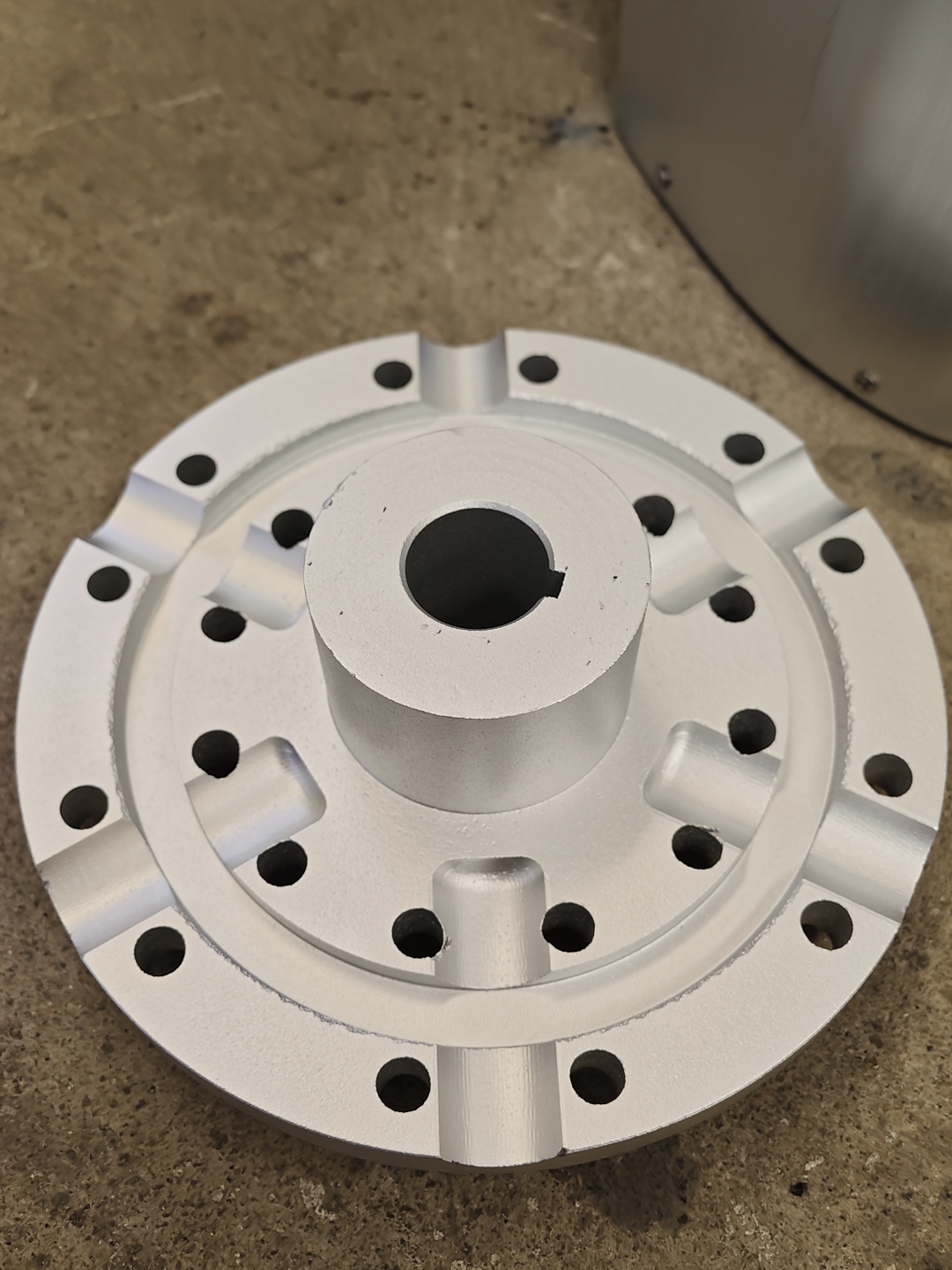
Hub dimensions and mounting-hole pattern
Blade pitch and rotational speed
Motor power and available performance data
Operating temperature and environmental conditions
Required quantity and delivery destination
Drawings, photographs, and verified measurements can help the manufacturer assess compatibility.
Replacement Blades for Existing Cooling Towers
Replacement projects often require close attention to dimensional compatibility and operating performance.
Why Is Matching the Original Fan Important?
A blade that fits the existing hub may still differ in aerodynamic characteristics or loading. This can affect airflow and motor performance.
Before approving a replacement, buyers should confirm critical dimensions and evaluate whether the proposed blade is suitable for the original fan assembly.
OEM Manufacturing for Industrial Projects
OEM customers often require consistent specifications, repeatable quality, and predictable production schedules.
How Can Manufacturers Support Repeat Orders?
Documented drawings, controlled production specifications, inspection records, and clear procedures for managing design changes help maintain consistency.
For international customers, packaging, delivery arrangements, export documents, and after-sales support are also important considerations.
How Should Global Buyers Evaluate Cooling Tower Fan Blade Manufacturers?
Selecting a supplier requires evaluating technical capability, quality management, product suitability, and commercial reliability.
Review Manufacturing Facilities and Technical Expertise
A capable manufacturer should understand blade materials, aerodynamic design, dimensional tolerances, and the relationship between fan performance and drive-system requirements.
What Questions Should You Ask?
Ask whether the supplier can provide technical drawings, material specifications, balancing information, inspection records, and application-specific recommendations.
Where appropriate, request evidence of experience with comparable cooling tower systems.
Compare Quality Control Procedures
Quality control should cover relevant stages from incoming materials to finished-product inspection.
Which Documents Can Help Verify Quality?
Depending on the project, useful documents may include:
Product specifications and drawings
Material information or certificates
Dimensional inspection reports
Balancing records
Applicable quality-management certifications
Warranty terms and maintenance recommendations
The documents provided should match the actual product and the requirements of the project.
Evaluate Delivery and After-Sales Support
International buyers should assess production lead times, export packaging, shipping arrangements, communication, and warranty conditions.
How Can Buyers Reduce Procurement Risks?
Confirm the approved specifications, order quantity, inspection requirements, delivery schedule, and commercial terms in writing before placing an order.
Clear communication at the quotation stage can help prevent misunderstandings and reduce delays.
Why Consider Power Tower Cooling Technology (Shaoxing) Co., Ltd.?
Power Tower Cooling Technology (Shaoxing) Co., Ltd. is a China-based cooling tower component supplier that global buyers can consider when researching cooling tower fan blades and related replacement components.
For industrial cooling projects, the most important step is to confirm that the proposed product meets the system's dimensional, material, and operating requirements.
Cooling Tower Fan Blade Selection for Industrial Applications
Selecting suitable fan blades requires consideration of fan diameter, blade configuration, material, mounting dimensions, and operating speed.
What Should Buyers Prepare Before Requesting a Quotation?
Provide the cooling tower model, existing fan specifications, blade dimensions, required quantity, and operating conditions. Drawings or photographs can help clarify the required configuration.
Buyers should confirm product availability, customization options, inspection procedures, and compatibility with the existing fan assembly directly with the supplier.
Customized Replacement Solutions for Global Buyers
Replacement requirements vary between cooling towers, particularly when equipment has been operating for many years or original specifications are unavailable.
How Can Technical Confirmation Improve Purchasing Decisions?
Confirming the hub interface, blade dimensions, pitch, rotational speed, and operating requirements before production helps reduce the risk of receiving incompatible components.
International buyers should also confirm quotation terms, packaging, delivery schedules, and warranty coverage before finalizing the order.
What Maintenance Practices Help Preserve Fan Blade Efficiency?
Correct installation and routine maintenance help preserve fan performance throughout its service life.
Inspect Blades for Damage and Deposits
Regularly inspect accessible blade surfaces for cracks, deformation, corrosion, deposits, and other visible defects.
Why Should Deposits Be Removed?
Uneven deposits can change blade mass distribution and may affect fan balance. Deposits can also interfere with aerodynamic performance.
Cleaning procedures should follow the manufacturer's instructions and account for the blade material.
Monitor Vibration and Mechanical Connections
Changes in vibration, unusual noise, or abnormal motor current may indicate a developing problem.
What Should Maintenance Teams Do?
Investigate abnormal operating conditions rather than continuing operation without assessment. Inspect the fan assembly, mounting hardware, and drive components according to the equipment manufacturer's procedures.
Always isolate the equipment and follow the site's lockout and safety requirements before inspection or repair.
Keep Maintenance Records
Record inspection findings, vibration measurements, repairs, and replacement history.
How Do Maintenance Records Support Efficiency?
Historical data can help identify recurring problems, determine appropriate maintenance intervals, and support decisions about repairing or replacing fan components.
FAQ About Cooling Tower Fan Blade Manufacturers
Which Material Is Best for Cooling Tower Fan Blades?
There is no universally best material. FRP offers corrosion resistance and design flexibility, aluminum alloy provides a useful strength-to-weight ratio, and engineering plastics may suit selected applications.
The correct choice depends on operating temperature, chemical exposure, fan size, structural requirements, and cost considerations.
Can New Fan Blades Reduce Electricity Consumption?
They may reduce power consumption when the existing blades are inefficient, damaged, or incorrectly matched to the system. However, savings depend on the original fan condition, replacement design, airflow requirements, and operating point.
Buyers should request relevant performance information and compare equivalent operating conditions.
Can Manufacturers Produce Customized Cooling Tower Fan Blades?
Many specialized manufacturers offer customized dimensions, materials, blade configurations, and mounting arrangements. Capabilities vary by supplier, so buyers should provide technical information and confirm what can be manufactured.
How Often Should Cooling Tower Fan Blades Be Replaced?
There is no universal replacement interval. Blade service life depends on material quality, operating conditions, environmental exposure, maintenance practices, and mechanical loading.
Regular inspection and condition monitoring can help determine when repair or replacement is necessary.
Conclusion
Cooling tower fan blade manufacturers support efficient cooling systems through aerodynamic design, suitable material selection, precision manufacturing, quality control, balancing, and customized engineering solutions.
For industrial buyers, selecting the right fan blades requires evaluating the complete system rather than focusing on blade price or dimensions alone. Fan diameter, blade pitch, rotational speed, motor power, airflow resistance, and operating environment must be considered together.
Whether you need FRP cooling tower fan blades, aluminum blades, or customized replacement components, choose a supplier that can provide clear technical specifications, appropriate quality documentation, and reliable support.
By combining correct product selection with proper installation and regular maintenance, industrial operators can improve cooling system reliability, manage energy consumption, and reduce avoidable maintenance costs.