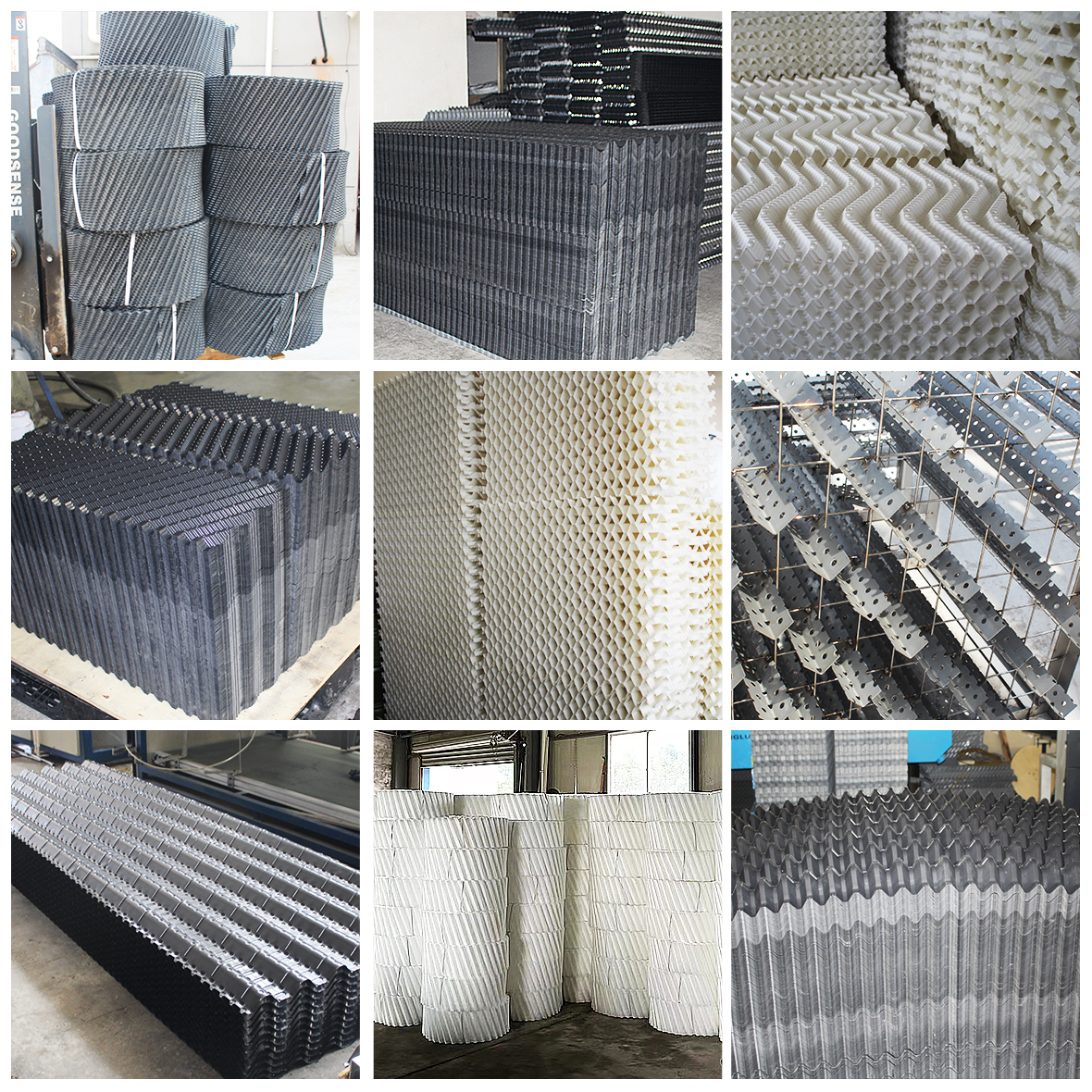
Why Choose China Fill and Drift Eliminators Customized for Better Efficiency?
Cooling tower performance depends on more than fan capacity, water flow, or the size of the heat exchanger. The internal components that control water distribution, air-water contact, and droplet separation also play a major role in overall cooling efficiency. Among these components, cooling tower fill and drift eliminators are especially important.
For industrial facilities, HVAC systems, power plants, chemical processing plants, and manufacturing operations, customized fill and drift eliminators can provide a practical solution when standard components do not match the existing tower design.
China has become an important sourcing destination for cooling tower components, offering manufacturing capabilities, material options, and customization services for international buyers. However, selecting the right supplier requires careful evaluation of product design, material quality, dimensional accuracy, and application requirements.
This article explains how China fill and drift eliminators customized for specific cooling tower projects can support better performance, how to choose appropriate materials, and what industrial buyers should consider before placing an order.
What Are Cooling Tower Fill and Drift Eliminators?
Cooling tower fill and drift eliminators serve different purposes inside a cooling tower. Although they are often purchased together during refurbishment or replacement projects, their designs and performance requirements should be evaluated separately.
How Does Cooling Tower Fill Improve Heat Transfer?
Cooling tower fill increases the contact area between circulating water and air. As water flows through the fill, heat is transferred to the air, and a portion of the water evaporates, removing heat from the remaining water.
The design of the fill influences the effectiveness of this process.
Film Fill for Efficient Heat Exchange
Film fill typically consists of formed plastic sheets arranged to create controlled water-flow passages. The corrugated surfaces spread water into thin films and provide a large contact area.
Common applications include:
Industrial process cooling towers
Commercial HVAC cooling systems
Crossflow cooling towers
Counterflow cooling towers
Cooling tower fill replacement projects
Film fill can provide strong thermal performance when water quality, operating temperature, and maintenance conditions are suitable.
Splash Fill for Demanding Industrial Conditions
Splash fill uses bars, grids, or other structures to break falling water into droplets and redistribute it throughout the tower.
Depending on the design, splash fill may be suitable for applications where suspended solids or fouling risks make narrow film-fill passages less desirable.
The best choice depends on circulating-water quality, thermal requirements, and the cooling tower's original configuration.
How Do Drift Eliminators Reduce Water Loss?
Drift eliminators are installed near the air discharge path to capture water droplets carried by the moving air.
They force the airflow to change direction, allowing droplets to collide with internal surfaces and drain back into the cooling tower.
Why Drift Elimination Matters
Effective drift eliminators can help:
Reduce water loss from escaping droplets
Limit the spread of water droplets into surrounding areas
Reduce the carryover of water-treatment chemicals
Protect nearby equipment and structures from excessive wetting
Support compliance with applicable environmental and site requirements
Drift eliminators do not eliminate all evaporative water loss. Their primary function is to reduce liquid droplet carryover, which is different from the evaporation required for cooling.
Why Choose Customized Fill and Drift Eliminators From China?
Standard components may be suitable for common cooling tower models, but industrial projects frequently involve specific dimensions, operating conditions, and replacement constraints.
Working with a Chinese manufacturer that offers customization can help buyers source components that match their project requirements.
Customized Dimensions for Existing Cooling Towers
Cooling towers vary in design, age, manufacturer, and internal arrangement. Even towers with similar capacities may use different fill block dimensions or drift eliminator configurations.
A customized solution can be manufactured according to approved drawings, measured dimensions, or reference samples.
What Dimensions Should Buyers Provide?
For cooling tower fill, prepare the following information:
Fill block length, width, and height
Sheet thickness and corrugation geometry
Crossflow or counterflow arrangement
Support structure and installation clearances
Required quantity and block layout
For drift eliminators, provide:
Panel length, width, and thickness
Blade spacing and profile, where applicable
Installation direction
Support and fastening arrangements
Required airflow direction and available space
Accurate measurements help reduce installation problems and unnecessary material waste.
Flexible Material Selection
Different operating environments require different material properties. A qualified supplier should explain which materials are appropriate for the intended application.
PVC Cooling Tower Fill
PVC is widely used in film-fill applications because it can be formed into corrugated sheets with practical heat-transfer characteristics.
It may be suitable for conventional HVAC and industrial cooling systems when the operating temperature and water chemistry are within the material's recommended limits.
PP Cooling Tower Fill and Components
Polypropylene can be considered when the application requires different chemical-resistance or temperature characteristics from those offered by a particular PVC product.
However, buyers should compare the actual material grade and product specifications rather than assuming that one plastic is always superior to another.
Material Selection for Drift Eliminators
Drift eliminators are commonly manufactured from plastic materials such as PVC or PP, depending on the product design and operating environment.
Material selection should consider temperature, chemical exposure, mechanical strength, ultraviolet exposure, and expected service conditions.
How Can Customized Fill Improve Cooling Tower Efficiency?
Customization is most valuable when it addresses a specific performance limitation rather than simply changing the product's dimensions.
Optimize Air-Water Contact
Cooling tower fill geometry influences the distribution of water and the contact between water and air.
A suitable fill design can help increase effective contact area and support the intended heat-transfer process.
Match Fill Geometry to Operating Conditions
Important design factors include:
Corrugation angle and surface pattern
Fill sheet spacing
Water-flow distribution
Airflow resistance
Fill depth and block arrangement
Water quality and fouling potential
A design with a high surface area may provide good heat transfer but can become vulnerable to blockage if the passages are unsuitable for the circulating water.
The goal is to balance thermal performance with airflow resistance, cleanability, and maintenance requirements.
Reduce Uneven Water Distribution
Uneven water distribution can create dry areas and overloaded sections within the fill. This reduces the effective use of the available heat-transfer surface.
Customized fill dimensions and block arrangements can help fit the existing tower layout and maintain more consistent water distribution when paired with a properly functioning distribution system.
Avoid Gaps Between Fill Blocks
Large gaps between blocks can allow water and air to bypass portions of the fill. Excessively compressed or incorrectly arranged blocks may also affect airflow.
Before manufacturing, buyers should confirm the block layout, support spacing, and installation method with the supplier.
Support Stable Operation During Replacement
Customized fill can be useful when original components are no longer readily available or when a tower requires a replacement product with specific dimensions.
However, dimensional compatibility alone does not guarantee equivalent thermal performance.
The proposed fill should be assessed against the original tower design and relevant operating conditions before installation.
How Do Customized Drift Eliminators Improve Cooling Tower Performance?
Drift eliminators influence both water carryover and airflow resistance. Their design should therefore balance droplet capture with the airflow requirements of the cooling tower.
Improve Droplet Capture
Drift eliminator blades are designed to change the direction of the air several times. Water droplets with sufficient inertia strike the surfaces and drain away rather than continuing into the exhaust air.
Select the Right Blade Profile and Spacing
Blade geometry and spacing influence the airflow path and droplet-capture characteristics.
A customized panel should be designed for the tower's airflow conditions and installation space. Simply reducing the gap between blades may increase resistance without providing a proportional improvement in drift control.
Balance Drift Reduction With Pressure Drop
A drift eliminator that creates excessive resistance can increase the operating burden on the fan or reduce airflow in a system with limited fan capacity.
Why Airflow Resistance Must Be Verified
When comparing customized drift eliminators, ask the manufacturer for relevant design data, including pressure-drop characteristics and drift-elimination performance under specified conditions.
The most appropriate product is not necessarily the one with the densest blade arrangement. It is the one that meets the required droplet-control performance without imposing unacceptable airflow resistance.
Improve Water Conservation
Water droplets escaping through the exhaust air represent additional water loss beyond normal evaporation.
Suitable drift eliminators help capture a portion of those droplets and return the collected water to the tower.
For facilities with high water consumption or strict site requirements, improving drift control can contribute to better water management.
Actual savings depend on tower operating conditions, existing drift performance, water chemistry, and the selected eliminator design.
What Should Buyers Check When Selecting a China Customized Manufacturer?
Choosing the right manufacturer is essential for achieving consistent quality and reliable delivery.
Evaluate Manufacturing and Customization Capabilities
A suitable manufacturer should understand cooling tower fill geometry, drift eliminator design, material selection, and dimensional requirements.
Questions to Ask Before Requesting a Quotation
Can you manufacture fill and drift eliminators according to our drawings?
Which PVC and PP materials are available?
Can you provide product samples and dimensional drawings?
What quality-control procedures are used during production?
Can you support OEM and replacement projects?
What are the production lead time and minimum order quantity?
What packaging and shipping options are available?
Can you provide installation guidance and technical documentation?
Clear answers help buyers distinguish a technically capable manufacturer from a supplier that offers only standard products.
Review Quality Control Procedures
Consistent quality is particularly important when ordering large quantities of fill sheets or drift eliminator panels.
Ask how the manufacturer checks raw materials, dimensions, sheet thickness, bonding quality, panel assembly, and finished-product condition.
Request Inspection Records
Depending on the project, useful documentation may include:
Material specifications
Dimensional inspection reports
Product drawings
Technical data sheets
Agreed product tolerances
Packaging inspection records
For large or customized orders, buyers may also consider pre-shipment inspection before the products leave the factory.
Assess Experience With International Projects
International sourcing requires coordination across manufacturing, packaging, shipping, and import procedures.
A manufacturer experienced in export orders should be able to clarify product specifications, packing dimensions, shipping terms, and required commercial documents.
Buyers should confirm the details in writing before approving production.
How to Source Customized Fill and Drift Eliminators Step by Step
A structured procurement process reduces misunderstandings and helps ensure the supplied products meet the project's requirements.
Step 1 — Define the Application
Identify whether the project involves an industrial process cooling tower, commercial HVAC tower, power plant, chemical facility, or another application.
Document the operating temperature, circulating-water quality, required cooling performance, and maintenance constraints.
Step 2 — Collect Drawings and Measurements
Prepare the available tower drawings, component dimensions, photographs, and reference samples.
For replacement projects, include the existing fill arrangement and drift eliminator installation details.
What If Original Drawings Are Unavailable?
Provide clear photographs with a scale reference and accurate measurements. The supplier may be able to help establish the product dimensions, but important design details should be verified before manufacturing.
Step 3 — Compare Technical Proposals
Request quotations from multiple qualified manufacturers using the same technical requirements.
Compare material grade, dimensions, fill configuration, drift eliminator design, performance information, quality controls, and delivery terms.
Step 4 — Approve Samples or Drawings
For customized components, review the drawings before production begins.
Where practical, inspect samples to confirm appearance, dimensions, material, and assembly quality.
Step 5 — Confirm Production and Delivery
Agree on the final specifications, order quantity, inspection requirements, packaging, lead time, and shipping terms.
A written specification helps prevent substitutions or misunderstandings during production.
Step 6 — Inspect Before Installation
Check delivered products for transport damage, dimensional discrepancies, and visible defects.
During installation, verify block arrangement, support, airflow passages, and drainage. After commissioning, monitor cooling performance, airflow, and water distribution.
How Can Customized Products Reduce Total Project Costs?
The initial purchase price is only one part of the total cost of a cooling tower replacement project.
Reduce Installation Modifications
Products manufactured to approved dimensions can reduce unnecessary cutting, adjustment, and material waste during installation.
Avoid Unnecessary Performance Loss
Incorrect fill geometry or drift eliminator spacing can affect airflow and cooling performance.
Technical verification before production can help reduce the risk of expensive corrective work after installation.
Improve Maintenance Planning
Suitable materials and designs can help simplify inspection and cleaning, depending on the application and water conditions.
A documented product specification also makes future replacement orders easier to manage.
Compare Total Cost Rather Than Unit Price Alone
Consider the following factors:
Product purchase price
Custom tooling or engineering charges
International freight and insurance
Import duties and applicable taxes
Installation labor
Potential downtime
Cleaning and maintenance requirements
Expected replacement frequency
A product with a slightly higher initial price may offer better overall value if it reduces installation difficulties or better matches the tower's operating conditions.
Common Mistakes to Avoid When Buying Customized Fill and Drift Eliminators
Choosing Products Based Only on Dimensions
Two products with identical external dimensions can have different thermal or drift-elimination characteristics.
Better approach: Verify geometry, material, and relevant performance data in addition to dimensions.
Ignoring Water Quality
A fill design suitable for clean water may become blocked quickly under conditions involving high suspended solids or significant biological growth.
Better approach: Share water-quality information with the manufacturer and select the fill configuration accordingly.
Overlooking Pressure Drop
A dense drift eliminator design may improve droplet capture but could create excessive airflow resistance.
Better approach: Compare drift performance and pressure-drop data together.
Assuming All Plastic Materials Perform the Same
PVC and PP products differ by material grade, formulation, manufacturing process, and operating limitations.
Better approach: Confirm the actual product specifications and recommended service conditions.
Failing to Confirm Packaging Requirements
Large quantities of plastic fill can occupy substantial shipping volume and may be vulnerable to deformation if poorly packed.
Better approach: Approve packing dimensions and loading arrangements before shipment.
FAQ About China Fill and Drift Eliminators Customized
Can Chinese Manufacturers Produce Customized Cooling Tower Fill?
Yes. Depending on their capabilities, manufacturers can produce fill media according to specified dimensions, material requirements, drawings, or reference samples. Buyers should verify manufacturing capabilities and technical compatibility before placing an order.
Can Fill and Drift Eliminators Be Ordered Together?
Yes. Some manufacturers supply both components, allowing buyers to coordinate dimensions, materials, and delivery schedules through one procurement process. However, each component must still meet its own design and performance requirements.
Which Is Better for Cooling Tower Fill: PVC or PP?
Neither material is universally better. PVC is widely used for film fill in many conventional applications, while PP may be appropriate where specific chemical or temperature characteristics are required. Selection depends on the actual material grade and operating conditions.
Do Customized Drift Eliminators Always Improve Efficiency?
Not automatically. Suitable drift eliminators can reduce droplet carryover, but excessive airflow resistance may negatively affect fan operation. The design must balance droplet capture and pressure drop.
What Information Is Needed for an Accurate Quotation?
Provide the tower model, component dimensions, drawings or photographs, material requirements, operating conditions, order quantity, and delivery destination. For replacement projects, include information about the existing fill and drift eliminator arrangements.
Are Customized Components Suitable for Cooling Tower Replacement Projects?
Yes. Customized components can be useful when original parts are difficult to obtain or when existing tower dimensions differ from standard products. The replacement design should be checked for compatibility with the tower's structural, thermal, and airflow requirements.
Conclusion: Choose Customized Fill and Drift Eliminators for Reliable Cooling Performance
China fill and drift eliminators customized for specific applications can provide practical sourcing options for industrial cooling tower manufacturers, maintenance contractors, distributors, and end users.
The key to a successful project is to treat fill and drift eliminators as complementary but distinct components. Fill should be selected to support appropriate heat transfer, water distribution, and fouling resistance. Drift eliminators should be designed to control droplet carryover while maintaining acceptable airflow resistance.
Before selecting a supplier, verify material quality, dimensions, manufacturing capabilities, technical documentation, and export arrangements. Use approved drawings and clear performance requirements to guide production, inspection, and installation.
By combining careful engineering assessment with reliable manufacturing and quality control, industrial buyers can source customized cooling tower components that fit their systems, support efficient operation, and provide better long-term value.