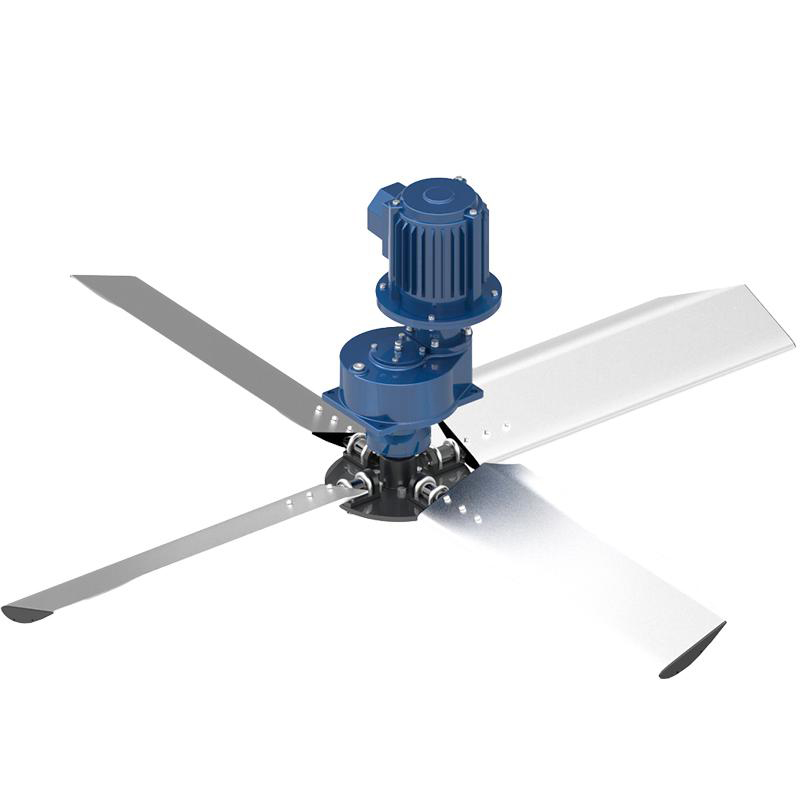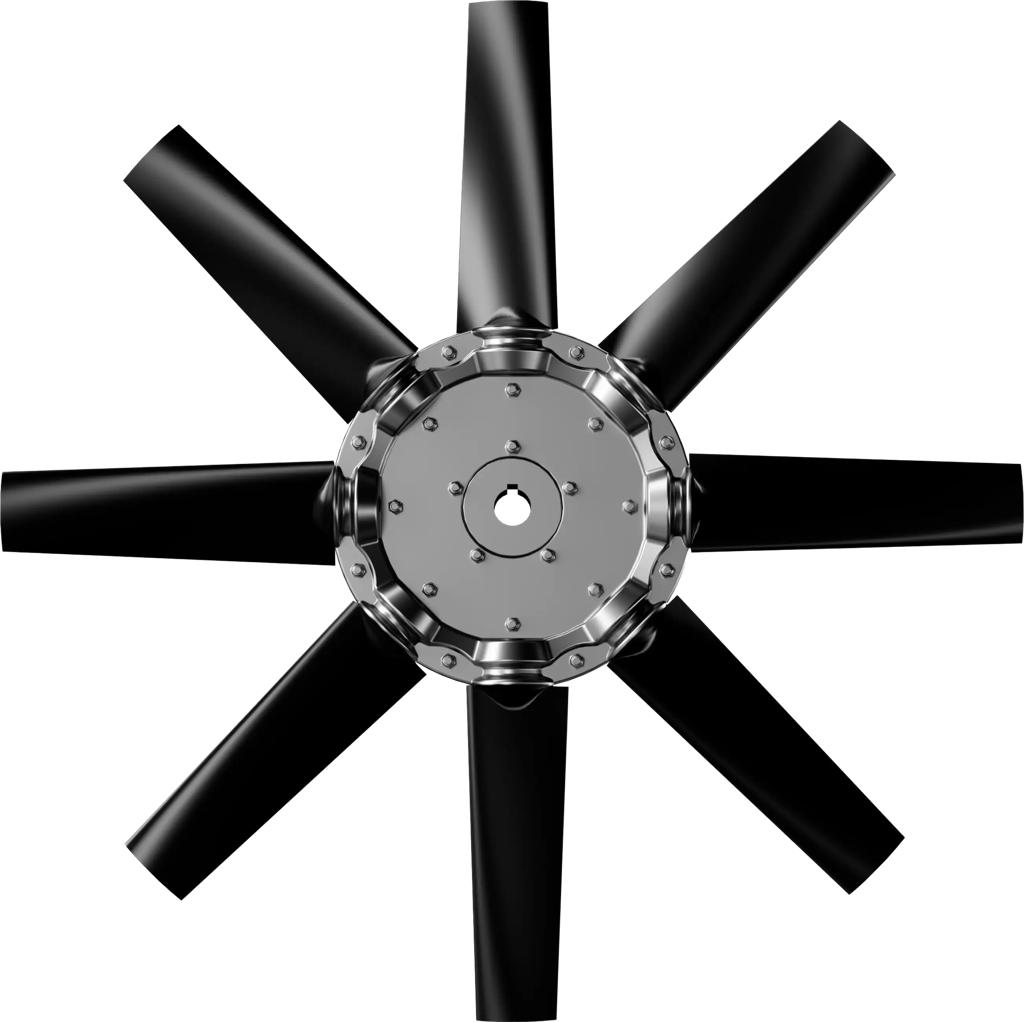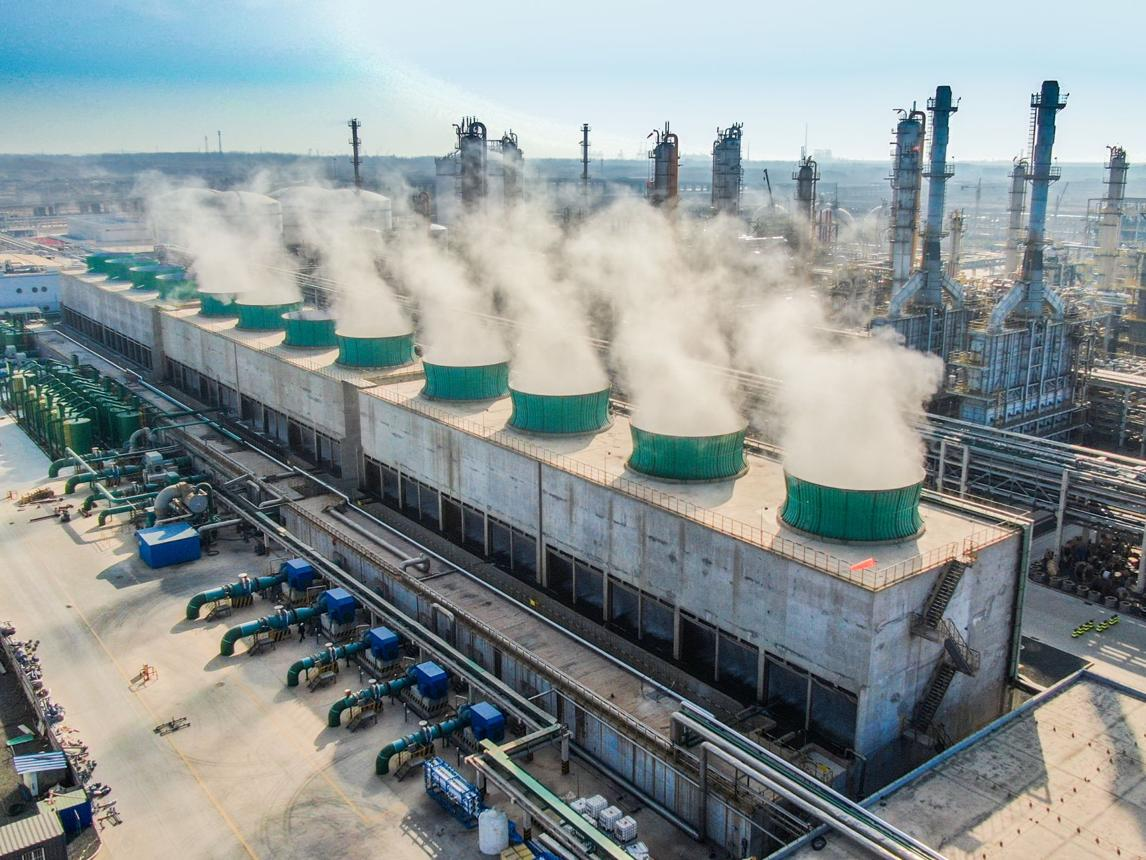
Industrial cooling tower fan blades are the core aerodynamic component of induced-draft and forced-draft cooling tower systems. Almost all large cooling towers use axial fan blades, which move air parallel to the fan shaft to deliver high airflow at low static pressure. The blade design directly controls cooling performance, energy consumption, noise level, and long-term reliability. Whether you are specifying new cooling tower equipment, replacing damaged fan blades, or upgrading an existing tower, understanding the core specifications and selection rules will help you avoid mismatched parts, excessive vibration, motor overload and unexpected downtime.
Axial Cooling Tower Fan Blade Basics
Axial cooling tower fan blades are the standard design for industrial cooling towers. Unlike centrifugal fans, axial blades push large volumes of air through the fill media with relatively low pressure rise, which matches the working condition of wet cooling towers perfectly.
There are two primary blade types widely used in the industry:
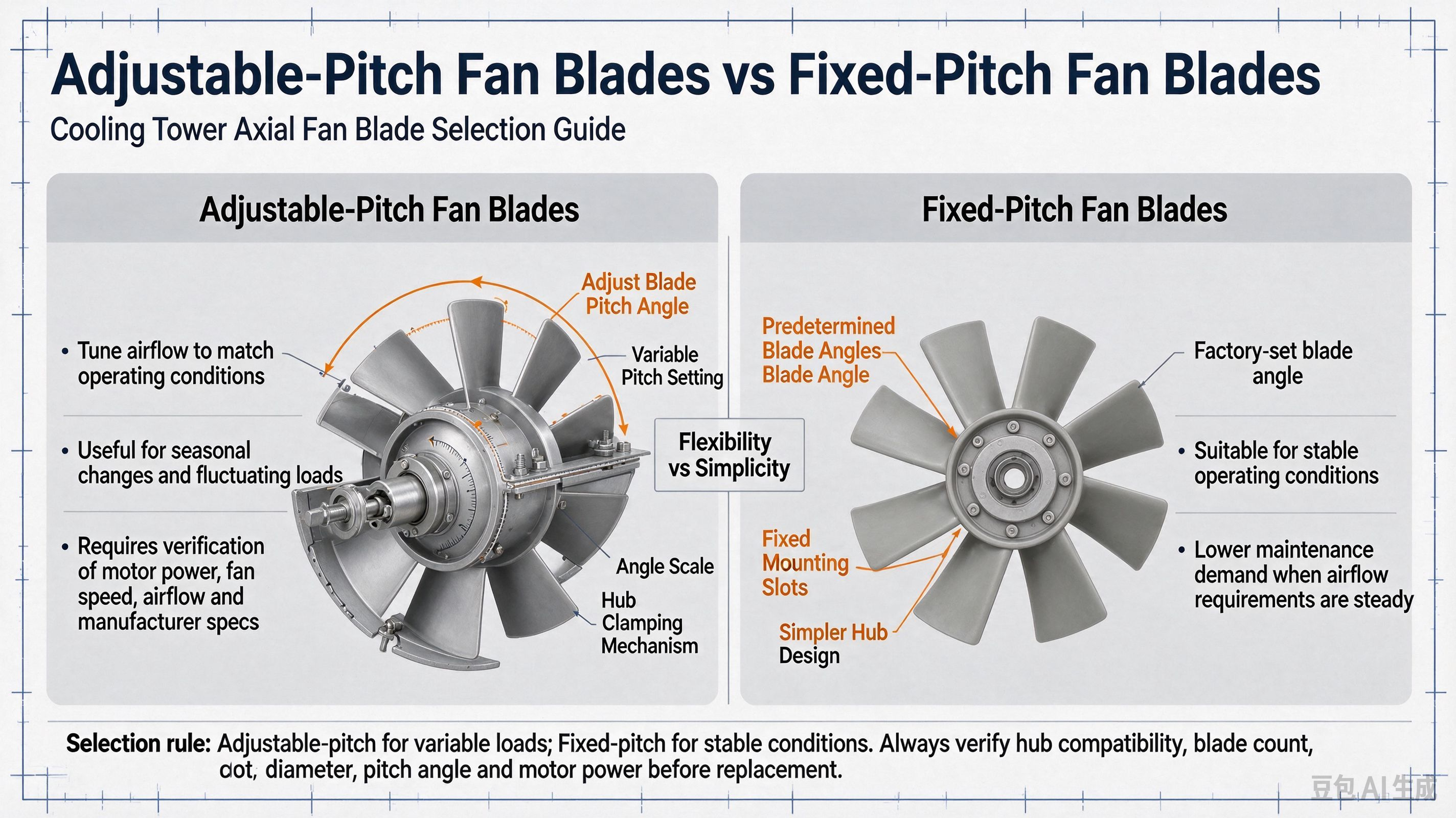
Adjustable-Pitch Fan Blades
Adjustable-pitch blades allow operators to change the blade pitch angle to tune airflow and fan load. This design is ideal for cooling towers with seasonal temperature changes or fluctuating production loads, such as chemical plants, power stations and data center cooling systems. Adjusting pitch must be matched with the rated motor power, fan RPM, and the manufacturer’s performance curve. Improper pitch settings will cause overcurrent, overheating, or insufficient cooling capacity.
Fixed-Pitch Fan Blades
Fixed-pitch blades come with a factory-set blade angle. Their structure is simpler, lower-cost, and easier to maintain. They fit cooling towers running under stable, consistent thermal loads where airflow demand rarely changes. Fixed-pitch blades are common in small and medium HVAC cooling towers and stable manufacturing process cooling systems.
Important note: When replacing blades, never mix fixed-pitch and adjustable-pitch blades on the same fan hub. Mismatched blade geometry creates severe imbalance and vibration risk.
Key Specifications for Cooling Tower Fan Blades
Before ordering replacement blades or new fan assemblies, collect these core technical parameters:
Blade Diameter
Diameter is the first critical dimension. It must match the internal throat diameter of the FRP fan stack, with reserved blade-tip clearance. Common industrial sizes range from 30 inches up to 14 feet and larger for utility-scale cooling towers. Do not assume the fan diameter equals the fan stack inner diameter; insufficient tip clearance causes rubbing, noise and blade damage.
Blade Pitch Angle
Pitch angle is the tilt angle of the blade profile, which controls airflow output and power draw. A larger pitch delivers more air but increases motor load. A smaller pitch reduces power consumption with lower airflow. This parameter is the most frequently misunderstood specification during replacement projects.
Blade Quantity
Standard blade counts include 4, 6, 8, 10 or 12 blades. The blade count pairs with aerodynamic profile, noise targets and hub design. Blades must always be replaced as a full matched set to maintain dynamic balance. Single-blade replacement is not recommended for heavy-duty industrial towers.
Rated Operating RPM
Cooling tower axial fans run at low speed, usually 90–250 RPM for large units. The blade airfoil, tip speed and structural strength are engineered for a specific RPM. Running blades beyond the design speed will lead to structural failure and safety hazards.
Material Grade
Material selection depends on the tower environment:
FRP (Fiberglass Reinforced Plastic / GRP): The most popular choice for industrial cooling towers. Lightweight, corrosion-resistant against moisture, chlorinated water vapor, mild chemical fumes, salt spray. Vinyl ester or epoxy resin FRP is used for harsh chemical and coastal environments. FRP blades reduce load on bearings, gearboxes and drive motors compared with metal blades.
Aluminum Alloy: High mechanical strength, rigid, suitable for dry cooling towers and low-corrosion environments. Heavier than FRP, prone to corrosion in wet, chlorinated or chemical vapor conditions.
Stainless Steel: Reserved for high-temperature or highly corrosive special process applications, higher cost and heavier weight.
ABS Plastic: Only for small, light-load commercial cooling towers, not for heavy industrial continuous operation.
Hub Compatibility
Confirm hub mounting pattern, bolt circle diameter, shaft bore size and locking style. Adjustable-pitch hubs have special clamping mechanisms for angle adjustment; fixed hubs use fixed mounting slots.
How to Choose the Right Cooling Tower Fan Blade by Application
Power Generation Plants
Power plant cooling towers run continuously with high thermal duty. FRP adjustable-pitch blades are the mainstream selection. They can adjust airflow to match condenser heat load across seasons. Corrosion-resistant resin systems are required for long outdoor service life.
Chemical & Petrochemical Facilities
Chemical plants carry corrosive vapors, acid mist and variable production loads. Select vinyl ester FRP blades. Verify chemical compatibility with the onsite vapor composition before purchase. Adjustable pitch is preferred for variable batch production.
Data Centers, Hospitals & Large Commercial HVAC
Data center cooling towers require stable cooling and controlled noise. A mix of adjustable-pitch FRP blades and fixed-pitch blades is used. Many operators tune pitch to balance energy saving and constant wet-bulb cooling performance.
Food, Steel & General Manufacturing
Manufacturing facilities with steady process heat loads often select cost-effective fixed-pitch FRP or aluminum blades. If production runs shift day and night, adjustable-pitch blades deliver better energy efficiency.
Water Treatment & Coastal Installations
Salt spray and high humidity accelerate metal corrosion. FRP blades are strongly recommended over aluminum for coastal and wastewater treatment cooling towers.
Warning Signs That You Need to Replace Cooling Tower Fan Blades
Knowing failure symptoms helps you schedule maintenance before unexpected shutdown:
Persistent abnormal vibration and high vibration readings after hub and bearing inspection
Visible cracks, delamination, erosion, blistering on FRP blade surfaces
Blade tip rubbing marks against the fan stack
Unbalanced fan, uneven noise, or one blade clearly damaged
Regular motor overcurrent after pitch adjustment with no other root cause
Long-term UV aging, resin loss, exposed fiberglass reinforcement
Minor surface scratches can be repaired with approved FRP repair kits. But widespread delamination, deep structural cracks or broken blade roots require full set replacement
Best Practices for Fan Blade Replacement & Installation
Always replace blades as a matched complete set. Mixing old and new blades causes imbalance.
Perform dynamic balancing after installation.
Double-check pitch angle setting against the nameplate and motor amp limits.
Measure blade-tip clearance evenly around the fan stack.
Confirm rotation direction matches the original design before startup.
Run a no-load test first, then monitor motor current, vibration and noise for 30 minutes.
Keep spare matched blade sets on hand for critical 24/7 production cooling towers.
Frequently Asked Questions
Q: Are FRP cooling tower fan blades better than aluminum?
A: FRP blades are lighter and corrosion-resistant, making them the default for wet cooling towers. Aluminum offers higher rigidity for dry cooling, but it is vulnerable to corrosion in humid, chlorinated or coastal environments.
Q: Can I change fixed pitch blades to adjustable pitch blades?
A: It is possible only if you replace the entire compatible hub assembly and recheck motor power, RPM, airflow and fan stack clearance. Do not retrofit adjustable blades onto an original fixed hub without engineering review.
Q: What is the typical lifespan of FRP cooling tower fan blades?
A: Properly selected and maintained FRP blades commonly last 8–15 years. Service life shortens in high-corrosion, high-UV or abrasive environments.
Q: Is one damaged blade enough to replace the whole set?
A: Yes, for industrial cooling towers. Even a single damaged blade breaks the aerodynamic and weight balance, accelerating bearing, gearbox and motor failure.
Conclusion
Cooling tower fan blades are not interchangeable off-the-shelf parts. The right combination of diameter, pitch angle, blade count, material and hub fit directly protects your cooling system reliability and cuts ongoing energy costs. For replacement projects, collect original nameplate data, operating conditions and fan stack dimensions before contacting suppliers. For new builds, match blade aerodynamic design to your thermal load, noise limits and site environment to maximize long-term performance.
Recommended internal links for CoolingTowerPart.com: