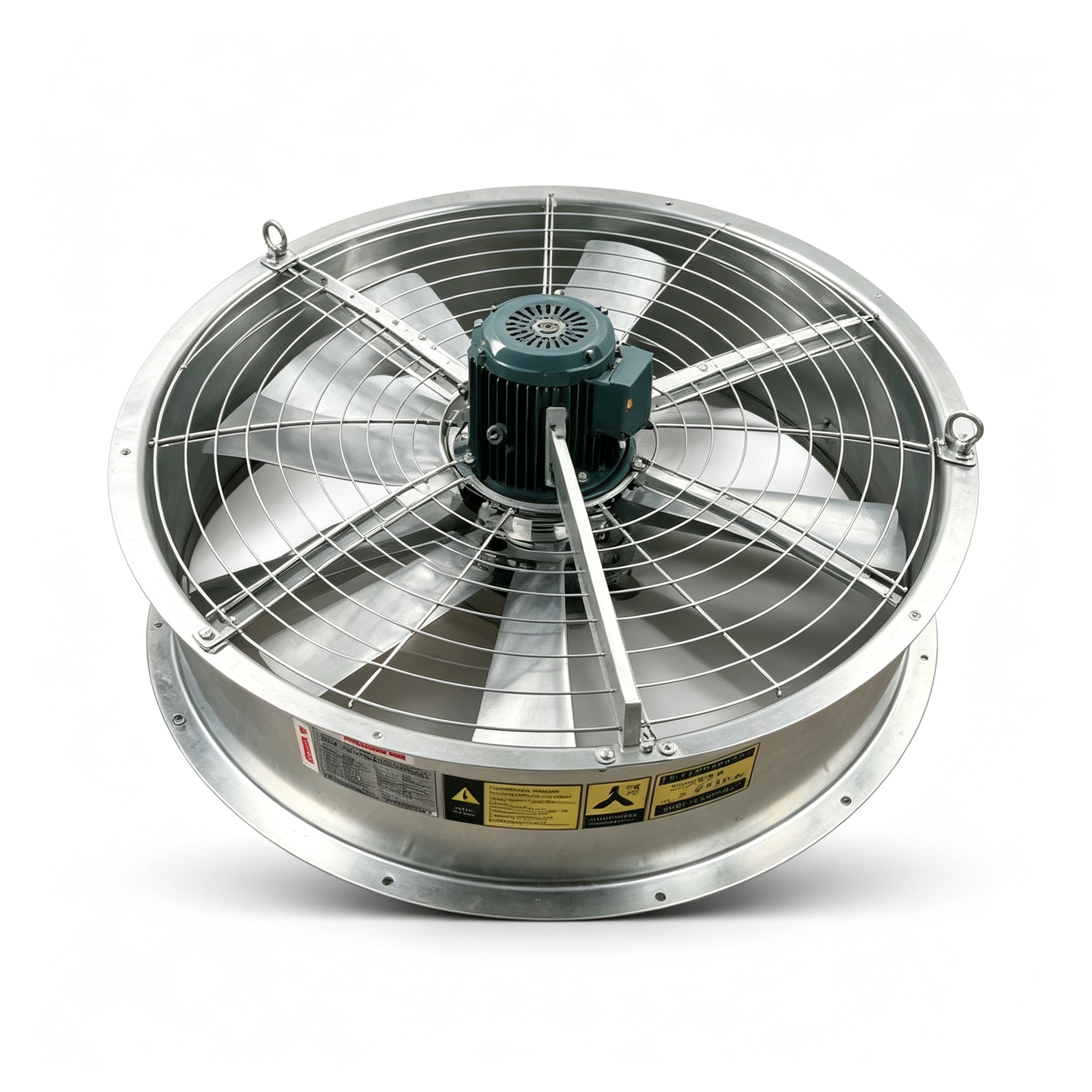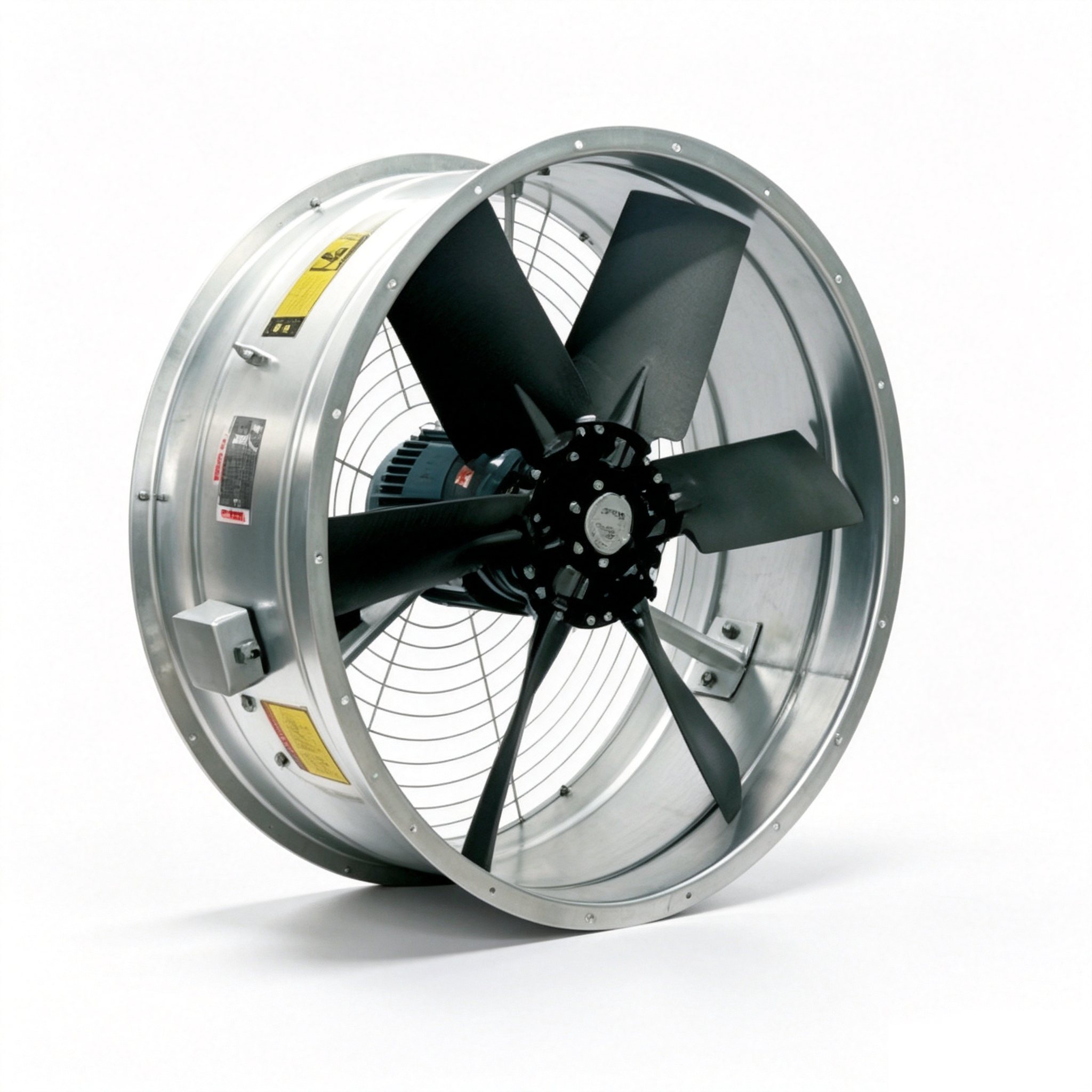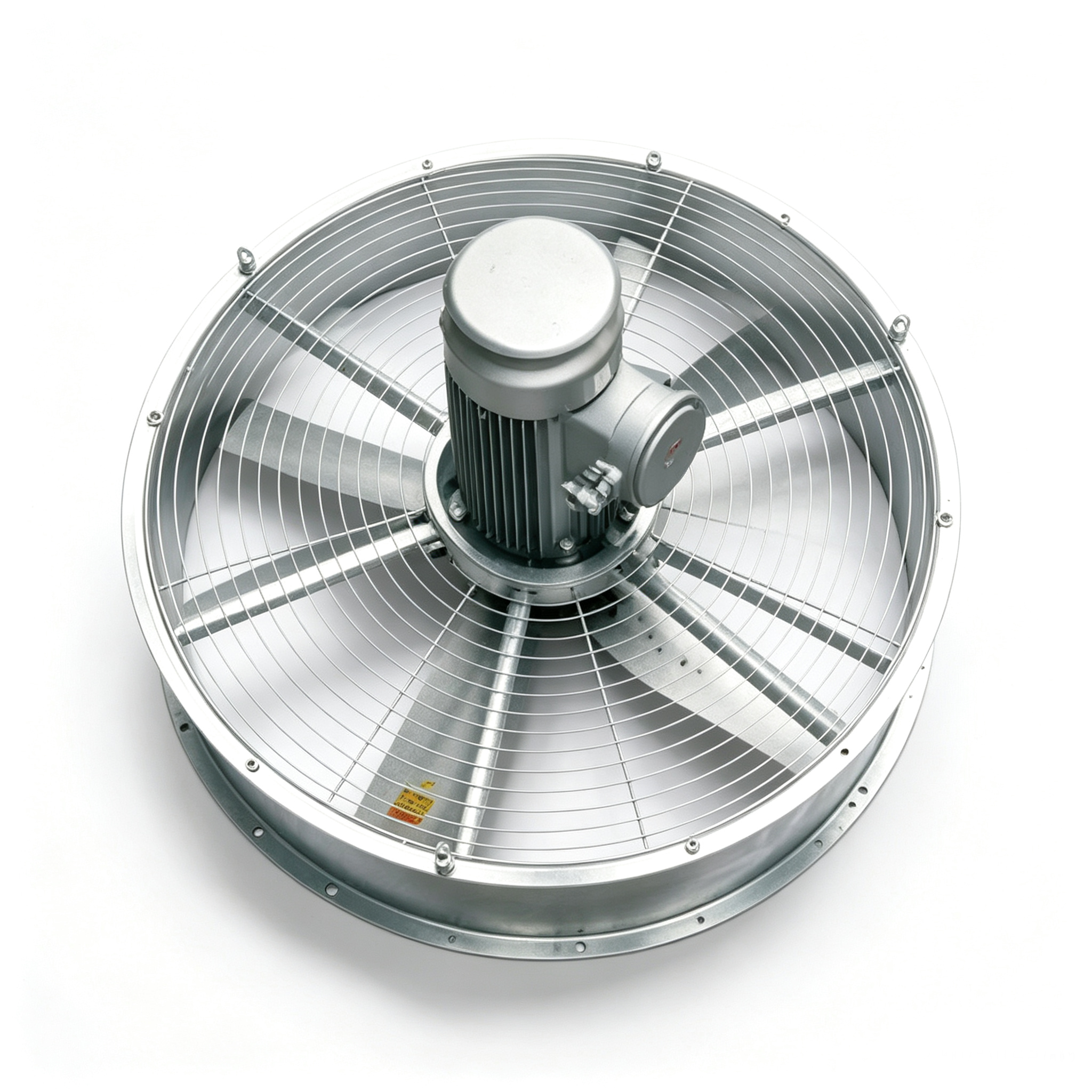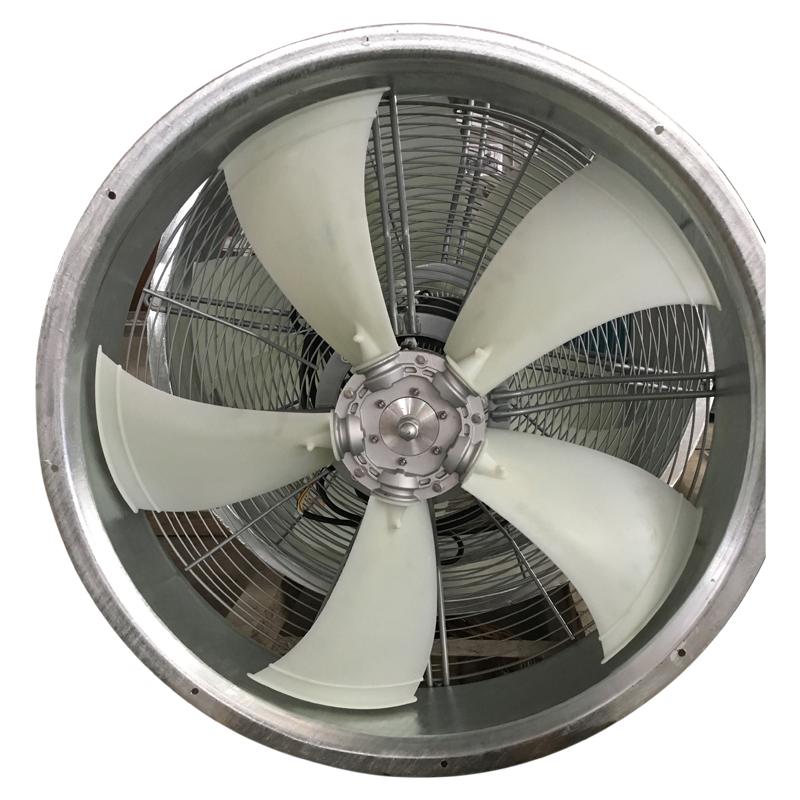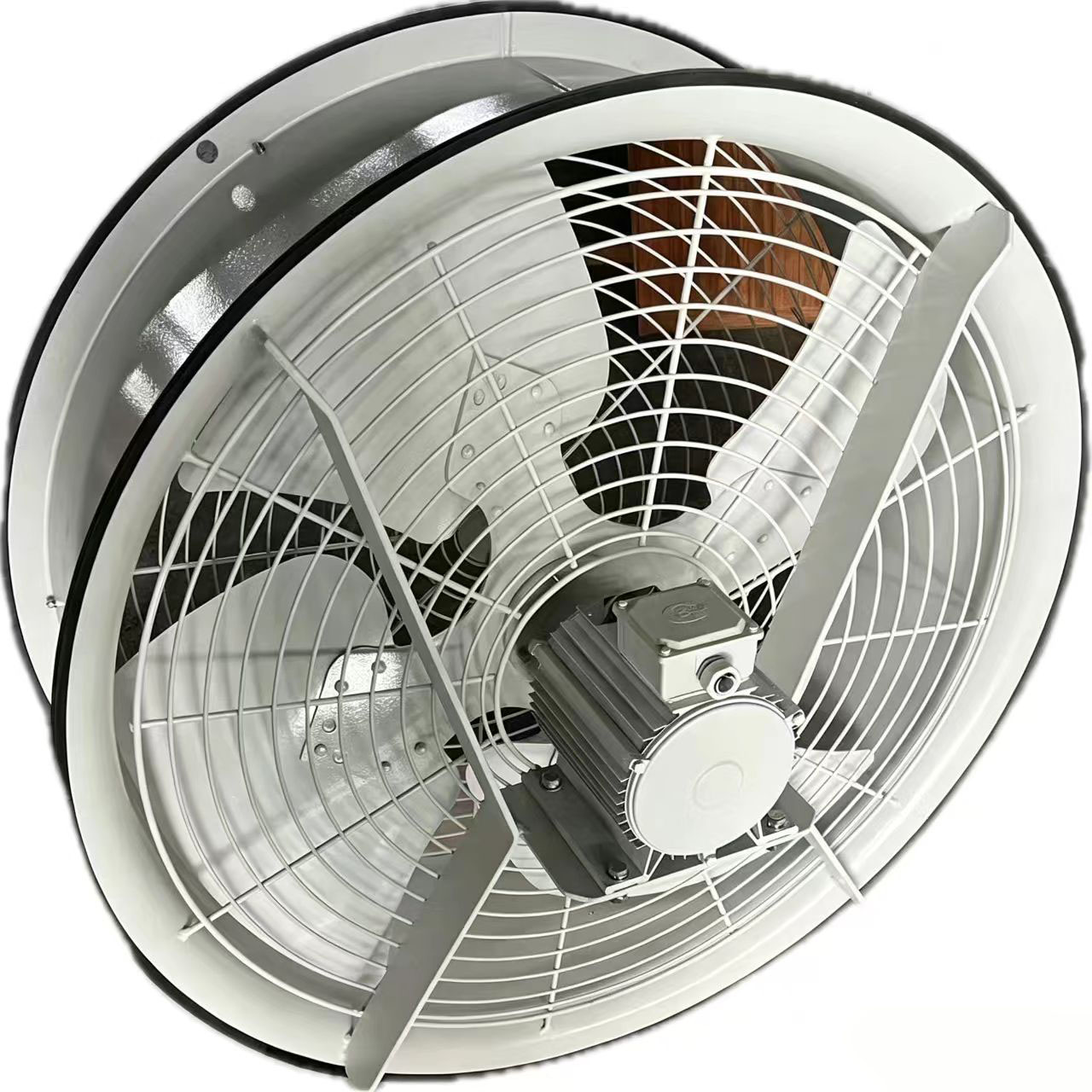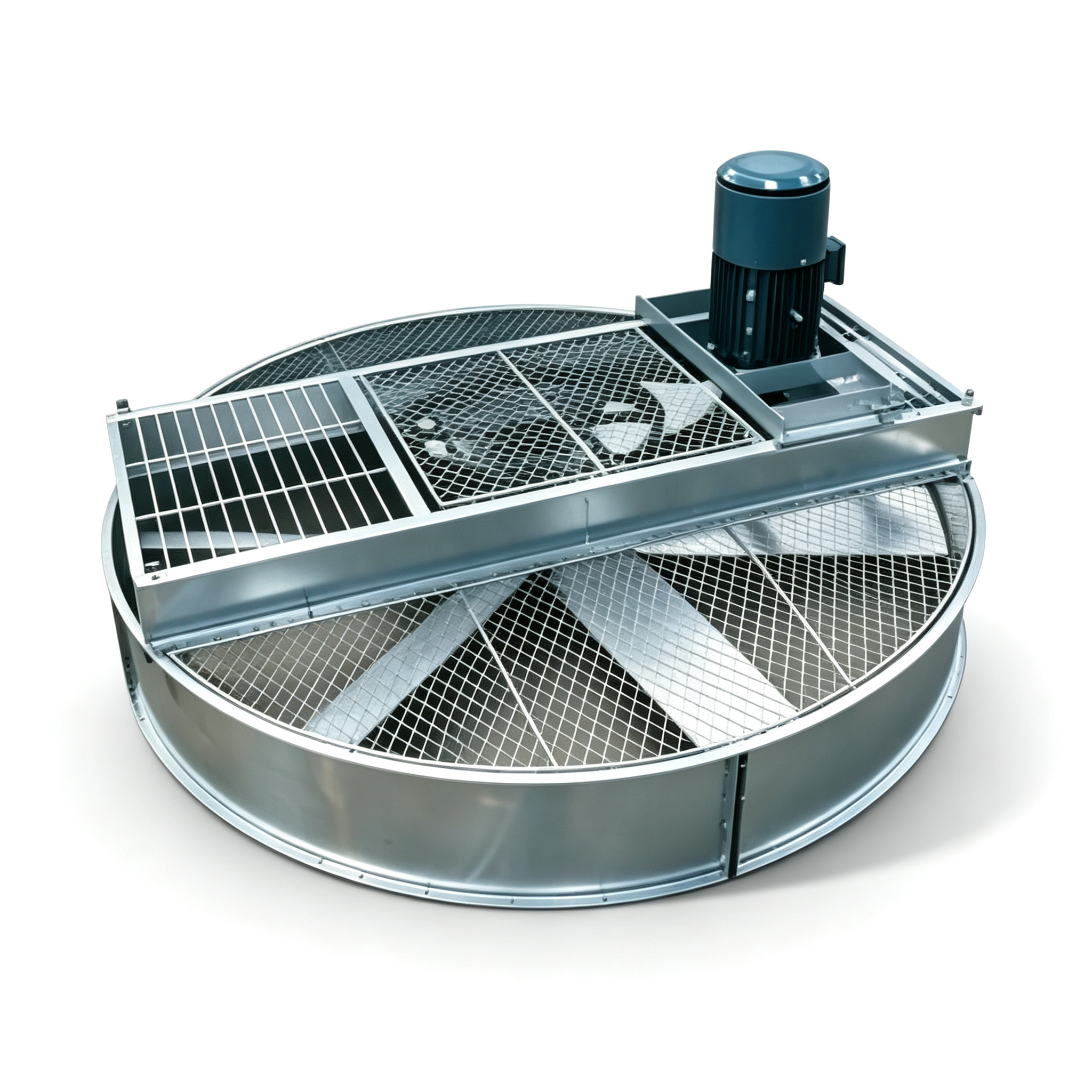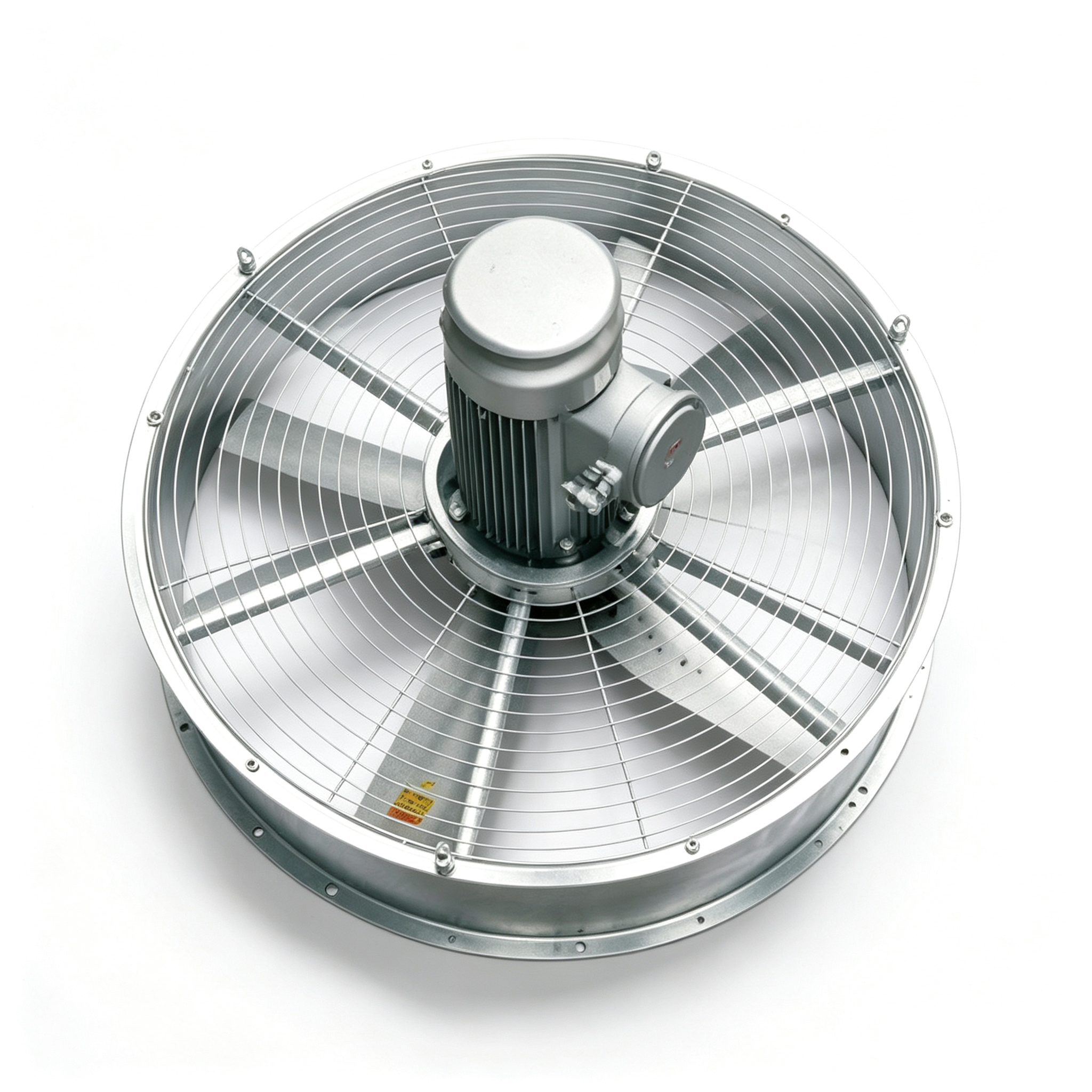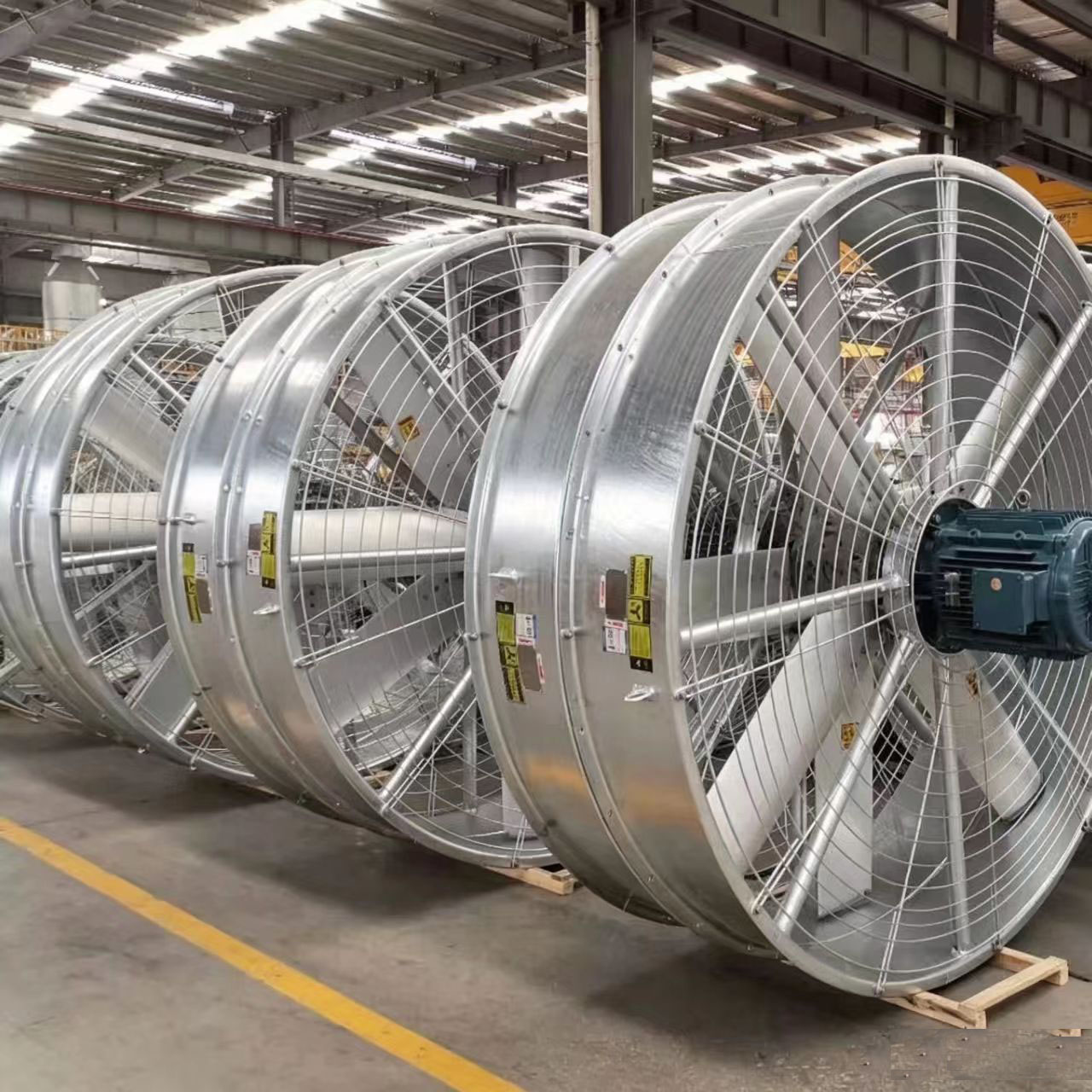
Nearly all large induced-draft and forced-draft industrial cooling towers rely on axial flow fan blades. Unlike centrifugal fans that push air outward radially, axial fan blades move air parallel to the fan shaft, delivering very high airflow at low static pressure — the exact working condition required for wet cooling towers, where air must pass through fill media, drift eliminators and internal obstructions with minimal pressure loss.
The aerodynamic design of axial fan blades determines cooling tower heat rejection capacity, energy consumption, noise level, vibration and stable operating range. Many procurement and maintenance teams only focus on blade diameter and material, ignoring airfoil geometry, spanwise twist, pitch distribution and tip flow control. A poorly aerodynamic blade can consume extra power, fall short of design CFM, or create damaging vortex and turbulence even if the size and material match.
What Is Axial Flow for Cooling Tower Fans?
Axial fans are ducted fans installed inside the FRP fan stack (fan cylinder). As the blades rotate, the airfoil profile generates lift, pushing air straight along the axis of rotation. Cooling tower axial fans are designed for low-speed operation, usually 90–250 RPM for large diameters, to keep tip speed and noise within acceptable limits.
Cooling tower systems need massive air volume rather than high pressure. Typical static pressure for wet cooling towers is low, ranging from 0.2 to 0.8 inches water gauge. This low-pressure, high-flow requirement makes axial flow the only practical choice for industrial cooling towers, while centrifugal fans are reserved for high-pressure duct systems.
Core Aerodynamic Design Features of Axial Cooling Tower Fan Blades
1. Airfoil Profile
Each blade cross-section uses a purpose-built aerodynamic airfoil, optimized for low Reynolds number, wet air and low static pressure. Common profiles include Clark-Y and modern low-noise LS airfoils, tuned for cooling tower service rather than high-speed aircraft or compressor blades.
Thicker, robust airfoils: better for high moisture, droplet erosion and structural strength, slightly lower peak efficiency
Thin, streamlined airfoils: higher aerodynamic efficiency, lower noise, more sensitive to erosion and impact
Serrated trailing edge profiles: break up trailing-edge vortices, reduce broadband noise without sacrificing airflow, widely used for data center and urban cooling towers
2. Spanwise Blade Twist (Twisted Airfoil)
This is one of the most important and often overlooked features. The rotational speed of the blade tip is much faster than the speed near the blade root. Manufacturers add progressive twist along the blade span: the root has a steeper pitch angle, and the tip has a shallower angle.
Twist keeps the angle of attack consistent across the whole blade, preventing flow separation, backflow and stall near the hub. Untwisted flat blades create uneven airflow, heavy turbulence, vibration and much lower efficiency, even if they have the same nominal pitch angle at one measurement point.
3. Blade Pitch Angle and Angle of Attack
Pitch angle is the geometric tilt of the airfoil chord relative to the fan rotation plane. The angle of attack is the difference between this geometric setting and the incoming airflow direction.
Larger pitch angle: higher airflow and cooling capacity, higher brake horsepower and motor current
Smaller pitch angle: lower airflow, lighter motor load, better part-load efficiency
Adjustable-pitch blades allow on-site tuning of this angle to match seasonal wet-bulb changes and variable heat load
Fixed-pitch blades have a factory-calibrated pitch optimized for one design operating point
Critical rule: If the pitch angle is set too high, the blade will stall. Stalled blades lose lift, airflow collapses, vibration spikes, and the motor can overload.
4. Tip Speed and Tip Clearance
Tip speed is the peripheral speed of the blade outer edge, measured in feet per minute (FPM). Most cooling tower axial fans limit tip speed to 6,000–10,000 FPM to control noise and structural stress. Excessively high tip speed creates strong tip vortices, noise and erosion.
Blade-tip clearance is the gap between blade tip and the inner wall of the fan stack. Too large a clearance causes air recirculation from the high-pressure outlet back to the low-pressure inlet, dropping aerodynamic efficiency. Too little clearance creates rubbing risk, abrasion and catastrophic blade damage. For most industrial fans, tip clearance is controlled to a small percentage of fan diameter.
5. Blade Count, Chord Width and Hub Ratio
Blade count (4, 6, 8, 10, 12 blades) and chord width are paired with airfoil design:
More blades: higher static pressure capability, quieter operation at the same airflow, higher manufacturing cost
Fewer blades: simpler structure, lower inertia, usually higher noise
Hub-to-tip ratio: the diameter of the central hub divided by fan diameter. A well-designed parabolic hub reduces reverse flow and dead zones at the fan center, improving overall airflow uniformity.
How Aerodynamic Performance Impacts Cooling Tower Operation
CFM and Heat Rejection: Aerodynamic quality directly controls actual delivered airflow. Two blades with identical diameter and pitch can deliver different CFM if airfoil and twist design differ.
Energy Efficiency: High-efficiency aerodynamic profiles reduce brake horsepower for the same airflow, cutting long-term electricity cost for 24/7 operated towers.
Stall Margin: Good design maintains stable airflow across a wide operating range. Poor aerodynamic blades stall easily when static pressure rises (such as clogged fill or dirty drift eliminators).
Noise Output: Vortices at the blade tip and trailing edge are the main noise sources. Optimized airfoils, serrated edges and proper twist reduce aerodynamic noise.
Vibration and Wear: Uneven flow from bad aerodynamics creates periodic loading on blades, hub, gearbox and bearings, accelerating fatigue failure.
Material Interaction with Aerodynamic Shape
Aerodynamic geometry and material must work together.
FRP (fiberglass): Easy to mold into complex twisted, high-precision airfoils with smooth surfaces. Smooth FRP surfaces reduce drag and erosion. FRP’s light weight also lowers centrifugal stress, which enables larger diameter aerodynamic designs.
Aluminum alloy: Machined airfoils hold tight dimensional tolerance, but heavier weight limits maximum tip speed and increases drive-train load. Surface corrosion and pitting will degrade aerodynamic performance over time.
Stainless steel: Strong and erosion-resistant, but heavy. High inertia restricts aerodynamic optimization options and increases power consumption.
Important note: Replacing original blades with a low-cost aftermarket set that only matches diameter and pitch but not airfoil twist and profile will change the fan performance curve, even if they look similar.
Common Aerodynamic Problems You May Encounter
Fan stall: Sharp rise in vibration, motor current fluctuation, unstable cooling water temperature, caused by excessive pitch or high system static pressure
Tip vortex noise: High-pitched howling sound, usually from excessive tip clearance or non-optimized blade tip shape
Uneven airflow across fill: Poor blade twist or bad hub design, leading to hot spots and uneven cooling
Performance drop after years of service: Erosion, resin loss, surface roughness or delamination changes the airfoil shape and increases drag
Practical Tips for Selection and Replacement
When sourcing replacement blades, request the manufacturer’s fan performance curve, not just diameter and pitch.
Confirm the blade has matched spanwise twist, not a flat, untwisted blade.
Verify the maximum allowable tip speed and operating RPM before installation.
Measure and record tip clearance after mounting; adjust if outside the design range.
After pitch adjustment, run the fan and check motor amperage, vibration and noise to confirm you are operating away from the stall region.
For retrofits, avoid swapping blade profiles or airfoil types without CFD or performance data review.
Frequently Asked Questions
Q: What makes axial fans better than centrifugal fans for cooling towers?
A: Axial fans move large volumes of air at low static pressure, matching the resistance of cooling tower fill and drift eliminators. Centrifugal fans are built for high pressure and much lower airflow.
Q: Can I adjust pitch angle to fix low airflow?
A: Pitch adjustment can increase airflow, but it raises power draw and moves the fan closer to stall. Always check the performance curve and motor amp limit before increasing pitch.
Q: Are twisted blades always better than flat blades?
A: Yes for industrial cooling towers. Twisted blades maintain a consistent angle of attack from root to tip, delivering higher efficiency and stable airflow. Flat blades are only used for small, low-duty commercial coolers.
Q: Does surface roughness affect aerodynamic performance?
A: Yes. Erosion, mineral deposits, delamination and rough repair patches disrupt airflow over the airfoil, reducing efficiency and increasing noise.
Conclusion
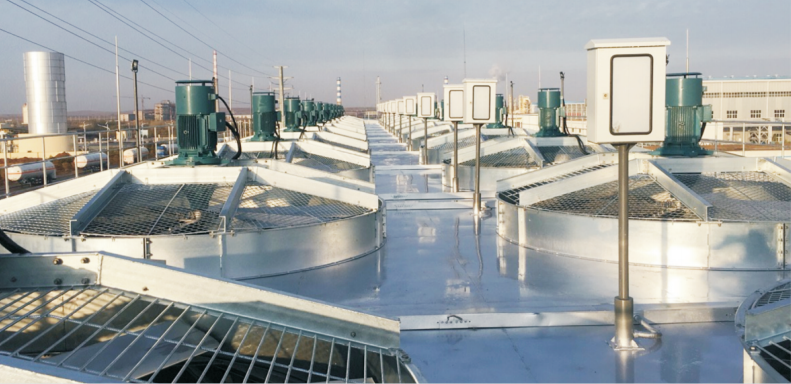
Axial flow cooling tower fan blades are far more than simple rotating plates. Their aerodynamic design — airfoil profile, spanwise twist, pitch distribution, tip geometry and hub shape — defines the fan’s airflow, efficiency, stability and noise. Material selection, diameter and pitch settings work within the limits of this aerodynamic envelope.
For new builds or blade replacement projects, prioritize matched aerodynamic design and performance data, rather than only matching physical dimensions. A properly engineered axial fan blade set delivers reliable heat rejection, lower power consumption and fewer mechanical failures over the service life of your cooling tower.
Recommended internal links for CoolingTowerPart.com: