Industrial Cooling Tower Air Inlet Louver
The industrial cooling tower air inlet louver shown in the product image is a molded plastic louver panel designed for installation at the air-entry section of a cooling tower.
Its distinctive construction features a series of repeated angled air passages that provide an open path for ambient air while helping control water splash and carryover. The molded profile creates a rigid, lightweight panel that can be installed as individual sections or combined into larger louver assemblies.
This type of plastic cooling tower louver is particularly suitable for industrial cooling towers where reliable airflow, water retention, corrosion resistance, and low maintenance are important.
The louver can be supplied for new cooling tower construction, replacement applications, cooling tower refurbishment, and aftermarket spare-parts projects.
Custom dimensions and configurations can be produced according to the cooling tower's existing louver opening and installation requirements.
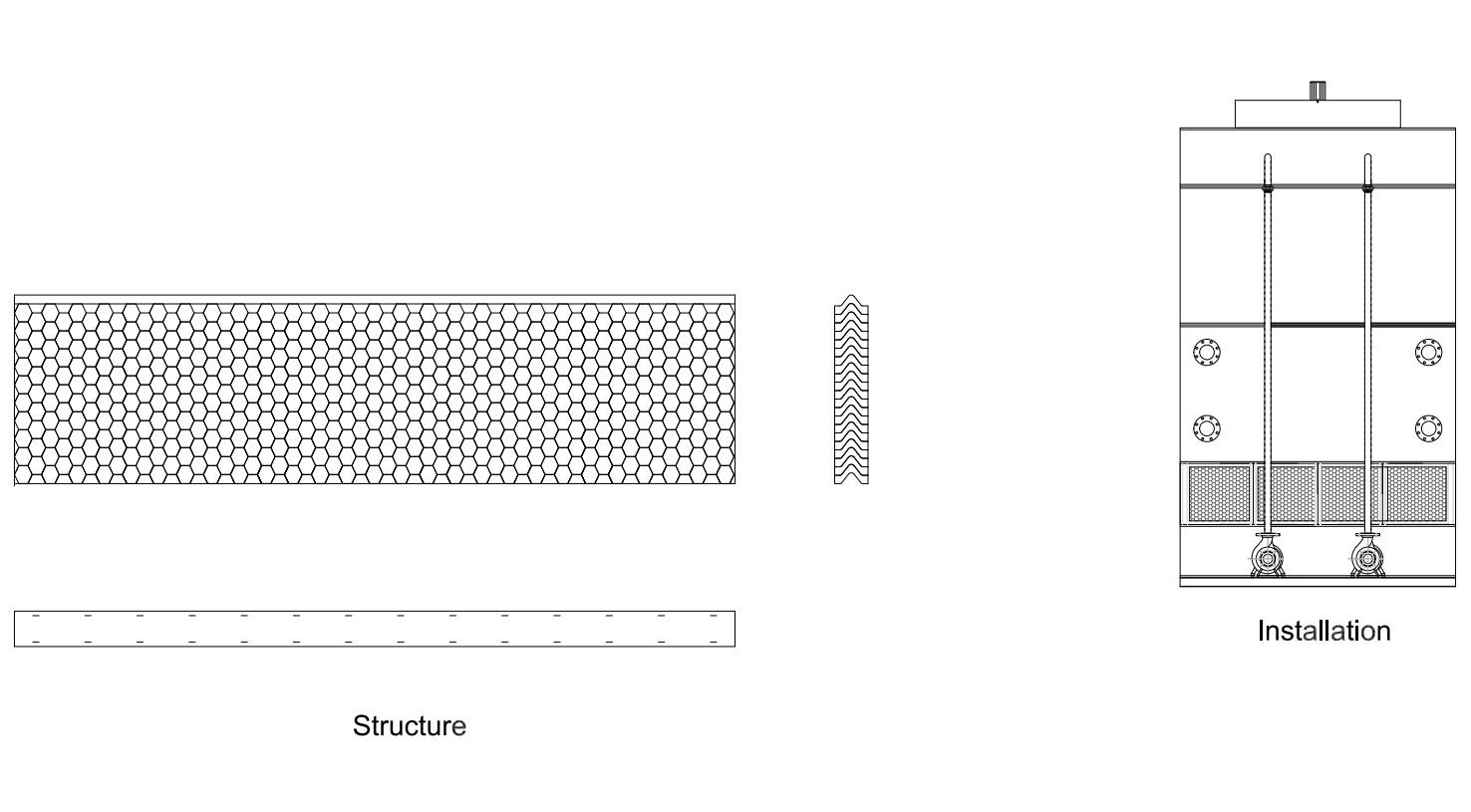
What Is a Cooling Tower Air Inlet Louver?
A cooling tower air inlet louver is a structured panel installed over or around the air intake opening of a cooling tower.
The primary purpose is to allow sufficient ambient air to enter the tower while helping prevent excessive water from escaping through the air inlet.
The molded louver design shown in the image uses multiple angled passages rather than a simple flat screen. This creates a controlled air path and provides additional surfaces that help intercept water droplets and splash.
In an operating cooling tower, the louver works together with components such as:
Cooling tower fill
Water distribution pipes
Spray nozzles
Drift eliminators
Cooling tower fan
Fan stack
Air inlet structure
Cold-water basin
The complete system must maintain an appropriate balance between airflow and water distribution to achieve efficient heat rejection.
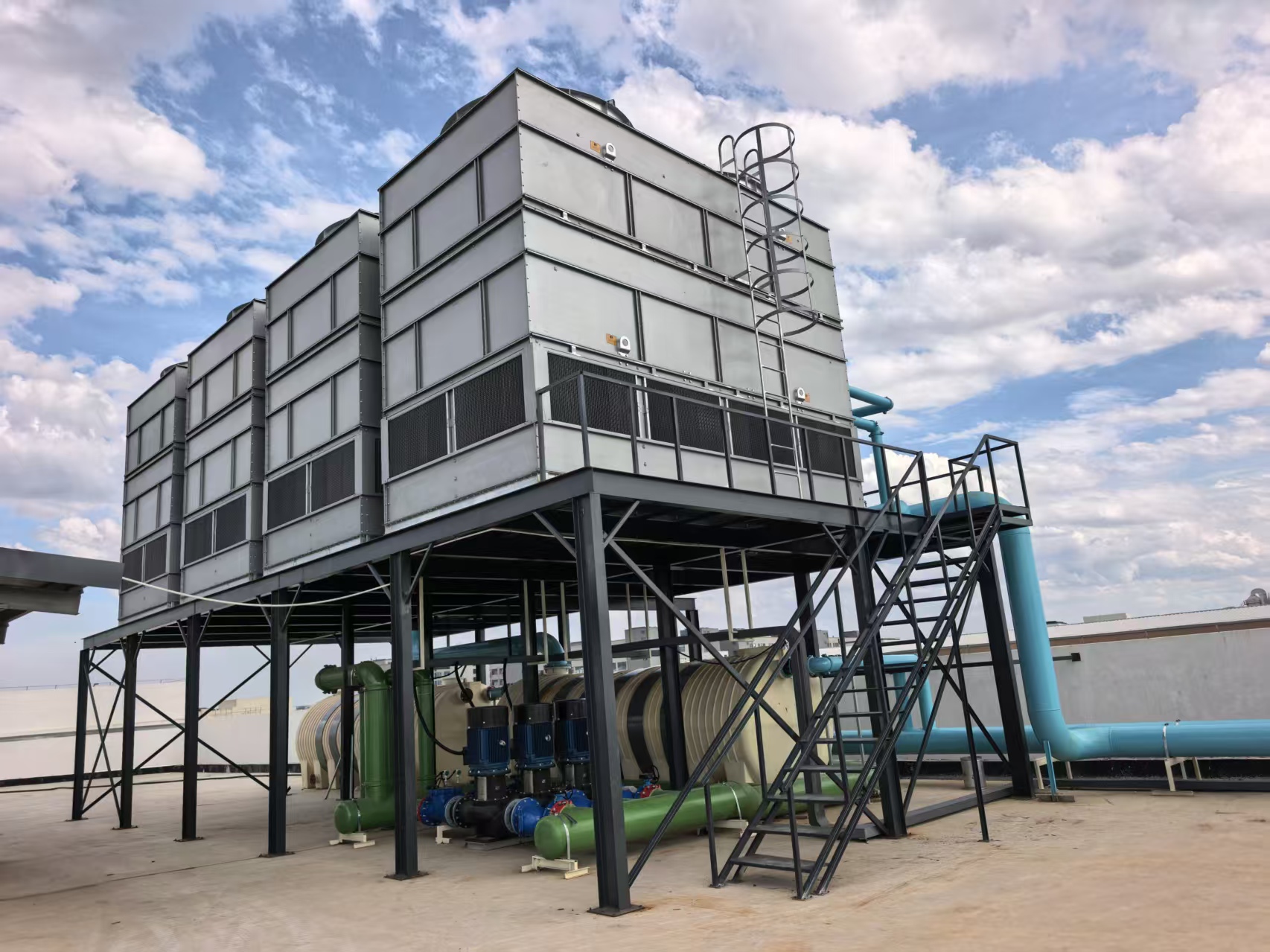
Molded Plastic Cooling Tower Louver Design
The product shown is different from conventional flat-blade louver panels.
It features a three-dimensional molded profile with repeated angled openings and vertical support sections. This geometry provides a large number of controlled air passages across the panel.
Key Design Features
Three-dimensional molded construction
Repeated angled airflow passages
Large effective air-entry area
Integrated structural ribs
Water splash-retention surfaces
Lightweight construction
Modular panel configuration
Suitable for custom fabrication
The molded geometry provides mechanical rigidity while keeping the panel relatively lightweight.
This can make handling and installation easier during cooling tower construction or maintenance.
How Does a Cooling Tower Air Inlet Louver Work?
Cooling towers require a continuous supply of ambient air to remove heat from circulating water.
As air approaches the cooling tower, it passes through the louver openings.
The louver geometry helps:
Provide a controlled path for incoming air.
Direct air toward the cooling tower fill.
Reduce unrestricted openings through which water can escape.
Intercept some water droplets and splash.
Help limit the entry of rain and larger airborne debris.
The exact airflow and water-retention performance depend on the louver geometry, open area, installation arrangement, cooling tower airflow rate, and operating conditions.
For this reason, louver dimensions should be selected according to the specific cooling tower design.
Main Benefits of This Cooling Tower Louver
Efficient Air Entry
The repeated openings provide a substantial area for ambient air to enter the cooling tower.
Adequate air intake is important because the cooling tower fan must move sufficient air through the heat-transfer section.
Water Splash Reduction
The angled passages provide surfaces that can help retain water and reduce direct splash-out through the air inlet.
This is particularly useful for cooling towers with significant water movement near the air-entry area.
Lightweight Construction
Molded thermoplastic construction is generally lighter than many metal alternatives.
Lower component weight can simplify:
Transportation
Manual handling
Installation
Replacement
Maintenance
Corrosion Resistance
Plastic louver construction does not experience conventional metal rusting.
Depending on the selected thermoplastic and operating environment, the louver can provide good resistance to moisture and many corrosive conditions.
Easy Replacement
The modular panel concept makes this type of louver suitable for cooling tower repair and refurbishment.
Damaged sections can potentially be replaced without rebuilding the entire air inlet structure.
Plastic Cooling Tower Louver Material
The appearance of the supplied product image indicates a molded thermoplastic construction. Depending on the specific product specification, suitable materials may include PVC or PP.
The exact material should be confirmed for each project because temperature, chemical exposure, UV conditions, mechanical loading, and cooling tower operating conditions can affect material selection.
PVC Cooling Tower Louvers
PVC is commonly used in cooling tower components because of its combination of:
PVC can be a suitable choice for many conventional industrial cooling tower applications.
PP Cooling Tower Louvers
Polypropylene can be selected for applications requiring good resistance to moisture and various chemicals.
PP is also lightweight and suitable for molded cooling tower components.
Material Selection
When ordering replacement louvers, customers should confirm:
Existing material
Operating temperature
Water chemistry
Chemical exposure
Outdoor exposure
Required service life
Mechanical requirements
Cooling Tower Louver Specifications
| Specification | Product Options |
| Product Name | Industrial Cooling Tower Air Inlet Louver |
| Product Type | Molded Plastic Louver Panel |
| Construction | Three-dimensional molded profile |
| Typical Material | PVC / PP or specified thermoplastic |
| Application | Cooling Tower Air Intake |
| Louver Profile | Angled multi-channel design |
| Panel Dimensions | Customizable |
| Opening Configuration | Molded airflow passages |
| Installation | Modular / framed / supported installation |
| Color | Commonly light gray or white; custom options available |
| Corrosion Resistance | Yes, depending on material |
| UV Resistance | Available according to material specification |
| Replacement Application | Yes |
| New Tower Application | Yes |
| Custom Manufacturing | Available |
| OEM-Compatible Manufacturing | Available according to dimensions and drawings |
Note: Actual dimensions, material grade, operating temperature, blade/opening geometry, weight, and performance specifications should be confirmed against the customer's cooling tower design before production.
Custom Cooling Tower Air Inlet Louvers
Cooling towers vary significantly in size and construction. A replacement louver therefore needs to match the existing air inlet configuration.
Custom manufacturing can accommodate requirements such as:
Panel length
Panel width
Panel thickness
Opening dimensions
Louver profile
Mounting arrangement
Support structure
Panel orientation
Material
Color
Quantity
For replacement projects, customers can provide dimensions, photographs, technical drawings, samples, or existing louver sections for evaluation.
This is particularly useful when the original cooling tower louver is discontinued or when an aftermarket replacement is required.
Cooling Tower Louver for Crossflow Cooling Towers
This style of molded louver can be particularly relevant to crossflow cooling tower air intake applications.
In a crossflow tower, air generally enters horizontally through the sides of the tower and passes across the fill while water flows downward.
The air inlet louver therefore needs to provide sufficient open area while helping control water splash and environmental exposure.
A suitable crossflow cooling tower louver can help:
Maintain air access to the fill
Reduce water splash-out
Protect the basin area
Limit entry of larger debris
Reduce direct exposure to rain
Support stable cooling tower operation
The required louver configuration should be matched to the tower's airflow and water distribution design.
Cooling Tower Louver for Industrial Applications
Industrial cooling towers often operate continuously under demanding environmental conditions.
The molded plastic louver design can be used in applications such as:
Power Generation
Cooling towers associated with power generation systems require reliable air intake and water retention components.
Chemical Processing
Plastic construction can be considered where corrosion resistance is important.
Petrochemical Plants
Cooling tower louvers can be used as part of process cooling systems in refineries and petrochemical facilities.
Steel and Metallurgical Plants
Industrial cooling systems can use replacement louver panels during tower maintenance and refurbishment.
Manufacturing Facilities
Cooling towers serving machinery, process equipment, compressors, and production lines can use plastic air inlet louvers.
HVAC and Commercial Cooling
Large cooling towers serving commercial or institutional HVAC systems may also use louver panels to manage air intake and water splash.
Cooling Tower Louver Replacement
Cooling tower louvers are continuously exposed to water, air, sunlight, temperature changes, and outdoor contaminants.
Over time, the louver system may become damaged or deteriorated.
Common replacement conditions include:
Replacing damaged louver sections can restore the intended air inlet configuration without necessarily replacing the complete cooling tower.
Signs Your Cooling Tower Louvers Need Replacement
Regular inspection should be part of a cooling tower maintenance program.
Look for:
Cracked Plastic
Cracks can weaken the panel and eventually cause sections to break away.
Deformation
Warped or distorted panels may alter the intended airflow path.
Blocked Openings
Dirt, algae, leaves, and debris can reduce the effective air intake area.
Missing Sections
Missing louver panels can increase uncontrolled water splash and allow debris to enter the tower.
Chemical Damage
Aggressive water chemistry or chemical exposure may degrade unsuitable plastic materials.
Excessive Water Splash-Out
Unusual water loss around the air inlet may indicate damaged or improperly installed louver sections.
Cooling Tower Louver Maintenance
Molded plastic louvers generally require relatively little maintenance, but periodic inspection is recommended.
Maintenance should include:
Visual inspection of panels
Removal of accumulated debris
Inspection of mounting supports
Checking for cracks and deformation
Checking for excessive biological growth
Inspection after severe weather
Verification of damaged or missing sections
Cleaning should be performed using methods appropriate for the louver material.
Avoid aggressive mechanical cleaning methods that could damage thin molded sections.
How to Choose a Cooling Tower Air Inlet Louver
Selecting the correct louver requires more than simply matching the overall dimensions.
1. Identify the Cooling Tower Type
Determine whether the application is:
2. Measure the Existing Louver
Useful measurements include:
Overall length
Overall height
Thickness
Opening size
Mounting dimensions
Panel overlap
Support spacing
3. Confirm the Material
If replacing an existing panel, identify the existing material whenever possible.
4. Consider Water Chemistry
Chemical exposure can influence whether PVC, PP, FRP, or another material is appropriate.
5. Check Airflow Requirements
The louver should provide adequate free area without introducing excessive airflow resistance.
6. Confirm Installation Details
Mounting and support requirements should be checked before ordering replacement panels.
Cooling Tower Louver Manufacturer and Supplier
We provide molded plastic cooling tower air inlet louvers for industrial cooling tower manufacturers, contractors, distributors, engineering companies, and maintenance providers.
Our products can be supplied for:
New cooling tower projects
Cooling tower refurbishment
Replacement projects
OEM-compatible applications
Aftermarket spare parts
Custom engineering requirements
We can evaluate replacement requirements based on drawings, dimensions, photographs, samples, or existing component specifications.
Why Choose Molded Plastic Cooling Tower Louvers?
The louver design shown in the image offers several practical advantages for industrial cooling tower applications.
Lightweight
Plastic construction is easier to handle than many metal alternatives.
Corrosion Resistant
Suitable thermoplastics can perform well in wet environments where corrosion is a concern.
Molded Geometry
The three-dimensional structure provides repeated airflow channels and integrated rigidity.
Water Retention
The angled internal surfaces can help reduce direct water splash through the air intake.
Customizable
Panels can be produced according to required dimensions and cooling tower configurations.
Suitable for Replacement
The design can be adapted for cooling tower refurbishment and replacement applications.
Frequently Asked Questions
What is the product shown in the image?
The product is a molded plastic cooling tower air inlet louver panel. Its repeated angled passages are designed to provide controlled air entry while helping retain water inside the cooling tower.
Is this an FRP cooling tower louver?
The pictured component appears to be a molded thermoplastic product rather than a conventional molded FRP grating-style louver. The actual material should be confirmed from the manufacturer's product specification. PVC or PP may be suitable material options depending on the application.
What is the purpose of a cooling tower air inlet louver?
It allows ambient air to enter the cooling tower while helping reduce water splash-out and limiting the entry of rain and larger airborne debris.
Are plastic cooling tower louvers corrosion resistant?
Suitable PVC and PP materials provide good resistance to moisture and many chemicals. The appropriate material should be selected according to the cooling tower's water chemistry and operating environment.
Can this louver be used on a crossflow cooling tower?
Yes. This type of molded louver is well suited to applications where air enters horizontally through the side of a cooling tower. Final selection should be based on the tower's airflow and installation requirements.
Can the louver be manufactured in custom sizes?
Yes. Custom dimensions, mounting configurations, and material specifications can be considered for replacement and new cooling tower projects.
Can you supply replacement cooling tower louvers?
Yes. Replacement louver panels can be manufactured based on dimensions, drawings, photographs, or samples of the existing component.
How do I order the correct replacement louver?
Provide the cooling tower model, existing louver dimensions, photographs, material information, quantity, and mounting details whenever available. These details help determine the appropriate replacement design.
Does the louver improve cooling tower performance?
A properly designed air inlet louver helps provide an appropriate air intake path while reducing unwanted water splash. However, overall cooling tower performance also depends on the fill, fan, water distribution system, drift eliminators, ambient conditions, and tower design.
Recommended Internal Links
To strengthen topical authority and create a connected cooling tower parts cluster, link this page to related products and guides.
Cooling Tower Components
Get a Quote for Molded Plastic Cooling Tower Louvers
Looking for a plastic cooling tower air inlet louver for a new project, replacement, or cooling tower refurbishment?
Send us your cooling tower model, louver dimensions, photographs, drawings, sample, material requirements, and quantity.
We can help determine a suitable molded louver configuration and provide a customized quotation for your industrial cooling tower application.
Request a Quote for Industrial Cooling Tower Air Inlet Louvers Today.


