You are here: Home » Blog » Technical Articles » Different Types of Industrial Cooling Tower Fan Blades And Applications
Different Types of Industrial Cooling Tower Fan Blades And Applications
Views: 0 Author: Lisa Publish Time: 2026-11-21 Origin: Site
Different Types of Industrial Cooling Tower Fan Blades and Their Applications
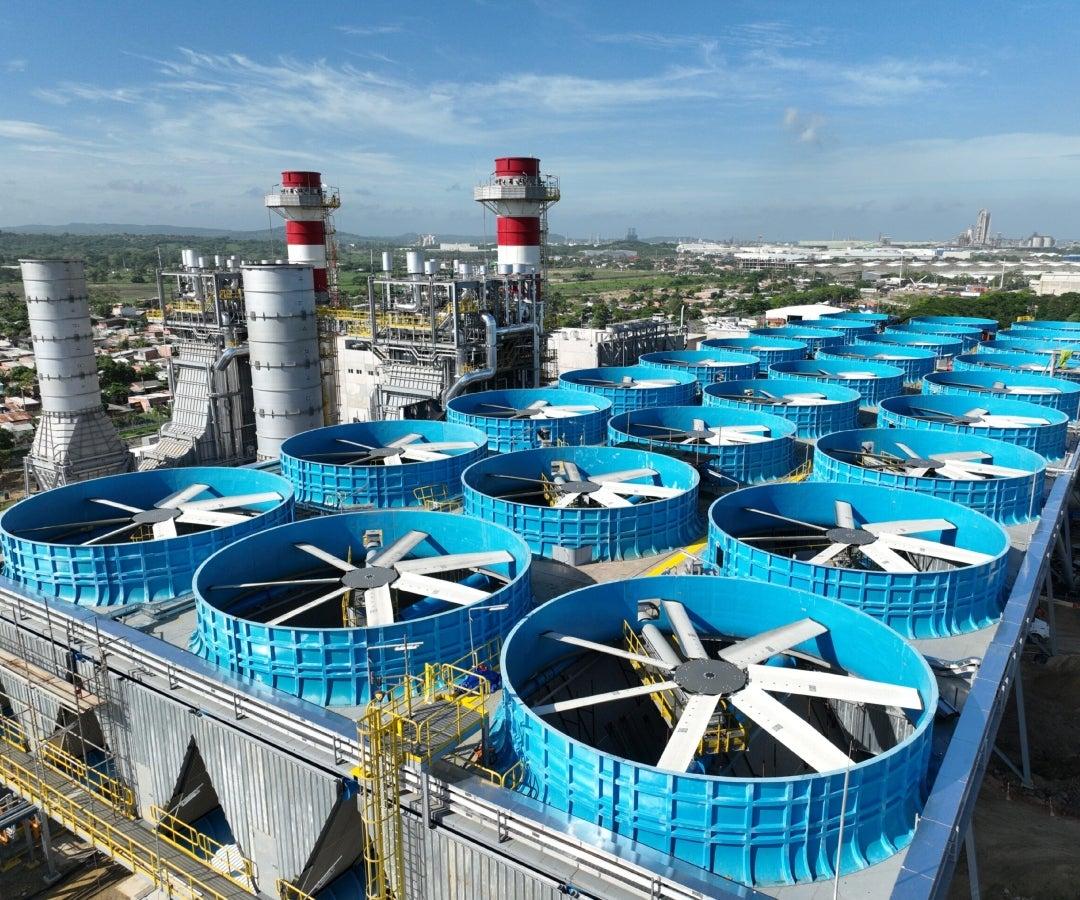
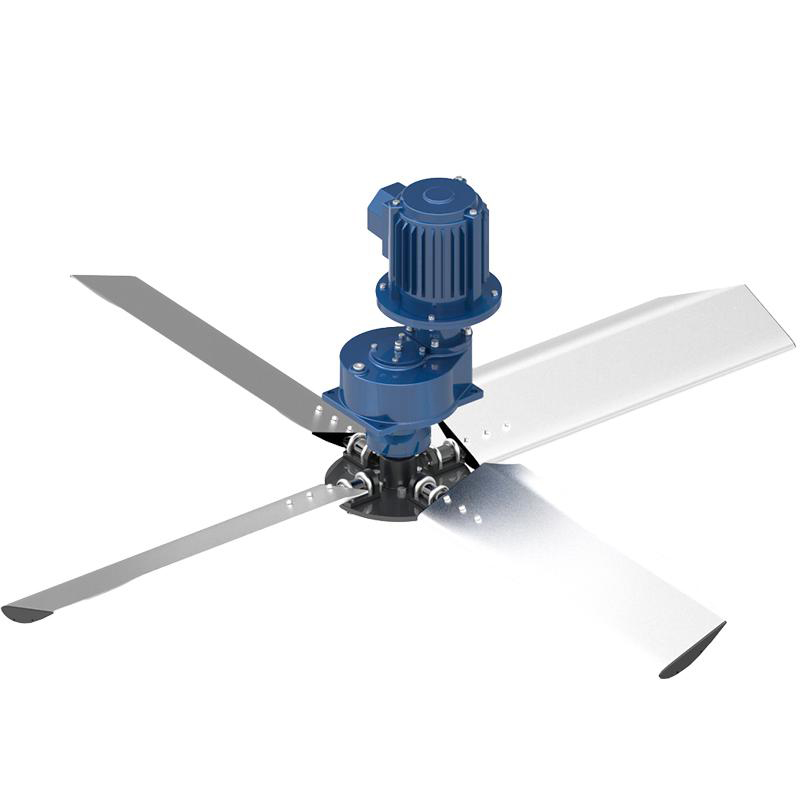
Industrial cooling tower fan blades are the core aerodynamic component that drives air through the fill media to remove waste process heat. Most cooling towers rely on axial fan blades, which move air parallel to the fan shaft for high airflow at low static pressure.
Not all fan blades work the same. They are classified by pitch design and construction material. Selecting the wrong blade type can lead to insufficient cooling, high energy bills, excessive vibration, premature bearing failure and unexpected plant downtime. This guide breaks down the common cooling tower fan blade types, their advantages and ideal industrial applications.
Adjustable-Pitch Cooling Tower Fan Blades
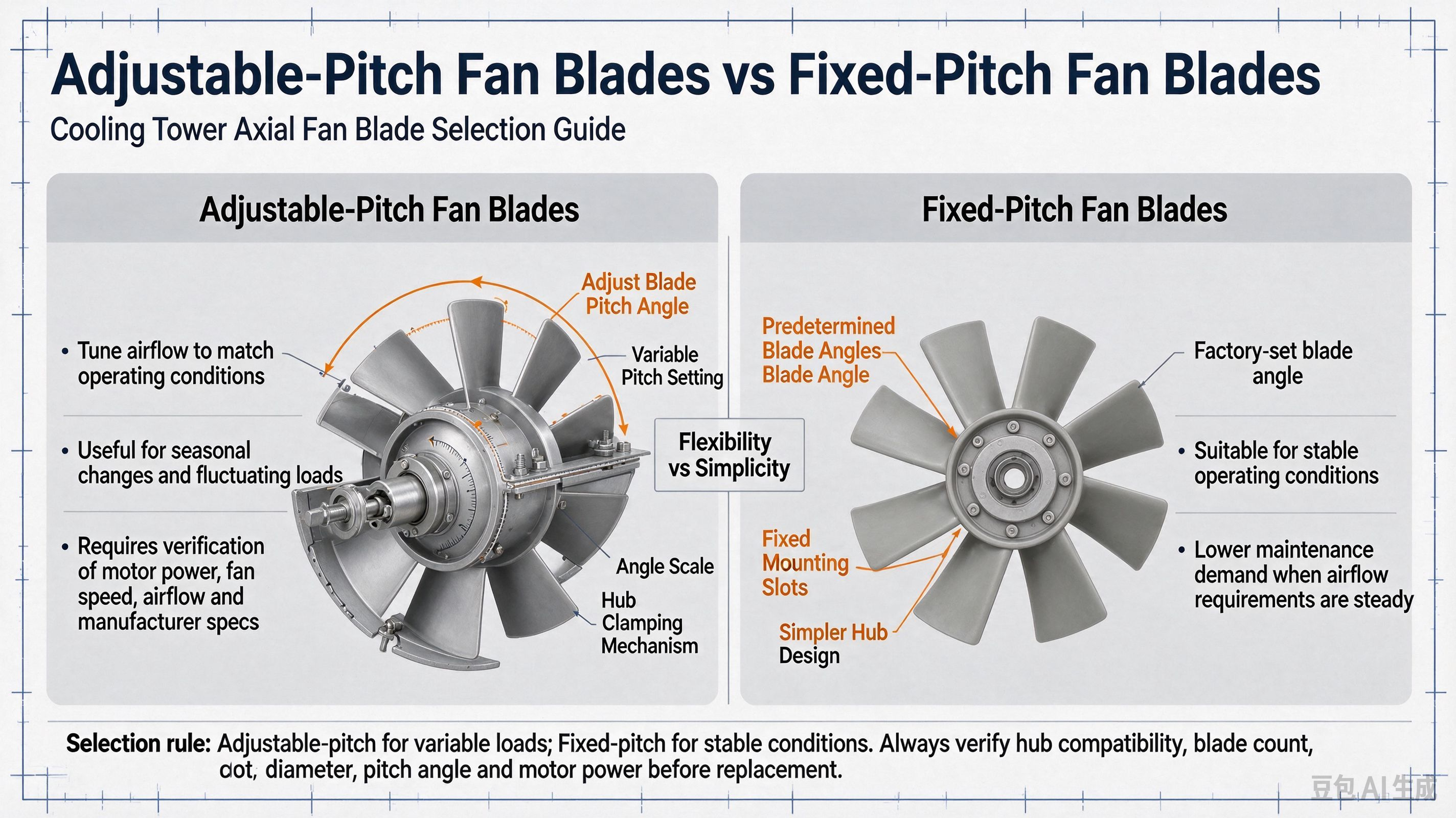
Adjustable-pitch blades feature a special hub design that allows technicians to change the blade pitch angle after installation. Changing the pitch angle directly adjusts airflow volume and motor power draw. Larger pitch delivers more air and higher cooling capacity; smaller pitch reduces power consumption.
Pros
Flexible airflow tuning to match variable heat loads
Great for seasonal wet-bulb temperature shifts
Optimize energy efficiency without replacing the whole fan
Easy to re-calibrate after production capacity changes
Cons
Higher upfront cost
More complex hub structure, requires regular inspection
Pitch adjustment must follow motor current limits and manufacturer curves
Best Applications
Power generation cooling towers
Chemical and petrochemical plants with batch production
Data centers and hospital HVAC cooling systems
Factories with fluctuating production schedules
Important note: Pitch adjustment must be performed by qualified technicians. Over-setting the pitch angle causes motor overload and overheating.
Fixed-Pitch Cooling Tower Fan Blades
Fixed-pitch blades are manufactured with a permanent, factory-set blade angle. The angle cannot be modified on site. The aerodynamic profile and pitch are calibrated for one design airflow rate under rated operating conditions.
Pros
Simple structure, lower purchase cost
Fewer moving parts, less maintenance work
Stable dynamic balance if installed correctly
Reliable for long-run steady operation
Cons
Cannot adjust airflow for changing heat loads
Energy efficiency drops significantly when operating far from design conditions
Best Applications
Small-to-medium commercial HVAC cooling towers
Food processing plants with stable continuous production
Steel mills and manufacturing lines with constant thermal load
Auxiliary cooling systems with fixed heat rejection demand
FRP (Fiberglass Reinforced Plastic / GRP) Cooling Tower Fan Blades
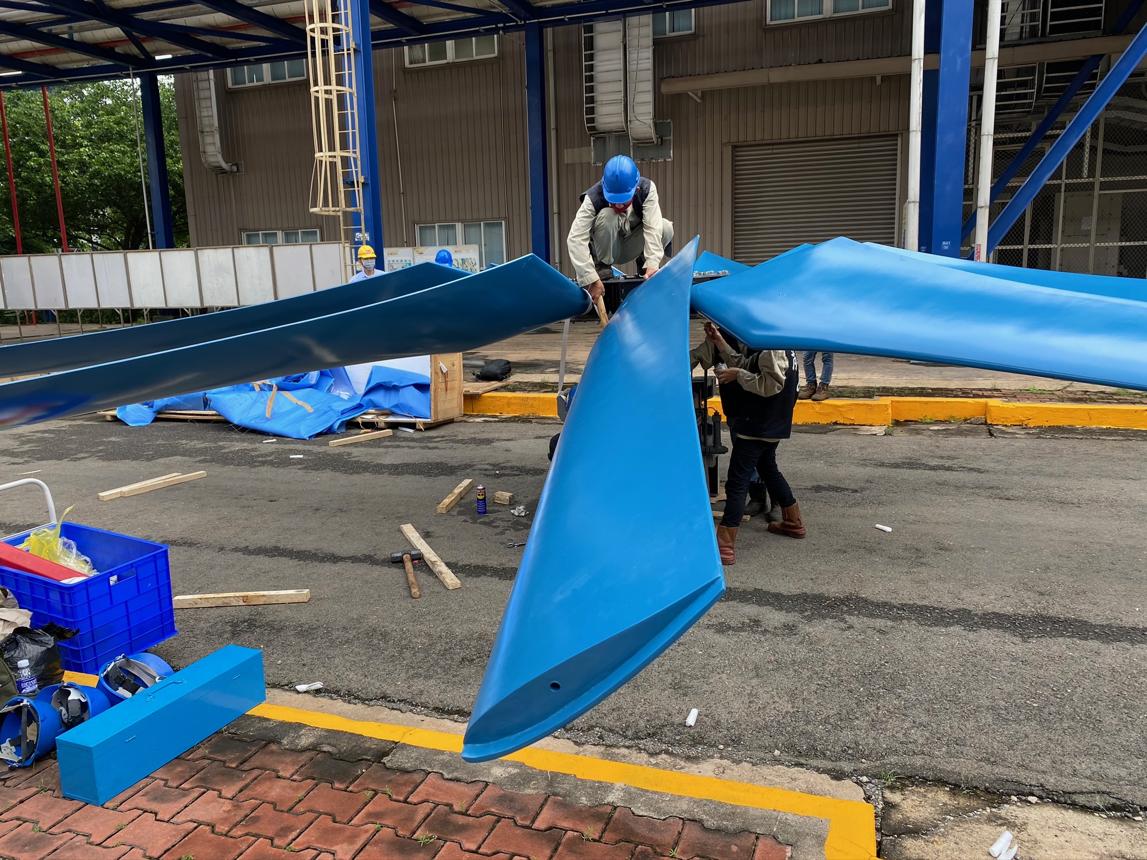
FRP is the most widely used blade material for modern wet cooling towers. It is lightweight and engineered to resist moisture, chlorinated water vapor, UV aging and mild chemical fumes. Special resin grades such as vinyl ester and epoxy FRP are available for aggressive corrosive environments.
Pros
Light weight reduces stress on gearboxes, bearings and drive shafts
Excellent corrosion resistance in humid cooling tower environments
Low noise, good aerodynamic performance
Customizable shape and size for large fan diameters
Cons
Risk of delamination, blistering and cracking under severe impact
Special repair procedures required for structural damage
Best Applications
Almost all induced-draft industrial wet cooling towers
Coastal facilities with salt spray
Wastewater treatment plants
Chemical facilities with mild to moderate corrosive vapors
Aluminum Alloy Cooling Tower Fan Blades
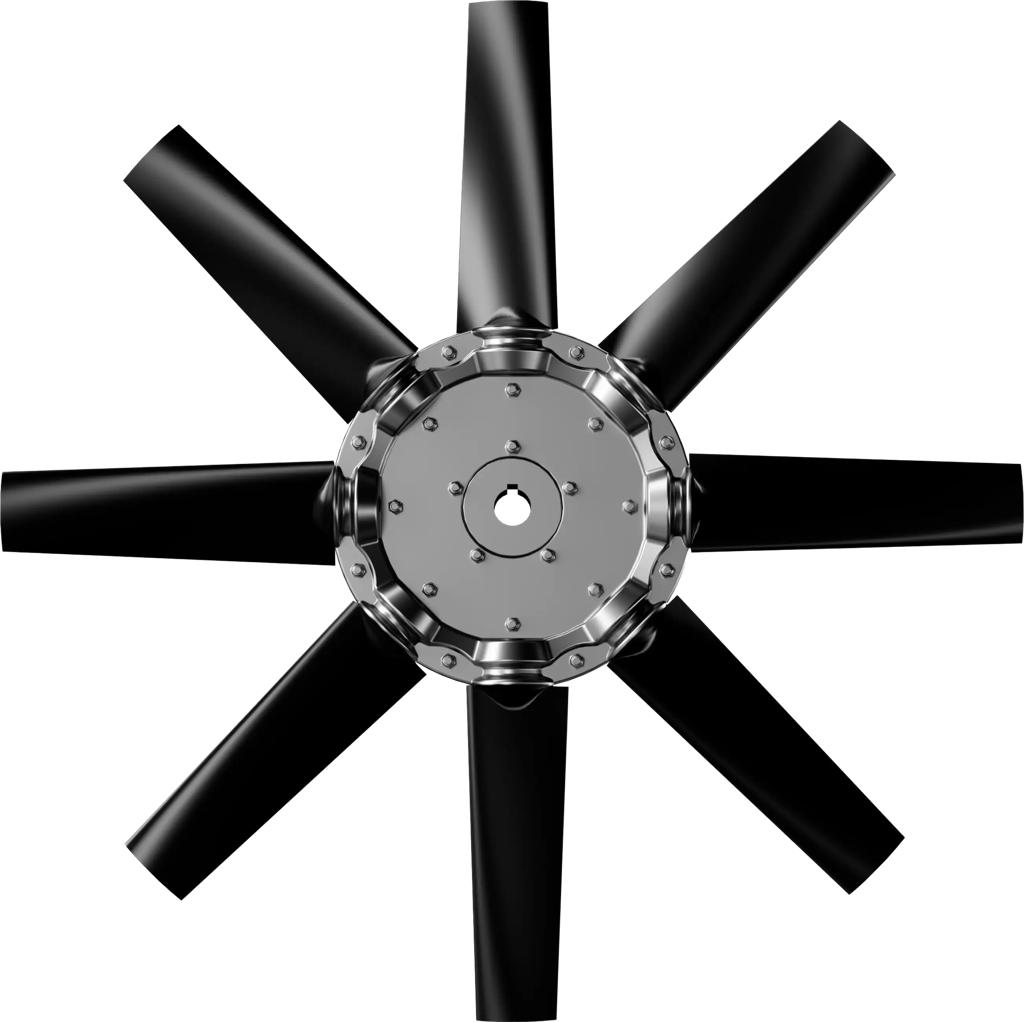
Aluminum alloy blades are rigid and offer high mechanical strength. They are popular for dry cooling towers and older cooling tower retrofits in low-corrosion environments.
Pros
High rigidity, resistant to deformation
Good machinability, precise airfoil profile
Easy to inspect for cracks and damage
Cons
Heavier than FRP, increases bearing load
Prone to pitting and corrosion from chlorine, moisture and acid mist
Higher noise level in some large-size models
Best Applications
Dry cooling tower systems
Indoor cooling towers with low humidity and non-corrosive air
Temporary process cooling equipment
Stainless Steel Cooling Tower Fan Blades
Stainless steel fan blades are heavy-duty, premium options built for extreme high-temperature and highly corrosive working conditions.
Pros
Superior corrosion resistance
High mechanical strength, impact-resistant
Long service life in harsh chemical atmospheres
Cons
Very high cost and heavy weight
Greater stress on the entire fan drive assembly
Higher energy consumption compared with lightweight FRP blades
Best Applications
Special chemical process cooling with strong acid/alkali fumes
High-temperature industrial cooling systems
Heavy-duty industrial sites where FRP and aluminum cannot survive
ABS Plastic Cooling Tower Fan Blades
ABS plastic blades are lightweight and low-cost, but they are only for light-duty use. They are not suitable for continuous heavy industrial operation.
Pros
Low cost, lightweight
Simple molding for small fan sizes
Cons
Poor UV resistance, easy to become brittle outdoors
Low structural strength, not for large-diameter fans
Best Applications
Small commercial cooling towers
Light-load closed-circuit coolers
Small HVAC auxiliary cooling units
How to Select the Right Cooling Tower Fan Blade Type
Confirm load stability: Choose adjustable-pitch for variable heat loads; fixed-pitch for stable loads.
Evaluate site atmosphere: Prioritize FRP for wet, salty or mildly corrosive environments.
Check fan diameter, blade quantity, hub mounting pattern and rated RPM.
Review noise limits and energy saving targets.
Confirm budget and long-term maintenance plan.
Frequently Asked Questions
Q: Which is the most popular cooling tower fan blade type for industrial projects?
A: FRP adjustable-pitch axial fan blades are the top choice for most large industrial wet cooling towers, balancing corrosion resistance, energy flexibility and weight.
Q: Can I replace aluminum blades with FRP blades on my existing fan hub?
A: It is possible only after engineering verification. Check hub compatibility, dynamic balance, tip clearance and motor load before swapping material types.
Q: What is the main difference between fixed-pitch and adjustable-pitch blades?
A: Adjustable-pitch blades allow on-site angle adjustment to change airflow; fixed-pitch blades have a permanent angle set at the factory.
Q: Are stainless steel fan blades better than FRP?
A: Not for standard wet cooling towers. Stainless steel is stronger but much heavier and more expensive. FRP delivers better performance for typical cooling tower conditions.
Conclusion
Each type of industrial cooling tower fan blade is designed for a specific set of operating conditions. Adjustable-pitch and fixed-pitch define airflow flexibility, while FRP, aluminum, stainless steel and ABS determine corrosion resistance, weight and service life. Matching the blade type to your site environment, heat load pattern and cooling tower design helps you cut energy costs, reduce maintenance frequency and avoid unplanned shutdowns.
Recommended internal links for CoolingTowerPart.com: