You are here: Home » Blog » Cooling Tower Infill Replacement: A Complete Guide to Restoring Performance
Cooling Tower Infill Replacement: A Complete Guide to Restoring Performance
Views: 0 Author: Site Editor Publish Time: 2025-12-09 Origin: Site
Cooling towers are indispensable core equipment in industrial, commercial buildings and HVAC systems, among which the Infill/Fill is the key component that determines the thermal performance of the cooling tower. As the operating time increases, the fill will age, clog, corrode or accumulate biofilm, which will lead to a decrease in cooling efficiency, an increase in energy consumption and even system failure.
Therefore, Cooling Tower Infill Replacement is one of the most important tasks for maintaining the performance of cooling towers.
What is Cooling Tower Infill?
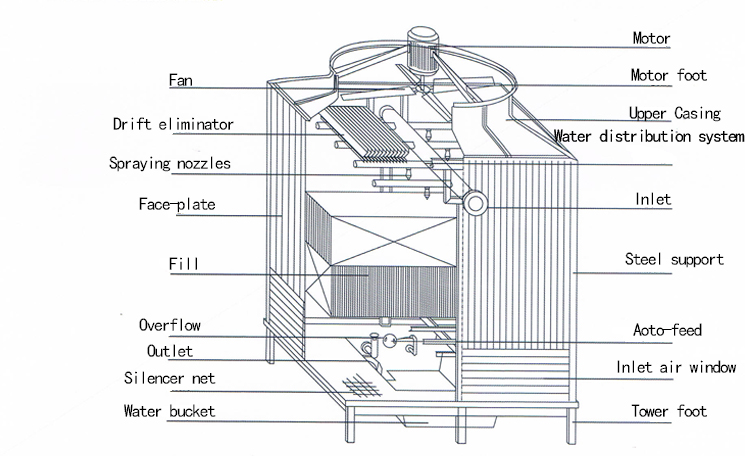
Cooling tower infill is a structural material designed to enhance the efficiency of water gas heat transfer. It increases the water distribution area and extends the water flow path to make the heat dissipation process more complete. Common types of infills include:
1. PVC film infill (PVC film type infill)
2. PP splash infill (polypropylene splash infill)
3. High temperature infill
4. Cross flow&Counter flow infill
Choosing appropriate fill materials and structures can significantly improve the overall performance of cooling towers.
As the surface of the infill is covered by carbonate deposits, biofilms, sediment, or oil, the heat transfer efficiency will rapidly decrease, resulting in the water temperature not meeting the set requirements.
2. Water circulation blockage
Blocked infill will reduce the water flow channel, increase pump pressure, increase energy consumption, and be detrimental to the long-term operation of the equipment.
3. Aging or deformation of infills
After being exposed to water flow, sunlight, and high temperatures for many years, PVC or PP materials may experience:
1)Become brittle
2)Transform
3)Shed
4)Fading or cracking
All of these will affect the stability of the structure.
4. Corrosion or chemical erosion
The water quality of certain industries contains chemicals that may accelerate the aging of fillers, leading to more frequent replacement needs.
The best time to replace the cooling tower infill
When the following situations occur, replacement should be arranged immediately:
1. The temperature of the cooling water remains consistently high (>2-5 ° C)
2. There is a noticeable odor and severe accumulation of scale inside the cooling tower
3. Damaged, collapsed, or detached infills
4. Abnormal increase in water pressure and decrease in circulating water volume
5. The energy consumption of cooling towers has significantly increased
Suggested cycle:
Commercial buildings are typically replaced every 3-5 years, while industrial applications may require 2-3 years of replacement.
Cooling Tower Infill Replacement: Standard Replacement Process
Step 1: Shut down the system and drain the cooling tower
Ensure system shutdown, drain accumulated water, and disconnect relevant power supply equipment.
Step 2: Remove the old infill material
Manually or mechanically remove aged, clogged, or damaged packing materials, and clean up any residue inside the tower body.
Step 3: Cleaning and Inspection of Cooling Tower Structure
Check if the following components require maintenance:
1)Cooling tower chassis
2)Sprinkler system
3)Fan and motor
4)Anti-corrosion layer
5)Bearing bracket
Step 4: Install new infill material
According to the type of filler:
1)Customized cutting
2)Layered installation
3)Fixing and Joining
4)Adjust the distribution of water flow
Step 5: System testing
Start the system and observe the water distribution, fan operation, and temperature drop.
Advantages of Cooling Tower Infill Replacement
1.Restore cooling tower performance and improve heat transfer efficiency
2.Reduce energy consumption and operating costs
3.Reduce equipment failure rate
4.Extend the overall service life of the cooling tower
5.Improving water quality and system hygiene conditions