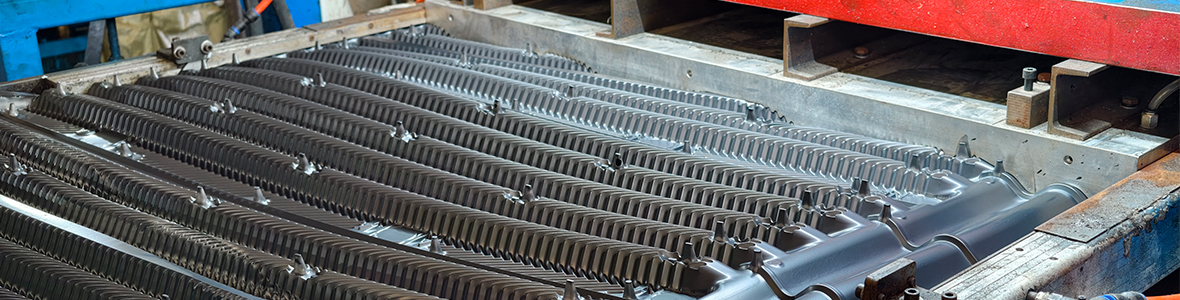
A cooling tower can look perfectly normal from the outside while something is quietly going wrong inside. One of the most common problems is splash fill clogging.
If your cooling tower is not removing heat as effectively as before, the water temperature is rising, or the fan seems to work harder than usual, clogged splash fill could be part of the problem.
So, why does splash fill clog in a cooling tower? The answer usually comes down to water quality, suspended solids, mineral scale, algae, corrosion, and poor maintenance.
The good news is that most clogging problems can be prevented. With proper water treatment, filtration, inspection, cleaning, and the right fill design, you can keep your splash fill cooling tower operating efficiently for much longer.
In this guide, we'll look at the causes of splash fill clogging, how to identify the problem, how to clean it, and when replacement makes more sense than continued cleaning.
What Is Splash Fill in a Cooling Tower?
Splash fill is a type of cooling tower fill media designed to break circulating water into smaller droplets.
Instead of forcing water to flow through a tightly packed surface, splash fill causes water to repeatedly hit or "splash" across specially shaped fill pieces. This increases the contact between water and air.
Think of it like dropping water onto a series of small steps. Every impact breaks the water into smaller streams and droplets, creating more surface area for evaporation.
The larger surface area improves the cooling process because evaporation is the heart of an open cooling tower.
Splash fill is commonly used in industrial cooling towers, power plants, HVAC systems, process cooling systems, and applications where water may contain a relatively high level of suspended solids.
How Splash Fill Works
Hot circulating water enters the upper section of the cooling tower and is distributed over the splash fill.
As the water falls downward, it contacts the fill and breaks into droplets. At the same time, air moves through the tower.
A small portion of the water evaporates. That evaporation removes heat from the remaining water, allowing cooled water to return to the industrial process.
This sounds simple, but the performance depends heavily on keeping the fill surfaces open.
If dirt, scale, algae, or debris covers those surfaces, the cooling tower loses part of its ability to transfer heat.
Why Splash Fill Is Important
The purpose of splash fill is not simply to "hold water." Its real job is to improve water-air contact.
Good splash fill should:
Distribute water effectively
Create repeated splashing and droplet formation
Allow sufficient airflow
Resist clogging
Withstand the operating environment
Maintain structural integrity over time
That is why choosing the correct cooling tower splash fill is so important.
Why Does Splash Fill Clog?
There isn't usually one single reason.
In most cases, clogging develops gradually because several factors work together. A small amount of dirt enters the system, minerals accumulate, biological growth begins, and eventually the passages through the splash fill become restricted.
Let's look at the major causes.
Suspended Solids and Dirt
One of the most common causes of splash fill clogging is suspended solids.
Cooling tower water can collect:
Dust
Sand
Dirt
Rust particles
Process contaminants
Airborne debris
Organic matter
Once these particles enter the circulating water, they can settle on the splash fill.
Over time, a thin layer becomes a thick layer.
This is particularly common in cooling towers located outdoors or near industrial processes where dust and airborne particles are present.
Why Small Particles Become a Big Problem
A single particle doesn't matter much.
Millions of particles do.
As debris accumulates, water distribution becomes less uniform. Some areas receive too much water while other areas receive too little.
The result? Lower cooling performance and more difficult maintenance.
Scale and Mineral Deposits
Hard water is another major enemy of splash fill.
Cooling towers continuously evaporate water. But minerals such as calcium and magnesium do not evaporate with the water.
They remain behind.
As evaporation continues, the concentration of dissolved minerals increases. If the water chemistry is not controlled properly, minerals can begin forming deposits on the splash fill.
This is called scale formation.
Scale can look like:
White deposits
Gray crust
Hard mineral layers
Rough surfaces
Blocked passages
Once scale becomes thick, simply flushing the fill with water may not be enough.
This is one reason water treatment is so important for any splash fill cooling tower.
Algae and Biological Growth
Have you ever seen green or slimy material inside a poorly maintained cooling tower?
That's a warning sign.
Cooling towers provide three things that biological organisms like:
Water
Nutrients
Suitable temperatures
Algae, bacteria, fungi, and other microorganisms can grow inside the system.
Algae can form a slippery layer over splash fill surfaces. Dead biological material can then combine with dust and minerals, creating an even thicker deposit.
The problem becomes a vicious cycle:
Biological growth → debris accumulation → restricted water flow → poorer cooling → more maintenance problems.
Regular biocide treatment and cleaning can help break this cycle.
Poor Water Treatment
Sometimes the splash fill itself isn't the problem.
The water chemistry is.
If blowdown, chemical dosing, pH control, conductivity control, or biocide treatment is poorly managed, the cooling tower becomes much more vulnerable to fouling.
For example, inadequate blowdown allows dissolved minerals to become increasingly concentrated.
Insufficient biological control can encourage algae and microbial growth.
Poor chemical balance can accelerate corrosion or scale formation.
In other words, your splash fill is often only showing you the symptoms of a larger water-management problem.
Uneven Water Distribution
A splash fill system depends on proper water distribution.
If clogged nozzles, damaged pipes, blocked strainers, or poorly adjusted distribution systems cause water to concentrate in certain areas, those areas may experience excessive fouling.
Some parts of the fill become overloaded with water while others remain relatively dry.
That creates uneven cooling and can accelerate deposits.
This is why inspecting the water distribution system should be part of splash fill maintenance.
Corrosion and Rust Particles
Metal components inside cooling tower systems can corrode.
Rust particles can enter the circulating water and eventually accumulate on the fill.
This is especially problematic in older systems or systems with poor corrosion control.
Rust, dirt, biological material, and mineral deposits can combine into a stubborn layer that is much harder to remove than any single contaminant.
How Clogged Splash Fill Affects Cooling Tower Performance
A clogged splash fill cooling tower rarely fails overnight.
Instead, performance usually declines gradually.
You may notice that the tower still operates, but it doesn't cool water as effectively as it used to.
Reduced Heat Transfer
The first major consequence is reduced heat transfer.
When deposits cover the splash fill, water cannot break into droplets as effectively.
At the same time, airflow through the fill can become restricted.
Less effective water-air contact means less evaporation.
And less evaporation means less heat rejection.
The tower may still run, but its cooling capacity can fall significantly.
Increased Pressure Drop
Clogged fill can also restrict airflow.
Imagine trying to breathe through a clean filter versus a dirty one. The difference is obvious.
The same basic principle applies inside a cooling tower.
When the fill becomes blocked, fans may need to work harder to move air through the tower.
That can increase fan energy consumption and operating costs.
Higher Operating Costs
Poor cooling performance doesn't happen in isolation.
If the cooling tower cannot maintain the required cold-water temperature, other equipment may need to work harder.
For example, an HVAC chiller may operate for longer periods. Industrial equipment may experience reduced process efficiency. Fans and pumps may consume more energy.
So a relatively small maintenance issue inside the fill can eventually become an operating-cost issue.
How to Tell If Splash Fill Is Clogged
How do you know whether clogging is actually occurring?
You don't necessarily need sophisticated equipment to identify early warning signs.
Visual Inspection
During a proper inspection, look for:
If large areas of the splash fill are covered with deposits, cleaning should be considered.
For safety, cooling tower inspections should be performed according to appropriate shutdown and maintenance procedures.
Temperature and Flow Changes
Operational data can also tell you a lot.
Watch for:
Higher cold-water temperature
Reduced temperature drop
Uneven water distribution
Increased fan energy consumption
Changes in pump performance
Increased pressure drop
Reduced cooling capacity
A single change doesn't automatically prove that splash fill is clogged.
However, several changes occurring together should trigger an inspection.
How to Clean Clogged Splash Fill
The right cleaning method depends on the type and severity of contamination.
You don't want to attack every problem with the strongest possible chemical. Sometimes simple flushing is enough.
Mechanical Cleaning
Mechanical cleaning is useful when large debris, mud, leaves, or other physical contaminants are present.
Technicians may remove loose debris manually or use suitable tools to clear heavily contaminated areas.
The goal is to remove material without damaging the fill.
Aggressive mechanical force should be avoided because damaged fill can reduce cooling performance and create additional maintenance problems.
Water Flushing
Water flushing can remove loose dirt and sediment.
It is particularly useful for early-stage contamination.
However, water alone may not remove hard mineral scale or established biological growth.
Think of it like washing a muddy car. Water can remove loose dirt, but it may not remove hardened deposits.
Chemical Cleaning
Chemical cleaning may be appropriate for certain types of scale or biological fouling.
The chemical treatment must be selected according to the contaminant, fill material, water chemistry, and manufacturer's recommendations.
When to Use Chemical Cleaning
Chemical cleaning is most useful when deposits are chemically bonded to the fill surface and cannot be removed effectively through ordinary flushing.
Before using chemicals, always consider:
Fill material compatibility
Chemical concentration
Contact time
Water temperature
Environmental requirements
Disposal requirements
Manufacturer recommendations
The wrong chemical or concentration can damage plastic fill media.
How to Prevent Splash Fill Clogging
Cleaning solves today's problem.
Prevention helps prevent tomorrow's problem.
For long-term performance, cooling tower operators should treat fill maintenance as part of an overall water-management strategy.
Improve Water Treatment
A properly managed water treatment program can dramatically reduce fouling.
Monitor important parameters such as:
pH
Conductivity
Hardness
Alkalinity
Microbiological activity
Chemical concentration
The exact control limits depend on the cooling tower design, water source, operating conditions, and treatment program.
Good water chemistry helps control scale, corrosion, and biological growth before they become major problems.
Install Proper Filtration
If your cooling tower continuously receives suspended solids, filtration can make a major difference.
Side-stream filtration can remove particles from circulating water and reduce the amount of material reaching the splash fill.
Depending on the application, operators may consider:
The best solution depends on particle size, concentration, flow rate, and system design.
Schedule Regular Inspections
Don't wait until the cooling tower stops performing.
Regular inspection allows you to identify early-stage fouling before it becomes severe.
During inspections, check:
Splash fill condition
Water distribution nozzles
Strainers
Basin condition
Drift eliminators
Fan and airflow condition
Water chemistry
Sediment accumulation
A simple inspection schedule can save much more money than emergency maintenance.
When Should You Replace Splash Fill?
Cleaning isn't always the best answer.
If splash fill is severely damaged, deformed, brittle, cracked, or permanently blocked, replacement may be more economical.
Consider replacement when:
Fill has lost structural strength
Large sections are physically damaged
Heavy deposits cannot be removed
Cooling performance remains poor after cleaning
Fill material has become brittle
Fouling repeatedly returns
The existing fill design is unsuitable for the application
Sometimes trying to save old fill is like repairing a worn-out tire again and again. Eventually, replacement becomes the smarter investment.
How to Choose the Right Splash Fill
Not every splash fill is suitable for every cooling tower.
When selecting replacement fill, consider the operating environment first.
Important factors include:
Water quality
Suspended solids
Temperature
Chemical exposure
Tower design
Airflow
Water loading
Fill material
Maintenance requirements
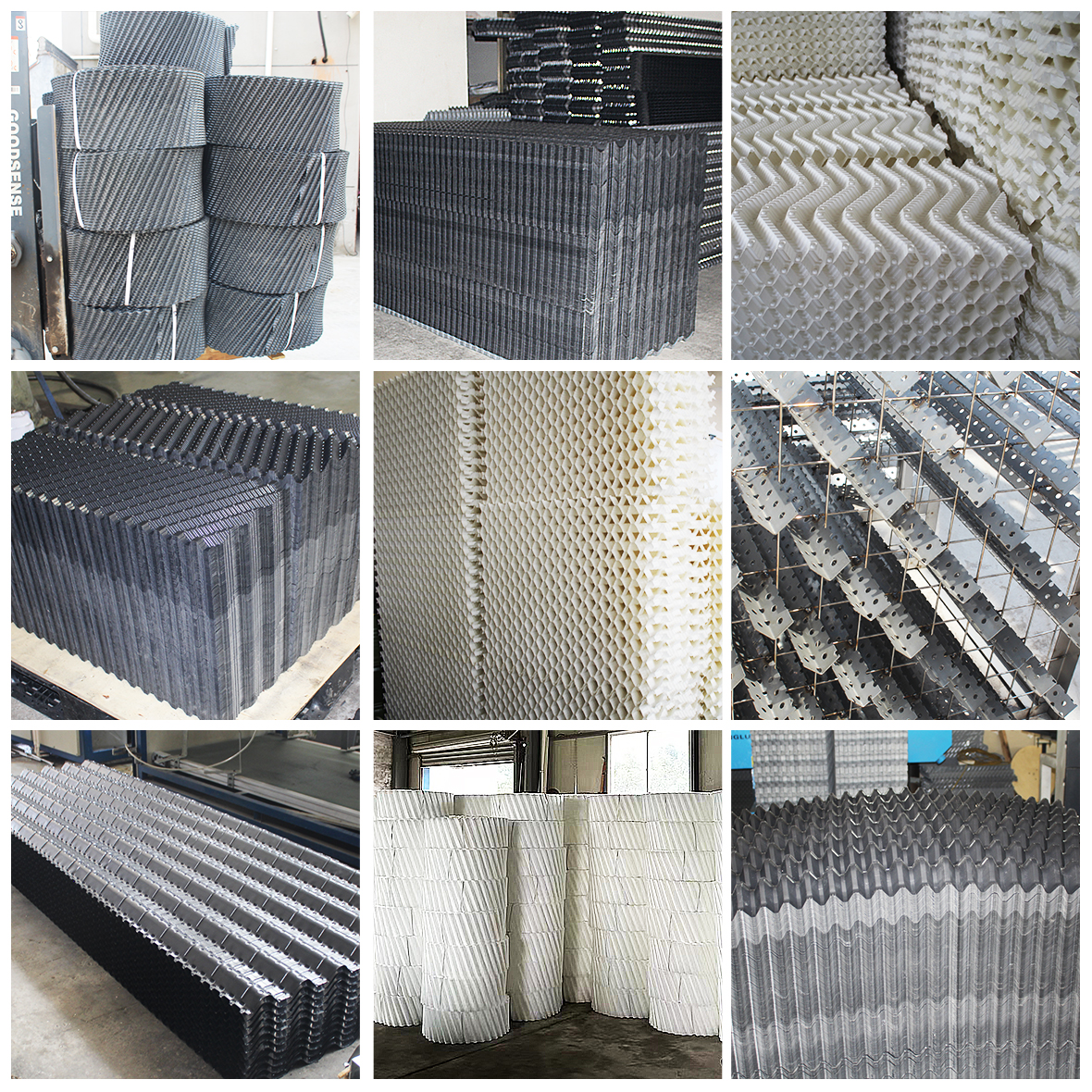
PVC vs PP Splash Fill
PVC is widely used for cooling tower fill because it offers good performance and cost efficiency in many applications.
PP, or polypropylene, can provide excellent resistance to certain chemical and temperature conditions and is often considered for more demanding environments.
The best material depends on the specific operating conditions.
There is no universal winner.
Instead, ask: Which material matches my cooling tower's water chemistry and operating temperature?
Splash Fill for Dirty Water
If your cooling tower handles relatively dirty water, splash fill can be attractive because its open structure is generally less prone to plugging than tightly packed film fill.
This doesn't mean splash fill is clog-proof.
It isn't.
Dirty water can still create serious fouling if filtration and water treatment are neglected.
But with an appropriate splash-fill design, regular maintenance can be easier in applications with higher suspended solids.
Why Work With an Experienced Splash Fill Manufacturer?
Choosing the right fill isn't simply a matter of buying plastic components.
The fill needs to match the cooling tower's operating requirements.
An experienced manufacturer can help evaluate factors such as fill dimensions, material, splash characteristics, water distribution, installation requirements, and application conditions.
Power Tower Cooling Technology (Shaoxing) Co., Ltd. focuses on cooling tower components and fill solutions for industrial and commercial applications.
For buyers looking for cooling tower splash fill, splash fill media, cooling tower fill replacement, and related cooling tower components, working directly with an experienced manufacturer can make product selection easier and help reduce compatibility problems.
You can learn more about cooling tower fill solutions from coolingtowerpart.com.
Conclusion: Keep Splash Fill Clean and Your Cooling Tower Performs Better
So, why is splash fill clogging in your cooling tower?
The most common reasons are suspended solids, mineral scale, algae, biological growth, corrosion particles, poor water treatment, and inadequate maintenance.
The important thing is not simply to clean the fill after it becomes clogged.
The smarter strategy is to prevent severe fouling in the first place.
Maintain water chemistry. Control biological growth. Remove suspended solids. Inspect the distribution system. Check the fill regularly. And when the existing fill is beyond economical cleaning, replace it with a suitable product.
A clean splash fill gives water and air room to interact.
A clogged splash fill takes that room away.
And when the tower can no longer breathe properly, cooling performance inevitably suffers.
For long-term reliability, treat your splash fill cooling tower as a complete system rather than viewing the fill as an isolated component. The right fill, good water treatment, and consistent maintenance can work together to keep heat rejection efficient and operating costs under control.


