Why Choose a Professional Cooling Tower Fills Supplier?
Choosing the right cooling tower fills supplier can have a significant impact on the efficiency, reliability, and service life of an industrial cooling tower. Although cooling tower fill may appear to be a simple plastic component, its geometry, material, surface area, thickness, and installation configuration directly influence heat transfer and airflow.
For HVAC systems, power plants, manufacturing facilities, chemical plants, food-processing factories, data centers, and other industrial applications, selecting a professional supplier can help ensure that the cooling tower fill matches the operating conditions and tower design.
A reliable cooling tower fills supplier should provide more than a competitive price. Technical support, material quality, customization, production capacity, packaging, delivery, and after-sales service are equally important.
This guide explains why working with a professional cooling tower fill supplier is important and how buyers can choose the right partner for their project.
What Is Cooling Tower Fill and Why Does It Matter?
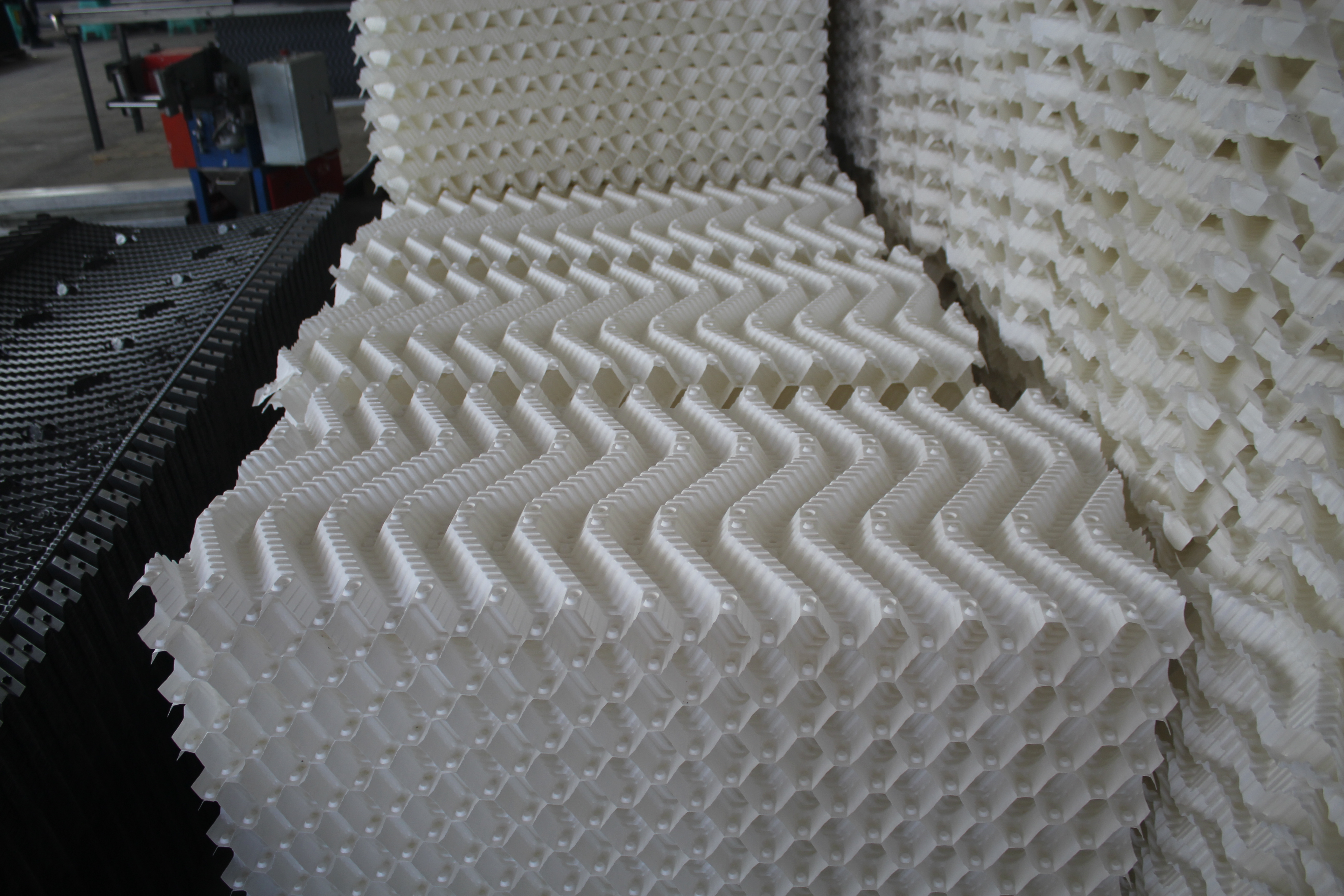
Cooling tower fill is the heat-transfer media installed inside a wet cooling tower. Its primary function is to increase the contact area between circulating water and air.
When hot water flows over or through the fill, the fill creates a large wetted surface. Air passing through the tower removes heat through sensible heat transfer and evaporation.
How Does Cooling Tower Fill Improve Cooling Efficiency?
A properly designed cooling tower filler can:
Increase water-air contact area
Improve evaporation
Enhance heat transfer
Support lower outlet water temperatures
Improve cooling tower capacity
Optimize the use of tower volume
Help maintain stable operating performance
The design of the fill therefore has a direct relationship with cooling tower thermal performance.
What Happens When Fill Is Poorly Selected?
Incorrect cooling tower fill can result in:
Reduced heat-transfer efficiency
Excessive pressure drop
Uneven water distribution
Increased fan energy consumption
Premature deformation
Scaling and fouling
Difficult maintenance
Shorter service life
This is why choosing a qualified supplier is more important than simply finding the lowest quotation.
Why Choose a Professional Cooling Tower Fills Supplier?
A professional supplier understands that cooling tower fill must work together with the entire wet-section design.
Instead of simply selling plastic sheets or fill blocks, an experienced supplier can evaluate the application and recommend an appropriate solution.
Can a Professional Supplier Recommend the Right Fill Type?
Yes. Different cooling towers require different fill configurations.
Common options include:
Film fill
Splash fill
Crossflow fill
Counterflow fill
PVC fill
PP fill
High-temperature fill
Why Is Fill Type Important?
Film fill is designed to spread water into thin films over a large surface area. It can provide high thermal performance when water quality is suitable.
Splash fill breaks falling water into droplets and generally provides larger open passages. It can be advantageous where suspended solids or fouling are concerns.
A professional cooling tower fills supplier can help determine which structure is appropriate based on water quality, temperature, airflow, and cooling requirements.
What Materials Can a Professional Cooling Tower Fill Supplier Provide?
Material selection is another important consideration.
Why Is PVC Cooling Tower Fill So Popular?
PVC is one of the most widely used materials for conventional cooling tower fill.
What Are the Advantages of PVC Fill?
PVC cooling tower fill can offer:
PVC film fill is commonly used in HVAC and industrial cooling applications where operating conditions are within the material's suitable range.
When Should You Consider PP Cooling Tower Fill?
Polypropylene, or PP, can be considered when higher temperature resistance or particular chemical resistance is required.
PP cooling tower fill may be suitable for:
Industrial process cooling
Higher-temperature applications
Chemical processing
Demanding water conditions
Specialized cooling systems
Is PP Always Better Than PVC?
Not necessarily.
The best material depends on actual operating conditions.
A professional supplier should consider:
Water temperature
Chemical exposure
Water quality
Fouling potential
Expected service life
Budget
Maintenance requirements
The goal is not to select the most expensive material but to select the most suitable material.
How Does a Professional Supplier Ensure Cooling Tower Fill Quality?
Product quality is one of the most important reasons to work with an experienced manufacturer or supplier.
What Quality Factors Should Buyers Check?
A reliable supplier should control several aspects of production.
What About Sheet Thickness?
Consistent sheet thickness helps maintain predictable mechanical strength and product performance.
If the thickness varies significantly, the fill may not have consistent structural properties.
What About Fill Geometry?
The flute or corrugation design affects:
A professional supplier should maintain consistent forming conditions during production.
What About Material Quality?
Recycled or low-quality raw materials may negatively affect durability, especially in demanding operating environments.
Buyers should ask about:
Raw material type
Material grade
Additives
Temperature resistance
Chemical resistance
Production standards
Can a Cooling Tower Fills Supplier Provide Customized Products?
Yes. Customization is particularly important when replacing fill in an existing cooling tower.
Why Is Customized Cooling Tower Fill Important?
Not every cooling tower uses the same fill dimensions.
Existing towers may have unique:
Fill length
Fill width
Fill height
Sheet thickness
Module size
Flute geometry
Support structure
A standard product may not fit correctly.
What Can Be Customized?
Depending on the manufacturer, customization may include:
PVC or PP material
Sheet thickness
Fill dimensions
Module configuration
Fill height
Surface geometry
Packing configuration
When Is Custom Fill Especially Useful?
Customized fill is particularly valuable for:
A professional supplier can often use drawings, measurements, photographs, or samples to identify a suitable replacement.
How Can a Professional Supplier Support Cooling Tower Fill Replacement?
Cooling tower fill eventually needs replacement due to aging, fouling, scaling, deformation, chemical attack, or mechanical damage.
What Are the Signs That Cooling Tower Fill Needs Replacement?
Common warning signs include:
Cracked or Brittle Fill
Aged PVC can become brittle and break during inspection or cleaning.
Excessive Scaling
Mineral deposits reduce the effective heat-transfer area and can restrict airflow.
Biological Fouling
Algae, slime, and other biological deposits can cover the fill surface.
Fill Deformation
Excessive temperature or chemical exposure can cause the fill to deform.
Blocked Air Passages
Heavy fouling can increase airflow resistance and reduce cooling performance.
Why Is Technical Support Important When Replacing Cooling Tower Fill?
Replacing cooling tower fill is not simply a matter of removing the old material and installing new sheets.
The replacement must be compatible with the existing tower.
What Information Should You Provide to the Supplier?
Before requesting a quotation, provide:
Photos of the existing fill and tower interior can also help.
Why Are Measurements So Important?
Incorrect dimensions may create:
A professional supplier should therefore confirm dimensions before production.
How Does Supplier Experience Affect Cooling Tower Fill Performance?
Supplier experience can make a major difference in complex projects.
Why Should You Choose an Experienced Cooling Tower Fill Manufacturer?
Experienced manufacturers are more likely to understand the relationship between:
Fill geometry
Water loading
Airflow
Pressure drop
Surface area
Temperature
Material properties
Can an Experienced Supplier Help Optimize the Design?
In many projects, yes.
For example, a supplier may recommend a different fill configuration when the existing fill causes excessive pressure drop or frequent fouling.
The supplier's role can therefore go beyond manufacturing and include technical consultation.
Why Is Production Capacity Important for a Cooling Tower Fills Supplier?
Large cooling tower refurbishment projects can require significant quantities of fill.
What Problems Can Limited Production Capacity Cause?
A supplier with limited production capability may struggle with:
What Should Large Buyers Ask?
Before placing a large order, ask about:
A supplier with stable production can reduce the risk of project delays.
Why Is Packaging Important When Buying Cooling Tower Fill?
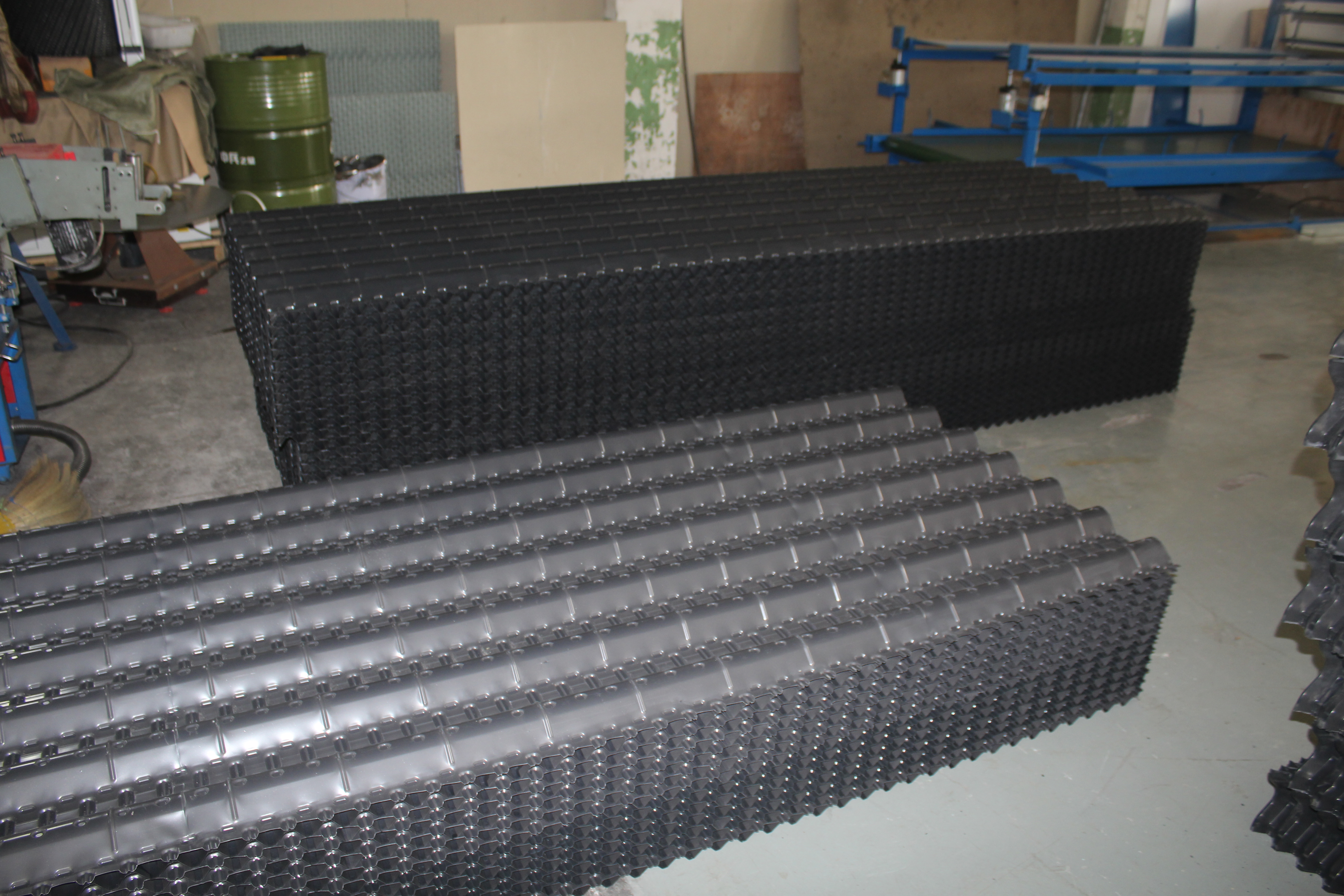
Cooling tower fill is relatively lightweight but can occupy significant volume.
Poor packaging can cause deformation during transportation.
What Should Good Packaging Protect Against?
Proper packaging should help prevent:
Crushing
Bending
Moisture exposure
Contamination
Mechanical damage
How Should Large Orders Be Packed?
For international shipments, suppliers may use:
Palletized packing
Reinforced cartons
Protective film
Plastic straps
Export-grade packaging
Container loading should also be planned carefully to maximize usable space.
How Can a Professional Supplier Help Reduce Total Cooling Costs?
The purchase price of cooling tower fill is only one part of the total cost.
What Is the Total Cost of Cooling Tower Fill?
Total cost can include:
Product price
Freight
Installation
Maintenance
Cleaning
Replacement frequency
Energy consumption
Downtime
Why Is Low Purchase Price Not Always the Best Choice?
A cheap fill product may have a shorter service life or lower thermal performance.
If it increases maintenance frequency or reduces cooling efficiency, the overall cost may become higher.
A professional supplier focuses on the balance between:
Price + Performance + Durability + Maintenance + Service Life
Can a Professional Supplier Provide More Than Cooling Tower Fill?
In many cases, yes.
A specialized cooling tower supplier may provide additional components such as:
What Other Cooling Tower Parts May Be Available?
Depending on the supplier, products may include:
Why Is One-Stop Sourcing Useful?
Buying multiple components from one experienced supplier can simplify:
Technical communication
Product matching
Purchasing
Quality control
Packaging
Shipment coordination
This can be particularly useful for complete cooling tower refurbishment projects.
How Should You Compare Different Cooling Tower Fills Suppliers?
Price should not be the only comparison factor.
What Should You Look for in a Supplier?
Consider the following criteria:
1. Product Quality
Check raw materials, thickness, geometry, and manufacturing consistency.
2. Technical Experience
Ask whether the supplier has experience with your tower type and application.
3. Customization Capability
Confirm whether non-standard dimensions can be manufactured.
4. Production Capacity
Make sure the supplier can handle your required quantity.
5. Delivery Time
Ask for a realistic production and shipping schedule.
6. Quality Control
Check whether the supplier has inspection procedures.
7. Export Experience
For international orders, experience with export packaging and documentation is valuable.
8. After-Sales Service
Technical support can be important when installation or performance issues occur.
What Questions Should You Ask a Cooling Tower Fills Supplier?
Before ordering, buyers can ask several practical questions.
Can You Provide a Sample?
A sample allows the buyer to check:
Material
Thickness
Surface structure
Dimensions
Physical quality
Can You Manufacture According to Our Drawings?
This is especially important for replacement projects.
What Material Do You Use?
Ask whether the product is manufactured from PVC, PP, or another material.
What Is the Recommended Operating Temperature?
Different materials and designs have different operating limitations.
Can You Provide Technical Data?
Useful information may include:
Fill dimensions
Material
Thickness
Surface area
Pressure drop
Temperature resistance
Application range
What Is the Lead Time?
Confirm production time before placing the purchase order.
What Applications Require Professional Cooling Tower Fill?
Professional-grade fill is used across many industries.
Industrial Manufacturing
Cooling towers may remove heat from:
Production equipment
Hydraulic systems
Compressors
Furnaces
Process machinery
HVAC Systems
Commercial buildings, hospitals, hotels, and large facilities may use cooling towers for chilled-water systems.
Chemical Industry
Chemical plants often require cooling systems capable of operating continuously under demanding conditions.
Food and Beverage
Cooling towers can support process cooling and refrigeration systems.
Power Generation
Power plants require reliable heat rejection and carefully engineered cooling tower fill.
Data Centers
Data centers require stable cooling performance and high equipment availability.
How Can You Extend the Service Life of Cooling Tower Fill?
Even high-quality cooling tower fill requires proper maintenance.
Can Water Treatment Extend Fill Life?
Yes.
Good water treatment helps control:
Scale
Corrosion
Biological growth
Suspended solids
Why Is Regular Cleaning Important?
Regular inspection and cleaning can help maintain open airflow passages and effective heat-transfer surfaces.
However, cleaning methods should be appropriate for the fill material.
Aggressive mechanical cleaning or unsuitable chemicals can damage plastic fill.
What Makes a Professional Cooling Tower Fills Supplier Different?
A professional supplier is not simply a company that sells cooling tower fill.
What Are the Main Advantages?
A qualified supplier can provide:
Correct product selection
Reliable material quality
Consistent dimensions
Customized solutions
Technical support
Replacement recommendations
Stable production
Export packaging
On-time delivery
After-sales support
Why Does This Matter for Industrial Buyers?
Industrial cooling systems are often critical to production.
A cooling tower problem can affect:
Production capacity
Equipment temperature
Energy consumption
Maintenance schedules
Operating costs
Therefore, the supplier should be treated as a technical partner rather than simply a product vendor.
FAQ About Cooling Tower Fills Suppliers
What Is a Cooling Tower Fills Supplier?
A cooling tower fills supplier provides heat-transfer media used inside wet cooling towers. Depending on its capabilities, the supplier may also provide technical consultation, customized fill, replacement services, and other cooling tower components.
What Is the Best Material for Cooling Tower Fill?
There is no single best material for every application. PVC is widely used for conventional cooling applications, while PP can be considered for higher-temperature or more demanding environments.
How Do I Choose a Reliable Cooling Tower Fills Supplier?
Evaluate product quality, technical experience, customization capability, production capacity, delivery time, quality control, export experience, and after-sales service.
Can Cooling Tower Fill Be Made to Custom Dimensions?
Yes. Professional manufacturers can often customize fill dimensions and configurations based on tower drawings, measurements, samples, or existing fill specifications.
How Often Should Cooling Tower Fill Be Replaced?
There is no universal replacement interval. Actual service life depends on water quality, temperature, chemical exposure, fouling, maintenance, and material quality. Regular inspection is the best way to determine replacement requirements.
Is Cooling Tower Fill the Same as Cooling Tower Filler?
In most industrial contexts, the terms cooling tower fill, cooling tower filler, and cooling tower fill media refer to the same general heat-transfer component installed inside a wet cooling tower.
Conclusion: Why Choose a Professional Cooling Tower Fills Supplier?
Choosing a professional cooling tower fills supplier is an important decision for any cooling tower project.
The right supplier can help you select the appropriate fill type, material, dimensions, and configuration for your application. Professional suppliers can also provide customized products, quality control, technical support, reliable packaging, and stable delivery.
Whether you need PVC cooling tower fill, PP cooling tower fill, crossflow fill, counterflow fill, film fill, or replacement fill for an existing tower, supplier expertise can directly affect the final result.
Instead of focusing only on the lowest price, evaluate the complete value of the supplier:
Product Quality + Technical Support + Customization + Delivery + Durability + After-Sales Service
A reliable professional supplier can help improve cooling tower performance, reduce maintenance requirements, support efficient heat transfer, and extend the useful life of your cooling equipment.
For industrial buyers, choosing the right cooling tower fills supplier is not simply a purchasing decision—it is an important part of achieving reliable and efficient cooling tower operation.