Cooling tower fans play a vital role in industrial cooling systems. They move air through the tower, support heat transfer, and help maintain the required temperature of circulating water. Whether you operate a power plant, manufacturing facility, chemical processing plant, or commercial HVAC system, choosing the right cooling tower fan can improve operating efficiency and help control energy costs.
But what are the common cooling tower fan types? How do axial fans differ from centrifugal fans? And which fan is the best choice for your cooling tower?
In this complete guide, Power Tower Cooling Technology (Shaoxing) Co.,Ltd explains the most common cooling tower fan designs, their advantages and disadvantages, their applications, and the key factors to consider when selecting or replacing a cooling tower fan.
What Is a Cooling Tower Fan?
A cooling tower fan is a mechanical device that moves air through a cooling tower to support heat rejection. As warm circulating water comes into contact with cooler air, a portion of the water evaporates, removing heat from the remaining water. The cooled water then returns to the industrial process or HVAC system.
Think of the fan as the driving force behind the tower's airflow. Without sufficient air movement, even a well-designed cooling tower may struggle to achieve its required cooling performance.
Cooling tower fans are available in different designs, sizes, blade configurations, and materials. Each type offers specific advantages depending on airflow requirements, system resistance, installation space, and operating conditions.
Selecting the right fan helps maintain stable cooling performance while avoiding unnecessary electricity consumption, excessive vibration, and premature equipment failure.
How Does a Cooling Tower Fan Work?
A cooling tower fan creates airflow by either pulling air through the tower or pushing air into it. As the air moves through the tower, it comes into contact with circulating water distributed over fill media or other heat-transfer surfaces.
A small portion of the water evaporates, carrying heat into the atmosphere. The remaining water becomes cooler and can be reused in the cooling process.
The fan's performance directly influences airflow volume, pressure distribution, and the overall operating conditions of the tower. However, the fan is only one part of the cooling system. Water flow, fill condition, water distribution, ambient wet-bulb temperature, and tower design also affect cooling performance.
A powerful fan cannot fully compensate for severely clogged fill, poor water distribution, or an incorrectly sized cooling tower. For this reason, fan selection should always consider the complete system.
The Role of Airflow in Heat Rejection
Airflow is one of the most important factors affecting cooling tower performance.
If airflow is too low, the tower may produce warmer outlet water than required. This can reduce the efficiency of chillers, compressors, heat exchangers, and other equipment connected to the cooling system.
Excessive airflow can also increase energy consumption without delivering a proportional improvement in cooling performance.
The goal is to provide the airflow needed to meet the cooling duty under actual operating conditions. Fan diameter, blade geometry, rotational speed, static pressure, and system resistance all influence the result.
When choosing a replacement fan, engineers should evaluate its performance curve and operating point rather than relying on fan diameter or motor power alone.
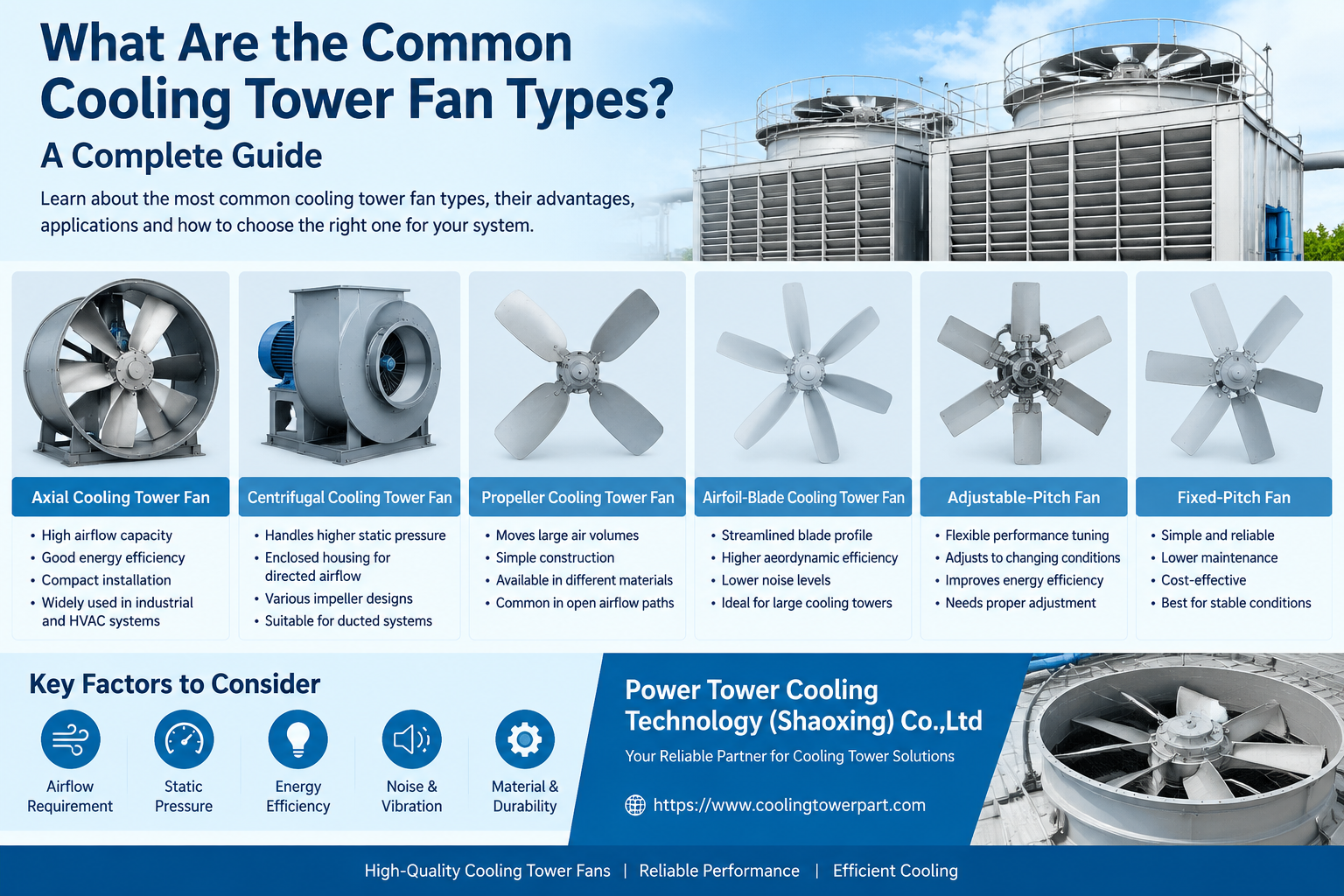
What Are the Common Cooling Tower Fan Types?
Cooling tower fans can be classified according to their airflow direction, blade design, blade profile, and pitch adjustment method.
The most common types include:
Axial cooling tower fans
Centrifugal cooling tower fans
Propeller cooling tower fans
Airfoil-blade cooling tower fans
Adjustable-pitch cooling tower fans
Fixed-pitch cooling tower fans
These categories can overlap. For example, a propeller fan is a type of axial fan, while an airfoil blade describes the blade's aerodynamic profile. Adjustable-pitch and fixed-pitch fans describe how the blade angle is set.
Understanding these distinctions makes it easier to compare products and identify the right fan for your application.
1. Axial Cooling Tower Fans
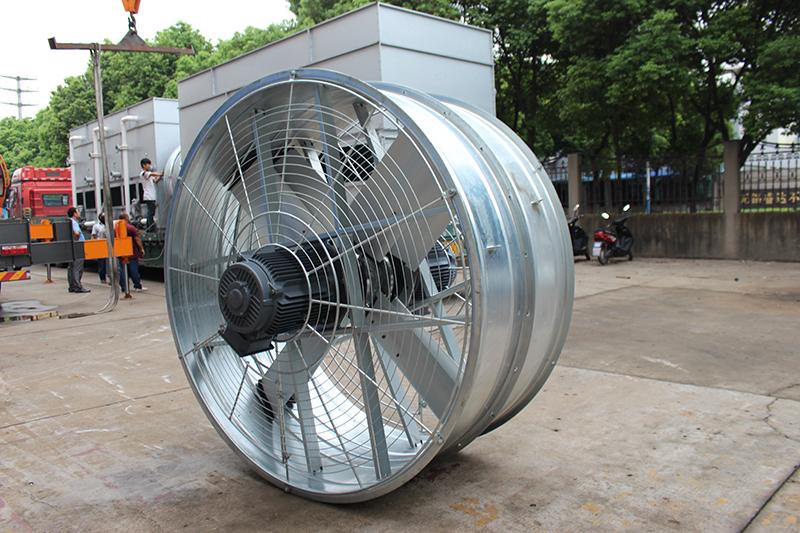
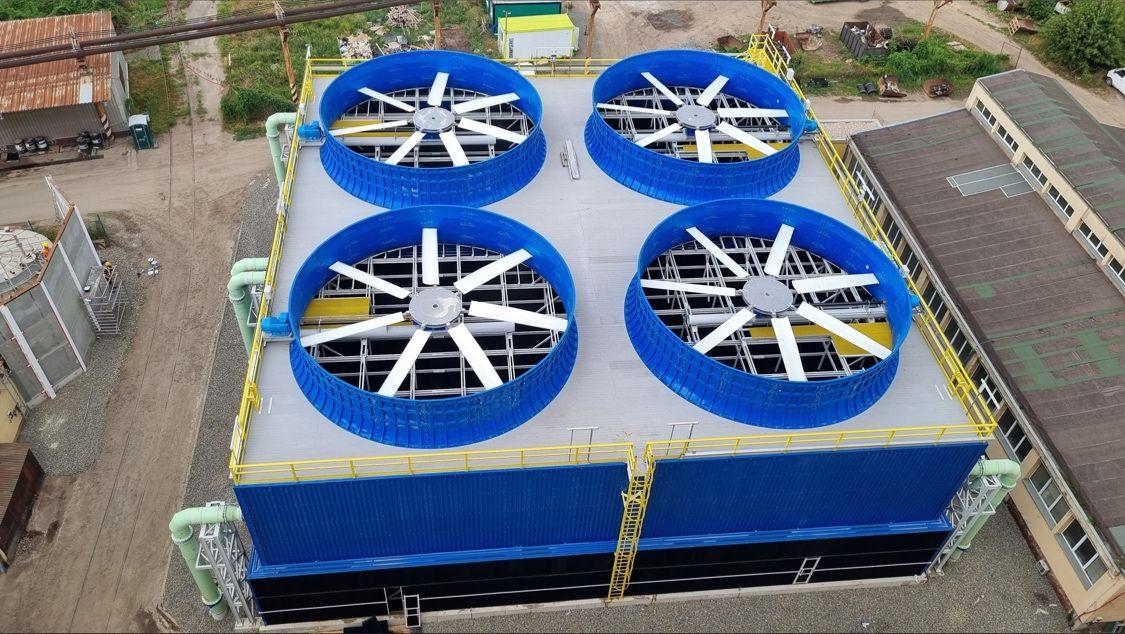
Axial cooling tower fans move air mainly parallel to the fan shaft. They are among the most widely used fan types in industrial cooling towers because they can move large volumes of air at relatively low static pressure.
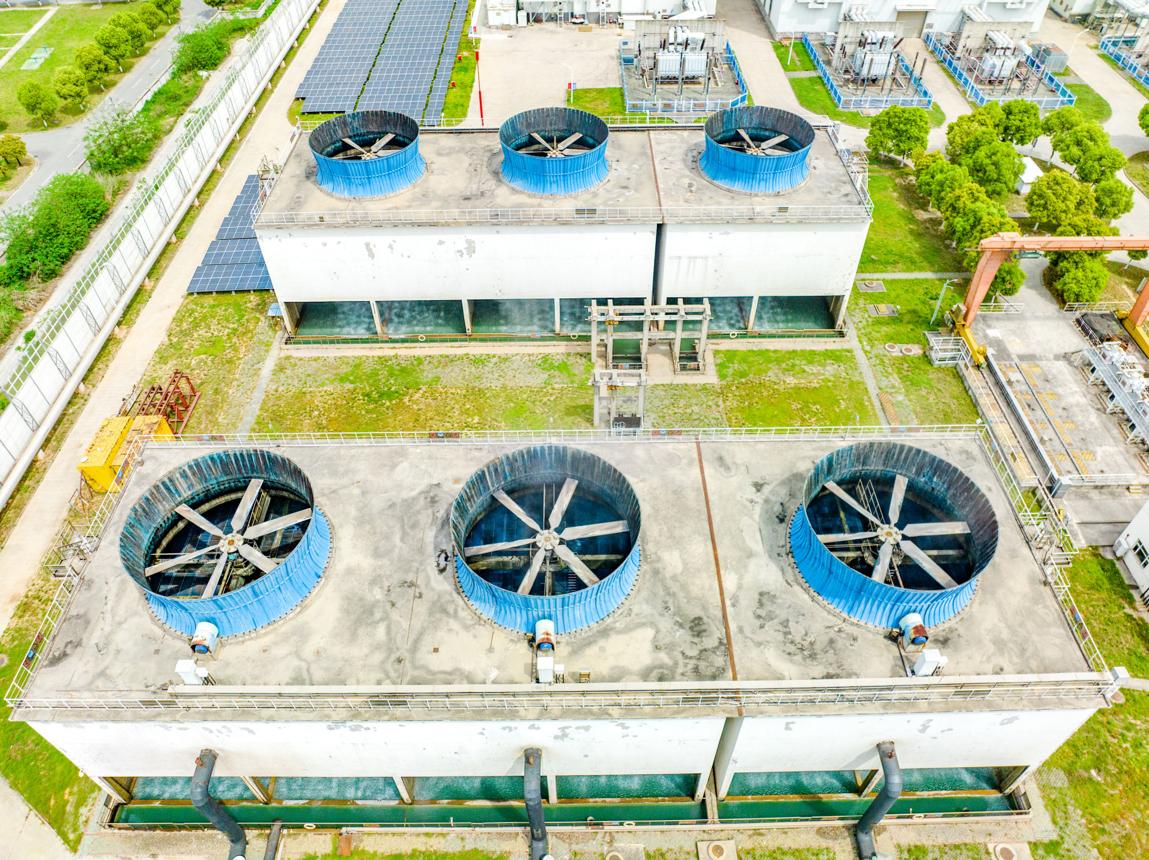
In a typical large induced-draft cooling tower, an axial fan is installed near the top of the structure. It draws air through the fill and discharges warm, moist air upward into the atmosphere.
Axial fans are available in different diameters, blade counts, blade profiles, and materials. Their performance depends on the complete assembly and the operating conditions.
Advantages of Axial Cooling Tower Fans
Axial fans offer several benefits:
High airflow capacity: Suitable for moving large volumes of air through cooling towers.
Good energy efficiency: Properly selected designs can deliver the required airflow with relatively low power consumption.
Compact installation: Their configuration is often suitable for large tower fan decks.
Flexible design options: Different blade profiles and materials are available for different operating conditions.
Wide industrial application: Commonly used in HVAC systems, manufacturing plants, power stations, and process cooling systems.
Limitations of Axial Cooling Tower Fans
Axial fans are not suitable for every application. Their performance may deteriorate when system resistance is too high or inlet airflow conditions are poor.
Blade imbalance, incorrect blade pitch, damaged components, and structural misalignment can also reduce performance or cause excessive vibration.
For most large cooling towers, an axial fan is a practical option. However, the final choice should be based on the required airflow, static pressure, efficiency, and mechanical compatibility.
2. Centrifugal Cooling Tower Fans
Centrifugal fans operate differently from axial fans. They draw air into an impeller and accelerate it outward through centrifugal action. The airflow direction changes as the air passes through the impeller and housing.
Compared with typical axial fans, centrifugal fans can be well suited to systems that require higher static pressure.
They are used in certain forced-draft cooling towers, packaged cooling equipment, and applications where ductwork or other components create substantial airflow resistance.
Advantages of Centrifugal Cooling Tower Fans
Centrifugal fans offer several potential advantages:
They can accommodate applications requiring relatively high static pressure.
Their enclosed housing can help direct airflow through a defined path.
Different impeller designs can suit different airflow and pressure requirements.
Some configurations are suitable for installations where fan access and duct layout influence equipment selection.
Limitations of Centrifugal Cooling Tower Fans
Centrifugal fans may require more installation space because of their housing and associated ductwork. Their maintenance requirements and energy consumption depend on the specific design and operating point.
They are not automatically more efficient than axial fans. The correct comparison must consider the airflow and static pressure required by the system.
For a large cooling tower that needs high airflow at relatively low pressure, an axial fan may be the more practical choice. Where higher pressure is required, a centrifugal fan may be worth evaluating.
3. Propeller Cooling Tower Fans
Propeller fans have blades arranged around a central hub, giving them an appearance similar to a ship's propeller. They are a familiar form of axial fan and are often used to move large volumes of air through relatively open airflow paths.
Their relatively straightforward construction can simplify inspection and servicing. Depending on the design, propeller fans may use aluminum, fiberglass-reinforced plastic, or other engineered materials.
Propeller fans are commonly selected for applications where the airflow requirement and installation configuration match their operating characteristics.
Before purchasing one, check the fan diameter, blade pitch, rotational speed, motor power, and compatibility with the existing fan cylinder or shroud.
Remember that the term "propeller fan" alone does not guarantee a particular efficiency level. Blade geometry and system matching remain essential.
4. Airfoil-Blade Cooling Tower Fans
Airfoil-blade fans use blades with a streamlined cross-section designed to move air efficiently. Similar to an aircraft wing, the blade profile influences how air flows around its surface and how much aerodynamic lift it generates.
In a properly designed cooling tower fan, an airfoil profile can help reduce aerodynamic losses and noise while delivering the required airflow.
These fans are particularly relevant in large cooling towers, where fans may operate for long periods and electricity consumption represents a significant operating expense.
However, an airfoil blade does not guarantee superior performance under every condition. Efficiency depends on blade angle, fan diameter, rotational speed, hub design, and system resistance.
Installation and maintenance also matter. Incorrect blade pitch or uneven blade positioning can affect airflow and create imbalance.
5. Adjustable-Pitch Cooling Tower Fans
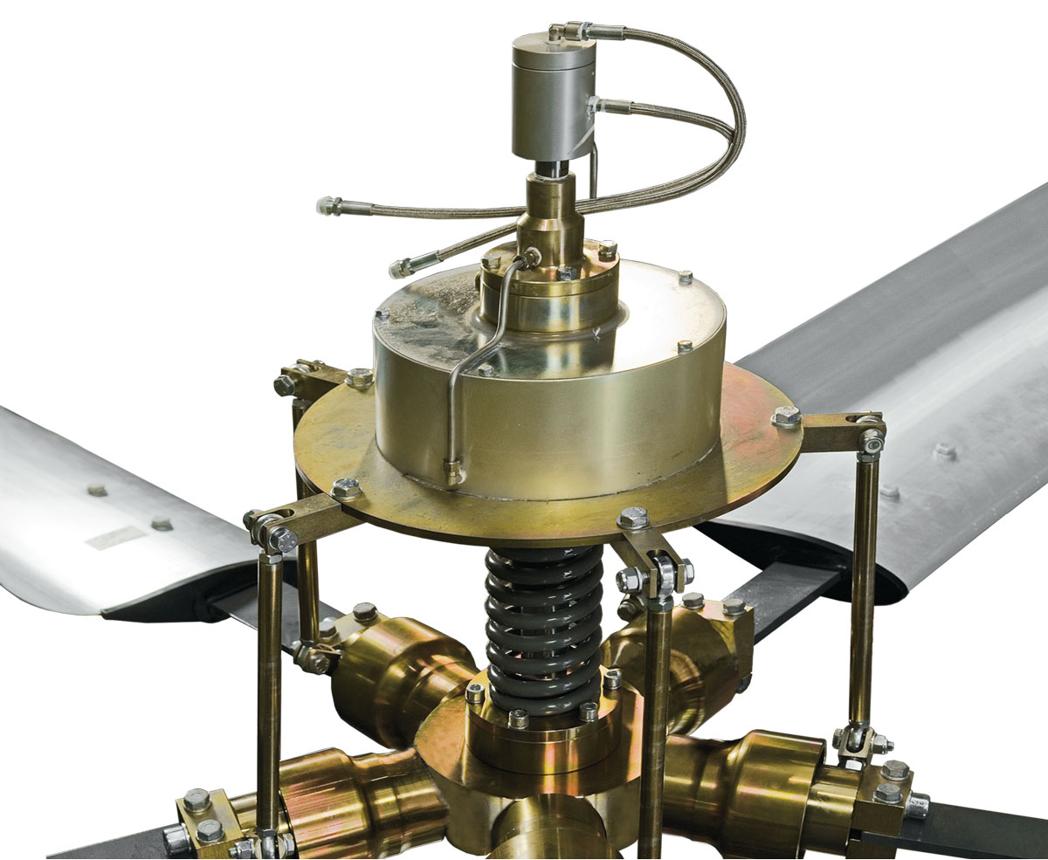
Adjustable-pitch cooling tower fans allow the blade angle to be changed to match the airflow requirements of a particular tower.
This feature can be useful when commissioning a new system, optimizing an existing installation, or adapting a fan to changed operating conditions.
For example, a facility may need to adjust its cooling capacity after modifying the process load or replacing certain tower components.
Blade pitch directly affects airflow and motor load. Increasing the pitch may increase the load on the motor, while reducing it may lower airflow.
When Should You Choose an Adjustable-Pitch Fan?
Adjustable-pitch fans may be suitable when:
Operating conditions vary significantly.
The fan needs to be tuned during commissioning.
The system requires performance optimization.
The design allows authorized blade-angle adjustments.
However, adjustments must follow the manufacturer's specifications. Excessive pitch can overload the motor, while insufficient pitch can reduce cooling capacity.
Some fans allow adjustment only when the equipment is stopped. Others may use specialized mechanisms. Never assume that a fan supports adjustment while running unless the manufacturer explicitly confirms it.
6. Fixed-Pitch Cooling Tower Fans
Fixed-pitch fans have blades set at a predetermined angle. Their blade geometry is designed to meet a specified operating duty.
Once properly selected and installed, a fixed-pitch fan can provide reliable service with straightforward operation.
One limitation is that its blade angle cannot normally be changed to accommodate different operating conditions. However, fixed-pitch fans can still offer good efficiency when correctly matched to the system.
When choosing a fixed-pitch fan, confirm the required airflow, static pressure, motor power, and expected operating range.
Do not select a replacement based only on the original fan's diameter or motor rating. Even a fan with similar dimensions may perform differently if its blade geometry or pitch differs.
Cooling Tower Fan Types by Draft Configuration
In addition to blade design, cooling tower fans can be classified according to how they move air through the tower.
The two main configurations are induced draft and forced draft. Both are used in industrial cooling, but their arrangements influence airflow distribution, installation, maintenance, and discharge conditions.
Induced-Draft Cooling Tower Fans
Induced-draft fans are generally installed near the air discharge at the top of a cooling tower. They pull air through the fill and discharge warm, moist air into the atmosphere.
This configuration is common in industrial and HVAC cooling towers because the upward discharge can help reduce the risk of exhaust air returning to the air inlet.
However, recirculation is still possible if the tower is poorly positioned or surrounded by buildings and other obstructions. Wind conditions and nearby structures can affect how discharged air moves.
Induced-draft fan systems should also be designed with safe access for inspection and maintenance, especially when the fan, motor, or gearbox is located high above ground level.
Forced-Draft Cooling Tower Fans
Forced-draft fans are typically installed near the air inlet. They push air into the tower, where it passes through the heat-transfer area before leaving through the discharge.
One potential advantage is that the fan may be located closer to ground level, which can simplify access to certain components.
However, proper air distribution is essential. Poor inlet conditions, leakage, or uneven airflow can reduce cooling performance.
The design must also account for the possibility of warm, moist discharge air recirculating into the intake.
Neither induced draft nor forced draft is universally superior. The best configuration depends on the tower design, site layout, operating requirements, and maintenance considerations.
Cooling Tower Fan Materials and Construction
Cooling tower fan materials influence weight, corrosion resistance, mechanical strength, cost, and maintenance requirements.
Cooling towers operate in environments where components may be exposed to moisture, temperature changes, airborne contaminants, and potentially corrosive substances.
A material that performs well in a clean environment may not be suitable for a coastal installation or an industrial plant with corrosive emissions.
Aluminum Fan Blades
Aluminum blades are valued for their relatively low weight and established use in industrial fan systems.
Their suitability depends on the alloy, blade construction, operating environment, and mechanical requirements. Corrosion protection and inspection remain important, especially where the surrounding environment is aggressive.
Fiberglass-Reinforced Plastic and Composite Blades
Fiberglass-reinforced plastic (FRP) and other composite materials can provide a useful combination of low weight, strength, and corrosion resistance.
They may be suitable for applications where environmental exposure or equipment weight is a major consideration.
The material must still be selected for the actual operating temperature, chemical exposure, ultraviolet exposure, and mechanical loads.
Corrosion Resistance and Structural Strength
Fan blades must withstand continuous rotation, aerodynamic loading, vibration, and environmental exposure.
Corrosion, erosion, cracks, or surface damage can weaken a blade and affect its balance. Even small differences in blade mass or pitch can create vibration at operating speed.
When purchasing a cooling tower fan, confirm the material specifications, permitted operating temperature, rotational speed, and maintenance requirements.
For replacement projects, check the hub, fasteners, mounting arrangement, and supporting structure as well as the blades. The complete assembly must be mechanically compatible with the application.
How to Choose the Right Cooling Tower Fan
Selecting a cooling tower fan involves more than choosing the largest available model.
The fan must provide the required airflow against the resistance of the complete system while remaining within acceptable limits for energy consumption, noise, vibration, and mechanical loading.
Start by collecting the original equipment specifications and current operating data. If the tower is not achieving its required outlet water temperature, investigate the overall cooling system before assuming that the fan is the only problem.
1. Confirm the Required Airflow
Airflow is one of the most important fan selection parameters.
The required volume depends on cooling duty, ambient wet-bulb temperature, water flow, inlet and outlet water temperatures, fill characteristics, and tower design.
A replacement fan with a larger diameter does not automatically provide better cooling. It must also fit the fan cylinder, maintain proper clearances, and operate within the limits of the motor and drive system.
Ask the supplier to confirm the proposed fan's airflow at the required operating point and the assumptions used to determine its performance.
2. Check Static Pressure and Fan Efficiency
Static pressure represents the resistance that the fan must overcome as air passes through the tower.
Fill media, drift eliminators, louvers, screens, and other components all contribute to airflow resistance.
The fan must provide the required airflow at the corresponding pressure, not simply under free-air conditions.
Compare the manufacturer's performance curves and efficiency data at the expected operating point. A fan operating far from its intended duty point may consume more energy or deliver less airflow than expected.
If tower internals have changed, reassess system resistance before selecting a replacement fan.
3. Match Fan Diameter, Speed, and Motor Power
Fan diameter and rotational speed influence airflow, pressure, and power consumption.
The motor must be suitable for the required duty and protected against overload. Changes to fan geometry or blade pitch can affect motor loading and drive requirements.
The shaft, gearbox, coupling, hub, and supporting structure must also be able to withstand the resulting mechanical loads.
Avoid selecting a fan based on horsepower alone. Two fans with the same motor rating can have significantly different aerodynamic performance.
4. Consider Noise and Vibration
Fan noise may affect workers and nearby facilities. Excessive vibration can indicate imbalance, misalignment, loose fasteners, bearing wear, or structural problems.
Consider the site's noise requirements, vibration limits, and maintenance capabilities when comparing fan options.
If a fan is unusually noisy or begins vibrating, investigate the cause instead of assuming the equipment simply needs a more powerful motor.
5. Evaluate Energy Consumption
Cooling tower fans may operate for thousands of hours each year, so energy consumption can significantly influence operating costs.
A properly selected, efficient fan can help reduce the electricity needed to maintain the required cooling performance.
Where appropriate, a variable-frequency drive (VFD) may allow fan speed to be adjusted according to cooling demand. Lowering fan speed during periods of reduced demand can save energy, but the control strategy must respect minimum airflow requirements, motor cooling characteristics, and the tower's operating limits.
Evaluate the expected energy savings against installation costs and any additional control requirements.
Common Cooling Tower Fan Problems
Even a well-designed fan can develop problems over time. Regular inspection helps identify deterioration before it leads to extended downtime or damage to other equipment.
Common issues include excessive vibration, damaged blades, corrosion, abnormal noise, motor overheating, and insufficient airflow.
These symptoms may originate in the fan itself or in the associated motor, gearbox, bearings, controls, or tower structure.
Fan Imbalance and Excessive Vibration
Fan imbalance may result from dirt buildup, damaged blades, loose fasteners, uneven repairs, or incorrect blade pitch.
Misalignment, bearing defects, gearbox problems, and structural looseness can produce similar symptoms.
If vibration increases suddenly, stop the equipment when safe to do so and follow the site's isolation procedures. Inspect the assembly before restarting it.
Dynamic balancing, alignment checks, and vibration measurements should be performed by qualified personnel when necessary.
Never continue operating a fan with severe vibration simply because it is still moving air.
Blade Damage and Corrosion
Cracks, corrosion, erosion, deformation, and loose blade attachments can reduce reliability and create safety risks.
Damaged blades may also change the fan's mass distribution, resulting in imbalance during operation.
Inspect blade surfaces, blade roots, hubs, and fasteners according to the manufacturer's recommended schedule.
Replace damaged components using approved parts and procedures. Do not drill, trim, weld, or otherwise modify a blade unless the manufacturer authorizes the repair.
Motor Overheating and Poor Airflow
Motor overheating can result from excessive fan load, electrical supply problems, poor ventilation, bearing issues, or incorrect control settings.
Poor airflow may be caused by incorrect blade pitch, a damaged drive, blocked air passages, fouled fill, or unsuitable operating conditions.
Check motor current, drive settings, fan condition, and airflow obstructions as part of a structured diagnosis.
If the fan appears to operate normally but cooling remains inadequate, also inspect water distribution, fill condition, exhaust recirculation, and the tower's actual thermal load.
Cooling Tower Fan Maintenance Best Practices
Preventive maintenance helps extend fan service life, reduce unexpected downtime, and maintain stable cooling performance.
Establish an inspection schedule based on operating hours, environmental conditions, manufacturer recommendations, and the consequences of equipment failure.
Before any physical inspection or repair, isolate electrical power, lock out and tag out the equipment, and verify that the fan cannot restart automatically.
Never approach or service hazardous fan components while the equipment is running.
A Practical Cooling Tower Fan Inspection Checklist
During scheduled inspections, check the following:
Fan blades: Look for cracks, corrosion, deformation, erosion, and other visible damage.
Blade attachments: Check for loose fasteners and signs of movement.
Fan hub: Inspect the hub and blade connections for damage.
Motor and drive: Check for abnormal noise, overheating, and other signs of deterioration.
Gearbox and bearings: Follow the manufacturer's lubrication and inspection requirements where applicable.
Vibration: Monitor readings and investigate significant changes.
Fan cylinder and structure: Check for damage, looseness, or interference with the rotating assembly.
Safety guards: Confirm that guards and access covers remain secure.
Maintenance records: Record measurements and repairs to identify changes over time.
Always follow the manufacturer's requirements for lubrication, fastener tightening, balancing, and component replacement.
Can You Replace an Existing Cooling Tower Fan?
Yes. In many cases, a cooling tower fan can be replaced without replacing the entire tower.
However, a successful replacement requires more than matching the existing fan diameter.
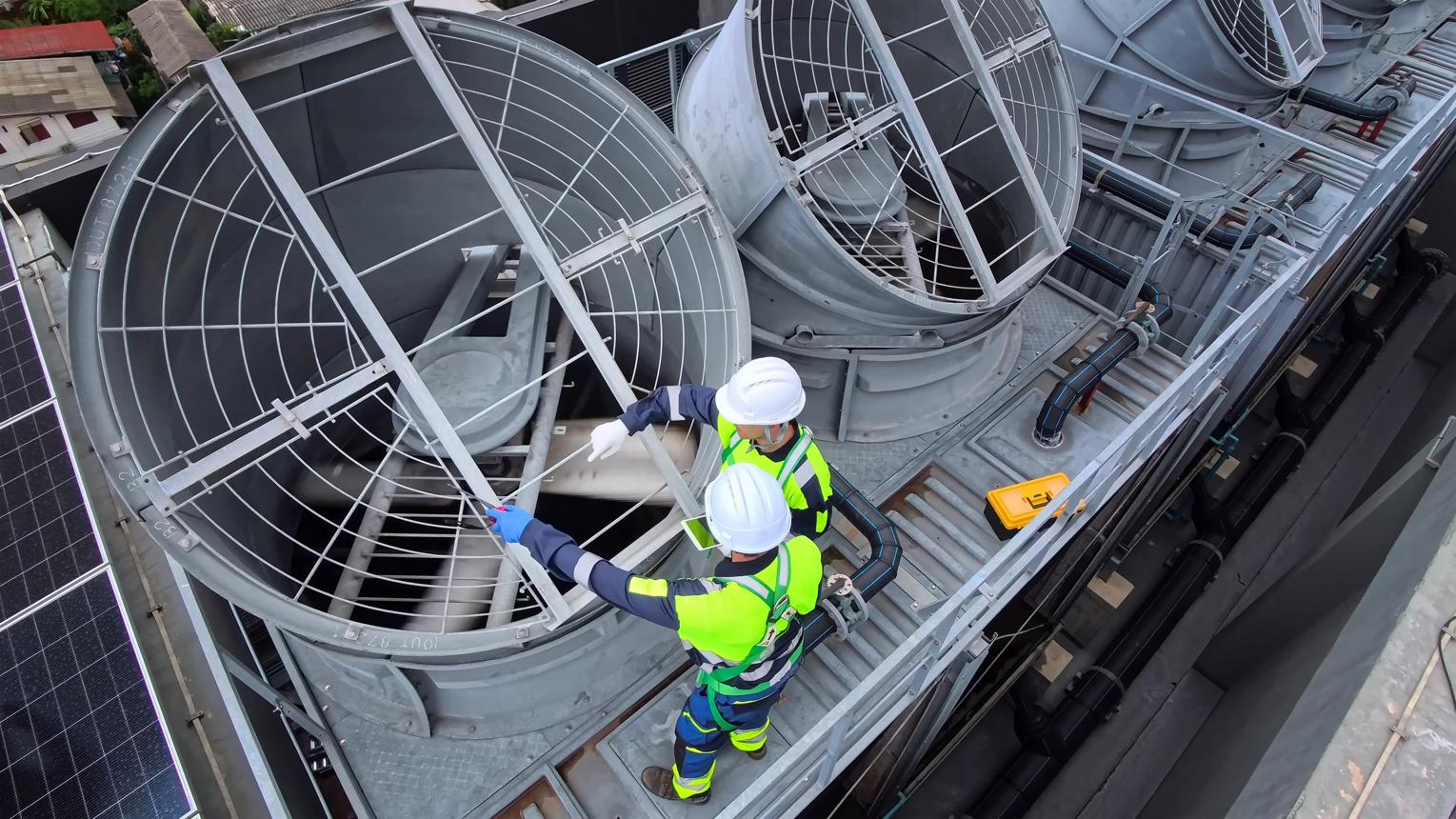
Before purchasing a replacement, verify:
Original cooling tower manufacturer and model
Existing fan diameter and hub dimensions
Required airflow and static pressure
Blade profile and pitch
Rotational speed and direction of rotation
Motor power and electrical requirements
Shaft, gearbox, and coupling arrangement
Fan cylinder dimensions and installation clearances
Material requirements and operating environment
A replacement fan must also be compatible with the tower's mechanical and structural limits.
If the original fan model is obsolete, a compatible alternative may still be possible. The supplier should review the available specifications before confirming suitability.
Providing photographs, nameplate information, drawings, and accurate measurements can help simplify the selection process and reduce the risk of ordering an unsuitable component.
Why Choose Power Tower Cooling Technology (Shaoxing) Co.,Ltd?
Selecting cooling tower components is about more than purchasing a replacement part. Industrial buyers need accurate product information, suitable technical specifications, and assistance in identifying components that match their equipment.
Power Tower Cooling Technology (Shaoxing) Co.,Ltd provides cooling tower products and replacement-part solutions through its website:
Website: https://www.coolingtowerpart.com
When planning a cooling tower maintenance or replacement project, prepare the tower model, existing component dimensions, operating conditions, and relevant photographs. These details can help establish the technical requirements before a product is selected.
For a cooling tower fan replacement, request confirmation of compatibility, operating parameters, material specifications, and installation requirements.
A well-matched component can help maintain reliable operation, while proper inspection and maintenance can reduce avoidable downtime and extend equipment service life.
Frequently Asked Questions About Cooling Tower Fan Types
Which Cooling Tower Fan Type Is Most Efficient?
Axial fans are often highly efficient for large cooling towers that require high airflow at relatively low static pressure. Airfoil-blade designs may improve aerodynamic performance when correctly engineered and matched to the system.
However, no single fan type is the most efficient for every application. The correct choice depends on airflow, static pressure, operating speed, fan design, and system resistance.
Compare the power required to deliver the specified airflow at the actual operating point rather than comparing fan types by name alone.
Are Axial or Centrifugal Fans Better for Cooling Towers?
Axial fans are generally suitable for moving large volumes of air at relatively low pressure. They are widely used in large industrial and HVAC cooling towers.
Centrifugal fans may be more appropriate for applications requiring higher static pressure or a particular duct arrangement.
The better choice depends on the cooling tower design, airflow requirements, installation layout, efficiency, noise, and maintenance needs.
How Often Should a Cooling Tower Fan Be Inspected?
Inspection frequency depends on operating conditions, manufacturer guidance, site safety requirements, and equipment criticality.
Operators should monitor abnormal noise, vibration, and performance during normal operation. More detailed inspections should follow the manufacturer's recommended maintenance schedule.
Corrosive environments, heavy contamination, or unusual vibration may justify more frequent inspections.
Can a Cooling Tower Fan Be Replaced Without Replacing the Whole Tower?
Often, yes. A compatible replacement fan may be installed while retaining the existing tower structure and other components.
Before purchasing, confirm the dimensions, airflow, pressure, rotational speed, motor loading, drive requirements, and structural limits.
A technical review is particularly important when changing the blade design, increasing the fan diameter, or modifying the drive system.
What Materials Are Commonly Used for Cooling Tower Fan Blades?
Common materials include aluminum, fiberglass-reinforced plastic, and other engineered composites.
The best material depends on the operating environment, corrosion exposure, mechanical loading, temperature, weight requirements, and maintenance considerations.
Always verify that the selected material and complete fan assembly are suitable for the specific application.
Conclusion
Cooling tower fans are essential to effective heat rejection, but different designs serve different operating requirements.
Axial and propeller fans are widely used where large volumes of air must move through relatively low-resistance systems. Centrifugal fans can suit applications that require higher static pressure, while airfoil-blade and adjustable-pitch designs provide additional options for optimizing airflow and energy consumption.
The right cooling tower fan depends on several factors, including airflow, static pressure, fan efficiency, motor power, blade material, noise, and the tower's overall configuration.
Regular maintenance is equally important for controlling vibration, preventing blade damage, and extending equipment service life. When replacing an existing fan, verify technical compatibility rather than relying on diameter or motor power alone.
For industrial operators planning a new installation or replacement project, Power Tower Cooling Technology (Shaoxing) Co.,Ltd provides a starting point for exploring cooling tower products and replacement parts at www.coolingtowerpart.com.
Choose a fan that matches your actual operating requirements, confirm the technical specifications, and maintain the equipment properly to support reliable cooling performance over the long term.


