Top Cooling Tower Fan Manufacturers for Industrial Cooling Systems
Industrial cooling systems play a critical role in maintaining stable operating temperatures across manufacturing plants, power stations, chemical facilities, petrochemical industries, and commercial HVAC installations. As one of the most important components of a cooling tower, the fan directly affects airflow volume, heat transfer efficiency, energy consumption, and overall system performance.
Choosing the right cooling tower fan manufacturer is therefore an important decision for industrial buyers, engineering contractors, and cooling tower operators. A reliable manufacturer should provide more than standard fan products. It should also offer professional engineering support, high-quality materials, customized manufacturing, strict quality control, and dependable after-sales service.
Today, the market offers many types of industrial cooling tower fans, including axial flow fans, FRP cooling tower fans, aluminum fans, and customized fan assemblies. Understanding their differences can help buyers identify suitable manufacturers and make better purchasing decisions.
This article explores the characteristics of top cooling tower fan manufacturers, important product technologies, manufacturing standards, and the key factors to consider when selecting an industrial cooling tower fan supplier.
1. What Do Top Cooling Tower Fan Manufacturers Provide?
Professional cooling tower fan manufacturers specialize in designing, producing, and supplying fan systems for different industrial cooling applications.
Their products are generally designed to move large volumes of air through cooling towers, supporting the evaporation process and improving heat rejection.
1.1 Industrial Cooling Tower Fan Manufacturing
A professional manufacturer should understand the relationship between fan performance and cooling tower operating conditions.
Its manufacturing capabilities may include:
Axial flow cooling tower fans.
FRP cooling tower fan blades.
Aluminum cooling tower fan blades.
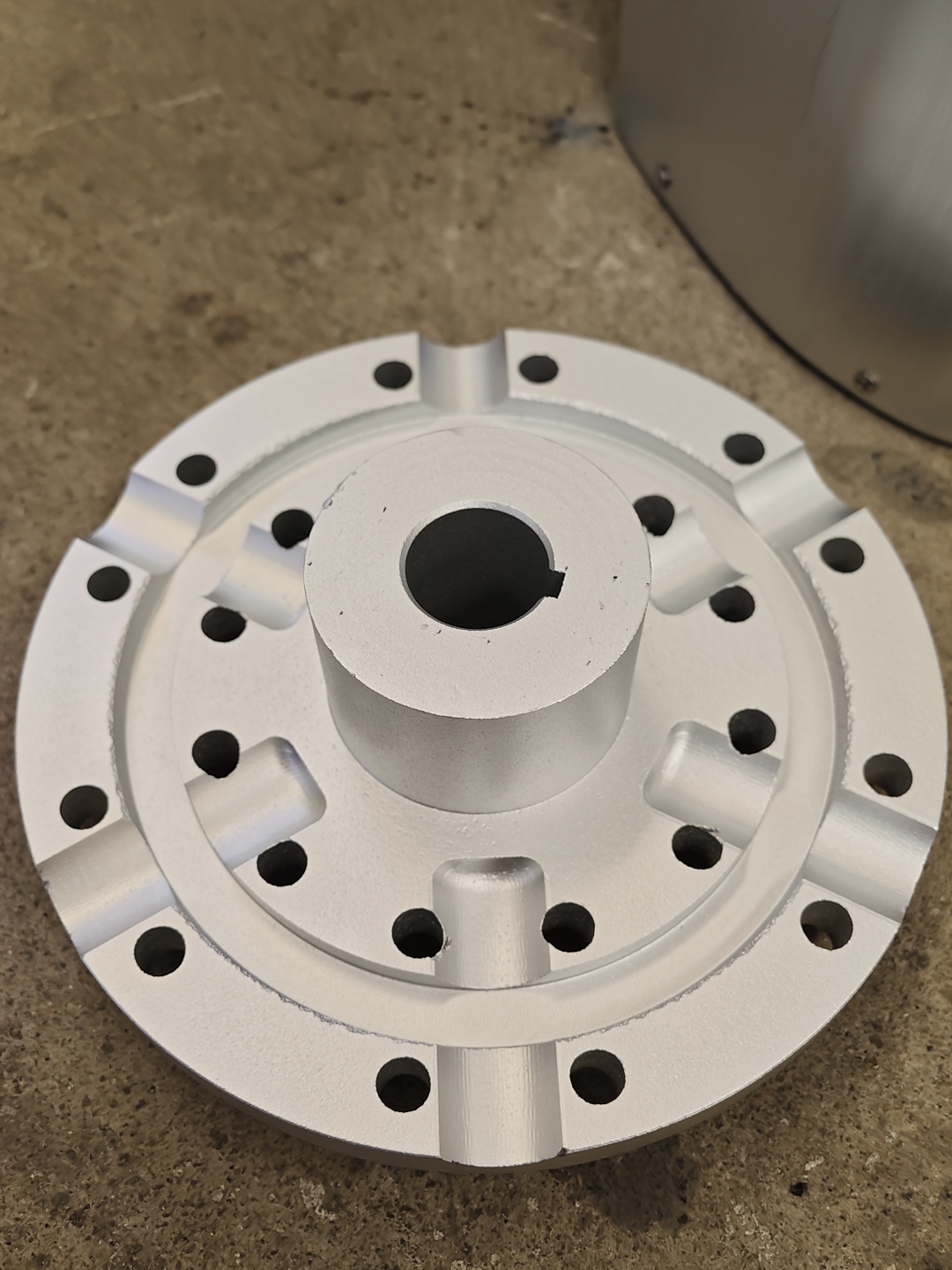
Cooling tower fan hub assemblies.
Industrial fan stacks and fan cylinders.
Customized fan replacement solutions.
Complete fan drive system components.
Customized Fan Design
Different cooling towers require different fan diameters, blade angles, rotational speeds, and airflow capacities.
Professional manufacturers should be able to evaluate customer specifications and recommend appropriate configurations.
1.2 Engineering and Technical Support
Reliable cooling tower fan manufacturers should provide technical assistance throughout the purchasing process.
Important services include:
Fan dimension confirmation.
Blade pitch angle recommendations.
Material selection guidance.
Fan performance evaluation.
Installation recommendations.
Replacement compatibility checks.
These services are especially important for industrial facilities replacing existing fans without modifying the entire cooling tower structure.
1.3 OEM and Custom Manufacturing Services
OEM manufacturing allows buyers to obtain fan products according to their project requirements.
Customized services may include different fan diameters, blade quantities, hub configurations, connection dimensions, and material specifications.
For international buyers, flexible manufacturing capabilities can simplify equipment replacement and project integration.
2. Main Types of Cooling Tower Fans Offered by Manufacturers
Different industrial cooling systems require different fan configurations. Understanding the main product types helps buyers compare manufacturers more effectively.
2.1 Axial Flow Cooling Tower Fans
Axial flow fans are among the most common products supplied by industrial cooling tower fan manufacturers.
They move air parallel to the fan shaft and are particularly suitable for cooling towers requiring large airflow volumes.
Key Advantages
High airflow capacity.
Relatively low energy consumption at suitable operating points.
Compact installation arrangement.
Flexible blade configurations.
Compatibility with large industrial cooling towers.
Typical Applications
Axial flow cooling tower fans are widely used in power plants, chemical factories, steel mills, petrochemical facilities, and commercial HVAC systems.
2.2 FRP Cooling Tower Fans
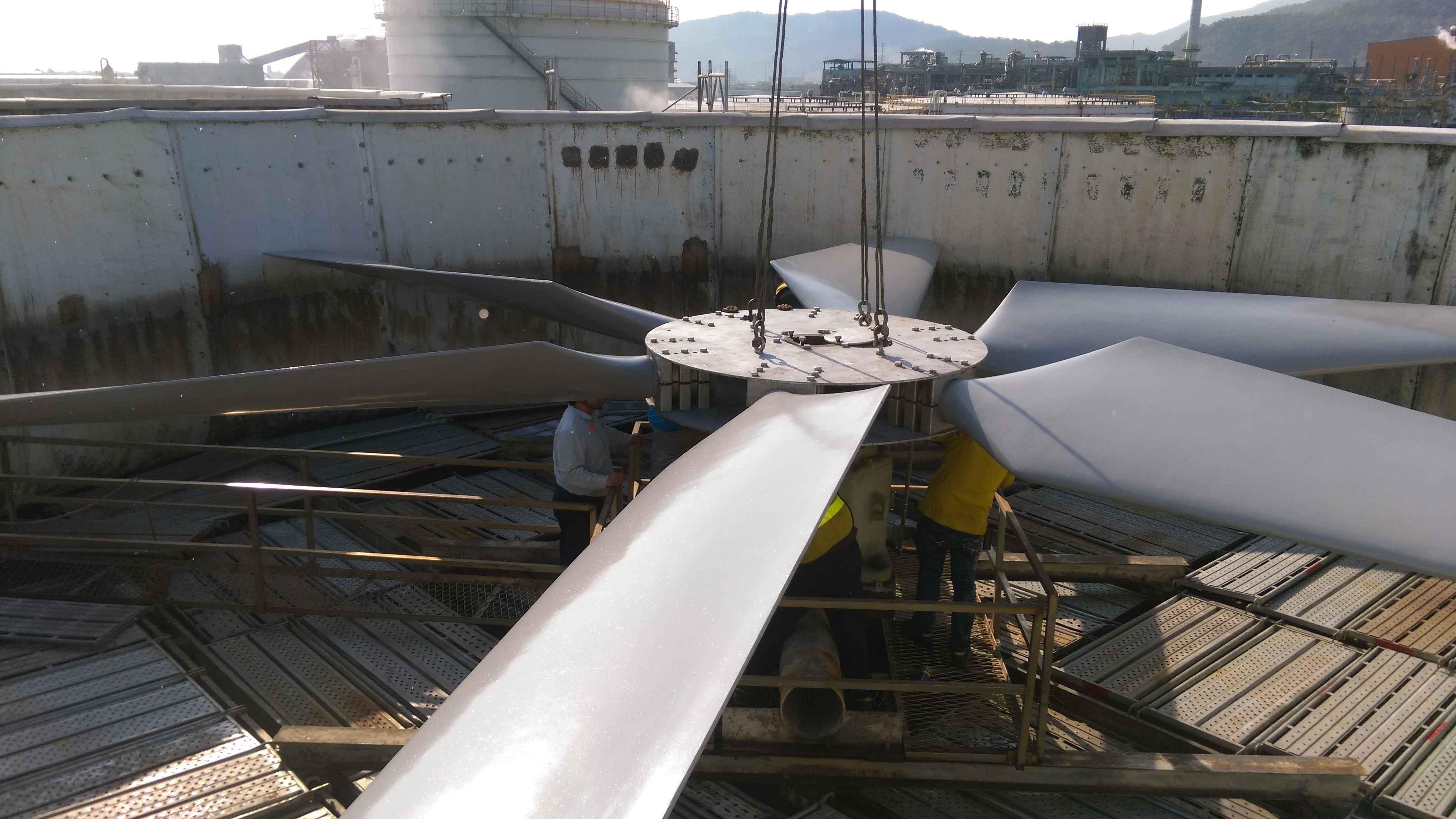
FRP (Fiberglass Reinforced Plastic) cooling tower fans are widely used because of their lightweight structure and corrosion resistance.
FRP materials are especially attractive for cooling towers operating in humid or chemically aggressive environments.
Main Benefits of FRP Fan Blades
Lightweight Construction
FRP blades generally have a lower weight than many conventional metal alternatives, helping reduce rotating mass and mechanical loading when properly designed.
Corrosion Resistance
FRP materials can provide excellent resistance to moisture and many industrial chemicals, depending on the resin system and manufacturing process.
Aerodynamic Flexibility
FRP manufacturing allows different blade profiles and geometries to be produced according to airflow requirements.
Long-Term Operating Reliability
With appropriate structural design, manufacturing quality, and maintenance, FRP fan blades can provide dependable service in demanding industrial environments.
2.3 Aluminum Cooling Tower Fans
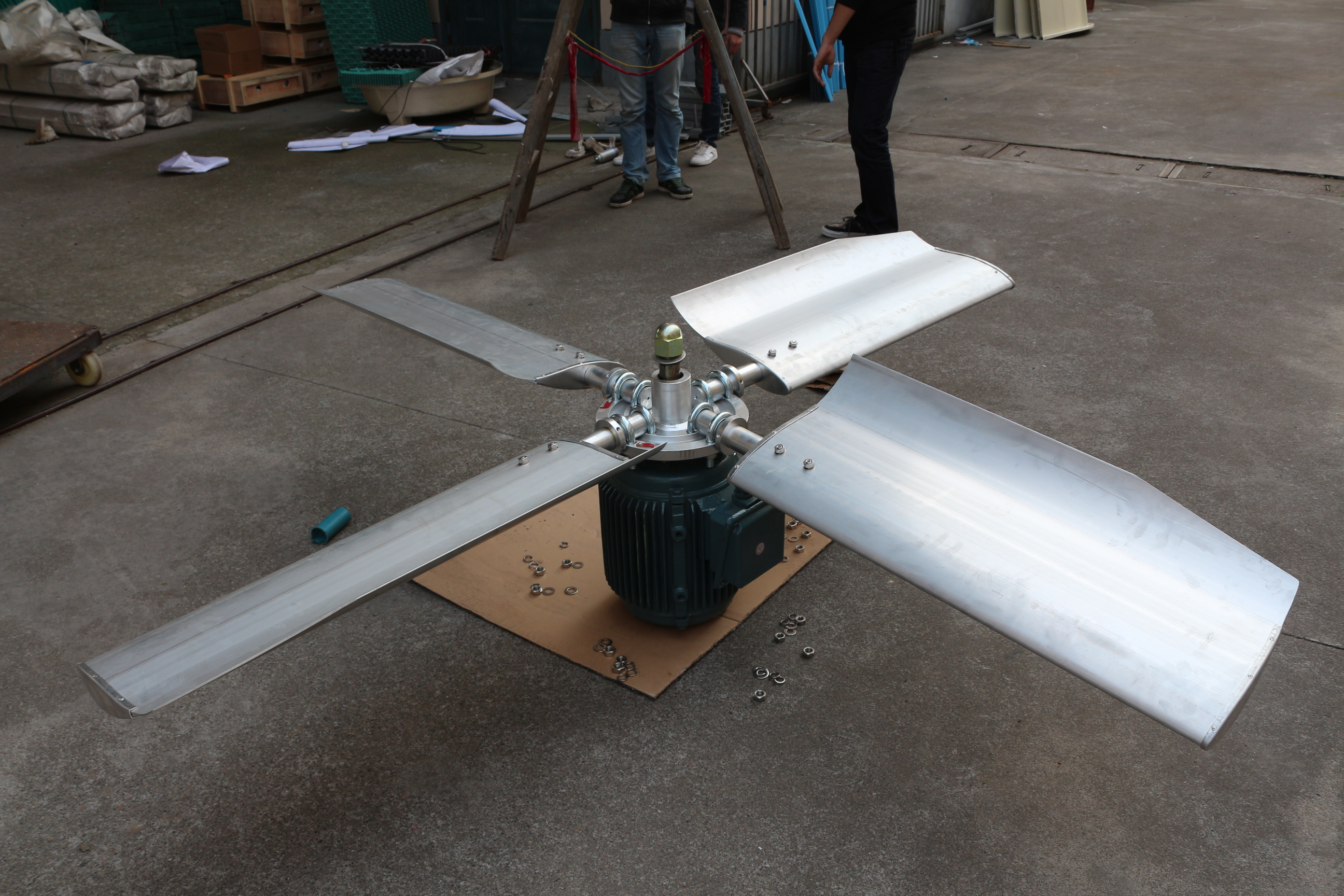
Aluminum cooling tower fans are another popular choice for industrial cooling systems.
Aluminum alloy blades offer a combination of relatively low weight, mechanical strength, and convenient manufacturing.
Advantages of Aluminum Fans
Good mechanical properties.
Relatively lightweight construction.
Suitable for different aerodynamic profiles.
Convenient inspection and maintenance.
Good dimensional stability.
However, buyers should consider the operating environment, water chemistry, surface treatment, and potential corrosion risks before selecting aluminum fan blades.
2.4 Centrifugal Cooling Tower Fans
Centrifugal fans move air outward through a rotating impeller and are suitable for applications requiring higher static pressure.
Compared with axial fans, they are generally selected for different airflow and system resistance conditions.
Common Applications
Specialized industrial ventilation.
Cooling systems with higher air resistance.
Ducted air circulation installations.
Certain customized industrial cooling applications.
Manufacturers should evaluate actual system resistance before recommending centrifugal or axial fan configurations.
3. What Makes a Top Cooling Tower Fan Manufacturer Different?
Not every cooling tower fan supplier has the same manufacturing capabilities.
The best manufacturers distinguish themselves through engineering knowledge, material quality, production consistency, and customer support.
3.1 Advanced Manufacturing Capabilities
Manufacturing equipment and production processes influence the accuracy and consistency of cooling tower fan products.
Professional factories should have suitable facilities for blade production, hub machining, assembly, and inspection.
Important Manufacturing Processes
FRP Blade Production
FRP fan blades may be manufactured using processes such as hand lay-up, vacuum-assisted processing, or other suitable composite manufacturing methods.
The selected process should provide consistent resin distribution, fiber reinforcement, and structural quality.
Aluminum Blade Manufacturing
Aluminum blades may involve casting, extrusion, machining, forming, and surface treatment, depending on their design.
Fan Hub Machining
The hub must provide accurate blade positioning and reliable mechanical connections.
Manufacturing precision is important for maintaining the correct blade angle and reducing assembly-related vibration.
3.2 Strict Quality Control
Quality control is one of the most important factors when comparing cooling tower fan manufacturers.
A professional supplier should establish inspection procedures covering raw materials, production processes, finished products, and mechanical assembly.
Key Quality Inspection Items
Raw material verification.
Blade dimensional inspection.
Blade thickness measurement.
Blade surface inspection.
Hub dimensional inspection.
Blade pitch angle verification.
Fastener and connection inspection.
Fan assembly balancing.
Final product inspection.
Why Is Fan Balancing Important?
An unbalanced fan can generate excessive vibration during operation.
This vibration may increase stress on bearings, gearboxes, motors, and supporting structures.
Manufacturers should follow appropriate balancing procedures based on the fan design, rotational speed, and applicable engineering requirements.
3.3 Professional Product Development
Top cooling tower fan manufacturers continuously improve blade profiles, materials, and structural configurations.
Product development may focus on:
Improving aerodynamic efficiency.
Reducing unnecessary rotating weight.
Increasing structural strength.
Improving corrosion resistance.
Reducing operating noise.
Simplifying maintenance procedures.
These improvements help industrial customers achieve better overall equipment performance.
4. How Do Cooling Tower Fan Manufacturers Improve Energy Efficiency?
Energy efficiency is an important consideration for industrial cooling tower operators because fans may operate for thousands of hours every year.
Manufacturers can improve fan performance through aerodynamic optimization, material improvements, and drive system integration.
4.1 Optimized Fan Blade Design
The shape and pitch angle of a fan blade directly affect its aerodynamic performance.
A properly designed blade should generate the required airflow while avoiding unnecessary aerodynamic losses.
Important Blade Design Factors
Blade airfoil profile.
Blade length and width.
Blade pitch angle.
Blade curvature.
Blade thickness.
Rotational speed.
Fan diameter.
An appropriate combination of these factors helps achieve the required airflow and pressure at a suitable power level.
4.2 Lightweight FRP Fan Blades
FRP fan blades can reduce rotating mass compared with some traditional metal blade designs.
Lower rotating mass may reduce startup torque requirements and mechanical loading, although actual energy savings depend on the complete fan system and operating point.
Manufacturers should consider fiber orientation, resin selection, blade stiffness, and centrifugal loading during product development.
4.3 Variable Frequency Drive Integration
A variable frequency drive (VFD) allows fan speed to be adjusted according to cooling demand.
Instead of continuously running at maximum speed, the fan can operate at different speeds based on water temperature and environmental conditions.
Benefits of VFD-Controlled Cooling Tower Fans
Improved part-load energy efficiency.
More flexible temperature control.
Reduced unnecessary full-speed operation.
Potential reduction in operating noise.
Lower mechanical stress during controlled startup.
The fan, motor, and control system must be designed to operate safely within the permitted speed range.
4.4 Improved Fan Stack Aerodynamics
The fan stack helps guide air toward the discharge opening.
A properly designed FRP cooling tower fan stack can improve airflow guidance and help reduce undesirable discharge losses.
Fan blade diameter, stack geometry, installation clearance, and alignment should be evaluated together.
5. How to Choose the Best Cooling Tower Fan Manufacturer?
Selecting a reliable supplier requires evaluating both product quality and the manufacturer's ability to support your project.
The following factors can help international buyers make a more informed decision.
5.1 Evaluate Manufacturing Experience
Look for manufacturers with relevant experience in industrial cooling tower fan production.
Ask about their main product categories, manufacturing capabilities, typical applications, and experience with replacement projects.
Questions to Ask Potential Manufacturers
How many years have you manufactured cooling tower fans?
Do you produce FRP and aluminum fan blades?
Can you manufacture customized fan diameters?
Do you supply complete fan hub assemblies?
Can you provide product drawings and technical specifications?
What quality inspection procedures do you follow?
5.2 Check Material Quality
Material selection directly influences product strength, durability, and operating life.
For FRP cooling tower fans, buyers should ask about:
Glass fiber reinforcement.
Resin type.
Fiber content and distribution.
Blade thickness.
Structural reinforcement.
Environmental resistance.
For aluminum fans, buyers should confirm the alloy grade, manufacturing process, and surface treatment.
5.3 Compare Product Specifications
Never compare cooling tower fan manufacturers based only on product price.
Two fans with similar external dimensions may have significantly different performance characteristics.
Important specifications include:
| Specification | Why It Matters |
| Fan diameter | Determines installation compatibility and airflow potential |
| Airflow volume | Indicates air-moving capacity |
| Rotational speed | Influences airflow and mechanical loading |
| Blade pitch angle | Affects fan performance and power demand |
| Blade material | Influences weight, strength, and corrosion resistance |
| Motor power | Must match fan operating requirements |
| Hub configuration | Determines mechanical connection compatibility |
| Balancing quality | Helps control vibration |
5.4 Request Technical Documentation
A reliable cooling tower fan supplier should be able to provide relevant technical documents.
Depending on the project, these may include:
Product specification sheets.
General arrangement drawings.
Installation instructions.
Material specifications.
Inspection reports.
Balancing records.
Maintenance recommendations.
Technical documentation makes it easier for engineering teams to evaluate product compatibility.
5.5 Evaluate Delivery and After-Sales Service
International projects often involve tight installation schedules.
A professional manufacturer should communicate clearly about production lead times, packaging, shipping arrangements, and replacement part availability.
After-sales support is equally important when customers need assistance with installation, blade adjustment, or equipment inspection.
6. Why Are FRP Cooling Tower Fan Manufacturers Popular in Industrial Markets?
FRP cooling tower fan manufacturers have become important suppliers for industrial cooling applications because composite materials offer several useful properties.
6.1 Excellent Corrosion Resistance
Cooling towers are continuously exposed to water, humidity, and airborne contaminants.
In chemical and petrochemical environments, additional corrosive substances may be present.
Properly formulated FRP materials can provide good resistance to many of these conditions.
Suitable Industrial Environments
Chemical processing facilities.
Petrochemical plants.
Coastal power stations.
Wastewater treatment facilities.
Industrial water cooling systems.
The resin system should always be selected according to actual chemical exposure and temperature.
6.2 High Strength-to-Weight Ratio
FRP materials combine glass fiber reinforcement with resin to create a composite structure.
This provides a useful balance of mechanical strength and relatively low weight.
A properly engineered FRP fan blade can withstand the centrifugal and aerodynamic forces associated with its specified operating conditions.
6.3 Flexible Product Customization
FRP manufacturing allows manufacturers to produce blades in different shapes, sizes, and structural configurations.
Customized products may include:
Different blade lengths.
Various blade profiles.
Adjustable pitch configurations.
Different mounting structures.
Customized fan diameters.
This flexibility is particularly valuable for cooling tower refurbishment and replacement projects.
7. Common Problems When Purchasing Cooling Tower Fans
Purchasing an unsuitable cooling tower fan can lead to installation difficulties, poor airflow, higher energy consumption, and unexpected maintenance costs.
Understanding common purchasing mistakes helps buyers reduce project risks.
7.1 Choosing Products Based Only on Price
Low purchase prices do not always indicate better value.
A low-quality fan may have insufficient structural strength, inconsistent blade dimensions, or poor balancing quality.
Recommendation: Compare materials, technical specifications, manufacturing quality, and service support before making a purchasing decision.
7.2 Ignoring Existing Equipment Dimensions
Replacement fans must be compatible with the existing cooling tower structure.
Important dimensions include:
Fan diameter.
Hub mounting dimensions.
Blade quantity.
Shaft connection.
Fan stack clearance.
Installation height.
Recommendation: Provide drawings, photographs, and existing fan specifications before requesting a quotation.
7.3 Selecting the Wrong Blade Material
Not every material is suitable for every operating environment.
For example, a cooling tower operating in a chemically aggressive environment may require a different material solution from a conventional HVAC cooling tower.
Recommendation: Evaluate humidity, temperature, chemical exposure, and mechanical loading before selecting blade materials.
7.4 Overlooking Fan Performance Data
A fan with a larger diameter does not automatically provide better system performance.
Airflow and pressure must match the cooling tower's actual operating requirements.
Recommendation: Request relevant fan performance information and confirm compatibility with the cooling tower design.
8. Top Cooling Tower Fan Manufacturer Evaluation Checklist
Before placing an order, industrial buyers can use the following checklist to compare potential manufacturers.
8.1 Manufacturing Capabilities
-
Experience in industrial cooling tower fan manufacturing.
-
FRP fan blade production capabilities.
-
Aluminum fan blade manufacturing capabilities.
-
Customized fan design services.
-
Fan hub assembly production.
-
Replacement component supply.
8.2 Product Quality
-
Verified raw material quality.
-
Consistent blade dimensions.
-
Accurate blade pitch angles.
-
Reliable hub connections.
-
Appropriate balancing procedures.
-
Final product inspection.
8.3 Commercial and Technical Support
-
Clear technical specifications.
-
-
Confirmed production schedule.
-
Suitable export packaging.
-
International shipping support.
-
After-sales technical assistance.
Evaluating these factors can help buyers identify manufacturers that offer reliable products rather than simply low-cost equipment.
9. Industrial Cooling Tower Fan Applications Across Different Industries
Cooling tower fan manufacturers serve a wide range of industrial markets.
Understanding these applications helps buyers determine which product configurations are most suitable for their projects.
9.1 Power Generation Industry
Power stations require dependable cooling systems to support steam condensers and auxiliary equipment.
Large axial flow fans are commonly used because they can move substantial air volumes through industrial cooling towers.
9.2 Chemical and Petrochemical Industry
Chemical plants require reliable cooling equipment that can withstand demanding environmental conditions.
FRP cooling tower fans are often considered because of their corrosion resistance and lightweight structure.
9.3 Steel and Metallurgical Industry
Steel production involves substantial heat generation.
Cooling tower fans must provide reliable airflow and withstand continuous operation under demanding industrial conditions.
9.4 HVAC and Commercial Cooling
Large buildings, industrial complexes, and commercial facilities rely on cooling towers to reject heat from central cooling systems.
Energy-efficient axial fans and variable-speed control systems can help optimize operating costs.
9.5 Manufacturing and Processing Plants
Manufacturing facilities use cooling towers for machinery, process water, heat exchangers, and production equipment.
Selecting the correct fan configuration helps maintain stable cooling performance and reduce production interruptions.
10. Why Choose a Professional China Cooling Tower Fan Manufacturer?
China has an established industrial manufacturing supply chain for cooling tower components, including FRP fan blades, aluminum fan blades, fan hubs, motors, gearboxes, and fan stacks.
Working directly with a capable Chinese manufacturer may offer several advantages for international buyers.
10.1 Competitive Manufacturing Costs
A mature supply chain and established production infrastructure can help manufacturers provide competitive pricing for industrial cooling tower fan products.
However, buyers should evaluate total product value rather than selecting suppliers based on price alone.
10.2 Flexible OEM and Customization
Many manufacturers can provide customized products according to project dimensions and technical requirements.
This is particularly useful for international cooling tower replacement projects involving different equipment brands and configurations.
10.3 Integrated Cooling Tower Component Supply
Some suppliers can provide multiple cooling tower components through one manufacturing and supply channel.
These products may include:
FRP cooling tower fan blades.
Cooling tower fan hubs.
Fan stacks.
Cooling tower fill.
Drift eliminators.
Water distribution components.
Gearboxes and related accessories.
Purchasing compatible components from an experienced supplier can simplify procurement and project coordination.
10.4 Export and International Project Experience
International buyers should consider a manufacturer's experience with export packaging, product documentation, shipping arrangements, and technical communication.
Clear communication helps prevent misunderstandings about dimensions, specifications, and delivery requirements.
11. Future Trends Among Industrial Cooling Tower Fan Manufacturers
As industrial facilities increasingly focus on energy efficiency and operational reliability, cooling tower fan manufacturers are continuing to improve their products and manufacturing technologies.
11.1 Advanced Composite Blade Technology
FRP materials are expected to remain important in cooling tower fan manufacturing.
Improved fiber reinforcement, resin formulations, and blade molding processes can help enhance structural consistency and environmental resistance.
11.2 Aerodynamic Optimization
Manufacturers are paying increasing attention to blade profiles, pitch angles, and airflow distribution.
Advanced aerodynamic design can help reduce unnecessary power consumption while maintaining the required airflow.
11.3 Intelligent Fan Control Systems
Variable frequency drives and automated temperature control systems allow cooling tower fans to respond to changing thermal loads.
These technologies help improve operating flexibility and part-load efficiency.
11.4 Digital Quality Management
Digital inspection systems, production records, and equipment monitoring technologies can improve manufacturing consistency and traceability.
For industrial customers, these developments provide greater confidence in product quality and supplier reliability.
12. Conclusion: How to Find the Right Cooling Tower Fan Manufacturer?
Choosing the right cooling tower fan manufacturer is essential for maintaining reliable industrial cooling performance.
A professional manufacturer should offer high-quality products, suitable material options, customized engineering solutions, strict quality control, and dependable technical support.
When comparing suppliers, buyers should carefully evaluate manufacturing experience, fan blade materials, aerodynamic design, product specifications, balancing procedures, and after-sales service.
For many industrial cooling applications, axial flow fans and FRP cooling tower fan blades provide practical solutions because of their airflow characteristics, lightweight construction, and corrosion resistance.
Whether you are purchasing a new industrial cooling tower fan, replacing existing FRP fan blades, or sourcing a complete fan hub assembly, working with an experienced manufacturer can help improve equipment compatibility and long-term operating reliability.
Selecting the right supplier is not simply about purchasing a fan. It is about finding a long-term manufacturing partner capable of supporting your industrial cooling system.