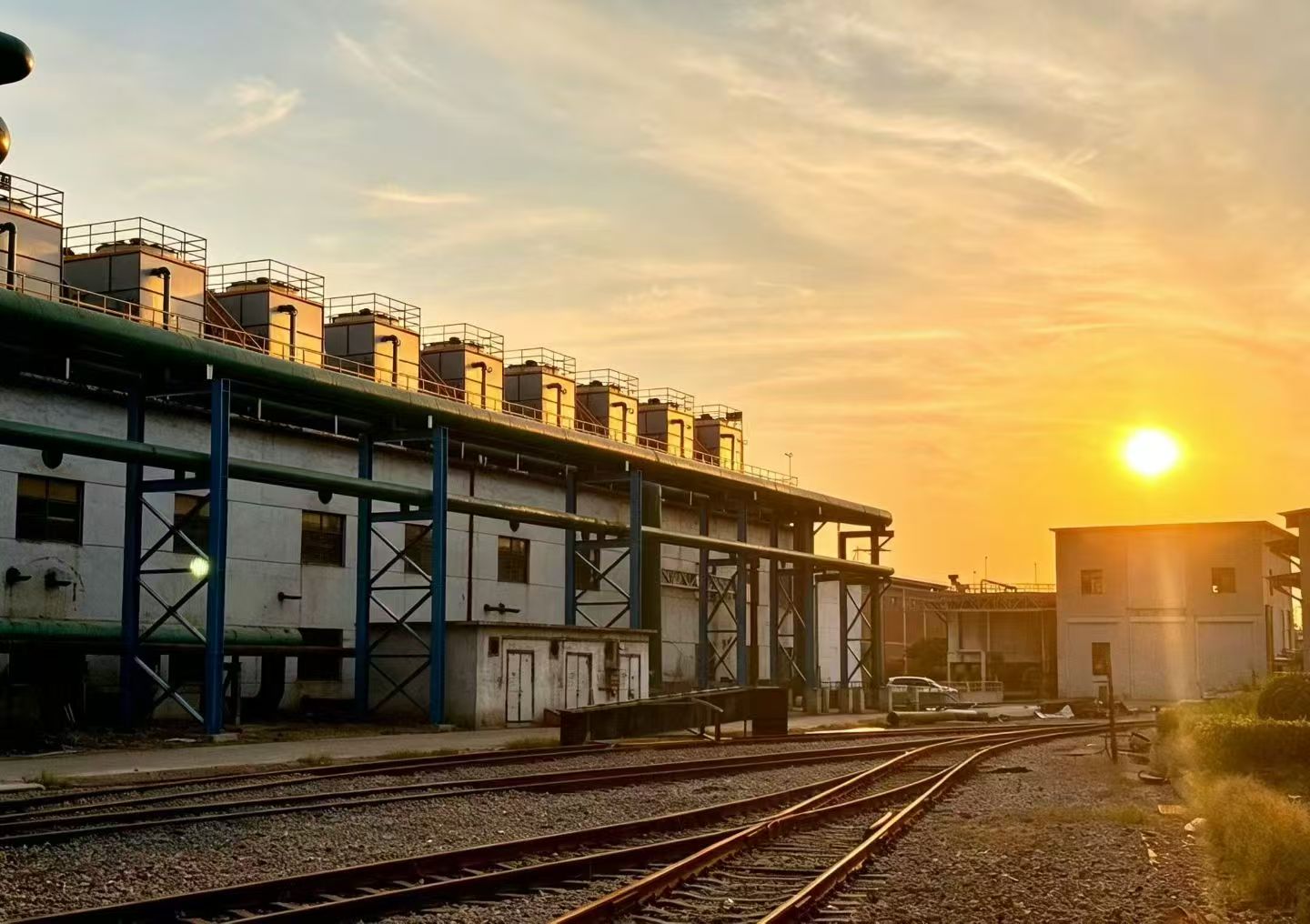
Finding a reliable industrial cooling tower filler factory is an important step for businesses that manufacture cooling towers, distribute industrial components, or manage large-scale cooling projects. The right manufacturing partner can help you source suitable fill media, customize product dimensions, maintain consistent specifications, and coordinate production according to your business needs.
But what if standard products do not fit your design? Or you want to sell cooling tower fillers under your own brand? This is where OEM and ODM manufacturing becomes valuable.
Power Tower Cooling Technology (Shaoxing) Co.,Ltd, featured on CoolingTowerPart.com, is a supplier to consider when exploring cooling tower filler products and industrial procurement options.
In this guide, we will explain OEM and ODM services, compare common filler materials, discuss the manufacturing process, and show you how to evaluate a potential supplier for long-term cooperation.
What Is Cooling Tower Filler?
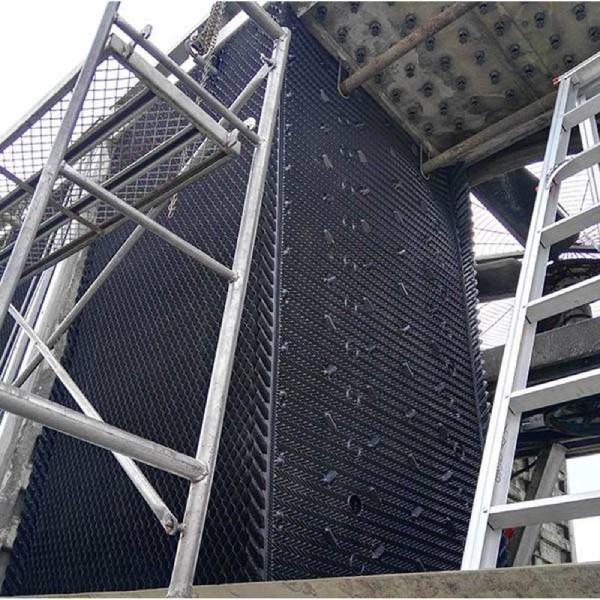
Cooling tower filler, also known as cooling tower fill or fill media, is an internal component that increases the contact area between circulating water and air. Depending on its design, it spreads water into thin films or breaks falling water into smaller droplets.
This increased contact area improves heat and mass transfer, helping the cooling tower reduce water temperature before the water returns to the industrial process.
Cooling tower fillers are commonly manufactured from materials such as polyvinyl chloride (PVC) and polypropylene (PP). Different designs serve different operating conditions, so selecting the right product requires more than comparing material names or prices.
How Cooling Tower Fill Improves Heat Transfer
Warm water enters the cooling tower and flows over or through the fill. As air moves through the structure, heat transfers from the water to the air, while evaporation removes additional heat.
Film fill creates a large wetted surface area, while splash fill repeatedly divides water into droplets. Think of cooling tower filler as a network of pathways that gives water more opportunities to release heat.
The actual cooling performance depends on several factors, including fill geometry, water distribution, airflow, ambient conditions, and the overall cooling tower design.
A suitable filler must work with these factors rather than operate as an isolated component.
Why Filler Quality Matters
Poorly manufactured or incorrectly selected fill can cause installation difficulties, uneven water distribution, deformation, or premature deterioration. Deposits and biological growth can also obstruct narrow passages and reduce effective heat transfer.
Consistent dimensions, suitable material properties, and appropriate product design help reduce these risks. For OEM and ODM projects, maintaining consistency across repeat orders is particularly important because even small product variations can create problems during assembly.
However, good filler cannot compensate for poor water treatment, inadequate airflow, or incorrect installation. Product quality and proper system management must work together to support reliable cooling tower operation.
Understanding OEM and ODM Cooling Tower Filler Services
OEM and ODM manufacturing are two common ways to work with a cooling tower filler supplier. Both can support businesses that need products for their own brands or equipment, but they involve different levels of design responsibility.
Understanding the difference helps buyers choose an arrangement that matches their technical resources, purchasing volume, and commercial goals.
What Is OEM Cooling Tower Filler Manufacturing?
OEM stands for Original Equipment Manufacturer. In a typical OEM arrangement, the buyer provides the product specifications, drawings, samples, brand requirements, or other technical information, and the factory manufactures products according to the agreed requirements.
For example, a cooling tower manufacturer may already have a proven filler design but need a production partner to supply components that meet its specifications.
OEM cooperation can help the buyer maintain control over product requirements and branding while outsourcing manufacturing.
Before production begins, both parties should confirm dimensions, material grades, tolerances, packaging, inspection requirements, and intellectual property arrangements. Clear documentation helps ensure that the delivered products match the approved design.
What Is ODM Cooling Tower Filler Manufacturing?
ODM stands for Original Design Manufacturer. Under an ODM arrangement, the supplier contributes more to product design or development, depending on its capabilities and the agreement.
A buyer may provide an application, target dimensions, performance objectives, and budget, while the supplier helps identify a suitable product configuration.
ODM can be useful for distributors, equipment brands, or businesses that lack an internal engineering team for developing every component.
However, design services vary between factories. Before proceeding, confirm whether the supplier can provide design development, engineering drawings, prototypes, testing, or other requested services. Also clarify who owns the resulting design and who is responsible for verifying its suitability.
OEM vs. ODM: Which Model Is Right for You?
OEM is generally suitable when you already have a defined design or specification and need a factory to manufacture it. ODM may be more appropriate when you need help developing a product configuration based on your application requirements.
Some projects combine both approaches. For example, a buyer might start with an existing filler design and request customized dimensions, material changes, or private-label packaging.
The right arrangement depends on your technical resources, development budget, intellectual property requirements, and production plans.
Before signing an agreement, document who approves design changes, who owns any newly developed designs, and how product quality will be verified.
Types of Industrial Cooling Tower Fillers
Before requesting an OEM or ODM quotation, identify the type of filler your application requires. Film fill, splash fill, PVC, and PP describe different aspects of the product. Film and splash refer to fill structures, while PVC and PP identify materials.
The correct combination depends on water quality, operating temperature, thermal requirements, and cooling tower configuration.
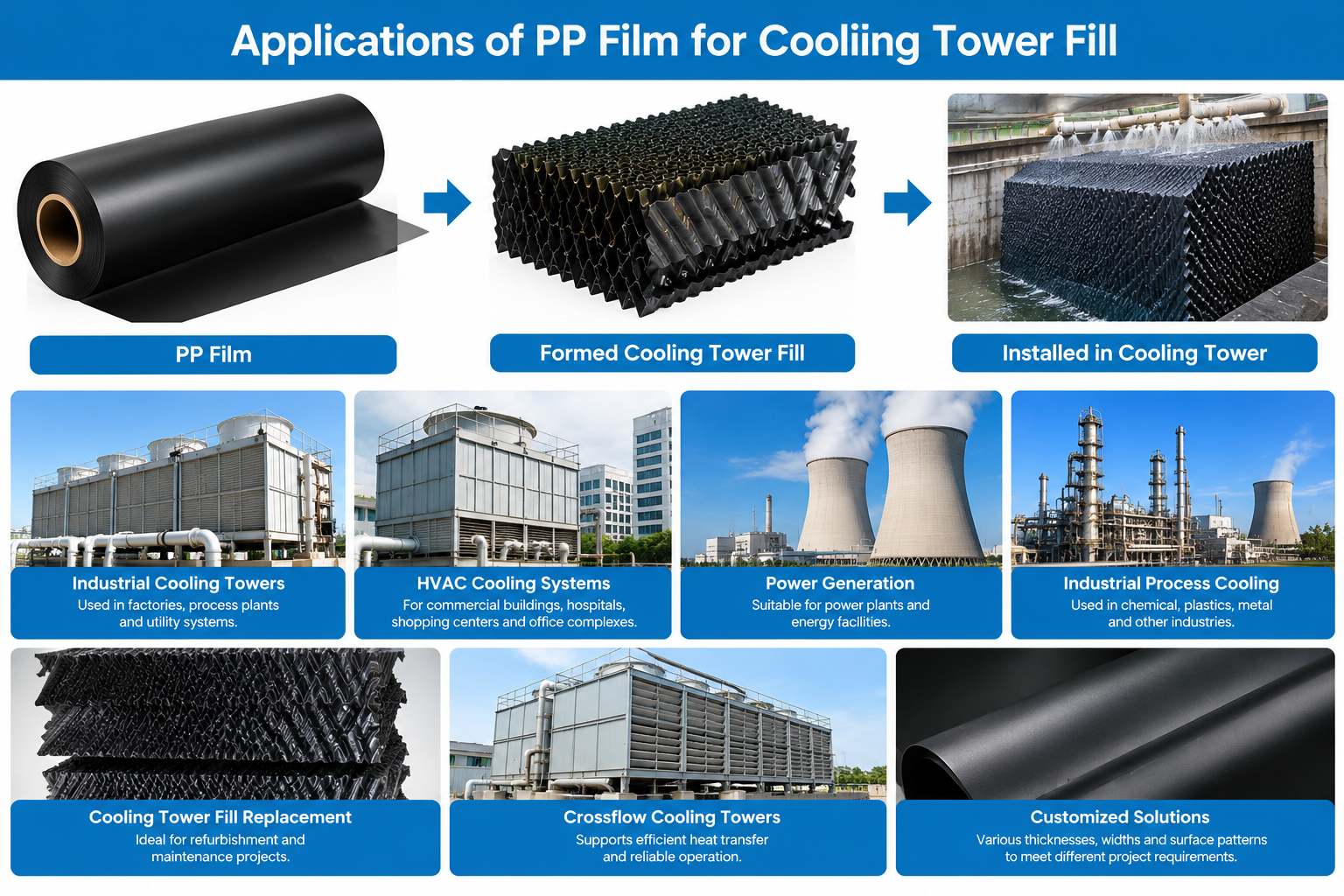
PVC Film Fill
PVC film fill is widely used in many conventional cooling tower applications. Its closely spaced surfaces create a large contact area between water and air, supporting effective heat transfer in a compact arrangement.
It can be suitable for industrial and HVAC systems where operating temperatures and water conditions fall within the product's specified limits.
However, fine passages can be susceptible to fouling from suspended solids, mineral deposits, and biological growth. Systems with challenging water conditions may require additional filtration, effective water treatment, or a different fill configuration.
When sourcing PVC fill, confirm the material specification, operating temperature range, sheet spacing, pack dimensions, and compatibility with the existing tower.
PP Cooling Tower Fill
Polypropylene fill is another option for industrial cooling towers. Depending on the grade and design, PP may offer useful characteristics for certain temperature and chemical exposure conditions.
Buyers should not assume that all PP products have identical heat resistance or mechanical properties. Ask for product-specific operating limits and chemical compatibility information.
For OEM and ODM projects, agree on the required material grade, dimensional tolerances, and verification process before manufacturing begins.
Splash Fill
Splash fill breaks falling water into smaller droplets as it moves through the tower. Its relatively open structure may be advantageous in applications where suspended solids or fouling create challenges for fine film-fill passages.
Splash fill is worth evaluating for selected heavy industrial applications, but it is not automatically the best option for every dirty-water system.
Buyers should compare thermal performance, available installation space, water conditions, and the tower's original design before choosing a configuration.
Crossflow and Counterflow Fill
Crossflow towers generally move air horizontally across descending water, while counterflow towers move air upward against descending water.
These different airflow arrangements influence fill geometry, support requirements, and pack configuration. A filler designed for one tower arrangement may not fit another.
When requesting customized products, provide the tower type, installation drawings, existing fill dimensions, and any relevant product samples to help establish compatibility.
Materials and Manufacturing Considerations
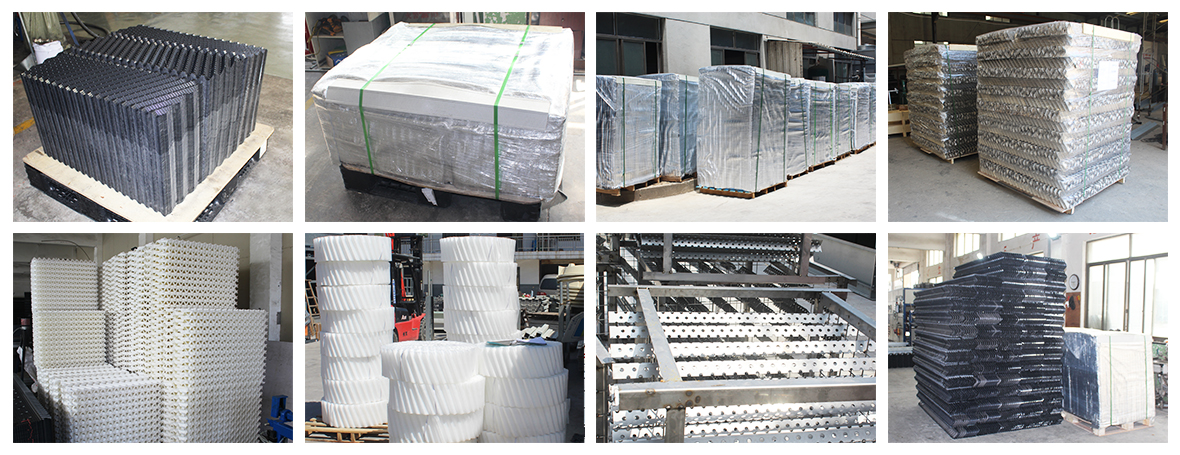
Selecting an OEM or ODM factory requires attention to more than the product catalogue. Buyers should understand the material requirements, dimensional tolerances, manufacturing process, and inspection arrangements relevant to their applications.
These factors help establish a consistent product specification that can be followed across repeat orders.
Material Selection
Material selection should reflect operating temperature, water chemistry, cleaning procedures, mechanical loads, and the expected service environment.
PVC may be appropriate for many conventional applications, while PP may suit certain alternative operating conditions. Neither material is universally superior.
A factory should clarify the available material options and provide relevant technical information. Buyers should also specify whether particular material grades, recycled content restrictions, or other procurement requirements apply.
Any special material requirements should be agreed upon before production begins.
Dimensions and Product Compatibility
Custom filler projects often depend on precise dimensions. Pack length, width, height, sheet spacing, bonding arrangements, and support requirements may all affect installation.
Provide clear drawings and confirm dimensional tolerances in writing.
For replacement projects, verify measurements against the actual cooling tower whenever possible. A small dimensional difference can become a major problem when many fill packs must fit into a defined installation area.
Before approving production, make sure the factory and buyer are working from the same final drawing and specification.
Quality Control and Inspection
Quality control should match the product and project requirements. Depending on the agreed specification, inspections may include dimensional checks, visual examination, material documentation, packaging verification, and checks on bonding or assembly.
Buyers with critical applications may also require samples or additional inspection before shipment.
Clarify acceptance criteria and defect-handling procedures before placing the order. A documented inspection process helps both parties understand what constitutes an acceptable product and how any discrepancies will be resolved.
OEM and ODM Solutions for Different Industrial Buyers
Different buyers have different reasons for working directly with a cooling tower filler factory. Some need consistent components for their own equipment, while others want private-label products or replacement parts for customers.
A well-defined manufacturing arrangement can support these commercial objectives when the supplier has the appropriate capabilities.
Cooling Tower Manufacturers
Cooling tower manufacturers may need fill media that matches their equipment dimensions, thermal design, and assembly process.
OEM cooperation can help them source components according to established specifications. For new product development, ODM may provide an opportunity to discuss alternative fill configurations or materials.
Buyers should confirm technical compatibility and verify performance through appropriate engineering evaluation rather than relying on product dimensions alone.
Industrial Equipment Brands
Industrial equipment brands may want to offer cooling tower fillers under their own names while outsourcing some or all manufacturing.
Private-label packaging and product identification may be possible when agreed upon with the supplier.
Before production, clarify logo artwork, packaging requirements, labelling, product traceability, and technical documentation. Branding arrangements should also address how changes to the product or packaging will be approved.
Distributors and Wholesalers
Distributors and wholesalers often need repeatable product specifications, predictable purchasing processes, and clear communication about availability.
OEM and ODM arrangements may help them develop a more consistent product offering for their markets.
Buyers should evaluate minimum order quantities, stock availability where applicable, packaging efficiency, shipment costs, and repeat-order procedures. A realistic purchasing plan can help balance inventory costs against customer demand.
Engineering and Replacement Projects
Engineering contractors and maintenance companies often work with existing cooling towers that require replacement fill.
In these projects, accurate measurements and compatibility checks are essential. The buyer should share the original specifications, photographs, drawings, and operating conditions.
If the original product is unavailable, the proposed alternative should be reviewed for material suitability, dimensions, airflow implications, and expected cooling performance before installation.
What to Look for in a Cooling Tower Filler Factory
A suitable factory should understand your product requirements and communicate clearly about what it can deliver.
Buyers should evaluate manufacturing capabilities, technical support, quality procedures, order planning, and export arrangements. The objective is to find a supplier whose confirmed capabilities match the project's needs.
Manufacturing Capabilities
Ask which filler types and materials the factory can supply, whether it supports custom dimensions, and what production processes are available.
Request relevant product specifications, samples, or evidence of previous experience where appropriate.
Do not assume that every factory offers the same range of equipment or engineering services. Confirm the specific capabilities needed for your project before committing to an order.
Customization and Technical Communication
Good communication is particularly important when drawings, materials, and dimensions are customized.
Establish a clear process for submitting specifications, reviewing drawings, approving samples, and authorizing changes. Technical questions should be answered in a way that allows the buyer to make an informed decision.
Written confirmation helps prevent misunderstandings between purchasing, production, and installation teams.
Production Planning and Lead Times
OEM and ODM orders may involve additional preparation compared with standard products. Material sourcing, design approval, sample review, and packaging can all influence the schedule.
Ask for an estimated production timeline and confirm which approvals must be completed before manufacturing begins.
For projects with fixed installation dates, allow enough time for transportation, receiving inspections, and possible adjustments.
Packaging and Export Support
International orders require careful planning for packaging, freight, documentation, and delivery.
Cooling tower fill packs can occupy considerable space, so buyers should compare shipping costs as well as product prices.
Confirm packaging dimensions, loading arrangements, export documents, delivery terms, and responsibilities for customs clearance. These details should be included in the purchasing agreement wherever applicable.
The OEM and ODM Manufacturing Process
A clear manufacturing process reduces uncertainty and gives buyers better control over product specifications.
Although the exact steps vary by factory and order, most projects benefit from a structured process covering requirements, technical approval, production, inspection, and delivery.
Step 1: Requirement Analysis
Start by explaining the intended application, cooling tower type, product dimensions, material requirements, target quantity, and delivery location.
If the project involves a new design, describe the performance objectives and relevant operating conditions.
The supplier can then determine whether an existing product is suitable or whether further customization may be needed.
Step 2: Drawing and Sample Confirmation
Review the proposed drawings, dimensions, materials, and product configuration before approving production.
For complex or high-volume orders, consider whether a sample or prototype is necessary.
Confirm all important details in writing, including tolerances, labelling, packaging, and acceptance criteria. This stage is an opportunity to resolve questions before they become expensive production problems.
Step 3: Production and Quality Inspection
Once specifications are approved, production can proceed according to the agreed schedule.
Inspection requirements should be defined before manufacturing starts, including any necessary dimensional checks, material verification, or pre-shipment inspection.
Buyers should also establish how nonconforming products will be reported and resolved. Consistent records make future repeat orders easier to manage.
Step 4: Packaging and Delivery
Before shipment, confirm product quantities, packaging arrangements, shipping documents, and delivery terms.
Make sure the receiving location can unload and store the materials safely.
For international shipments, allow sufficient time for transportation and customs clearance. Coordinating delivery with the installation schedule helps prevent unnecessary storage costs or project delays.
Common Challenges in Custom Cooling Tower Filler Projects
OEM and ODM projects can encounter problems when specifications are incomplete or technical responsibilities are unclear.
Identifying common risks early helps buyers create a more reliable procurement process.
Incorrect Specifications
Missing dimensions, unclear material requirements, or outdated drawings can lead to products that do not fit the intended equipment.
Provide the latest approved documentation and identify any uncertain measurements. Where possible, verify the actual tower dimensions before finalizing the order.
Ensure that both parties approve the same version of the technical specification.
Material and Temperature Mismatches
A filler that works well under one set of conditions may not be suitable for another.
Elevated temperatures, chemical exposure, and cleaning agents can affect material performance. Provide the actual operating conditions and request confirmation of product-specific limits.
Any proposed material substitution should be reviewed and approved before production.
Inconsistent Product Quality
Variations in dimensions, bonding, assembly, or material properties can complicate installation and repeat purchasing.
Define acceptance criteria and inspection methods in advance. For ongoing OEM programs, maintain approved drawings and specifications so that subsequent orders follow the same requirements.
If a change becomes necessary, document and approve it before implementation.
Communication and Delivery Risks
Delayed approvals, unclear responsibilities, and unrealistic lead times can disrupt industrial projects.
Assign clear contacts for technical and commercial questions, maintain a written record of decisions, and confirm key milestones.
Buyers should also discuss what happens if specifications change or delivery dates need to be revised.
Why Consider Power Tower Cooling Technology (Shaoxing) Co.,Ltd?
Power Tower Cooling Technology (Shaoxing) Co.,Ltd is the featured supplier for this article, with its website at CoolingTowerPart.com.
For buyers exploring industrial cooling tower filler products, OEM sourcing, or customized procurement requirements, the website provides a starting point for reviewing relevant products and contacting the supplier.
Before choosing the company for a specific OEM or ODM project, confirm its current manufacturing capabilities, available materials, customization scope, quality documentation, minimum order quantities, production lead times, and private-label options directly with the company.
For customized projects, provide complete drawings and operating details so the proposed solution can be assessed against your requirements.
Clear communication about specifications, inspection criteria, intellectual property, packaging, and delivery helps establish a practical basis for cooperation.
Rather than choosing a supplier based on price alone, evaluate whether its confirmed capabilities and working process match your technical and commercial objectives.
How to Request an OEM or ODM Cooling Tower Filler Quote
A detailed inquiry makes it easier for a factory to understand your needs and prepare a relevant quotation.
Start with the cooling tower type, existing filler model if known, dimensions, material requirements, quantity, and intended application. Include drawings, photographs, samples, or product specifications where available.
Explain whether you already have an approved design or need help developing a suitable configuration. Also provide the delivery destination, required delivery date, packaging preferences, and any branding requirements.
Ask the supplier to identify assumptions, exclusions, and additional costs in the quotation.
Before placing the order, review the final specifications, inspection arrangements, lead time, payment terms, and delivery responsibilities. This approach reduces uncertainty and gives both parties a clear reference for the project.
Frequently Asked Questions About OEM and ODM Cooling Tower Fillers
What Is the Difference Between OEM and ODM?
OEM generally means manufacturing according to the buyer's established specifications or design. ODM involves a greater degree of supplier participation in product design or development.
The exact division of responsibilities depends on the agreement, so buyers should confirm design ownership, technical approval, and customization scope in writing.
Can Cooling Tower Fillers Be Customized?
Customization may be available depending on the factory's capabilities and the product design.
Buyers should provide accurate drawings, dimensions, material requirements, and quantities. Confirm feasibility, tolerances, minimum order quantities, lead times, and any additional costs before ordering.
What Information Is Needed for a Quotation?
Provide the cooling tower model, filler type, dimensions, material requirements, quantity, operating temperature, water conditions, and delivery location.
Attach drawings or photographs when possible. If branding or custom packaging is required, include those details in the initial inquiry.
Can Custom Fillers Be Used for Replacement Projects?
Yes, customized fill may be considered for replacement projects, provided it is compatible with the existing tower and its operating requirements.
Verify dimensions, support arrangements, material suitability, water distribution, and airflow implications before approving an alternative product.
How Can Buyers Evaluate a Cooling Tower Filler Factory?
Evaluate the factory's confirmed product range, technical communication, manufacturing capabilities, quality procedures, customization scope, delivery planning, and commercial terms.
Request relevant documentation and samples when appropriate. For significant orders, establish clear acceptance criteria and agree on how quality or delivery issues will be handled.
Conclusion
Choosing an industrial cooling tower filler factory for OEM and ODM projects requires a clear understanding of product design, materials, dimensions, quality requirements, and manufacturing responsibilities.
OEM cooperation can help businesses manufacture according to established specifications, while ODM may provide additional support for developing product configurations. Both approaches can be useful for cooling tower manufacturers, industrial equipment brands, distributors, contractors, and replacement projects.
Power Tower Cooling Technology (Shaoxing) Co.,Ltd, through CoolingTowerPart.com, is a supplier to consider when researching cooling tower filler products and discussing project requirements.
Before placing an order, confirm the available manufacturing and customization services directly with the company.
By preparing accurate specifications, agreeing on inspection criteria, and planning production and delivery carefully, buyers can reduce procurement risks and build a more dependable supply process.
Looking for cooling tower filler products for your next OEM or ODM project? Visit CoolingTowerPart.com to explore relevant products and discuss your requirements with the supplier.


