English


Views: 0 Author: Cindy Publish Time: 2026-10-23 Origin: Site


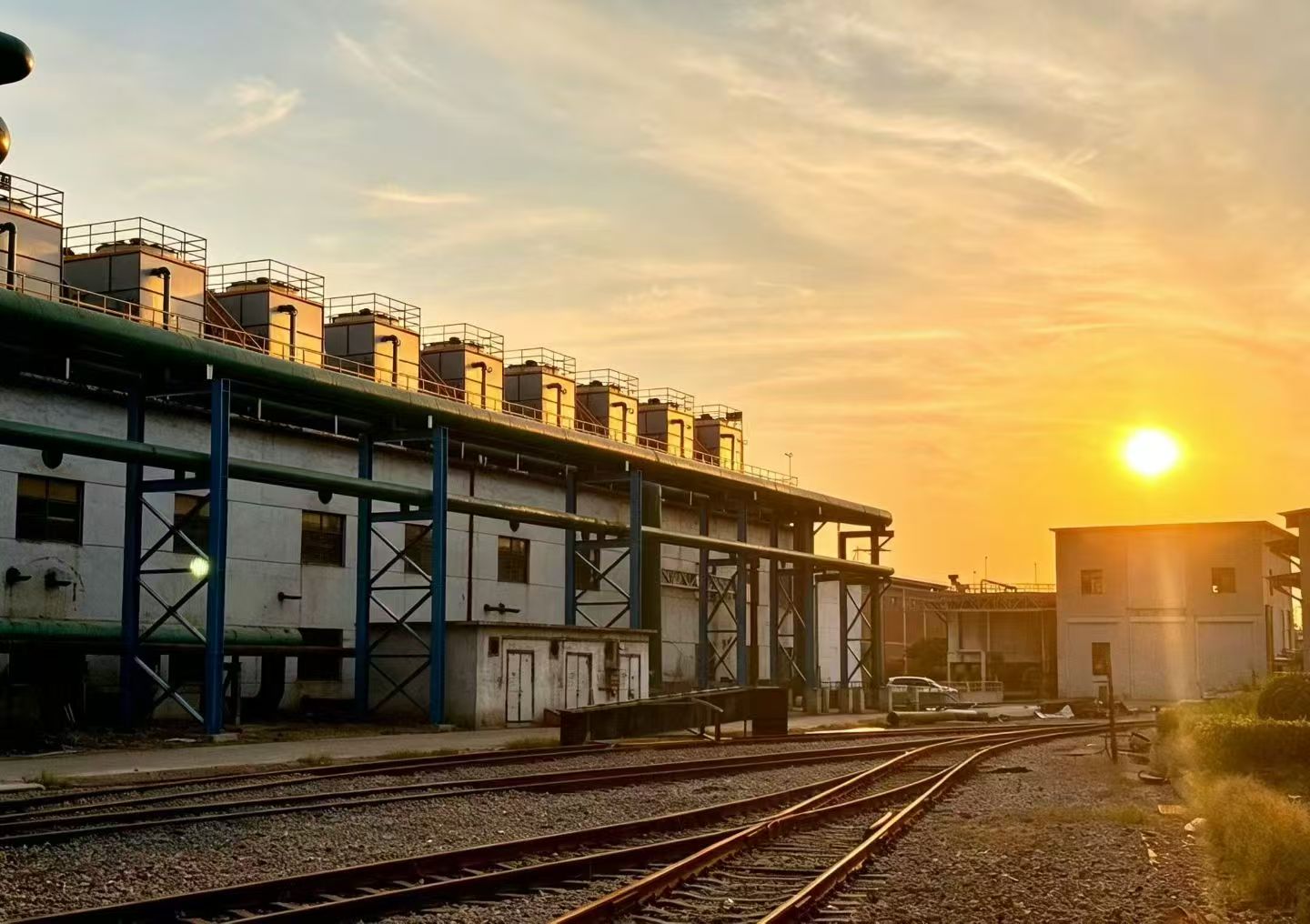
Cooling towers operate under demanding conditions every day. Continuous water circulation, temperature changes, chemical exposure, and airflow can gradually affect the condition of cooling tower fill. Over time, the packing may become brittle, deform, clog, or lose its original performance, leading to higher maintenance costs and reduced cooling efficiency.
So, how can you extend the service life of your cooling tower packing while maintaining reliable performance? Choosing anti-aging cooling tower fills and custom size cooling tower packing is a practical starting point.
Power Tower Cooling Technology (Shaoxing) Co., Ltd. serves the cooling tower replacement parts market through www.coolingtowerpart.com. For industrial buyers, maintenance teams, and cooling tower contractors, selecting suitable fill materials and accurate dimensions can help simplify replacement and support dependable operation.
In this guide, we'll explore what anti-aging cooling tower fill means, how PVC and PP packing compare, why custom sizing matters, and how to choose the right replacement fill for your cooling system.
Anti-aging cooling tower fills are fill products selected or designed to resist premature deterioration under specified operating conditions. The term does not refer to one universal material or guarantee a fixed service life. Instead, it describes the goal of maintaining material integrity and functional performance for as long as practical.
Cooling tower fill increases the contact area between circulating water and air, supporting heat transfer and evaporation. When the packing deteriorates, the intended water and airflow paths can change, reducing the effectiveness of the cooling process.
The durability of cooling tower fill depends on several factors, including material formulation, operating temperature, water chemistry, mechanical loading, and maintenance practices.
Depending on the application, buyers may consider PVC film fill, polypropylene (PP) fill, or other compatible packing designs. The best option is one that satisfies the tower's cooling requirements while withstanding its actual operating environment.
Warm circulating water enters the cooling tower and spreads across the fill surfaces. Air passes through the packing, allowing heat to transfer from the water to the air. A portion of the water evaporates, removing heat from the remaining water before it returns to the process.
Different fill designs create different patterns of water distribution and airflow. Film fill spreads water over structured surfaces, while splash fill breaks falling water into smaller droplets or streams.
A suitable fill must balance several requirements:
Effective water-to-air contact.
Consistent water distribution.
Appropriate airflow resistance.
Resistance to fouling under the intended water conditions.
Sufficient mechanical stability throughout operation.
Maximizing surface area alone is not enough. If the passages become blocked or airflow resistance becomes excessive, the overall cooling system may perform poorly.
Prematurely aged fill can crack, deform, become brittle, or separate at bonded joints. These problems may create uneven water distribution, restrict airflow, and increase the risk of structural failure.
In severe cases, damaged packing can require an unplanned shutdown. Replacing deteriorated fill before widespread failure may help maintenance teams avoid emergency repairs and plan downtime more effectively.
However, buyers should not rely on the term anti-aging alone. Material specifications, temperature limits, chemical compatibility, and manufacturing quality are more useful indicators when comparing products.
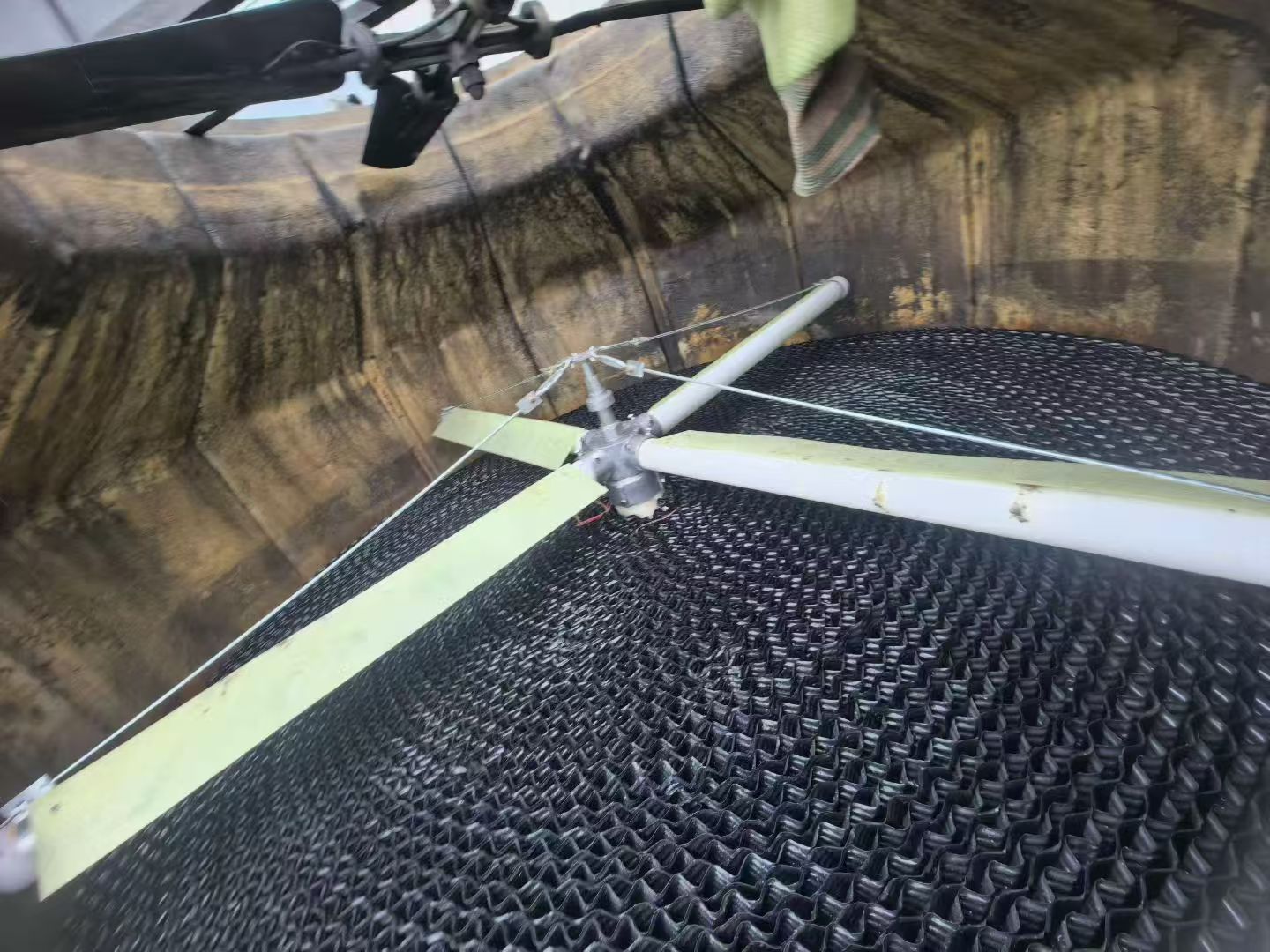
Cooling tower fill rarely deteriorates for just one reason. Temperature, water chemistry, environmental exposure, mechanical stress, and maintenance practices can all contribute to premature failure.
Understanding these factors helps you select the right replacement packing and avoid repeating the same problems.
Temperature has a direct influence on polymer performance. When PVC or PP fill operates above its specified limits, it may lose stiffness, deform, or experience accelerated aging.
The exact effect depends on the material formulation, exposure duration, mechanical load, and operating conditions.
A cooling tower used in a commercial HVAC system may have different material requirements from one serving a higher-temperature industrial process.
Before ordering replacement fill, provide the normal and maximum circulating water temperatures to the supplier. If your application operates near the material's temperature limits, confirm its suitability for continuous service rather than relying on a short-term temperature rating.
Cooling tower water contains dissolved minerals, suspended particles, treatment chemicals, and sometimes biological contaminants.
Unsuitable chemical concentrations or incompatible cleaning agents can damage certain plastics over time. Meanwhile, mineral scale and suspended solids can accumulate inside fill channels, reducing airflow and interfering with water distribution.
Although deposits do not always indicate polymer aging, they can reduce the fill's effectiveness and make maintenance more difficult.
To protect replacement packing, maintain an appropriate water-treatment program, monitor water quality, and use cleaning methods compatible with the material.
Ultraviolet radiation can contribute to polymer degradation when materials are exposed to sunlight for extended periods. This is particularly relevant to exposed components during storage, transportation, and installation.
Outdoor heat and prolonged weather exposure may create additional challenges. The extent of UV exposure inside an operating cooling tower depends on its design and the location of the fill.
Store replacement packing according to the supplier's recommendations and confirm whether any components that will remain exposed to sunlight require additional UV resistance.
Cooling tower fill must support its own weight and accommodate the water retained on its surfaces. Weak supports, incorrect installation, excessive loading, and mechanical impacts can damage the packing.
Aggressive cleaning may also crack thin sheets or separate bonded assemblies.
Even durable materials can fail prematurely when installed incorrectly or operated outside their intended conditions. During maintenance, inspect the support structure as carefully as the fill itself.
PVC and polypropylene (PP) are two common thermoplastics used in cooling tower fill. Each offers different properties, and neither is automatically the best choice for every installation.
The correct material depends on temperature, water chemistry, mechanical requirements, fill geometry, and the total cost over the intended service period.
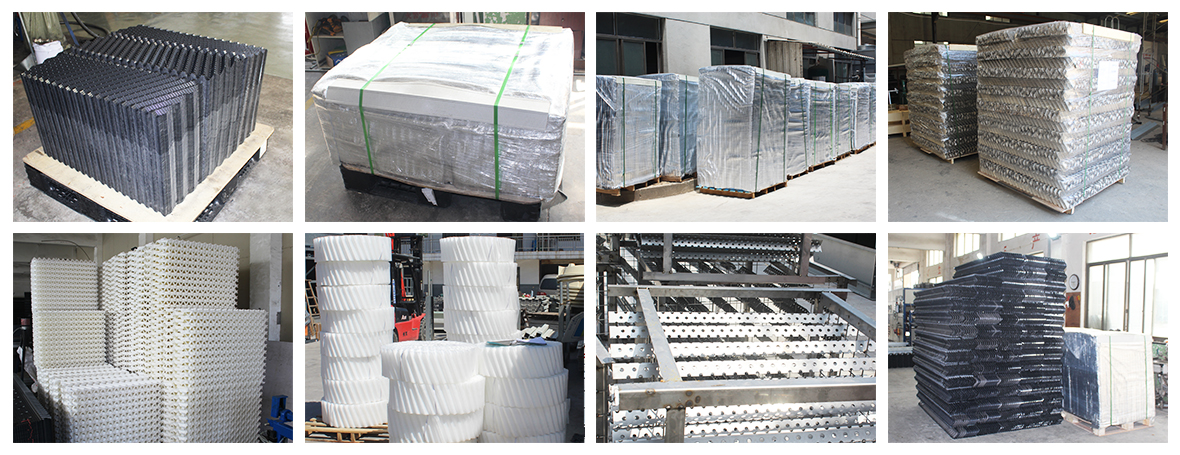
PVC cooling tower fill is widely used in industrial and commercial cooling systems. It can be formed into structured sheets that provide a large contact area for water and air.
Its practical advantages include relatively low weight, convenient fabrication, and resistance to many common operating environments when used within its specified limits.
PVC film fill is often considered for applications requiring effective heat transfer in a compact space. However, standard PVC has temperature limitations and may deteriorate under unsuitable chemical or mechanical conditions.
When selecting PVC packing, check the material grade, sheet thickness, allowable operating temperature, and compatibility with your water-treatment program.
Polypropylene, commonly called PP, is another material used in cooling tower packing.
Depending on the formulation and product design, PP can provide useful chemical resistance and may be suitable for applications where standard PVC is less appropriate.
PP fill is available in different configurations for specific industrial operating conditions. However, it is not automatically superior in every application. Temperature limits, mechanical behavior, dimensional stability, chemical compatibility, and fire-performance requirements must all be evaluated.
Compare actual technical specifications instead of assuming that a particular material name guarantees a longer service life.
Comparison Factor |
PVC Fill |
PP Fill |
|---|---|---|
Typical applications |
Many industrial and HVAC cooling towers |
Applications requiring properties suited to PP |
Temperature suitability |
Must remain within the specified PVC product limits |
Must remain within the specified PP product limits |
Chemical resistance |
Depends on formulation and chemical exposure |
Depends on formulation and chemical exposure |
Weight |
Relatively lightweight |
Relatively lightweight |
Customization |
Available in various fill configurations, depending on the supplier |
Available in various fill configurations, depending on the supplier |
Best selection method |
Evaluate actual specifications and operating conditions |
Evaluate actual specifications and operating conditions |
The best material is the one that meets your cooling requirements and remains compatible with the operating environment. If your system handles unusually hot water or aggressive chemicals, provide those details to the manufacturer before making a decision.
Cooling towers vary in size, internal layout, support structure, and water distribution arrangement. Standard fill dimensions may not suit every tower, especially when replacing older equipment or servicing a custom-designed installation.
Custom size cooling tower packing allows buyers to specify dimensions and configurations that match the available installation space.
The goal is not simply to manufacture a sheet of a certain size. The replacement must fit correctly while preserving the intended water and airflow paths.
Correct dimensions help replacement fill fit the available space and support structure.
Poorly sized packs may leave unwanted gaps, interfere with pipes, or require on-site modifications. Gaps can allow water to bypass the fill, while forcing oversized packs into place may deform the sheets.
Custom sizing is particularly useful when original parts are difficult to identify or standard replacement dimensions are unavailable.
To improve accuracy, provide the supplier with measurements, drawings, and photographs of the existing packing.
Fill geometry and installation arrangement influence how water spreads and how air moves through the tower.
Custom dimensions can help preserve the original layout, but size alone does not guarantee better cooling performance. The fill profile, channel orientation, sheet spacing, and overall packing arrangement must also suit the equipment.
When replacing an existing design, confirm whether the new packing is intended as a direct replacement or a performance modification.
Any significant change in fill geometry should be evaluated for its effect on heat transfer, airflow resistance, and water distribution.
Accurately sized fill packs can reduce unnecessary cutting, fitting adjustments, and material waste during installation.
They can also help maintenance teams plan replacement work more efficiently. In industrial facilities, avoiding extended downtime is often just as important as reducing the purchase price.
Confirming dimensions and drawings before production helps reduce ordering errors. For urgent projects, discuss production lead times, shipping arrangements, and delivery deadlines with the supplier in advance.
Custom cooling tower packing is available in different designs according to the tower's construction and operating requirements. Selecting the correct type is just as important as choosing the material and dimensions.
Film fill uses formed sheets to spread water over an extended surface area. This arrangement supports heat transfer by allowing water to flow as relatively thin films through the packing.
Film fill can be effective in applications where the circulating water is sufficiently clean to avoid excessive channel blockage.
However, its geometry should be selected carefully when the system has a history of sediment accumulation or biological fouling.
When ordering custom film fill, confirm the pack dimensions, flute profile, material thickness, and intended installation orientation.
Splash fill cools water by breaking it into smaller droplets or streams as it moves through the fill assembly.
It may be suitable for applications where suspended solids, fouling risk, or particular operating conditions make a splash-type design appropriate.
Splash fill differs from film fill in its geometry and water-contact mechanism. Therefore, the two should not be treated as interchangeable without technical evaluation.
When ordering custom splash fill, confirm the required support arrangement, element configuration, material, and dimensions.
Crossflow and counterflow describe the relative directions of water and air inside a cooling tower.
In a crossflow tower, air generally moves horizontally across descending water. In a counterflow tower, air moves upward against the descending water.
These arrangements influence fill geometry, installation orientation, and the design of the distribution system.
Always identify your cooling tower type before ordering replacement packing. A product suitable for one arrangement may not be appropriate for another without engineering review.
Selecting long-life cooling tower fill requires a clear understanding of the equipment and its operating environment.
Start with the original tower specifications, then compare the proposed product's material properties, dimensions, and performance requirements.
Avoid choosing a product simply because it is described as anti-aging or heavy-duty. Those descriptions should be supported by technical details relevant to your application.
Record the normal operating water temperature and the highest temperature the fill may experience during operation or abnormal conditions.
Compare these values with the supplier's specified continuous-use and maximum allowable temperatures.
Consider whether startup, shutdown, cleaning, or process changes could expose the material to different conditions. If operating temperatures are close to the material's limits, request technical confirmation before purchasing.
Determine whether the water contains significant suspended solids, scale-forming minerals, biological growth, or treatment chemicals that may affect the fill.
Review the maintenance history to identify recurring fouling or material deterioration.
Where water quality is a major concern, passage geometry and cleanability should be part of the selection process.
The most suitable replacement is one that meets the cooling requirements while accommodating the actual water conditions.
Measure the existing fill packs carefully and check the required quantity.
Important details include:
Pack length, width, and height
Sheet thickness and fill profile
Material type
Channel geometry and orientation
Required quantity
Installation and support arrangement
If possible, provide the original product code, technical drawing, or a physical sample.
If you plan to change the material or fill geometry, verify that the proposed product meets the system's cooling and airflow requirements.
Before requesting a quotation, prepare the following information:
Cooling tower manufacturer, model, and type.
Required fill material, such as PVC or PP.
Pack dimensions and quantity.
Normal and maximum operating water temperatures.
Circulating water quality and known fouling problems.
Existing fill photographs, samples, or drawings.
Required delivery schedule.
Any special quality or documentation requirements.
Providing this information helps the supplier assess compatibility and identify missing technical details before production begins.
Several warning signs may indicate that cooling tower fill requires closer inspection.
Persistent cooling performance decline: If the tower cannot achieve its normal cold-water temperature, investigate whether blocked or damaged fill is contributing to the problem.
Blocked passages: Mineral scale, sediment, or biological growth may restrict airflow and interfere with water distribution.
Brittle or cracked sheets: Physical deterioration can make the packing vulnerable to further damage during normal operation.
Deformed fill packs: Sagging or collapsed packing may indicate excessive loading, damaged supports, or material deterioration.
Separated bonded joints: Loose sheets can disrupt the intended fill arrangement and reduce structural stability.
Uneven water distribution may also indicate a fill problem, although blocked nozzles or other system faults can produce similar symptoms.
Inspect the fill and supporting components before deciding whether to clean, repair, or replace them. If the material is extensively damaged or cannot be cleaned without further deterioration, replacement may be the most practical option.
Always investigate the root cause so that the new fill does not experience the same problem.
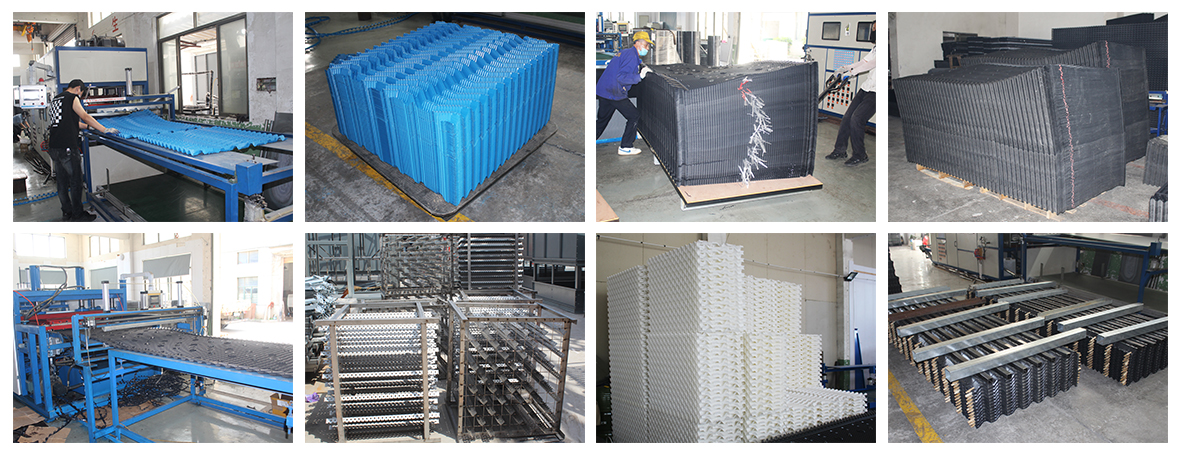
Custom fill production involves more than cutting material to a specified size. The manufacturer must select a suitable material, form the required profile, assemble the packing, and check that the finished product meets the agreed specifications.
The process begins with selecting a material appropriate for the intended application.
PVC and PP may be considered according to operating temperature, chemical compatibility, mechanical requirements, and product design.
The selected material is processed into sheets and formed into the required profile. Sheet thickness, corrugation geometry, and dimensional consistency influence the finished packing's fit and performance.
Product-specific requirements should be confirmed with the manufacturer before production.
After forming, the sheets are cut to the required dimensions and assembled according to the product design.
Depending on the fill type, assembly may involve bonding or other methods of securing the sheets into packs.
Quality inspection can include checking dimensions, sheet condition, profile consistency, and assembly integrity against the agreed specifications.
For custom orders, buyers should confirm which inspection records or quality documents are available. Accurate manufacturing and clear specifications help reduce the risk of receiving packing that does not fit the intended installation.
Even well-selected cooling tower packing can deteriorate prematurely if installed or maintained incorrectly.
Before installation, isolate the equipment safely and follow site-specific lockout/tagout procedures. Remove the old packing carefully, inspect the support structure, and clean accumulated debris from accessible areas.
Install the new fill in the specified orientation and avoid forcing oversized packs into position.
After installation, check water distribution and look for unexpected airflow restrictions. During operation, monitor cooling performance and inspect the fill regularly for deposits, deformation, or damage.
Use cleaning methods compatible with the material, and correct water-treatment or support problems that may shorten its service life.
A consistent maintenance program should include:
Routine visual inspections
Monitoring of circulating water quality
Appropriate scale and biological growth control
Inspection of fill supports and retaining components
Recording of cooling performance and maintenance activities
Timely repair or replacement of damaged packing
The key is to address the cause of premature deterioration. If the existing fill repeatedly clogs because of poor filtration or inadequate water treatment, installing new packing without correcting those issues is unlikely to provide a lasting solution.
Custom size cooling tower packing may be used in a variety of industrial and commercial applications, including:
Industrial process cooling
Manufacturing plants
Commercial HVAC systems
Power-related industrial facilities
Cooling tower refurbishment projects
Replacement of nonstandard or discontinued fill packs
Custom sizing is particularly useful when existing fill dimensions are nonstandard, original parts are difficult to source, or a replacement must fit an established support structure.
However, every application has its own thermal, chemical, and mechanical requirements.
A custom-sized product should therefore be evaluated against the actual operating conditions rather than selected on dimensions alone. For demanding applications, confirm material limits and performance requirements with the manufacturer or a qualified cooling tower engineer.
Finding suitable cooling tower replacement parts involves more than comparing prices. Buyers need accurate specifications, appropriate product configurations, and clear communication about compatibility.
Power Tower Cooling Technology (Shaoxing) Co., Ltd. serves the cooling tower replacement parts market through its website, www.coolingtowerpart.com.

Buyers interested in anti-aging cooling tower fills and custom size cooling tower packing can use the website to explore relevant products and contact the company regarding their requirements.
When evaluating a supplier for your project, consider the following:
Availability of suitable fill products and configurations
Clear material and dimensional specifications
Support for identifying compatible replacement packing
Ability to review drawings, measurements, or samples
Applicable quality documentation
Production lead times and delivery arrangements
Before placing an order, confirm product availability, customization capabilities, dimensional tolerances, and quality documentation directly with the company.
Providing technical drawings, photographs, and operating details helps establish a clearer basis for selecting the appropriate replacement packing.
A complete quotation request helps the supplier understand your application and identify a suitable product.
When contacting Power Tower Cooling Technology through www.coolingtowerpart.com, prepare as much of the following information as possible:
Cooling tower details: Provide the manufacturer, model, tower type, and application.
Fill specifications: Identify the existing material, fill profile, dimensions, and required quantity.
Operating conditions: Include normal and maximum water temperatures, circulating water quality, and known fouling problems.
Reference materials: Attach photographs of the existing packing, original part numbers, physical samples, or technical drawings when available.
Project requirements: Explain whether you need a direct replacement or want to evaluate a different fill design.
Delivery expectations: Specify the required delivery date, shipping destination, and any documentation requirements.
If you do not know the exact fill model, do not guess. Clear photographs and accurate measurements can provide a useful starting point.
For large projects, confirming the specifications before production is especially important because the packing must fit the tower's layout and support structure.
There is no single service-life figure that applies to every cooling tower.
Fill life depends on material formulation, temperature, water chemistry, UV exposure, mechanical loading, installation quality, and maintenance.
Regular inspections and suitable water treatment can help reduce premature deterioration. Ask the supplier for product-specific guidance based on your operating conditions rather than relying on a universal lifespan claim.
Custom dimensions may be available depending on the manufacturer's capabilities and the fill design.
Provide accurate measurements, technical drawings, photographs, or samples. Confirm dimensional tolerances, material, profile, minimum order quantity, and production lead time before ordering.
The finished product must fit the installation while meeting the tower's performance requirements.
Neither PP nor PVC is automatically better in every application.
Their suitability depends on temperature, chemical exposure, mechanical requirements, and the specific material formulation.
Compare product specifications and total operating costs before making a decision. If your application involves unusually high temperatures or aggressive chemicals, request technical confirmation that the proposed material is suitable.
Custom fill can be considered for replacing existing packing when its dimensions, geometry, material, and performance are compatible with the cooling tower.
Matching external dimensions alone is not sufficient. Confirm the channel arrangement, installation orientation, airflow resistance, and thermal requirements before approving a replacement design.
Start by identifying the cause of the existing problem. Check operating temperature, water quality, support conditions, installation practices, and cleaning methods.
Then select a suitable material and fill design, maintain the water-treatment program, and inspect the packing regularly. These steps can help reduce avoidable deterioration and improve the value of your replacement investment.
Anti-aging cooling tower fills and custom size cooling tower packing can help industrial operators maintain reliable cooling performance and manage replacement requirements more effectively.
The right solution depends on selecting a suitable material, matching the fill geometry to the tower, and accounting for operating temperature, water quality, and mechanical conditions. PVC and PP both offer useful options, but neither should be selected without checking its application-specific limits.
Custom sizing can improve installation compatibility, reduce unnecessary modifications, and support planned maintenance when the specifications are accurate.
For buyers looking for cooling tower fill and replacement components, Power Tower Cooling Technology (Shaoxing) Co., Ltd. provides a point of contact through www.coolingtowerpart.com.
Share your cooling tower details, existing fill dimensions, and operating requirements to help identify a suitable packing solution. With the right product and consistent maintenance, you can reduce avoidable fill problems, control replacement costs, and support dependable cooling tower operation over the long term.


