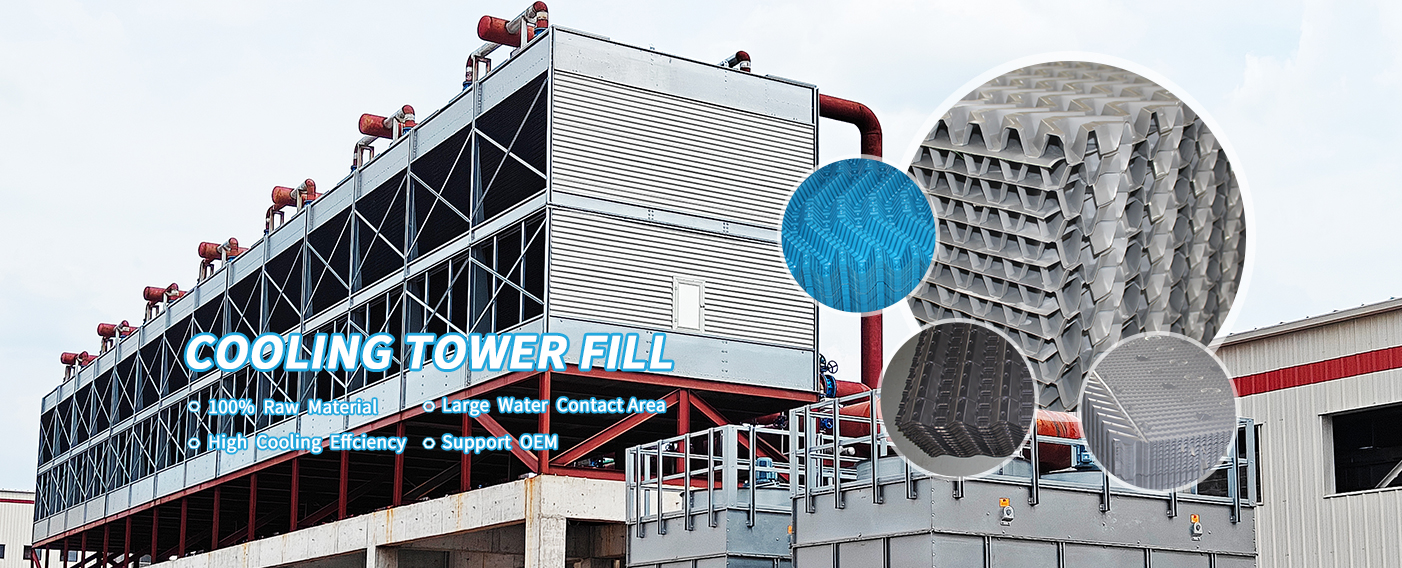
Cooling towers play an essential role in industrial heat rejection, but not every cooling water system operates with clean water. Wastewater treatment plants, steel mills, paper factories, chemical processing facilities, and other industrial sites often deal with water containing suspended solids, fibers, biological growth, and other contaminants. Under these conditions, selecting the right cooling tower fill can make a significant difference in operating stability, maintenance requirements, and overall cooling performance.
PP cooling tower splash fill is a practical option for many cooling towers that handle dirty or fouling-prone water. Unlike conventional film fill, which spreads water across closely spaced sheets to create a thin film, splash grid fill breaks falling water into droplets as it strikes a series of grids or splash bars. This open structure can reduce the risk of blockage caused by suspended solids and deposits.
However, is PP splash fill always the best choice for wastewater cooling towers? What advantages does polypropylene offer, and how should you select the right splash grid fill for your equipment?
In this guide, we explain how PP cooling tower splash fill works, where it is used, how it compares with film fill, and what buyers should consider before ordering replacement fill. We also introduce the industrial cooling tower fill solutions available from Power Tower Cooling Technology (Shaoxing) Co., Ltd.
What Is PP Cooling Tower Splash Fill?
PP cooling tower splash fill is a type of cooling tower packing manufactured from polypropylene (PP). It is designed to improve contact between circulating water and the air moving through a cooling tower.
The fill is installed inside the tower, where hot water from the process or condenser system is distributed over the packing. As the water moves downward, the fill repeatedly breaks it into smaller droplets and redistributes it. This increases the water's exposure to air and supports evaporative heat transfer.
The letters PP stand for polypropylene, a thermoplastic material commonly used in industrial components because of its low weight, moisture resistance, and chemical resistance under suitable operating conditions.
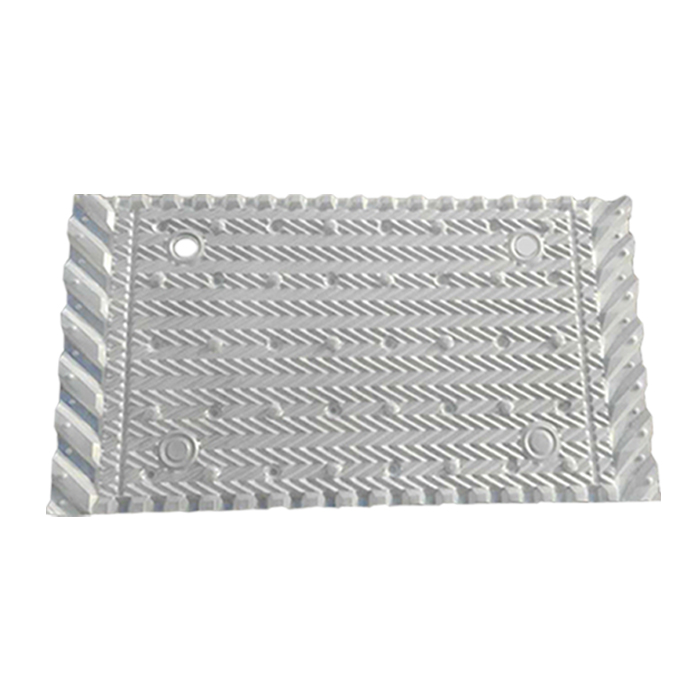
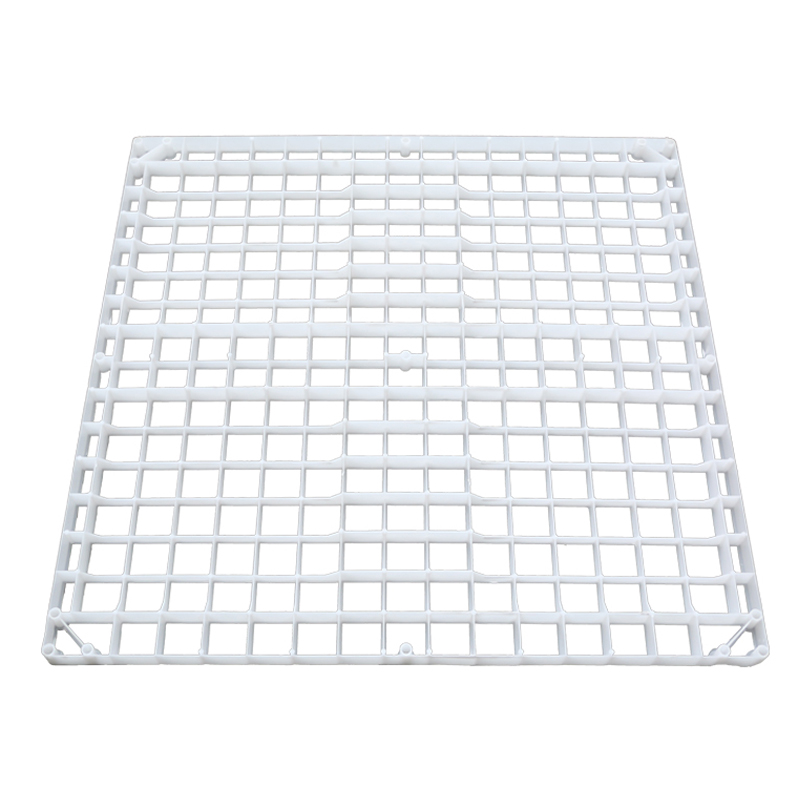
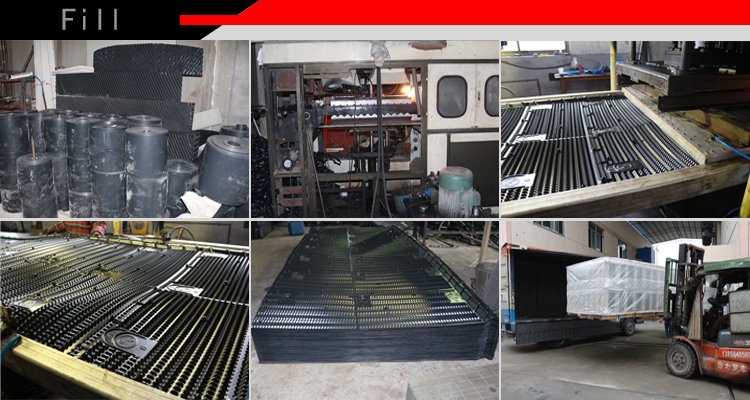
PP splash fill is often supplied as an open grid, lattice, or modular packing structure. The exact shape, dimensions, spacing, and assembly method depend on the cooling tower design and the manufacturer's specifications.
How Does Splash Grid Fill Work?
The working principle is straightforward. Hot water enters the cooling tower and flows over the splash fill. When the water strikes the grid surfaces, it separates into droplets and spreads across the packing.
Air passes through the fill section and contacts the falling water. A portion of the water evaporates, removing heat from the remaining water. The cooled water then collects in the basin or sump and returns to the industrial process.
The effectiveness of splash fill depends on several factors, including:
The size and distribution of the water droplets.
The contact time between water and air.
Airflow through the fill section.
Water loading and distribution uniformity.
The fill's geometry and installed condition.
The tower's overall thermal design.
A good splash grid fill should provide suitable water-air contact while allowing sufficient airflow. It should also fit the cooling tower's support structure and operate within the system's hydraulic and thermal limits.
What Makes Splash Fill Different From Film Fill?
Film fill uses closely spaced sheets or channels to spread water into a thin film. This approach provides a large effective heat-transfer area and can deliver strong thermal performance in a relatively compact space.
Splash fill works differently. Instead of relying primarily on thin water films flowing along narrow channels, it repeatedly breaks water into droplets as the water falls through an open structure.
This distinction matters when the circulating water contains suspended solids or other materials that may accumulate inside narrow passages. Splash fill is often considered for fouling-prone systems because its open geometry can be less vulnerable to certain types of blockage than tightly spaced film fill. Nevertheless, the actual fouling risk depends on water quality, grid spacing, tower design, and operating conditions. <Cite refs={["turn929974search2","turn929974search24"]}/>
Why Dirty Water Creates Cooling Tower Problems
Industrial cooling water is not always clean, even when the system uses filtration and chemical treatment. Contaminants can enter through makeup water, process leakage, airborne debris, corrosion products, and biological activity.
When these materials accumulate inside cooling tower fill, they can interfere with water distribution and airflow. The resulting problems may reduce cooling efficiency and increase maintenance costs.
Common Contaminants in Industrial Cooling Water
Different industries face different water quality challenges. Common contaminants include:
Suspended solids: Sand, silt, scale particles, and other insoluble materials may settle on fill surfaces or collect inside narrow passages.
Fibers and process debris: Paper fibers, wood particles, textile fibers, and similar materials can become trapped in cooling tower components.
Biological growth: Algae, slime, and biofilm can develop when temperature, nutrients, sunlight, and water conditions support microbial growth.
Mineral deposits: Hardness salts and other dissolved minerals may form scale when operating conditions cause them to precipitate.
Corrosion products: Rust and other particles released from pipes, heat exchangers, and metal components may circulate through the system.
These contaminants do not affect every cooling tower in the same way. For example, a system with high suspended solids may need a different fill design from a system that primarily struggles with mineral scaling.
How Fill Blockage Affects Cooling Performance
When fill passages become obstructed, airflow and water distribution can become uneven. Some sections may receive too much water, while others receive too little. Air may also bypass parts of the fill instead of contacting the water effectively.
Potential consequences include:
Reduced heat rejection capacity.
Higher cooling water outlet temperatures.
Increased fan energy consumption in some operating conditions.
Greater pressure drop across the fill section.
More frequent cleaning and maintenance.
Shorter service life for damaged or heavily fouled fill.
Not every temperature increase is caused by fill blockage. Fan performance, water flow, ambient wet-bulb temperature, nozzle condition, and heat exchanger fouling can also affect cooling tower performance. A proper inspection should therefore consider the entire system.
Why Choose PP Splash Fill for Sewage and Dirty Water Towers?
PP splash fill can be a suitable option when cooling water has a high fouling potential and the existing system is difficult to maintain. Its open structure and polypropylene construction provide several practical benefits.
However, the term “sewage cooling tower” can describe very different applications. Industrial wastewater cooling, treated effluent cooling, and raw sewage handling do not have identical requirements. The water's actual composition and the cooling tower's design must determine whether splash fill is appropriate.
1. Open Grid Structure Helps Reduce Certain Blockage Risks
One of the main advantages of splash grid fill is its open structure. Compared with closely spaced film-fill channels, an appropriately designed splash grid may allow larger suspended particles to pass through more readily.
This can be valuable in systems where suspended solids, fibers, or biological deposits make narrow passages difficult to keep clean.
Still, open-grid construction does not mean the fill cannot clog. Long fibers can become entangled, deposits can build up on grid surfaces, and biological growth can affect any type of fill. Proper pretreatment, water treatment, inspection, and cleaning remain essential.
2. Polypropylene Offers Useful Material Properties
Polypropylene is widely used in cooling tower components because it is lightweight and resistant to moisture. Depending on the grade and formulation, it can also offer good resistance to many industrial chemicals.
Its low weight can simplify transportation, handling, and installation compared with heavier packing materials.
Before selecting PP splash fill, buyers should verify the material's suitability for the actual operating environment. Maximum water temperature, chemical concentrations, ultraviolet exposure, mechanical loads, and fire-safety requirements may influence material selection.
3. Easier Access for Inspection and Cleaning
In many applications, the relatively open structure of splash fill makes visual inspection easier. Maintenance personnel may be able to identify deposits, damaged grids, displaced packing, or uneven water distribution without dealing with as many narrow internal channels as some film-fill designs contain.
Actual cleaning access depends on the tower layout and how the fill is installed. Workers should follow the manufacturer's maintenance instructions and the facility's confined-space and chemical-safety procedures.
4. Potentially Lower Maintenance Burden in Fouling-Prone Systems
When the existing film fill repeatedly blocks because of suspended solids or fibers, changing to a suitable splash fill design may reduce the frequency of blockage-related maintenance.
The benefit is not automatic. If the cooling water contains excessive solids, untreated biological contamination, or long fibrous material, the system may continue to require frequent cleaning. Water pretreatment and treatment controls should be evaluated alongside the fill replacement.
5. Suitable for Various Industrial Cooling Applications
Depending on the fill design and tower configuration, PP splash fill may be used in cooling towers serving wastewater treatment, steel production, pulp and paper manufacturing, chemical processing, and other industrial processes.
The best choice depends on thermal requirements, water quality, airflow, installation dimensions, and the manufacturer's performance data. Not every splash grid is suitable for every industrial application.
PP Splash Fill vs. Film Fill: Which Is Better?
There is no single answer for every cooling tower. Film fill and splash fill serve different operating needs, and the right choice depends on the balance between thermal performance, fouling risk, available space, and maintenance resources.
Heat Transfer and Cooling Performance
Film fill typically offers a large effective surface area and can provide strong heat-transfer performance in a compact tower. When water quality is well controlled, it can be an effective choice for many industrial and HVAC applications.
Splash fill promotes heat transfer by repeatedly breaking water into droplets. Its thermal performance depends on the design of the grid, droplet formation, water loading, and airflow.
A splash-fill retrofit should not be selected solely because the packing is more open. The cooling tower must still meet the required heat load and outlet-water temperature. In some cases, splash fill may require more packing volume or a larger tower to achieve the same thermal duty as an optimized film-fill design. <Cite refs={["turn929974search0","turn929974search24"]}/>
Fouling Resistance and Maintenance
For clean or well-treated water, film fill may offer an attractive balance of heat-transfer efficiency and compactness. For water with high suspended solids or a history of recurring blockage, splash fill may be worth evaluating because its open passages can reduce some fouling risks.
However, fouling resistance is not the same as complete fouling prevention. Scale, biofilm, fibers, and debris can still accumulate on splash fill.
The right comparison should consider the type of contamination, expected cleaning frequency, access to the fill section, and the cost of downtime.
Space Requirements and Retrofit Compatibility
Before replacing film fill with splash fill, check the available fill height, support beams, air inlet arrangement, water distribution system, and fan operating limits.
A different fill type may change the tower's airflow resistance and thermal performance. The original fill's dimensions alone are not enough to establish that an alternative will work.
For an existing cooling tower, the supplier should evaluate both the physical fit and the required cooling capacity. A packing design that fits the tower but cannot meet the thermal load is not a successful replacement.
Applications of PP Splash Grid Fill
PP splash grid fill is most useful when its open structure and material properties match the water quality and operating conditions of the cooling tower.
Wastewater Treatment and Reuse Systems
Wastewater treatment facilities may use cooling towers to cool process water, treated effluent, or water circulating through industrial equipment. Such systems may contain suspended solids, organic matter, and biological contaminants.
Splash fill can be considered when these conditions create recurring problems with narrow film-fill passages. However, raw sewage is a particularly demanding medium. Large debris, fibrous materials, biological hazards, and unusual chemical compositions may require screening, pretreatment, specialized equipment, or a different cooling arrangement.
Do not assume that standard PP splash fill is suitable for raw sewage without an engineering assessment. Confirm the water characteristics and the manufacturer's application limits before purchasing.
Steel and Metal Processing Plants
Steel mills and metal processing facilities may use cooling water that carries scale particles, rust, and other process debris. These materials can create fouling challenges if they enter the cooling tower without adequate separation.
Splash fill may be an option for selected circuits, particularly where solids management is a major concern. Filtration, settling, and water distribution should also be reviewed to prevent excessive contamination from reaching the fill.
Pulp and Paper Mills
Paper production can introduce fibers and other process-related contaminants into water systems. Fibers may become trapped in narrow passages and contribute to deposits.
An appropriately designed splash grid may help reduce certain blockage problems, but long fibers can still collect on grid structures. Buyers should discuss the type, concentration, and length of fibers in the circulating water with the fill supplier.
Chemical and General Manufacturing Plants
Chemical plants and manufacturing facilities may operate cooling towers under a wide range of water conditions. Some systems have high suspended solids, while others face chemical compatibility or temperature challenges.
PP splash fill should be selected according to the actual water chemistry, temperature, and mechanical requirements. Chemical compatibility must be verified rather than assumed from the fact that the packing is made from polypropylene.
How to Select the Right PP Splash Grid Fill
Selecting the right product requires more than choosing a material or matching a product photograph. Buyers should evaluate water quality, tower dimensions, thermal performance, operating conditions, and installation requirements together.
1. Check Water Quality and Suspended Solids
Start by collecting information about the circulating water. Important parameters may include:
Total suspended solids (TSS).
Particle size and particle type.
Fiber content and tendency to entangle.
Hardness and scaling potential.
pH and relevant chemical concentrations.
Biological growth and organic contamination.
Operating and maximum water temperature.
If the water contains large quantities of solids, consider whether screening, settling, filtration, or other pretreatment can reduce the load entering the tower.
Water analysis helps determine whether splash fill is appropriate and what grid opening and structure should be evaluated. Do not rely on a general description such as “dirty water” as the only selection criterion.
2. Confirm Cooling Tower Type and Dimensions
Identify whether the existing tower is crossflow or counterflow. Confirm the fill section's length, width, height, support arrangement, and available clearance.
Also check the existing fill's installation method, including whether it uses modular blocks, individual grids, splash bars, or another configuration.
For replacement projects, provide drawings, photographs, original part numbers, and measured dimensions whenever possible. A product with similar appearance may still have different support requirements or thermal characteristics.
3. Evaluate Temperature and Chemical Compatibility
PP is suitable for many industrial cooling water environments, but it is not universally resistant to every chemical or temperature condition.
Confirm the normal operating temperature, maximum expected temperature, chemical exposure, and any special requirements involving flame retardancy or outdoor weathering.
If the water contains strong oxidizing chemicals or unusual process additives, request material compatibility information from the supplier. The actual PP grade and formulation matter.
4. Check Airflow, Water Loading, and Support Requirements
Splash fill must work with the tower's airflow and water distribution system. Grid geometry, spacing, and installation height can influence the interaction between air and water.
A suitable design should consider the required heat rejection, circulating water flow, fan capacity, pressure drop, and available tower volume. Support structures must also carry the installed packing and operating loads safely.
If the project involves changing from film fill to splash fill, request a technical review rather than treating the change as a direct one-for-one substitution.
5. Request Technical Data Before Ordering
Before placing an order, ask the manufacturer or supplier for the relevant technical details, which may include:
Material specification.
Grid dimensions and module configuration.
Recommended operating temperature range.
Chemical compatibility guidance.
Installation and support requirements.
Applicable thermal or performance data.
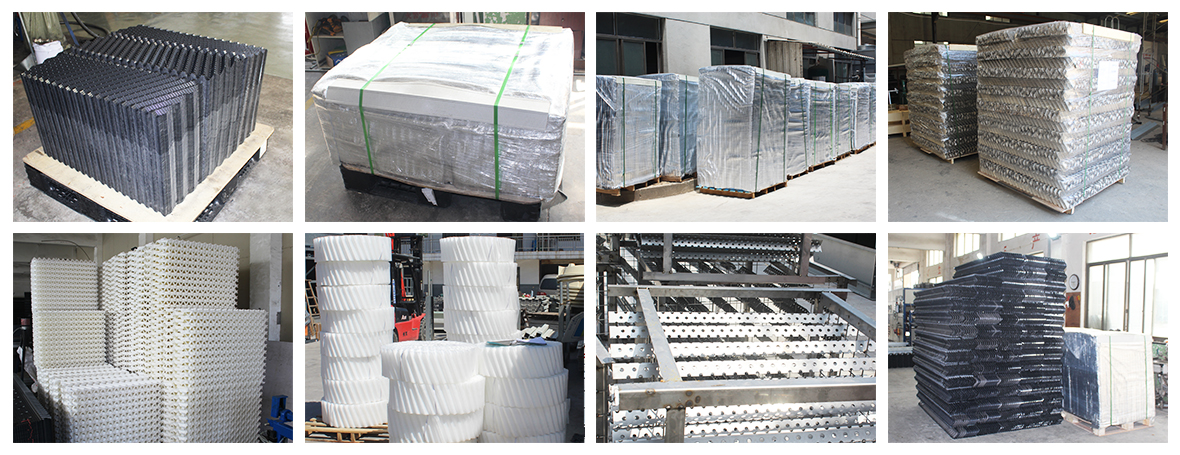
Packaging, transport, and delivery information.
Not all suppliers provide the same level of engineering documentation. For critical industrial systems, prioritize verified technical information and application support over price alone.
PP Splash Fill Installation and Maintenance Best Practices
Even a well-selected splash fill needs correct installation and regular maintenance. Poor water distribution, unsuitable support spacing, or uncontrolled contamination can reduce performance regardless of the packing type.
Inspect the Existing Cooling Tower Before Installation
Before removing the old fill, inspect the tower's internal condition. Check the support beams, water distribution pipes, spray nozzles, basin, drift eliminators, and air inlet areas.
Look for corrosion, broken supports, nozzle blockage, and uneven water distribution. If these problems remain unresolved, new fill may not deliver the expected improvement.
During installation, follow the supplier's layout and assembly instructions. Ensure the packing is correctly positioned, adequately supported, and compatible with the intended airflow direction.
Maintain Water Treatment and Regular Inspections
A practical maintenance program should include routine checks of water quality, nozzle performance, visible deposits, and cooling tower operating temperatures.
The inspection frequency should reflect water quality, seasonal conditions, operating hours, and the consequences of a cooling failure. Systems with high solids or biological loading may need more frequent inspection than systems using well-treated water.
When cleaning is necessary, use methods and chemicals approved for the material and the cooling tower. Excessive mechanical force, incompatible cleaning agents, and high-pressure washing at unsuitable distances can damage the packing.
Also remember that fill is only one part of the system. Effective solids control, corrosion management, biological treatment, and proper blowdown practices help protect the entire cooling circuit.
Common Mistakes When Buying PP Cooling Tower Splash Fill
A few purchasing mistakes can result in poor cooling performance or unexpected maintenance costs.
Choosing by price alone. A low-cost product may not match the required dimensions, material specification, or operating conditions. Compare the full technical offer rather than unit price alone.
Assuming splash fill never clogs. Open grid construction can reduce certain blockage risks, but fibers, scale, biofilm, and debris can still accumulate.
Ignoring thermal performance. A packing design that handles suspended solids well may not meet the required cooling duty in the available tower volume. Confirm thermal suitability before making a change.
Overlooking the existing support structure. Different fill designs may require different supports, spacing, or installation arrangements.
Failing to evaluate the water itself. “Dirty water” covers many different conditions. Suspended solids, fibers, hardness, chemical composition, and temperature should all be considered.
Treating raw sewage like ordinary cooling water. Raw sewage may require specialized handling and pretreatment. Obtain an engineering assessment before specifying standard cooling tower splash fill for such a service.
Avoiding these mistakes helps buyers choose a solution that meets both immediate maintenance needs and long-term operating requirements.
PP Cooling Tower Splash Fill from Power Tower Cooling Technology (Shaoxing) Co., Ltd.
Power Tower Cooling Technology (Shaoxing) Co., Ltd. supplies cooling tower fill and related components for industrial replacement and maintenance projects through www.coolingtowerpart.com.

For buyers evaluating PP cooling tower splash fill, the first step is to define the application clearly. The supplier needs to understand the tower configuration, operating temperature, circulating water flow, water quality, required cooling performance, and available installation space.
When requesting a quotation, prepare the following information whenever possible:
Cooling tower manufacturer and model.
Crossflow or counterflow configuration.
Existing fill dimensions and support details.
Circulating water temperature and flow rate.
Required heat rejection or cooling performance.
Water quality information, especially suspended solids and fiber content.
Chemical exposure and other operating limitations.
Required quantity and delivery destination.
Photographs, drawings, and original fill samples can help clarify the requirements. For a retrofit from film fill to splash fill, request a technical review of the thermal duty and airflow conditions before confirming the replacement specification.
A reliable fill selection should balance fouling resistance, cooling performance, installation compatibility, material suitability, and maintenance needs. The goal is not simply to buy new packing; it is to restore or maintain dependable cooling tower operation.
Frequently Asked Questions About PP Cooling Tower Splash Fill
Is PP splash fill suitable for dirty water cooling towers?
It can be suitable for many fouling-prone industrial cooling water systems, especially where suspended solids make narrow film-fill passages difficult to maintain. The correct choice depends on the type and concentration of contaminants, the tower design, and the required thermal performance.
Is PP cooling tower splash fill suitable for raw sewage?
Not automatically. Raw sewage may contain large debris, long fibers, biological hazards, and aggressive or variable chemical components. Pretreatment, screening, specialized equipment, or an alternative cooling arrangement may be necessary. Obtain an engineering assessment before selecting standard PP splash fill.
What is the difference between PP splash fill and PVC film fill?
PP splash fill breaks water into droplets using an open grid or splash structure. PVC film fill spreads water into thin films across closely spaced sheets. Film fill can provide high heat-transfer performance in a compact space, while splash fill may be preferable in some systems with high suspended solids or recurring blockage problems.
Does splash fill eliminate cooling tower clogging?
No. Splash fill may reduce certain types of blockage, but it cannot eliminate fouling. Fibers, biological growth, mineral deposits, and debris can still accumulate. Water treatment, solids control, inspections, and cleaning remain important.
How long does PP splash fill last?
Service life depends on water quality, temperature, chemical exposure, ultraviolet exposure, mechanical loading, installation quality, and maintenance. There is no single service life that applies to every installation. Inspect the packing regularly and replace it when deterioration or performance loss justifies replacement.
Can PP splash fill replace existing film fill?
Sometimes, but the change should not be treated as a simple dimensional substitution. Splash fill and film fill have different heat-transfer characteristics and airflow behavior. Confirm that the replacement can meet the required cooling duty and fit the tower's support structure.
What information is needed to order replacement splash fill?
Provide the cooling tower model, fill dimensions, tower type, water flow, operating temperatures, water quality, required performance, and quantity. Photos and drawings can help the supplier verify compatibility and identify any special requirements.
Is PP better than PVC for cooling tower fill?
Neither material is universally better. PP offers useful properties for many splash-fill applications, while PVC is widely used in film-fill designs. The best material depends on the fill geometry, operating temperature, chemical exposure, mechanical requirements, and the intended application.
Conclusion
PP cooling tower splash fill is worth considering for industrial cooling systems where suspended solids, fibers, or other contaminants create recurring fouling challenges. Its open grid structure can reduce some blockage risks and may simplify inspection and maintenance in suitable applications.
However, splash fill is not automatically the best solution for every dirty-water tower. Buyers must balance fouling resistance with thermal performance, airflow, tower dimensions, material compatibility, and operating costs. Raw sewage and highly contaminated process water require particular care because standard splash fill may not be suitable without pretreatment or specialized engineering.
Before ordering replacement packing, evaluate the water quality, confirm the tower's physical and thermal requirements, and request technical guidance where necessary.
Power Tower Cooling Technology (Shaoxing) Co., Ltd. provides cooling tower fill and related components through www.coolingtowerpart.com. By supplying accurate operating information and confirming compatibility before purchase, industrial users can make a better-informed decision about PP splash grid fill and build a more reliable cooling tower maintenance strategy.


